2025-05-16 05:18
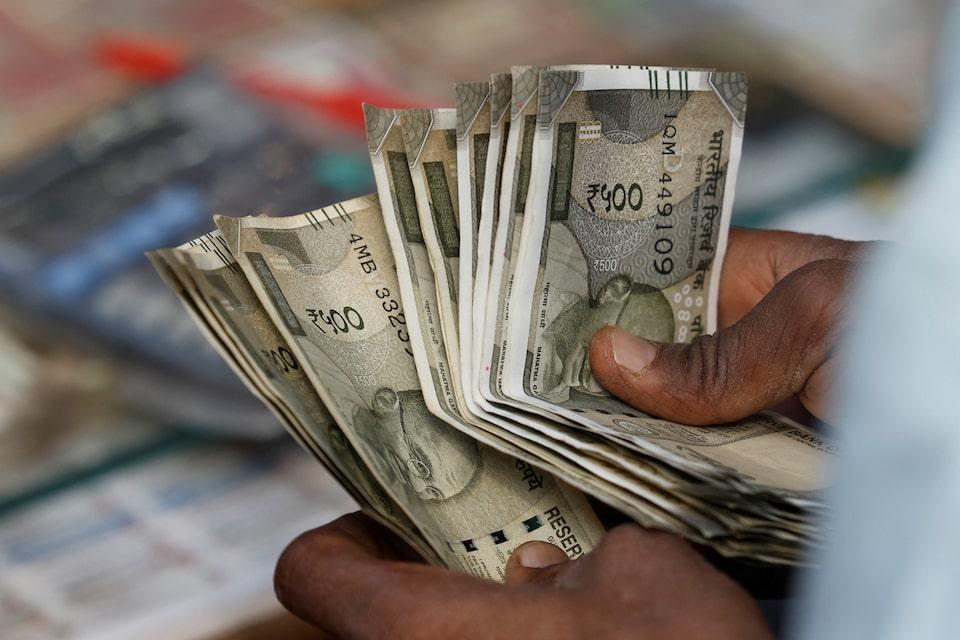
India's discount at $34 an ounce this week Premiums of $0.25-$0.50/oz charged in Japan Retail investment demand will likely be strong, ANZ says May 16 (Reuters) - Physical gold demand improved across most key Asian hubs this week as a pullback in global prices sparked buying interest among consumers. This week, Indian dealers were offering a discount of up to $34 an ounce over official domestic prices – inclusive of 6% import and 3% sales levies - compared to last week's discount of up to $16. Sign up here. "Demand was better this week compared to last, thanks to the price drop. But a lot of buyers are still waiting it out, hoping prices dip even more," said a Kolkata-based bullion dealer. Domestic gold prices were trading around 92,900 rupees per 10 grams on Friday after hitting a record high of 99,358 rupees last month. "Prices need to settle down a bit. If gold drops another 2,000 rupees and hovers around 90,000 rupees, we could see demand really take off," said a Mumbai-based bullion dealer with a private bank. Spot gold trading around $3,216.17 as of 0434 GMT on Friday. It hit an over one-month low of $3,120.14 on Thursday and is set for its biggest weekly decline since November. Dealers in top gold consumer China charged premiums of $9-$50 an ounce over the global benchmark spot price, compared with premiums of $42-$49 last week. "The correction in gold prices has for sure encouraged some bargain hunting and a good entry point for those who may have missed the move higher," said Ross Norman, an independent analyst. "We expect jewellery demand to stabilise over the coming quarters, retail investment demand will likely be strong given the compelling investment case for gold," ANZ said in a note. In Hong Kong, gold was sold at par to a $2 premium, while in Singapore gold traded at par with the global benchmark to a premium of up to $2.50 per ounce. In Japan, bullion was sold at a premium of $0.25 to $0.50. "Purchases from the general public have been strong as prices dropped," said a Tokyo-based trader. https://www.reuters.com/world/china/asia-gold-price-pullback-spurs-gold-demand-top-asian-hubs-2025-05-16/
2025-05-16 04:57
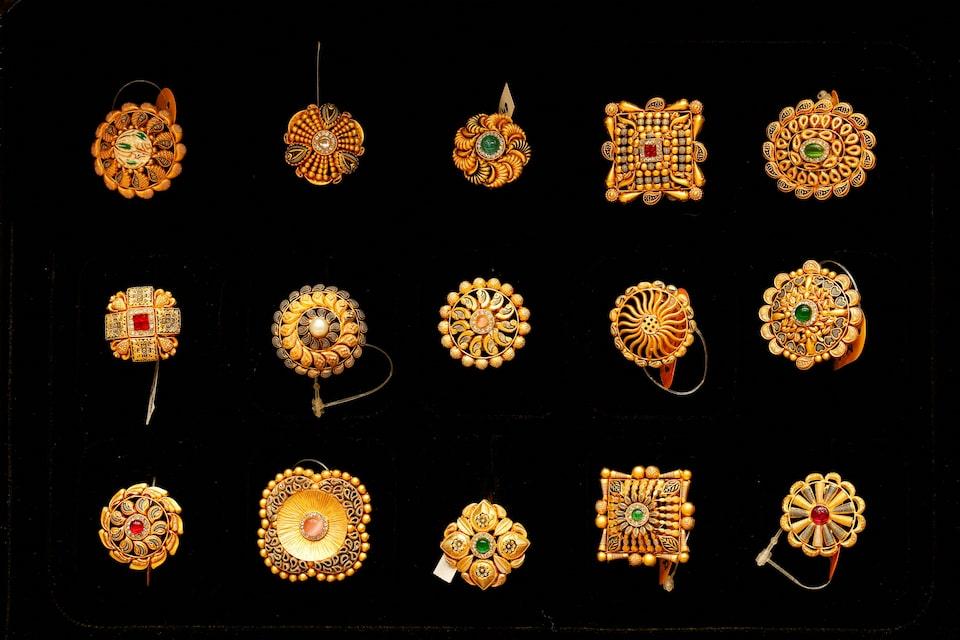
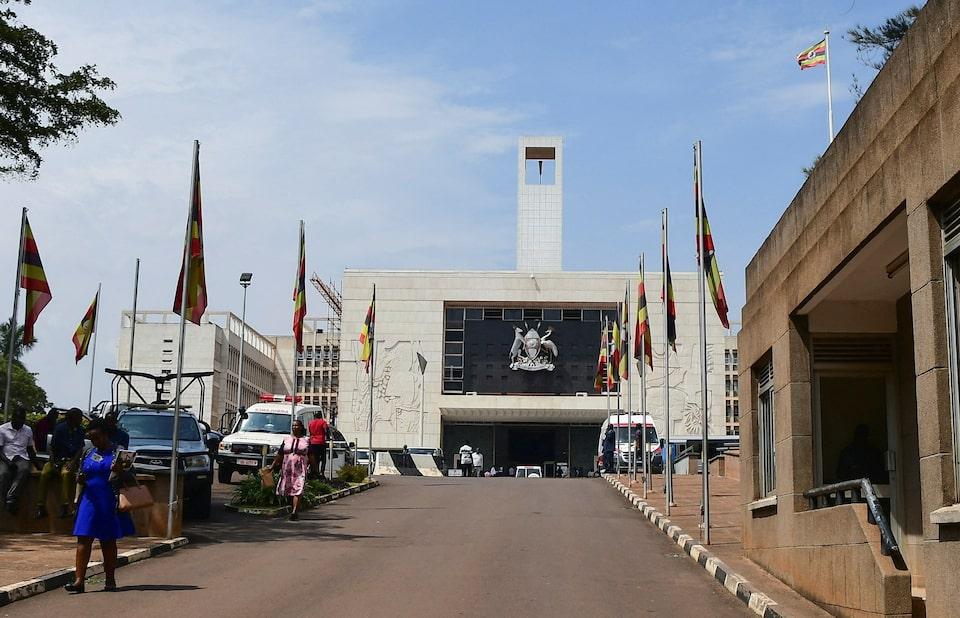
KAMPALA, May 15 (Reuters) - Uganda's lawmakers have approved the government's proposed budget for the fiscal year starting in July, with planned spending roughly steady compared with the previous year, the parliament said. The East African country will spend 72.4 trillion Ugandan shillings ($20 billion) in the 2025/26 (July-June) financial year, little-changed from the spending for the year ending next month which stands at 72.1 trillion shillings, parliament said in a post on the social media platform X late on Thursday. Sign up here. "The House has considered and approved the proposed annual budget for financial year 2025/2026," it said. Parliament did not say which sectors will receive majority of the funds but the government has previously said spending priorities in the next financial year would be in agro-industrialisation, tourism and minerals including petroleum. Finance Minister Matia Kasaija is due to present the budget to parliament formally on June 12 and provide more details on where the money will be used. Uganda is carrying out infrastructure projects to kick-start commercial production of crude oil next year. That infrastructure includes a $5 billion crude oil pipeline to help the landlocked country ship its oil to international markets via Tanzania. ($1 = 3,645.0000 Ugandan shillings) https://www.reuters.com/world/africa/ugandan-parliament-approves-proposed-202526-government-spending-2025-05-16/
2025-05-16 04:37
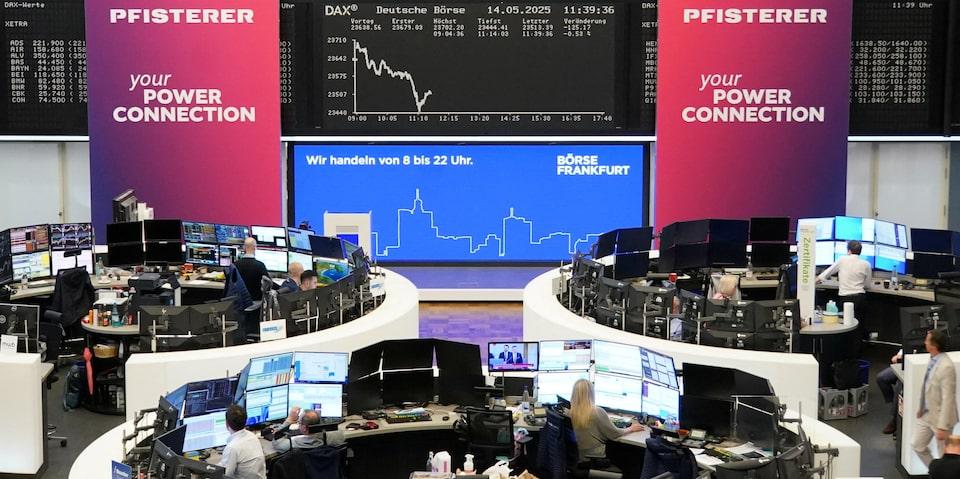
A look at the day ahead in European and global markets from Stella Qiu The week started with a bang but by Friday the risk-on rally - supercharged by a China-U.S. trade truce - was wearing thin as traders grew wary that the rebound had overshot and that more twists and turns lie ahead in the trade saga. Sign up here. Wall Street and European stock futures are little changed while Asian shares are mixed. Hong Kong's Hang Seng index (.HSI) , opens new tab fell 0.8%, weighed down by Alibaba's (9988.HK) , opens new tab more than 5% tumble after its earnings failed to impress investors. Australian shares fared better, rising 0.7%. The stock market now seems to be acting as if the tariff war never happened. The MSCI's broadest index of Asia-Pacific shares outside Japan (.MIAPJ0000PUS) , opens new tab is hovering just below a seven-month top. Even Chinese blue chips (.CSI300) , opens new tab have recovered all of the losses since April 2 when President Donald Trump announced "reciprocal" tariffs - since put on hold - on the rest of the world. Beaten-down bond markets cheered an unexpected fall in U.S. producer prices and a soft core retail sales print, prompting investors to nudge up their rate cut outlook for the Fed, pricing in a total of 56 basis points in rate cuts for this year, up from 49 bps. Ten-year benchmark Treasury yields fell 3 basis points to 4.424% on Friday, extending a 7 bps decline overnight. Trump has meanwhile been busy in the past few days talking up deals in the Middle East, including a potential nuclear deal with Iran. Trump's comments that a deal was near sent oil prices tumbling 2% on Thursday. The broader markets are keen, however, for progress in trade talks with China and details of more trade deals with other countries after an agreement with Britain. Let's not forget tariffs are still a lot higher than before Trump began his crusade on trade, and the highest since the 1930s. Walmart (WMT.N) , opens new tab, the world's largest retailer, said it would have to start raising prices later this month due to the high cost of tariffs, pointing to more pain ahead for U.S. consumers. Although the latest U.S. price data looked benign, it might be just a matter of time before the impact of tariffs starts to show up in the hard numbers that the Federal Reserve has said it needs to see before considering its response to trade-related uncertainties. The economic calendars in Europe and the U.S. are a bit thin. U.S. releases on Friday include import prices for April and the University of Michigan consumer sentiment survey, which might be useful for gauging the impact of Trump's tariff manoeuvring. Key developments that could influence markets on Friday: - University of Michigan consumer sentiment survey - U.S. import prices for April https://www.reuters.com/markets/global-markets-view-europe-2025-05-16/
2025-05-16 04:06
TOKYO, May 16 (Reuters) - Credit ratings agency Fitch on Thursday placed five Taiwanese life insurers under review for potential downgrades after a sharp surge in the Taiwanese dollar this month put stress on their balance sheets. Fitch put Cathay Life Insurance, Fubon Life Insurance, KGI Life Insurance, Nan Shan Life Insurance and Taiwan Life Insurance on "Rating Watch Negative" due to the "substantial currency mismatch" produced by their "sizeable" U.S. dollar holdings, the ratings agency said in a press release. Sign up here. "While insurers have hedged a majority of their balance sheet mismatches, we believe this strategy will come under pressure due to the surge in hedging costs, and unhedged positions continue to expose them to sharp currency swings," Fitch said. "The potential for further Taiwan dollar appreciation remains." Taiwan's dollar experienced an unprecedented 8% two-day surge at the start of this month in what analysts postulate was a scramble to repatriate U.S.-based investments, with confidence in the U.S. dollar tarnished by President Donald Trump's trade war, and as speculation built that U.S.-Taiwan tariff negotiations might include an agreement to weaken the greenback. Fitch estimates the insurers have sufficient capital buffers to withstand a 10% rise in the Taiwan dollar against the U.S. dollar from the start of 2025. Currently, the local currency is up about 8.8% this year. The ratings agency said it expects to resolve the reviews over the next three to six months. https://www.reuters.com/world/asia-pacific/fitch-puts-taiwan-life-insurers-downgrade-watch-after-currency-surge-2025-05-16/
2025-05-16 03:05
BENGALURU, May 16 (Reuters) - The Reserve Bank of Australia will cut its key rate by 25 basis points on Tuesday and twice more this year as core inflation remains within its target range while trade tensions fuel growth concerns, a Reuters poll found. After it held borrowing costs steady in April there has been a shift in expectations regarding the RBA, from three 25 basis-point cuts before last month's meeting to four this year amid global trade uncertainties and core inflation cooling to 2.9% in the March quarter. Sign up here. Recently, the United States and China agreed to a 90-day truce in their trade war. The Reuters poll, conducted May 12–15, showed near-unanimous expectations for the Reserve Bank of Australia to cut its key rate (AUCBIR=ECI) , opens new tab by 25 basis points to 3.85% at the end of its two-day policy meeting on May 20, with 42 of 43 economists forecasting the move. NAB was the only major bank to predict a 50 basis-point cut, while ANZ, CBA and Westpac all anticipate a quarter-point reduction. "Following tariff news at the start of April, we shifted our expectations. We're expecting the cash rate will go to 3.35% now. That shift was really a rough lesson of a very changing, uncertain global environment where global growth was likely to slow," said Madeline Dunk, economist at ANZ. "There are indications some of those tariff announcements are going to be wound back but the big question is how this actually shakes consumer confidence and how businesses are feeling... There is some clear softness in the business environment, which would support a rate cut from the RBA next week." In an April pre-meeting poll economists largely expected the cash rate to end this year at 3.60% but now 74%, or 29 of 39, of those who had a long-term view forecast the cash rate falling to 3.35% or lower by the end of the year. A poll conducted after April's meeting reflected a similar shift in sentiment. If realised, that would mark a cumulative 100 basis points of easing by the RBA this year - far less than the expected 250 basis points of rate cuts from the Reserve Bank of New Zealand in the current cycle, its counterpart across the Tasman Sea. "From our perspective, the economy will remain below trend and that implies further downward pressure on inflation... Growth below trend and inflation below the midpoint means monetary policy needs to be expansionary. And we think that implies another two rate cuts over the course of this year," said Lynda Bourke, senior economist at QIC. Australia's economy will grow 2.0% this year and 2.4% in 2026 while inflation is expected to average around 2.6% this year and next, according to another Reuters poll. While economists don't anticipate an aggressive easing cycle, a few warned the RBA could cut further if the labour market weakens given its past caution to protect jobs. "The labour market is really critical (and) if it turns more negative, then you could see sharper rate cuts than we are factoring in," Bourke added. (Other stories from the May Reuters global economic poll) https://www.reuters.com/markets/rba-lower-key-rate-by-25-bps-may-20-two-more-cuts-likely-this-year-2025-05-16/
2025-05-16 03:02
MUMBAI, May 16 (Reuters) - The Indian rupee is expected to strengthen at open on Friday, buoyed by widespread U.S. dollar weakness following soft economic data that supported expectations for a Federal Reserve rate cut later this year. The 1-month non-deliverable forward indicated that the rupee will open at 85.34 to 85.36 to the U.S. dollar compared with 85.55 in the previous session. Sign up here. The rupee has struggled throughout the week, weighed down by dollar demand for immediate payments, per bankers. A large state-run bank and two major foreign banks have been active dollar buyers. Despite the respite offered by the India-Pakistan truce, the rupee remains lower on the week through Thursday and has underperformed its Asian peers. The pull of U.S. dollar demand has shifted the near-term bias on the rupee from positive to neutral, a currency trader at a Mumbai-based bank said. “At these levels and considering the recent price action, it's hard to hold a high-conviction view,” the trader said. Meanwhile, India merchandise trade deficit in April stood at $26.42 billion, higher than $20 billion economists had expected. DOLLAR BACK TO LOSING WAYS The dollar index dropped on Thursday after a flurry of economic data, which was largely on the weaker side. U.S. control group retail sales declined 0.2% month-on-month versus expectations of a 0.3% rise. ANZ Bank pointed out that control group sales, which are used in calculating personal consumption expenditure in GDP and data, indicate a weak start to the current quarter for goods consumption. U.S. factory production too fell in April, down 0.4% month-on-month and as both durable and non-durable goods fell. Finally, the U.S. producer price index dropped 0.5% last month after an upwardly revised unchanged reading in March. The combination of the weak retail sales and an soft PPI increased the likelihood that the Fed will cut rates at least twice this year. U.S. Treasury yields declined on Thursday. KEY INDICATORS: ** One-month non-deliverable rupee forward at 85.53; onshore one-month forward premium at 16.25 paise ** Dollar index down at 100.64 ** Brent crude futures up 0.1% at $64.6 per barrel ** Ten-year U.S. note yield at 4.43% ** As per NSDL data, foreign investors bought a net $109.1 mln worth of Indian shares on May 14 ** NSDL data shows foreign investors sold a net $88.8 mln worth of Indian bonds on May 14 https://www.reuters.com/world/india/rupee-set-rise-after-soft-us-data-boosts-fed-rate-cut-odds-2025-05-16/