2026-01-19 14:49
Annual inflation rate at 2.4% Monthly inflation rate at -0.2% Core inflation rate slowest in a year OTTAWA, Jan 19 (Reuters) - Consumer prices in Canada rose a faster-than-expected 2.4% in December, largely due to the base effect of the previous year's sales tax break, but closely watched core measures of inflation cooled for the third consecutive month, data showed on Monday. Analysts polled by Reuters had forecast inflation would hold at November's 2.2% rate. Sign up here. On a monthly basis, the consumer price index declined by 0.2%, Statistics Canada data showed. The monthly decline was less than market expectations of a 0.3% decrease. The Canadian central bank's preferred measures of core inflation, CPI-median and CPI-trim, continued to ease and were the lowest since December 2024. CPI-median - or the value at the middle of the set of price changes in a month - cooled to 2.5% from 2.8% in November, while CPI-trim - which excludes the most extreme price changes - decreased to 2.7% from 2.9%. The deceleration in core prices should allow the Bank of Canada to keep rates on hold, economists said after the inflation report. Money markets expect rates to stay unchanged this year. The Canadian dollar was trading 0.3% higher at 1.3880 per U.S. dollar, or 72.05 U.S. cents, as the greenback posted broad-based declines. The Bank held its key policy rate steady at 2.25% in December and said this was about the right level to keep inflation close to its 2% target. "Despite a somewhat stronger than expected headline reading, today's data are still consistent with underlying inflation being close to 2%, and as a result we continue to see no change in the Bank of Canada overnight rate throughout 2026," said Andrew Grantham, a senior economist at CIBC Capital Markets. Jessica Hinds, a director in Fitch Ratings' Economics team, said Monday's data was "highly unlikely to change the calculus" for the central bank. The rise in headline inflation in December was driven by a temporary sales tax break on certain food and children's items authorized by the previous Liberal government headed by Justin Trudeau in the comparative December 2024 period. Restaurant prices, one of the segments affected by the tax holiday, were the largest contributor to the acceleration in the annual inflation rate in December 2025. Moderating the acceleration in the annual rate was a year-over-year decline in prices for gasoline, which fell 13.8% in December after a 7.8% decline in November. Excluding volatile food and energy, inflation rose 2.5% in the month. Services price inflation in December accelerated to 3.3% from 2.8% in November, while goods prices rose by 1.2% after 1.5% in the previous month. On an annual average basis, prices increased 2.1% last year, following a 2.4% rise in 2024. https://www.reuters.com/world/americas/inflation-canada-accelerates-24-december-key-measures-ease-2026-01-19/

2026-01-19 14:03
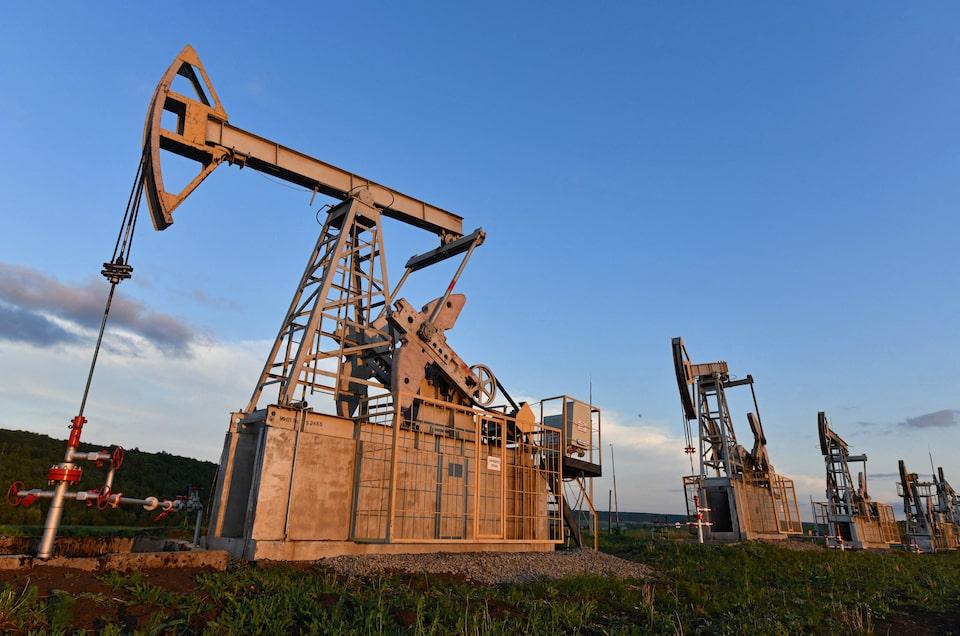
Oil and gas revenue make up 25% of federal budget proceeds Russia's oil price in roubles down 53% in December on year Finance ministry will release January data on February 4 MOSCOW, Jan 19 (Reuters) - Russia's federal budget proceeds from taxes on oil and gas are expected to drop by 46% in January from the same month in 2025 due to a weaker oil price and a stronger rouble, Reuters calculations showed on Monday. The share of oil and gas revenue accounts for around a quarter of the Russia's federal budget proceeds and are an important part of the funds for Kremlin's military campaign in Ukraine. Sign up here. The revenue will likely to fall to around 420 billion roubles ($5.41 billion) in the first month of the year, the lowest since August 2020 when the COVID pandemic crippled global demand for fuel. Reuters calculations are based on oil and gas production data, refining, and supplies on domestic and international markets. Russia's indicative rouble-denominated price of oil for tax purposes collapsed in December by 53% year-on-year to 3,073 roubles per barrel as the rouble exchange rate jumped 30.6% from the same month in 2024. The finance ministry will publish its data on the budget's oil and gas revenue on February 4. The federal budget is assumed to collect 8.957 trillion roubles from oil and gas sales this year. Total budget revenues for 2026 are seen at 40.283 trillion roubles. Last year, Russia's federal budget revenues from oil and gas dropped 24% to 8.48 trillion roubles, the lowest level since 2020. ($1 = 77.6500 roubles) https://www.reuters.com/business/energy/russias-oil-gas-budget-revenue-set-sink-46-january-reuters-calculations-show-2026-01-19/
2026-01-19 13:59
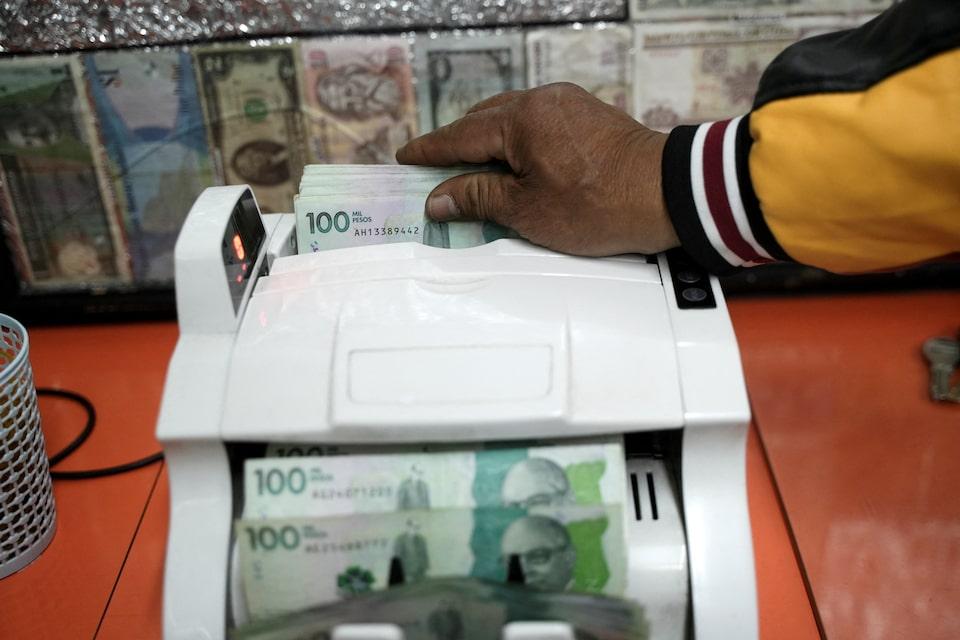
LONDON, Jan 19 (Reuters) - JP Morgan's strategists cut the bank's view on emerging market currencies to 'market weight' from 'overweight' on Monday, saying short-term positioning was now "overbought" following a strong year-long rally. The U.S. investment bank, whose views are closely watched by traders, also cut South Africa's rand to 'market weight' from 'overweight' having already cut risk in central and eastern Europe and adjusted its view on the Mexican peso over the last week. Sign up here. "There are times to reduce risk in the short term due to overcrowding and this is one of those times in our view," JP Morgan's strategists said in a note to clients. International investors rediscovered their appetite for emerging market assets last year despite the volatility of U.S. trade tariffs, as the lure of attractive interest rates and cheaper asset prices has been given extra impetus by a near 10% drop in the dollar. The move back in has lifted MSCI's emerging market currency index (.MIEM00000CUS) , opens new tab roughly 7.5% over the last 12 months, EM local currency debt has returned almost 20%, while MSCI's EM stocks index (.MSCIEF) , opens new tab has surged nearly 40%. JP Morgan's analysts said a fresh glut of inflows into EM since the start of the year had pushed the bank's in-house EM FX Risk Appetite Index into significantly overbought territory and well above the threshold that triggers a "sell signal". "We have flagged the build-up of positioning in EM currencies and this is now enough for us to take profits in the short term," they added. They acknowledged that emerging markets had also had to grapple with "a lot of other noise" since the start of the year, starting with Venezuela, Iran, U.S. Federal Reserve independence, U.S. Supreme Court rulings and now Greenland with new threats of tariffs. While these developments were not the key driver of the change in their EM foreign exchange view, JP Morgan analysts flagged that the key areas of worry could start to feed off each other. "We often find that once the market is already over-positioned it can become nervous about newsflow that it might otherwise downplay," they said. "Given the low starting levels of vols and risk premia globally, this nervousness could show in a short-term pull-back." https://www.reuters.com/business/finance/jp-morgan-cuts-emerging-market-fx-view-overcrowding-worries-2026-01-19/
2026-01-19 13:26
BUENOS AIRES, Jan 19 (Reuters) - Mexico's economy will stay on a slow track this year amid high uncertainty over the future of the country's trade deal with the United States and Canada (USMCA), a Reuters poll among economists found. Risks to economic growth are tilted to the downside due to concerns about U.S. President Donald Trump's lack of support for the existing agreement that is set for review by a July 1 deadline, analysts said. Sign up here. At the same time, Mexico's inflation outlook is worsening as tax and tariff hikes kick in at the start of 2026, leading the central bank to tighten its forward guidance earlier this month. Gross Domestic Product (GDP) in Latin America's No.2 economy after Brazil is set to grow just 1.3% this year and 1.9% in 2027, according to the median forecast of 29 economists polled January 12-16. Still, that is better than the modest 0.4% growth expected in the year just ended as a result of relatively steep interest rates, fiscal consolidation and worries related to U.S. tariffs. Preliminary GDP data for 2025 are due on January 30. "The downside bias in the balance of risks to economic growth in 2026 remains. In particular... a tougher-than-expected trade agreement negotiation," said Alejandro Saldaña, chief economist at Ve por Mas. Of a total of 12 respondents to an additional question on risks to GDP growth forecasts, eight said they leaned toward weaker expansion, while four viewed a possible better-than-expected outcome. Among the latter, Alberto Ramos, Goldman Sachs head of Latin America economic research, said: "The risk is probably slightly skewed to the upside in part because we have a positive view of the U.S. economy. "If Mexico's access to the U.S. market becomes more difficult or more onerous (from the USMCA review) we will revisit our macro outlook," he added. STRICTER RULES? This could include stricter rules of origin that trouble automakers as well as more scrutiny on trade flows between Mexico and China to deal with fears of import triangulation from the Asian nation. Meanwhile, headline consumer prices in Mexico are likely to rise 3.8% throughout 2026 on average 12-month terms, matching last year's average 3.8% rate, the survey showed. In 2027 inflation is seen inching down to 3.7%. "Inflation could be higher than forecast if some of the shocks expected at the start of the year prove to be less transitory than anticipated," said Saldaña at Ve por Mas. "Considering the challenges on the inflation horizon and that the monetary stance is currently in neutral territory, the central bank has almost no room to further adjust its monetary stance," he said, referring to rate cuts. In reply to an extra question on inflation risks, nine participants saw chances of higher pressures than forecast, two said they may be lower, and one qualified them as "symmetrical". "During the summer, we could see a notable price increase as a result of the FIFA World Cup in Mexico, which could drive up service prices... amid increased tourist inflows", Scotiabank analysts wrote in a report. "Likewise, we could see some pressures from the 13% increase in the minimum wage as well as higher taxes on imported products from Asia without trade agreements with Mexico and on health-harmful products." Mexico's central bank will likely keep its benchmark rate unchanged at 7.00% in the first quarter of 2026 and then cut it by 50 basis points the next one, leaving it at 6.50% for the foreseeable future, the poll showed. (Other stories from the Reuters global economic poll) https://www.reuters.com/world/americas/mexico-economy-stay-slow-track-2026-amid-trade-deal-uncertainty-2026-01-19/

2026-01-19 12:42
LONDON, Jan 19 (Reuters) - The board of Swiss speciality chemicals maker Clariant (CLN.S) , opens new tab has proposed adding BP (BP.L) , opens new tab Chair Albert Manifold to its ranks at its annual general meeting on April 1, Clariant said on Monday. The board also proposed the re-election of Chair Ben van Beurden, former CEO of Shell (SHEL.L) , opens new tab. Sign up here. Clariant, whose chemicals are used in smartphone and electric vehicle production, is reducing spending through job cuts, production facility closures and procurement reductions to bolster its margins as it waits for a meaningful rebound in demand. The Swiss firm has rejected allegations by BP Europe and an ExxonMobil (XOM.N) , opens new tab subsidiary, which are seeking damages for breaching competition law in the ethylene purchasing market. https://www.reuters.com/business/clariant-board-wants-add-bp-chair-manifold-its-ranks-2026-01-19/

2026-01-19 12:02
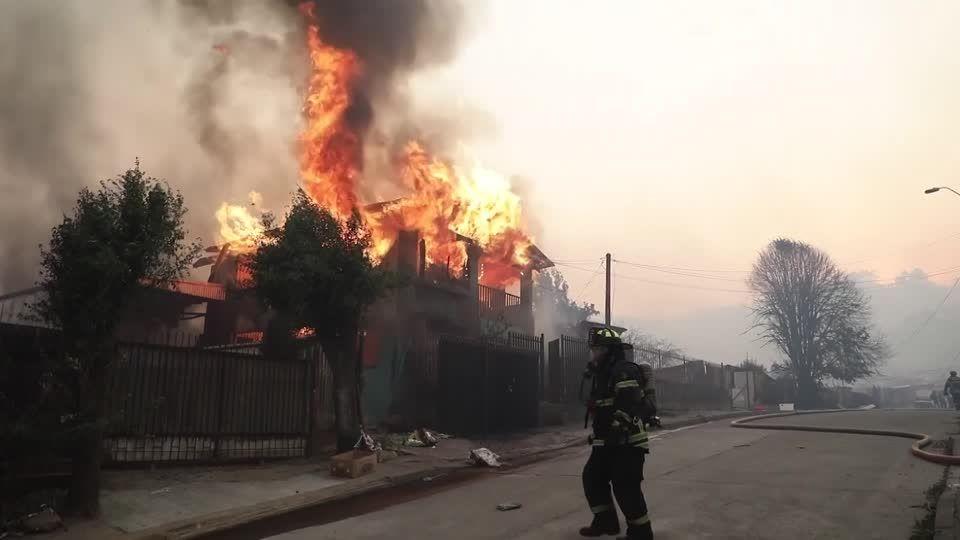
Fast-moving wildfires being worsened by intense heat, winds Firefighters battling 34 active blazes spreading towards cities Fires left 19 dead and destroyed hundreds of homes PENCO, Chile, Jan 19 (Reuters) - Wildfires in Chile have killed at least 19 people, authorities said on Monday, as the government carried out mass evacuations and fought over 30 blazes exacerbated by intense heat and high winds. While weather conditions overnight helped control some fires, the largest were still active, with adverse conditions expected throughout the day, Security Minister Luis Cordero said at a news briefing on Monday. Sign up here. "The projection we have today is of high temperatures," Cordero said, and the main worry was that new fires would be triggered throughout the region. Parts of central and southern Chile were under extreme heat warnings with temperatures expected to reach up to 37 Celsius (99 Fahrenheit). HUNDREDS OF HOMES DESTROYED Most of those killed were in Penco, a small coastal city just north of the regional capital of Concepcion. On Monday morning, thousands of residents in the area sifted through the rubble of their homes as firefighters continued to extinguish nearby fires. Ana Caamano, 51, was one of those residents, rummaging through the ashes of the home in Lirquen that she was raised in and later inherited from her parents. Among the wreckage was the corpse of one of her four dogs, some charred rings and a metal ladle. "They're not that important," Caamano said, looking at the rings in her hand. "But they're memories." Caamano and her husband Luis, who was cleaning up the wreckage of their garage to make a temporary shelter, were visiting family on Saturday when the fires broke out. Their son, Franco, was home and said he was trying to hose down the house when he noticed the blaze getting closer, but a sudden strong wind brought in a black cloud of smoke that forced him to flee, leaving everything behind. "It came like lightning, it was so quick," Franco said, echoing what many residents remembered, a fast-moving fire that gave them almost no time to flee. Authorities say 325 homes have been destroyed and 1,100 more are being evaluated. STATE OF EMERGENCY DECLARED IN NUBLE, BIO BIO As of late Monday afternoon, Chile's CONAF forestry agency said firefighters were combating 34 fires across the country, the largest of which were in regions of Nuble and Bio Bio, where President Gabriel Boric declared a state of catastrophe. Over 35,000 hectares (135 square miles) have been razed so far, an area about the size of Philadelphia, with the largest fire surpassing 14,000 hectares on the outskirts of the coastal city of Concepcion. Miguel Castillo, a professor and researcher at the University of Chile's Forest Fire Laboratory, said a number of factors made the recent fires so deadly, including the amount of dry material and persistent high temperatures. "There have been several consecutive days over 30 degrees (Celsius) and for the Concepcion area that's rare," Castillo said. "One or two days are common, but not four or five." Castillo added that fires are more difficult to put out once they reach a certain size and have been complicating by strong, shifting winds. "With those extreme conditions, it practically becomes an uncontrollable monster," he said, adding that most fires last two or three days, but the risk is multiple active fires combining before authorities can control them. Both Chile and Argentina rang in the new year with heat waves which have continued into January. Earlier this month, wildfires broke out in Argentina's Patagonia, burning around 15,000 hectares. https://www.reuters.com/sustainability/climate-energy/chile-wildfires-leave-19-dead-amid-extreme-heat-scores-evacuated-2026-01-19/