2025-05-15 22:15
May 15 (Reuters) - Utility Vistra (VST.N) , opens new tab said on Thursday it would acquire seven natural gas generation facilities, with a combined capacity of nearly 2,600 megawatt, from Lotus Infrastructure Partners for $1.9 billion, as it looks to meet growing power demand. The U.S. Energy Information Administration estimates electricity consumption in the country to reach record highs in 2025 and 2026, driven by surging demand from data centers looking to match Big Tech's AI ambitions. Sign up here. The deal includes five combined cycle gas turbine facilities and two combustion turbine facilities located across PJM, New England, New York and California, Vistra said. PJM Interconnection is a regional transmission organization that coordinates the movement of wholesale electricity in parts of the Eastern United States. It covers parts of 13 states from Illinois to New Jersey. The acquisition is expected to expand Vistra's footprint in key competitive markets and serve growing power demand, while exceeding its mid-teens levered return target, according to its CEO Jim Burke. Vistra expects to fund the transaction with the assumption of an existing term loan from Lotus and cash on hand. Greenwich, Connecticut-based Lotus is a private equity firm specializing in energy infrastructure investments. The power company said the transaction — expected to close sometime in late 2025 or early 2026 — is subject to certain regulatory approvals, including from the Federal Energy Regulatory Commission and the Department of Justice. Shares of Vistra rose nearly 1.9% in extended trading. https://www.reuters.com/business/energy/utility-vistra-buy-natural-gas-assets-19-billion-2025-05-15/

2025-05-15 21:21
LIMA, May 15 (Reuters) - Peru's interior ministry said on Thursday that a suspect in the killing of 13 miners in the northern district of Pataz has been arrested in Colombia. The ministry said in a post on X that the arrest of Miguel Rodriguez, alias "Cuchillo" or "Knife," followed extensive intelligence work and coordination between the Peruvian and Colombian National Police and Interpol. Sign up here. Earlier this month, workers at a gold mine in northern Peru were kidnapped and murdered by illegal miners that were allied with criminal groups, according to police and industry sources, among a wave of violence over control of the area, which has forced the government to establish a military facility there. A lawyer for the suspect, Kevin Diaz, told local radio station RPP that his client had been in Venezuela for "a few days" before returning to Colombia, where he was arrested. Rodriguez had previously denied involvement in the killings in an interview with a local television station. Illegal mining in Peru, mainly for gold, has begun moving more money than drug trafficking, between $3 billion and $4 billion, per year, according to the government. https://www.reuters.com/world/americas/peru-says-suspect-miner-killings-arrested-colombia-2025-05-15/

2025-05-15 21:08
ORLANDO, Florida, May 15 (Reuters) - TRADING DAY Making sense of the forces driving global markets Sign up here. By Jamie McGeever, Markets Columnist Softer bond yields cushion stocks Cooler inflation pressures in the shape of surprisingly soft U.S. economic data and a slide in oil prices helped bring down Treasury yields and support stocks on Thursday, although the recent surge on Wall Street does appear to be losing steam. In my column today I look at how the decline in U.S. inflation - a healthy development, in most people's eyes - is coming with an unwelcome side effect - rising real yields. More on that below, but first, a roundup of the main market moves. I'd love to hear from you, so please reach out to me with comments at [email protected] , opens new tab. You can also follow me at @ReutersJamie and @reutersjamie.bsky.social. Trading Day is also sent by email every weekday morning. Think your friend or colleague should know about us? Forward this newsletter to them. They can also sign up here. If you have more time to read, here are a few articles I recommend to help you make sense of what happened in markets today. Today's Key Market Moves Inflation - calm before the storm? A decline in European and U.S. bond yields provided the springboard for equity markets on Thursday. Or at least a cushion. Thursday's U.S. bond market rally will also have come as relief to policymakers in Washington as yields pulled back sharply across the curve, but not before longer-dated yields hit fresh one-month highs. The 10-year yield hit 4.55% and the 30-year yield reached 5.00% before sliding back. The recovery in global stock prices since the 'Liberation Day' tariff debacle early last month has been impressive, but understandably, that momentum is fading. For that momentum to be rekindled, a further decline in bond yields may be required. Although figures this week showed U.S. consumer and producer inflation cooled in April, tariffs have yet to bite and price pressures are tilted to the upside. Worries about the U.S. public finances are intensifying too. The Trump administration's plans to extend tax cuts, coupled with what many analysts consider to be a lack of commitment to reduce spending, will widen the budget deficit, perhaps to more than 7% of GDP. Add to that the apparent desire among foreign investors to reduce their exposure to U.S. assets, and Treasuries' safe haven allure has been diminished. Just when the deficit is widening. All of this means the 'term premium' - the extra compensation investors demand to hold longer maturity Treasuries rather than rolling over short-dated ones - is near the highest in over a decade. The yields on 10- and 30-year bonds are now not too far away from levels that were the norm before the Global Financial Crisis. Previous spikes in the term premium have cheapened bond prices sufficiently to attract overseas money back into the market, especially the 7-10 year part of the Treasury curve, says Bank of New York's John Velis. But this hasn't happened this time around, suggesting yields may have further to rise. It's notable that the 30-year yield fell only 5 basis points on Thursday, 3-4 basis points less than any other point on the curve. Meanwhile, the main focus for investors in Asia on Friday will be Japan's first quarter GDP figures. Economists polled by Reuters expect an annualized contraction of 0.2%, which would be a significant drop from the 2.2% expansion the previous quarter and the first in a year. These are backward-looking numbers but the immediate outlook is highly uncertain, at best - the tariff turbulence has put the yen back under pressure and has, according to many analysts, put the Bank of Japan's rate-hiking cycle on ice. US inflation progress stokes real yield problem Few would find fault with the steady, gradual decline in U.S. inflation, but it has recently come with an unwelcome side effect: rising 'real' borrowing costs. With the Federal Reserve's official policy rate on hold and the benchmark 10-year Treasury yield edging higher, inflation-adjusted interest rates – so-called real rates – are rising, effectively tightening monetary policy and financial conditions. The real yield on the 10-year Treasury note is now approaching 2.20%, the highest in a decade, based on the April headline annual CPI inflation rate of 2.3%. And the real fed funds rate has risen from a low of 1.50% in January to eclipse 2.00%, the highest in more than six months. While real borrowing costs are not at levels that will trigger alarm bells with Fed officials, CEOs or CIOs, the direction of travel is pretty clear, and is one more factor that could weigh on the activity of consumers, businesses, and investors in an environment already shrouded in a thick fog of uncertainty. Additionally, for policymakers, it shines a light on the constant struggle to determine the optimal interest rate at any given time. In Fed Chair Jerome Powell's press conference earlier this month after the central bank left its fed funds target range on hold at 4.25-4.50%, he said no fewer than eight times that rates are "in a good place". Current policy is "somewhat" and "modestly or moderately" restrictive, he added. The higher real rates grind, however, the tighter policy gets, unless the Fed resumes its easing cycle, which has been on pause following cuts of 100 basis points between last August and December. The tariff-fueled uncertainty and volatility of recent months has helped to extend that pause and, thus, enabled real rates to rise. R-STAR, MAN Real borrowing costs can send vastly different signals from their nominal equivalents. For example, Japan's official policy rate and long-dated bond yields are the highest in years, but the real policy rate is deeply negative and by far the lowest among the G4 central banks. In the U.S., the signaling behind today's rate moves is far from clear. If real yields are rising because investors are demanding a risk premium to hold dollars and Treasuries, then it's a cause for concern. If the upward shift reflects strong growth expectations, then that's much more positive. But, regardless, one thing is evident. The higher U.S. real rates grind, the further away they move from 'R-Star', the amorphous real rate of interest that neither stimulates nor crimps economic activity when the economy is at full employment. Two closely watched R-Star models partly constructed by current New York Fed President John Williams suggest the optimum real interest rate at the end of December was 0.8% or 1.3%, both the lowest in years. These figures will be updated for the January-March quarter at the end of this month. Fed rate-setters' median projection for the natural real interest rate is around 1.0%, and this view will be updated next month. These projections assume inflation at the Fed's 2% target, which it hasn't been for years. The R-Star concept has come under heavy criticism since the pandemic. Williams defended it in July last year, saying it is a fundamental part of all macroeconomic models and frameworks. "Pretending it doesn't exist or wishing it away does not change that." But he also cautioned that R-Star should not be "overly" relied upon when setting appropriate monetary policy "at a given point in time" given the uncertainty surrounding it. So as real rates move further away from this theoretical sweet spot, what, if anything, is the real-world impact? Right now, financial conditions are loosening as markets calm after the market turmoil wrought by the 'Liberation Day' tariff tantrum last month. But if you exclude that uniquely volatile episode, conditions have been steadily tightening since September last year, Goldman Sachs's U.S. financial conditions index shows. Further upside for real yields from here may be limited if inflation ticks higher in the coming months as Trump's tariffs kick in. But worries over U.S. debt and deficits are beginning to weigh on the long end of the bond market again. As investors continue to monitor countless economic variables to determine where the U.S. economy is heading, elevated real yields are one they should watch closely. What could move markets tomorrow? Opinions expressed are those of the author. They do not reflect the views of Reuters News, which, under the Trust Principles , opens new tab, is committed to integrity, independence, and freedom from bias. https://www.reuters.com/markets/global-markets-trading-day-graphic-pix-2025-05-15/

2025-05-15 20:49
YENAGOA, Nigeria, May 15 (Reuters) - Nigeria's Trans Niger Pipeline, a major oil artery transporting crude from onshore oilfields to the Bonny export terminal, burst and spilled oil into the local B-Dere community in Ogoniland, an environmental rights group said on Thursday. This is the second incident affecting the Trans Niger Pipeline in two months. In March, the pipeline was shut after a blast that caused a fire. Sign up here. Nnimmo Bassey, executive director of Health of Mother Earth Foundation, said the spill, which occurred on May 6, was yet to be stopped, adding that the slow response showed a lack of care for the people and was "unconscionable." "We are in a disaster zone and further disasters can erupt from even an accidental spark of fire," he said. "The fact that this spill that happened a week ago is yet to be stopped sends a very strong point to why the government should focus on cleaning up Ogoniland and not seek to open new oil wells. The old wells should be shut down, and decommissioned." Ogoniland, one of Africa's earliest crude oil producing areas, has been dealing with oil pollution for decades, but its profits have often flowed to the big oil companies and to Nigerian state coffers. Local residents have long complained of toxic waste and little compensation. Nigerian oil consortium Renaissance Group, which now owns Shell's former onshore subsidiary that operates the pipeline, confirmed the explosion and said a team of investigators has been dispatched to determine the cause of the spill. The Trans Niger Pipeline (TNP), with a capacity of around 450,000 barrels per day, is one of two conduits that export Bonny Light crude from Nigeria, Africa's biggest oil producer. It was not immediately clear whether the TNP was shut. TNP did not immediately provide a statement when asked for comment. A prolonged outage could, however, force its operators to declare force majeure on Bonny Light exports. Pipeline sabotage and crude theft are some of the major reasons that forced oil majors like Shell, Exxon Mobil, Total and Eni to sell their onshore and shallow-water fields in Nigeria to concentrate on deep-water operations. Renaissance Group, which includes Nigerian exploration and production companies Aradel Energy, First E & P, Waltersmith, and ND Western, along with the international energy group Petroline, completed the acquisition of Shell's former onshore assets in March. https://www.reuters.com/sustainability/climate-energy/nigerias-trans-niger-oil-pipeline-bursts-spills-crude-rights-group-says-2025-05-15/

2025-05-15 20:41
MEXICO CITY, May 15 (Reuters) - The Bank of Mexico lowered its benchmark interest rate by 50 basis points for the third consecutive meeting on Thursday, as inflation remains within the bank's target range but uncertainty persists around trade tensions and a weak economy. The unanimous decision by the bank's governing board, which was expected by analysts polled by Reuters, brings Mexico's benchmark rate to 8.50%, the lowest since August 2022. Sign up here. In a statement announcing the decision, the Mexican monetary authority said it could consider cutting the rate by a similar magnitude at future meetings. Headline inflation in Latin America's No. 2 economy hit 3.93% on an annual basis in April, accelerating from the previous month but still within the central bank's target range. Banxico, as Mexico's central bank is known, targets inflation at 3%, plus or minus a percentage point. The bank said its board took into account Mexico's weak economic activity, and also considered trade tensions with the United States, its top trading partner. "The changes in economic policy by the new U.S. administration have added uncertainty to the forecasts," Banxico said, warning that U.S. policies could move inflation in either direction. Analysts polled by Reuters in late April said the uncertainty around U.S. President Donald Trump's tariffs will likely hurt private spending and investment in Mexico throughout the rest of the year. Mexico's gross domestic product expanded just 0.2% in the first quarter, according to official data, allowing the country to narrowly avoid a technical recession. A Reuters poll forecast the same rate of growth for the full year. For economic growth, "the environment of uncertainty and trade tensions pose significant downward risks," Banxico said. The bank's statement on Thursday announcing its rate decision struck a "growing reluctance to move too quickly," said Andres Abadia, chief Latin America economist at Pantheon Macroeconomics, pointing out that it mentioned "persistent economic weakness" three times. But Alberto Ramos, head of Latin America economic research at Goldman Sachs, said Banxico "remains inclined to continue to frontload the rate normalization cycle" and "does not seem to be particularly defensive in the face of external uncertainty." Both Abadia and Ramos expect another 50 basis point cut at the bank's meeting next month. https://www.reuters.com/world/americas/mexico-central-bank-cuts-interest-rate-flags-trade-tensions-weak-economy-2025-05-15/

2025-05-15 20:29
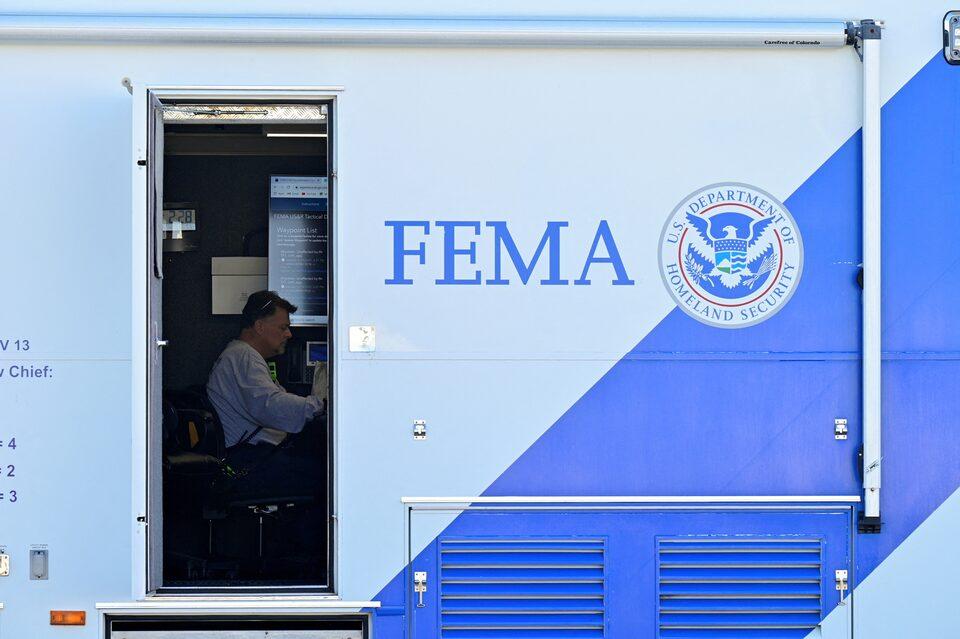
Hurricane preparation 'has not been normal,' according to slide seen by Reuters FEMA head Richardson says agency is prepared for disasters in staff town hall Richardson says states will need to pay greater share of disaster response May 15 (Reuters) - The loss of key staff and low morale at the Federal Emergency Management Agency have derailed the agency's planning for the June 1 start of hurricane season, according to an internal document seen by Reuters, though the agency chief said on Thursday that FEMA is well prepared. The agency has lost 2,000 full-time staff, or roughly one third of its total, to terminations and voluntary incentives as part of an effort by President Donald Trump to slash the size and cost of the federal bureaucracy. Sign up here. The internal document underscores the potential challenges facing the agency, including possible issues with morale, a lack of coordination with states and resource constraints as it prepares for the start of hurricane season. Trump and Department of Homeland Security Secretary Kristi Noem have called for the disaster relief agency to turn over much of its work to the states while also floating the idea of abolishing it. FEMA is part of DHS. The concerns about morale and staffing were included in a 19-page slide deck titled "Hurricane Readiness Complex Problem Solving" and prepared for acting FEMA Administrator David Richardson to use in a meeting with agency leaders, according to a person with knowledge of the matter and a statement from a DHS official. Preparation at FEMA "has not been normal" for what forecasters are predicting to be a busier-than-average Atlantic hurricane season, according to one of the slides seen by Reuters. "Most of that process has been derailed this year due to other activities like staffing and contracts," another line in the slide deck reads in an apparent reference to the staff cuts. "If an organization hears it should be eliminated or abolished, the resources and cooperation are not there," one line in the presentation says. Another reads: "Quality of people lost that cannot be replaced right away." STATES WILL BEAR HIGHER COST Earlier this week Reuters reported that FEMA has sharply reduced training for state and local emergency managers this year, possibly leaving storm-prone communities less prepared to handle the aftermath of a big storm. Richardson, who took the helm at FEMA last week in an abrupt change of leadership, laid out his vision to staff in a Thursday town hall and said he had met with staff earlier in the day to address the year's disaster planning. He said he had been working to address what he described as a lack of clarity within FEMA about planning for hurricane season. "We are to some degree, to a great degree ready for disaster season '25," he said. He vowed to narrow the agency's operations to only what is spelled out in law and to push more of the cost burden for disaster response down to the states, in line with the wishes of the Trump administration. "FEMA 2 will look different than FEMA 1. There will be much more emphasis on the states to do response and recovery, to some degree preparedness as well," Richardson said. Richardson said states would in the future bear half the costs for responding to natural disasters, up from 25% under current cost-sharing levels. He had advised staff to alert governors to the possibility of an increased cost-share in disaster response. "I said, 'Hey, when you talk to the governor, give them a heads up that 50/50 might be coming. It's 75/25 right now, but 50/50's coming,'" Richardson said. "So part of it is letting people know as we transition, okay, that if it doesn't happen this year, it will very, very likely happen next year." State officials have told Reuters that they will need more time and resources if they are expected to make up for FEMA funding and staffing cuts. Richardson, a former Marine artillery officer and combat veteran, also said there would be instances in which states needed more help financially and that FEMA would provide it. The Thursday town hall was the second time Richardson met with staff after replacing acting FEMA chief Cameron Hamilton last week. In his initial address to staff, Richardson said he would "run right over" anyone who resisted his efforts to reform the agency. https://www.reuters.com/world/us/fema-chief-says-agency-will-raise-state-burden-disasters-50-2025-05-15/