2025-05-15 11:29
NAPERVILLE, ILLINOIS, May 14 (Reuters) - China’s soybean imports recently dipped to a 12-year low, and trade estimates suggest the overall intake pace could still be sluggish by mid-year. But top supplier Brazil has harvested a record crop and its latest export volumes to China have hit all-time highs. Sign up here. So how does this all fit together? For one, soybean import data from Chinese customs has not recently aligned with supplier export data, so much so that the U.S. Department of Agriculture last year stopped using China's customs data for its estimates. And in a slightly satisfying twist for U.S. soybean exporters, Chinese buyers may have been able to use a few extra U.S. bean cargoes several months back during the peak U.S. shipping season. But that might not be the case this time around. SCENARIO RUNDOWN China’s customs reported March-April soybean imports at just 9.6 million metric tons, down 32% on the year and the smallest for the period since 2013. That held China’s total imports through the first seven months of 2024-25 to a six-year low. The laggard pace owes partially to extended clearance times at customs, something not necessarily new to Chinese importers. Brazil also recently reaped a record soybean crop, but harvest delays and logistical issues slowed the export ramp-up that typically begins in February. Brazil’s February-April shipments to China still notched an all-time high, some 13% more than the year-ago record. But since the start of the U.S. marketing year in September, U.S. bean exports to China are at a 12-year low aside from the two previous trade war years. Additionally, Brazilian volumes to China between September and January were down nearly 40% on the year. This might explain some of the shockingly low Chinese import numbers, which have strained domestic processing and tightened soymeal supplies. Perhaps Chinese buyers were too lax in the anticipation of Brazil’s monster crop, and some additional U.S. purchases might have filled some gaps. Given the trade data discrepancies, though, analysts should monitor the monthly Chinese customs numbers to ensure the recent record shipments are actually showing up in the data. CLASHING FORECASTS Analysts peg China’s May and June soybean imports to reach roughly 11 million tons apiece to ink a new record for the period, up 3% versus last year. But that would still keep year-to-date imports at six-year lows with just three months left in the marketing year. This is somewhat peculiar as China accounts for more than 70% of Brazil’s soybean exports, which are expected at all-time highs this year. Record Brazilian exports could indeed blow China’s forecast, especially because Brazil’s late start plus a possible May slowdown mean that elevated export volumes could persist well through mid-year. This week, China boosted its 2024-25 soy import estimate to 98.6 million tons from 94.6 million previously. The new 2024-25 outlook would allow China’s July-September imports to fall 9% from the year-ago record if assuming the analyst estimates for May and June. That doesn’t exactly fit with the meaty Brazilian export narrative. USDA estimates China’s 2024-25 imports at 108 million tons, down from 112 million in the previous year. The agency has maintained import figures above the official Chinese ones for a couple years now as exporter data suggests China’s figures are too low. And they have indeed been too low, evidenced by the bump in China’s 2024-25 import target, which was first issued a year ago. The estimate might still be light as China’s import numbers for the last two seasons rose even further from this point, the 2023-24 figure by another 9%. But here’s where the news might turn grim for U.S. soybean exporters. Brazil’s late start to shipping means that elevated volumes could extend into September or October, when the U.S. soy season usually starts to build. This phenomenon has cut into U.S. export potential in past years. That situation could be optimal for China in its effort to reduce reliance on American soybeans, potentially offering Beijing leverage in the trade war with Washington. Karen Braun is a market analyst for Reuters. Views expressed above are her own. https://www.reuters.com/markets/commodities/light-chinese-soy-imports-should-raise-eyebrows-braun-2025-05-15/

2025-05-15 11:21
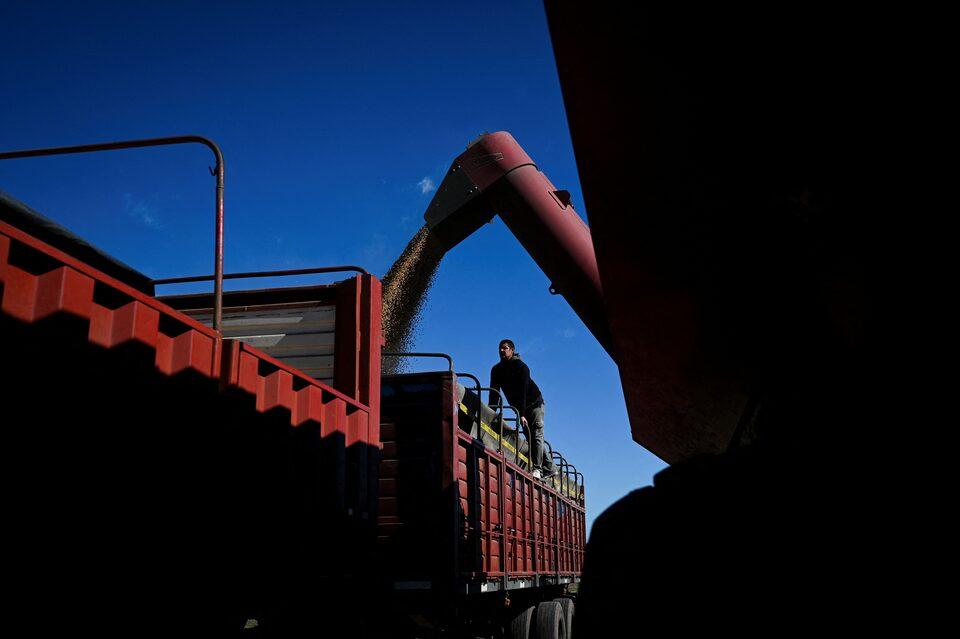
Soy harvest delayed by strong rains, impacting Argentina's economy Farmers race against forecasted storms to harvest soybeans El Niño phenomenon expected to bring more rain, complicating harvest SAN ANDRES DE GILES, Argentina, May 15 (Reuters) - On Cristian Giacobone's farm in the heart of Argentina's Pampas plains, workers in the soy fields have been up since dawn, racing to harvest the rain-delayed crop before the arrival of new storms that will make threshing more difficult. The soy crop, the main export of the South American country's embattled economy, has been delayed by unusually strong rains, weighing on sales of the oilseed that are running at the slowest pace in some 11 years. Sign up here. Now, with a window of dry weather - but with more rains forecast - farmers are speeding up their operations. "We have a very small harvest window," Giacobone said from his 60-hectare (148-acre) soy field in San Andrés de Giles, about 100 km (62 miles) west of Buenos Aires. "The weather conditions from February until now have seen persistent rains," he added, citing an accumulated rainfall of almost 580 mm (22.83 inches). "This was the main reason for delays, due to soil conditions both in and out of the fields." Argentina is the world's top exporter of soy oil and meal, with soybean production this season estimated at 50 million metric tons by the Buenos Aires Grains Exchange. The indebted country needs soy dollars to replenish depleted foreign currency reserves. But the delays have raised fears the harvest could end up lower due to the impact of fungi or the opening of soy pods in the plant, turning every dry hour into gold for farmers, who are even harvesting in muddy fields, at the expense of compacting the soil and making future planting difficult. "What the producer is doing is making the decision to leave early in the morning, rather than wait for the grains to dry out and extend the day's work despite higher costs," Giacobone said. Typically, farmers go out with combine harvesters later in the day when grain moisture level is lower to avoid additional drying costs. 'RAINS CONTINUE' The slow harvest has hit Argentina's soy sales in the 2024/25 season, with the slowest pace in over a decade, with only 28.7% of the oilseed sold through May 7, according to official data, well below the 10-year average of 36.1% In Giacobone's field, the combine harvesters comb the last rows of soybeans, taking advantage of sunny weather that began on Saturday, allowing the restart of farm work that had been halted last week by several days of rain. The respite gave farmers time to speed up harvesting, bringing in nearly 65% of the area planted with the crop so far, the Buenos Aires Grains Exchange said in a Thursday report. That remains five percentage points behind the five-year average. However, amid the conditions of the El Niño weather phenomenon — that causes higher than normal rainfall in Argentina — more rains are expected in the days ahead. "The rains continue," Eduardo Sierra, a climate specialist at the Buenos Aires Grains Exchange, told Reuters. "We see a front coming that could bring very strong storms," the expert noted, adding that the rainfall could extend until Sunday. Sierra added that June could also be a rainy month. In San Andres de Giles, the country roads still bear the muddy marks of the wet Southern Hemisphere autumn that has spurred producers to wrap up the harvest campaign as soon as possible. "Our current strategy is this: to ensure that the soybeans ... are protected," said Giacobone, who is also president of the area's rural society. "We're somewhat fearful of all these rains and these days where the weather won't let us work." https://www.reuters.com/business/environment/argentinas-soy-farmers-race-ahead-with-harvest-beat-rains-2025-05-15/
2025-05-15 11:18
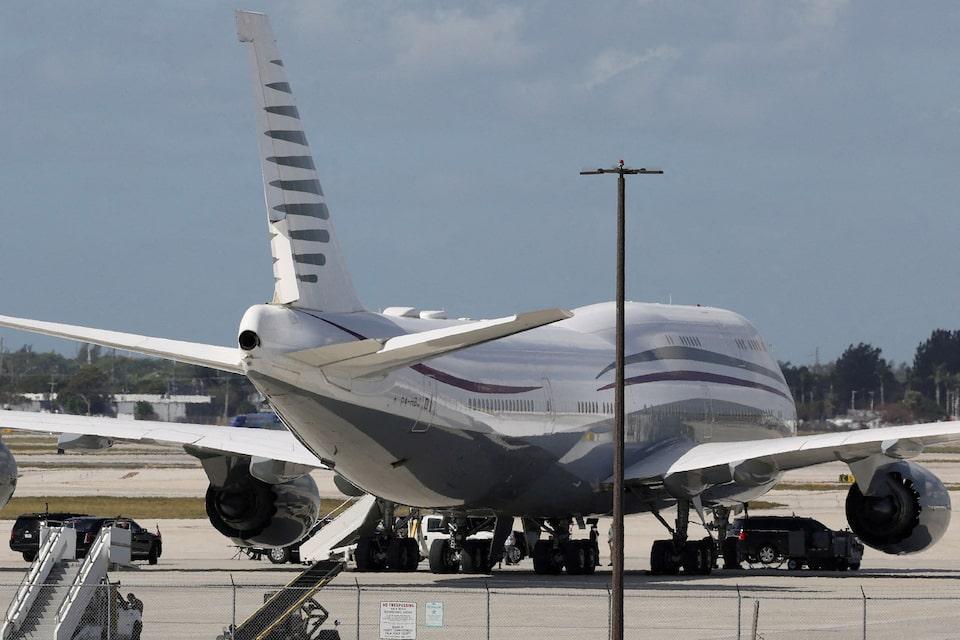
Plane could be restricted to flying inside US unless significant upgrades made, experts say Trump could waive specific safety requirements, if he chooses Trump has dismissed criticism of his plan to receive and use the plane WASHINGTON, May 15 (Reuters) - A Boeing 747 jet offered to President Donald Trump by Qatar as a temporary flying White House might need fighter jet escorts and could be restricted to flying inside the U.S. unless significant costly security upgrades were made, aviation experts and industry sources said. Even if numerous improvements to the plane's communications and defenses are made over the coming months once any deal is completed, the military escort and domestic restriction could remain in place, the experts and sources said. Sign up here. As the commander-in-chief, however, Trump could waive any and all requirements like these, a former Air Force official noted. Retrofitting the luxury plane offered by Qatar's royal family would require security upgrades, communications improvements to prevent spies from listening in and the ability to fend off incoming missiles, experts said. The costs were not known, but could be significant given Boeing's (BA.N) , opens new tab current effort to build two new Air Force One planes exceeds $5 billion. The Air Force referred a request for comment to the White House, which did not have an immediate comment. There are serious questions about whether any combination of fighter escorts and short-term upgrades would be enough to provide sufficient protection for the president. "I don't think it's possible," said Mark Cancian, a senior adviser with the Center for Strategic and International Studies' Defense and Security Department, referring to short timeline for the deep modifications. "Air Force One is designed to be survivable in all kinds of environments, including a nuclear war," he added, noting the jet's ability to tolerate the electromagnetic pulse from a nuclear blast is embedded in the jet's wiring and systems from the bottom up. "That's not something you add on." Trump has dismissed criticism of his widely-reported plan to accept the 13-year-old airplane with a $400 million list price, saying it would be "stupid" to turn down the offer. Trump also called it a practical decision, and that he was disappointed Boeing had taken so long to deliver on already delayed contracts for the two new Air Force One planes that he renegotiated during his first term. "If he wants it, and he says 'I'll accept any risk associated with not having all the stuff the real Air Force One has,' he can do that," the former Air Force official said. While Air Force One does not normally fly with fighter escorts, the new plane may need them to defend against missile threats, the former official added. An escort could be necessary because the Qatari plane "wouldn't have the electronic warfare and missile warning systems and whatever else you associate with survivability on Air Force One," said Richard Aboulafia, managing director of consulting firm AeroDynamic Advisory. He added international travel may be off-limits because "you can't guarantee the level of security in international airspace or airports." Air Force One almost never requires fighter escorts because it is equipped with a range of advanced defensive systems including flares, electronic jammers and infrared detection systems that protect against missile strikes. Escorts sometimes fly with the jet when it is overseas, or in moments of national security risk such as after the attacks of September 11, 2001. The government has tapped L3Harris Technologies (LHX.N) , opens new tab to overhaul the 747 as it waits for delivery of the two delayed new Air Force One aircraft from Boeing. Other upgrades could include a communications suite that can handle sensitive White House and aircraft crew functions, and changing the interior so it can support Trump, his staff, the Secret Service and the press, said Douglas Birkey, executive director of the Mitchell Institute for Aerospace Studies. Under any scenario, the U.S. military would need to install new security features and potentially new wiring before the plane was used to transport Trump, experts say. DELAYS First mooted a decade ago, the Air Force One program has faced chronic delays, with the delivery of two new 747-8s slated for 2027, three years behind the previous schedule. Boeing in 2018 received a $3.9 billion contract to build the two planes for use as Air Force One and costs have since risen to at least $4.7 billion. Boeing has also posted $2.4 billion of charges from the project. Those jets were themselves originally intended for a foreign airline, Russian carrier Transaero, which went bankrupt in 2015. Using existing airframes was meant to reduce costs but Boeing has since taken billions of dollars in charges because the costs to retrofit the plane have far exceeded the contract price. In February, Trump toured a Boeing 747-8 built for Qatar to highlight the delays. The White House said at the time that the visit allowed him to "check out the new hardware/technology," without elaborating. The aircraft was originally operated by state-owned VIP airline Qatar Amiri flight, which performs private flights for members of the country's ruling family and other government officials, according to specialist databases. It was reported sold in 2023 to Global Jet Isle of Man, a private charter firm that has declined to comment on the jet. There are also questions over the $400 million value widely placed on the jet, based on new prices for the aircraft, which halted production in 2023. Analysts Cirium said a second-hand 747-8 might fetch a quarter of that, while a trader in VIP jets said the bespoke interior would be worth much more than the plane itself. https://www.reuters.com/business/aerospace-defense/trumps-qatari-747-may-need-fighter-escorts-serve-air-force-one-2025-05-15/
2025-05-15 10:32
May 15 (Reuters) - A look at the day ahead in U.S. and global markets by EMEA markets breaking news editor Amanda Cooper. It's looking very much like another "risk-off" day for the markets today, where stocks, the dollar and commodities are down, while bond prices are ticking up and safe-haven currencies like the Japanese yen and the Swiss franc are enjoying a rally. Sign up here. The sugar rush earlier this week from the U.S./China trade truce seems to have given way to a sugar hangover. Traders seeking another hit will now be scouring data on U.S. consumer spending and various surveys of regional business activity, while also hoping to hear soothing words from Fed Chair Jerome Powell. The Reuters markets team is here to provide you with all the information you need to start your day. Today's Market Minute * Republicans in the U.S. Congress advanced major elements of President Donald Trump's budget package on Wednesday, as key committees approved tax cuts that would add trillions of dollars to the U.S. debt, while cutting spending on healthcare for the poor and disabled. * U.S. President Donald Trump said on Thursday that the United States was getting very close to securing a nuclear deal with Iran, and Tehran had "sort of" agreed to the terms. * Elon Musk's political action committee failed to pay registered swing state voters as promised during last year's U.S. election in return for signing a petition or referring other voters, according to a proposed federal class action lawsuit. * Oil barely garnered a mention from U.S. President Donald Trump during his glitzy visit to Saudi Arabia this week. But the black gold may explain why the trip went so smoothly. Find out why in Reuters’ columnist Ron Bousso’s latest piece. * China’s soybean imports recently dipped to a 12-year low, but top supplier Brazil’s latest export volumes to China have hit all-time highs. So how does this all fit together? Reuters’ columnist Karen Braun breaks it down. ANOTHER WON BITES THE DUST Every U.S. administration for decades has indicated it maintains a strong dollar policy. It's no secret that Trump's administration wants a weaker currency to help grease the wheels as it seeks to get the rest of the world to buy more U.S. goods and services. The flipside, of course, is that a weaker currency will drive up the cost of any imported goods and services, thereby heaping more pain on a U.S. consumer that already face a hit from tariffs - even if these levies are not currently at the eye-watering levels Trump first floated as part of his April 2 "Liberation Day" tariff bonanza. Against a basket of currencies, the dollar has fallen 7% this year, which puts it on course for its biggest annual decline since 2017, when the index fell almost 10%. However, the dollar index might not be the best representation of what is happening with the U.S. currency right now. The index was established in 1973 by the Federal Reserve as a basket of the currencies of six large U.S. trading partners and currently includes the euro, the Japanese yen, the pound, the Canadian dollar, the Swiss franc and the Swedish crown. The six biggest U.S. trading partners now are Canada, Mexico, China, Germany, Japan and South Korea. A simple average of the year-to-date decline of the dollar against those currencies is roughly 5.6%, although this does not take into account any kind of weighting based on trade. Trump would like to see a number of currencies appreciate against the dollar and, Asian exporting nations could be among the candidates. Currency markets got something of a bombshell on Wednesday in the form of reports that South Korean and U.S. officials sat down last week to talk trade and discuss the dollar/won exchange rate. Cue a rip higher in the Korean won, which has already strengthened by more than 5% since April 2, as it heads for a third straight daily gain. As ever with markets, these things rarely happen in isolation. The move in the won has shades of the unprecedented rally in the Taiwan dollar earlier this month, which surged 6% in two days, clocking its largest single-day percentage gain since the 1980s. The parallels between the two has given rise to speculation that the Trump administration might shift its gaze to the FX market and put pressure on its trading partners to allow their currencies to appreciate in value, thereby removing some of what the president perceives as an unfair advantage. Big exporters tend to like big currency weakness. Haggling over import duties on various goods and services can bring mutual benefits to both parties, even with the compromises that inevitably come along with that process. FX, however, is a lot more binary. If one side of a currency pair depreciates, the other must appreciate and that might be a tougher pill to swallow. Chart of the day Walmart is going to be in sharp focus today. The world's largest retailer delivers first-quarter earnings, and investors will be anxious to see how the company is dealing with tariffs, trade ructions and consumer boycotts. The Arkansas giant is one of just a handful of large companies that has not either pulled or slashed its forecasts as it seeks to navigate Trump's tariffs. China is Walmart's largest supplier, and the company has pledged to keep prices low to beat its rivals. Walmart has run into trouble with some shoppers after the company, like many other U.S. firms, said it would roll back its diversity, equity and inclusion practices in line with Trump's executive order. Footfall at its stores, and at rivals Target and Costco has declined. Today's events to watch * Federal Reserve Chair Jerome Powell speaks at a conference in Washington. * New York Fed May manufacturing index * Philadelphia Fed May business index * April retail sales, producer price index data * Walmart Q1 earnings https://www.reuters.com/markets/us/global-markets-view-usa-2025-05-15/

2025-05-15 10:10
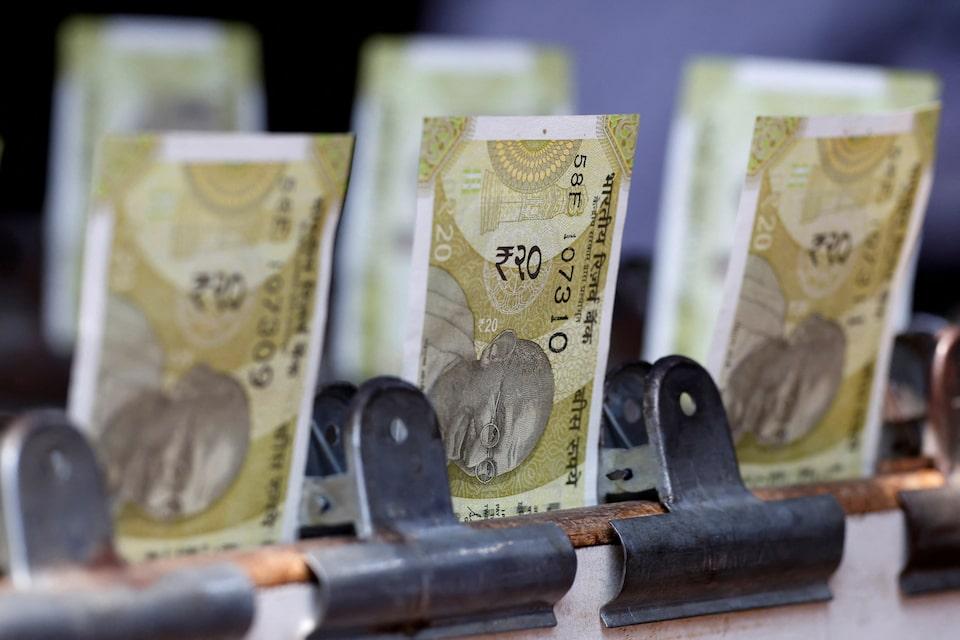
MUMBAI, May 15 (Reuters) - The Indian rupee fell on Thursday, weighed down by persistent interbank dollar demand, but pared losses after President Donald Trump said that India had offered a zero-tariff trade deal to the United States. The rupee closed at 85.55 against the U.S. dollar, down 0.3% on the day but above its intraday low of 85.7225. Sign up here. The rupee rose above 85.50 in an immediate reaction to Trump's comments but thereafter bids from foreign and local banks picked up, a trader at a Mumbai-based bank said. The dollar bids were likely spurred by corporate demand and modest portfolio outflows, the trader said. The dollar-rupee overnight swap rate also dipped, pointing to heightened demand for cash dollars, which typically indicates a pick up in outflows. India's benchmark equity indexes, the BSE Sensex (.BSESN) , opens new tab and NSE Nifty 50 (.NSEI) , opens new tab, rose about 1.5% with sentiment boosted by Trump's remarks. The United States is India's largest trading partner, with bilateral trade totalling some $129 billion in 2024. New Delhi has sought to clinch a trade deal with the U.S. within the 90-day pause announced by Trump on April 9 on tariff hikes for major trading partners. India's trade data for the month of April is due after the local currency market closes. Investors also await remarks from Federal Reserve Chair Jerome Powell as well as U.S. economic data for cues on the future trajectory of Fed policy rates and the dollar. The dollar index may find near-term support around 100.20 to 100.25 but a fall below that could prompt it to give back more of its recovery over the last three weeks, ING Bank said in a note. https://www.reuters.com/world/india/rupee-weakens-trumps-trade-deal-remark-helps-contain-losses-2025-05-15/
2025-05-15 08:42
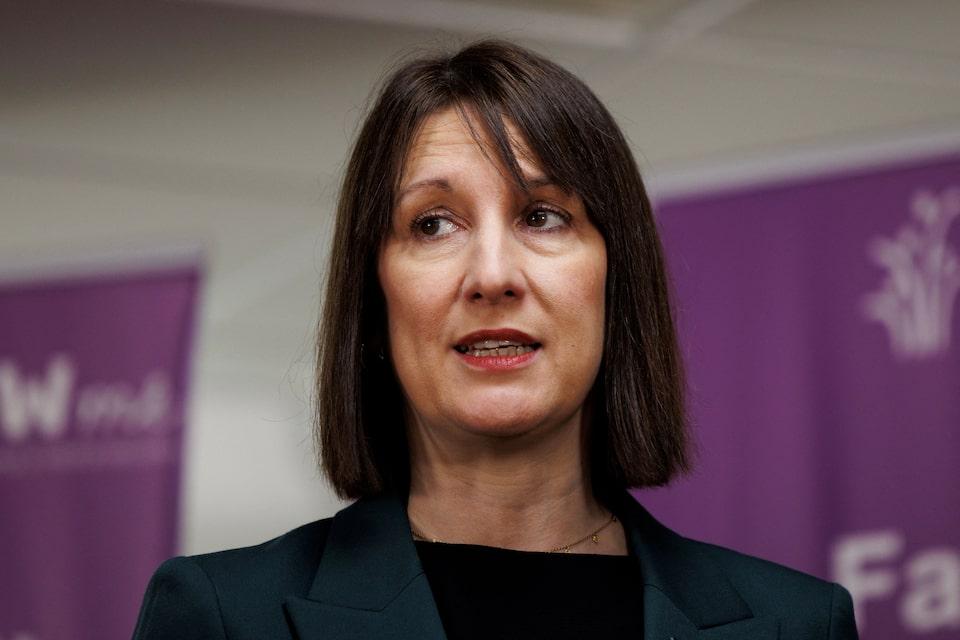
LONDON, May 15 (Reuters) - British finance minister Rachel Reeves on Thursday said there were clearly economic headwinds approaching, speaking after data showed Britain's economy grew more strongly than expected in early 2025. "There's clearly economic headwinds, and the world is changing. We can see that all around us, but we are a strong economy," Reeves told reporters, when asked whether growth was sustainable. Sign up here. Reeves also emphasised the significance of the government's recently-announced trade agreements with the United States and India. She said the government was "working through the detail" on the U.S. deal - a limited bilateral trade agreement that leaves in place Trump's 10% tariffs on British exports. https://www.reuters.com/world/uk/uk-finance-minister-reeves-economic-headwinds-are-coming-2025-05-15/