2025-05-15 06:10
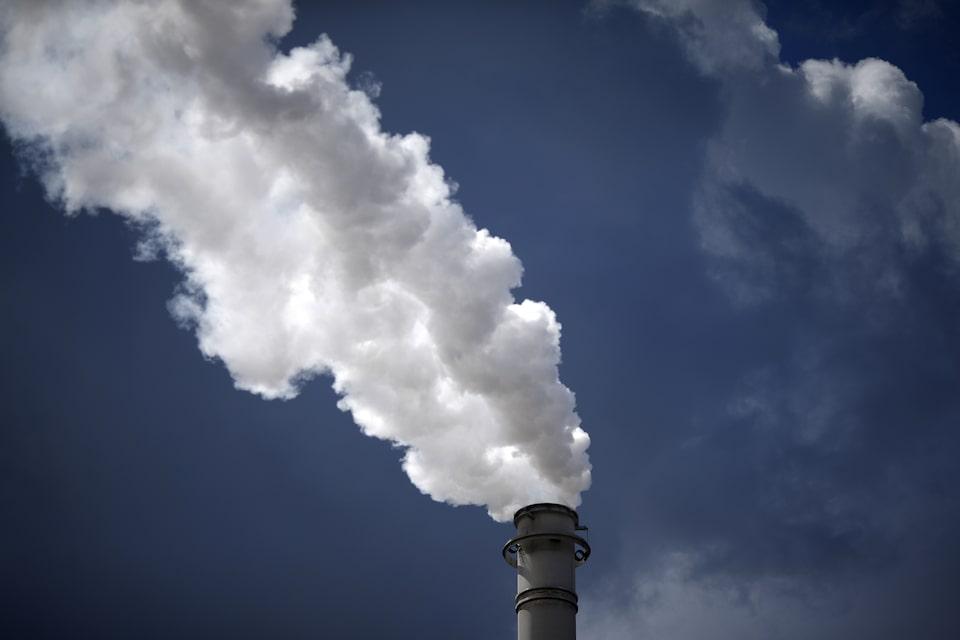
LITTLETON, Colorado, May 15 (Reuters) - The world's largest power polluter, China, made its biggest cut to power emissions since 2020 so far this year, but global power emissions have still held largely flat due to higher fossil fuel power generation in the United States and Europe. The United States and Europe emitted a combined 801 million metric tons of carbon dioxide (CO2) from fossil fuel-based power production during January to March, data from Ember shows. Sign up here. That emissions toll was 53 million tons or 7% more than during the same period in 2024, and was the highest since 2022 for the opening quarter of the year. The greater discharge from the U.S. and Europe largely offset a 60 million-ton drop in fossil power emissions in China, and means that global power sector pollution levels remain elevated despite reductions in the top polluting market. With the U.S. power sector about to enter its most fossil fuel-intensive generation period just as China's manufacturers lift output during the trade truce with the U.S., global power emissions will likely keep rising and hit new highs in 2025. FOSSIL FIRED Power producers in both the United States and Europe boosted generation from fossil fuels such as coal and natural gas during the opening months of 2025 from the year before. In Europe, sustained low wind speeds reduced supplies of clean power and forced utilities to compensate with 8% more fossil fuel-fired output than during January to March of 2024. Gas-fired generation climbed by 8% while coal-fired output rose by 6% during the first quarter of 2025 from the same months in 2024, according to Ember. In the United States, steadily rising power demand coupled with strong support for fossil fuels from the new administration of President Donald Trump spurred utilities to lift fossil fuel power output by 4% during January to March from the year before. However, sharply rising gas prices drove utilities to prioritise generation from cheaper-to-run coal plants, with coal-fired output jumping by 23% during January to March 2025 from the same months in 2024. Gas-fired power output shrank 4%. ECONOMIC DRAG China's overall power demand during the opening months of 2025 was impacted by the stunted state of its economy, which has been hampered by an enduring construction sector credit crisis and more lately by the new trade war with the United States. Lower output by industrial plants and factories in turn reduced demand for power by the commercial sector, and allowed utilities to reduce output from fossil fuels by 4% during January to March from the same period in 2024. Going forward, however, China's manufacturers are likely to boost production following the recently announced 90-day trade truce between China and the United States. Higher factory activity will directly trigger more power demand, and will likely force Chinese power firms to lift output from fossil fuels to ensure adequate power supplies over the coming months. EMISSIONS PEAK U.S. power firms are also set to crank fossil fuel-fired power production, as the peak period for U.S. power demand is over the summer when use of energy-intensive air conditioners is at its highest. The summer is also when U.S. solar power output peaks, which will provide utilities with more clean energy. But power firms will remain primarily dependent on fossil fuels for a majority of power supplies, especially during the evenings when solar output falls just as air conditioner use in households rises. And with benchmark U.S. natural gas prices currently holding around 40% more than where they were in May of 2024, utilities will likely continue to deploy high volumes of cheaper coal-fired power within generation networks. That in turn will further boost overall power emissions, as U.S. power firms discharge far more CO2 from coal-fired power generation than from gas-fired generation. In 2024, U.S. power firms discharged around 950,000 tons of CO2 per terawatt hour (TWh) of coal-fired electricity, and around 540,000 tons of CO2 per TWh of gas-fired electricity output, according to Ember. Combine those emissions loads with the expected rise in generation from China - where utilities rely on coal for around 60% of electricity supplies - and the stage is set for a further climb in global power emissions over the coming months. The opinions expressed here are those of the author, a columnist for Reuters. https://www.reuters.com/sustainability/climate-energy/us-europe-drive-global-power-emissions-higher-so-far-2025-maguire-2025-05-15/
2025-05-15 06:07
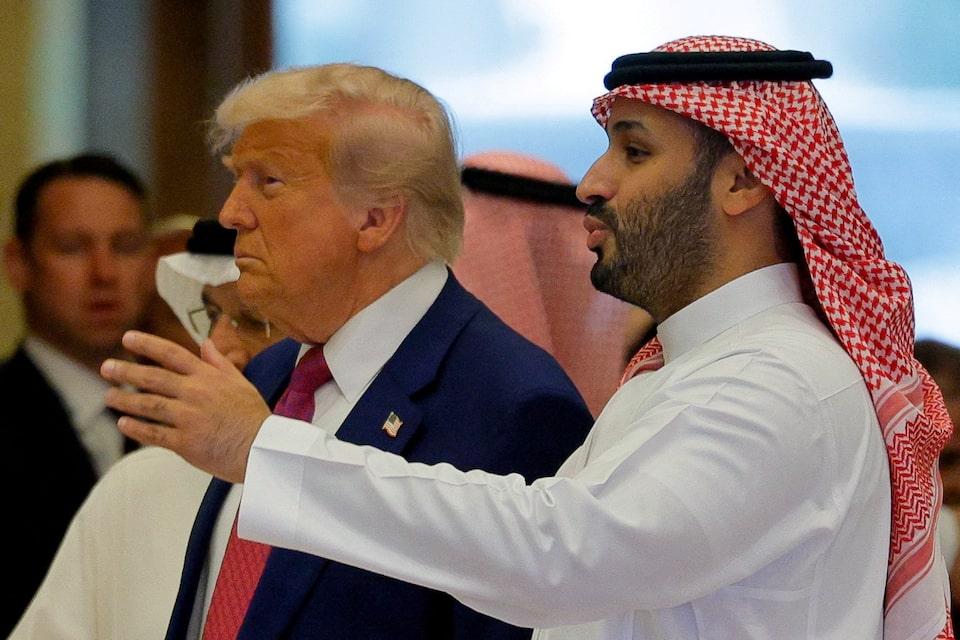
OPEC+ strategy helps lower oil prices at time of concerns over tariffs Trump reaffirms US ties with Saudi in lavish visit to kingdom Saudi oil exports to the US have declined in recent decades LONDON, May 15 - Oil barely garnered a mention from U.S. President Donald Trump during his glitzy visit to Saudi Arabia this week. But the black gold may explain why the trip went so smoothly. Trump lavished praise on Saudi Crown Prince Mohammed bin Salman, known as MbS, in his speech on Tuesday at an investment summit in Riyadh as the Kingdom unveiled a $600 billion package for investment in the United States and Trump touted a $142 billion defence deal. Sign up here. Yet there was no public mention of the main thing that has tied the two countries together over the past century: oil. For decades, Washington and Riyadh have nurtured close ties based on Saudi Arabia's pivotal role in the oil market and America's strategic interests in the Middle East. This translated into hundreds of billions of dollars of military and economic support for Saudi Arabia over the years. For decades, Saudi Arabia was a major supplier of crude oil to the United States, with imports peaking at 2.2 million barrels per day in 2003, according to data from the Energy Information Administration. But with the surge in domestic U.S. oil production in the Gulf of Mexico and onshore shale basins in recent decades, Saudi exports gradually slid to around 275,000 bpd in 2024, less than 1.5% of total U.S. consumption. The decline in American dependence on Saudi petroleum had caused some U.S. politicians to question the alliance, including Trump's predecessor Joe Biden, who sought to make Saudi Arabia a pariah over the country's human rights record. But Trump used the first major overseas trip of his second term to send a clear message about the U.S. commitment to this partnership. The Kingdom, in turn, may have helped ensure the trip’s success by taking steps beforehand to help lower oil prices, right as the president was facing scrutiny over his tariff policies. PRIMING THE PUMP Saudi Arabia remains hugely influential in setting global oil prices through its iron-fisted leadership of the Organization of the Petroleum Exporting Countries, the cartel of producers founded in 1960 that today controls around 40% of global crude supplies. That influence was expanded in 2016 when OPEC formed an alliance with Russia and other producing nations known as OPEC+. Trump clearly recognizes this power. He called for OPEC , opens new tab to boost output in order to keep U.S. gasoline prices down days after taking office. Wanting to rein in energy prices is normal for any U.S. president, but it became doubly important for Trump after his tariff sweep of April 2 launched the United States into a trade war that risks increasing consumer prices. Given this backdrop, it’s notable that Saudi Arabia recently made a dramatic shift in policy, pushing OPEC+ to increase oil output sharply into a market that was already well supplied, even as the demand outlook was tanking due to Trump’s trade war. The group's decision to boost output by 411,000 bpd in May and again in June helped send oil prices tumbling to around $60 a barrel in early May from $82 a barrel at the start of the year. Prices are currently at around $66 a barrel. The timing of these supply increases was a bit head-scratching. But they make a lot more sense if the Saudis were seeking, at least in part, to give Trump a hand as he sought to pursue his ambitious economic and geopolitical agenda. First, falling energy prices could help minimize any inflationary impact from Trump’s tariffs and support economic activity at a time when U.S. consumers and businesses are on edge. Additionally, lower oil prices could support Trump’s efforts to mediate an end to the war in Ukraine. Plummeting energy prices put pressure on Russia, which is heavily reliant on oil and gas revenue. Trump recently indicated as much. "I think Russia, with the price of oil right now – oil has gone down – we are in a good position to settle, they want to settle," the president said on May 5. Riyadh’s decision to add more oil into a well-stocked market could also help offset any oil lost through sanctions on Iran and Venezuela, which the Trump administration ratcheted up in recent months. To be sure, Saudi Arabia’s decision to launch what amounts to an oil price war has been driven by several considerations, most notably the wish to punish OPEC+ members for failing to comply with production quotas and the Kingdom’s desire to regain market share. But pursuing a price war at a time when there could be many forces suppressing demand is a questionable strategy. So why take this step now? Potentially because any short-term pain will be worth it if it enables MbS to gain significant political capital with the U.S. that can help him advance his 2030 vision to diversify Saudi's economy and receive generous military support. Trump's landmark visit to Saudi Arabia, therefore, may have had everything to do with oil, even if the topic never seemed to come up. ** The opinions expressed here are those of the author, a columnist for Reuters. ** Want to receive my column in your inbox every Thursday, along with additional energy insights and trending stories? Sign up for my Power Up newsletter here. https://www.reuters.com/business/energy/saudi-price-war-looks-like-unspoken-gift-trump-bousso-2025-05-15/
2025-05-15 06:00
Eni enters exclusive talks with Ares over Plenitude stake sale Ares on Wednesday announced opening of office in Milan Potential deal is part of Eni's satellite strategy Minority stake sales help Eni to fund low-carbon unit growth MILAN, May 15 (Reuters) - Italian energy group Eni (ENI.MI) , opens new tab said it had entered exclusive talks with investment firm Ares Alternative Credit Management to sell a 20% stake in its renewable and retail business Plenitude. The deal is part of Eni's efforts to develop greener businesses and signals the growing interest of Los Angeles-based Ares (ARES.N) , opens new tab, which had $546 billion in assets under management at the end of March, for the Italian market. Sign up here. Negotiations are based on an equity value of Plenitude of between 9.8 billion and 10.2 billion euros, which rises to more than 12 billion euros ($13 billion) when including debt, Eni said in a statement on Thursday. The deal falls under Eni's 'satellite' strategy, aiming to develop specialised units dedicated to low-carbon businesses or upstream projects that can attract investments from financial partners. By selling minority stakes in its units, Eni can fund capital spending in low-carbon businesses while preserving its capacity to invest in oil and gas activities, Chief Transition and Financial Officer Francesco Gattei recently said. "The agreement follows a thorough selection process involving several prominent international players who expressed strong interest in the company, further confirming the great appeal of its business model and its growth prospects," Eni said. Ares, a global leader in credit, which at the end of March accounted for $359 billion of its assets, on Wednesday said it was opening an office in Milan. Tyrone Cooney, head of France and southern Europe for direct lending, told Reuters last year Italy was "the new frontier" for private credit funds. Alternative credit is a form of asset-based finance, meaning lending secured by a pool of assets. Mediobanca (MDBI.MI) , opens new tab is a financial adviser to Eni. UniCredit and Deutsche Bank are advising Ares. Under the satellite strategy, Switzerland's Energy Infrastructure Partners (EIP) has previously bought 10% of Plenitude in two transactions. The latest one, in March, valued Plenitude above 10 billion euros, including debt. Earlier this year U.S. investment fund KKR (KKR.N) , opens new tab acquired 30% of Eni's biofuel unit Enilive. The state-controlled group is in preliminary talks with a handful of players interested in its budding carbon capture and storage business (CCS), sources told Reuters. Eni's CCS projects in Italy and abroad will be wrapped up in a new unit by the end of this year, the group said. The group is also negotiating with Malaysia's state energy firm Petronas to form a joint venture that will oversee upstream assets in Indonesia and Malaysia. ($1 = 0.8939 euros) https://www.reuters.com/sustainability/climate-energy/italys-eni-enters-exclusive-talks-with-ares-fund-plenitude-stake-2025-05-15/
2025-05-15 05:57
Q1 adj EBITDA down 23.5% Keeps 2025 outlook Could buy back more shares if return targets are not met FRANKFURT, May 15 (Reuters) - Germany's largest utility RWE on Thursday said first-quarter core earnings (adjusted EBITDA) fell by nearly a quarter, hurt by a weak commodity trading business as well as poor wind conditions that weighed on the group's offshore business. First-quarter adjusted EBITDA came in at 1.307 billion euros ($1.46 billion), RWE (RWEG.DE) , opens new tab said, also below the average forecast of 1.321 billion euros in a poll provided by the company. Sign up here. RWE, which has come under pressure from activist investors to do more share buybacks, still confirmed its 2025 outlook, expecting adjusted EBITDA between 4.55 billion and 5.15 billion euros and a dividend of 1.20 euros per share. The group earlier this year set more ambitious return targets for new energy projects in light of regulatory hurdles and supply chain risks, also cutting its investment programme by more than a fifth. It said on Thursday that if these targets, defined as an average rate of return of more than 8.5%, were not met it could adjust its capital allocation and reinvest the savings in additional share buybacks. RWE is currently buying back up to 1.5 billion euros of its shares in a programme that runs until the second quarter of 2026. ($1 = 0.8933 euros) https://www.reuters.com/business/energy/rwe-posts-q1-profit-decline-weak-trading-poor-winds-2025-05-15/
2025-05-15 05:36
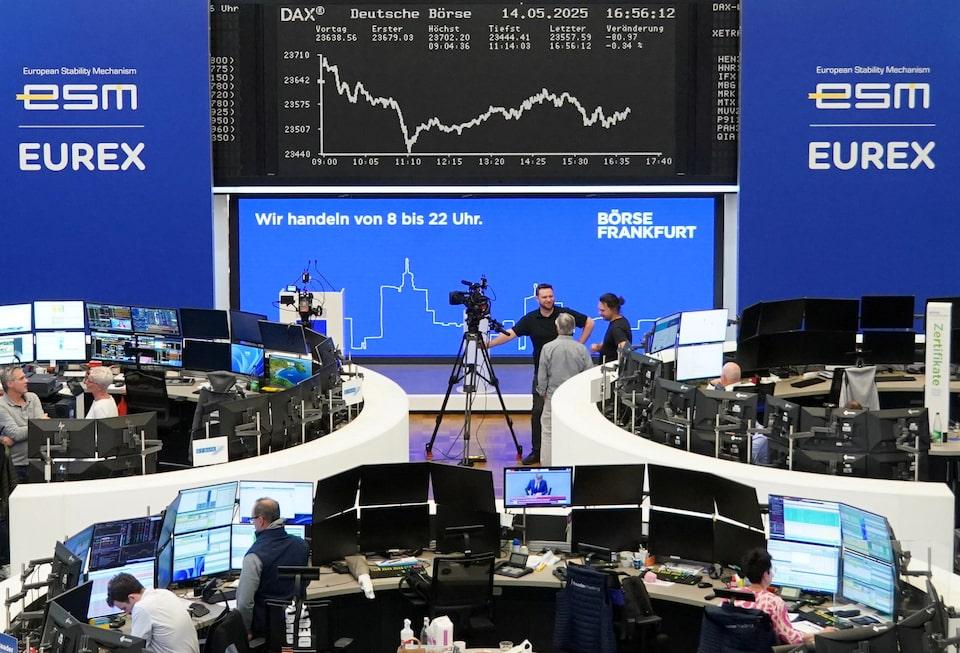
Oil prices tumble Fed chair warns of a period of 'more frequent' shocks European shares recover to end higher NEW YORK/LONDON, May 15 (Reuters) - Oil dropped over 2% on Thursday as a potential U.S.-Iran nuclear deal raised the prospect of increased global crude supply, and Wall Street indexes were mixed in choppy trading. European shares reversed losses to end higher, with corporate earnings in the spotlight, and gold prices jumped over 1%. Sign up here. U.S. producer prices fell unexpectedly in April and retail sales were mixed, data showed on Thursday. Global equities (.MIWD00000PUS) , opens new tab rose 0.3%, while emerging market stocks eased. U.S. Federal Reserve officials feel they need to reconsider the key elements around both jobs and inflation in their current approach to monetary policy, Chair Jerome Powell said during opening remarks at a two-day conference. Russian President Vladimir Putin spurned a challenge to meet face-to-face with Ukrainian President Volodymyr Zelenskiy in Turkey, dealing a blow to prospects for a peace breakthrough. Brent futures closed down over 2% as U.S. President Donald Trump, in the midst of a Middle East tour, said he was getting close to securing a deal with Iran - and that Tehran had "sort of" agreed to the terms. Ali Shamkhani, an adviser to Iran’s Supreme Leader Ayatollah Ali Khamenei, had said in an NBC interview that the country would commit to never making nuclear weapons and get rid of its stockpiles of highly-enriched uranium. BNP Paribas economist Paul Hollingsworth said the drop in oil compounded the deflationary pressures already in play in places like Europe where U.S. tariff worries are lingering. "Everyone is finding it difficult to navigate the volatility in the announcements," Hollingsworth said. In Europe, the continent-wide STOXX 600 index (.STOXX) , opens new tab rose 0.6%, recovering from earlier losses that were led by the energy sector. Most major regional indexes were higher. April jobless figures were steady. On Wall Street, the Dow Jones Industrial Average (.DJI) , opens new tab rose 271.69 points, or 0.65%, to 42,322.75, the S&P 500 (.SPX) , opens new tab rose 24.35 points, or 0.41%, to 5,916.93 and the Nasdaq Composite (.IXIC) , opens new tab fell 34.49 points, or 0.18%, to 19,112.32. Retailer Walmart posted solid first-quarter sales numbers, but it became the latest to warn about the high costs of Trump's trade tariffs and did not provide second-quarter profit guidance due to the uncertainty. "We may be entering a period of more frequent, and potentially more persistent, supply shocks," the Fed's Powell said. Britain's economy grew by a quicker-than-expected 0.2% in March, data showed. Industrial production in the 20-nation euro zone also rose far more than predicted although overall first-quarter GDP growth disappointed. The yield on the benchmark German 10-year Bunds fell 1.2 basis points to 2.614%. Yields on benchmark U.S. 10-year notes fell 9.1 basis points to 4.437% amid worries that Trump's budget package would add trillions of dollars to the U.S. debt. DATA DELUGE Investors were greeted with a plethora of good news earlier this week, from a U.S.-China trade-war truce to a raft of headline-grabbing investment deals from the Middle East during Trump's Gulf tour. But most of the optimism had died down by Thursday, leaving MSCI's broadest index of Asia-Pacific shares outside Japan (.MIAPJ0000PUS) , opens new tab down 0.15%. "We've had a huge party, everyone's hung over, and now we're just recuperating and waiting for the next big party," said Tony Sycamore, a market analyst at IG. In currencies, the dollar was struggling to extend its strong gains made at the start of the week, with the dollar index down 0.2% against a basket of major currencies. The euro edged higher. Moves against the Korean won were particularly choppy for a second straight day, after news that South Korea's deputy finance minister Choi Ji-young met with Robert Kaproth, assistant secretary for international finance at the U.S. Treasury, to discuss the dollar/won market on May 5. In commodities, U.S. gold futures settled 1.2% higher at $3,226.6. https://www.reuters.com/markets/global-markets-wrapup-1-2025-05-15/
2025-05-15 05:25
May 15 (Reuters) - Japanese investors snapped up foreign stocks for an eighth straight week, as progress in U.S. trade negotiations and easing concerns over the global economic impact of a trade war lifted investor sentiment. Japanese investors bought a net 250.8 billion yen ($1.72 billion) worth of foreign stocks during the week ended May 10, although it was sharply lower compared to about 2.55 trillion yen worth of net accumulations in the prior week, data from Japan's Ministry of Finance showed. Sign up here. Including the week's purchases, Japanese investors have now acquired a net 8.2 trillion yen in foreign equities so far this year, the largest total for the same period since at least 2005. Investor concerns over the impact of elevated U.S. tariffs on global economic growth eased significantly in May, buoyed by ongoing trade negotiations, the announcement of a U.S.-UK trade agreement, and a 90-day U.S.-China tariff truce. The U.S. has reduced its combined tariffs on most Chinese imports from 145% to 30%, while China has agreed to cut duties from 125% to 10%. The MSCI World Index (.MIWD00000PUS) , opens new tab has surged about 20.88% since hitting nearly a 15-month low of 722.57 on April 7. The World Index is just 1.6% below its record high of 887.58. Japanese investors also funnelled a net 1.92 trillion yen into long-term overseas bonds in the week ended May 10, reversing net sales of 514.2 billion yen the week prior. Meanwhile, Japan’s equity markets attracted around 439 billion yen in foreign capital, with cross-border investors extending net purchases to a sixth straight week. Foreign investors net sold 141.1 billion yen in long-term Japanese government bonds, marking their second straight week of net selling, but picked up 973.9 billion yen in short-term Japanese bills. ($1 = 146.0100 yen) https://www.reuters.com/business/japanese-investors-extend-foreign-stock-buying-eighth-week-trade-optimism-2025-05-15/