2025-05-15 04:57
MUMBAI, May 15 (Reuters) - The Indian rupee weakened in early trading on Thursday, weighed by dollar bids on account of corporate hedging and portfolio outflows, traders said, even as its regional peers benefited from broad weakness in the greenback. The rupee declined 0.5% to 85.67 against the U.S. dollar, as of 10:20 a.m. IST. Sign up here. Asian currencies were mostly stronger, with the Taiwan dollar and Korean won leading gains, as investor focus remained on U.S. trade deals amid speculation that the negotiations may involve foreign exchange policies. "Markets are alert to Trump's desire for a more competitive USD to advance his reshoring agenda, reacting strongly to speculation of currency discussions in trade negotiations between the US and major Asian economies," DBS Bank said in a note. The dollar index was down nearly 0.2% at 100.8 while U.S. bond yields nudged higher with the 10-year U.S. Treasury yield climbing over the 4.50% mark on concerns about growing disagreements on the Trump administration's tax and budget policies. Persistent corporate dollar demand and foreign portfolio outflows from local equities were weighing on the rupee though, a senior trader at a foreign bank said. There are "some jitters" about India's ability to crack a trade deal with the U.S. quickly, which has prompted some outflows from equities alongside a tactical re-allocation to Chinese stocks, the trader added. India's benchmark equity indexes, the BSE Sensex (.BSESN) , opens new tab and Nifty 50 (.NSEI) , opens new tab, were down about 0.5% on the day. India's benchmark 10-year government bond also dipped, tracking a decline in U.S. peers. India's trade data, due post currency market hours on Thursday, will be in focus, followed by a string of U.S. economic data and remarks from Federal Reserve Chair Jerome Powell. https://www.reuters.com/world/india/rupee-drops-hedging-portfolio-outflow-spurred-dollar-bids-2025-05-15/
2025-05-15 04:33
A look at the day ahead in European and global markets from Rae Wee The euphoria from this week's mix of market tailwinds appears to have run its course, with investors left searching for the next catalyst. That could come later in the day from U.S. retail sales and Walmart's earnings. Sign up here. Asian stocks drifted and futures pointed to a mixed opening in Europe on Thursday, as investors sobered up to the fact that there remains much uncertainty over the outlook for the global economy and U.S. President Donald Trump's chaotic trade policies. Key for markets will be results from Walmart (WMT.N) , opens new tab, a bellwether for the U.S. retail industry, for an indication on whether the Arkansas behemoth is truly best placed to navigate the uncertainty from Trump's tariffs. Walmart is among a handful of large companies that have not either pulled or slashed their forecasts. The company last month reaffirmed its annual forecast, saying "nothing in the current environment changes its strategy". Should that change, investors will no doubt be alarmed. The results come alongside U.S. retail sales data for the month of April, where expectations are for a flat reading on a monthly basis. Together, the releases will offer clues on the health of the U.S. consumer, and upbeat numbers could narrow the chances of a recession in the world's largest economy, which would in turn be a boon for stocks. Also on the market's radar is a speech from Federal Reserve Chair Jerome Powell, where the focus will be on any hints he may give regarding the outlook for U.S. monetary policy. So far, the hard data has given Fed policymakers little to go on as they try to assess how Trump's sweeping tariffs and ongoing trade negotiations will affect prices and the economy. And it is likely Powell will reiterate his patient approach on rates. Ahead of the U.S. releases, preliminary first-quarter growth figures for the UK and euro zone are also due, though investors are likely to look past those numbers given they pre-date Trump's "Liberation Day" tariffs. In currency markets, the dollar remained volatile against the Korean won , sliding for a second straight day on news that South Korea's deputy finance minister discussed forex with a U.S. Treasury official earlier this month. The moves in the won were reminiscent of an unprecedented surge in the Taiwan dollar just a few days ago, again stoking speculation that a weaker dollar could be part of Trump's trade deal with other countries. Key developments that could influence markets on Thursday: - UK preliminary GDP (Q1) - Euro zone flash GDP (Q1) - U.S. retail sales (April) - Walmart earnings - Fed Chair Powell speaks Trying to keep up with the latest tariff news? Our new daily news digest offers a rundown of the top market-moving headlines impacting global trade. Sign up for Tariff Watch here. https://www.reuters.com/markets/europe/global-markets-view-europe-2025-05-15/
2025-05-15 03:11
April employment +89,000, vs forecast +20,000 Driven by female employment, participation rate back to 67.1% Jobless rate steady at 4.1%, hours worked flat May rate cut still expected, but further easing may be gradual SYDNEY, May 15 (Reuters) - Australian employment blew past expectations in April in a sign of strength that lessens the need for aggressive stimulus, but markets still expect an interest rate cut next week as slowing inflation allows policymakers to respond to rising global risks. The Australian dollar got some support from the strong data and was last up 0.1% at $0.6435, while three-year government bond yields extended an earlier rise to be up 6 basis points at 3.669%, the highest since early April. Sign up here. Investors remain confident the Reserve Bank of Australia will cut rates by a quarter point to 3.85% next Tuesday due to cooling inflation at home and global uncertainty caused by U.S. tariff policies. Beyond that, they have been scaling back expectations and now see around 75 basis points of easing by year-end, compared to more than 100 basis points a couple of weeks ago, in part due to the tariff truce between the United States and China. "We don’t see this strong labour landscape as a hindrance to more rate cuts...That being said, this rate cut cycle will be shallow," said My Bui, an economist at AMP. "The Australian labour market has been very resilient throughout the past year, with unemployment rate hovering just above 4% and solid jobs growth." Figures from the Australian Bureau of Statistics showed net employment jumped 89,000 in April from March, when they rose an upwardly revised 36,400. That was far above market forecasts for a 20,000 rise and the biggest monthly increase in over a year. The monthly gain was driven by full-time jobs, with a surge of 65,000 in female employment. The jobless rate held at 4.1%, as expected, as the participation rate climbed back to near record highs at 67.1%, showing the supply of labour was meeting strong demand. Despite the strength in employment, hours worked were unchanged, after two months of falls. GRADUAL CUTS The RBA held rates steady at 4.1% in April but opened the door to a rate cut by stating that the meeting in May would be an opportunity to revisit monetary policy settings. Global tariff risks and a disappointing recovery in consumer spending have clouded the economic outlook for Australia but the labour market has so far proven resilient. The unemployment rate remains low and job advertisements are stabilising above pre-COVID levels. Wages have been well-behaved, with growth in the private sector mostly subdued. The central bank is not expecting further loosening in the labour market, tipping unemployment to peak at 4.2% this cycle. Analysts at TD Securities expect the RBA to cut rates next week, and then go slow and steady in delivering further policy easing. "Our current forecast is for the RBA to deliver two further 25bps cuts, in May and in August. We continue to believe it's highly unlikely the bank delivers cuts in between SoMP meetings given the outlook for tariffs is nowhere as dire as it was a few weeks back." Headline consumer price inflation held at 2.4% in the first quarter and a key trimmed mean measure of core inflation slowed to 2.9%, taking it back into the RBA's target band of 2% to 3% for the first time since late 2021. The RBA has been concerned that some other measures of broad labour costs have been running hot while productivity has been disappointingly weak, a combination that could threaten progress made on taming inflation. https://www.reuters.com/world/asia-pacific/australia-employment-surges-past-expectations-april-jobless-rate-steady-2025-05-15/
2025-05-15 02:06
SEOUL, May 14 (Reuters) - South Korea's deputy finance minister Choi Ji-young met with Assistant Secretary for International Finance at the U.S. Treasury, Robert Kaproth, to discuss the dollar/won market on May 5, a South Korean government official said on Wednesday. The two met on the sidelines of the 58th ADB Annual Meeting in Milan, Italy, after Seoul and Washington said in April they would try to come up with a trade package aimed at removing U.S. tariffs before a pause on reciprocal tariffs is lifted in July. Sign up here. The U.S. and South Korea on April 25 agreed to craft a trade package going forward where tariffs, economic security, investment and forex policies would be discussed. On Wednesday, the won gained 1.4% against the dollar to 1,398.40 as of 0830 GMT, extending gains to breach the key psychological level of 1,400 per dollar. The won was the worst performer among emerging Asian currencies last year, having fallen more than 14% against the dollar. "News that U.S. and South Korea are discussing forex could be part of the reason why the won is up, but we need to monitor further to see flows behind this as the gains were quite substantial in the afternoon," a local forex dealer said, asking not to be named due to the sensitivity of the matter. U.S. Trade Representative Jamieson Greer is due to meet Ahn Duk-geun, Seoul's trade minister, on Friday on the sidelines of the APEC meeting in South Korea to discuss a broad range of trade issues, according to officials. https://www.reuters.com/world/asia-pacific/south-koreas-deputy-finance-minister-discussed-forex-with-us-treasury-official-2025-05-15/
2025-05-15 00:54
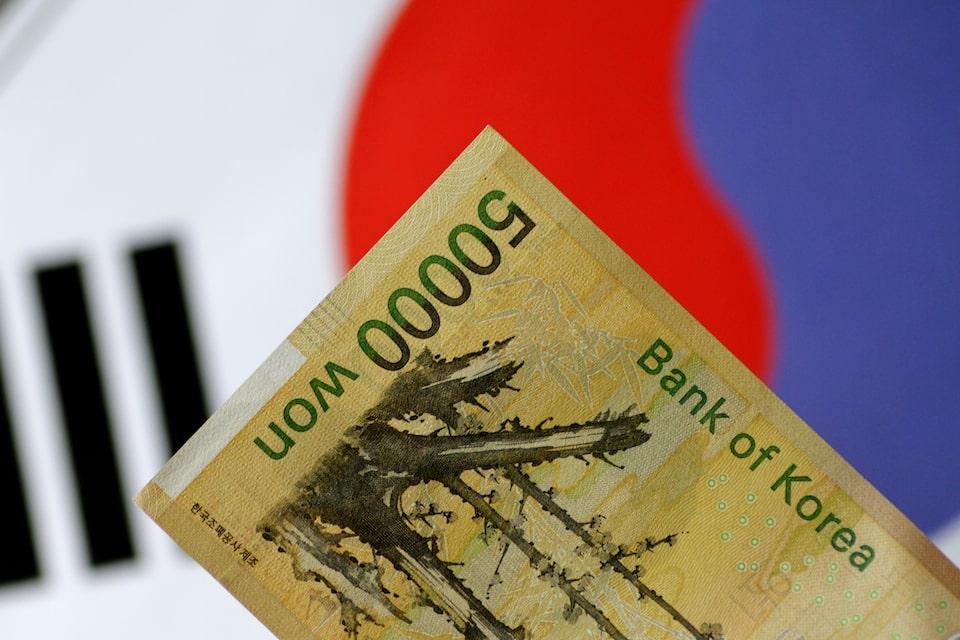
Retail sales growth slows Initial jobless claims indicate stable labor market PPI shows surprise drop NEW YORK, May 15 (Reuters) - The U.S. dollar slipped on Thursday after a flurry of economic data, including a gauge of consumer health that showed retail spending slowed in April as an uncertain economic outlook weighed on sentiment. The Commerce Department said retail sales edged up 0.1% last month after an upwardly revised 1.7% surge in March, compared with the expectation of economists polled by Reuters to remain unchanged after a previously reported 1.5% jump in March. Sign up here. The boost in March was due in part to purchases of items such as automobiles being pulled forward ahead of U.S. President Donald Trump's April 2 tariff announcement. In a separate report, the Labor Department said the producer price index (PPI) for final demand dropped 0.5% last month after an upwardly revised unchanged reading in March. It was pulled down by waning demand for air travel and hotel accommodation as Trump's protectionist trade policy, immigration crackdown as well as references to Canada as the 51st state and a desire to acquire Greenland have contributed to a sharp drop in tourist travel. However, other data from the Labor Department showed weekly initial jobless claims held steady at 229,000, in line with expectations of economists polled by Reuters, although job openings have become more limited. "I have a suspicion that this is not just about tariffs, I have a suspicion that there's an underlying tone of weakness in the U.S. consumer," said Thierry Wizman, global FX and rates strategist at Macquarie in New York. "It is the tariffs, but it's also the underlying weakness among U.S. consumers at this point and Q2 will be a weak quarter for growth, given that we came into it with poor sentiment and a lot of uncertainty around policy. And it has not been completely resolved yet, despite what we did with China last weekend." The dollar index , which measures the greenback against a basket of currencies, fell 0.11% to 100.89 after falling as much as 0.43% on the session, with the euro up 0.02% at $1.1176. The greenback started the week with a surge of more than 1% Monday after the United States and China announced a 90-day pause on most of the tariffs imposed on each other's goods since early April, easing fears of a global recession. In light of the signs of easing trade tensions, markets have dialed back expectations for rate cuts from the U.S. Federal Reserve this year, pricing in a 75.4% chance for the first cut of at least 25 basis points (bps) at the central bank's September meeting, according to LSEG data. The prior view was for a likely cut in July. Recent comments from Fed officials have indicated the central bank needs more data to determine the impact of the tariff announcements on prices and the economy before adjusting policy. In comments on Thursday, Fed Chair Jerome Powell did not focus on monetary policy or the economic outlook, but said central bank officials feel they need to reconsider the key elements around jobs and inflation in their approach to monetary policy given the inflation experience of the last few years. Federal Reserve Governor Michael Barr said the economy is on solid footing with inflation moving towards the central bank's 2% target, but trade policies have raised uncertainty about the outlook. Against the Japanese yen , the dollar weakened 0.73% to 145.68 while sterling strengthened 0.23% to $1.329 after Britain's economy grew more strongly than expected in early 2025. As trade tensions seem to have been temporarily defused, several major brokerages, including Goldman Sachs, JPMorgan and Barclays, scaled back their U.S. recession forecasts and their view of Fed policy easing this week. https://www.reuters.com/world/middle-east/dollar-wavers-uncertainty-over-trade-deals-skorean-won-focus-2025-05-15/
2025-05-14 23:53
Patience is the word of the day, Daly says Hard economic data so far shows little impact from Trump tariffs Fed seen needing until Sept to start rate cuts, markets bet WASHINGTON, May 14 (Reuters) - Federal Reserve policymakers are leaving interest rates where they are while they try to assess how U.S. President Donald Trump's sweeping tariffs and ongoing trade negotiations will affect prices and the economy. So far, the hard data is giving them little to go on. Sign up here. "We're still kind of holding our breath," Chicago Fed President Austan Goolsbee said on Wednesday on NPR's Morning Edition radio show. "We've got a bunch of noise that we're trying to figure out the through line." A case in point: on Tuesday a widely-watched measure of inflation showed consumer prices rose a less-than-expected 2.3% in April, the smallest annual increase in four years. The tame reading owed mostly to a decline in food prices. Excluding food and energy prices, which can be volatile from month to month, underlying "core" inflation was 2.8%, the same as in March and too hot to be consistent with the Fed's 2% inflation goal. "We continue to get these numbers that at least suggest that it's going okay," said Goolsbee, a current voter on the Fed committee that sets interest rates. "It's just, I think, not realistic to expect businesses or central banks to be jumping to conclusions about long-term things when you've got so much short-term variability. That's just a very difficult environment." The Fed has held short-term borrowing costs in the 4.25%-4.50% range at each of its three meetings so far this year, and last week Fed Chair Jerome Powell signaled there is no rush to change that. Policymakers speaking this week echoed that sentiment. "We have ourselves in a good position to respond to whatever comes right now," San Francisco Fed President Mary Daly told the California Bankers Association on Wednesday. "Patience is the word of the day." The Trump administration has driven import levies to record heights only to postpone or suspend the most aggressive actions. It has exempted some goods like electronics even as it looks into subjecting additional sectors like pharmaceuticals to fresh import levies. The back and forth has left the Fed struggling to determine the ultimate impact on inflation, growth and employment. Traveling across the western states in recent weeks, Daly says she hears plenty of worries from businesses and households, but sees little sign in the data they have pulled back on spending or investment as a result. "If you're in a highly tourism-driven state like Nevada and especially Las Vegas, you're getting nervous because international tourism might be coming down; you're worried about the domestic durability when consumers get a little pinched," she said. In other states like Utah and Alaska there is still a pipeline of activity that businesses and banks feel they can count on, she said. Overall, Daly said, "we've got solid growth, a solid labor market and declining inflation." "People feel like the economy is doing fairly well, and it's just a matter of resolving the uncertainty so we can continue to do very well," Daly said. Speaking earlier on Wednesday at an event in New York, Fed Vice Chair Philip Jefferson also called the labor market solid and said he felt the slight contraction in U.S. economic output over the first three months of the year was distorted by import data that overstated the degree to which the economy was slowing. Still, Jefferson said, sentiment among businesses and households has declined, and he was "watching very carefully for signs of weakening economic activity in hard data." At the same time, he said, inflation is likely to firm, but for how long is unclear. "If the increases in tariffs announced so far are sustained, they are likely to interrupt progress on disinflation and generate at least a temporary rise in inflation," he said. "Whether tariffs create persistent upward pressure on inflation will depend on how trade policy is implemented, the pass-through to consumer prices, the reaction of supply chains, and the performance of the economy." Financial markets are currently betting the data will give the Fed the clarity it needs by September, at which point the central bank will deliver the first of a couple of rate cuts by year's end. https://www.reuters.com/world/us/feds-goolsbee-data-still-noisy-fed-waits-understand-tariff-impacts-2025-05-14/