2026-01-19 11:39
LONDON, Jan 19 (Reuters) - Award-winning drama "Drops of God”, based on the hit Japanese manga series, returns for a second season on Wednesday, with half-siblings Camille and Issei taking on a new wine challenge set by their late father. The two characters, played by French actor Fleur Geffrier and Japanese singer and actor Tomohisa Yamashita, set off on a journey that will test their bond as they seek to uncover the origin of what is deemed the world’s greatest wine. Sign up here. In an interview with Reuters, Geffrier and Yamashita, along with series sommelier Seb Pradal and executive producer Klaus Zimmermann, spoke about the Apple TV+ multilingual show’s new storyline, featured wines, and building cellars. Q: What is the quest facing Camille and Issei this season? Geffrier: “It's like the quest, they don't have a choice somehow. It arrives on the table: ‘You have to do that’. She doesn't want to, he really wants to. The audience will understand... at the very beginning of the second season why Issei needs it and why she really doesn't want it at all. But they will have to team up to go on this quest, and that will start building their relationship deeper.” Q: How did you choose what wines to feature this season? Pradal: “It's wine, winemakers and wineries that I admire, of course. We try to work with wineries with a real ethic, considering ecology, for example. And of course, wines that would suit to the story itself; for example, tasting a Chateau d’Yquem with fancy people or these kind of things; we try to pick... a wine (suited) to the situation.” Q: How has making the show changed your appreciation of wine? Yamashita: “Before taking part... I didn't have any interest in wine. After that, I fell in love with wine... (my) wine teacher... recommended (I) go to this specific restaurant and order this fish and order this bottle, you know, the marriage experience blew my mind. And... now I have a full, big cellar in my place.” Q: What do you hope audiences will take away from season two? Zimmermann: “I think the audience will even more understand how wine can be something broad... Going deep into Georgia and seeing how the wine was actually made eight thousand years ago is something which I think (most of) the audience will not know... And I think what I also want, from a story point of view, is to give... people the feeling that family might be the problem, but family can also be the solution.” https://www.reuters.com/business/media-telecom/minute-with-drops-god-team-season-two-wine-quest-2026-01-19/

2026-01-19 11:20
Engie reaches financial close on 1.5 GW solar park in Abu Dhabi Project is Engie's largest globally Sees MENA providing bulk of new renewable capacity through 2035 PARIS/DUBAI, Jan 19 (Reuters) - Engie (ENGIE.PA) , opens new tab has reached financial closing on a 1.5-gigawatt solar park in Abu Dhabi, its largest globally, the French utility said on Monday, as it steps up projects in the fast-growing Middle East market amid a renewables slowdown in the U.S. and Europe. Set to begin commercial operations in 2028, the Khazna park will supply 160,000 homes across the United Arab Emirates under a 30-year power purchase agreement with Emirates Water and Electricity Company. Sign up here. Financial closing typically means that all funding agreements are signed and the project can start spending the money. Engie operates about 25 GW of gas-fired power plants in the Gulf along with cooling networks and desalination plants that produce 5 million cubic metres of water per day. The company now hopes rising electricity demand and abundant land and sunshine in the region will help it move quickly towards its target of 95 GW of installed renewable capacity by 2030, up from around 55 GW today. "This is a key region that can play a big role for Engie's ambitions given the size of projects, so it will contribute an important amount of our renewables growth through 2035 because there's an enormous amount of demand," said Niko Cornelis, Engie's country manager for the Gulf Cooperation Council, on a media call on Monday. The company is participating in multiple tenders, including in Saudi Arabia, where projects range from 0.5 to 2 GW, compared with European solar tenders that are much smaller, Cornelis said. In the U.S., two of Engie's early-stage offshore wind projects have been frozen due to President Donald Trump's halt on the sector. "The Gulf has its challenges, there is lots of competition because lots of companies are interested, and the power prices are very low, so we have developed an industrial cooperation with Chinese firms LONGi and PowerChina to engineer, supply and build and ensure projects are profitable," Cornelis said. Abu Dhabi requires its state-owned Masdar to hold a 60% stake in all projects, with other countries in the region maintaining similar partnership rules. Equity in the Khazna scheme is split 60/40 between Masdar and Engie, with financing from seven international banks including Abu Dhabi Islamic Bank and Credit Agricole Corporate and Investment Bank. https://www.reuters.com/business/energy/uaes-masdar-engie-reach-financial-close-15-gw-khazna-solar-project-2026-01-19/
2026-01-19 11:12
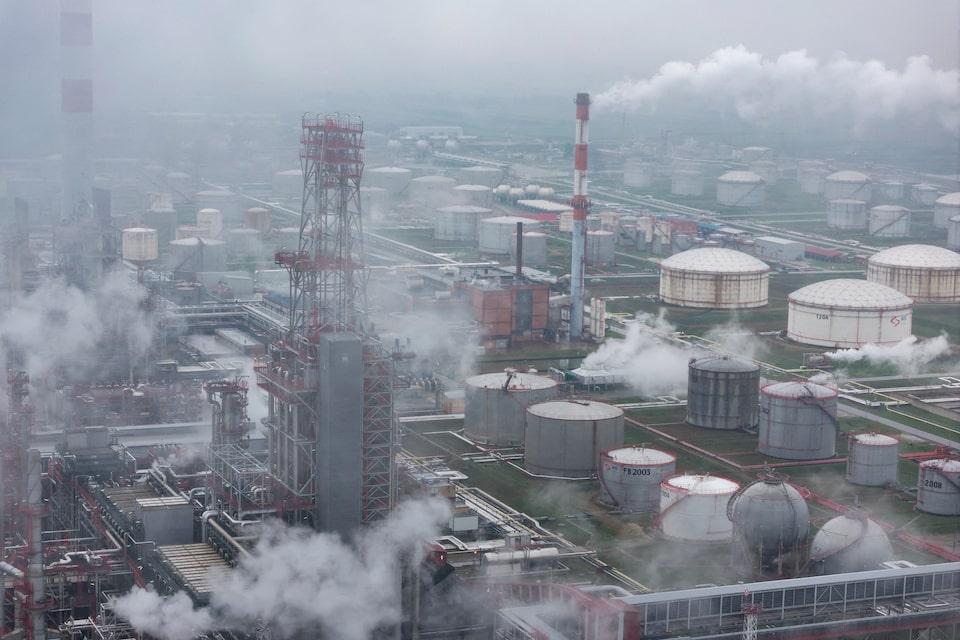
BELGRADE, Jan 19 (Reuters) - Serbia's majority Russian-owned oil company NIS said on Monday it had secured enough crude to keep its refinery operating through February after resuming imports under a new U.S. sanctions waiver. In a statement on its web site, NIS confirmed a statement by energy minister Dubravka Djedovic Handanovic and said it has restarted activities in its Pancevo refinery, Serbia's only. The first quantities of diesel should be on the market on January 27, it said. Sign up here. "Bearing in mind the imported quantities of crude oil, as well as crude oil produced in domestic oil fields, the refinery is planned to work throughout February," it said. "Further work will be coordinated with decisions on enabling the company's operational activities." The U.S. Treasury Department's Office of Foreign Assets Control (OFAC) imposed sanctions on NIS - in which Russia's Gazprom Neft (SIBN.MM) , opens new tab and Gazprom (GAZP.MM) , opens new tab hold majority stakes - in October as part of broader measures targeting Russia's energy sector over Moscow's war in Ukraine. NIS was granted a sanctions reprieve by OFAC until January 23, allowing it to import crude oil through Croatia’s JANAF (JANF.ZA) , opens new tab pipeline. It has until late March to negotiate the divestment of the stakes held by the Russian firms and it is in the midst of negotiating a sale to Hungary’s MOL (MOLB.BU) , opens new tab. Hungarian Foreign Minister Peter Szijjarto said on Thursday that he expects that the initial deal for the sale will be approved by OFAC in the coming days. Gazprom and Gazprom Neft own 11.3% and 44.9% of NIS, respectively. The Serbian government has a 29.9% stake. https://www.reuters.com/business/energy/russian-owned-owned-serbian-refiner-has-enough-crude-keep-running-through-2026-01-19/
2026-01-19 10:56
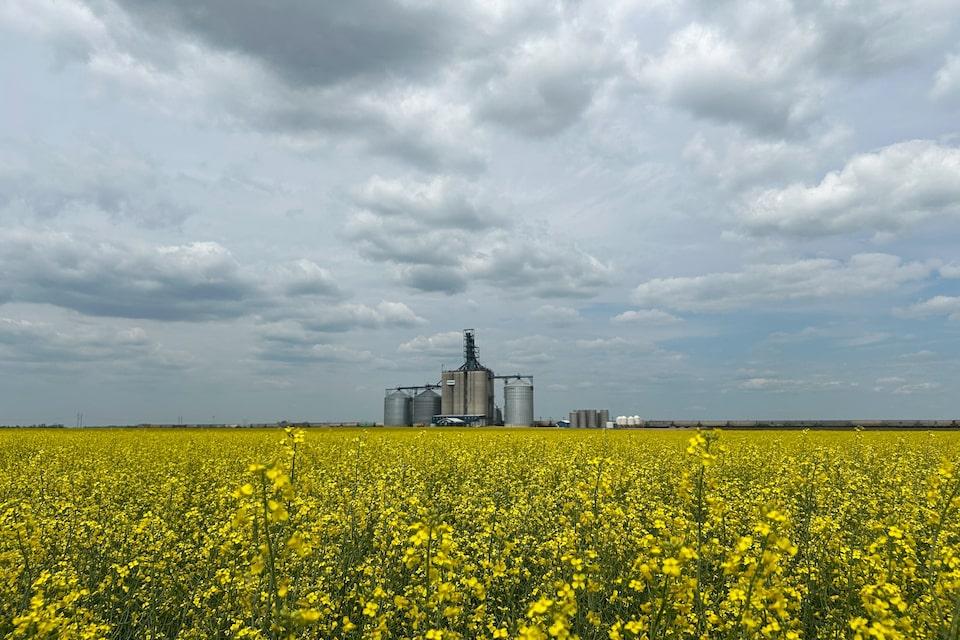
Chinese importer buys first Canadian canola cargo as China set to ease tariffs Move expected to boost Canadian farmers, weigh on rival Australia Australia's bid to capitalize on Canadian canola gap faces uncertainty BEIJING/SINGAPORE, Jan 19 (Reuters) - A Chinese importer bought a cargo of Canadian canola shortly after Canadian Prime Minister Mark Carney's visit to Beijing last week, trader sources said, boosting prospects for Canadian farmers and potentially undercutting sales by rival supplier Australia. The Panamax cargo of about 60,000 metric tons of Canadian canola is the first since China halted imports in October, and is expected to be shipped after March, two traders with direct knowledge of the deal told Reuters on Monday. Sign up here. On Friday, Carney said Canada expects China to cut tariffs on Canadian canola seed to a combined rate of about 15% by March 1 from 84% currently, part of an initial trade deal that also reduces tariffs on Chinese electric vehicles. China's commerce ministry said later that day Beijing would adjust its anti-dumping measures on Canadian rapeseed, without elaborating. "Lower duty on Canadian canola is almost a done deal after the Canadian PM visit. It makes sense to buy now," said one oilseed trader at an international trading company. The Chinese purchase of Canadian canola comes as Australia had been hoping to lift oilseed exports to the world's largest importer, with state-owned COFCO buying about 500,000 tons of Australian canola in recent months. China's purchases of Australian canola resumed after it imposed anti-dumping duties on Canada, the first in about five years, following biosecurity curbs that derailed trade in 2020. Zhengzhou rapeseed meal futures fell 2.4% to a more than one-year low on Monday on hopes of higher supplies. CHINA'S CANADIAN CANOLA IMPORT COLLAPSE China has been conducting an anti-dumping probe into Canadian canola and in August imposed preliminary duties of 75.8%, effectively halting shipments amid a wider diplomatic and trade dispute between the two countries. The halt in Canadian shipments has brought China's vast canola crushing industry to a standstill for the first time since at least 2015, according to data from consultancy MySteel. Monthly Chinese canola imports fell to zero in October for the first time in two decades, trade data shows, and inventories at crushing plants have fallen to nothing, MySteel said. Beijing is expected to make a final ruling in its anti-dumping investigation on Canadian canola before March 9. Canola, or rapeseed, is crushed to produce cooking oil and other products. The protein-rich meal left behind in the crushing process is used as livestock feed. https://www.reuters.com/world/asia-pacific/chinese-importer-buys-first-canadian-canola-cargo-months-after-carney-visit-2026-01-19/
2026-01-19 10:54
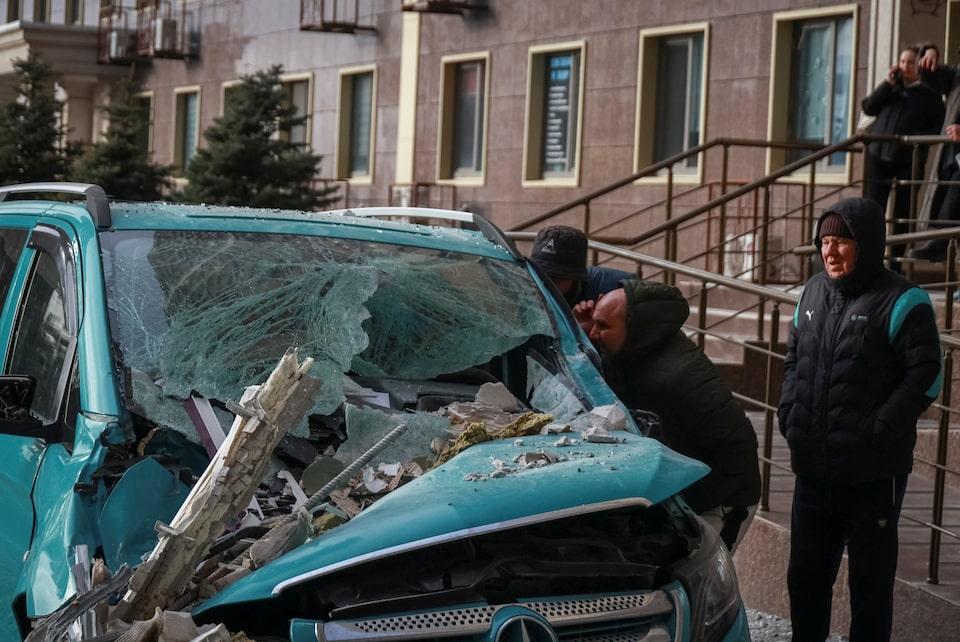
Jan 19 (Reuters) - Russia launched a barrage of drone strikes on Ukraine's energy infrastructure overnight on Monday, cutting off power in five regions across the country amid freezing temperatures and high demand, Ukrainian officials said. The Ukrainian air force said that Russian troops had launched 145 drones. Air defence units shot down 126 of them, it said. Sign up here. "As of this morning, consumers in Sumy, Odesa, Dnipropetrovsk, Kharkiv, and Chernihiv regions are without power," the energy ministry said in a statement. "Emergency repair work is underway if the security situation allows." In the southern Odesa region, energy and gas infrastructure was damaged, the regional governor said, adding that one person was hurt in the attack. DTEK, Ukraine's largest private energy company, said its energy facility in Odesa was "substantially" damaged, knocking out power for 30,800 households. A local power grid company in northern Chernihiv region said that five important energy facilities were damaged, leaving tens of thousands of consumers without power. Russia also hit Ukraine's second-largest city of Kharkiv with missiles on Monday morning, significantly damaging a critical infrastructure facility, Mayor Ihor Terekhov said. Moscow has stepped up a winter campaign of strikes on the Ukrainian energy system, including generation, electricity transmission and gas production facilities, amid freezing temperatures that complicate repair works. The attacks have caused long blackouts. "Being without electricity for more than 16 hours is awful," Serhii Kovalenko, CEO of energy distribution company Yasno, said on Facebook late on Sunday. "And it's not because of the energy companies, but because of cynical attacks by the enemy, who is trying to create a humanitarian disaster." Ukraine declared an energy emergency last week as its grid crumbled due to accumulated wartime damage and a new targeted wave of Russian bombardments. Energy Minister Denys Shmyhal said on Monday the government would implement projects to improve electricity transmission from the western part of the country to its power-hungry east. https://www.reuters.com/world/europe/russia-hits-energy-system-several-regions-ukraine-kyiv-says-2026-01-19/
2026-01-19 10:27
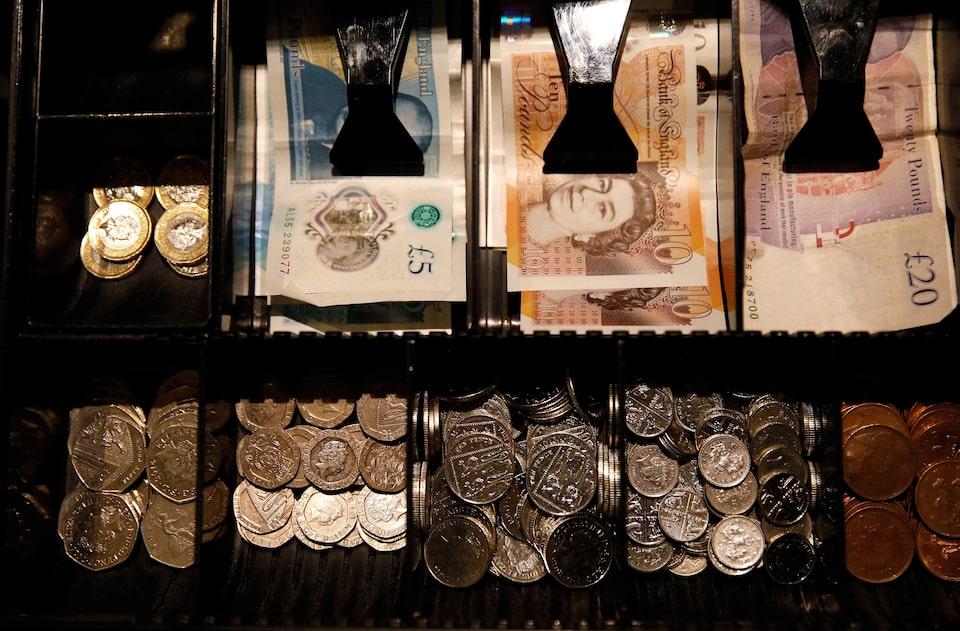
LONDON, Jan 19 (Reuters) - Sterling rose on Monday as markets looked to UK economic data points due throughout the week, while U.S. President Donald Trump's tariff threats against Europe over Greenland raised geopolitical concerns. The pound was up 0.16% to $1.3402. It ended the previous week down 0.13%. Sign up here. The euro was flat against the pound at 86.75 pence . Kit Juckes, chief FX strategist at Societe Generale, said the pound has performed relatively well so far this year, but this move could soon come to an end as new economic data is released. "The idea that the UK economy is doing well, I think isn't particularly priced by anybody, but certainly people are going to be nervously looking at some of the upcoming data," he said. "So it feels as if we've seen sterling rally against the euro just about as far as it's going to manage to and it's going to run out of some momentum." So far this year, the pound is down around 0.5% against the dollar, yet has strengthened a similar amount against the euro. In the coming days, November UK employment data, as well as December inflation and retail sales figures are due. Trump over the weekend said an additional 10% tariff would be applied to goods from Denmark, Norway, Sweden, France, Germany, the Netherlands, Finland and Britain from February 1 until the United States can buy Greenland. UK Prime Minister Keir Starmer on Monday called for a calm discussion on Greenland, while European allies scrambled to avert extra duties and prepared retaliatory measures. The dollar slipped broadly on Monday as investors moved money away from U.S. assets. "I think the geopolitical backdrop is certainly playing its part, but we're not quite front and centre of it," Juckes said. But, as the pound reacts to UK data, there will be "at least one eye floating around at...the wider world." Juckes noted that this also includes Trump's appearance at the World Economic Forum in Davos on Wednesday, where the U.S. president is expected to deliver remarks that will be closely watched by investors globally. https://www.reuters.com/world/uk/sterling-rises-economic-data-remains-focus-along-with-greenland-2026-01-19/