2025-05-14 22:13
NEW YORK, May 14 (Reuters) - Discovery Capital's founder Rob Citrone said on Wednesday his favorite stock at this moment is Mexico's America Movil (AMXB.MX) , opens new tab due to its exposure to many different countries in Latin America. Citrone, who manages a macro hedge fund, is bullish on Latin America as a diversification to investments in the U.S. Discovery posted a 52% gain last year. He sees opportunities in Latin America's equities, rates and currencies. Sign up here. Currently, most of Discovery's bets are outside the U.S. https://www.reuters.com/business/finance/discoverys-citrone-says-america-movil-is-his-top-stock-name-2025-05-14/
2025-05-14 22:01
WASHINGTON, May 14 (Reuters) - President Donald Trump is not going to Turkey to join Russia-Ukraine talks on Thursday, a U.S. official said on Wednesday. The official spoke after Russian President Vladimir Putin announced the Russian delegation for the talks, a list that did not include Putin himself. Trump had toyed with the idea of going to Turkey if Putin would be there. Sign up here. https://www.reuters.com/world/trump-not-going-turkey-russia-ukraine-talks-us-official-says-2025-05-14/
2025-05-14 21:19
WASHINGTON, May 14 (Reuters) - The U.S. Department of Agriculture on Wednesday canceled existing grants under its Food for Progress food aid program, according to an email seen by Reuters and two sources familiar with the situation. The Food for Progress program sends U.S. commodities abroad for agricultural and economic development projects, providing an important foreign market for farmers and enhancing food security in poorer countries. Sign up here. The program had been briefly paused in February under a review of federal spending by the administration of President Donald Trump, but quickly resumed. Food for Progress grantees were notified by the USDA on Wednesday that their awards were terminated and that staff would work with them on the "security, integrity, and disposition of any commodities" associated with the awards, according to an email seen by Reuters. The cancellations appeared to affect all existing awards, including some dating back to 2018, said one of the sources. Reuters could not independently confirm how many awards were canceled. Some of the commodities for projects funded in 2024 are still being shipped to their destinations, the source said. The USDA did not immediately respond to a request for comment. Trump's budget had proposed eliminating Food for Progress and other foreign food aid programs, including the McGovern-Dole Food for Education program run by USDA and the Food for Peace program administered by USAID. The USDA issued more than $218 million in Food for Progress grants in 2024, to send crops like milled rice, soybean meal, wheat, and yellow soybeans to countries, including Tanzania, Tunisia and Sri Lanka. https://www.reuters.com/world/us/us-farm-agency-cancels-food-progress-food-aid-grants-2025-05-14/

2025-05-14 21:06
ORLANDO, Florida, May 14 (Reuters) - TRADING DAY Making sense of the forces driving global markets Sign up here. By Jamie McGeever, Markets Columnist Eyes turn to Powell The powerful rise in risk and growth assets lost some steam as U.S. stocks ended mixed and oil slipped on Wednesday, although the losses were minimal, suggesting investors aren't ready to call a halt to the rally just yet. In my column today I look at the 'Global South', and how its time to shine may be now if the era of 'U.S. exceptionalism' forces a major shift in global capital and investment flows. More on that below, but first, a roundup of the main market moves. I'd love to hear from you, so please reach out to me with comments at [email protected] , opens new tab. You can also follow me at @ReutersJamie and @reutersjamie.bsky.social. Trading Day is also sent by email every weekday morning. Think your friend or colleague should know about us? Forward this newsletter to them. They can also sign up here. If you have more time to read, here are a few articles I recommend to help you make sense of what happened in markets today. Today's Key Market Moves S&P 500 completes 2025 round trip The feelgood factor from the U.S.-China trade truce at the weekend continues to ripple through world markets, although the positive impact on prices is understandably fading. From a Wall Street perspective at least, now that the S&P 500 has recouped most of its losses and is now virtually flat for the year, it is an ideal juncture for investors to draw breath and assess the landscape. From a technical perspective, key equity indices are comfortably above the 200-day moving averages so the longer-term upward momentum would appear to be in place. Markets will be more balanced than they were a month ago. If anything though, the risk is some investors could now be leaning too heavily 'long' stocks - the Nasdaq is up 30% from its April 7 low - and 'short' bonds. A speech on the economy from Fed Chair Jerome Powell on Thursday might be pivotal for short-term direction. A Fed rate cut by September is now no longer fully priced into the rates futures curve, and traders barely see 50 basis points of easing this year. Contrast this with the depths of the tariff tantrum in early April when 100 bps of rate cuts this year, starting as early as June, was the consensus view. The more hawkish shift hasn't completely dented U.S. or global risk appetite though, as it has been driven by a sudden improvement in the economic outlook rather than a surge in inflation expectations. That said, U.S. fiscal concerns are back on investors' radar again. Figures from China earlier on Wednesday, meanwhile, showed that bank lending tumbled more than expected in April, underscoring the weakness of the domestic economy and the impact of heightened trade tensions with the United States. But these tensions have cooled considerably, and investors will have more positive, forward-looking signposts for direction. The news flow over the last 48 hours will have given them cause for cautious optimism. E-commerce retailer JD.com topped market estimates for quarterly revenue on Tuesday, Tesla plans to start shipping components from China to the U.S. for the production of Cybercab and Semi trucks soon, and Tencent Holdings' Q1 earnings beat forecasts. Tencent President Martin Lau also said stockpiles of AI chips should protect it from U.S. restrictions. Chinese and Hong Kong equities outperformed on Wednesday, with Hong Kong's headline and tech indexes rising more than 2%. Meanwhile, Thursday's calendar is overflowing with earnings results, policymaker speeches and economic data that could potentially move markets around the world. Perhaps the most important of them all will be Powell's remarks, his first public comments since last weekend's 'Geneva convention'. Calling the 'Global South', your time is ... now? The era of 'U.S. exceptionalism' may be over – and with it the Washington-led world economic and financial order of the last 50 years. This leaves investors with a big question, how will this reshape capital flows? The most obvious destination is Europe, home to the world's second-largest economy and second-biggest reserve currency, where markets are deep and liquid and the rule of law reigns supreme. The so-called 'Global South' may seem less attractive. Its 100-plus disparate countries, excluding China, carry the typical smorgasbord of emerging market risks, including political instability, legal concerns and policymaking credibility. But the global economic and investment landscape is changing rapidly and perhaps irrevocably, and investors may be skittish about once again finding themselves over-concentrated in any one region. Investors with long-term horizons and high risk thresholds may therefore increasingly consider boosting their allocations to this enormous and varied 'bloc'. These countries have long punched below their financial market weight. But could they be poised to benefit from a global capital reallocation shift? That's among the findings in a report published last week by Deutsche Bank strategists, 'The Global South: A strategic approach to the world's fourth bloc'. "The time for the Global South is now," states the report, which broadly defines the bloc as the 134 member countries of the G77 group of nations, excluding China, Russia, Singapore and a few others, adding in Mexico, Turkey and some central Asian countries. Some numbers here are worth noting. The group is home to almost two-thirds of the world's working age population, produces 40% of the world's energy and key transition metals, accounts for a quarter of global trade, and has attracted nearly a quarter of all inward FDI over the past decade. Indeed, the Boston Consulting Group says foreign direct investment in the Global South in 2023 totaled $525 billion, surpassing FDI into advanced economies of $464 billion. And while it is far too early to say how countries will align politically, economically, or militarily in the years ahead, there are already signs of rotation of capital into the Global South and away from China. Deutsche Bank's report notes that foreign investment into the Global South has held relatively steady in recent years while flows into China have collapsed to near zero. DIVERSIFICATION AND VALUE GENERATION China's economic rise in recent decades has been one of the most astonishing in human history. In 1990, China accounted for only 2% of developed economies' GDP. By 2021 that figure had reached 33%, almost matching the Global South's then share. But China's growth rates have stalled, especially since the pandemic. The International Monetary Fund forecasts China's share of advanced economies' GDP will end this decade around 35%, while the Global South's share will rise to a new high of 40%. "In the event the U.S. trade war remains concentrated against China, the Global South could evolve into ... a source of diversification and value generation for investors," Deutsche Bank's analysts argue. From an equity allocation perspective, there is a lot of space to grow. The Global South made up a mere 11% of global market capitalization at the end of last year, with two countries - India and Saudi Arabia - accounting for more than half this share. If the dominance of U.S. equities wanes - they currently make up more than 70% of global market cap - even a tiny reallocation to this group could have a big impact on valuations in these countries. The risks, however, are manifold and many were on display during the market turbulence sparked by U.S. President Donald Trump's tariffs. Figures released by the Institute of International Finance last week showed that portfolio flows to emerging markets came to a "standstill" in April. While the Trump administration is rolling back its initial plan to slap enormous tariffs on much of South East Asia, investors may still be anxious about plowing too much capital into countries that could yet get caught in the U.S. crosshairs. "The current environment differs fundamentally from past episodes. This is not an exogenous shock but a deliberate policy action with structural objectives. As a result, the scope for rapid normalization is limited," the IIF said. But what really matters here are not "rapid" moves, but the structural changes in the global economy that the U.S. administration's unorthodox policies may have catalyzed. It's good to remember that Chinese exports to 'conductor economies' in the Global South have doubled since Trump's first trade war in 2018. Given how unreliable the U.S. now appears, it is reasonable to assume that both China and Europe may be seeking to further diversify their export markets. So perhaps the time is not 'now' for the Global South, but it could be coming soon. What could move markets tomorrow? Opinions expressed are those of the author. They do not reflect the views of Reuters News, which, under the Trust Principles , opens new tab, is committed to integrity, independence, and freedom from bias. https://www.reuters.com/markets/global-markets-trading-day-graphic-pix-2025-05-14/
2025-05-14 20:58
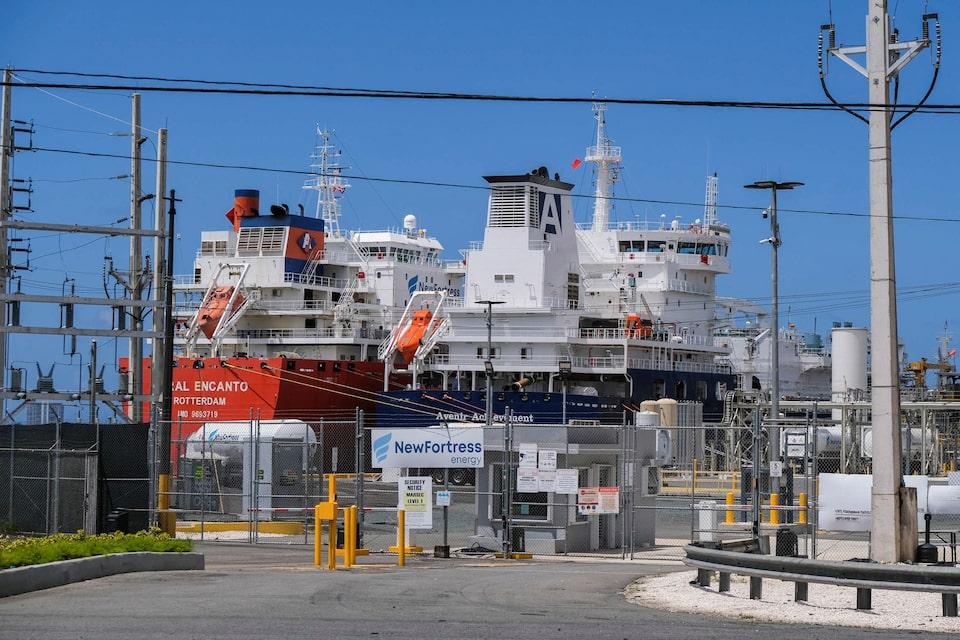
May 14 (Reuters) - New Fortress Energy (NFE.O) , opens new tab posted a loss in the first quarter on Wednesday, as the U.S. LNG firm struggled with weak performance across its segments, sending the shares down nearly 19% in extended trading. The company also closed the sale of its Jamaican assets and operations to Excelerate Energy (EE.N) , opens new tab for $1.06 billion. The New York-based company had pushed its first-quarter results announcement from Monday as it intended to announce completion of the deal. Sign up here. "The closing of the sale of our Jamaican assets to Excelerate is a significant milestone for the company as we streamline our operations and paydown corporate debt through asset sales," said CEO Wes Edens. New Fortress, valued at $1.93 billion according to LSEG data, had long-term debt worth $8.9 billion at the end of the first quarter. Last year, it began exploring options like bringing in strategic partners or selling assets, after it deferred a shareholder dividend to preserve cash and worked out a deal with bondholders to push back maturities. Its financial woes stem from its inability to secure LNG for its power-generation assets in Latin America on long-term agreements because its credit was not rated investment-grade and had to acquire the gas at higher prices. New Fortress' total revenue fell to $470.5 million in the first quarter, from $690.3 million during the same reporting period a year earlier. At its terminals and infrastructure unit, operating margin declined 78.7% to $74.6 million during the quarter. Operating margin at the ships segment fell to $31.4 million during the January-March period, from $34.2 million a year earlier. The company reported a net loss of $197.4 million, or 73 cents per share in the quarter ended March 31, compared with a net income of $56.7 million, or 26 cents per share, a year earlier. https://www.reuters.com/business/energy/new-fortress-energy-posts-quarterly-loss-all-segments-show-weak-performance-2025-05-14/
2025-05-14 20:48
SAO PAULO, May 14 (Reuters) - A settlement involving federal prosecutors and Brazilian meat packers has helped wean much of the country's beef supply chain from links to Amazon rainforest destruction, according to company audits of their cattle purchases in six states that prosecutors unveiled on Wednesday. The settlement, called TAC da Carne, requires meatpackers to audit their cattle purchases to determine whether the animals are being raised in areas that are protected, were illegally deforested, or have other irregularities. The initiative does not cover indirect cattle suppliers, which remain a big part of the beef industry's supply chain. Sign up here. Brazil is the world's biggest beef exporter, but most of its herd is in the Amazon, the world's largest and most biodiverse rainforest. Research shows cattle ranching there is a major driver of deforestation. Last year, deforestation in the Brazilian Amazon reached read more , an area larger than the U.S. state of Delaware. It was the lowest level since 2015. Daniel Azeredo, one of the federal prosecutors overseeing the settlement, said the data showed the program made huge contributions to curbing deforestation. Still, he added, animals raised on illegally deforested farms continue to enter companies' supply chains through illegal schemes. He called for closer monitoring of indirect cattle suppliers. "We must recognize challenges remain," he said. Overall, 4% of the Amazon cattle supply of meatpackers audited as part of the settlement showed signs of irregularities between January and December 2022. But companies that did not audit purchases had a record 52% of non-compliance. The disparity, federal prosecutors said, highlighted the impact of the settlement. JBS (JBSS3.SA) , opens new tab, the world's largest meatpacker, and rivals Minerva (BEEF3.SA) , opens new tab and Marfrig (MRFG3.SA) , opens new tab all hired independent auditors to monitor their cattle purchases, as have multiple privately owned beef packers. JBS cattle purchases reached 98.2% of conformity in Mato Grosso, home to Brazil's biggest cattle herd, compared with 100% compliance for its two main listed competitors, according to data presented by the prosecutors. In Para, home to Brazil's second largest cattle herd, JBS showed 3% of non-conformity in cattle purchases, a steady improvement since a 2020 audit found 32% of its supply came from irregular farms. In a statement, JBS celebrated the audit results and said it is closer to its goal of 100% compliance. https://www.reuters.com/sustainability/climate-energy/audits-brazil-beef-supply-chain-show-progress-reducing-links-amazon-2025-05-14/