2025-05-14 12:23
DUBAI, May 14 (Reuters) - Abu Dhabi National Oil Company's international investments arm XRG said on Wednesday it had taken a stake in an offshore natural gas block in Turkmenistan, part of its ambitious growth plans. XRG, set up late last year and which ADNOC has said has $80 billion in assets, has a mandate to pursue global deals in chemicals, natural gas and renewables as Abu Dhabi seeks to build a globe-spanning portfolio in those areas and rely less on revenue from oil exports. Sign up here. Malaysia's state oil firm Petronas will hold a 57% interest in the offshore "Block I", XRG will own 38% and Turkmen state firm Hazarnebit will have the remaining 5%, XRG said in a statement. They signed a long-term gas sales agreement with state firm Turkmengas as part of the deal, XRG added. Financial details of the deal were not disclosed. The three companies also signed a production sharing contract with Turkmen national oil firm Turkmennebit for the offshore block. The block in the Caspian Sea currently produces 400 million cubic feet of natural gas per day. "It offers significant long-term potential, with access to over 7 trillion cubic feet of natural gas resources and future opportunities for production capacity expansion," XRG said in its statement. https://www.reuters.com/business/energy/adnocs-xrg-takes-stake-turkmenistan-gas-block-2025-05-14/
2025-05-14 12:20
LONDON, May 14 (Reuters) - OPEC on Wednesday trimmed its forecast for growth in oil supply from the United States and other producers outside the wider OPEC+ group this year and said it expected lower capital spending following a decline in oil prices. Supply from countries outside the Declaration of Cooperation - the formal name for OPEC+ - will rise by about 800,000 barrels per day in 2025, OPEC said in a monthly report, down from last month's forecast of 900,000 bpd. Sign up here. A slowdown in supply growth outside OPEC+, which groups the Organization of the Petroleum Exporting Countries plus Russia and other allies, would make it easier for OPEC+ to balance the market. Rapid growth from U.S. shale and from other countries has weighed on prices in recent years. In recent weeks, oil prices have come under pressure from OPEC+'s decisions to increase output in May and June more rapidly than first planned, and from U.S. President Donald Trump's tariffs. In the report, OPEC said it expected investment in exploration and production outside OPEC+ in 2025 to decline by about 5% year-on-year. In 2024, investment rose by about $3 billion year-on-year to reach $299 billion, OPEC said. "The potential impact on production levels in 2025 and 2026 of the decline in upstream E&P oil investments will constitute a challenge, despite the industry's continued focus on efficiency and productivity improvements," OPEC said in the report. While the United States is still expected to drive supply growth, OPEC expects U.S. total oil output to rise by about 300,000 bpd this year. Last month, it forecast growth of 400,000 bpd. It left its forecasts for global oil demand growth unchanged in 2025 and 2026, after reductions last month. It cited the impact of first-quarter demand data and trade tariffs. The group welcomed this week's trade agreement by the United States and China. "The 90-day trade agreement between the U.S. and China suggests the potential for more lasting agreements, likely supporting a normalisation of trade flows but at potentially elevated tariff levels compared to pre-April escalations," OPEC said. https://www.reuters.com/markets/commodities/opec-expects-slower-2025-oil-supply-growth-rivals-after-price-drop-2025-05-14/
2025-05-14 11:56
Romanian politics in turmoil after government collapses Romania headed for decisive presidential run-off on Sunday Far-right, centrist candidates neck-and-neck in latest poll EU Commission in talks with Romania on budget consolidation BUCHAREST, May 14 (Reuters) - Major foreign business chambers in Romania, including the U.S., UK and Germany, voiced concern on Wednesday about what they described as a rapid deterioration of the investment climate and the credibility of central Europe's second-largest economy. Romania's politics have been in turmoil since hard-right presidential front-runner George Simion's surge in a first-round vote led to the collapse of the pro-Western coalition government, and caused widespread concern about Romania's already strained finances. Sign up here. The leu fell sharply, while local currency bonds sold off last week amid rising uncertainty about how Romania will rein in the European Union's highest budget gap and stave off a credit rating downgrade from the lowest rung of investment grade. The European Commission told Reuters it was in close contact with Romanian authorities to ensure Bucharest takes additional measures needed to stick to its deficit-cutting plan submitted to Brussels late last year. "This would, over the medium-term, credibly put Romanian government finances on a sustainable trajectory," it said in an emailed response. Romania's budget deficit surged to 9.3% of output last year, nearly double the government's target. With a decisive run-off due on Sunday and a poll showing Simion and centrist Bucharest mayor Nicusor Dan running neck-and-neck, the business chambers said political decisions must be stable and coherent to keep Romania on its Euro-Atlantic path. "The Romanian business sector represented by our organizations underlines jointly the accelerating deterioration of the business environment and the erosion of Romania's credibility," a joint statement by eight investor associations and business chambers said. A Simion victory could isolate Romania, erode private investment and destabilise NATO's eastern flank, where Bucharest plays a key role in providing logistical support to Ukraine as it fights a three-year-old Russian invasion, political observers say. Simion has said that, if elected, he would nationalise companies that exploit Romania's natural resources and appoint Calin Georgescu, the far-right Russia-friendly front-runner of a presidential election annulled in December, as prime minister. Both Simion and independent rival Dan have ruled out tax hikes to fix the country's finances despite Romania's budget revenue being among the lowest in the 27-member EU as a percentage of national output. Bank of America economists said Simion's victory could delay the formation of a new government as he would likely aim to include his far-right AUR party in any new cabinet to emerge after the ballot. "The fiscal and political timelines are not aligned," it said in a note. "The (European Commission) require budget plans ideally before end-May, and latest by early July to make a decision, while government formation may happen later. So negative headlines on EU funds could come in June-July." The head of the country's largest investors' group told Reuters last week that a deepening political crisis raised the risk of pushing the country into recession. https://www.reuters.com/world/europe/foreign-investors-sound-alarm-over-erosion-romanias-business-climate-2025-05-14/

2025-05-14 11:52
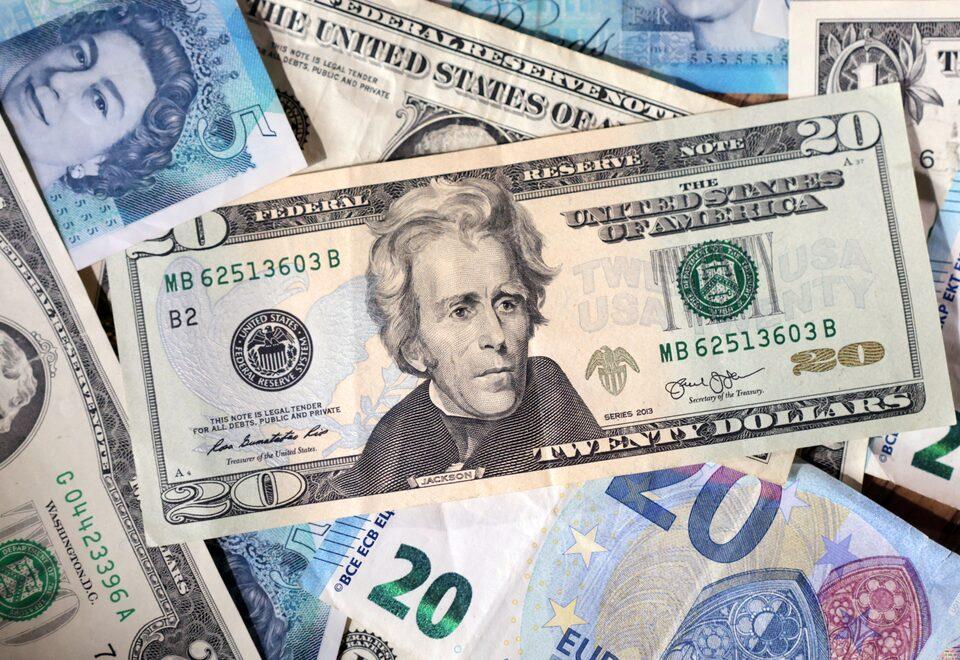
EU supervisors step up demands to reduce liquidity risks, sources say Senior bankers assess unprecedented scenarios of Fed withholding dollars in emergency Risks of Fed dollar freeze in crisis seen at 5% from 0% before, source says LONDON, May 14 (Reuters) - European Central Bank supervisors are asking some of the region's lenders to assess their need for U.S. dollars in times of stress, as they game out scenarios in which they cannot rely on tapping the Federal Reserve under the Trump administration, three people with knowledge of the discussions said. Nearly one-fifth , opens new tab of euro zone banks' funding needs are denominated in U.S. dollars, with the lenders borrowing in markets for short-term funding that can shut down abruptly in times of financial stress. In the past, European central banks borrowed dollars from the Fed, the source of the currency, to make up for the shortfall. Sign up here. The Fed has lending facilities with the ECB and other major counterparts to alleviate shortages of the global reserve currency and to keep financial stress from spilling over into the United States. Two of the sources familiar with the ECB supervisory discussions said the Fed had never suggested - including now - that it would not stand by those backstops. Even so, with President Donald Trump’s questioning of long-held defence and trade agreements with European allies breeding mistrust, there are concerns the Fed’s position could change, said the sources, who requested anonymity to speak candidly about sensitive banking supervisory matters. ECB supervisors are thus requesting as a matter of urgency that the region’s lenders assess gaps in their balance sheets, such as where they have lent out dollars to clients and financed other dollar-denominated assets but don’t have sufficient or reliable funding in that currency to meet liabilities, one of the sources said. They are pressing some banks in the euro zone to reduce such gaps and in some cases demanding that they consider changing some of their business to make them less exposed to dollar funding, this person said. The ECB declined to comment. The White House didn't respond to a request for comment. The Fed also declined to comment and referred to a speech by Fed Chair Jay Powell in April where he said that the central bank remains prepared to provide dollars to counterparts. "We want to make sure that dollars are available," Powell said. While the Fed is independent of the White House, Trump has frequently and openly criticised Powell, whose term runs out in a year, leading some to worry about the possibility of a less-independent Fed in future. SIGNIFICANT RISK The supervisory actions - previously unreported - follow a March report by Reuters that revealed some European central banking and supervisory officials were considering whether they could rely on the Fed for dollars under Trump. In response to a query on the March report, Claudia Buch, the ECB's supervisory chief, told a parliamentary hearing that month that the ECB monitors liquidity in the banking system "very closely." She also warned of risks to liquidity from geopolitical shocks in the ECB's annual report on banking supervision. While the questions about the Fed backstops involve risk assessments in situations considered highly unlikely, and while there is no stress on the dollar funding market at present, the precautionary supervisory requests show the extent of unease among the U.S.' closest allies. A senior executive at one of the biggest lenders in Europe, which is not regulated by the ECB but by other authorities, said their bank is now assigning a 5% risk to a scenario in which Fed financing might not be available, up from zero a few months ago. The person described that level of risk as "quite significant," and added that ways to address a dollar shortage such as reducing exposures and seeking alternatives will form part of the bank's risk discussions going forward. Another senior European banking executive said their bank, which is regulated by the ECB, in recent weeks and for the first time modelled for a "tricky scenario" where the Fed swap lines would not be available. While the bank could keep trading for a prolonged period, it would come at a great cost for new activity in dollars, the executive said. FUNDING GAPS The European discussions reflect the sprawling, interlinked nature of big lenders and are relevant to financial stability. Global banks, including some of Europe's biggest lenders, run huge balance sheets and have exposure to a range of currencies including the dollar. They can often operate in different currencies and their assets and liabilities can have various durations. In its Financial Stability Review last November the ECB said 17% of euro zone banks’ funding was in dollars. These banks raised the bulk of that in U.S. funding markets, such as commercial paper and overnight repurchase agreements, where they borrowed dollars against Treasuries and other collateral. They used those dollars to lend to non-banks in the euro zone and finance other client activities such as trade. Those funding sources could dry up in the event of stress, and when banks lose trust in each other. That's where the Fed's arrangements come in. Most recently, the system was tested in March 2023 when Credit Suisse ran into trouble. As the market's confidence in the Swiss lender withered and clients withdrew tens of billions of dollars, its peers quickly reduced their exposure to the bank, Reuters reported at that time. The Fed provided tens of billions of dollars to the Swiss National Bank, which in turn enabled Credit Suisse to meet client demand for cash, averting a broader crisis. One of the sources familiar with the latest supervisory discussions said that while replacing liquidity lines from central banks isn't a task for banks, they can do more to ensure they have the liquidity available in the right currency. Regulators typically tolerate some gaps in liquidity and duration - or mismatches in the periods over which assets and liabilities mature - but are now pressing banks to reduce them, the person said. In some cases, European banking supervisors have asked them as part of their recent requests to consider changes in their business models to better match currency liquidity needs with their funding sources, the person added. Banks can trim their dollar-denominated liabilities by reducing their activities in certain markets or business lines. For instance, European lenders that do not have a U.S. subsidiary and are active in global commerce, such as in financing shipping, can have large exposure to dollars, most likely causing a liquidity imbalance in their balance sheets, said one European banking regulator not directly involved in bank supervision. Reuters was unable to obtain further details of the kinds of businesses coming under such pressure. https://www.reuters.com/sustainability/boards-policy-regulation/ecb-supervisors-press-banks-dollar-funding-over-trump-concerns-sources-say-2025-05-14/
2025-05-14 11:46
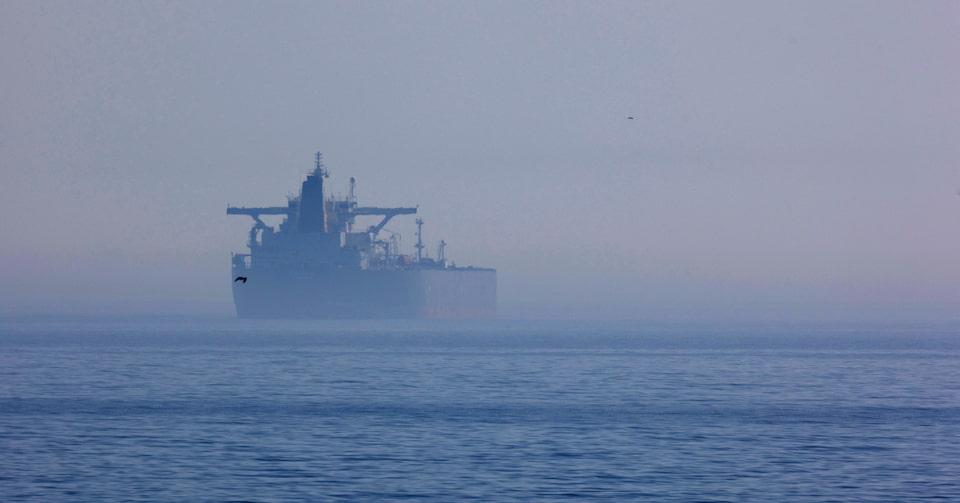
Jean-Noel Barrot says EU must work on new sanctions with US Talks planned with US Senator Lindsey Graham in Turkey Latest EU sanctions package targets Russia's shadow fleet Judges and prosecutors in Kara-Murza and Navalny cases also sanctioned BRUSSELS/PARIS, May 14 (Reuters) - The European Union must focus on a new sanctions package to suffocate Russia's economy and force President Vladimir Putin to end the war in Ukraine, France's foreign minister said on Wednesday. Speaking after the EU adopted a 17th sanctions package, Jean-Noel Barrot said that the impact of sanctions had been insufficient so far, and the bloc needed to work with the United States, where Congress has prepared crippling measures should U.S. President Donald Trump decide to pressure Moscow. Sign up here. "We are adopting today a 17th sanctions (package)," Barrot told leading news channel BFM TV. "We will need to go further because the sanctions so far have not dissuaded Vladimir Putin from continuing his war of aggression. "So we must prepare to expand devastating sanctions that could suffocate once and for all Russia's economy." The 17th package sees some 200 'shadow fleet' tankers sanctioned. Two countries still need to consult their own parliaments on the details but the package is expected to be adopted next week by the bloc's foreign ministers, diplomatic sources said. The latest tightening of sanctions comes as Moscow and Kyiv may hold their first peace talks in Istanbul on Thursday since the early days of Russia's February 2022 full-scale invasion of Ukraine. In addition to the ships, the package adds new restrictions on 30 companies involved in the trade of dual-use goods while 75 individuals and entities will be listed for their links to Russia's military industrial complex. The countries have also agreed to expand the legal base for their sanctions framework on Russian hybrid threats. One of the new measures will allow the EU to sanction fleets that destroy subsea cables and other physical assets. A further 20 entities and individuals were added to this list. Some European leaders have threatened to impose further sanctions on Russia if Putin does not agree to a ceasefire in Ukraine, but they would face formidable political obstacles and would need U.S. support to succeed, officials and diplomats have said. Barrot, who will be in Turkey on Thursday for a NATO foreign ministers meeting, said he would hold talks in Turkey with U.S. Senator Lindsey Graham on a U.S. sanctions bill he is putting together. That bill would impose tariffs of 500% on countries that imported Russian oil, Barrot said. "Russia has found ways to circumvent the blockage imposed by Europe and the United States so closing the tap would grab Russia by the throat," he said. Diplomats said discussions on a new EU package would take several weeks and aim to target the banking, financial and energy sector, but would face difficulties in securing the necessary unanimity among the bloc's 27 members. Under a human rights framework, the EU also agreed on Wednesday to place sanctions on judges and prosecutors involved in the cases against Vladimir Kara-Murza as well as Alexei Navalny, who died in an Arctic penal colony in February last year. The countries have also agreed on an export ban on chemicals used in missile production, the diplomatic sources said. https://www.reuters.com/world/europe/time-suffocate-russias-economy-after-17th-eu-sanctions-package-france-says-2025-05-14/
2025-05-14 11:45
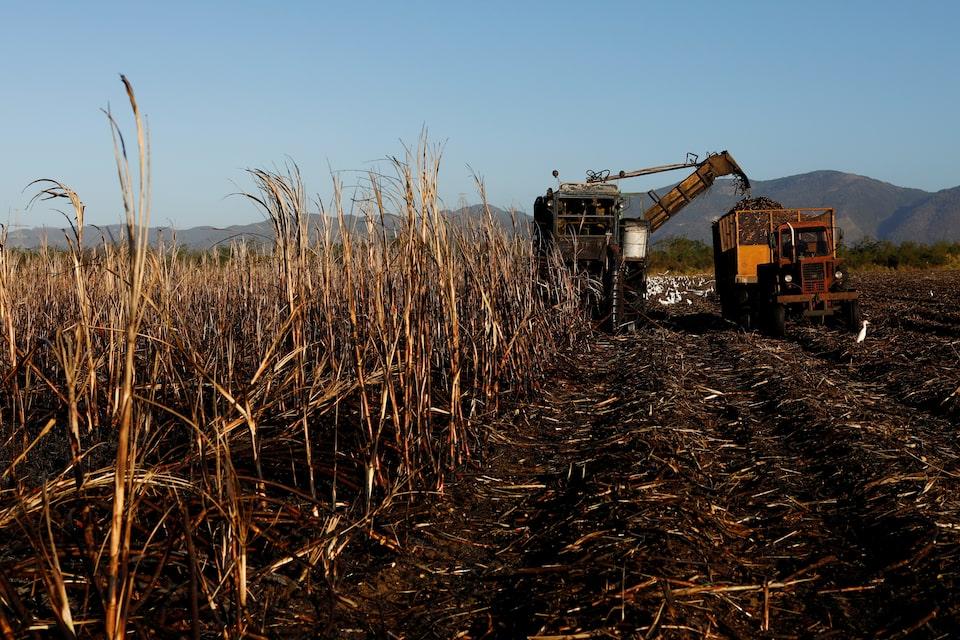
Island's sugar output falls to lowest in more than a century Causing a shortage of local ingredient for Cuban rum Cuba must import sugar to meet bare minimum demand HAVANA, May 14 (Reuters) - Cuban annual raw sugar production will fall below 200,000 metric tons in 2025 for the first time since the 19th century, potentially leaving rum makers short of a key ingredient, according to recent official reports and an industry source. State-run monopoly AZCUBA planned to produce 265,000 metric tons of raw sugar this year. But as the milling season has neared its end, output was running about 100,000 tons short, a Reuters estimate found, based on official media reports and sources with knowledge of the situation. Sign up here. Cuba produced 350,000 metric tons of sugar in 2023, its most recent data, compared with 1.3 million in 2019. The Communist-run Caribbean Island nation, at one time a major sugar exporter, will have to import more than it produces this year to meet bare minimum demand, offering little solace to rum distilleries, which can only use local product. The National Statistics and Information Agency reported production of sugar-based 96% ethanol alcohol -- used in distilling quality rum -- plunged 70% from 573,000 hectoliters in 2019 to 174,000 last year , opens new tab. Another grade of alcohol used in some other rums fell a similar amount. The outlook is the latest sign of Cuba`s collapsing economy, ravaged by U.S. sanctions, inefficiencies and the COVID-19 pandemic. Sugar cane production and sugar milling have dropped due to shortages of key inputs and mismanagement. An authentic Cuban rum must use alcohol produced from Cuban cane sugar, but plunging production has unsettled the industry, a foreign businessman told Reuters, requesting anonymity. “Because rum must age, we have been using our stocks and the concern is, will we have new stocks looking forward?” he said. Though sugar mills remain open, yields typically drop sharply in May as summer rains complicate processing. Just one of 13 sugar-producing provinces, Sancti Spiritus, had completed its plan of a comparatively meager 19,000 tons by May. Villa Clara province, once a sugar powerhouse, reported hitting 38% of a 27,000 ton target, and Cienfuegos reached about two-thirds of a 38,000 ton plan. In eastern Cuba, Las Tunas province reported output at 5,000 tons, 11% of its plan. The Communist Party newspaper in Las Tunas blamed industrial breakdowns, fuel shortages and a lack of lubricants -- a common refrain across the industry. The Caribbean island nation was once the world’s top sugar exporter, churning out 8 million metric tons of raw sugar in 1989. The collapse of its former benefactor, the Soviet Union, sparked a steady decline. https://www.reuters.com/markets/commodities/cuban-sugar-production-falls-further-rattling-rum-makers-2025-05-14/