2025-05-14 10:45
SINGAPORE, May 14 (Reuters) - The Democratic Republic of Congo may impose strict curbs on exports of cobalt when its existing four-month export ban ends, the head of a government agency said on Wednesday. Congo, the world's leading producer of cobalt, imposed the export ban in February to try to revive prices for the metal, which is used for batteries for electric vehicles and mobile phones. Sign up here. Patrick Luabeya, president of the Authority for the Regulation and Control of Strategic Mineral Substances' Markets, told a conference in Singapore that Congo would implement further restrictions because of high stocks in the country and elsewhere. He said the stockpiles that have depressed prices "have not yet been exhausted although they have been significantly reduced". The government agency's next decision "will inevitably imply a strict limitation of exports in whole or in part until market balance is reached with regard to the supply and demand of cobalt," Luabeya said. He also said the agency would consult industry players in June regarding the ban. Mines Minister Kizito Pakabomba earlier said in a speech the ban on cobalt exports is under review, without giving further details. The country is in talks with major stakeholders over next steps in its export policy, including miners Glencore, ERG, and CMOC, he told Reuters. In February, Congo imposed a four-month ban on cobalt exports to tackle oversupply of the battery metal on the international market. In March, the country's prime minister said it intended to impose export quotas on cobalt following the export ban, and plans to partner with Indonesia, another big producer, to manage global supply and pricing. https://www.reuters.com/world/africa/congos-four-month-ban-cobalt-exports-is-under-review-minister-says-2025-05-14/

2025-05-14 10:37
LONDON, May 14 (Reuters) - What matters in U.S. and global markets today by Amanda Cooper. The stock market is a little on the weaker side today, with U.S. futures mostly steady, as investors take a breather from this week's blistering rally. Global trade tensions might finally be easing, money is flowing back into the glittering AI sector and the prospect of potentially bullish Federal Reserve rate cuts is back on the table. Sign up here. Mike is out today, but check out his latest column to find out why U.S. budget anxiety could quickly replace the trade war tensions. Today's Market Minute * President Donald Trump kicked off his trip to the Gulf on Tuesday with a surprise announcement that the United States will lift long-standing sanctions on Syria, and a $600 billion commitment from Saudi Arabia to invest in the U.S. * Tesla plans to start shipping components from China to the U.S. for the production of Cybercab and Semi trucks from the end of this month, after the U.S. and China reached a truce over tariffs. * How will the trade war de-escalation impact China's mammoth manufacturing sector and the country's energy needs? Read Reuters’ columnist Gavin Maguire’s latest piece to learn which key metrics you should be tracking. * The fog of uncertainty created by Trump's trade war may be lifting, but it’s leaving investors with a lingering question: what was the point of all that chaos around what the president termed "Liberation Day"? Check out Jamie McGeever’s analysis in his latest column. * The comprehensive trade deal announced by the U.S. and UK governments last week was a damp squib, but that shouldn’t worry Downing Street. The bigger prize is closer collaboration with the European Union, and that could accelerate after the UK-EU summit next week. Find out more in the column from Panmure Capital’s Joachim Klement. The Magnificent 7 Ride Back into Town This week's stock market rally could well go down in Wall Street history as one of the most epic on record. The S&P 500 is up by more than 20% in the 36 days since it hit a 15-month low on April 7. The index took just 16 days to hit the 20%-recovery-from-the-lows mark in 2020 and 18 days in 2009. The difference this time around is there is no tidal wave of monetary or fiscal stimulus helping to grease the wheels of the rally. The bulls aren't just back, they're in the driving seat and the Magnificent 7 - Apple, Amazon, Microsoft, Nvidia, Meta and Tesla (TSLA.O) , opens new tab - are the engine. Investors have an affinity for shiny things. This week's cocktail of market-friendly catalysts, including the 90-day halt to the U.S./China trade war, a benign reading of inflation and a raft of headline-grabbing investment deals from the Middle East, where Trump happens to be visiting, have set the stage for Mag 7 mania once again. Nvidia has announced it will sell hundreds of thousands of its artificial intelligence chips in Saudi Arabia. Chip designer Advanced Micro Devices has unveiled a $10 billion collaboration with Humain, the Saudi sovereign wealth fund's newly minted AI startup, while the Saudi government itself made a commitment to Trump to invest $600 billion in U.S. companies. If the Mag 7 were a major drag on the broader S&P on the way down earlier this year, they're proving to be a major boon on the way back up. Most world indices have recovered the bulk of the losses triggered by the April 2 "Liberation Day" sell-off. Since then, the Roundhill Magnificent 7 exchange-traded fund has gained 11%, far outpacing the 4.5% rise in the S&P 500 since then. By contrast, the equal-weight S&P, which strips out the oversized influence of the megacaps, is barely up 1%. Tesla has rejoined the $1-trillion club this week, having dropped out in late February, while shares in Nvidia, whose name has become synonymous with the AI boom, have gained nearly 18%. Chart of the day Zooming out, so far this year the Mag 7 are lagging the rest of the market. But at this rate, they're not only catching up, they're powering the May rally. Today's events to watch * Trump tours the Middle East; Gulf Cooperation Council takes place in Riyadh, Saudi Arabia * Federal Reserve Board Governor Christopher Waller addresses an event in Rabat, Morocco * Federal Reserve Vice Chair Philip Jefferson speaks on the economic outlook * Federal Reserve Bank of San Francisco President Mary Daly participates in fireside chat before the California Bankers Association * Cisco Systems fiscal Q3 2025 earnings after the bell Opinions expressed are those of the author. They do not reflect the views of Reuters News, which, under the Trust Principles , opens new tab, is committed to integrity, independence, and freedom from bias. https://www.reuters.com/markets/us/global-markets-view-usa-2025-05-14/
2025-05-14 10:29
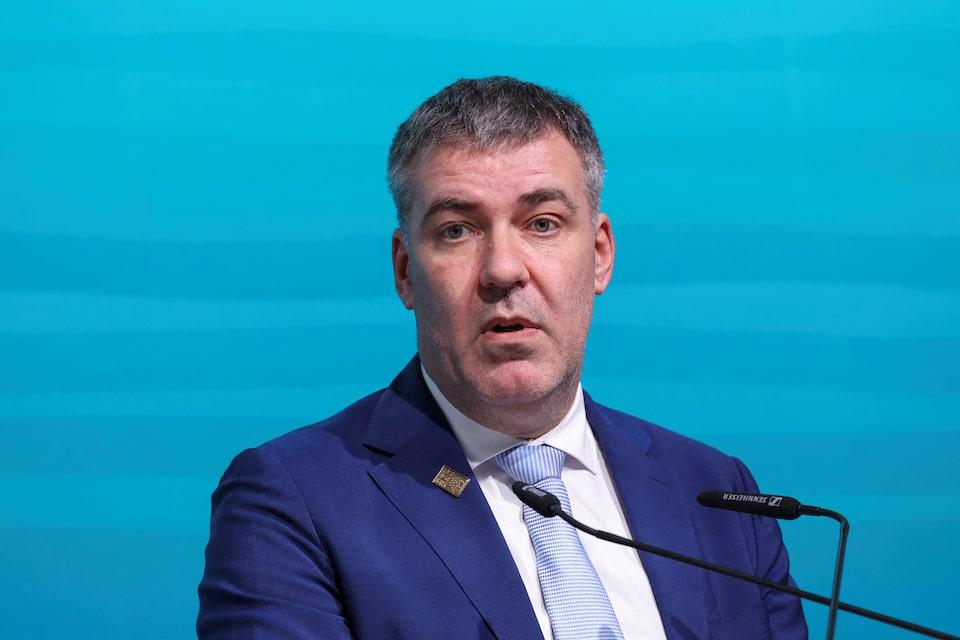
COPENHAGEN, May 14 (Reuters) - Denmark is considering lifting a 40-year-old ban on nuclear power to enhance its energy security, its energy minister said, marking a significant policy shift in a country that has prioritised expanding wind and solar power. The Danish government will analyse the potential benefits of new nuclear power technologies, with a report expected to be ready next year, Minister for Climate, Energy and Utilities Lars Aagaard told Danish daily Politiken in an interview published late on Tuesday. Sign up here. "We can see that there is a development underway with new nuclear power technologies - small, modular reactors," Aagaard said in remarks confirmed by his ministry on Wednesday. "But it's not enough that they have potential. We also need to know what it means for Danish society if we are to enable these technologies," he said. He also dismissed the idea that traditional nuclear power technologies would return in Denmark, which banned it in 1985. "We continue the energy policy we have pursued for many years in Denmark. Solar and wind are the cheapest and fastest way to the green transition," Aagaard said. In 2005, Danes celebrated as neighbouring Sweden shut down the Barseback 2 nuclear reactor, located near Copenhagen just across the Oresund strait. While Sweden has closed more of its nuclear plants over the past decade, the current government is taking a firmly pro-nuclear stance and is seeking to build new capacity. Later on Wednesday, Aagaard is due to appear at a public hearing in parliament and answer questions from opposition parties favouring the revival of nuclear power. https://www.reuters.com/business/energy/denmark-is-considering-lifting-40-year-old-nuclear-power-ban-minister-says-2025-05-14/
2025-05-14 10:17
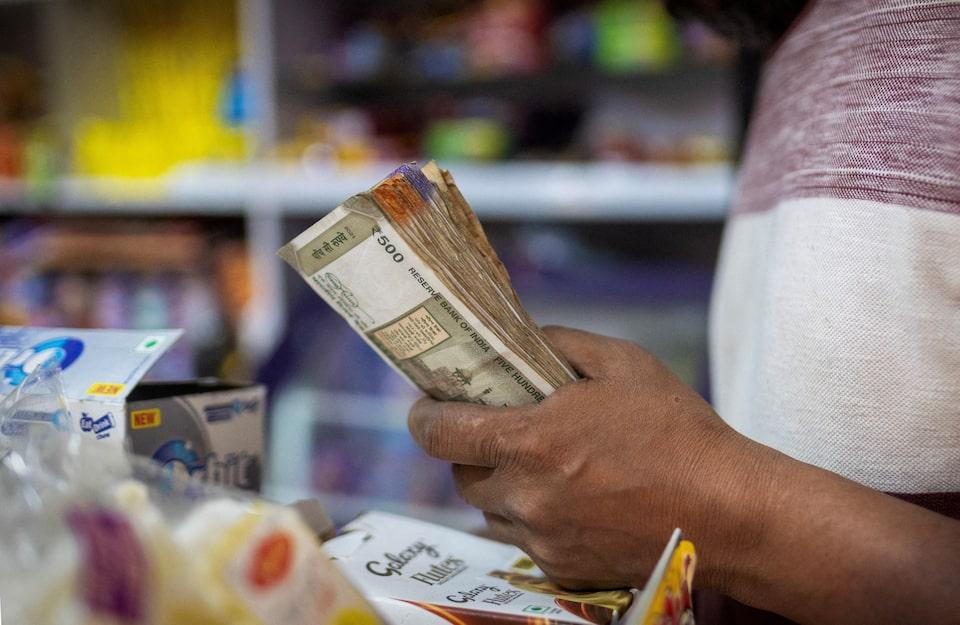
MUMBAI, May 14 (Reuters) - The Indian rupee ended modestly stronger on Wednesday as strong dollar demand from state-run and foreign banks eroded positive cues due to broader weakness in the greenback, which helped lift most Asian currencies. The rupee swung between gains and losses through Wednesday's session before ending a tad higher at 85.27 against its close at 85.33 in the previous session. Sign up here. The currency touched a peak of 85.07 in early trade before falling to a low of 85.51 due to persistent dollar bids from a large state-run bank and a clutch of foreign banks, a foreign exchange trader at a Mumbai-based bank said. Modest outflows also weighed on the rupee towards the close of the session, the trader added. The dollar index, meanwhile, was down 0.6% at 100.3 while most Asian currencies gained, with the Korean won up nearly 1.7% on the day. The offshore Chinese yuan, a closely tracked peer of the rupee, was little changed at 7.20. Renewed focus on reserve accumulation by the Reserve Bank of India, slower GDP growth as the impact of tariffs filters through and geopolitical uncertainty "should all mean the currency pair (USD/INR) finds a floor around current levels and moves up from here," ING said in a note. ING holds " mildly bullish," bias on the USD/INR and expects it to rise to 88 over the next 12 months. India's benchmark equity indexes, the BSE Sensex (.BSESN) , opens new tab and Nifty 50 (.NSEI) , opens new tab ended in the green, 0.2% and 0.3%, respectively, while the yield on the benchmark 10-year bond dipped to 6.29%. Remarks from Federal Reserve policymakers, due later in the day, are in focus for cues on the future path of policy rates after data showed that U.S. consumer prices rose less-than-expected in April. https://www.reuters.com/world/china/rupee-ends-tad-higher-caught-between-weaker-greenback-interbank-dollar-bids-2025-05-14/
2025-05-14 10:00
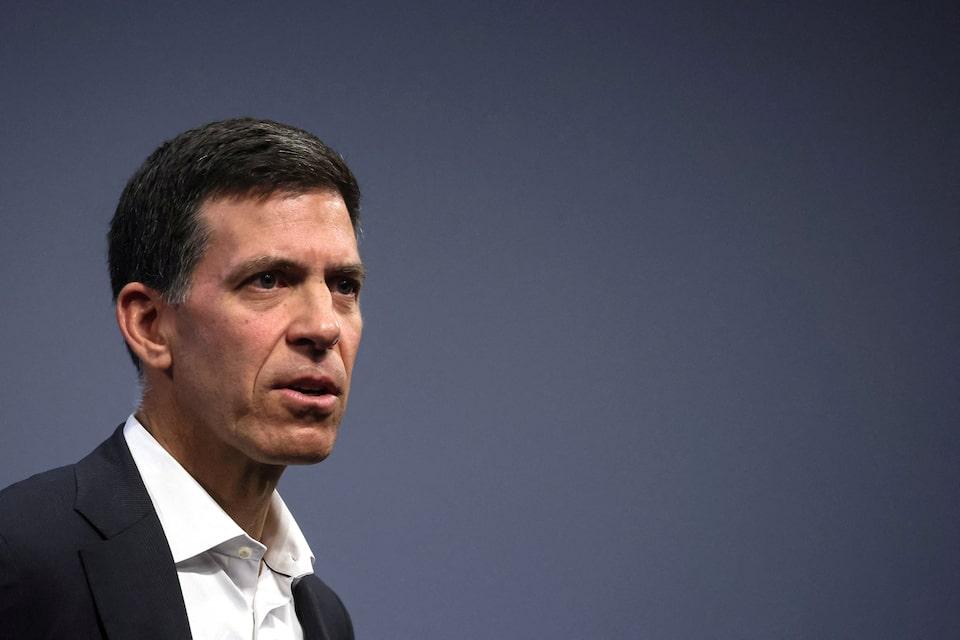
Investors return to neutral positions on US dollar assets, says Waldron US-China trade truce boosts stocks, dollar Tariffs impact M&A activity, causing deal pauses, Waldron notes NEW YORK, May 14 (Reuters) - Goldman Sachs President John Waldron said a recent lightening up of U.S. dollar assets by investors had shown them returning to more neutral positions on the currency, rather than a wholesale "run for the gates." Financial markets have witnessed a roller-coaster ride in the initial few months of the Trump administration as its April 2 move to increase tariffs on trading partners prompted some investors to move away from American assets. The White House has since made progress on tariff deals. Sign up here. Waldron said that some investors "that were owning 10%, 20%, 30% more U.S. dollars in U.S. assets than they would otherwise be holding" had gone back to a more neutral position. Waldron said investors had been optimistic about the U.S. outperforming the rest of the world. "Everybody, for the most part, had some expression of overweight U.S.," he said. But after the tariff announcement, clients had been active repositioning portfolios in currencies, Waldron said. "The lightening up (of dollar holdings) we've seen (since April 2) is more the excess coming out, not a wholesale run for the gates," Waldron told Reuters in an interview. "Is there a sense that the volatility of U.S. policymaking is higher, and therefore we should be reducing our holdings? We haven't seen that yet." Waldron, 55, was added to Goldman's board of directors earlier this year, a few weeks after he was given a retention bonus, cementing his position as a potential successor to CEO David Solomon. TRUCE The recent truce in the U.S.-China trade war has since set off a relief rally in stocks and propelled the dollar higher with the S&P 500 and the Nasdaq recovering losses since April 2 - or "Liberation Day" - when President Donald Trump announced sweeping reciprocal tariffs. "The market is -- I'd call it relatively benign in the context of what was going on," Waldron said. Waldron said that there was demand from investors for access to Chinese equities and fixed income products, and said that American firms were able to operate in China despite challenges. "I wouldn't overstate the challenges between the two governments in terms of our ability to operate," said Waldron. "We can operate. The American firms are operating." Waldron said most companies are trying to figure out how to navigate the impact of relatively higher tariffs from a cost standpoint. "How much of this are we going to ... pass through on price? How much of this are we going to push back on our suppliers? Who's going to bear the brunt of these tariffs? And the answer is it will be shared," he said. He said the tariff moves have also affected mergers and acquisitions, halting fresh dealmaking. "If you were working on an M&A transaction, you were getting started on it or you were getting into it, you're probably pausing it," he said. "If you were at the five-yard line and you were getting close to announcing it and it's not overly impacted by tariffs, you're probably going to go ahead and do it, and we've seen both." Goldman Sachs is advising Hong Kong conglomerate CK Hutchison (0001.HK) , opens new tab, sources previously told Reuters. The firm is selling most of the $22.8 billion ports business to U.S. firm BlackRock, including assets it holds along the Panama Canal. The number of M&A contracts announced across the world - an indicator of global economic health - fell in April to the lowest level in more than 20 years, according to data compiled by Dealogic for Reuters. https://www.reuters.com/world/china/goldman-sachs-says-investors-trim-dollar-holdings-return-neutral-position-us-2025-05-14/
2025-05-14 09:13
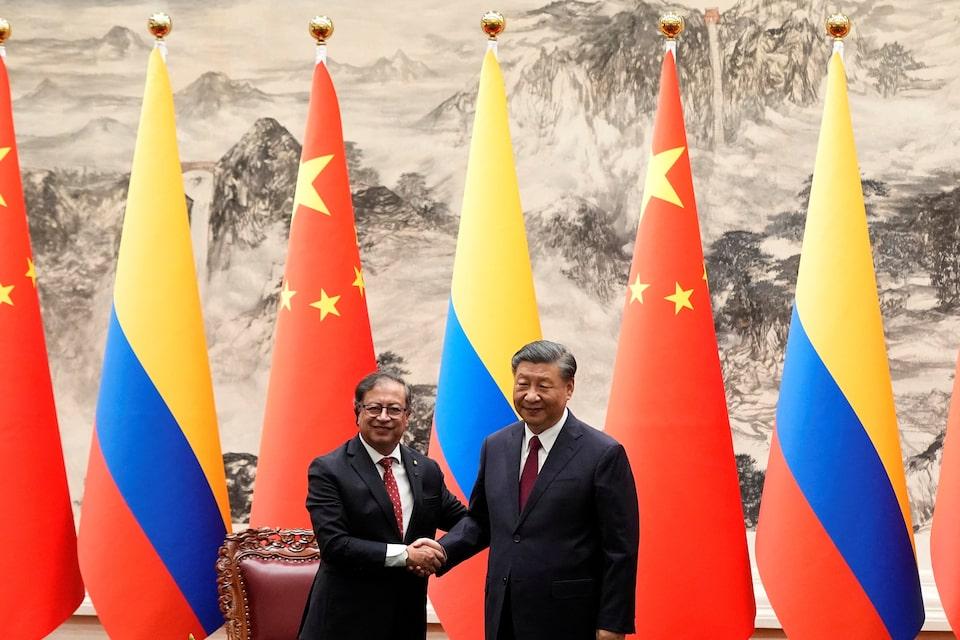
BEIJING, May 14 (Reuters) - China and Colombia have signed a joint cooperation plan on the Belt and Road Initiative, state media said on Wednesday after their leaders met in Beijing. Burgeoning commerce in recent years has helped grow Beijing's influence in Latin America and the Caribbean, a region of strategic significance for the United States. Sign up here. Colombia's foreign minister Laura Sarabia said on Wednesday that the decision to join China's flagship overseas development project was the South American country's "boldest step in decades." "The signing of this cooperation plan opens up a horizon of endless opportunities in trade, investment, and tourism. There is no turning back: Colombia is resolutely opening up to the world," Sarabia wrote on X. China is Colombia's second largest trading partner after the United States, which it recently displaced as Colombia's largest source of imports. China is ready to import more high-quality products from Colombia, back its firms in investing and doing business there and join in infrastructure construction, President Xi Jinping told counterpart Gustavo Petro, the Xinhua news agency said. On Monday, Petro said Colombia would join the Belt and Road Initiative launched by Xi in 2013 to recreate the ancient Silk Road and build China's trade and infrastructure links with the world. More than 20 Latin American nations are among the more than 150 countries participating in the programme, but in February Panama said it was exiting from the pact, a move China blamed on pressure from the United States. Petro, who took over in August 2022, made his first trip to China as president in October 2023, upgrading to a strategic partnership two-way ties first established in 1980. https://www.reuters.com/world/china-colombia-sign-belt-road-cooperation-pact-2025-05-14/