2025-05-14 05:36
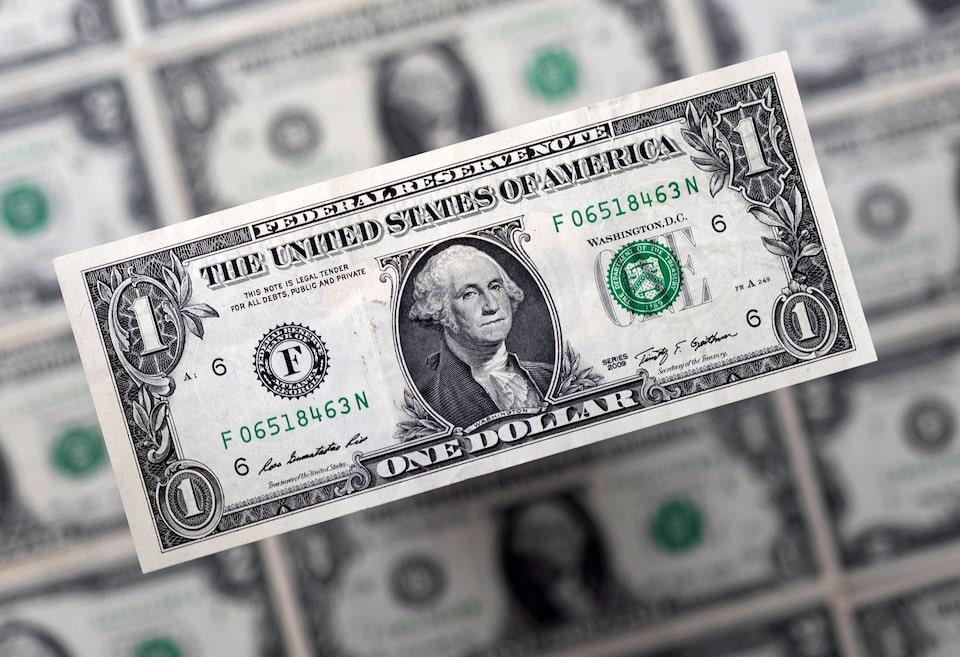
Dollar down against won after US-Korea FX talks Fed officials cite need for more data Dollar reverses earlier declines NEW YORK, May 14 (Reuters) - The U.S. dollar edged higher on Wednesday, rebounding from earlier declines as investors await fresh signals that global trade battles will continue to ease. The dollar index began the week with a jump of more than 1% on Monday and hit a one-month high as the United States and China reached a deal to temporarily cut reciprocal tariffs and tamped down concerns that a trade war between the world's two biggest economies could lead to a global recession. Sign up here. But the greenback fell on Tuesday after a gauge of consumer prices was below economists' expectations as declining food costs partially offset rising rents. "Obviously, everything's still pretty focused on trade these days, that's still kind of a big catalyst moving things around," said Brad Bechtel, global head of FX at Jefferies in New York. "There's a lot of volatility in the Asian currency space still, but the dollar should still be in a counter-trend bounce and then will ultimately start to turn lower again, potentially on some sort of backdoor or behind-closed-doors arrangement." The dollar index , which measures the greenback against a basket of currencies, rose 0.06% to 101.04, with the euro down 0.06% at $1.1177. Investors were also digesting news South Korea's Deputy Finance Minister Choi Ji-young met with Robert Kaproth of the U.S. Treasury on May 5 to discuss forex markets, which helped send the dollar to its lowest in a week against Korea's won. But the moves in Asian currencies eased somewhat after Bloomberg reported the U.S. is not negotiating for a weaker dollar as part of tariff talks, citing a person familiar with the matter. The won strengthened 0.84% against the dollar to 1,402.66 per dollar after gaining as much as 2.1%. Against the Japanese yen , the dollar weakened 0.52% to 146.71 after falling as much as 1.2% on the session. Goldman Sachs analysts said in a note to clients that while details of the meeting are scarce and talks may be part of an ongoing dialogue, "it puts renewed focus on the scope for undervalued trade surplus currencies to appreciate in a weaker dollar environment." In light of the easing trade tensions, markets have dialed back expectations for rate cuts from the U.S. Federal Reserve this year, pricing in a 74% chance for the first cut of at least 25 basis points (bps) at the central bank's September meeting, according to LSEG data, compared with the prior view for a cut in July. Several major brokerages, including Goldman Sachs, JPMorgan and Barclays, have recently scaled back their U.S. recession forecasts and their view of Fed policy easing. Chicago Fed President Austan Goolsbee said data showing temperate consumer inflation in April does not necessarily reflect the impact of rising U.S. import tariffs, and the Fed still needs more data to determine the direction of prices and the economy. Fed Vice Chair Philip Jefferson noted a similar sentiment, saying the recent inflation data indicated good progress towards the central bank's 2% goal, but the outlook is now uncertain due to the possibility that new import taxes will drive prices higher. Sterling weakened 0.32% to $1.3261. Bank of England interest rate-setter Catherine Mann said she voted to keep borrowing costs on hold last week - having sought a big 50-basis point cut in February - because Britain's labor market had been more resilient than she expected. https://www.reuters.com/world/africa/dollar-steadies-with-trade-talks-frame-after-sliding-cooler-us-inflation-2025-05-14/
2025-05-14 05:28
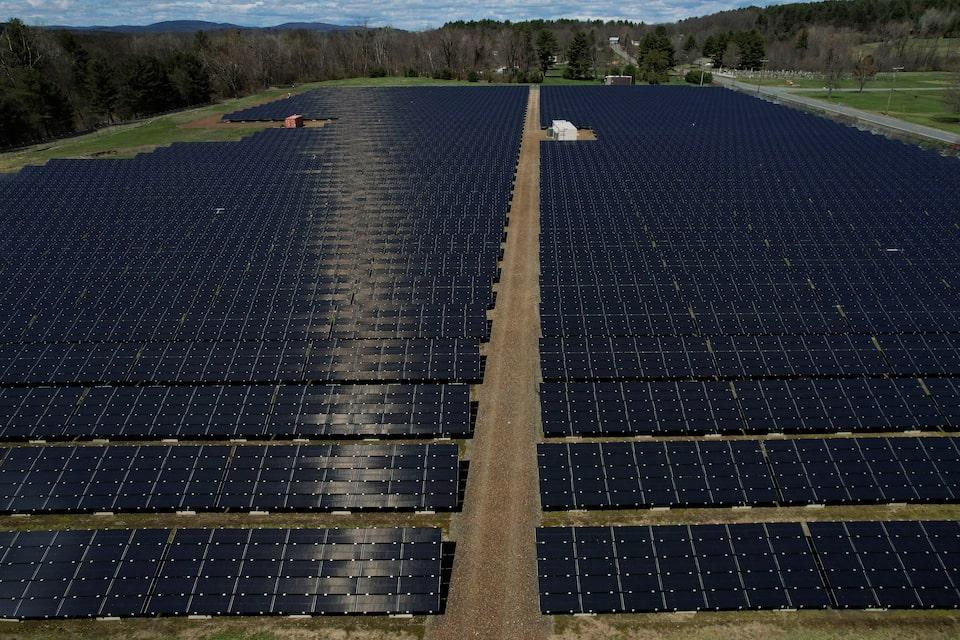
Rogue communication devices found in Chinese solar inverters Undocumented cellular radios also found in Chinese batteries U.S. says continually assesses risk with emerging technology U.S. working to integrate 'trusted equipment' into the grid LONDON, May 14 (Reuters) - U.S. energy officials are reassessing the risk posed by Chinese-made devices that play a critical role in renewable energy infrastructure after unexplained communication equipment was found inside some of them, two people familiar with the matter said. Power inverters, which are predominantly produced in China, are used throughout the world to connect solar panels and wind turbines to electricity grids. They are also found in batteries, heat pumps and electric vehicle chargers. Sign up here. While inverters are built to allow remote access for updates and maintenance, the utility companies that use them typically install firewalls to prevent direct communication back to China. However, rogue communication devices not listed in product documents have been found in some Chinese solar power inverters by U.S experts who strip down equipment hooked up to grids to check for security issues, the two people said. Over the past nine months, undocumented communication devices, including cellular radios, have also been found in some batteries from multiple Chinese suppliers, one of them said. Reuters was unable to determine how many solar power inverters and batteries they have looked at. The rogue components provide additional, undocumented communication channels that could allow firewalls to be circumvented remotely, with potentially catastrophic consequences, the two people said. Both declined to be named because they did not have permission to speak to the media. "We know that China believes there is value in placing at least some elements of our core infrastructure at risk of destruction or disruption," said Mike Rogers, a former director of the U.S. National Security Agency. "I think that the Chinese are, in part, hoping that the widespread use of inverters limits the options that the West has to deal with the security issue." A spokesperson for the Chinese embassy in Washington said: "We oppose the generalisation of the concept of national security, distorting and smearing China's infrastructure achievements." Using the rogue communication devices to skirt firewalls and switch off inverters remotely, or change their settings, could destabilise power grids, damage energy infrastructure, and trigger widespread blackouts, experts said. "That effectively means there is a built-in way to physically destroy the grid," one of the people said, The two people declined to name the Chinese manufacturers of the inverters and batteries with extra communication devices, nor say how many they had found in total. The existence of the rogue devices has not previously been reported. The U.S. government has not publicly acknowledged the discoveries. Asked for comment, the U.S. Department of Energy (DOE) said it continually assesses risk associated with emerging technologies and that there were significant challenges with manufacturers disclosing and documenting functionalities. "While this functionality may not have malicious intent, it is critical for those procuring to have a full understanding of the capabilities of the products received," a spokesperson said. Work is ongoing to address any gaps in disclosures through "Software Bill of Materials" - or inventories of all the components that make up a software application - and other contractual requirements, the spokesperson said. TRUSTED EQUIPMENT As U.S.-China tensions escalate, the U.S. and others are reassessing China's role in strategic infrastructure because of concerns about potential security vulnerabilities, two former government officials said. In February, two U.S. Senators introduced the Decoupling from Foreign Adversarial Battery Dependence Act, banning the Department of Homeland Security from purchasing batteries from some Chinese entities, starting October 2027, due to national security concerns. The bill was referred to the Senate Committee on Homeland Security and Governmental Affairs on March 11 and has yet to be enacted. It aims to prevent Homeland Security from procuring batteries from six Chinese companies Washington says are closely linked to the Chinese Communist Party: Contemporary Amperex Technology Company (CATL) (300750.SZ) , opens new tab, BYD Company (002594.SZ) , opens new tab, Envision Energy, EVE Energy Company (300014.SZ) , opens new tab, Hithium Energy Storage Technology Company, and Gotion High-tech Company (002074.SZ) , opens new tab. None of the companies responded to requests for comment. Utilities are now preparing for similar bans on Chinese inverter manufacturers, three people with knowledge of the matter said. Some utilities, including Florida's largest power supplier Florida Power & Light Company, are attempting to minimise the use of Chinese inverters by sourcing equipment from elsewhere, according to two people familiar with the matter. FPL did not respond to requests for comment. The DOE spokesperson said: "As more domestic manufacturing takes hold, DOE is working across the federal government to strengthen U.S. supply chains, providing additional opportunities to integrate trusted equipment into the power grid." 'CATASTROPHIC IMPLICATIONS' Huawei is the world's largest supplier of inverters, accounting for 29% of shipments globally in 2022, followed by Chinese peers Sungrow and Ginlong Solis, according to consultancy Wood Mackenzie. German solar developer 1Komma5 said, however, that it avoids Huawei inverters, because of the brand's associations with security risks. "Ten years ago, if you switched off the Chinese inverters, it would not have caused a dramatic thing to happen to European grids, but now the critical mass is much larger," 1Komma5 Chief Executive Philipp Schroeder said. "China's dominance is becoming a bigger issue because of the growing renewables capacity on Western grids and the increased likelihood of a prolonged and serious confrontation between China and the West," he said. Since 2019, the U.S. has restricted Huawei's access to U.S. technology, accusing the company of activities contrary to national security, which Huawei denies. Chinese companies are required by law to cooperate with China's intelligence agencies, giving the government potential control over Chinese-made inverters connected to foreign grids, experts said. While Huawei decided to leave the U.S. inverter market in 2019 - the year its 5G telecoms equipment was banned - it remains a dominant supplier elsewhere. Huawei declined to comment. In Europe, exercising control over just 3 to 4 gigawatts of energy could cause widespread disruption to electricity supplies, experts said. The European Solar Manufacturing Council estimates over 200 GW of European solar power capacity is linked to inverters made in China - equivalent to more than 200 nuclear power plants. At the end of last year, there was 338 GW of installed solar power in Europe, according to industry association SolarPower Europe. "If you remotely control a large enough number of home solar inverters, and do something nefarious at once, that could have catastrophic implications to the grid for a prolonged period of time," said Uri Sadot, cyber security program director at Israeli inverter manufacturer SolarEdge. STRATEGIC DEPENDENCIES Other countries such as Lithuania and Estonia acknowledge the threats to energy security. In November, the Lithuanian government passed a law blocking remote Chinese access to solar, wind and battery installations above 100 kilowatts - by default restricting the use of Chinese inverters. Energy minister Zygimantas Vaiciunas said this could be extended to smaller rooftop solar installations. Estonia's Director General of the Foreign Intelligence Service, Kaupo Rosin, said the country could be at risk of blackmail from China if it did not ban Chinese technology in crucial parts of the economy, such as solar inverters. Estonia's Ministries of Defence and Climate declined to comment when asked if they had taken any action. In Britain, the government's review of Chinese renewable energy technology in the energy system - due to be concluded in the coming months - includes looking at inverters, a person familiar with the matter said. In November, a commercial dispute between two inverter suppliers - Sol-Ark and Deye - led to solar power inverters in the U.S. and elsewhere being disabled from China, highlighting the risk of foreign influence over local electricity supplies and causing concern among government officials, three people familiar with the matter said. Reuters was unable to determine how many inverters were switched off, or the extent of disruption to grids. The DOE declined to comment on the incident. Sol-Ark and Deye (605117.SS) , opens new tab did not respond to requests for comment. The energy sector is trailing other industries such as telecoms and semiconductors, where regulations have been introduced in Europe and the U.S. to mitigate China's dominance. Security analysts say this is partly because decisions about whether to secure energy infrastructure are mostly dictated by the size of any installation. Household solar or battery storage systems fall below thresholds where security requirements typically kick-in, they said, despite now contributing a significant share of power on many Western grids. NATO, the 32-country Western security alliance, said China's efforts to control member states' critical infrastructure - including inverters - were intensifying. "We must identify strategic dependencies and take steps to reduce them," said a NATO official. https://www.reuters.com/sustainability/climate-energy/ghost-machine-rogue-communication-devices-found-chinese-inverters-2025-05-14/
2025-05-14 05:22
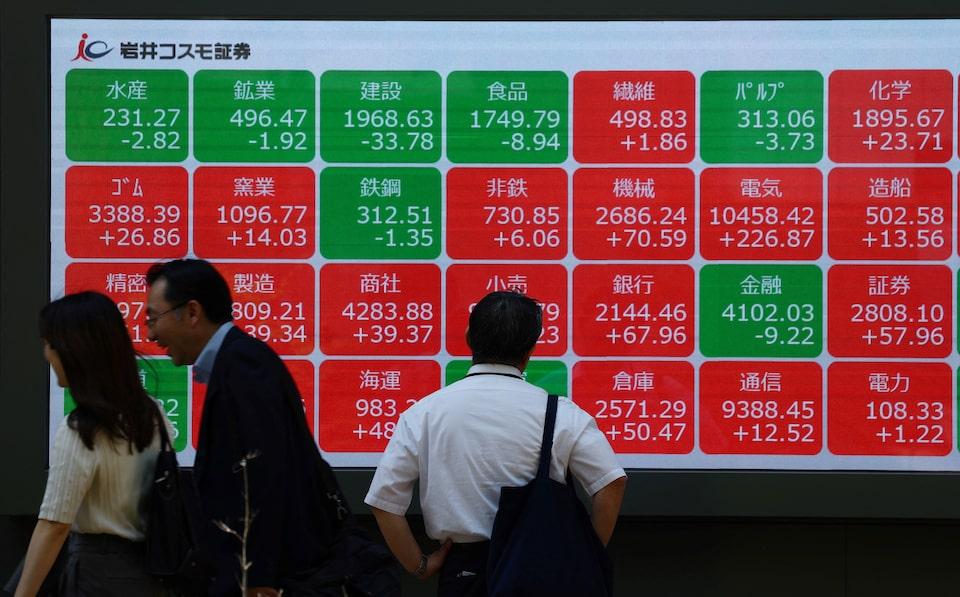
US dollar recovers from recent losses European stocks settle lower after four up sessions Fed cautious on rate cuts due to tariff uncertainty NEW YORK/LONDON, May 14 (Reuters) - Global shares gained and major Wall Street indexes were mixed on Wednesday as trade tensions eased between the world's two largest economies, and the U.S. dollar steadied after recent losses. Gold prices sank to a more than one-month low as the U.S.-China trade truce dimmed bullion's safe-haven appeal. Sign up here. As the tariff spat between China and the United States appeared to abate, along with the prospects of a global trade war, investors have pushed global equities higher, although European shares took a breather on Wednesday. "It's all about the change in risk appetite," said Lars Skovgaard, senior investment strategist at Danske Bank. "I have a hard time seeing that we'll go back to this extreme political noise," he added. MSCI's gauge of stocks across the globe (.MIWD00000PUS) , opens new tab rose 2.04 points, or 0.23%, to 873.24. On Wall Street, the S&P 500 (.SPX) , opens new tab rose 6.03 points, or 0.10%, to 5,892.58 and the Nasdaq Composite (.IXIC) , opens new tab rose 136.72 points, or 0.72%, to 19,146.81. The Dow Jones Industrial Average (.DJI) , opens new tab fell 89.37 points, or 0.21%, to 42,051.06. Europe's STOXX 600 index (.STOXX) , opens new tab closed 0.24% lower, its first loss in five sessions. Data on Tuesday showing softer-than-expected U.S. consumer inflation also provided some relief to investors worried about the inflationary impact of U.S. tariff policies, which had severely undercut expectations of near-term Fed rate cuts. Though traders expect inflation to pick up as tariffs lift import costs, the uncertainty over the outlook remains as Washington moves ahead to strike deals with its trading partners. "U.S. tariffs on Chinese goods are still much higher than they were months ago," said Wei He, China economist at Gavekal Research. "There's still plenty of uncertainty about the outlook." ASSESSING TARIFF IMPACT The Fed has warned of rising economic uncertainty, signalling it is prepared to wait to assess the impact of U.S. tariffs before moving to cut interest rates again. Fed Chair Jerome Powell is scheduled to give remarks on Thursday. In remarks on Wednesday, Fed Vice Chair Philip Jefferson said recent inflation data point to continued progress toward meeting the Federal Reserve's 2% inflation goal, but the outlook is now uncertain due to the possibility that new import taxes will drive prices higher. The U.S. dollar, which has taken a beating on the back of the economic and policy uncertainty, extended gains, up 0.14% against a basket of currencies including the yen and the euro. Global asset managers held their biggest underweight position in the dollar in 19 years in May, as Trump's trade policy cut investor appetite for U.S. assets, Bank of America's global fund manager survey (FMS) showed on Tuesday. The euro was down 0.15% at $1.1167, and the sterling weakened 0.38% to $1.3253. Yields on U.S. Treasuries were higher as markets awaited new economic data as well as a clearer picture of future government deficits from discussions in the U.S. Congress. Euro zone bond yields were steady after nudging up to multi-week highs amid easing trade tensions. The next major signal for U.S. economic health is retail sales data for April due on Thursday. The same day, talks are planned between Ukraine and Russia in Istanbul with hopes of a ceasefire three years into the deadliest conflict in Europe since World War Two. In commodities, rising U.S. crude stockpiles pressured prices. Brent crude futures settled 54 cents, or around 0.81%, lower to $66.09 a barrel. U.S. West Texas Intermediate crude slipped 52 cents, or 0.82%, to $63.15. U.S. gold futures settled 1.8% lower at $3,188.3, and spot gold fell 2.07% to $3,180.07 an ounce. MSCI's broadest index of Asia-Pacific shares outside Japan (.MIAPJ0000PUS) , opens new tab closed higher by 1.56%, to 614.33, while Japan's Nikkei (.N225) , opens new tab fell 55.13 points, or 0.14%, to 38,128.13. Hong Kong's Hang Seng index (.HSI) , opens new tab jumped. https://www.reuters.com/markets/global-markets-wrapup-1-2025-05-14/
2025-05-14 04:40
HONG KONG, May 14 (Reuters) - Crypto prime broker FalconX and global bank Standard Chartered (STAN.L) , opens new tab said on Wednesday they had formed a strategic partnership to serve institutional crypto investors. The partnership marks FalconX's first collaboration with a global traditional bank and suggests growing institutional demand for digital assets through traditional finance channels. Sign up here. FalconX will leverage Standard Chartered's banking and foreign exchange services - including its access to a wide range of currencies - to support its institutional clients, said Matt Long, FalconX's general manager of APAC & Middle East. "Our clients will be able to engage more efficiently in fiat currencies settlements, which means a lot faster settlement, better capital efficiency and overall reduced operational risk," he told Reuters. The California-based crypto-focused prime-brokerage services firm said its clients include some of the world's largest asset managers, sovereign wealth funds, hedge funds and family offices. Standard Chartered pointed to greater digital asset adoption by institutional clients as the driver for the partnership. Luke Boland, Asia head of fintech at Standard Chartered, said the bank's collaboration with FalconX would begin in Singapore and later expand to other countries in Asia, the Middle East and the United States. The London-headquartered multinational bank has been expanding its digital asset business. Last year, the bank started a digital asset custody service in the United Arab Emirates. In April, it partnered with digital exchange OKX to enable institutional clients to use cryptocurrencies as collateral. The global cryptocurrency market surpassed $3 trillion in market value in November following the election of crypto-friendly Donald Trump as U.S. president, fuelling expectations of a golden era for digital assets. Standard Chartered expects the overall value of digital assets to reach $10 trillion by 2026. Founded in 2018, FalconX was last valued at $8 billion following a $150 million funding round in 2022. It is backed by investors including Wellington Management, Singapore sovereign wealth fund GIC and Tiger Global Management. (This story has been corrected to say that Standard Chartered's headquarters is in London, not Hong Kong, in paragraph 8) https://www.reuters.com/business/finance/crypto-platform-falconx-partners-with-standard-chartered-2025-05-14/
2025-05-14 04:37
A look at the day ahead in European and global markets from Rocky Swift Most major equity markets have clawed back loss in the six weeks since U.S. President Donald Trump dropped his tariff bomb, leaving investors now nervously looking to see if more trade deals will follow those the U.S. has sketched out with China and Britain. Sign up here. U.S. stocks have returned to positive territory for the year, while European shares are now a shade higher than when Trump announced tariffs against friend and foes alike on April 2. Technology shares are back in the spotlight after U.S. chip firms Nvidia (NVDA.O) , opens new tab and Advanced Micro Devices (AMD.O) , opens new tab announced huge artificial intelligence deals in the Middle East, timed with a visit by Trump to Saudi Arabia. A surge in Nvidia stock on Tuesday took the chip firm's valuation to $3 trillion and CEO Jensen Huang's net worth to $120 billion. U.S. performance is likely to lift Europe's tech stock index (.SX8P) , opens new tab on Wednesday, with notable constituents including Dutch chip firm ASML (ASML.AS) , opens new tab. Still, equity futures point to a lower European open and a flat day in the U.S. . Trump in an interview on Tuesday said he could see himself dealing directly with Chinese President Xi Jinping on details of a trade pact. His touted "potential deals" with India, Japan and South Korea are still pending. The U.S. dollar, which has taken a beating on the back of U.S. trade policy uncertainty, was mired in loss in Asian trade. Global asset managers held their biggest underweight position in the dollar in 19 years in May, Bank of America's global fund manager survey showed on Tuesday. The next signal for U.S. economic health is retail sales data for April due on Thursday. The same day, talks are planned between Ukraine and Russia in Istanbul with hope of a ceasefire three years into Europe's deadliest conflict since World War Two. Key developments that could influence markets on Wednesday: Trying to keep up with the latest tariff news? Our new daily news digest offers a rundown of the top market-moving headlines impacting global trade. Sign up for Tariff Watch here. https://www.reuters.com/markets/europe/global-markets-view-europe-2025-05-14/

2025-05-14 03:18
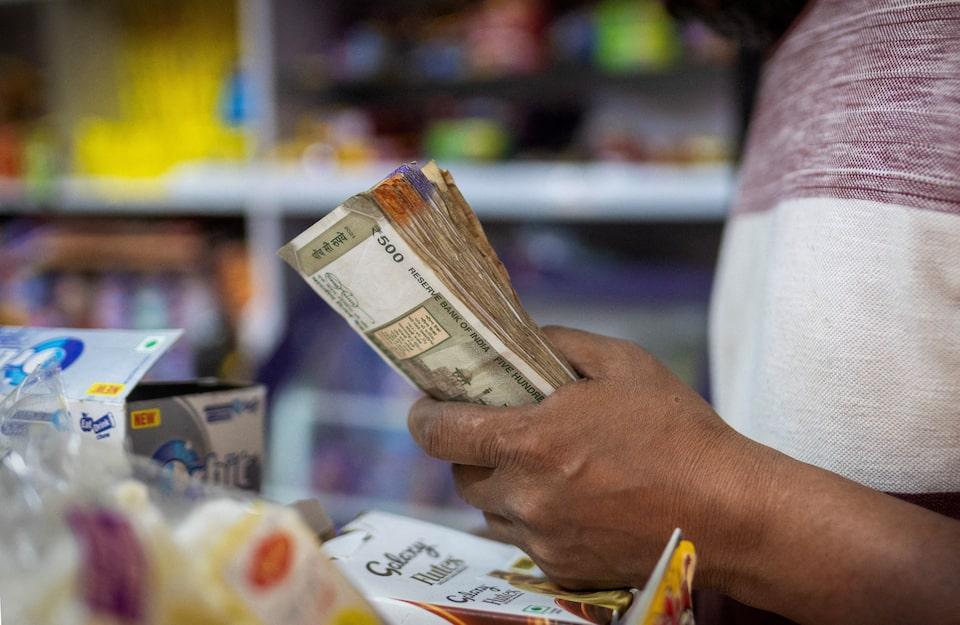
MUMBAI, May 14 (Reuters) - The Indian rupee is expected to open higher on Wednesday, aided by a weaker dollar following soft U.S. inflation data and on expectations that the one-off outflow seen in the prior session may not repeat. The 1-month non-deliverable forward indicated that the rupee will open at 85.00-85.04 to the U.S. dollar, compared to 85.33 in the previous session. Sign up here. The Indian rupee saw an intraday reversal on Tuesday. After initially strengthening to almost 84.60, it weakened to nearly 85.50. Bankers attributed the move to dollar purchases by a large state-run bank, likely tied to a sizeable one-off outflow, followed by demand from foreign banks. The reversal was flow-driven, which is unlikely to be repeated, a currency trader at a Mumbai-based bank said. With the dollar broadly on the backfoot, the rupee should be able to sustain its opening upmove, he said, adding that "through the ongoing volatility", the bias on the Indian currency remains on the upside. DOLLAR STRUGGLES On Tuesday, the dollar reversed a part of its previous day's rally after U.S. inflation data showed a smaller-than-expected rise. The U.S. Consumer Price Index (CPI) for April rose by 0.2%, below the 0.3% forecast. The softer inflation reading could pave the way for the Federal Reserve to cut rates, particularly in light of recent trade agreements that the U.S. has struck. The de-escalation of trade tensions.. makes it more likely that inflation will be less of an issue for the Fed and the scope for rate cuts remains, ING Bank said in a note. "We had been looking for the Fed to wait until September before cutting and that still holds." KEY INDICATORS: **India's retail inflation slowed to a near 6-year low of 3.16% in April from 3.34% in March, increasing the odds that the Reserve Bank of India will cut rates next month ** One-month non-deliverable rupee forward at 85.20; onshore one-month forward premium at 18 paise ** Dollar index down at 100.92 ** Brent crude futures down 0.7% at $66.2 per barrel ** Ten-year U.S. note yield at 4.47% ** As per NSDL data, foreign investors sold a net $278.8 million worth of Indian shares on May 12 ** NSDL data shows foreign investors sold a net $13.4 million worth of Indian bonds on May 9 https://www.reuters.com/world/india/rupee-set-rise-us-inflation-spurred-dollar-weakness-outflow-reprieve-2025-05-14/