2025-05-13 21:37
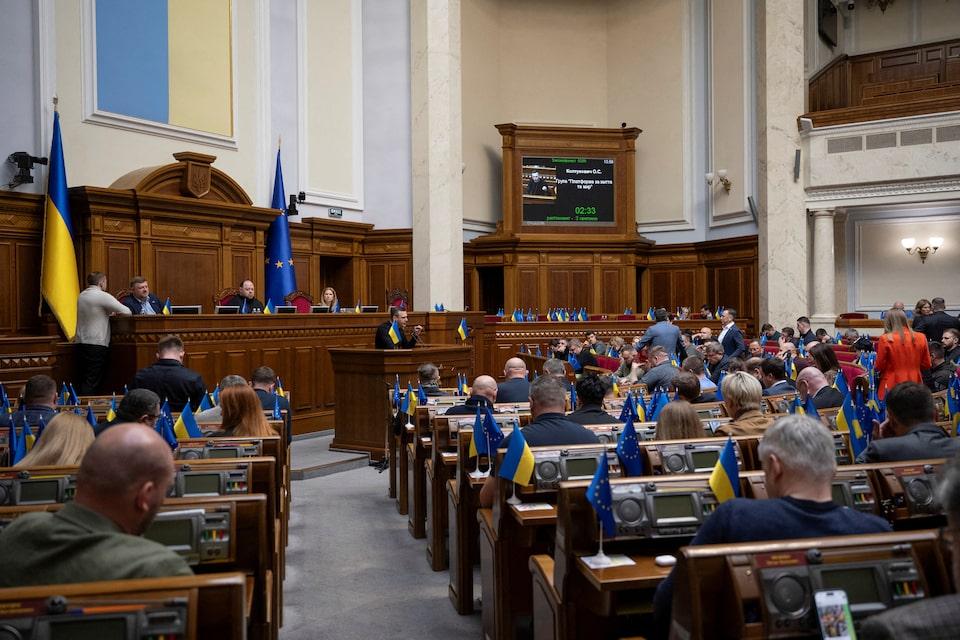
May 13 (Reuters) - Ukraine has concluded procedures for implementation of a deal with the United States on exploiting minerals, including the operation of an investment fund, the country's first deputy prime minister said on Tuesday. Yulia Svyrydenko gave few details of the latest step in securing approval of the accord, promoted by U.S. President Donald Trump, but it was known that two additional documents were drawn up as part of its implementation. Sign up here. "Another milestone on the path to launching the United States-Ukraine Reconstruction Investment Fund: Ukraine has completed all necessary procedures on schedule," Svyrydenko wrote in English on social media. She said a note certifying completion of the process had been handed to interim U.S. Charge d'Affaires Julie Davis. "These are equal agreements — forward-looking, aligned with Ukraine's national interests, and structured to ensure investment flows exclusively into Ukraine’s recovery and growth," Svyrydenko wrote. After weeks of tough negotiations following a shouting match between President Volodymyr Zelenskiy and Trump in the Oval Office, Svyrydenko signed the minerals agreement in Washington and it was ratified last week by the Ukrainian parliament. After that vote, Svyrydenko described the accord as "not merely a legal construct — it is the foundation of a new model of interaction with a key strategic partner." The minerals agreement hands the United States preferential access to new Ukrainian minerals deals and sets up the investment fund, which could be used for the reconstruction of Ukraine for the first 10 years. Ukraine also sees the deal as a way to unlock supplies of new U.S. weapons, especially additional Patriot air defence systems it sees as vital to protect against Russian air attacks. Zelenskiy hailed the reworked draft of the agreement as a marked improvement over earlier versions that some critics in Ukraine had denounced as "colonial." The accord also acknowledges Ukraine's bid to join the European Union. https://www.reuters.com/markets/commodities/ukraine-completes-steps-minerals-deal-with-us-deputy-prime-minister-says-2025-05-13/
2025-05-13 21:35
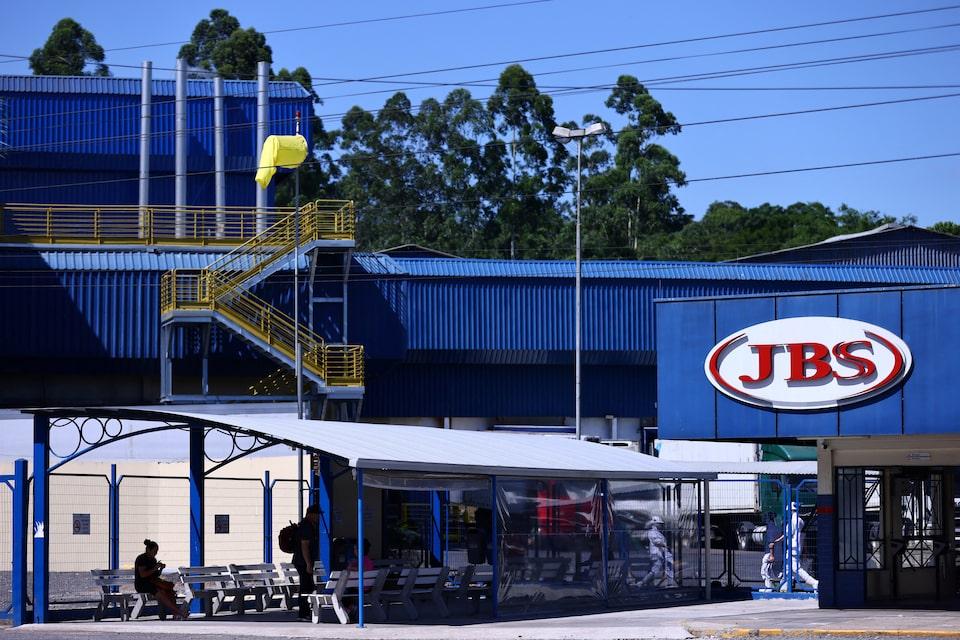
Q1 EBITDA tops analyst forecasts Seara and U.S. Pilgrim's Pride report record high EBITDA margins Rising Brazilian cattle prices, global trade war cloud outlook SAO PAULO, May 13 (Reuters) - JBS (JBSS3.SA) , opens new tab, the world's largest meatpacker, reported a nearly 78% annual increase in net profit driven by its poultry and pork businesses in Brazil and the U.S., and said on Tuesday the global trade war has so far had little impact on its business. Its net profit rose to 2.92 billion reais ($521 million) in the first quarter from 1.64 billion reais a year earlier. Sign up here. In a financial statement, JBS said earnings before interest, tax, depreciation and amortization, a measure of operating income known as EBITDA, came in at 8.92 billion reais, above the 8.77 billion reais forecast by analysts. JBS said it had a strong quarter in a seasonally weaker period of the year, when winter affects consumption in the Northern Hemisphere and sales tend to slow compared with the end-of-year holiday weeks. The company's net profit rose 21.2% from the previous quarter. "Quarter after quarter, our results prove that we made the right choices in building and managing our global multi-protein platform," Gilberto Tomazoni, global CEO of JBS, said in a statement. In an interview, he said the company would continue to benefit from its diversified production base, which includes Brazil, Australia and the U.S., adding that the impact on its operations from the global tariff war had so far been "insignificant." JBS' Seara processed foods division in Brazil and its U.S.-controlled Pilgrim's Pride (PPC.O) , opens new tab, which processes chicken, reported record high EBITDA margins for the period, the company said. Net revenue rose 28% to 114.1 billion reais in the first quarter from the same quarter last year but was down 2.2% from the fourth quarter. As expected, JBS's North America beef business continued to reel from a severe cattle shortage in the United States. While that division reported net revenue of 37.5 billion reais, a 36% annual increase, operating earnings slid to a loss of 587.2 million reais. In Brazil, rising cattle prices are also a concern because it can mean margin compression down the road, Genial Investimentos said in a note to clients before results were released. Other potential risks for JBS include an escalation of the global trade war, which might impact commodities exports out of the U.S. and result in a potential oversupply of chicken and or pork in the U.S., according to Goldman Sachs. Tomazoni told Reuters potential pork and chicken oversupply in the U.S. is not a concern in the short term. China remained a key market for JBS, taking about 23% of the company's $4.9 billion in exports last quarter. Sao Paulo-based JBS is very close to listing its shares on the New York Stock Exchange, with trading slated to begin next month if minority shareholders give their approval for the plan in 10 days' time. https://www.reuters.com/business/retail-consumer/brazils-jbs-reports-profit-521-million-first-quarter-2025-05-13/
2025-05-13 21:09
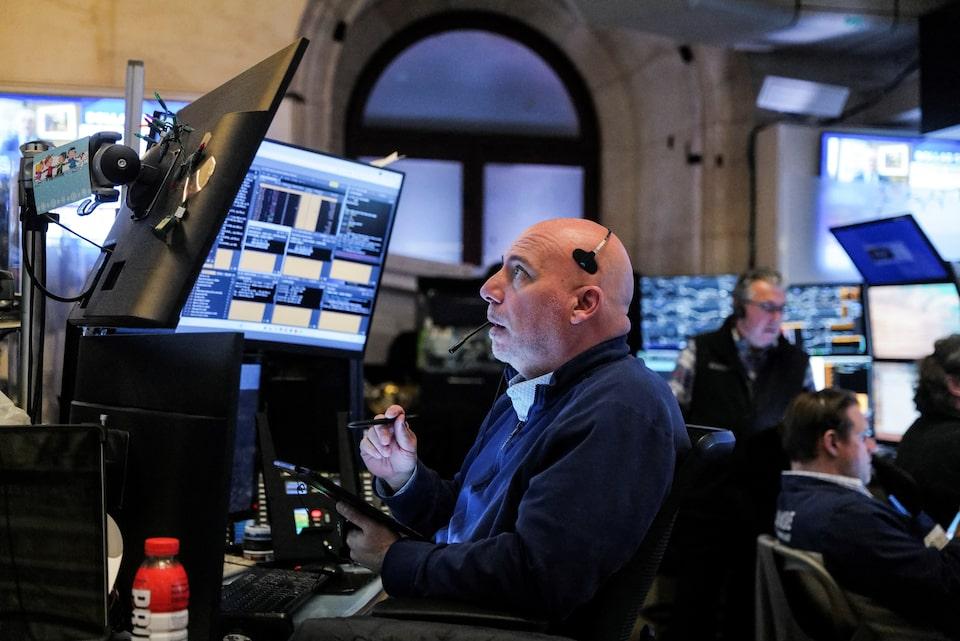
ORLANDO, Florida, May 13 (Reuters) - TRADING DAY Making sense of the forces driving global markets Sign up here. By Jamie McGeever, Markets Columnist Risk assets extend gains Stocks, oil and bond yields rose on Tuesday, lifted by the optimism surging through markets that the worst of the global trade crisis is past and that the growth outlook is much brighter than it looked only a few days ago. In my column today I look at the market and economic chaos sparked by U.S. President Donald Trump's 'Liberation Day' tariff announcement and ask: was it worth it? More on that below, but first, a roundup of the main market moves. I'd love to hear from you, so please reach out to me with comments at [email protected] , opens new tab. You can also follow me at @ReutersJamie and @reutersjamie.bsky.social. Trading Day is also sent by email every weekday morning. Think your friend or colleague should know about us? Forward this newsletter to them. They can also sign up here. If you have more time to read, here are a few articles I recommend to help you make sense of what happened in markets today. Today's Key Market Moves No 'trade truce' hangover, party continues There was no hangover for world markets on Tuesday from the previous day's trade-fueled euphoria. Indeed, the party continued as stocks and bond yields climbed higher, and volatility declined further. The wave of relief that swept through world markets on Monday following the U.S.-China 'trade truce' was compounded on Tuesday by receding U.S. 'stagflation' fears after April inflation figures came in softer than economists had expected. Consumer prices rose at a 2.3% annual pace in April, the smallest gain since February 2021 and a sign that the Federal Reserve is still well-placed to deliver gradual interest rate cuts later in the year. The medium-term outlook for markets is still unclear. Uncertainty surrounding the path for tariffs, growth, and inflation this year is still high. But that's for another day. The last 48 hours have given some powerful rocket fuel for risk assets - a surprisingly rapid de-escalation in U.S.-Sino trade tensions, waves of upward revisions to Chinese and U.S. growth forecasts, and now the tamest U.S. inflation in over four years. The global inflation picture was also burnished on Tuesday by figures from India that showed consumer prices in the world's fifth-largest economy rose last month at the slowest pace in nearly six years. Of course, these are backward-looking numbers and tariff-affected inflation rates in the coming months will likely be higher. But they're still positive for risk appetite, and investors are willing to look on them favorably for now. Optimism on trade is running high. In Saudi Arabia on Tuesday, U.S. President Donald Trump secured a $600 billion commitment from the oil powerhouse to invest in the United States; a number of U.S. technology firms, including Nvidia and Advanced Micro Devices, announced artificial intelligence deals in the Middle East; and China has removed a ban on airlines taking delivery of Boeing planes. Sentiment toward China continues to improve, with several economists revising up their growth forecasts since the U.S.-Sino trade truce. On Tuesday, the yuan appreciated to its strongest level against the dollar since mid-November on the onshore and offshore spot markets. What was the point of April's market chaos? The fog of uncertainty created by U.S. President Donald Trump's trade war is suddenly lifting, although doubts over its longer-term economic impact will linger. As will another question: What was the point of all that 'Liberation Day' chaos and confusion? Trump, a consistent advocate of tariffs since the 1980s, made it very clear during his election campaign that he intended to significantly raise import levies. As the self-styled 'Tariff Man,' he vehemently argued that tariffs will help raise federal revenues, revitalize U.S. manufacturing, and reduce the country's yawning trade deficit. One can argue the economic merits of his agenda, but no one, in good faith, can express surprise that he did exactly what he said he would do. But even some of Trump's ardent backers are questioning the strategy and implementation. Was the aim to whip up economic and market chaos to gain maximum leverage over America's trading partners and thereby secure the most favorable terms for Washington in subsequent trade talks? Maybe. Short-term havoc was certainly wreaked, with some $6 trillion wiped off the value of U.S. stocks in the three days after 'Liberation Day.' But now deals are getting done and all those losses have been erased – except, of course, for investors who got spooked and sold. But after all that, it's unclear whether the tariffs that will result from these deals – which will likely be much lower than the extreme figures put forward a few weeks ago – will be significant enough to move the dial meaningfully on the U.S. trade deficit. And on the fiscal side, all tariffs announced so far this year are forecast to raise $2.7 trillion in federal revenue over the 2026-35 decade, up from an estimated $2.4 trillion before the U.S.-China 'truce' in Geneva, according to Yale Budget Lab, which pointed out that sky-high tariffs were far from 'revenue optimal.' Was the turbulence of the last several weeks worth an extra $30 billion a year, or 0.1% of GDP? Of course, $2.7 trillion is not to be sniffed at, but it comes at a cost. Yale Budget Lab also estimates tariffs will knock 0.7 percentage points off real U.S. GDP growth this year, and in the long run the U.S. economy will permanently be 0.4 percentage points smaller. The price level of goods across the country will be permanently higher too, economists reckon. Estimates vary, but the general view is that the global average effective tariff rate will be somewhere in the 13-18% range, down 10 percentage points from before the weekend truce but still the highest since before World War Two, and significantly higher than 2.3% at the end of last year. Meanwhile, U.S. consumer and business confidence has slumped to some of the lowest levels on record, and consumer inflation expectations are the highest in decades. These indicators may improve in the months ahead, but much spending and investment has been put on hold due to the uncertainty and likely won't be switched back on so quickly. LASTING DAMAGE Perhaps most importantly, the damage done to U.S. credibility hasn't vanished simply because asset prices have rebounded. Remember the methodology behind the Liberation Day figures, which saw some of the highest duties slapped on the world's poorest countries and tariffs imposed on frozen islands largely inhabited by penguins? This was widely ridiculed and called into question the seriousness of Trump's team, as have many of the other unorthodox policies the administration has been pursuing. Faith in America as a reliable partner has clearly been diminished. As HSBC currency analysts reminded readers on Tuesday, "Trust takes years to build, seconds to break and forever to remake." The administration appears to be trying to repair some of that reputational damage. It's notable that Treasury Secretary Scott Bessent and Trade Representative Jamieson Greer led the delegation in Geneva this weekend rather than tariff hardliners like Commerce Secretary Howard Lutnick and Office of Trade and Manufacturing Policy director Peter Navarro. But fully restoring U.S. credibility won't be a quick fix. And the long-term consequences for U.S. rates, the dollar and U.S. assets overall could be meaningful. So if we consider where we are relative to a no-tariff scenario, U.S. growth will likely be slower, prices will likely be higher, and uncertainty will run much deeper. But would these costs be so burdensome had the administration taken a more pragmatic, less confrontational approach from the start? The wounds will heal, but the scars may last a long time. What could move markets tomorrow? Opinions expressed are those of the author. They do not reflect the views of Reuters News, which, under the Trust Principles , opens new tab, is committed to integrity, independence, and freedom from bias. https://www.reuters.com/markets/global-markets-trading-day-graphic-pix-2025-05-13/
2025-05-13 21:04
Republican bill aims to cut tax credits for renewable energy Biden climate bill created jobs in Republican states, group says Advertisements will note jobs created in congressional district WASHINGTON, May 13 (Reuters) - U.S. energy industry trade groups have launched a last-minute lobbying blitz to urge Congress members to spare a slew of former President Joe Biden's clean energy tax credits from the chopping block in the Republican budget plan. On Monday, the House Ways and Means committee proposed the phase-out or cancellation of several lucrative subsidies from Biden's signature climate law, the Inflation Reduction Act. On the block are several related to wind and solar power, hydrogen, and other technologies meant to cut greenhouse gas emissions. Sign up here. Lawmakers will work over the next day or two to amend and pass their plans for the broader tax package. Trade group Advanced Energy United, which represents a range of clean energy, transmission, technology and transportation companies including NRG (NRG.N) , opens new tab, Sunrun (RUN.O) , opens new tab, Enel (ENELAM.SN) , opens new tab and Microsoft (MSFT.O) , opens new tab, launched a national ad campaign targeting lawmakers in five states whose districts benefit from investments spurred by the IRA. The ads, which specify how much a congressional district has received in IRA-generated private sector and manufacturing investments, will run until a final budget bill passes in the House. Speaker Mike Johnson wants the bill passed by May 26. AEU did not divulge total spending on the ads, but called it a "six-digit" campaign. "Without these credits, American families will be worse off, and U.S. manufacturers, who have invested in domestic manufacturing, will be forced to shutter assembly lines, lay off workers, and move production abroad," Advanced Energy United’s CEO Heather O’Neill said on Tuesday. No Republicans voted for the IRA when it passed in 2022, yet districts and states led by Republicans accounted for 58% of new jobs created due to investments from the law, according to advocacy group Climate Power. Meanwhile, dozens of hydrogen industry lobbyists hit Capitol Hill on Tuesday to urge lawmakers to salvage the federal 45V tax credit to promote hydrogen projects, which they say could support around 60,000 jobs per year between 2025 and 2035 and generate more than $12 billion in annual GDP. The committee proposed to move the expiration of that tax credit from 2033 to 2026, making it impossible to develop longer-term projects. In a letter to Johnson and Ways and Means chair Jason Smith, companies and trade groups including Cummins, EQT, the ports of Long Beach and Corpus Christi and the American Petroleum Institute "urgently request" that they save the credits or risk ceding an advantage to China, which has rapidly developed its own hydrogen industry. Abigail Ross Hopper, president of the Solar Energy Industries Association, also urged member companies to pressure lawmakers to save tax credits, including the residential solar credit, which will be eliminated at year's end. She also noted that other proposed changes could hamper investment in commercial solar, and urged people to sign up to the Solar Powers America campaign, which generates letters to Congress members. https://www.reuters.com/sustainability/climate-energy/last-ditch-lobbying-blitz-seeks-save-bidens-clean-energy-tax-credits-2025-05-13/

2025-05-13 20:43
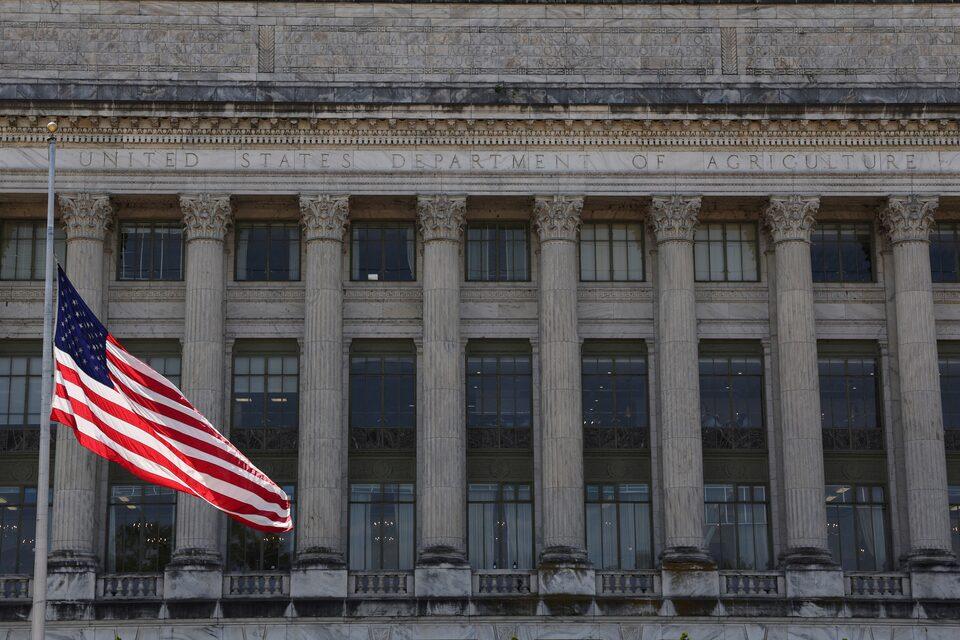
WASHINGTON, May 13 (Reuters) - The U.S. Department of Agriculture restored on Tuesday some climate change-related webpages that the agency had deleted since President Donald Trump's inauguration, after being sued by farm and environmental groups, one of the groups said. The Trump administration has frozen and canceled some funding to farmers for climate-friendly agriculture, arguing the work does not align with administration priorities. Agriculture accounts for about 11% of U.S. emissions. Sign up here. A USDA official directed staff on January 30 to take down any webpages focused on climate change, which resulted in the removal of material on some loan and funding opportunities, information about investments through the Inflation Reduction Act, and policy documents, according to the lawsuit filed on February 24 by the Northeast Organic Farming Association of New York, Natural Resources Defense Council, and the Environmental Working Group. The USDA said in a court filing on Monday that it would restore the removed pages and complete the restoration process in approximately two weeks. A USDA spokesperson declined to comment. On Tuesday, some pages detailing IRA-funded clean energy projects in rural America had been restored, said Nydia Gutierrez, a spokesperson for Earthjustice, which represented the plaintiffs. "Farmers depend on USDA's websites to protect their farms from droughts, wildfires, and extreme weather. We stand ready to ensure that USDA follows through on its promise to restore these crucial resources," Jeffrey Stein, associate attorney with Earthjustice, said in a statement. https://www.reuters.com/sustainability/cop/us-farm-agency-restores-some-climate-related-webpages-after-farmer-lawsuit-2025-05-13/
2025-05-13 20:41
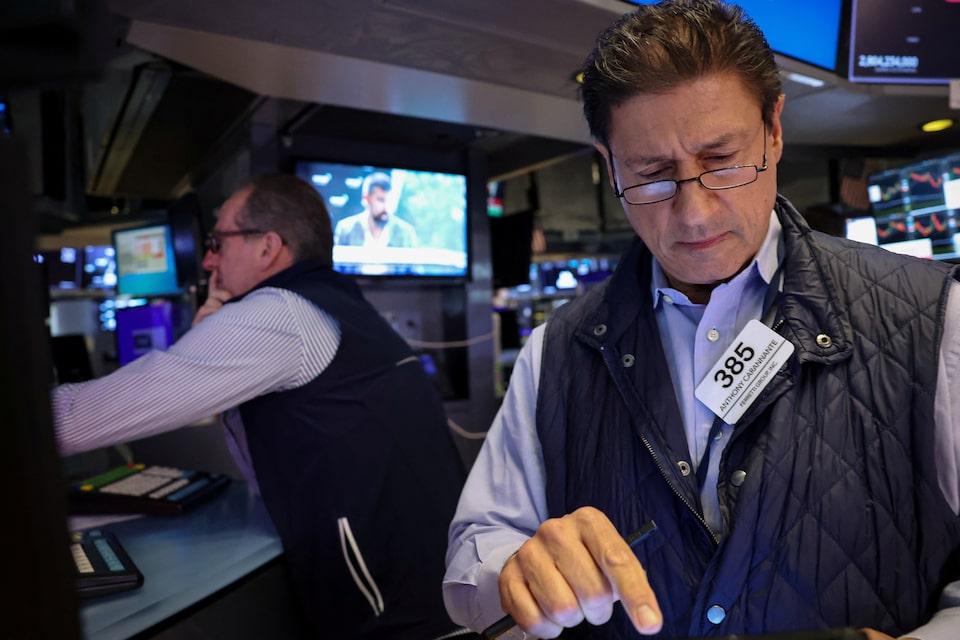
Indexes: Dow down 0.64%, S&P 500 up 0.72%, Nasdaq up 1.61% S&P 500 turns positive YTD for first time in 2 months April CPI at 2.3% YoY versus 2.4% estimate Coinbase soars after the stock's addition to the S&P 500 UnitedHealth suspends forecast, CEO steps down, shares tumble May 13 (Reuters) - The S&P 500 and the Nasdaq closed higher on Tuesday for a second straight day after softer-than-expected inflation numbers added to investor optimism from Monday when the U.S. and China announced a trade truce. The Dow (.DJI) , opens new tab fell, however, with its biggest drag a 17.8% slide in shares of UnitedHealth (UNH.N) , opens new tab after the insurance bellwether suspended its annual forecast and its CEO stepped down. Sign up here. The S&P 500 closed with a year-to-date gain for the first time since late February after data showed that U.S. consumer prices rebounded moderately in April, with headline inflation increasing 0.2% last month compared with economist estimates for a 0.3% increase and a 0.1% drop in March. The CPI climbed 2.3% in the 12 months through April, after advancing 2.4% in the 12-month period until March. "The sustainability of the carry-through from yesterday is positive. There was nothing in CPI to throw it off," said Carol Schleif, chief market strategist at BMO Private Wealth in Minneapolis. Schleif described Monday's improvement in U.S. and China trade relations as going "from iceberg to 80 degrees spring day overnight" and said the 90-day pause on tariffs came in time for retailers to import goods to build up stocks for back-to-school and year-end holiday shopping. Monday's relief rally followed Washington and Beijing's agreement to dial back stringent reciprocal tariffs, signaling a joint effort to stave off a global economic downturn. The U.S. will temporarily lower the extra tariffs it imposed on Chinese imports to 30% from 145% for three months, while Chinese duties on U.S. imports will fall to 10% from 125% in the same period. After the tariff truce, multiple brokerages lowered their odds of a U.S. recession. Traders leaned in to bets that the U.S. Federal Reserve would hold off on lowering interest rates until September, while still anticipating two 25-basis-point cuts by year-end. After Tuesday's inflation reading and Monday's U.S.-China trade detente, R. Burns McKinney, portfolio manager at NFJ Investment Group in Dallas, said, "It does give the Fed the ability to focus on the labor side of this dual mandate in the coming meetings." "If we don't see resurgent inflation and we get a little bit of certainty in trade policy between now and the end of the year, central bankers will resume their cutting cycle," said McKinney, "not because of economic weakness but because slowing inflation means the inflation-adjusted Fed fund rate is still restrictive, and there's room to lower." The Dow Jones Industrial Average (.DJI) , opens new tab fell 269.67 points, or 0.64%, to 42,140.43, the S&P 500 (.SPX) , opens new tab gained 42.36 points, or 0.72%, to 5,886.55 and the Nasdaq Composite (.IXIC) , opens new tab gained 301.74 points, or 1.61%, to 19,010.09. Among the S&P 500's 11 major industry sectors, six advanced, with technology (.SPLRCT) , opens new tab the biggest gainer, ending up 2.25% while healthcare (.SPXHC) , opens new tab was the biggest loser, down 2.97%. The S&P 500 and the Nasdaq have recovered losses since April 2 - or "Liberation Day" - when U.S. President Donald Trump announced sweeping reciprocal tariffs. A 90-day pause announced on April 9 for countries other than China, along with solid earnings reports and a limited U.S.-UK trade agreement last week, helped the S&P 500 and the tech-heavy Nasdaq regain lost ground. Shares of crypto exchange operator Coinbase Global (COIN.O) , opens new tab surged almost 24% after an announcement that it is slated to join the S&P 500 on May 19. With more than 90% of S&P 500 companies having reported earnings, numbers from retail giant Walmart (WMT.N) , opens new tab will be on the radar later this week. Also, a number of Fed officials are scheduled to speak this week, including Chair Jerome Powell on Thursday. Advancing issues outnumbered decliners by a 1.86-to-1 ratio on the NYSE where there were 189 new highs and 77 new lows. On the Nasdaq, 2,590 stocks rose and 1,904 fell as advancing issues outnumbered decliners by a 1.36-to-1 ratio. The S&P 500 posted 19 new 52-week highs and 6 new lows while the Nasdaq Composite recorded 75 new highs and 74 new lows. On U.S. exchanges, 17.81 billion shares changed hands compared with the 16.51 billion moving average for the last 20 sessions. https://www.reuters.com/business/us-stock-futures-down-trade-truce-rally-fades-inflation-data-focus-2025-05-13/