2025-05-13 20:37
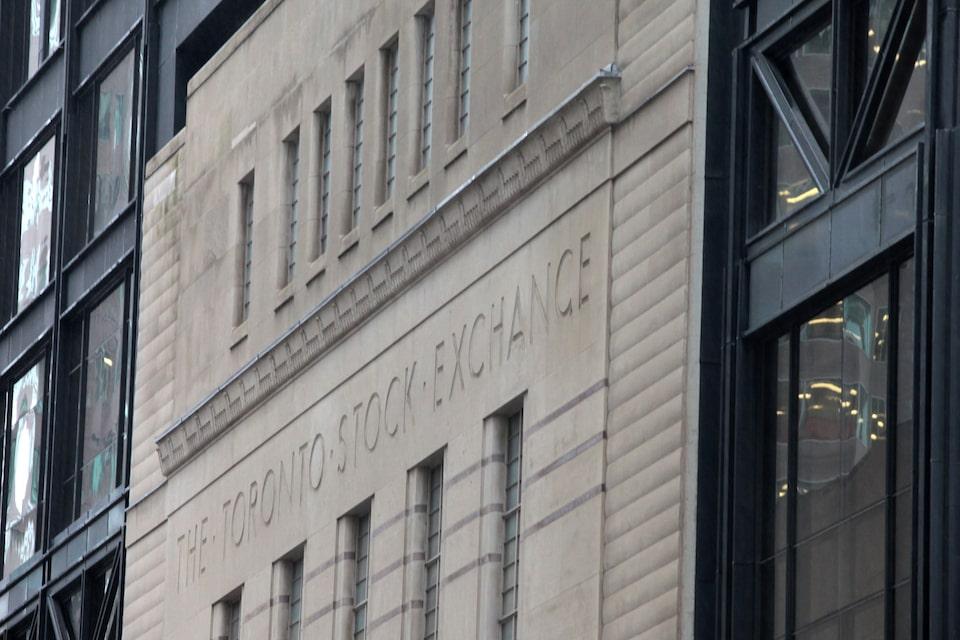
TSX ends up 0.3% at 25,616.86 Posts highest close since February 19 Energy adds 1.8% as oil settles 2.8% higher Former banker chosen as natural resources minister May 13 (Reuters) - Canada's main stock index rose on Tuesday for a sixth straight day, helped by gains for energy and financial shares, as cooler-than-expected U.S. inflation data fueled positive investor sentiment following an easing of trade tensions. The Toronto Stock Exchange's S&P/TSX composite index (.GSPTSE) , opens new tab ended up 84.68 points, or 0.3%, at 25,616.86, its highest closing level since February 19. The daily winning streak was the longest since January. Sign up here. U.S. consumer prices rebounded moderately in April, leading to the smallest annual increase in four years, while the United States and China have reached a deal to unwind most of the duties imposed on each other's goods since early April. "A softening in the global trade war and anything that hints at non-inflationary pressure is good for Canadian financials, good for energy companies," said Matt Skipp, President of SW8 Asset Management. "We have an economy that's uber-sensitive to the global economy because of energy prices and metal prices and financials make up such a big weighting in the index." Financials account for roughly one-third of the index's weighting. Energy and materials account for an additional 30%. Former Goldman Sachs banker Tim Hodgson takes over as natural resources minister in a new cabinet unveiled by Canadian Prime Minister Mark Carney. The energy sector rose 1.8% as the price of oil settled 2.8% higher at $63.67 a barrel, while financials were up 0.4% and technology added 0.7%. Defensive sectors, such as consumer staples and utilities, ended lower. https://www.reuters.com/markets/europe/tsx-futures-slip-us-china-trade-truce-rally-wanes-eye-us-inflation-data-2025-05-13/
2025-05-13 20:28
Namibia hopes for joint plan to monetize gas TotalEnergies said it needs to reinject gas into oil field Total to submit development plan in June or July -Namibia says Namibia expects first oil in 2029-2030 PARIS, May 13 (Reuters) - Namibia expects a final investment decision (FID) by TotalEnergies (TTEF.PA) , opens new tab on its Venus discovery by late next year, a senior government official said on Tuesday, even as the company pushes for incentives to lower production costs. The French oil major has joined peers like Shell (SHEL.L) , opens new tab and Galp in developing offshore blocks in the southern African country, which has no hydrocarbon production and is eager for new revenue sources. Sign up here. However, Shell wrote down its Namibia oil discoveries earlier this year as uncommercial due to a high amount of gas in the fields, dampening initial enthusiasm that the country could become a major producer. TotalEnergies, which has said it can handle Namibia's geological challenges, is on track for an FID on its Venus discovery in the fourth quarter of 2026, Maggy Shino, petroleum commissioner at Namibia's Ministry of Mines and Energy, told a conference in Paris. TotalEnergies CEO Patrick Pouyanne has said that an FID will depend on whether production costs can be kept under $20 per barrel. The company is currently in talks with Namibia to shoulder a higher burden of the costs, but getting costs under $20 a barrel will be "challenging", Mike Sangster, Total's senior vice president for Africa, told the conference. Norway's BWEnergy (BWE.OL) , opens new tab plans to develop the country's smaller Kudu gas field. Shino told the conference she expected those plans to be finalised in June, with an FID in late 2026 too. COMPLEX ISSUE Namibia is pushing oil majors exploring its waters to collaborate on a common plan to collect and monetize the natural gas in its oil fields, using joint infrastructure to pipe the gas to an onshore processing plant and use some for regional electricity. Sangster said selling gas wasn't in TotalEnergies' plans for Venus, and that the company already exports liquefied natural gas from projects in Angola and Nigeria. "In the case of Namibia, the gas is very remote... under 3,000 metres of water, which is a world record, and 300 kilometres (186 miles) from the coastline... to monetize the gas is super complex," he said. Gas will need to be re-injected as part of the development to produce the oil, Sangster added. Shino said it was too soon to comment on TotalEnergies' ruling out participating in a common gas plan. "We still need to discuss all these details, and to see Total's field development plan in June or July," she told Reuters on the conference sidelines. TotalEnergies owns a 45.25% interest in offshore block 2913B containing the Venus discovery, alongside QatarEnergy (35.25%), Africa Oil's Impact Oil and Gas (9.5%) and Namibia's state-owned NAMCOR (10%). BWEnergy holds a 95% interest in the Kudu prospect, with NAMCOR holding the remaining 5%. https://www.reuters.com/business/energy/totalenergies-set-take-fid-namibia-venus-project-late-next-year-minister-says-2025-05-13/
2025-05-13 20:06
Finance minister, US trade minister stay in place Carney plans tax cuts, internal trade barrier removal by July 1 Teamsters union concerned over labor minister position change OTTAWA, May 13 (Reuters) - Canadian Prime Minister Mark Carney, who won an election last month vowing to stand up to U.S. President Donald Trump, unveiled a new cabinet on Tuesday that he said would help urgently define a new relationship with Washington. Carney cut the number of ministers to 29 from the 39 under predecessor Justin Trudeau, but kept some key players in their positions, such as Finance Minister Francois-Philippe Champagne and Dominic LeBlanc, who is in charge of U.S. trade. Sign up here. Carney met Trump in Washington last week but did not secure any removal of tariffs the president has imposed on Canadian exports. "Our government will deliver its mandate for change with urgency and determination," Carney told reporters. "Our workers and businesses continue to face the unfair tariffs imposed by the United States. My government will fight for Canadians." Carney says Canada must spend billions to start shifting the economy's focus away from the United States as well as end barriers to internal trade and cut public spending. "The business of government must be business ... (we are) eager to work with the new government and all parties to tackle urgent nation-building goals," said Matthew Holmes, policy chief at the Canadian Chamber of Commerce, calling for action on issues such as regulatory reform and trade diversification. Melanie Joly moves from Foreign Affairs to Industry after four years and is replaced by Anita Anand. Chrystia Freeland, whose resignation as finance minister last December helped oust an increasingly unpopular Trudeau, keeps her job as minister of transport and internal trade. Former Goldman Sachs banker Tim Hodgson takes over as natural resources minister. "For the Canada-U.S. relationship, it was very important for Prime Minister Carney to position smart, tough, and experienced people in the key portfolios ... (he) has done just that," said Cameron Anderson, politics professor at Western University in London, Ontario. As well as the cabinet ministers, Carney named 10 junior secretaries of state. His immediate promises are a tax cut and ending all trade barriers among the 10 provinces by July 1. His platform, which promises additional spending of around C$130 billion ($93.20 billion) over the next four years, predicts that the 2025-26 deficit will be C$62.3 billion, far higher than the C$42.2 billion forecast in December. Carney abolished the position of labor minister and replaced it with a secretary of state for labor, a move the Teamsters union called deeply confusing and concerning. "It suggests the Carney government is underestimating the scale of the challenges facing Canadian workers in the years ahead," union spokesperson Christopher Monette said by email. The Trudeau government had to deal with several major labor disputes and last year intervened to end separate strikes by port, railway and postal workers. In the election, Carney's Liberals came within two seats of winning a majority in the House of Commons. The opposition Conservatives had been 20 points ahead in the polls in January but dropped off sharply after Trudeau quit and Trump imposed tariffs while musing about the annexation of Canada. "So far it's not a promising start. The first disappointment is unfortunately his cabinet - he appointed Trudeau's old team," Conservative leader Pierre Poilievre told reporters. "It's more of the same when Canada needs real change." ($1 = 1.3948 Canadian dollars) https://www.reuters.com/world/americas/carney-unveils-cabinet-aimed-resetting-us-canada-ties-2025-05-13/

2025-05-13 19:54
Pulp prices hit by US tariff uncertainties, Copec says Chinese customers waiting for lowest prices, adds executive European market following similar pattern Copec is building a $4.6 bln pulp project in Brazil May 13 (Reuters) - Chilean industrial conglomerate Empresas Copec (COPEC.SN) , opens new tab said on Tuesday that the Chinese market for its forestry products could become more challenging if paper makers struggle to boost sales amid uncertainty over U.S. tariff policies. "Most of our customers that export, especially to the U.S., really don't know what the price of their goods is going to be," said Cristian Infante, who heads Copec's forestry arm Arauco (ANTCOC.UL), in a presentation. "So they're trying to buy as little as possible." Sign up here. Arauco, which sells pulp and wooden panels worldwide, contributes the bulk of Copec's earnings, but saw its core earnings dip over 22% in the first three months of 2025 as pulp prices fell and it shipped smaller volumes. Copec said although prices increased at the start of 2025, they began to deteriorate in March "mainly due to the trade war," which caused Chinese paper makers to source locally to avoid forward purchasing agreements with long delivery periods amid shifting prices. It reported a similar pattern in Europe. According to analysts at Scotiabank, Copec's realized average pulp prices stood at $678 per metric ton over the first quarter, down 11% from a year earlier. Infante warned that prices could continue to go down in May. "When Chinese customers feel that the prices are close to the bottom, they will start talking. When that will be, that's a very good question," he added, noting that recent news on talks between the U.S. and China had made futures markets jump. Chinese demand, he said, was "pretty good" and supported a solid market if tariff uncertainties are lifted. Regarding Copec's U.S. market, Infante said he considered the market stable for the time being, although costs had increased for components of resins used in wood panels amid volatility over new import tax policies. "I wouldn't say it's booming," he said. "All this volatility that we've seen due to the tariff issue has affected the market." In Europe, meanwhile, Copec said uncertainty and concerns are growing in the face of the possible implementation of new U.S. tariffs and potential trade conflicts with other countries. The comments come as Arauco begins construction of a $4.6 billion pulp mill project, named Sucuriu, in Brazil. The plant is expected to produce some 3.5 million tons of pulp per year and launch operations by the end of 2027. https://www.reuters.com/markets/commodities/copec-says-china-pulp-market-could-be-challenging-face-us-tariffs-2025-05-13/
2025-05-13 19:25
Wall Street firms lower recession predictions after U.S.-China trade deal Fed now expected to deliver gradual rate cuts starting later in the year Economists anticipate goods prices to rise due to tariffs April inflation came in cooler than expected May 13 (Reuters) - Tamer-than-expected inflation and a significant de-escalation of a U.S.-China trade war are easing fears of a sharp squeeze on American households and businesses in coming months, prompting Wall Street firms to pare predictions of a recession and giving the Federal Reserve room to leave interest rates where they are. JP Morgan Chase and Barclays were among firms adjusting their forecasts on Tuesday to reflect a more benign economic trajectory after the United States and China reached a deal over the weekend to reduce the most punitive of the tariffs they had put on each other since early April. Sign up here. JP Morgan economists now see the chance of a recession as less than 50%; Barclays economists no longer have recession in their forecast at all. Both had earlier expected high tariffs to hit consumers and firms hard, putting the brakes on spending and economic activity. Financial markets also repriced after the U.S.-China agreement, slashing bets that the Fed would need to start cutting rates by July to cushion an economic downturn. Traders now see just two interest-rate cuts by year's end, beginning in September. A Labor Department report Tuesday showing consumer prices rose 2.3% in April, the smallest year-over-year gain in more than four years, solidified those market bets and the expectation that Fed policymakers will deliver gradual rate cuts later in the year instead of taking earlier, more aggressive action. "There's been a fear that tariffs are going to push inflation higher, and they may still, but today's data at least gives investors a sense of relief that inflation is still moving in the right direction," said Jake Dollarhide, CEO at Longbow Asset Management. Still, "uncertainty about tariff policies and implications for inflation going forward will keep (Fed policymakers) on the sidelines for now," wrote economists at Raymond James. The Fed last week held short-term borrowing costs in the 4.25%-4.50% range, where they have been since December. Fed Chair Jerome Powell said at the time that he saw so far no signal in the data of a crumbling economy. With inflation still above the Fed's 2% target and rapidly evolving trade policy likely to boost it further even as it slows the economy, the right move is to wait for more clarity before adjusting rates, he said. TRUMP WEIGHS IN U.S. President Donald Trump took the opportunity to repeat his standing call for the Fed to lower rates, saying Tuesday's consumer price index data showed prices of "practically everything" are down. "What is wrong with Too Late Powell? Not fair to America, which is ready to blossom? Just let it all happen, it will be a beautiful thing!" Trump said on Truth Social. Prices for some items such as food and particularly energy goods, which have fallen this year on concerns about global growth as well as higher crude oil production, were lower in April than in March. But annualized inflation, while well down from its peak, remains above levels consistent with the Fed's 2% target. Fed policymakers say that reducing rates when inflation is too high and expected to accelerate at least temporarily is a recipe for unleashing even more inflation that could prove wilting for economic growth. Underlying consumer prices excluding volatile food and energy rose at a heated 2.8% year-over-year pace, Tuesday's data showed. Prices for some goods seen as vulnerable to tariff-driven price hikes, like apparel, cars and trucks, were flat or fell, bucking expectations even as more of Trump's new tariffs announced in March and April took effect. But economists continue to expect in coming months to see goods prices rise due to tariffs, which were as high as 145% on Chinese imports until the detente over the weekend took the rate down to 30% for many of those goods. Even with that reprieve, tariffs are far higher and cover a broader range of imports overall than any time in the last 80 or so years. The Trump administration has sealed only one trade deal since announcing its barrage of tariffs on April 2. "With little clarity on the final status quo for trade policy and Fed policymakers unlikely to preempt any growth or inflation developments, we now only anticipate two Fed rate cuts (instead of three), and believe the first rate cut will come in September (instead of July)," wrote EY Chief Economist Gregory Daco. https://www.reuters.com/world/us/fed-stay-patient-amid-cooling-trade-war-inflation-2025-05-13/
2025-05-13 18:45
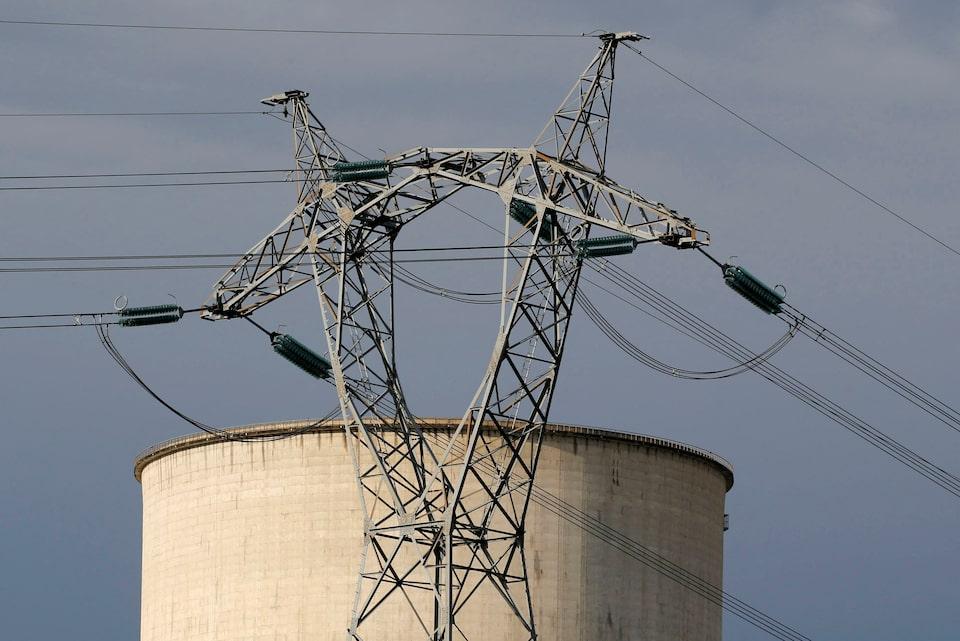
BRUSSELS, May 13 (Reuters) - European Union draft plans to wait until 2028 to classify hydrogen produced from nuclear power as a "low carbon" fuel, risk knee-capping the market for the nascent energy source, Europe's nuclear industry has said. The European Commission is drafting EU standards for what types of hydrogen will be designated as a "low-carbon" fuel - a certification aimed at building up a market for the nascent green energy source. Sign up here. A draft of those rules, seen by Reuters, said the Commission will by July 2028 assess a classification for hydrogen produced using nuclear energy - meaning that a hydrogen producer has signed a power purchase agreement with a nuclear plant. Brussels will start consulting on the nuclear rules by June 2026, the draft added. Emmanuel Brutin, Director General of industry group Nuclear Europe, said this timeline would hamper the development of nuclear-based hydrogen compared with other types of the fuel. "This unjustified three-year delay gives an unfair competitive advantage to hydrogen produced through renewables," he said in a statement. The EU passed rules in 2023 confirming how hydrogen produced from renewable energy can count towards Europe's green goals. EU countries are at odds over nuclear power's role in Europe's energy transition, and political clashes over the issue have stalled negotiations on numerous EU policies in recent years. Pro-nuclear countries including France, Poland and Sweden say Brussels should do more to recognise nuclear power. Others, including Germany and Denmark, have opposed mixing nuclear into some green policies, which they said could distract from the huge expansion of wind and solar needed to meet climate goals. Nuclear energy produces no CO2 emissions, but it is not a renewable source of energy like wind or solar. Proponents cite nuclear reactors' ability to produce base-load power regardless of weather conditions like sunshine or wind, while opponents raise issues including the disposal of radioactive waste. Most hydrogen consumed by European industries today is produced using fossil fuels. The EU aims to gradually replace this with hydrogen produced using emissions-free energy. Experts from EU countries will discuss the EU's draft proposal on Thursday. A European Commission spokesperson declined to comment on the draft. "We are committed to finding a balanced solution which works in all member states and clarifies the rules for the various hydrogen pathways," the spokesperson said. https://www.reuters.com/sustainability/climate-energy/eu-riles-nuclear-industry-with-delay-low-carbon-hydrogen-rules-2025-05-13/