2025-05-13 11:08
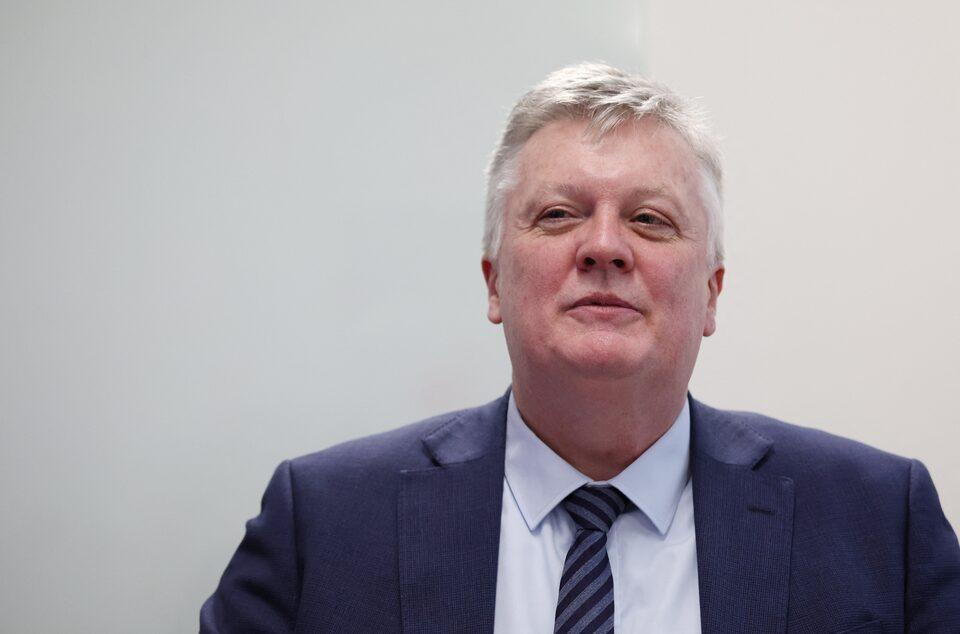
May 13 (Reuters) - Robinhood (HOOD.O) , opens new tab said on Tuesday it will buy Canadian crypto firm WonderFi (WNDR.TO) , opens new tab for C$250 million ($178.98 million), as the popular commission-free brokerage looks to expand its international footprint. The all-cash deal values WonderFi at 36 Canadian cents per share, a 41% premium to its previous close. Sign up here. The crypto industry, which is staging a comeback under U.S. President Donald Trump, has seen a flurry of tie-ups in 2025, including Coinbase's (COIN.O) , opens new tab $2.9 billion purchase of Deribit and Ripple's $1.25 billion acquisition of prime brokerage firm Hidden Road. Robinhood had struck a $200 million deal for crypto exchange Bitstamp last year. The company has been pursuing user growth through acquisitions and making a deeper push into crypto as it evolves beyond its roots as a stock-trading app to become a more central part of its customers' financial planning. WonderFi's brands include crypto exchanges Bitbuy and Coinsquare. It processed over C$3.57 billion in crypto trading volumes in fiscal year 2024, 28% higher than the previous year. The company's focus on both "beginner and advanced crypto users" makes it an "ideal partner", said Johann Kerbrat, Senior Vice President and General Manager of Robinhood Crypto. WonderFi's stock has declined 13.6% on the Toronto exchange so far in 2025, giving it a market capitalization of C$163.9 million. Its employees will join Robinhood, which already has a workforce of more than 140 in Canada. Interest in crypto has surged this year, with the price of bitcoin rising despite disruption due to economic uncertainty and trade tensions. The benchmark S&P 500 index (.SPX) , opens new tab, on the other hand, has dipped 0.6% in 2025. ($1 = 1.3968 Canadian dollars) https://www.reuters.com/business/finance/robinhood-woos-canadian-crypto-users-with-nearly-180-million-wonderfi-purchase-2025-05-13/

2025-05-13 11:08
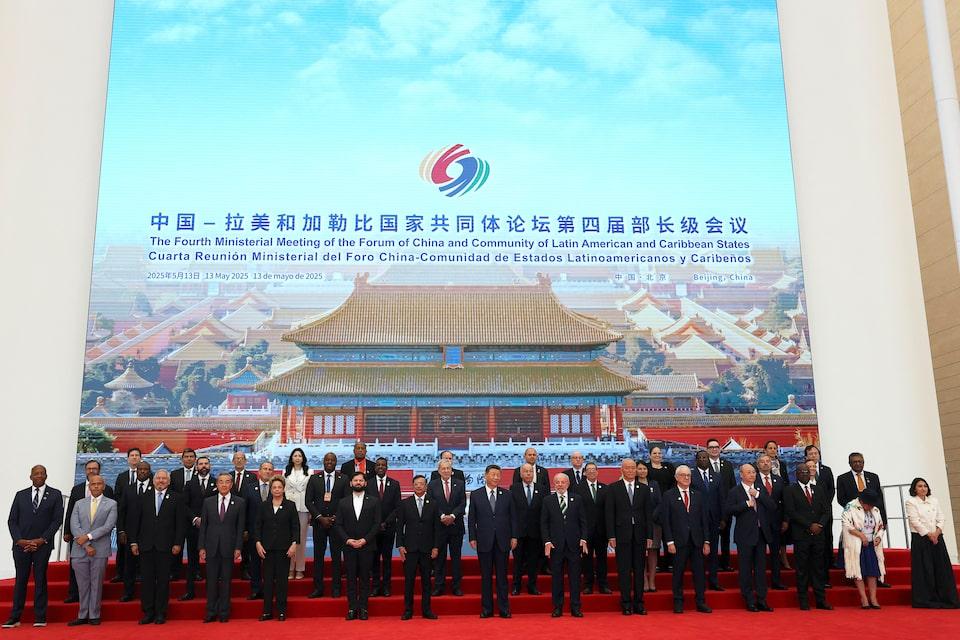
Xi offers 66-bln yuan credit line, fresh corporate investment Brazil's Lula says LATAM's fate independent of China, US, EU Lula says LATAM future 'depends on our actions' China, CELAC trade reaches $515 billion in 2024 - Chinese data BEIJING, May 13 (Reuters) - President Xi Jinping vowed on Tuesday to boost China's footprint in Latin America and the Caribbean with a new $9 billion credit line and fresh infrastructure investment, although Brazil warned the region not to become overly reliant on foreign funding. The world's second-largest economy will disburse 66 billion yuan ($9.18 billion) in credit to the Community of Latin American and Caribbean States' (CELAC) members, Xi told delegates from around 30 nations gathered in Beijing for the three-yearly China-CELAC Forum Ministerial Meeting. Sign up here. "China and the countries of Latin America and the Caribbean are important members of the Global South. Independence is our glorious tradition, development and revitalisation our natural right, and fairness and justice our common pursuit," Xi said. Xi promised leaders including Brazilian President Luiz Inacio Lula da Silva and Colombian counterpart Gustavo Petro that China would also import more from Latin America and encourage its firms to boost investment. Beijing has stepped up efforts in recent years to displace the United States as the region's primary development partner, although Xi's global "Belt and Road" infrastructure initiative (BRI) has encountered challenges in some countries. China also sees courting the region as a way to squeeze self-ruled Taiwan. Seven of the 12 countries that have official diplomatic ties with the island, which Beijing considers one of its provinces, hail from Latin America or the Caribbean. Haiti and Saint Lucia, which both recognise Taiwan, sent representatives to Beijing for the CELAC summit. Panama's ambassador to China was also in attendance, although the Central American country has announced it does not intend to renew its BRI membership, which is set to expire in two to three years. The fresh credit line, denominated in yuan, will be welcomed in many regional capitals, analysts say, although the funding is not immediately useful to countries struggling to service dollar-denominated debt. "They are doing a lot more yuan-based deals like this, particularly for credit swap agreements that make it easier for the borrowing country to transact in RMB rather than USD," said Eric Orlander, co-founder of the China-Global South Development Project. "I think there is a case to be made that it is a win for Latin America in the sense that getting access to capital is now not as easy as it used to be." The funding is just under half the amount Beijing offered during the inaugural China-CELAC Forum in 2015, although, as its $19 trillion economy has slowed, so has its willingness to lend. Xi also announced visa-free travel would be rolled out to five countries, without specifying which ones. After the opening ceremony, delegates adopted a joint action plan covering cooperation through to 2027, a Chinese foreign ministry statement said. US-CHINA COMPETITION The Forum comes as many Latin American and Caribbean states seek to negotiate better trade terms with the United States, following President Donald Trump's "Liberation Day" tariffs. Xi reiterated China's opposition to the levies, while the Brazilian President urged the region not to become overly reliant on the world's top economies. "It's important to understand, (the fate of Latin America) doesn't depend on anyone else. It does not depend on President Xi Jinping, it does not depend on the United States, it does not depend on the European Union, it depends solely and simply on whether we want to be great or continue to be small," Lula said. But Brazil, for one, has been aligning more closely with China, sensing an opportunity to sell more agricultural goods to the world's top food importer as it winds down purchases from the U.S. Xi and Lula held talks later on Tuesday and signed a series of cooperation documents covering agriculture, nuclear energy and broader technical cooperation, Brazilian state TV reported. Of the $240 billion worth of goods China bought from the CELAC countries last year, just under half came from Brazil, the region's largest economy. Two-way trade between China and the CELAC bloc was $515 billion in 2024, according to Chinese customs data, up from $450 billion in 2023 and just $12 billion in 2000. ($1 = 7.1925 Chinese yuan renminbi) https://www.reuters.com/world/china-latin-america-trade-exceeded-500-billion-2024-2025-05-13/
2025-05-13 11:06
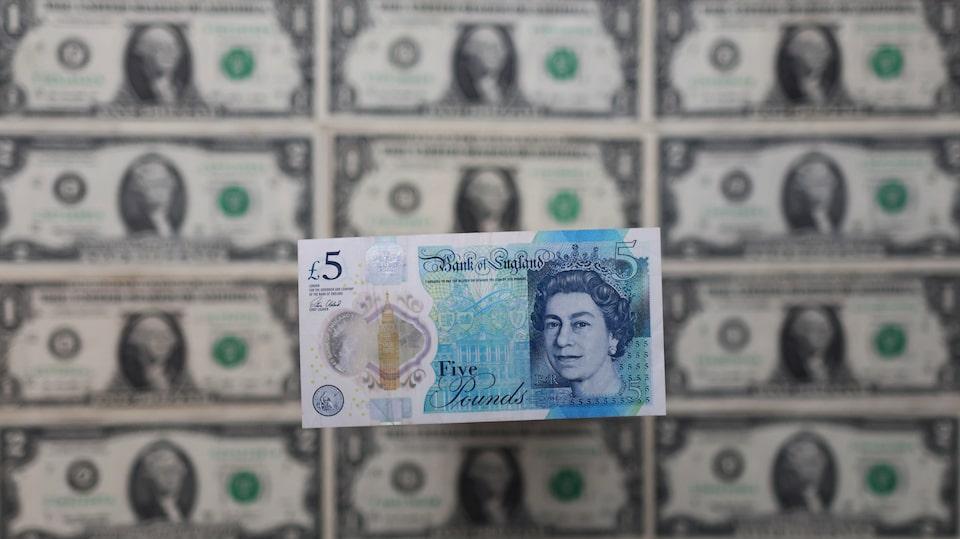
May 13 (Reuters) - Sterling recovered some ground against the dollar on Tuesday after weakening in the previous session, when the United States and China said they had temporarily cut reciprocal tariffs following negotiations over the weekend. The U.S. and China have agreed to temporarily slash tariffs in a deal that surpassed expectations, and the de-escalation in the trade war between the world's two biggest economies sparked risk appetite globally. Sign up here. Sterling rose 0.26% to $1.32115, after falling 1% against the dollar to a four-week low at $1.318 on Monday. It was steady against the euro and the yen, trading flat at 195.48 yen, while the euro slid 0.14% to 84.06 pence, holding its low of more than five weeks . "The global environment for UK assets and therefore the currency is actually relatively favorable," said Samy Chaar, chief economist at Lombard Odier, pointing to a more stable macro environment, improving domestic inflation, as well as Britain's improving relations with the rest of the world, as evidenced by their trade deals with the U.S. and India. Bank of England Chief Economist Huw Pill however said that he was worried inflation in Britain could prove stronger than policymakers expect and interest rates might need to stay higher than investors currently think. Last week, Pill voted against the BoE's quarter-point interest rate cut. The market is pricing in a cut in interest rates of up to 48.6 basis points in total by the end of the year, with no change in policy at the next BoE meeting in June. Earlier in the day, the pound had no noticeable reaction to UK wages data. "Far more interesting for the Bank of England will be next week's April CPI services release," Chris Turner, head of forex strategy at ING, wrote in a note to investors. Turner also pointed to the UK-EU summit on May 19, two days before the inflation data release, saying he expected sterling to stay bid ahead of that, "potentially even seeing EUR/GBP break below 84.0." Around mid-April, the euro shot up to its highest level against the sterling since 2023 at 87.38 pence, before retreating to 84.06 on Tuesday, its lowest since April 3. "I don't think we'll be able to hold levels under 84.0 for euro/sterling for very long," said Kit Juckes, chief FX strategist at Societe Generale. https://www.reuters.com/world/uk/sterling-recovers-some-lost-ground-against-dollar-2025-05-13/
2025-05-13 11:02
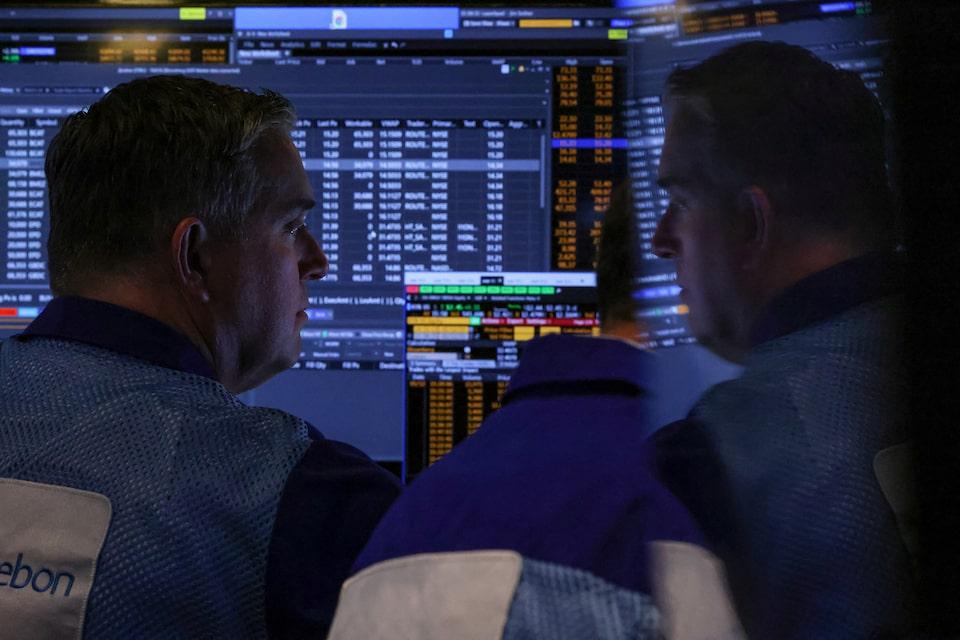
LONDON, May 13 (Reuters) - What matters in U.S. and global markets today By Mike Dolan , opens new tab, Editor-At-Large, Financial Industry and Financial Markets Sign up here. With the dramatic re-set of U.S.-China tariffs on Monday, the market completed the hair-raising round-trip it has been on over the past six weeks of trade angst. Punch-drunk investors are now assessing whether anything in the real economy broke in the process. In today's column, I explore whether the sudden easing of China tariffs may actually be related to an economic theory that has long been prized by American conservatives: the Laffer Curve. Now onto all of today's market news. Today's Market Minute * A White House executive order said on Monday that the U.S. would cut the "de minimis" tariff on China shipments to 54% from 120%, with a flat fee of $100 to remain starting from May 14. * U.S. President Donald Trump arrived in Saudi Arabia on Tuesday to start a four-day swing through the Gulf region, focusing more on economic deals than security crises ranging from war in Gaza to the threat of escalation over Iran's nuclear program. * Apple’s success rests on the iPhone, which helped turn the company from a niche player in the personal computer industry into one of the world’s largest companies. Much of that was due to its supply chain in China. Now geopolitical tensions and trade wars are calling that dependence into question. * The move by the United States and China to reduce import tariffs on each other and negotiate has been broadly welcomed by markets, but the de-escalation will do very little to restore the trade in energy commodities. Check out why in the latest piece from Reuters' columnist Clyde Russell. * A split is emerging between the Federal Reserve and other major central banks as they try to assess the economic impact of the rapidly shifting trade war. The Fed's cautious stance runs the risk of leaving Chair Jerome Powell and his team behind the curve once again. Read the latest from Reuters' columnist Jamie McGeever. Re-set, surge and hold The S&P 500 (.SPX) , opens new tab, Nasdaq (.IXIC) , opens new tab and Dow Jones (.DJI) , opens new tab indexes all boasted gains of 3-5% on Monday, their biggest single-day percentage gains since April 9. The S&P is now back within 1% of where it started the year, breaking above its 200-day moving average for the first time since late March. Stock futures dialed back a touch on Tuesday, but retained most of their recent gains. Following the positive China trade news, the dollar (.DXY) , opens new tab hit its highest point in a month before falling back a bit today. China's offshore yuan outpaced it to briefly notch its best levels since November's U.S. election. After Monday's agreement between the two biggest economies, the White House followed up with an executive order saying America would also cut the "de minimis" tariff on China shipments to 54% from 120%. In the meantime, U.S. Treasury yields are back near mid-April levels as Federal Reserve rate expectations have been pegged back to just two cuts this year. Back to square one? Well, not quite. U.S. tariffs have come off the mountain top, and the investor relief is palpable. Goldman Sachs cut back its U.S. recession chances to 35% from 45%. They are the first major brokerage to do so. BlackRock CEO (BLK.N) , opens new tab Larry Fink says tens of trillions of dollars of financial firepower is sitting idle in cash amid trade war worries and uncertainty over the U.S. economy, where deficits are beginning to spook investors. And the April 2 moves are still only paused for three months, with negotiations ongoing. The overall effective U.S. tariff rate at this point is still almost five times what it was at the start of the year, even if it has almost halved from last week. Indeed, the effective tariff rate is currently around 13% according to the Fitch credit rating firm, so it's still the highest since World War Two. While everyone waits and watches, economic stress tests are unfolding, with April's consumer price report due on Tuesday and retail and industrial numbers for the month out later in the week. Headline annual inflation is expected to have remained steady at 2.4% last month. However, there was a deep intake of breath before the report, following news that U.S. new-vehicle prices surged in April, a sign that Trump's auto-tariff measures at least are already rippling through the car market. The average price consumers paid, after discounts and promotions, rose 2.5% from March, more than double the typical 1.1% increase over those two months in recent years, Cox Automotive's Kelley Blue Book showed. And there were further signs of trepidation among households and companies ahead of the tariff sweep. Top U.S. bank lending officers reported weaker demand from businesses and consumers for many types of credit during the first three months of the year, according to a Federal Reserve report released on Monday, reversing a short-lived surge in loan demand the previous quarter. Elsewhere, stocks around the world remained buoyant on the tariff detente - nudging higher on most bourses in Asia and Europe. Positive British wage data and German ZEW investor sentiment readings helped. Make sure to check out my column today, where I look a little deeper at the effectiveness of the tariff hikes, why they were pulled back from the brink and why budget and government revenue considerations may now be top of mind. Chart of the day U.S. consumer price inflation for April is due for release on Tuesday, as households may be starting to experience the impact of the April 2 import tariff hikes. Due to a variety of lags related to existing contract expirations and producers absorbing some of the hit, economists think today's report will paint an incomplete picture. It could be several months before the full impact is revealed. As per Monday's U.S.-China re-set, the tariff target is changing all the time. What is clearer is the wide gap between inflation trends in the U.S. and China since the pandemic, with Beijing reporting this week that CPI inflation in April is still in negative territory. That speaks both to the difference in domestic demand in both countries and also relative competitiveness. Today's events to watch * U.S. April consumer price report (8:30EDT) * New York Federal Reserve issues Q1 Household Debt and Credit Report (10:00EDT) * Bank of England Governor Andrew Bailey and Chief Economist Huw Pill speak * European Union finance ministers meet in Brussels, with European Central Bank Vice President Luis de Guindos * U.S. President Donald Trump visits Middle East on three-country tour to Saudi Arabia, Qatar and United Arab Emirates (to May 16) * NATO Secretary General Mark Rutte travels to Ankara ahead of informal meeting of NATO Ministers in Antalya on May 14-15 Opinions expressed are those of the author. They do not reflect the views of Reuters News, which, under the Trust Principles , opens new tab, is committed to integrity, independence, and freedom from bias. https://www.reuters.com/markets/us/global-markets-view-usa-2025-05-13/
2025-05-13 10:26
MUMBAI, May 13 (Reuters) - The Indian rupee closed nearly flat on Tuesday as a fall in local equities and dollar bids from state-run banks ate into the currency's early gains spurred by the cessation of military hostilities between India and Pakistan. The rupee touched a peak of 84.6350 in early trading before ending at 85.33 against the U.S. dollar, nearly unchanged from its close at 85.37 on Friday. Sign up here. The benchmark equity indexes, the BSE Sensex (.BSESN) , opens new tab and Nifty 50 (.NSEI) , opens new tab, fell about 1.5% each on fears of foreign flows moving to China after its trade pact with U.S. and on profit booking after the previous day's near 4% rally. India's bond and currency markets were closed on Monday. On Monday, U.S. and China announced an agreement to reduce reciprocal tariff reductions for the next three months. "A rally in China stocks might see modest near-term underperformance of India stocks," Nomura said in a note, raising its allocation to Chinese equities to a "tactical overweight." The firm said that it maintains an overweight position on Indian equities but will fund its allocation to China by trimming exposure to India. On the day, two traders also pointed to strong bids from state-run banks weighing on the rupee. A large state-run bank was persistently bidding for dollar, a trader at a mid-sized foreign bank said. The offshore Chinese yuan was nearly flat after touching a six-month peak earlier in the session. The dollar index was slightly lower at 101.6 while U.S. bond yields dipped. Investors await consumer price inflation data from India and the U.S. due later in the day. While India's April CPI is expected to have eased to a near six-year low of 3.27%, month-on-month core U.S. CPI likely rose to 0.3%, according to economists polled by Reuters. https://www.reuters.com/world/india/rupee-ends-nearly-flat-weak-equities-erode-india-pakistan-truce-spurred-rise-2025-05-13/
2025-05-13 10:14
LONDON, May 13 (Reuters) - Bank of England Chief Economist Huw Pill said on Tuesday that he was worried that inflation in Britain could prove stronger than expected by the central bank and interest rates might need to stay higher than investors are thinking. Pill said inflation might be hard to get back to the BoE's 2% target which might "mean that the response of monetary policy, in order to ensure that we get back to our target within a reasonable cycle, needs to be somewhat more aggressive or more persistent in itself." Sign up here. Last week, Pill voted against the BoE's quarter-point interest rate cut. In his comments on Tuesday, he said investors should not assume that the BoE's latest forecast - that inflation would get back to target by early 2027 based on recent market pricing - was a direct endorsement of their bets on future rate cuts. He said there was a risk that Britain's productivity growth remains weak - as set out in a more inflationary outlook scenario highlighted by the BoE last week - and there were echoes of past inflation crises in the rise in wage demands triggered by the jump in prices over the past few years. "I remain concerned that we have seen a sort of structural change in price and wage-setting behaviour, maybe driven by the type of things that were involved in models of the inflation process from the '70s and '80s," he said. Pill was speaking at a conference organised by the London School of Economics. https://www.reuters.com/world/uk/bank-englands-pill-says-interest-rates-might-need-stay-high-2025-05-13/