2026-01-19 06:41
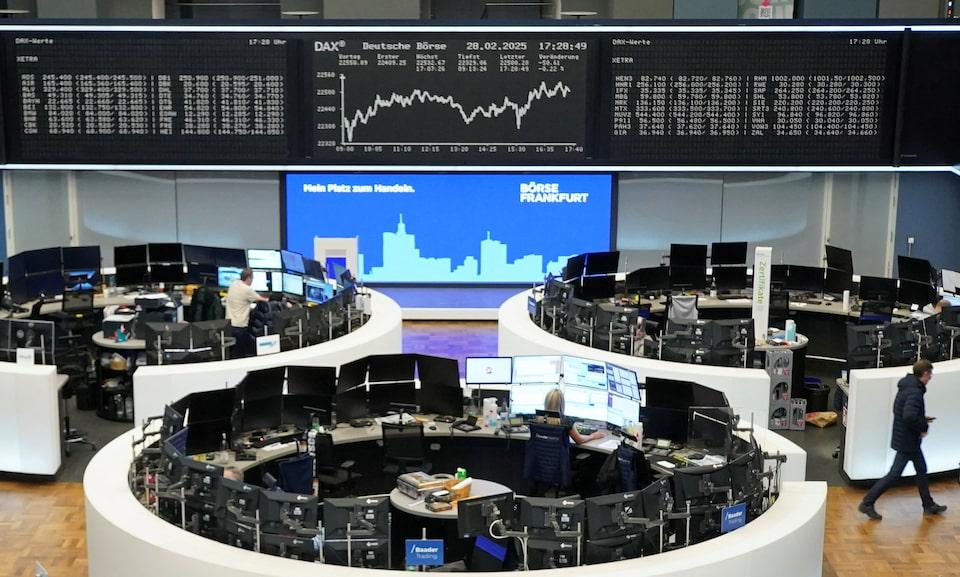
NEW DELHI, Jan 19 (Reuters) - Rajasthan will need 4,400 megawatts of new coal-fired power capacity by 2036 to meet rising electricity demand despite India's top renewable energy–producing state adding more clean energy as it retires some ageing thermal plants, according to a government document. The Central Electricity Authority, a think tank of the federal power ministry, has more than doubled its earlier estimates of 1,900 MW coal-fired power for Rajasthan, according to a letter dated November 27 that was addressed to the state power utility and reviewed by Reuters. Sign up here. Rajasthan is preparing to retire its existing 1,350 MW old coal power projects, the document showed. The Central Electricity Authority did not respond to a Reuters request for comment on the letter. India, which meets about a third of its power demand through thermal projects, has set a 2070 net-zero goal, which includes more than doubling national renewable capacity to 500 gigawatts. Power consumption in the South Asian nation is expected to rise as its economy expands, requiring a 40% increase in coal-fired capacity to more than 307 gigawatts by 2035, as per government data. With the upwards revision in the state's coal-based power needs, Rajasthan's power regulator has decided to review its November decision denying a permit for a new 3,200 MW coal power plant, according to a document posted on the regulator's website. The Rajasthan power utility had asked the regulator to review its decision, according to a separate document reviewed by Reuters. The company said additional coal capacity was needed because solar and wind energy was not available round the clock and battery storage systems were not yet ready. The state gets about 70% of its power from renewable sources. The state utility did not respond to Reuters request for comment. Several other Indian states are also accelerating coal power procurement, citing strong demand and the need for reliable, baseload generation. https://www.reuters.com/sustainability/boards-policy-regulation/indias-top-renewable-state-needs-more-coal-power-by-2036-adviser-says-2026-01-19/
2026-01-19 06:12
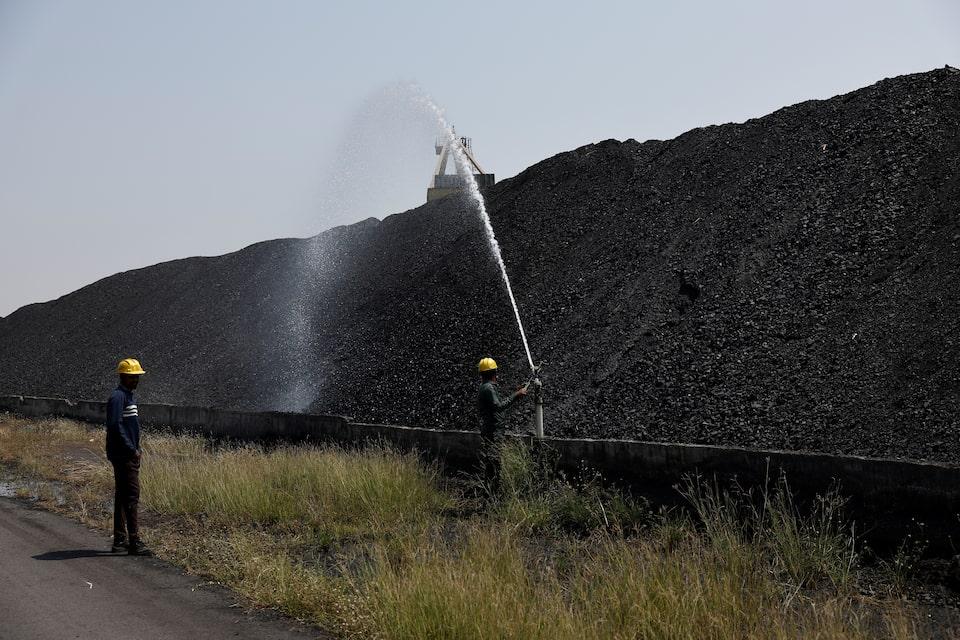
Gold hits record $4,689.39 an ounce Silver reaches record peak of $94.61 Dollar slides on trade war risk Jan 19 (Reuters) - Gold and silver hit record highs on Monday, driven by a flight to safety after U.S. President Donald Trump warned of extra tariffs on some European countries in a dispute over Greenland. Spot gold jumped 1.7% to $4,672.49 an ounce by 12:05 p.m. ET (1705 GMT), after scaling a record peak of $4,689.39. Sign up here. U.S. gold futures for February delivery advanced 1.8% to $4,677.70 an ounce. Trump threatened several European allies with a series of escalating tariffs on Saturday unless the U.S. is allowed to buy Greenland, intensifying a dispute over Denmark's vast Arctic island. "When institutional and policy risks resurface, markets tend to react swiftly by reallocating toward safe-haven assets, with gold once again emerging as the preferred choice," said Linh Tran, senior market analyst at XS.com. The dollar fell as Trump's latest tariff threats raised investors' appetite for safe-haven gold, the Japanese yen and Swiss franc in a broad risk-averse move across markets. Gold tends to do well during times of geopolitical and economic uncertainty, as well as when interest rates are low. It gained more than 64% in 2025 and is up more than 8% since the start of this year. Meanwhile, Federal Reserve Vice Chair for Supervision Michelle Bowman said on Friday that a fragile job market with the potential to weaken quickly means the U.S. central bank should stand ready to cut interest rates again if needed. Markets expect the Fed to leave rates on hold at its meeting over January 27-28 but are pricing in at least two cuts of 25 basis points this year. Elsewhere, spot silver climbed 5% to $94.41 an ounce after hitting a record high of $94.61. Silver has risen more than 32% since the start of the year. Analysts at Citi Research said they remain tactically bullish on precious metals, setting price targets of $5,000 an ounce for gold and $100 an ounce for silver in the next three months, citing geopolitical tensions that are likely to stay elevated in the near term. In other metals, spot platinum added 1.5% to $2,362.65 an ounce while palladium rose 1.1% to $1,819.99. https://www.reuters.com/world/india/gold-silver-hit-record-highs-trumps-greenland-tariffs-spark-safety-rally-2026-01-19/
2026-01-19 06:06
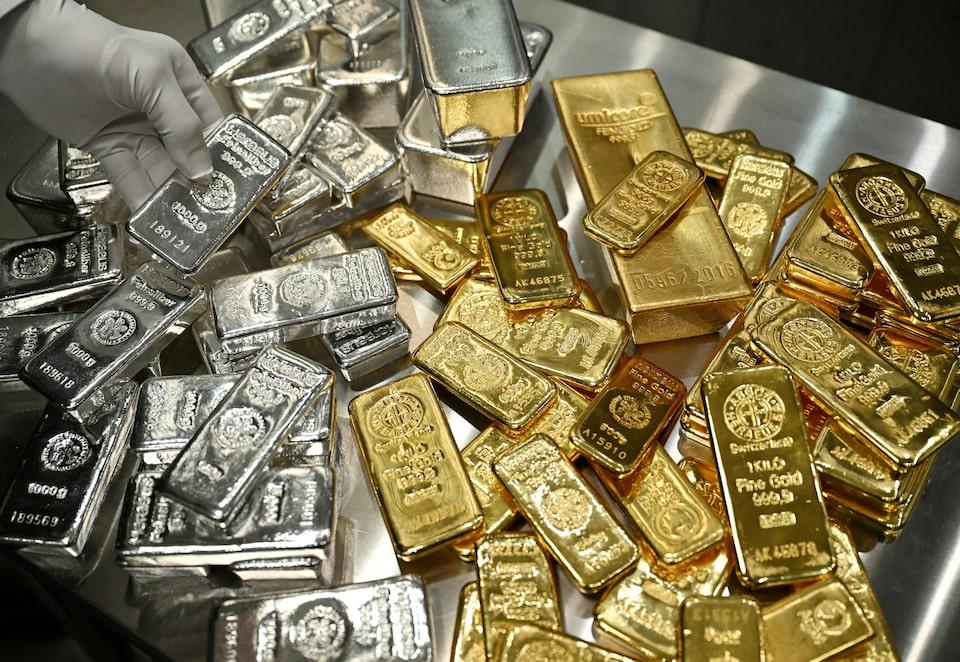
MUMBAI, Jan 19 (Reuters) - The Indian rupee reversed course and fell for the fourth consecutive session on Monday, pressured by corporate dollar buying that was further complicated by a shortfall in supply. The rupee appreciated to 90.6450 in early trade following a pullback in the U.S. dollar amid the Greenland dispute but later declined and was on the verge of breaking the 91 level. Sign up here. Some traders said that the central bank intervened mildly to prevent further losses. The local unit found early support as the dollar weakened against major peers and Asian currencies, with investors paring dollar exposure amid mounting tensions over Greenland and threats of U.S. tariffs on European nations. The rupee ended at 90.91 to the dollar, its lowest closing level since December 16. It settled at 90.8650 on Friday. "Risk-off sentiment is rarely friendly to emerging markets. As investors turn cautious, capital tends to move out of riskier assets. The rupee, already under pressure, may feel added strain and simply put, when the world feels uneasy, emerging market currencies often bear the cost," said Amit Pabari, managing director at FX advisory firm CR Forex. The rupee has breached the key zone of 90.30–90.50, with the all-time high of 91.0750 as the next major level to monitor, he added. The currency's inability to hold on to its opening advance underscores the current balance in the forex market, where any form of recovery is offset by corporate dollar demand and an overall lack of supply. Apart from this, outflows from equity markets also continue to hurt sentiment. Foreign investors have withdrawn over $2.5 billion from Indian stocks so far in January. https://www.reuters.com/world/india/rupee-falters-after-firm-open-corporate-demand-premiums-continue-climb-2026-01-19/
2026-01-19 06:04
TOKYO, Jan 19 (Reuters) - Japan's opposition Democratic Party for the People will propose issuing five trillion yen ($32 billion) in "education bonds" annually to double the spending on child care, education and scientific research, a draft campaign platform obtained by Reuters showed on Monday. The DPP will also propose lowering the consumption tax rate to 5% from 10% until the pace of wage gains exceed the rate of inflation by 2%, the draft showed. Sign up here. To fund various spending measures, Japan should use proceeds from investing 180 trillion yen worth of reserves set aside for currency intervention, another 280 trillion yen in pension reserves, as well as 90 trillion yen worth of exchange-traded funds (ETF) held by the central bank, the platform showed. Prime Minister Sanae Takaichi is widely expected to dissolve parliament's lower house and call a snap election in February in her first major election test since taking office in October. DPP currently holds the third largest number of seats among opposition parties and enjoys popularity among younger voters with its focus on expanding tax breaks and increasing pay. Depending on the election outcome, the party could influence government policies with its decision on whether to support parliament passage of the fiscal 2026 budget and a bill to allow government issuance of deficit-covering bonds, analysts say. ($1 = 157.8800 yen) https://www.reuters.com/world/asia-pacific/japan-opposition-propose-issuing-education-bonds-draft-platform-shows-2026-01-19/

2026-01-19 06:00
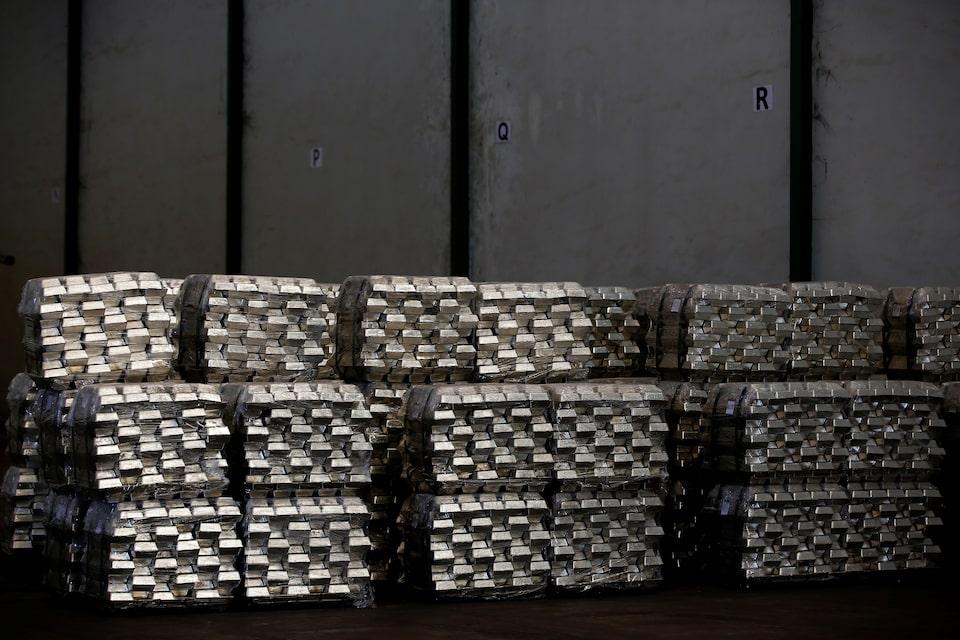
LONDON, Jan 16 (Reuters) - The tin market has kicked off the new year in explosive form, prices racing to all-time nominal highs on both the London and Shanghai markets. The rally is "unreasonable", according to the state-backed China Nonferrous Metals Industry Association (CNMIA). It warned all parties last month to "avoid blindly following the trend". Sign up here. Beijing's admonition hasn't in any way deterred Chinese investors from doing just that and chasing the price ever higher. The volume of trading on the Shanghai Futures Exchange's (ShFE) tin contract exceeded a million metric tons on Thursday. That's more than twice the world's annual physical usage. Tin is clearly in a speculative bubble, which will burst just as soon as the trend turns. But the mismatch between the size of the physical market and investment interest foreshadows more volatility ahead. And not just for tin. Given the tidal wave of investor buying washing through the industrial metals sector right now, tin's current toil and trouble may be a harbinger for other metal supply chains. IRRATIONAL EXUBERANCE The London Metal Exchange (LME) tin contract has been bubbling away for several months but turned supernova this week as Chinese investors brought their considerable financial firepower to the rally. LME three-month metal took out the previous March 2022 price peak at $51,000 per metric ton on Tuesday and leapt off the charts to $54,760 on Wednesday. The driving narrative is one of supply shortfall. Tin's structural supply issues are well known. Global mine production is too concentrated in too few countries and heavily dependent on frontier jurisdictions such as the Democratic Republic of Congo and the semi-autonomous Wa State in Myanmar. But this rally is ill-timed. If anything, the tin supply picture has been improving over recent months. The threat to Congo's Bisie mine from the M23 insurgency has receded since the site was in danger of being overrun a year ago. Indeed, mine operator Alphamin Resources (AFM.V) , opens new tabraised , opens new tab its annual production guidance after a strong third quarter performance. The giant Man Maw mine in Myanmar is also showing signs of renewed productive life after a prolonged absence. China imported 7,190 tons of tin raw materials from its neighbour in November, the highest monthly tally since August 2024. And while Indonesia's crackdown on illegal mining continues, the flip side is an expected increase in official-sector production quotas from 53,000 tons in 2025 to 60,000 tons in 2026, according to the Indonesia Tin Exporters Association. Nor is there any scarcity of refined tin right now. Producers and traders have delivered significant amounts of metal into the price rally. Combined stocks held by the LME and ShFE have risen from 11,000 tons at the end of October to over 19,000 tons. At the time of tin's previous 2022 peak, inventory was under 5,000 tons. So when China's state metals body describes tin's super-charged price performance as "unreasonable", it may have a point. LIQUIDITY MISMATCH The problem, to paraphrase economist John Maynard Keynes, is that a market can remain "unreasonable" longer than you can remain solvent. Particularly if it's a small market such as tin, where investors can have an outsize price impact. This is clearly the case in Shanghai right now. Such speculative surges have long characterised China's commodity markets. Last year it was alumina. The Chinese authorities have gone into well-practiced fire-fighting mode, raising trading margins, particularly the cost of intraday trades, and limiting position sizes for non-members. But it's not just the Chinese who have been drawn in by tin's narrative of constrained supply and growing usage as a semiconductor solder. Fund participation in the London tin market has been steadily rising over the last couple of years. When tin prices last scaled such giddy heights in late 2021 and early 2022, the investment fund long position peaked at 2,887 contracts, equivalent to 14,435 tons. At one stage last month, the investment long position rose to a record 5,753 contracts, or 28,765 tons. The liquidity rush has injected more volatility into a market with a history of price wildness. The futures frenzy poses very real-world problems for the physical supply chain as producers and consumers struggle to finance margins against their hedges. When does liquidity risk override price risk? Or, how long can you remain solvent? FUNDS AND FUNDAMENTALS A few years ago no one paid much attention to tin. The market was too small, both in terms of physical volumes and futures activity, to qualify for investment with most fund managers. That is changing as the world wakes up to tin's central role in the coming Internet of Things Age. No circuit boards, no internet. And very little else in our hyper-connected world. But the result is too much money flooding into a market ill-equipped to handle it. CNMIA, which speaks on behalf of both the world's largest refined tin producer and user, is clear about the dangers posed by the current exuberance. "The rapid price surge driven by funds has deviated from industry fundamentals, significantly magnifying market risks and harming the global industry chain." As fund money pours into the industrial metals complex in search of hard assets other than gold and silver, tin's drama may serve as a timely warning for other in-demand metals such as copper. Andy Home is a Reuters columnist. The opinions expressed are his own Enjoying this column? Check out Reuters Open Interest (ROI) for thought-provoking, data-driven commentary on markets and finance. Follow ROI on LinkedIn , opens new tab and X , opens new tab. https://www.reuters.com/markets/commodities/metals/tin-price-bubble-spells-toil-trouble-global-industry-2026-01-16/
2026-01-19 05:34
Jan 19 (Reuters) - You couldn't make this stuff up. A U.S. president threatens to pile an extra tax on American consumers in order to force a European country to sell him a territory it can't legally sell. Oh, and the tariffs themselves might well be illegal, assuming the Supreme Court finally gets around to making a ruling. Linking the tariffs directly to sovereignty, and all that entails for nation states, makes it harder for either side to TACO on this one, and throws into doubt all the trade deals already agreed. The EU has already paused ratification of the U.S.-EU agreement, and the U.S.-UK deal has to be in doubt. Sign up here. At least Trump is using tariffs rather than an actual military invasion against a fellow NATO member, risking the end of the alliance, the loss of U.S. bases and air access in Europe, intelligence sharing, billions in defence sales etc etc. The market reaction has been moderate risk-off, with S&P futures down almost 1% and EU stock futures 1.1%. Gold and silver scaled fresh peaks, while the dollar lost ground to the safe harbour Swiss franc and yen. It's even down on the euro as analysts note European investors own $8 trillion in U.S. stocks and bonds. Starting a trade war with your biggest creditor is a bold play, Cotton. It should also make for a fraught few days at Davos as leaders from around the world gather at the World Economic Forum, including a large U.S. group led by Trump himself. All this tension is a boon for China, which just struck a trade deal of its own with Canada. The strength of exports helped its Q4 GDP slightly pip forecasts at 4.5% on the year, though disappointing retail sales for December underlined the weakness of domestic demand. And, if demography is destiny, the latest population numbers should alarm Beijing. China ended 2025 with 3.4 million fewer people, roughly the population of Uruguay. Across in Japan, Prime Minister Sanae Takaichi holds a media conference at 0900 GMT to likely flag a snap election in February, capitalising on her strong approval ratings - though voters seem to like her more than the LDP. This has sparked talk of a cut in the consumption tax rate, at least for food, which would not be great for the budget. Still, it should be noted that strong nominal GDP growth means the budget is actually in better repair than for decades, and might even be in surplus this fiscal year. Key developments that could influence markets on Monday: - Euro zone CPI for December, Canadian CPI for Dec - Participation by ECB Board member Piero Cipollone in Eurogroup meeting https://www.reuters.com/world/china/global-markets-view-europe-2026-01-19/