2025-05-13 03:56
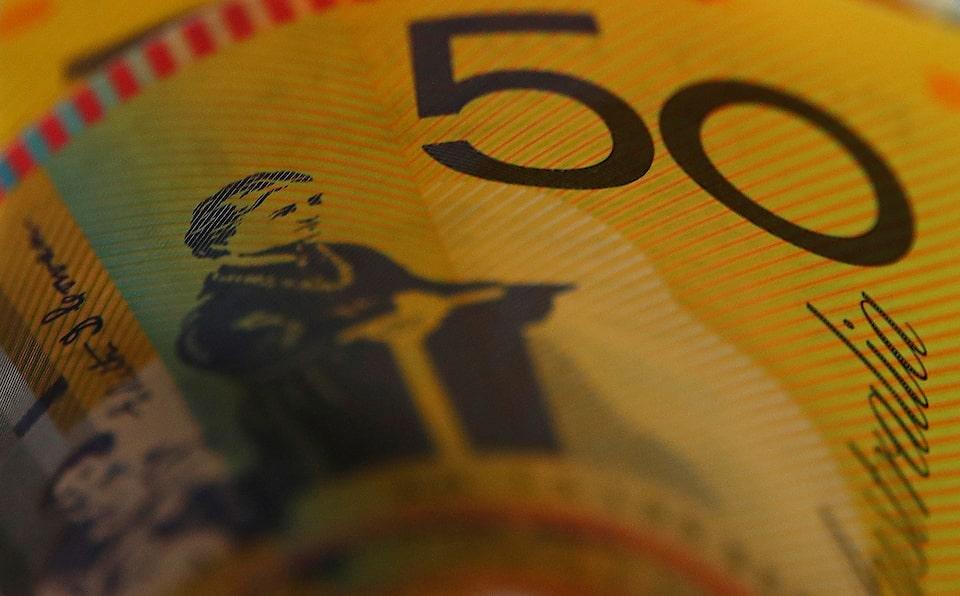
Australian pension funds reconsider U.S. asset strategies Hedging demand changes seen in Australian funds Aussie dollar's rise impacts U.S. equity returns for investors SINGAPORE/SYDNEY, May 13 (Reuters) - Funds in Australia's A$4.2 trillion ($2.7 trillion) pension sector are rethinking some of their long-held strategies of buying U.S. assets and the dollar, as confidence in American growth wanes. Volatility around Sino-U.S. trade tensions this year has forced investors to reassess their U.S. exposure and the role of the dollar, which has lately failed to behave as a safe haven currency amid heightened uncertainty around Washington's economic policy. Sign up here. While there have not yet been any major shifts in strategy, currency dealing desks in Australia have noticed modest changes in hedging demand from some pension funds. Those hedging tweaks are under the spotlight globally and Australia's pension funds, known locally as superannuation funds, have long kept low FX hedging ratios on large and growing foreign stock portfolios. When U.S. equities fell, funds allowed hedging ratios to rise by not keeping their currency positions exactly in step with asset prices, said Troy Fraser, head of foreign exchange sales for Australia and New Zealand at Citi in Sydney. "You would expect the funds to be selling Aussie and buying U.S. to adjust or to rebalance their hedge ratio," he said. "We've seen a little bit of that, but not a lot. I think funds are generally happy to be longer Aussie." Fraser said funds were weighing their asset mix, hedging costs and the outright level of the Aussie. Were it to extend it could move the currency, and in separate research Citi in February estimated that a 5% shift in hedging now could push the Australian dollar as much as 11% higher against the greenback. At about $0.64 , it's been falling on the dollar for nearly 15 years since touching $1.10 in 2011. Along with a tendency to drop reliably whenever global stocks fell, cushioning losses in Aussie dollar terms, the Aussie's behaviour encouraged a low hedging ratio. Industry-wide hedging on foreign equities was roughly 22% in the December quarter, according to the most recent regulatory data. "Unhedged has worked," said Ben McCaw, a senior portfolio manager at MLC Asset Management. "It was lowering the volatility of the portfolio (and) providing a positive return to the portfolio ... so that was almost the ultimate asset," he said. Now, however, long- and short-term factors are starting to shift how the Australian currency trades. He has been reducing U.S. dollar currency exposure for about three years. Others are keeping a watching brief. CBUS, which manages more than A$100 billion, has kept currency exposure steady but the U.S. dollar, which fell through market turbulence in April, caught the attention of fund CIO Leigh Gavin. "The USD is probably one of the few asset classes that hasn't rebounded from the early April lows, and we think that's interesting," he said. "It's certainly something we're monitoring, but it's still pretty early days." 'QUESTIONING OUR EXPOSURE' Some fund chiefs say U.S. allocations are under review. Australian super funds run a high allocation to equities, by global standards, at nearly 60%, according to regulatory data, with roughly half that abroad, as of December 2024. According to Westpac, some A$555 billion is invested in U.S. stocks by Australian domiciled investors. "That's been a very good place to be investing over the last couple of years," said John Pearce, chief investment officer of A$139 billion fund UniSuper on the fund's podcast in April. "Like every other fund, we are questioning our exposure to the U.S. It would be fair to say that we've hit peak exposure and will be reducing over time," he said. To be sure, no increase in the fund's hedging ratio, which typically swings between 30-40%, is being considered, a UniSuper spokesperson said in emailed remarks to Reuters. And there are very big funds that are not budging in their strategies. "We have no view of changing our hedge position or any of our positions based on that event," said Michael Clavin, head of income and markets at Aware Super, referring to last month's tariff-driven drawdown and market volatility. The chief investment officer of AustralianSuper, the largest super fund with more than A$365 billion under management, also told the Financial Times last month it would continue investing more than half its offshore flows into the U.S. Still, the Aussie's 3% rise against the U.S. dollar this year has meant the year-to-date 0.6% drop in the S&P 500 (.SPX) , opens new tab translates to a near 3.5% fall in Australian dollar terms, which if it persists or extends could start to drive a response. "Being underweight the Aussie dollar has been something which has typically rewarded Australian investors," said Cameron Systermans, head of multi-asset in the Asia-Pacific at fund manager and adviser Mercer. "So if there were to be a durable uptrend in the Aussie dollar, that would be a bit of a pain trade, I think, for a lot of the asset owners in Australia. And it might force them to really reassess whether that still makes sense." ($1 = 1.5625 Australian dollars) https://www.reuters.com/world/asia-pacific/australias-pension-funds-start-questioning-us-strategies-2025-05-13/
2025-05-13 03:55
MEXICO CITY, May 12 (Reuters) - Mexican state oil company Pemex said on Monday that it responded in a timely manner to requests for information from Norway’s wealth fund, but the fund's ethics watchdog maintained its recommendation to withdraw investments. Norway's wealth fund, the world's largest, sold all its fixed income investments in Pemex on Sunday citing what it called an unacceptable risk that the company is involved in corruption. Sign up here. Pemex said the fund's board had acknowledged its anti-corruption system was in accordance with international guidelines. "However, it considered that it does not have sufficient information, specifically on acts of corruption in 2017, reported in the media," the oil company added. https://www.reuters.com/business/energy/mexicos-pemex-says-it-responded-norway-wealth-fund-divestment-recommendation-2025-05-13/
2025-05-13 03:01
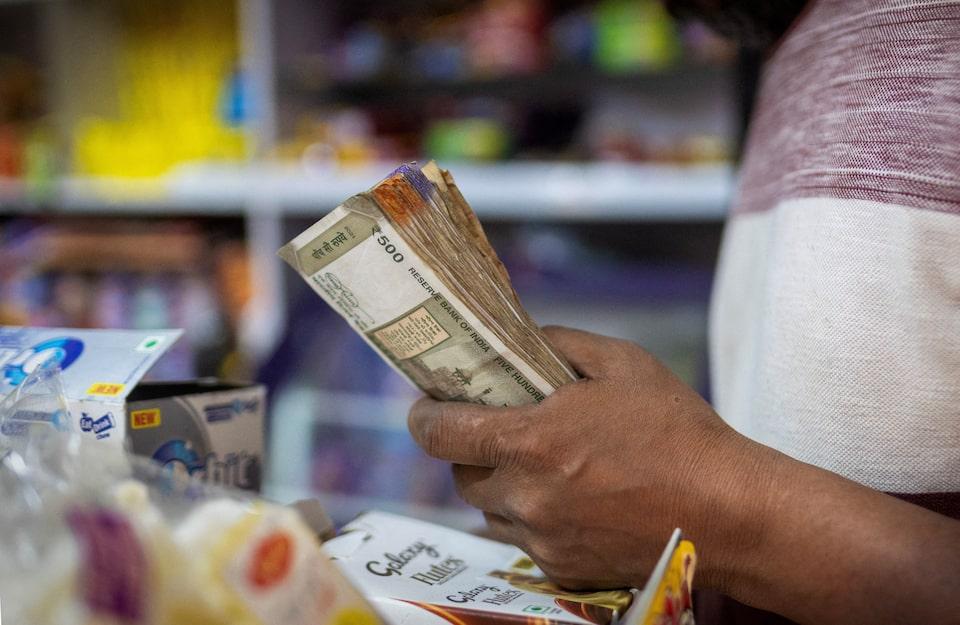
MUMBAI, May 13 (Reuters) - The Indian rupee is expected to appreciate past the 85 mark against the U.S. dollar at the open on Tuesday, supported by the India-Pakistan truce and a rally in the Chinese yuan on the back of the U.S.-China trade agreement. The 1-month non-deliverable forward indicated that the rupee will open at 84.70-84.75 to the U.S. dollar compared with 85.37 on Friday. India's forex and money markets were off on Monday. Sign up here. The rupee experienced significant volatility last week, with traders reacting to news surrounding the India-Pakistan conflict. The Indian currency fluctuated within the 84.12-85.84 range, with the Reserve Bank of India likely intervening on Friday to provide support. "This week is expected to be less turbulent," said a currency trader at a Mumbai-based bank. "I expect the rupee to rally to at least the 84.30-84.40 region, especially with positive developments on the U.S.-China front complementing the good news (about) India and Pakistan." India and Pakistan agreed to a ceasefire on Saturday following four days of cross-border strikes and retaliatory attacks. Although there were violations in the immediate aftermath, the truce has held since then. Indian equities soared on Monday, logging their best day in more than four years. US-CHINA PACT LIFTS YUAN The temporary pause in the U.S.-China trade war boosted Asian currencies and equities, alleviating worries of an economic slowdown. Following talks, both sides agreed that the U.S. would drop levies on Chinese imports from 145% to 30% during a 90-day negotiation period and that China would cut duties from 125% to 10%. The offshore Chinese yuan rose past 7.18 to the U.S. dollar, a six-month high. "In the short term, this 90-day reprieve increases optimism that the worst-case outcome (U.S. stagflation) will be avoided," ANZ Bank said in a note. U.S. equities rallied Monday, yields rose, and the dollar advanced against its major peers. KEY INDICATORS: ** One-month non-deliverable rupee forward at 84.94; onshore one-month forward premium at 18.75 paise ** Dollar index at 101.62, rallied 1.3% on Monday ** Brent crude futures down 0.3% at $64.7 per barrel ** Ten-year U.S. note yield at 4.45% ** As per NSDL data, foreign investors bought a net $286 million worth of Indian shares on May. 8 ** NSDL data shows foreign investors sold a net $64.5 million worth of Indian bonds on May. 8 https://www.reuters.com/world/china/india-pakistan-truce-yuan-boost-lift-rupee-past-85usd-2025-05-13/
2025-05-13 01:18
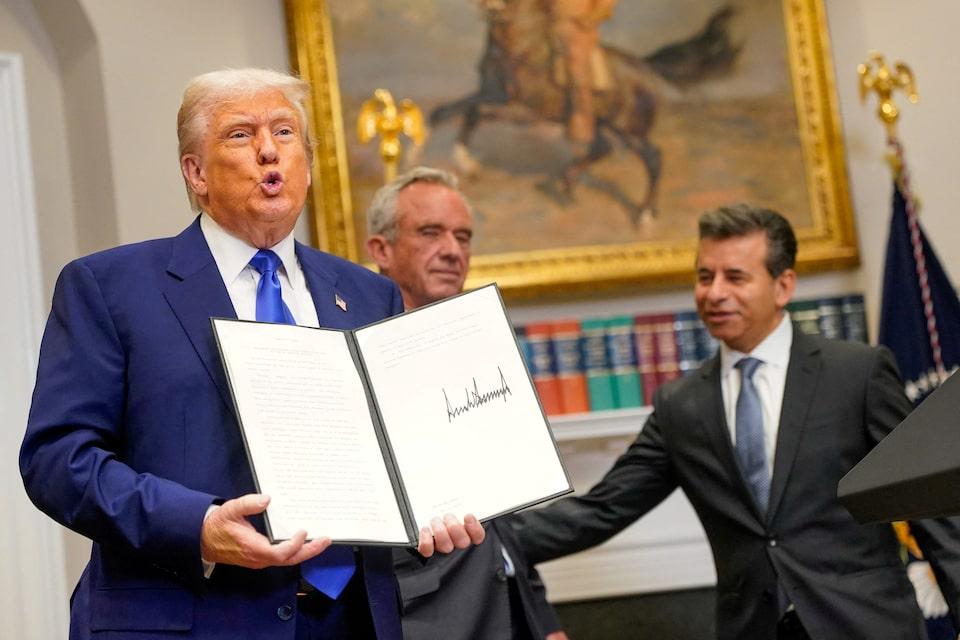
Trump tells drugmakers to cut prices to 'most favored nation' pricing Pharmaceutical shares rise as analysts question how it can be implemented Order calls for FTC to look for anti-competitive pricing WASHINGTON, May 12 (Reuters) - U.S. President Donald Trump signed a wide-reaching executive order on Monday directing drugmakers to lower the prices of their medicines to align with what other countries pay that analysts and legal experts said would be difficult to implement. The order gives drugmakers price targets in the next 30 days, and will take further action to lower prices if those companies do not make "significant progress" toward those goals. Sign up here. The order was not as bad as feared, investors, analysts and drug pricing experts said, and they questioned how it would be implemented. Shares of drugmakers, which had been down on the threat of "most favored nation" pricing, recovered and rose on Monday. Trump told a press conference that the government would impose tariffs if the prices in the U.S. did not match those in other countries and said he was seeking cuts of between 59% and 90%. "Everybody should equalize. Everybody should pay the same price," Trump said. The United States pays the highest prices for prescription drugs, often nearly three times more than other developed nations. Trump tried in his first term to bring the U.S. in line with other countries but was blocked by the courts. Trump's drug pricing proposal comes as the president has sought to fulfill a campaign promise of tackling inflation and lowering prices for a host of everyday items for Americans, from eggs to gas for their cars. Trump said his order on drug prices was partly a result of a conversation with an unnamed friend who told the president he got a weight-loss injection for $88 in London and that the same medicine in the U.S. cost $1,300. If drugmakers do not meet the government’s expectations, it will use rulemaking to bring drug prices to international levels and consider a range of other measures, including importing medicines from other developed nations and implementing export restrictions, a copy of the order showed. Trump's order directs the government to consider facilitating direct-to-consumer purchasing programs that would sell drugs at the prices other countries pay. Trade groups representing biotech and pharmaceutical companies decried the move. "Importing foreign prices from socialist countries would be a bad deal for American patients and workers. It would mean less treatments and cures and would jeopardize the hundreds of billions our member companies are planning to invest in America," Stephen Ubl, CEO of industry trade group PhRMA, said in a statement. Ubl said the real reasons for high drug prices are "foreign countries not paying their fair share and middlemen driving up prices for U.S. patients." The order also directs the U.S. Federal Trade Commission to consider aggressive enforcement against what the government calls anti-competitive practices by drugmakers. During a briefing, a White House official pointed to tactics the pharmaceutical industry uses to prevent competition, such as deals with generic companies to delay market entry of cheaper alternatives, as enforcement targets. 'A FLOOD OF LITIGATION' The executive order is likely to face legal challenges, particularly for exceeding limits set by U.S. law, including on imports of drugs from abroad, said health policy lawyer Paul Kim. "The order's suggestion of broader or direct-to-consumer importation stretches well beyond what the statute allows." Such challenges are likely months away, and will come after the Trump administration takes more concrete action to force companies to lower prices instead of the “scattershot threats” included in the executive order, according to Lawrence Gostin, a professor of health law at Georgetown Law. “At the point when there are actual consequences and we know what they are, and when companies feel that they have to lower the price of their drugs, at that point we're going to have a flood of litigation,” Gostin said. The Federal Trade Commission has a long history of antitrust enforcement actions against drugmakers and other healthcare companies. Trump last month ordered the FTC to coordinate with other federal agencies to hold listening sessions on anticompetitive practices in the drug industry. On Monday, Trump was expected to ask the FTC to consider taking enforcement action, sources said. "President Donald Trump campaigned on lowering drug costs and today he’s doing just that. Americans are tired of getting ripped off. The Federal Trade Commission will be a proud partner in this new effort," said FTC spokesperson Joe Simonson. Shares of major drugmakers, after initially falling during premarket trading, rallied on Monday along with the broader market. Shares of Merck & Co (MRK.N) , opens new tab closed up 5.8%, while Pfizer (PFE.N) , opens new tab gained 3.6% and Gilead Sciences (GILD.O) , opens new tab finished up 7.1%. Eli Lilly (LLY.N) , opens new tab, the world's largest drugmaker by market value, rose 2.9%. Analysts said the order did not contain the kinds of detailed plans for price cuts that would raise concerns. "Implementing something like this is pretty challenging. He tried to do this before and it was stopped by the courts," said Evan Seigerman, analyst at BMO Capital Markets. Trump's order directs the government to consider facilitating direct-to-consumer purchasing programs that would sell drugs at the prices other countries pay. It also orders the Secretary of Commerce and other agency heads to review and consider actions regarding the export of pharmaceutical drugs or ingredients that may contribute to price differences. The Commerce Department did not immediately respond to a request for comment. https://www.reuters.com/business/healthcare-pharmaceuticals/trump-says-he-will-cut-drug-prices-by-59-2025-05-12/
2025-05-13 00:46
U.S. CPI slightly below estimates Tariffs still likely to impact inflation Several brokerages cut recession outlook NEW YORK, May 13 (Reuters) - The dollar retreated on Tuesday, giving back some of its sharp gains a day earlier after an inflation reading came in below market expectations. The Labor Department said the consumer price index increased 0.2% last month, below expectations of economists polled by Reuters for a 0.3% gain, after dipping 0.1% in March. Sign up here. Still, inflation is likely to pick up steam in the coming months as U.S. tariffs lift the cost of imported goods. "While the headline number for inflation was better than expected, there are indicators that tariffs have already pushed prices higher," said Brian Jacobsen, chief economist at Annex Wealth Management in Menomonee Falls, Wisconsin. "Turning down the temperature of tariffs is good as the price effects would start seeping into the consumer basket pretty quickly," he said. "The trade reset with China might mean the Fed can go back to business as usual and gradually resume cutting rates later this year." The dollar index , which measures the greenback against a basket of currencies, fell 0.67% to 101.05, with the euro up 0.81% at $1.1177. The greenback rallied more than 1% on Monday on optimism that a tariff deal between the United States and China could cool the trade war between the world's two largest economies, which had raised the risk of a global recession. The dollar is still nearly 3% below its April 2 level, when President Donald Trump announced tariffs, prompting overseas investors to reduce their exposure to U.S. stocks and bonds. Against the Japanese yen , the dollar weakened 0.57% to 147.6, after rallying more than 2% a day before as the risk-on mood dented the appetite for safe-haven assets. The greenback was down 0.54% to 0.841 against the Swiss franc after climbing 1.6% on Monday. The dollar slipped 0.02% to 7.197 versus the offshore Chinese yuan, after falling to a six-month low of 7.1779. The curtailment of U.S.-China trade tensions has led market participants to dial back odds of a recession, along with expectations for the timing and magnitude of interest rate cuts from the Federal Reserve this year. Major brokerages, including Goldman Sachs, J.P. Morgan and Barclays, have recently scaled back their U.S. recession forecasts and their view of Fed policy easing. A rate cut of at least 25 basis points is now seen as likely at the central bank's September meeting, compared with the prior view for a cut at the July meeting, according to LSEG data. About 51 basis points of cuts are now being priced in for 2025. Sterling strengthened 0.95% to $1.3297 and was on pace for its biggest one-day gain since April 28. Among cryptocurrencies, bitcoin gained 1.59% to $104,314.79 after rising as high as $105,716.07 on Monday, a 3-1/2-month high. Ethereum jumped 5.09% to $2,612.46 and was on track for its sixth gain in seven sessions. https://www.reuters.com/world/china/dollar-clings-gains-us-china-trade-pact-2025-05-13/
2025-05-13 00:41
WASHINGTON, May 12 (Reuters) - U.S. House lawmakers on Monday laid out a plan to increase work requirements for some recipients of Supplemental Nutrition Assistance Program food aid benefits, and to eventually require states to share more of the cost of the program, according to the farm committee bill text. The House Agriculture Committee proposal would also restrict future increases to SNAP benefits that outpace inflation and would narrow the ability of states to waive work requirements during periods of high unemployment. Sign up here. The proposal advances the committee's efforts to achieve $230 billion in savings, part of the Republican plan to pass a sweeping budget package in line with President Donald Trump's agenda. More than 41 million Americans receive benefits from SNAP, the nation's largest food aid program. https://www.reuters.com/world/us/us-house-looks-hike-work-requirements-food-aid-2025-05-13/