2025-05-12 21:37
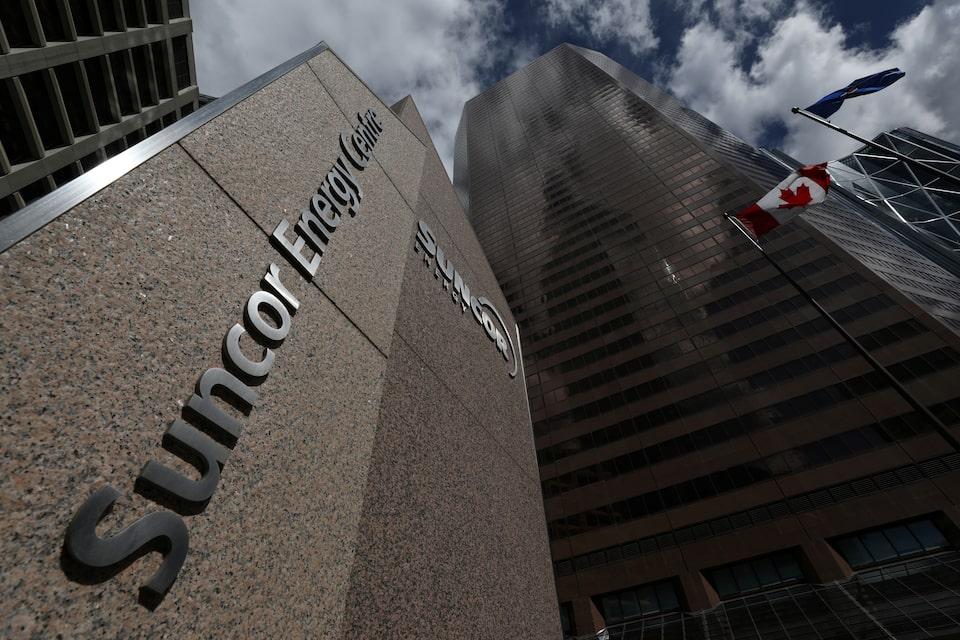
Colorado Supreme Court allows climate lawsuit against Exxon, Suncor Ruling marked second time a state supreme court has allowed climate case to proceed May 12 (Reuters) - Colorado's highest court on Monday rejected efforts by Exxon Mobil (XOM.N) , opens new tab and Suncor Energy (SU.TO) , opens new tab to dismiss a lawsuit by the city of Boulder seeking to hold the fossil fuel companies responsible for climate change. The Colorado Supreme Court in a 5-2 decision , opens new tab said federal law did not block Boulder and its surrounding county from claiming that the energy companies violated state law by misleading the public about the dangers associated with fossil fuels. Sign up here. The ruling marked only the second time a state supreme court has allowed one of the numerous lawsuits by state and local governments against major energy companies over climate change to move forward in the years-long litigation. The Hawaii Supreme Court allowed a similar lawsuit by Honolulu to move forward against Exxon, Sunoco and several other companies in a decision that the U.S. Supreme Court in January declined to review. "This ruling affirms what we’ve known all along: corporations cannot mislead the public and avoid accountability for the damages they have caused," Boulder Mayor Aaron Brockett said in a statement. Exxon in a statement said it would continue to fight Boulder's claims. "We've maintained from the beginning this case is meritless and has no place before a state court," the company said. Suncor did not respond to a request for comment. Boulder sued in 2018, alleging the companies violated various state laws and created a public and private nuisance by misleading the public about the role their fossil fuel products played in exacerbating climate change. Boulder argues they should be forced to pay for the costs it will incur to protect its community from climate change. The companies deny wrongdoing. They had fought for years to have the case heard in federal court. State courts are often considered a more favorable venue for plaintiffs. But following years of litigation and two trips to the U.S. Supreme Court, the case ultimately returned to state court, where a trial judge declined to dismiss the lawsuit. On appeal, the companies argued that Boulder's lawsuit would interfere with the federal regulation of greenhouse gas emissions under the Clean Air Act and impair the federal government's ability to conduct foreign affairs. But Justice Richard Gabriel, who like all of the Colorado Supreme Court's other members was appointed by a Democratic governor, said "a lawsuit does not amount to regulation merely because it might have an impact on how actors in a given field behave." Justice Carlos Samour dissented, expressing concern that Boulder's case sought to effectively regulate interstate air pollution and could lead to "regulatory chaos." https://www.reuters.com/sustainability/cop/colorado-top-court-allows-boulder-sue-exxon-suncor-over-climate-change-2025-05-12/
2025-05-12 21:29
May 12 (Reuters) - The U.S. Nuclear Regulatory Commission (NRC) has launched a special inspection at the Quad Cities Generating Station in Marseilles, Illinois, following discovery of inoperable safety-related vacuum breakers, the agency said on Monday. The two-unit nuclear plant is operated by Constellation Energy (CEG.O) , opens new tab. Sign up here. Operators discovered that vacuum breakers intended to maintain the structural integrity of the containment system during major events were inoperable because certain valves were not reopened after testing during a recent refueling outage, according to the NRC press release. It added that the event compromised the system's ability to regulate containment pressure, warranting a special investigation, and that the system has been restored. "While this did not affect safe plant operation, an independent review of the issue by the regulator is warranted given questions related to the performance of plant personnel that compromised the ability of a safety system to fulfill its function," said Region III Administrator Jack Giessner. The NRC said its inspectors will evaluate Constellation’s response, the company's understanding of the event, the scope of its assessment actions, and the adequacy of procedures and system design. Findings from the inspection will be documented in a publicly available report, which will be distributed electronically and posted on the NRC’s website, it added. https://www.reuters.com/business/energy/us-nuclear-regulator-begins-special-inspection-quad-cities-nuclear-power-plant-2025-05-12/

2025-05-12 21:11
WASHINGTON, May 12 (Reuters) - Republicans in the U.S. Congress have released initial drafts of a sweeping budget package that would fulfill President Donald Trump's calls to cut taxes and reduce spending, though many details still need to be resolved. Here is a summary of what they have proposed and what they have left out at this point. Budgetary estimates cover the next 10 years and are provided by the Joint Committee on Taxation and the Congressional Budget Office. Sign up here. TAXES: WHAT'S IN Makes permanent the lower income tax rates in Trump's 2017 Tax Cuts and Jobs Act that are currently due to expire at the end of 2025. Boosts the standard deduction by an additional $1,000 to $1,500 until 2029. Extends increased alternative minimum tax and the enhanced deduction for "pass-through" businesses, such as sole proprietorships. Expands the Child Tax Credit to $2,500 from $1,000 until 2029, and keeps it at $2,000 after that, indexed to inflation. Raises the estate tax exemption from $14 million to $15 million. Extends tax breaks for multinational corporations. Exempts taxes on some tipped income, such as from hair care, spa treatments and other types of employment. Exempts taxes on overtime pay. Exempts taxes on interest payments on loans for domestic autos. Exempts up to $5,000 for contributions to scholarship funds for private schools. Allows taxpayers to deduct up to $30,000 for state and local tax payments, up from $10,000 now. Creates new $4,000 deduction for seniors. Allows parents to contribute up to $5,000 tax-free each year to "MAGA Accounts" for their children, to be used for school, housing and other costs when they reach adulthood. Raises taxes on the biggest university endowments from 1.4% to 21%. TOTAL COST: at least $4.9 trillion WHAT'S NOT INCLUDED Initial proposals do not include Trump's suggestion to raise the top income tax rate on the highest-earning Americans, or end the "carried interest" tax break for income earned by private equity, venture capital and hedge fund managers. MEDICAID: WHAT'S IN Requires able-bodied adults who have no dependents to work, volunteer or be in school at least 80 hours a month. Bolsters verification efforts that check whether participants and healthcare providers are eligible for Medicaid. Blocks regulations that make it easier to enroll. Excludes non-citizens from the program and penalizes states that use their own funds to provide coverage to illegal immigrants. Blocks regulations that required minimum staffing levels at nursing homes and other long-term care facilities. Prohibits funding for gender transition therapies for minors. Prohibits payments to large providers like Planned Parenthood that specialize in birth control, abortion and other reproductive health services. Limits state taxes on providers that are used to raise the federal government's contribution. WHAT'S NOT INCLUDED Reduced payments to states that expanded eligibility under the Affordable Care Act. Changes to the way the federal government helps states pay for the program. TOTAL SAVINGS: $715 billion. CBO estimated that these changes would reduce enrollment in Medicaid by at least 7.7 million people 10 years from now. Medicaid currently covers about 71 million people. ENERGY, ENVIRONMENT, COMMUNICATIONS Cancels funding for green-energy grant programs in the 2022 Inflation Reduction Act, including vehicle manufacturing, home efficiency upgrades, electricity transmission, wind power. Creates incentives for pipelines, natural gas exports and exploration. Repeals grant programs for purchasing electric heavy-duty vehicles. Repeals grants to reduce air pollution, greenhouse gas emissions. Repeals fuel-efficiency standards for automobiles and pickup trucks. Makes more electromagnetic spectrum bands for communication available for auction. Prohibits states from regulating artificial intelligence. TOTAL SAVINGS: $197 billion https://www.reuters.com/sustainability/climate-energy/whats-republican-tax-health-plan-what-is-not-2025-05-12/
2025-05-12 21:10
ORLANDO, Florida, May 12 (Reuters) - TRADING DAY Making sense of the forces driving global markets Sign up here. By Jamie McGeever, Markets Columnist Movin' on up Relief and optimism coursed through world markets on Monday, putting a fire under stocks, the dollar and bond yields as U.S.-China tariff talks struck a surprisingly cooperative chord and raised hopes that the worst of the global trade crisis is over. In my column today I look at the Fed's more cautious, reactive approach to policymaking than many of its peers, who are cutting interest rates. More on that below, but first, a roundup of the main market moves. I'd love to hear from you, so please reach out to me with comments at [email protected] , opens new tab. You can also follow me at @ReutersJamie and @reutersjamie.bsky.social. Trading Day is also sent by email every weekday morning. Think your friend or colleague should know about us? Forward this newsletter to them. They can also sign up here. If you have more time to read, here are a few articles I recommend to help you make sense of what happened in markets today. Today's Key Market Moves Tariff truce a market 'game changer' Whatever the longer-term outlook is for world trade, economic growth and financial markets, there's little doubt that the near-term prospects are brighter today than they were at the end of last week. The unexpectedly cordial and fruitful talks between the U.S. and China in Geneva at the weekend defused trade tensions between the world's two largest economies and dramatically reduced the tail risks investors had priced into world markets. Many economists on Monday raised their Chinese growth forecasts, even though the projected stimulus from Beijing will now probably be lower, and some upped their U.S. outlook too. Of course, wherever U.S. import tariffs eventually settle, they will be much higher than they were before President Donald Trump came to power, probably still the highest in almost a century. But relative to expectations - as recently as Friday Trump was floating 80% tariffs on Chinese goods - the numbers announced and the 90-day pause are unambiguously positive for risk appetite. The positivity is based on three broad factors - the level of tariffs agreed upon, the willingness of both countries to keep talking, and the signal it sends about Washington's conciliatory approach to negotiations with other countries. "The China tariff reprieve is a game-changer for tactical risk," says Citi's Stuart Kaiser. "There are clearly still large policy and economic risks, but we see no reason to stand in the way of systematic buying." Systematic buying was the name of the game on Monday. The S&P 500 and Nasdaq both smashed through their 200-day moving averages, closing above the closely-watched technical level for the first time since late March. That proved to be a false dawn - will this time be different? A thaw in U.S.-Sino trade tensions is not the only reason for investors' optimism on Monday - global geopolitical tensions appear to be cooling on multiple fronts too. Ukrainian President Volodymyr Zelenskiy said he is willing to hold talks with Russian counterpart Vladimir Putin in Istanbul later this week, a meeting Trump on Monday said he would be willing to attend too. The ceasefire between India and Pakistan agreed on Saturday appears to be holding, Hamas on Monday released a U.S. hostage, and the Kurdistan Workers Party (PKK) militant group, which has been locked in bloody conflict with the Turkish state for more than four decades, is disbanding and ending its armed struggle. So, a ceasefire in the global trade war and signs of de-escalation in actual military conflicts. Reasons for investors to be relieved and even cheerful. Fed tests limits of 'wait and see' A split is emerging between the Federal Reserve and other major central banks as they try to assess the economic impact of the rapidly shifting global trade war. The Fed has kept interest rates on hold in the face of rising inflation risk, while many of its peers are cutting to cushion the blow from the looming growth slowdown. The Fed's cautious stance runs the risk of leaving Chair Jerome Powell and team behind the curve once again. With its decision last week to leave rates unchanged, the gap between the Fed's and European Central Bank's respective policy rates is the widest in more than two years. U.S. interest rates have not been higher than Canada's since 1997. Powell said last week he and his colleagues could afford to maintain a patient policy stance because the U.S. economy was, on the face of it, still in good shape. Growth and the labor market are strong, and inflation is reasonably close to their 2% target. The costs of waiting were "fairly low", he told reporters after the Fed left policy unchanged. "We can move quickly when appropriate. But there's so much uncertainty ... I can't really give you a time frame on that." The inference here is that any economic damage from delaying the resumption of its easing cycle - remember the Fed cut rates 100 basis points between August and December of last year - will be neutralized by more aggressive moves later. That may be wishful thinking. While Powell is correct that the "hard" economic data, like unemployment and retail sales, remains fairly healthy, "soft" data such as sentiment surveys right now are "about as dark as it gets," according to Moody's chief economist Mark Zandi. And confidence has a direct impact on consumer, business, and investor spending. It's tough to predict exactly how strong that link is right now, as it has weakened since the pandemic. But by the time the Fed detects serious deterioration in the "hard" data, underlying growth has probably already cooled meaningfully, meaning it may be too late to prevent a recession. EXPORTING INFLATION To be fair to Powell, the cautious U.S. stance is more reasonable when viewed through an inflation lens. U.S. inflation expectations are significantly higher than those elsewhere as consumers brace for a steep rise in prices later this year due to incoming import tariffs. These expectations may shift following news on Monday of a significant de-escalation in U.S.-Sino trade tensions. But even after trade agreements are reached, America's average effective tariffs will still be the highest in decades. And more than 75% of companies surveyed by the Fed have stated they will be passing cost increases along to consumers. And if the U.S.-China ceasefire doesn't hold, Beijing would almost certainly redirect its shipments of cheap goods previously bound for the U.S. to the rest of the world. All else being equal, that would put upward pressure on inflation in the U.S. while exerting downward pressure in other developed economies. This may largely explain the Fed's more cautious and reactive stance. 'EXCESSIVE UNANIMITY' "The Fed suffers from excessive unanimity disease," says Willem Buiter, former rate-setter at the Bank of England. He argues that there is a tendency among central banks to be "excessively gradualist" when it comes to changing rates. If policymakers know their end goal, he says, they should try and get there as quickly as possible without sparking unwanted financial market volatility. The trouble is the Fed doesn't have an idea of what its end goal is because of the fog of uncertainty Trump's trade war has created. Powell refused to definitely say which side of the Fed's employment and inflation dual mandate he and his colleagues consider the bigger risk to the economy. Even in the best of times, setting policy is an uncertain science and vulnerable to the vagaries of Milton Friedman's "long and variable" lag. "You never get it quite right – you're either too fast or too slow," says Steve Dean, Chief Investment Officer at Compound Planning. Investors don't seem to be too worried right now about the policy stasis, especially given the increasingly positive news on the trade war front in recent weeks. Wall Street has fully recovered the ground lost immediately after April 2. And if the trade war fog clears up, the Fed will be in a better position to act, perhaps justifying Powell's "wait and see" approach. But we may need to wait another 90 days to find out. What could move markets tomorrow? Opinions expressed are those of the author. They do not reflect the views of Reuters News, which, under the Trust Principles , opens new tab, is committed to integrity, independence, and freedom from bias. https://www.reuters.com/markets/global-markets-trading-day-graphic-pix-2025-05-12/
2025-05-12 21:02
NEW YORK, May 12 (Reuters) - Chevron (CVX.N) , opens new tab is attempting to restart the El Segundo, California refinery after taking units offline last week, sources familiar with plan operations said on Monday. The El Segundo refinery has brought its 100,500-barrel per day (bpd) crude distillation unit back online, one of the sources said. The 56,000-bpd vacuum distillation unit is still down, they said. Sign up here. Chevron declined to comment on refinery operations. https://www.reuters.com/business/energy/chevron-attempting-restart-el-segundo-california-refinery-after-taking-units-2025-05-12/
2025-05-12 20:56
House plans to phase out clean energy tax credits Proposal targets Biden's Inflation Reduction Act climate measures Environmental groups criticize cuts to clean energy investments WASHINGTON, May 12 (Reuters) - U.S. House lawmakers laid out plans on Monday to phase out clean energy tax credits, slash spending on electric vehicles and renewable energy, and claw back other climate-related funds as part of the Republicans' attempt to pass a multi-trillion-dollar budget in line with President Donald Trump's agenda. The House Committee on Energy and Commerce laid out a proposal, which will be voted on on Tuesday, that would raise $6.5 billion from the repeal of climate-related parts of the Biden administration's massive Inflation Reduction Act legislation. Sign up here. The House Ways and Means panel, meanwhile, proposed the phase-out or cancellation of several lucrative tax credits from former President Joe Biden's signature climate law, including ending a consumer-facing credit for electric vehicle purchases and a tax credit for home energy efficiency improvements, and the phase out of various key clean energy subsidies for expiry by 2031, according to a document it released on Monday. Trump had campaigned on a promise to end government support for EVs and unwind Biden's sweeping efforts to combat global warming, arguing that the measures are unnecessary and harmful to automakers, drillers and miners. He is also hoping that his first budget since reclaiming office will make good on his promises to slash the federal bureaucracy. The proposed cuts from the House tax panel include a rapid phase-out of the "technology neutral" 45Y tax credits for wind, solar and other clean energy sources that include Republican-favored technologies like nuclear and geothermal. The credits, which had no expiration previously, would phase down from 80% for a facility placed in service during calendar year 2029, to 60% by 2030, 40% by 2031 and zero after 2031. Transferability, a provision of the 2022 Inflation Reduction Act that had allowed developers to sell their tax credits and use the funds to finance their projects’ construction, would also be eliminated, according to the proposed draft. Meanwhile, tax credits for carbon capture and sequestration as well as direct air capture, known as 45Q - favored by the oil and gas industry - remained mostly in tact, with some limits to foreign ownership of projects. A tax credit for sustainable aviation fuel was also extended in the proposal, in a nod to biofuel producers looking to expand their markets. Over two dozen Republicans in the House, as well as four Republican senators whose states were beneficiaries of billions in investment due to the IRA, had urged the committee to preserve several of the tax credits. Some clean-energy advocates said the proposed phase outs were not as harsh as they could have been but still serve a huge blow to the clean energy industry. "Dismantling the IRA clean energy tax credits will kill jobs. It will create chaos in the business community, and it will raise energy costs for families already struggling to get by," said Nevada Democratic Senator Catherine Cortez Masto, who said it would hit her state's burgeoning solar industry especially hard. CLAWING BACK CLIMATE SPENDING The House energy panel's plan, meanwhile, would repeal major Biden administration Environmental Protection Agency rules such as one that would cut allowed emissions for light- and medium-duty vehicles starting with model year 2027. It also includes measures aimed at speeding up permitting for liquefied natural gas exports and would direct more than $1.5 billion for the Energy Department to refill the Strategic Petroleum Reserve. "This bill would claw back money headed for green boondoggles through 'environmental and climate justice block grants' and other spending mechanisms through the Environmental Protection Agency and Energy Department," House energy panel chair Brett Guthrie wrote in a Wall Street Journal op-ed that announced the proposal on Sunday. The bill would also rescind the remaining unspent money from the $27 billion greenhouse gas reduction fund, which has been a key target of EPA Administrator Lee Zeldin, who claimed that the money was being spent fraudulently in subsequent court cases. It would also take back unspent funding from nine IRA renewable energy and electrification subsidy programs, such as tribal energy loan guarantees and transmission facility financing, and remove unspent IRA funds from the Energy Department's loan office. It would rescind unspent funding made available by the IRA for methane reduction at oil and gas facilities and for greenhouse gas reporting, funds to reduce air emissions at ports and manufacturing facilities and schools as well as funds for low-income communities to access clean energy. "Their proposal guts investments that are cutting energy costs, powering a domestic manufacturing boom, and delivering essential healthcare to the communities that need it most," said environmental group Evergreen Action Executive Director Lena Moffitt. https://www.reuters.com/sustainability/climate-energy/us-house-targets-big-climate-clean-energy-rollbacks-budget-proposal-2025-05-12/