2025-05-12 07:13
MELBOURNE, May 12 (Reuters) - Australia's South32 (S32.AX) , opens new tab on Monday named Matthew Daley to lead the diversified miner when long-serving CEO Graham Kerr steps down in 2026, with Daley in the interim joining as deputy chief executive officer early next year. Daley has more than 20 years of experience in the metals and mining industry and is expected to help the miner continue its base metals expansion. He will join South32 from Anglo American plc (AAL.L) , opens new tab, where he is currently the technical and operations director, South32 said in a statement. Sign up here. He joined London-listed Anglo American in 2017 as group head of mining, and has previously served as the executive general manager for Glencore's (GLEN.L) , opens new tab Canadian copper division. South32, like other miners, wants to grow in energy transition metal copper, and Daley's background at Glencore may help further that ambition. That comes after criticism by some investors that South32 has been too timid on M&A. "What are we flagging, that they are going to buy some copper?" said Chief Investment Officer Simon Mawhinney of Allan Gray. "It might be a case of 'join the queue'." The appointment comes amid a generational change among the world's top miners with BHP's (BHP.AX) , opens new tab Mike Henry expected to step down in the coming year. "Matthew is a highly accomplished executive with extensive operational and leadership experience, including in copper and in the Americas, and the board is confident he is the right successor for Graham," South32 Chair Karen Wood said in the statement. Kerr has helmed South32 since its split from BHP 10 years ago, making him among the longest serving mining CEOs, except for the near 20-year reign of Glencore's Ivan Glasenberg. Over that time, South32 has sold out of coal and bought into copper and other base metals, adding value to a tough portfolio of assets, although some investors have said he could have done it faster. There is also a question mark about how successful his U.S. Hermosa base metals projects in Arizona will prove to be given a high capital cost. South32 approved $2.16 billion in capital investment last year. Kerr told Reuters he will remain focused on a copper expansion at its Sierra Gorda joint venture in Chile and derisking Hermosa's Taylor project. "We're still at that inflection point for the organisation where we're investing heavily in base metals," he said. Kerr said it was time to move on after 10 years at the helm, but he hadn't thought much about life after South32, beyond taking a break. "I can't imagine myself just playing golf, to be honest." https://www.reuters.com/markets/commodities/australias-south32-names-anglo-american-executive-matthew-daley-become-ceo-2026-2025-05-12/
2025-05-12 06:53
May 12 (Reuters) - Australian pension fund HESTA said on Monday it had sold its remaining stake in billionaire Chris Ellison-founded Mineral Resources (MIN.AX) , opens new tab, citing "serious governance concerns". The mining services provider has been grappling with governance issues, primarily involving Ellison, with allegations including tax evasion and misuse of company resources for personal projects. Sign up here. In an email to Reuters, HESTA confirmed it had divested approximately A$14 million ($8.99 million) worth of its stake in Mineral Resources. HESTA said concerns about the company's governance were not addressed quickly enough, despite repeated engagement with the board. It added that departures of directors on the ethics and governance committee were a "significant step backwards" in addressing the concerns. A spokesperson for Mineral Resources, in an emailed response to Reuters, said that the company remains committed to strengthening corporate governance and the appointment of the new chairman is "well advanced". "The Ethics and Governance Committee will be maintained going forward," the spokesperson said. ($1 = 1.5571 Australian dollars) https://www.reuters.com/markets/commodities/pension-fund-hesta-exits-australias-mineral-resources-flags-governance-issues-2025-05-12/

2025-05-12 06:41
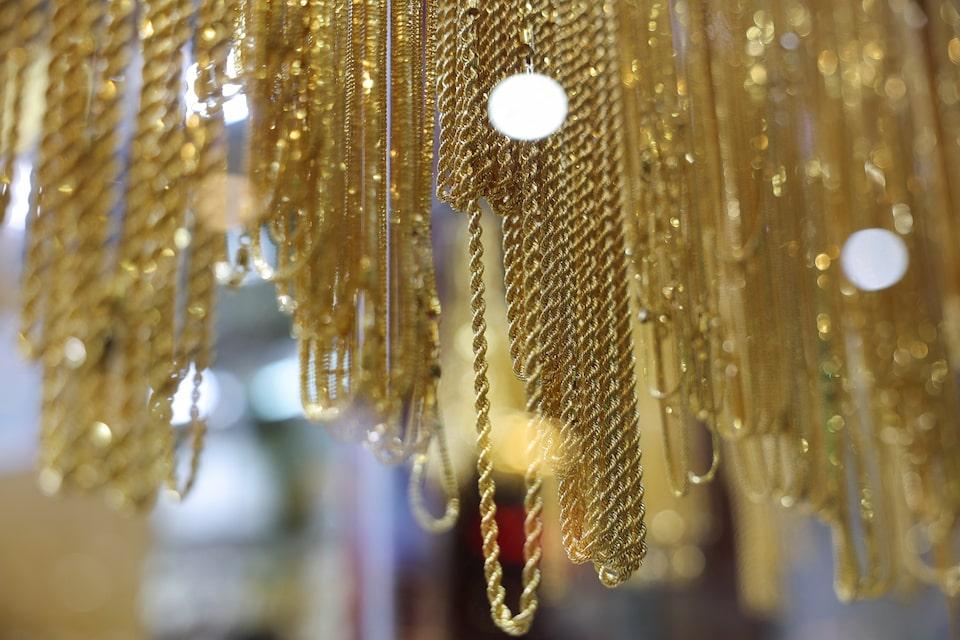
US CPI due on Tuesday Dollar, global shares soar after China-US truce Palladium down over 3% May 12 (Reuters) - Safe-haven gold fell 3% on Monday as risk sentiment crept in following the announcement of a temporary deal between the United States and China to reduce tariffs. Spot gold was down 3% at $3,225.28 an ounce, as of 1344 ET (17:44 GMT). Bullion, considered a hedge against economic and geopolitical turmoil, hit a record high of $3,500.05 last month amid increased tariff uncertainty. Sign up here. U.S. gold futures settled 3.5% lower at $3,228. "Gold's feverish response to last month's chaotic headlines from the White House made the precious metal vulnerable to Trump back-tracking," said Adrian Ash, BullionVault director of research. "Now that the mood music is more hopeful, gold is likely to find upside potential on setbacks to this optimism." The U.S. will cut extra tariffs it imposed on Chinese imports in April this year to 30% from 145% and Chinese duties on U.S. imports will fall to 10% from 125%, the two sides said. The new measures are effective for 90 days. In other markets following the deal, the U.S. dollar surged to over a one-month high, and global shares rallied. A stronger greenback makes gold more expensive for foreign investors. "June gold futures bulls have lost their overall near-term technical advantage. Bulls' next upside price objective is to produce a close above solid resistance at $3,350. First resistance is seen at $3,250 and then at $3,275," said Jim Wyckoff, senior analyst at Kitco Metals. Traders now await the U.S. Consumer Price Index data, due on Tuesday, to get direction on the Federal Reserve's policy path. Other key data sets due this week include the Producer Price Index and retail sales. Lower interest rates raise the appeal of non-yielding bullion. Spot silver slid 0.9% to $32.4 an ounce, platinum fell 1.9% to $976.06 and palladium dipped 3.4% to $942.69. https://www.reuters.com/markets/currencies/gold-falls-positive-us-china-talks-erode-safe-haven-appeal-2025-05-12/
2025-05-12 06:30
May 12 (Reuters) - Cobalt Holdings said on Monday it plans to raise $230 million through a global offer and potentially list its shares in the London Stock Exchange, aiming to offer investors pure-play exposure to prices of cobalt. The company, which has a contract with Glencore (GLEN.L) , opens new tab to buy an initial $200 million worth of cobalt from the global miner, said it plans to use the proceeds from the equity raise to execute the purchase of the metal, a core component in electric vehicle batteries. Sign up here. Glencore and affiliates of investment firm Anchorage Structured Commodities Advisor have agreed to invest about 20.5% of the shares to be offered, it said. The company's six-year supply contract with Glencore provides a guaranteed supply of cobalt worth up to $1 billion. It also has a supply contract to buy up to 1,500 tonnes of cobalt from Anchorage in 2031. "We believe now is the right time to build a strategic stockpile of cobalt. The long-term price of cobalt has historically been well above the prevailing spot price," CEO Jake Greenberg said in an expected intention to float filing. Its shares are expected to be admitted to the stock exchange in June, the company said. https://www.reuters.com/markets/commodities/cobalt-holdings-plans-raise-230-million-london-listing-2025-05-12/

2025-05-12 05:59
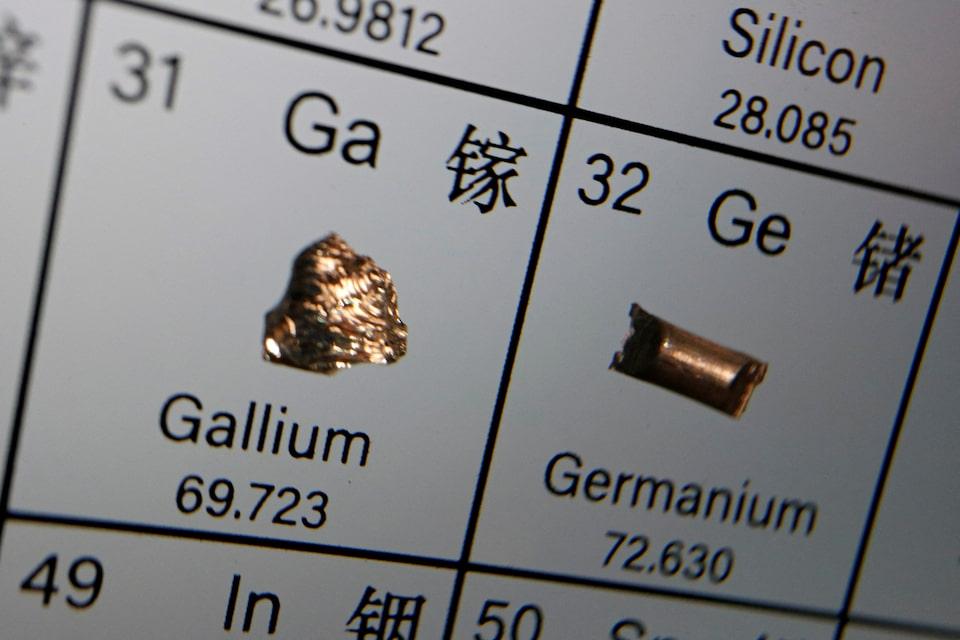
LONDON, May 9 (Reuters) - The price of gallium has been rising ever since China started restricting exports of the exotic metal in August 2023. This is not surprising since China has a near monopoly on global gallium production, just as it does across the critical materials spectrum. Sign up here. How much should we care that the price of something most people have never heard of is trading at 14-year highs? After all, global production last year was just 760 metric tons, according to the United States Geological Survey (USGS). Even at today's elevated prices the world market's nominal value is a modest $550 million. The metal is used in such tiny quantities that there is zero impact on the cost of a mobile phone or an electric vehicle. However, if you're in the semiconductor business it matters a lot. And it matters even more to U.S. defence planners, which is why China chose element number 31 as a metallic pressure point in the first place. THE MULTIPLIER EFFECT Because gallium is used in so many modern technological gadgets, there is a multiplier effect to the economic cost of China's export restrictions. The USGS estimates , opens new tab that a one-year suspension of Chinese gallium exports would translate into a $3.1 billion hit to the U.S. economy. Around half of the decrease would come from the semiconductor sector and the other half from a range of downstream industries such as printed circuit assembly, computers and electric vehicles. China hasn't totally suspended exports, although it has banned direct sales to the United States. But outbound flows have slowed since the dual-use regulations were introduced in 2023. Moreover, the USGS's projections were based on an assumption that the gallium price would rise by a factor of more than 2.5 in the event of a complete export halt. The reality is that the gallium price has more than doubled from $350 per kilogram in July 2023 to $725 and is still rising. The Chinese price, by contrast, is falling as more gallium stays in the domestic market. Physical arbitrage would at other times close the pricing gap but not with China's Ministry of Commerce guarding the gate. THE MILITARY ANGLE Gallium's significance to U.S. military planners is greater still. Indeed, it was the U.S. Defense Advanced Research Projects Agency (DARPA) that helped develop a compound called gallium arsenide, used in radar and precision-guided weapons, and more recently nurtured the next-generation gallium nitride semiconductor chip. The latter is "revolutionizing modern radar, allowing new radar modules to track smaller, faster, and more numerous threats from nearly double the distance," according to , opens new tab The Center for Strategic and International Studies, a non-profit policy research organisation. Gallium nitride-enhanced radars are being deployed in the U.S. Army's Lower-Tier Air and Missile Defense Sensor (LTAMDS), an integral part of Patriot missile defense units, and the F-35 Joint Strike Fighter. And there's probably a whole lot more that we don't know about. Gallium is typical of many critical metals in that its small market size belies an extraordinarily diverse array of applications, many of them at the cutting edge of semiconductor design. Which is why it's no coincidence that China announced its export controls in direct response to U.S. restrictions on next-generation semiconductor chips to China. THE CHINA CHALLENGE Can the West break China's grip on the gallium market? The solution is already at hand, or rather in the tailings pond. Gallium is not particularly rare in the earth's surface but only occurs in sufficient concentrations to extract as a by-product of other minerals, particularly bauxite. China's gallium supremacy has grown alongside its massive build-out of aluminium capacity. The country accounts for 60% of global aluminium output and all that metal needs alumina, which is processed from bauxite. China's alumina refineries aren't the only ones that can generate gallium. It's just that Western companies stopped doing so after China flooded the market at the start of the last decade. That's changing. Rio Tinto (RIO.L) , opens new tab and Indium Corporation have just announced , opens new tab the successful extraction of pure gallium from what was previously a waste stream at Rio's Vaudreuil alumina refinery in Quebec. The next stage will be a pilot plant with capacity of 3.5 tons per year. Greek aluminium producer METLEN (MYTr.AT) , opens new tab is planning to produce 50 tons per year by 2028 as part of a project to lift bauxite and alumina processing capacity. It is one of the European Union's 47 strategic minerals projects. There are two key takeaways here for other critical mineral markets being squeezed by Chinese export controls. Firstly, there is a good chance that the West is already producing many of them but has failed until now to appreciate the value of what was deemed part of the metals processing waste scheme. Rio Tinto, for example, has also started extracting scandium , opens new tab from its titanium operations in Quebec and tellurium , opens new tab from its Kennecott copper smelter in Utah. Both had been operating for many years without anyone thinking it worthwhile to separate out the critical metals in the waste stream. Secondly, it is clear that Western operators are having to learn, or in the case of gallium re-learn, the processing technology needed to separate and refine them. This will take time, particularly since China is in many instances also restricting exports of such technology. But the higher prices ensuing from China's export controls are providing the incentive for ever more Western companies to go back to metallurgy school. The opinions expressed here are those of the author, a columnist for Reuters https://www.reuters.com/markets/commodities/gallium-lens-chinas-minerals-dominance-how-break-it-andy-home-2025-05-09/
2025-05-12 05:12
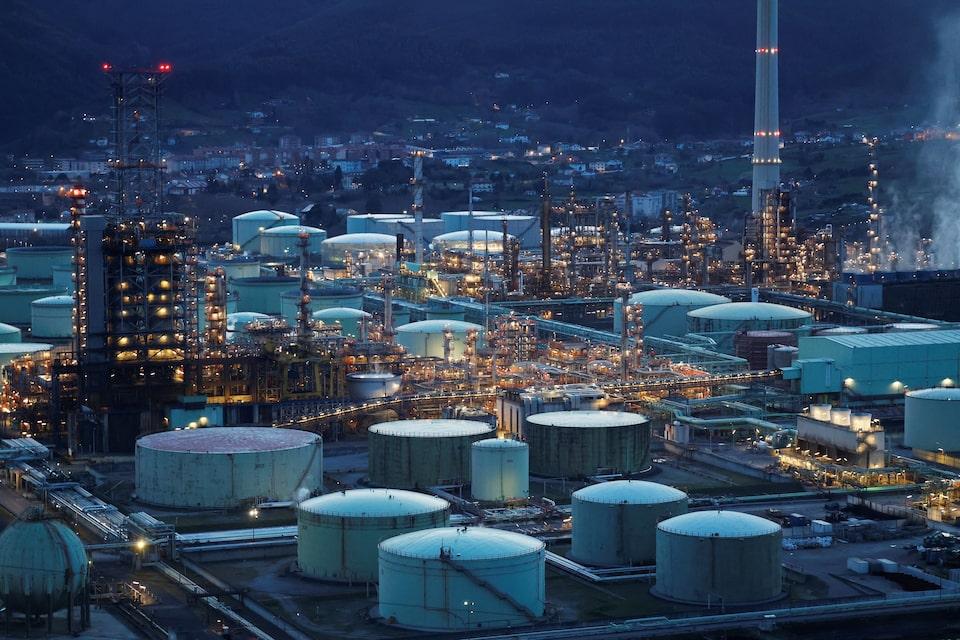
U.S. and China agree to 90-day pause on tariffs Saudi Aramco expects oil demand to remain resilient this year Iraq oil exports on track to decline in May and June NEW YORK, May 12 (Reuters) - Oil prices rose about 1.5% to settle at a two-week high on Monday, after the U.S. and China agreed to temporarily slash tariffs, raising hopes of an end to the trade war between the world's two biggest economies. Brent crude futures rose $1.05, or 1.6%, to settle at $64.96 a barrel. U.S. West Texas Intermediate (WTI) crude gained 93 cents, or 1.5%, to settle at $61.95. Sign up here. Both benchmarks notched their highest settlements since April 28. The U.S. and China tapped the brakes on tariffs, sending Wall Street stocks, the U.S. dollar and crude prices sharply higher on hopes the world's two biggest oil consumers can end a trade war that has stoked fears of recession. "This was a larger-than-expected de-escalation and represents an upgrade to the outlook, though the negotiation process will likely remain challenging," analysts at bank ING said in a note. U.S. Federal Reserve Governor Adriana Kugler said the trade deal could make it less necessary for the Fed to cut interest rates to stimulate the economy. This pressured oil prices in early trading, since lower rates can boost oil demand. In April, oil prices fell to a four-year low as investors worried the U.S.-China trade war could depress economic growth and oil demand. Also, the Organization of the Petroleum Exporting Countries (OPEC) decided to boost oil output by more than previously expected. In Saudi Arabia, the biggest producer in OPEC, oil giant Aramco (2222.SE) , opens new tab said it expects oil demand to remain resilient this year and sees further upside if the U.S. and China resolve their trade dispute. In Iraq, OPEC's No. 2 producer, crude exports were on track to decline to around 3.2 million barrels per day (bpd) in May and June, which would be a significant reduction from previous months. Oil prices gained support after Norwegian energy firm Equinor (EQNR.OL) , opens new tab said it temporarily halted output from the Johan Castberg oilfield in the Arctic Barents Sea to make repairs. In the Black Sea, Black Sea CPC Blend exports via the Caspian Pipeline Consortium system were on track to ease to 1.5 million bpd in May from 1.6 million bpd in April. In Mexico, PMI, trading arm of state-owned energy company Pemex, anticipates a reduction in crude exports this year as more will be sent to local refineries, especially the new Olmeca refinery. LOTS OF TALKS Ongoing talks between the U.S. and Iran over Tehran's nuclear program could pressure crude prices, since Iran is OPEC's No. 3 producer and any nuclear deal could reduce sanctions on Iran's exports. Russian crude supply could also increase on global markets if U.S.-brokered talks result in peace between Russia and Ukraine. Ukrainian President Volodymyr Zelenskiy said he was ready to meet Russia's Vladimir Putin in Turkey on Thursday after U.S. President Donald Trump told him publicly to immediately accept the Kremlin leader's proposal of direct talks. Trump raised the prospect of joining talks between Russia and Ukraine in Turkey. Russia was the world's No. 2 oil producer in 2024, according to data from the U.S. Energy Information Administration. A deal between Russia and Ukraine could reduce sanctions on Moscow and boost the amount of oil Russia can export. In India, Prime Minister Narendra Modi warned Pakistan that New Delhi would target "terrorist hideouts" across the border again if there were new attacks on India and would not be deterred by what he called Islamabad's "nuclear blackmail". India is the world's third biggest consumer of oil. https://www.reuters.com/markets/commodities/oil-prices-rise-us-china-trade-talks-soothe-market-jitters-2025-05-12/