2025-05-12 04:33
A look at the day ahead in European and global markets from Wayne Cole. Take your pick from "substantial progress", "constructive", "an important first step", "reached important consensus", "good news for the world", and easily the best: "As we say back in China, if the dishes are delicious, the timing doesn't matter". Sign up here. All were uttered by negotiators during the U.S.-China trade talks over the weekend in Geneva, and they do sound like progress compared with the jingoistic war of words that marked the initial announcement of President Trump's 145% tariffs. What was lacking was specifics, and it was notable that neither team mentioned actual tariff levels at all over the weekend. A joint statement is expected later on Monday, which may offer more detail, though markets doubt the White House take that a "deal" is being done. It's an odd world where investors trust the word of a communist one-party state over the United States. Anyway, markets are relieved that weapons weren't drawn during the talks and have pushed S&P 500 futures up 1.4% and Nasdaq futures almost 2%. European stock futures have gained 0.8% or so. The dollar is up modestly on safe havens and Treasuries have suffered knee-jerk selling as the market further trims its expectations on the pace of future Fed rate cuts. The odds for a June easing are now priced at just 17%, with July at 59%. Futures imply 63 basis points of cuts this year, compared with more than 110 bps in mid-April. Helping the mood was the fragile ceasefire holding between India and Pakistan, while Ukrainian President Volodymyr Zelenskiy said he was ready to meet Vladimir Putin in Turkey on Thursday for talks. As for the economic diary, U.S. CPI on Tuesday might hint at price rises to come, although analysts assume the first clear impact of tariffs will show in the May report. Retail sales are forecast to be flat for April, with the risk likely to the downside given the chilling effect that the announcement of import levies had on consumer sentiment. One assumes tariffs won't be applied to the gold-decked 747 Trump plans to accept from the Qatari royal family. Membership has its privileges, it seems. Key developments that could influence markets on Monday: - Eurogroup meeting includes ECB board members Cipollone and Buch; appearances by BoE Deputy Governor Lombardelli and policymakers Greene, Mann and Taylor. - Fed Board Governor Kugler speaks on the economic outlook https://www.reuters.com/markets/europe/global-markets-view-europe-2025-05-12/
2025-05-12 04:08
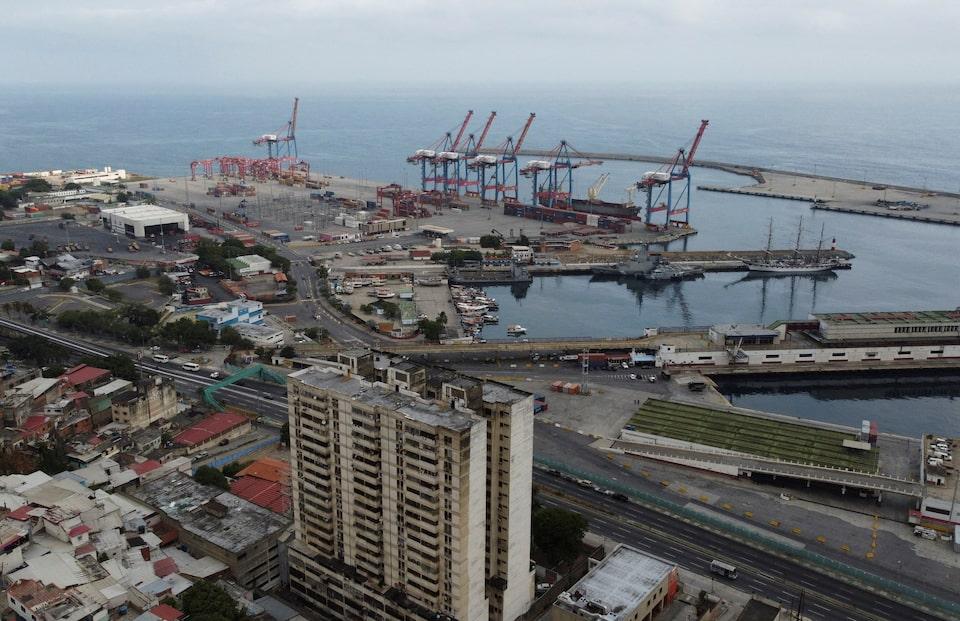
China registered some 67,000 bpd of mixed bitumen imports from Brazil since July worth $1.2 bln Shippers tamper with the tankers' signal to make them look like departing from Brazil Apart from shortening voyages, the practice helps secure bank financing SINGAPORE, May 12 (Reuters) - Traders have rebranded more than $1 billion of Venezuelan oil shipments to China as Brazilian crude over the past year, according to two tanker tracking firms, company documents and four traders, helping buyers to cut logistics costs and circumvent U.S. sanctions. Independent refiners in China are the main buyers of seaborne oil shipments from countries sanctioned by the United States, with offshore Malaysia serving as a key trans-shipment hub for Venezuelan and Iranian crude. Sign up here. Since July 2024, however, traders have also rebranded Venezuelan oil as from Brazil. This has enabled tankers to sail directly from Venezuela to China, skipping the stop-over in waters off Malaysia and shortening the voyage by about four days. Washington has imposed sanctions on Venezuelan energy exports since 2019 to reduce the oil export revenue that funds the government of President Nicolas Maduro, who has held power for more than a decade with elections that observers say were fraudulent. Maduro and his government have rejected sanctions by the United States and others, saying they are illegitimate measures that amount to "economic war" and are designed to cripple Venezuela. Since sanctions have been in place, oil traders have transferred oil from one ship to another at sea to disguise the origin of Venezuelan crude before it is shipped to China, which is the world's biggest crude importer. More recently, shippers have tampered with the tankers' location signal to make it look like vessels are departing from Brazilian ports when they are actually sailing from Venezuela, according to maritime data, satellite imagery and shoreside photos compiled and analysed by monitoring service TankerTrackers.com. This practice is known as spoofing. According to Chinese customs data, China imported about 2.7 million metric tons, or 67,000 barrels per day (bpd), of mixed bitumen from Brazil between July 2024 and March 2025, worth $1.2 billion. Chinese refiners regularly buy Brazilian crude but Brazil rarely exports any bitumen blend, according to state oil company Petrobras (PETR4.SA) , opens new tab. Brazilian customs data records no export of bitumen blend to China since at least 2023. Mixed bitumen, or bitumen blend, is a tar-like residue for processing into asphalt. However, Brazil's typical crude grades for export are classified as medium-sweet oil from its prolific offshore fields known as pre-salt. "What we export to China is mainly crude oil from the pre-salt, it's not bitumen," Petrobras CEO Magda Chambriard told reporters on the sidelines of a conference in Houston last week. Many crude cargoes entering China branded as Brazilian bitumen actually contain Venezuela's Merey, the flagship heavy crude typically bought by China's independent refiners from Venezuela's state-run PDVSA through intermediaries, according to the trading sources, tanker tracker Vortexa Analytics and internal PDVSA documents reviewed by Reuters. Traders have long branded Merey as bitumen blend, Chinese traders have said, because refiners do not need government crude oil import quotas to bring in the tar-like oil. To effect the switch, dealers change the documentation of the shipments to Brazilian origin by providing a new certificate of origin for the oil, without sending vessels near Brazil or going through any ship-to-ship operations, three of the traders said. This year, several vessels chartered by an intermediary of Venezuelan crude, Hangzhou Energy, have "spoofed" their signals - artificially placing them in Brazil while loading in Venezuela, according to PDVSA documents and the data compiled by TankerTrackers.com. Reuters was unable to locate a contact for Hangzhou Energy, which according to the PDVSA documents has loaded crude from Venezuela as an intermediary since 2021. The Liberia-flagged tanker Karina loaded 1.8 million barrels of Venezuelan Merey 16 crude for Hangzhou Energy in February under the name "Katelyn", according to one of the documents and TankerTrackers.com. It spoofed its signal while in Venezuela, making it appear that it had departed from Brazil. It discharged at China's Yangpu port in early April, according to TankerTrackers.com. China's customs agency did not immediately respond to a request for comment. PDVSA, Venezuela's oil ministry and Brazil's government did not reply to requests for comment. COST SAVER Apart from shortening the voyage and saving the ship-to-ship costs, passing cargoes off as Brazilian helps to secure bank financing, said one of the traders, a regular dealer of Venezuelan oil. "The savings on the freight front are not much, but it helps securing financing, relieving traders' financing pressure throughout the two-month-long voyages," the person said. The traders declined to be named due to the sensitivity of the subject. China, like Venezuela, has repeatedly said it opposes unilateral sanctions. China is the main destination for Venezuela's crude exports. Venezuela sent some 351,000 bpd of oil and heavy fuel to China last year. Volumes increased to 463,000 bpd in the first four months of 2025, according to PDVSA documents and shipping data compiled by Reuters. Most of China's imports of Venezuelan oil are still declared as Malaysian, either as Malaysian crude or mixed bitumen, traders have said, with less than 10% officially reported as Venezuelan. https://www.reuters.com/business/energy/traders-rebrand-venezuelan-oil-china-brazilian-sources-tanker-trackers-say-2025-05-12/
2025-05-12 00:10
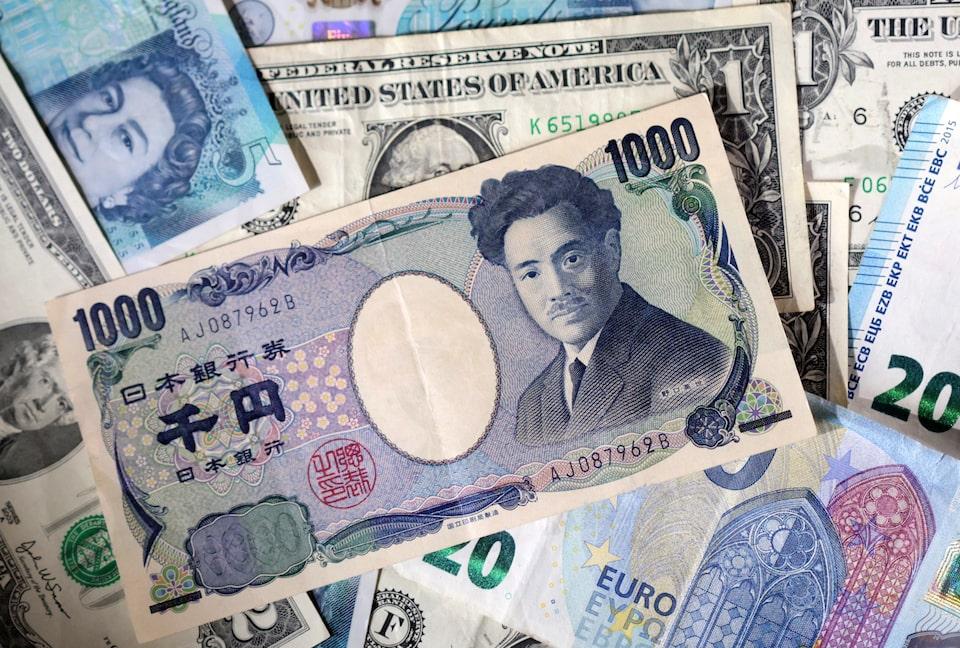
Dollar rallies as US, China reach deal to cut tariffs Safe-haven currencies yen, Swiss franc weaken US inflation, retail sales data in focus this week India-Pakistan ceasefire helps support risk sentiment NEW YORK, May 12 (Reuters) - The dollar surged on Monday as the United States and China reached a deal to temporarily cut reciprocal tariffs and tamped down concerns that a trade war between the world's two biggest economies could lead to a global recession. The U.S. will reduce extra tariffs it imposed on Chinese imports in April to 30% from 145% and Chinese duties on U.S. imports will fall to 10% from 125%, effective for 90 days. The de-escalation surpassed investor expectations, with many expecting an introductory round of talks with few, if any, agreements. Sign up here. "It's 90 days and so this basically buys some more time, I sort of think the U.S. blinked," said Marc Chandler, chief market strategist at Bannockburn Global Forex in New York. "I'm not a big fan of the tariffs in the first place, but once they were in place, the U.S. seemed to back down without getting much in exchange. That is, we stopped with our reciprocal tariffs on China and so they unwind their reciprocal tariffs on us, but we're still back at square one," Chandler said. The dollar index , which measures the greenback against a basket of currencies including the yen and the euro, rose 1.5% to 101.91, with the euro down 1.54% at $1.1074 and on track for its biggest one-day decline since November 6. The risk-on mood propelled U.S. stocks sharply higher, with the S&P 500 up more than 3%, and weighed on safe-haven currencies, with the dollar up 2.19% against the Japanese yen to 148.50 after reaching 148.64, its highest level since April 3. Against the Swiss franc , the dollar rose 1.86% to 0.847 after reaching 0.8475, its highest since April 10. Sterling weakened 1.07% to $1.3162 and was on track for its biggest daily drop since April 7. While the greenback has strengthened for three straight weeks on growing optimism over potential trade deals, the dollar is still down 2.2% since April 2, when Trump announced sweeping tariffs as his uneven rollout of policies and exemptions shook confidence in U.S. assets. The focus this week will also be on U.S. Consumer Price Index (CPI) figures on Tuesday and on April retail sales due on Thursday for indications of how the global trade conflict has impacted the economy and expectations for further interest rate cuts by the U.S. Federal Reserve. Traders on Monday dialed back on rate cut expectations by the Fed and European Central Bank as economic prospects improved after the Sino-U.S. trade deal. Markets now see the first cut of at least 25 basis points (bps) from the Fed as likely to come at the central bank's September meeting, compared with the July view last week. Analysts at Wells Fargo said the deal supports the firm's near-term view for U.S. dollar strength, buttressed by a Fed that would be slow to cut rates. The Chinese yuan strengthened 0.52% against the greenback to 7.201 per dollar. Meanwhile, geopolitical tensions also appeared to ease over the weekend, further buoying risk sentiment. India and Pakistan announced a ceasefire following four days of fighting between the nuclear powers which had rattled markets. Ukrainian President Volodymyr Zelenskiy said he was ready to meet Russian leader Vladimir Putin in Turkey on Thursday for direct talks. That would be the first negotiations between the two countries since the early months of Russia's 2022 invasion. https://www.reuters.com/world/china/dollar-gains-versus-yen-us-china-trade-optimism-kiwi-climbs-2025-05-12/
2025-05-11 23:38
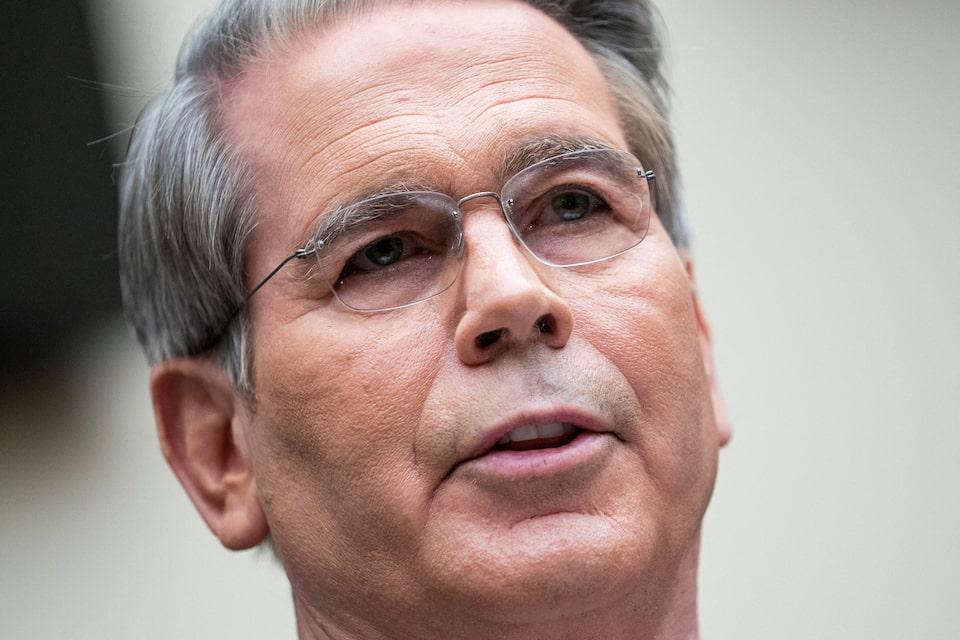
Geneva talks hailed as 'substantial progress' China says important consensus reached USTR Greer describes result as 'a deal we struck' Bessent, Greer to announce details on China talks on Monday No mention of tariff reductions from US officials, White House GENEVA, May 11 (Reuters) - The U.S. and China ended high-stakes trade talks on a positive note on Sunday, with U.S. officials touting a "deal" to reduce the U.S. trade deficit, while Chinese officials said the sides had reached "important consensus" and agreed to launch another new economic dialogue forum. Neither side released details after they wrapped up two days of talks in Switzerland. Chinese Vice Premier He Lifeng said a joint statement would be released in Geneva on Monday. Vice Commerce Minister Li Chenggang said it would contain "good news for the world." Sign up here. U.S. Treasury Secretary Scott Bessent and Trade Representative Jamieson Greer described "substantial progress" and also said details would be announced on Monday. In separate briefings with reporters, neither side mentioned any agreement to cut U.S. tariffs of 145% on Chinese goods and China's 125% tariffs on U.S. goods. Greer and Bessent took no questions from reporters. The U.S. Treasury chief has said previously that these duties amount to a trade embargo between the world's two largest economies and need to be "de-escalated." Financial markets have been on edge for signs of a thaw in a bitter U.S.-China trade war that has already begun to disrupt supply chains, prompt layoffs and raise wholesale prices. Greer described the Geneva meetings' conclusion as "a deal we struck with our Chinese partners" that will help reduce the $1.2 trillion U.S. global goods trade deficit. "And this was, as the secretary pointed out, a very constructive two days," Greer said. "It's important to understand how quickly we were able to come to agreement, which reflects that perhaps the differences were not so large as maybe thought," Greer said. The U.S. trade chief called He, Li and Vice Finance Minister Liao Min "tough negotiators." Vice Premier He, speaking to reporters at China's mission to World Trade Organization, described the talks as "candid, in-depth and constructive" on issues of concern to both countries. "The meeting achieved substantial progress, and reached important consensus," He said, drawing applause from a large audience of Chinese officials present at the WTO office. He also met with WTO Director General Ngozi Okonjo-Iweala, who said she was "pleased with the positive outcome" of the talks and urged the two countries to build on momentum to mitigate trade tensions. The WTO has ruled against Trump's past tariffs on Chinese goods, but the cases have been stalled in the WTO's paralysed appellate body due to the U.S. blocking judge appointments. NEW CONSULTATION PLATFORM The U.S. and China agreed to establish a new consultation mechanism for trade and economic issues, with relevant details to be finalized as soon as possible, He added. China and the U.S. have convened numerous consultation bodies to try to resolve trade and economic differences in recent decades, including the Economic Working Group that former president Joe Biden's Treasury secretary, Janet Yellen, established with Vice Premier He in 2023. These dialogues have provided forums for airing bilateral grievances, but have done little to advance Washington's longstanding goal to shift China's state dominated, export-driven economic model toward one driven by consumer spending. FIRST MEETING The meeting was the first face-to-face interaction between senior U.S. and Chinese economic officials since Trump took office and launched a global tariff blitz, declaring a national emergency over the U.S. fentanyl crisis and imposing a 20% tariff on Chinese goods in February. Trump followed with a 34% "reciprocal" duty on Chinese imports in April, and subsequent rounds pushed the rates into triple digits, bringing nearly $600 billion in two-way trade to a standstill. China had insisted that tariffs be lowered in any talks. Trump said on Friday that an 80% tariff on Chinese goods "seems right," suggesting for the first time a specific reduction target. Greer said there was a lot of groundwork done before the Geneva meetings on Saturday and Sunday, and that the result would address the national emergency that Trump declared over growing U.S. trade deficits. "We’re confident that the deal we struck with our Chinese partners will help us to work toward resolving that national emergency," Greer said. A White House press release that simply repeated Bessent's and Greer's brief comments with no details ran the headline: "U.S. announces China trade deal in Geneva." MORE TARIFF DEALS Earlier on Sunday, White House economic adviser Kevin Hassett said the Chinese were "very, very eager" to engage in discussions and rebalance trade relations with the U.S. Hassett also told Fox News' Sunday Morning Futures program that more foreign trade deals could be coming with other countries as soon as this week. Last week's limited trade deal with Britain left 10% U.S. duties in place on many UK products. Hassett said he had been briefed by U.S. Commerce Secretary Howard Lutnick on two dozen pending deals in development with USTR Greer. "They all look a little bit like the UK deal but each one is bespoke," Hassett said. Overnight, Trump gave a positive reading of the talks, saying on his Truth Social media platform that the two sides had negotiated "a total reset... in a friendly, but constructive, manner." GATED VILLA The teams met at the gated villa of Switzerland's U.N. ambassador, overlooking Lake Geneva in the leafy suburb of Cologny. Black Mercedes vans with sirens shuttled to and from the venue, bathed in bright sunshine. Neutral Switzerland was chosen as the venue following approaches by Swiss politicians on recent visits to China and the U.S. Washington is seeking to reduce its $295 billion goods trade deficit with Beijing and persuade China to renounce what Washington calls a mercantilist economic model, a shift that would require politically sensitive domestic reforms. https://www.reuters.com/world/us-bessent-hails-substantial-progress-trade-talks-with-china-2025-05-11/
2025-05-11 23:20
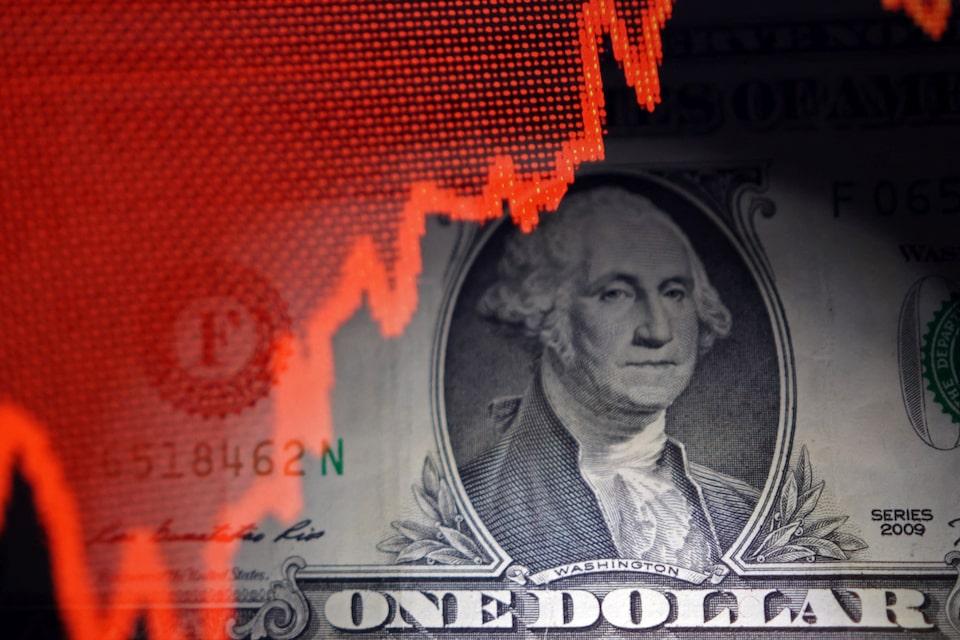
U.S. and China reach deal to temporarily slash tariffs Wall Street stocks leap Dollar jumps 2% against Japanese yen, Swiss franc tumbles Gold drops sharply after stunning rally, government bonds weak NEW YORK/LONDON, May 12 (Reuters) - Global shares rallied, while gold and safe-haven currencies slumped against a resurgent dollar on Monday as the U.S. and China agreed to temporarily slash harsh reciprocal tariffs and cooperate to avoid rupturing the global economy. Following weekend talks in Geneva, both sides agreed that the U.S. would drop levies on Chinese imports from 145% to 30% during a 90-day negotiation period and China would cut duties from 125% to 10%. Sign up here. Wall Street stocks made significant gains, with the S&P 500 index (.SPX) , opens new tab jumping 3.3% and the tech-focused Nasdaq Composite (.IXIC) , opens new tab advancing 4.4%. In a joint statement on Monday, Washington and Beijing said they recognised the importance of their bilateral trade relationship to both countries and the global economy, in language that analysts said had brightened the market outlook. An index tracking the dollar against other major currencies rose further from last month's three-year trough with an almost 1.17% gain, while Japan's yen fell 2.1% to 148.39 per dollar . The retreat from safe-haven assets pushed Switzerland's franc 1.8% lower on the day, in a jolt of relief for Swiss exporters and the nation's central bank. Spot gold prices , which hit an all-time high of $3,500 last month and often move inversely to the dollar, fell 2.7% to $3,234.8 an ounce. "This is a textbook recovery after the market's waterfall declines," said Gina Bolvin, the president of Bolvin Wealth Management Group in Boston. "The market is blowing through resistance levels and if it sticks, this is a big 'WIN' for Trump, for stocks and for investors." The euro, which surged in April as investors questioned the dollar's long-held status as the world's reserve currency, was 1.4% lower at $1.1090. 'RELIEF' Kit Juckes, chief FX strategist at Societe Generale, said the tariff pause was a "substantial relief" for the U.S. and China. With tariff anxiety having already caused some Chinese exporters to consider their futures, data this weekend showed the nation's factory-gate prices had dropped by the most in six months in April. Trump's erratic trade policies had also sparked fears over U.S. corporate earnings, with investors having entered this week nervous about an impending update from retail giant Walmart (WMT.N) , opens new tab after a slew of U.S. multi-nationals pulled their forecasts. On Monday, however, commodities traders rushed to reassess the recessionary risks of tariff uncertainty, with oil traders pricing Brent crude for delivery next month almost 1.9% higher at $65.10 a barrel, up from around $57 a week ago. Europe's regional STOXX 600 (.STOXX) , opens new tab was last trading 1.2% higher and Hong Kong's Hang Seng Index ended the day with an almost 3% gain. FURTHER TO RUN? While Trump's April 2 tariff announcement initially caused world stocks to drop sharply, MSCI's index of global shares (.MIWD00000PUS) , opens new tab, which is U.S.-dominated, was trading back at levels last seen in late March and was up 2%. Some analysts and investors warned, however, that this was not the end of unpredictable trade talks between the White House and Beijing and that any relief may soon be overshadowed by data showing the U.S. economy had slowed. Sheldon MacDonald, CIO at British asset manager Marlborough, said that even if the U.S. maintained 30% tariffs on China this was still "negative" for growth, with "no all-clear on recession fears just yet." The 10-year U.S. Treasury yield rose almost 10 basis points on the day, as the price of the government debt fell, with almost identical moves for benchmark German Bunds and British gilts . But analysts at Citi cautioned Trump supporters may not support a compromise with China and recalled the short-lived trade truce during his first presidency in 2018-2019, when both nations agreed a 90-day tariff halt before tensions resumed. "It's going to take some time to get more clarity," said John Praveen, managing director co-chief investment officer at Paleo Leon in New Jersey. "Until we have a final agreement on both sides, when Trump and Chinese President Xi meet and shake hands, that's when we will begin to see the blue skies." https://www.reuters.com/markets/global-markets-wrapup-1-2025-05-11/
2025-05-11 21:25
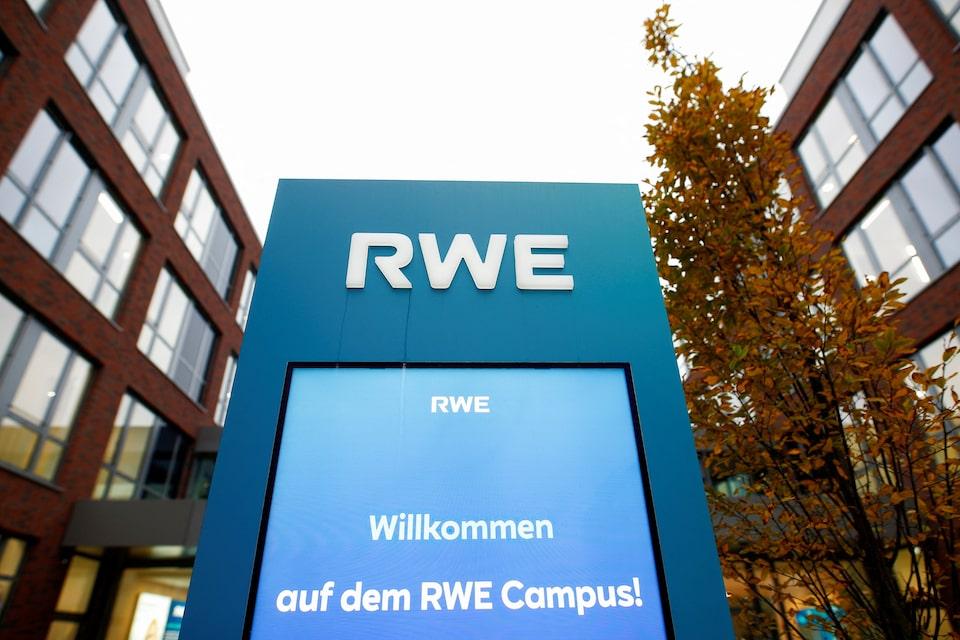
May 11 (Reuters) - Norway's $1.8 trillion sovereign wealth, the world's largest, has decided to revoke its exclusion on German utility RWE (RWEG.DE) , opens new tab, fund operator Norges Bank Investment Management said on Sunday. In 2020, Norway's sovereign wealth fund had excluded RWE, alongside Glencore, Anglo American, Sasol and AGL Energy, for the use and production of coal under updated ethical guidelines. Sign up here. In 2022, RWE, Germany's biggest utility, brought forward its coal phase-out by eight years and is ready to end lignite-based electricity generation in 2030 as part of a deal reached with the government. The Norwegian fund said that several milestones with regards to the phaseout have already been reached. "We consider that the coal-fired power capacity is now below the absolute threshold specified in the coal criterion. Coal mining will nevertheless remain above the threshold for some time to come," fund operator NBIM said in a statement. About half of RWE's installed renewable capacity is based in the United States. https://www.reuters.com/sustainability/climate-energy/norway-wealth-fund-revokes-exclusion-germanys-rwe-2025-05-11/