2025-05-11 20:53
NEW YORK, May 12 (Reuters) - The United States and China reached a better-than-expected deal to temporarily slash tariffs, sending stocks and the U.S. dollar sharply higher, as the world's two biggest economies seek to end a damaging trade war that has stoked fears of recession. The U.S. will cut extra tariffs it imposed on Chinese imports in April this year to 30% from 145% and Chinese duties on U.S. imports will fall to 10% from 125% for the next 90 days, the two sides said on Monday. Sign up here. MARKET REACTION: -- The S&P 500 (.SPX) , opens new tab was 2.93% higher at 5,826.12 -- The yield on benchmark U.S. 10-year notes rose 8.6 basis points to 4.461% -- The dollar index was up 1.193% at 101.79. The euro was down 1.423% at $1.1088 COMMENTS: SCOTT CHRONERT, US EQUITY STRATEGIST, CITI RESEARCH, SAN FRANCISCO (emailed note) “Lessening the fundamental overhang risk of tariffs is providing its own form of liberation day.” RYAN SWEET, CHIEF US ECONOMIST, OXFORD ECONOMICS, WEST CHESTER, PENNSYLVANIA (emailed note) “The agreement by the US and China to significantly reduce tariffs for the next 90 days warrants changes to our near-term baseline forecast for GDP growth, unemployment, and inflation. The changes will be incorporated in the second May baseline forecast, released on May 21. This likely doesn’t appreciably alter the calculus for the Federal Reserve, as it is comfortable waiting out the ebbs and flows in tariffs to gauge what the ultimate implications for inflation and growth are. … Our subjective odds of a recession this year dropped to 35% following the announcement, compared with the better-than-even odds previously. But as we learned in the first trade war, we don’t want to read too much into a single agreement. A future escalation remains possible, if not likely, as tariffs are used as a negotiating tactic. This will keep trade policy uncertainty uncomfortably high and create the potential for future, and significant, disruptions in supply chains.” MARC CHANDLER, CHIEF MARKET STRATEGIST, BANNOCKBURN GLOBAL FOREX, NEW YORK "The market long recognized the conflicting policy objectives raising revenue, onshoring production and between the UK agreement last week and this deal, I think that the market's confused. "Many people are confused by what the real goal is and it's 90 days and so this basically buys some more time, I sort of think the U.S. blinked. I'm not a big fan of the tariffs in the first place, but once they were in place, the U.S. seemed to back down without getting much in exchange. That is, we stopped with our reciprocal tariffs on China and so they unwind their reciprocal tariffs on us, but we're still back at square one. "This is sort of this huge sigh of relief and with the NASDAQ up 3%, I don't think that's going to really change the U.S. when I look at the tariff announcements, it doesn't look like the sectoral things have changed so China still has export controls on the critical earth, and we'll still have export controls on semiconductors." PATRICK KASER, PORTFOLIO MANAGER, BRANDYWINE GLOBAL, PHILADELPHIA "The reduction in fears is a positive catalyst in the short term, but that doesn't necessarily say much about the economy or the market a week from now or a month from now" "There's still uncertainty. It's still hard for companies to make decisions on spending. The market is acting like the risk has gone away, but I don't think that's how a lot of businesses and companies are going to view the situation." "The Nasdaq is up more than other pockets of the market; It's clearly a relief day for cyclicals, but again, I don't think this is necessarily sustainable." MARC CHANDLER, CHIEF MARKET STRATEGIST, BANNOCKBURN GLOBAL FOREX, NEW YORK "The market long recognized the conflicting policy objectives raising revenue, onshoring production and between the UK agreement last week and this deal, I think that the market's confused. "Many people are confused by what the real goal is and it's 90 days and so this basically buys some more time, I sort of think the U.S. blinked. I'm not a big fan of the tariffs in the first place, but once they were in place, the U.S. seemed to back down without getting much in exchange. That is, we stopped with our reciprocal tariffs on China and so they unwind their reciprocal tariffs on us, but we're still back at square one. "This is sort of this huge sigh of relief and with the NASDAQ up 3%, I don't think that's going to really change the U.S. when I look at the tariff announcements, it doesn't look like the sectoral things have changed so China still has export controls on the critical earth, and we'll still have export controls on semiconductors." KAMIL DIMMICH, PARTNER AND PORTFOLIO MANAGER, NORTH OF SOUTH CAPITAL EM FUND “Our concern has been that if the Trump administration was serious about achieving its stated goals, there was no plausible deal to be done with China. First and foremost this was the idea of the U.S. no longer running a trade deficit. This would have largely precluded trade with China and would have been achieved with the tariffs in place until yesterday. “The Chinese have called their bluff however and while today’s announcements don’t represent a trade agreement or any comprehensive solution, they strongly suggest that the U.S. wants to continue trading with China and wasn’t ever willing to contemplate significant disruption for longer than a few weeks. “We have been adding to China over the past months on the view that in the long term the current level of tariffs would be significantly reduced. At the same time, we were concerned that the path towards this could be highly volatile and painful. Markets have been fairly quick to price in the anticipated ‘normalization’, so we are no longer in a rush to add but remain happy with our exposures in China. Most likely there will be further ups and downs over the coming weeks and months so there may be better times to add." DEAN SMITH, CHIEF STRATEGIST, FOLIOBEYOND, NEW YORK “This weekend in Geneva, China got everything they wanted and gave up nothing. The preposterous 145% tariffs are gone, almost surely for good, and they now have 90 days to manage the context and agenda for future discussions. The US got nothing but an agreement to agree to talk about someday working out a deal both sides can agree on. In other words, basically nothing. The administration spinning this as a genius negotiating win for the US is laughable.” “The relief rally in stocks is just that. Look to the bond market to see what really matters. We are now back within 10 bps of where we started the year. Bessent's goal of getting long term rates down is now in tatters.” ADAM SARHAN, CHIEF EXECUTIVE, 50 PARK INVESTMENTS, NEW YORK "The market is able to breathe a collective sigh of relief - not just the stock market, all capital markets. There was fear earlier this year that the market would have to deal with a new reality of the global trade paradigm breaking down, or a massive recession sparked by a trade war that would get out of control. It appears that that's off the table. Cooler heads prevailed, and that's no longer going to happen. Could the trade talks turn sour, reverse? Yes, anything is possible. But as of right now, the market is breathing a sigh of relief. The reality is we're going to get past this and come out the other side stronger because we're going to have less tariffs against us on the other side of these trade deals ... There are several clear paths to coming out of this situation stronger, and that's why there's optimism." GINA BOLVIN, PRESIDENT, BOLVIN WEALTH MANAGEMENT GROUP, BOSTON (emailed note) "This is a textbook recovery after the market’s waterfall declines. Expect volatility we approach the 90-day reciprocal tariffs deadline. But today the market is blowing through resistance levels and if it sticks, this is a big WIN for Trump, for stocks and for investors. Regarding earnings, corporate America can handle 10% tariffs, and this will only be a 2% hit to earnings, not the 5% that rattled markets. Today’s rally illustrates why we tell our clients not to trade headlines." THIERRY WIZMAN, GLOBAL FX AND RATES STRATEGIST, MACQUARIE (emailed note) “The US is re-engaging with the world now through a kinder, gentler economic diplomacy than it did in March and early April - that's the 'Bessent brake'. And yet, the view of the US as a ‘full faith and credit’ counter-party won't return soon, given the damage caused by April's events. Diversity economic and security exposure away from the US - especially after 13 years (2012-2024) of US primacy - is likely still compelling. It will limit the USD's gains, before the USD weakens again.” CHRISTOPHER HODGE, CHIEF ECONOMIST, U.S., NATIXIS, NEW YORK “A de-escalation was inevitable and I think it’s clear there won’t be much durable that comes out of these talks. Perhaps a lowering of tariffs and a purchase agreement for some agriculture products, just like the phase one deal. But nothing that will dramatically open up Chinese markets for U.S. products or change the nature of the trading relationship. I think we can take the left-tail risks off the table, but when all is said and done tariffs will still be dramatically higher and will weigh on U.S. growth." JACK ABLIN, FOUNDING PARTNER AND CHIEF INVESTMENT OFFICER, CRESSET CAPITAL, CHICAGO "It's obviously positive headlines, we are going to hear more tomorrow. I'm not sure I would hit the 'buy' button on what we have heard today, but if we can make substantive progress with China I think the market will like it." "To me, this news is slightly better than expectations. I think most of us at the end of last week thought that there would be some progress made." "I did not expect a conclusion to the talks just because the whole portfolio of goods and services is so broad. ... But it sounds like we are going to take a trade war with China off the table." ERIC KUBY, CHIEF INVESTMENT OFFICER, NORTH STAR INVESTMENT MANAGEMENT CORP., CHICAGO: "This is a step in the right direction, showing that both sides are interested in coming to a constructive conclusion and develop a better trade relationship. The details are quite sketchy, but I think the direction sounds to be more cooperative rather than combative, and I think that we have to view that as a positive. "There were a variety of possible outcomes of this weekend's meetings, ranging from both sides walking out and pointing the finger at the other side to announcing that the extra tariffs have been taken off the table. What we got here was something more in the middle, but more towards the positive side. So I think this is a step in the right direction. It is not likely to trigger a dramatic market rally, but it's certainly also not going to create any selling pressure." GENNADIY GOLDBERG, HEAD OF US RATES STRATEGY, TD SECURITIES, NEW YORK: "Markets may be encouraged by some agreement on a deal, but it will remain contingent on further details being released. Recent price action suggests some optimism around a trade deal. If that turns out to be the case, pricing will have been justified. The risk is if the deal is less substantial than expected. Then the market might come away disappointed." JAMIE COX MANAGING PARTNER, HARRIS FINANCIAL GROUP, RICHMOND VIRGINIA: “The administration downplayed the talks heading into the weekend, so the substantial progress language will send markets zooming on a Monday. The one caveat to consider, however, is that the president could throw cold water on the talks if he thinks China is getting off easy.” DAVID WAGNER, HEAD OF EQUITIES AT APTUS CAPITAL ADVISORS LLC IN FAIRHOPE, ALABAMA: "There’s been a lot of optimism starting to be priced into the market already, but positive sentiment around the issue should continue to fuel a market recovery." https://www.reuters.com/world/china/view-investor-reaction-us-china-progress-trade-talks-2025-05-11/

2025-05-11 20:26
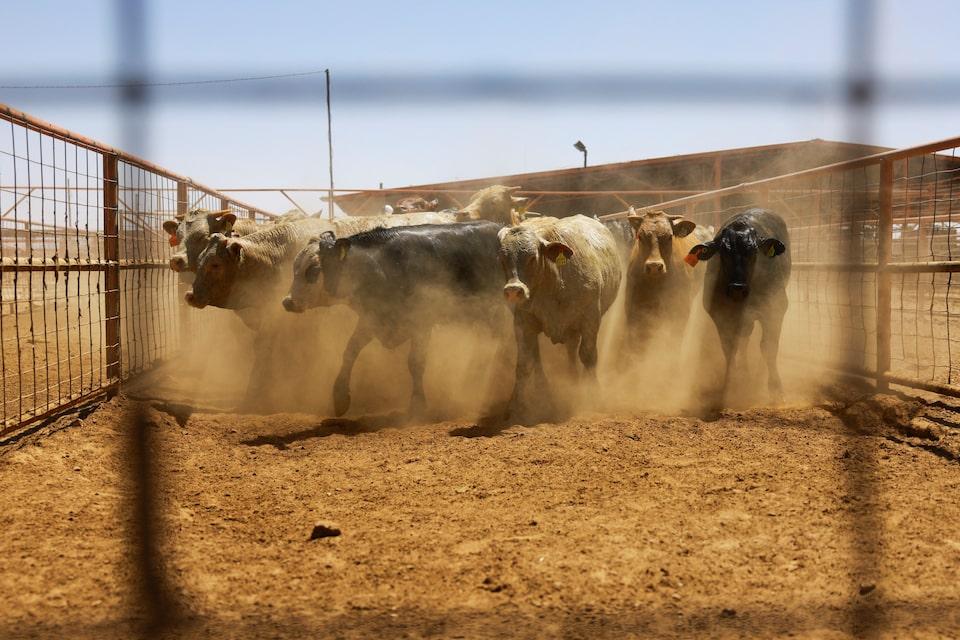
WASHINGTON, May 11 (Reuters) - U.S. Agriculture Secretary Brooke Rollins on Sunday said she is suspending imports of live cattle, horses and bison through the southern U.S. border over the damaging pest New World screwworm, a measure that immediately drew opposition from Mexico. "I am announcing the suspension of live cattle, horse, & bison imports through U.S. southern border ports of entry effective immediately," Rollins said. "The last time this devastating pest invaded America, it took 30 years for our cattle industry to recover. This cannot happen again." Sign up here. Her Mexican counterpart, Julio Berdegue, swiftly rebuked the action, but said he hoped the two countries could soon come to an agreement over the pest, known as NWS. "We don't agree with this measure," he said in a post on social media, adding that it would be in place for 15 days. The U.S. agriculture agency in a statement on Sunday said the suspension would be in effect on a "month-by-month basis." The U.S. and Mexico last month reached an agreement on the handling of the damaging pest, which can infest livestock and wildlife and carry maggots that burrow into the skin of living animals, causing serious and often fatal damage. The U.S. agriculture agency in a statement said the efforts so far were not sufficient, and acknowledged "an economic impact" on both countries due to the suspension. "There has been unacceptable northward advancement of NWS and additional action must be taken to slow the northern progression of this deadly parasitic fly," USDA said. It said the pest had been detected in Oaxaca and Veracruz, about 700 miles (1,127 km) from the U.S. border. https://www.reuters.com/world/us/us-suspends-mexican-cattle-horse-bison-imports-over-screwworm-pest-2025-05-11/
2025-05-11 19:05
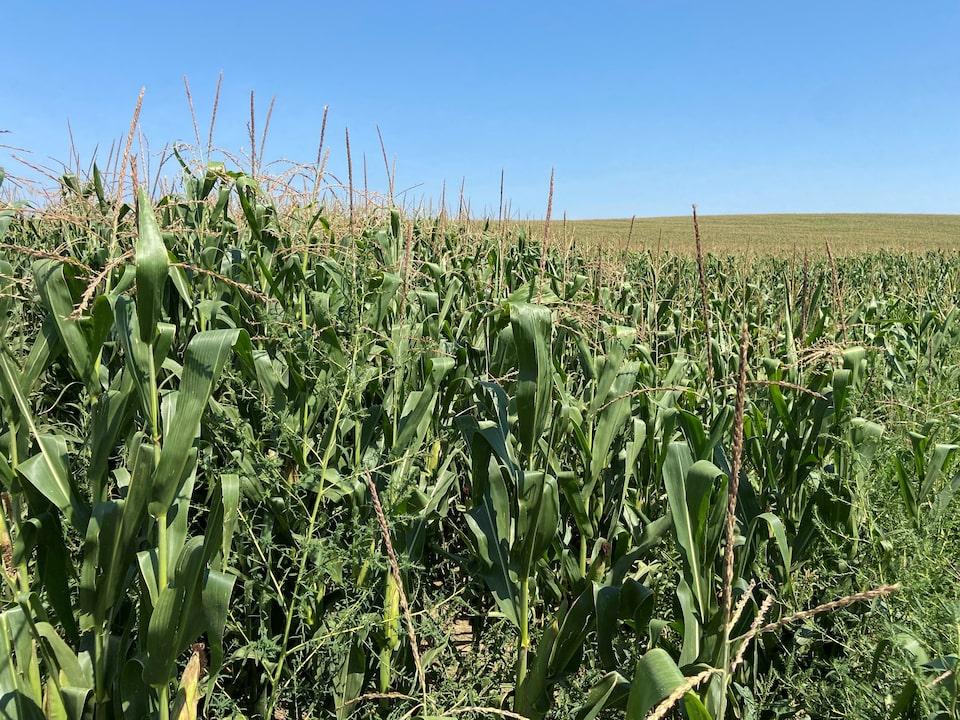
NAPERVILLE, Illinois, May 11 (Reuters) - When it comes to Chicago corn futures, speculators typically hold on to heavily bullish corn bets for an extended period. Ditching them after just a few months is unusual. But investors might be bearish heading into Monday’s reports from the U.S. Department of Agriculture after global trade uncertainties spurred atypical bouts of corn selling earlier this year. Sign up here. In the week ended May 6, money managers slashed their net long in CBOT corn futures and options to 13,893 contracts from 71,329 a week earlier. That is their least bullish corn view since they first established the net long six months ago, and it is notably off the year's high of more than 360,000 contracts. Most-active CBOT corn futures fell 3.1% in that period before declining another 1.3% between Wednesday and Friday. Daily trade estimates suggest speculators are net short corn heading into this week. On average, analysts expect USDA on Monday to project 2025-26 U.S. corn ending stocks near 2 billion bushels, up 40% on the year due to a massive acreage. WHEAT Money managers trimmed their net short in CBOT wheat futures and options in the week ended May 6, but their views remain strongly bearish for any time of year at 113,734 contracts. Russian wheat has dominated the export market, keeping global prices in check. Most-active CBOT wheat on Friday notched its lowest settle since August 2020. Top exporter Russia and neighbor Ukraine may not harvest a stellar crop this year, which could pressure global wheat supplies into 2025-26. But China’s general retreat as a global grain importer has alleviated some of the supply concerns. However, extreme heat in China’s wheat belt may have recently spawned some purchases out of Australia and Canada. Analysts see 2025-26 global wheat stocks largely unchanged from 2024-25. Money managers last week further extended what had been a record net short in Kansas City wheat futures and options. They also continue carrying very bearish views in Minneapolis wheat. SOYBEANS In the week ended May 6, money managers cut their net long in CBOT soybean futures and options to 21,870 contracts from 38,202 in the prior week. July futures rose 1% over the last three sessions, so funds might remain bullish heading into the week. Analysts expect 2025-26 U.S. soybean supplies to be similar to 2024-25. But global stocks are expected to rise, especially with Brazil likely expanding planted area for a 19th consecutive year. Chinese demand will continue to be a wildcard heading into 2026, particularly amid the top soybean importer’s slowing economic growth. Stagnant Chinese soy usage plus a huge Brazilian crop could make a U.S.-China trade war more tolerable for Chinese bean importers. SOYBEAN PRODUCTS Money managers pushed their net short in CBOT soybean meal futures and options to another all-time high through May 6. That record position of 103,457 contracts resulted despite a handful of new gross longs entering the market. Funds cut their net long in CBOT soybean oil futures and options through May 6 to 56,738 contracts from 63,387 a week earlier. That snapped a five-week streak of net buying, which was supported by strong export demand for U.S. soyoil. Back in February, USDA’s preliminary 2025-26 projections suggested that U.S. soybean meal exports would stay on their record pace as processing capacity continues to expand. Soybean oil exports were also expected to remain similarly strong as in the current year. Karen Braun is a market analyst for Reuters. Views expressed above are her own. https://www.reuters.com/markets/commodities/funds-might-be-short-cbot-corn-heading-into-mondays-data-dump-braun-2025-05-11/
2025-05-11 16:46
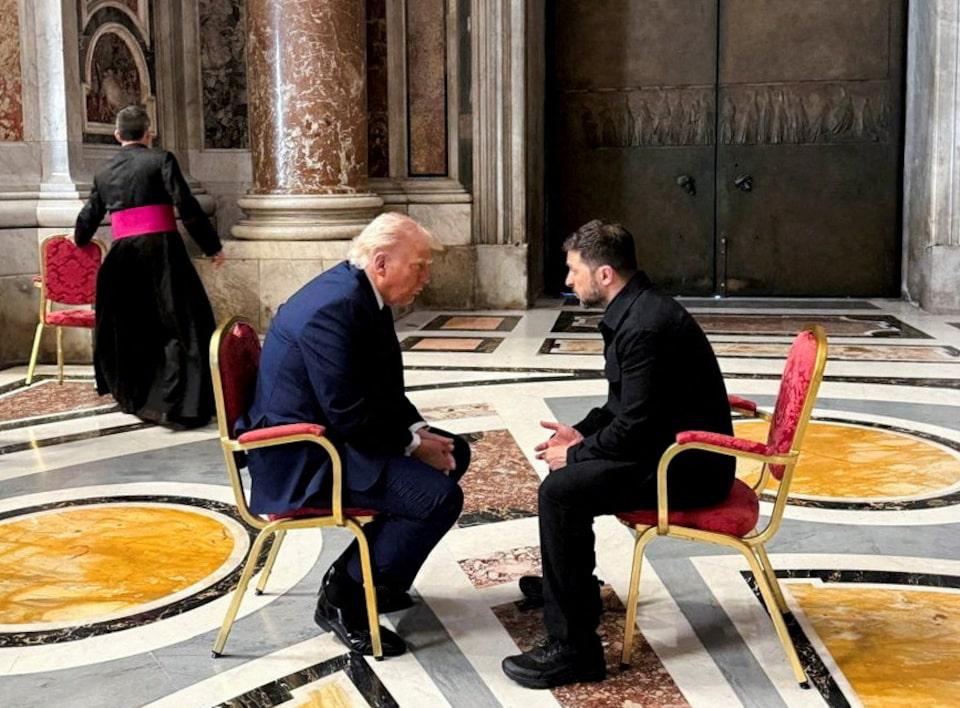
May 11 (Reuters) - U.S. President Donald Trump said on Sunday that he was "starting to doubt" that Ukraine will reach a ceasefire deal with Russia, and he urged Ukraine to meet with Russian officials in Turkey on Thursday to negotiate. "I'm starting to doubt that Ukraine will make a deal with Putin," Trump wrote on Truth Social. "President Putin of Russia doesn't want to have a Cease Fire Agreement with Ukraine, but rather wants to meet on Thursday, in Turkey, to negotiate a possible end to the BLOODBATH." Sign up here. Trump said that meeting would mean the two parties as well as European leaders and the U.S. would then be "able to determine whether or not a deal is possible."Truth said that meeting would mean the two parties as well as European leaders and the U.S. would then be "able to determine whether or not a deal is possible." (This story has been corrected to say 'Trump said,' not 'Truth said,' in paragraph 3) https://www.reuters.com/world/europe/trump-starting-doubt-that-ukraine-will-reach-deal-with-russia-2025-05-11/
2025-05-11 12:00
Indian military says Pakistan has been told truce violations will be countered, Pakistan denies any violations Indian military says Pakistan called and sought ceasefire Relief in border towns on Sunday as ceasefire holds Trump pledges increased trade and Kashmir solution India and Pakistan blame each other for overnight violations NEW DELHI/ MUZAFFARABAD, Pakistan, May 11 (Reuters) - The Indian military sent a "hotline message" to Pakistan on Sunday about violations of a ceasefire agreed this week and informed it of New Delhi's intent to respond if it was repeated, a top Indian army officer said, while the Pakistan military's spokesman denied any violation of the ceasefire. India's Director General of Military Operations (DGMO) was speaking as a fragile 24-hour-old ceasefire appeared to be holding after both sides blamed the other for initial violations on Saturday night. Sign up here. Pakistan's military spokesman said, "No violation is being made by the Pakistan army or armed forces of the ceasefire," during a press conference with representation from the country's air force and navy. The truce announced on Saturday followed four days of intense fighting between the nuclear-armed neighbours. In the worst fighting in nearly three decades, they fired missiles and drones at each other's military installations, killing almost 70 people. Diplomacy and pressure from the United States helped secure the ceasefire deal when it seemed that the conflict was spiralling alarmingly. But within hours of its coming into force, artillery fire was witnessed in Indian Kashmir, the centre of much of last week's fighting. Blasts from air-defence systems boomed in cities near the border under a blackout, similar to those heard during the previous two evenings, according to local authorities, residents and Reuters witnesses. "Sometimes, these understandings take time to fructify, manifest on the ground," Lieutenant General Rajiv Ghai, the Indian DGMO, told a media briefing, referring to the truce. "The (Indian) armed forces were on a very very high alert (yesterday) and continue to be in that state." The Indian army chief had given a mandate to its commanders to deal with "violations of any kind" from across the borders in the best way they deem fit, Ghai added. He said his Pakistani counterpart called him on Saturday afternoon and proposed the two countries "cease hostilities" and urgently requested a ceasefire. Following India's request for a call after carrying out military attacks in Pakistan between May 6 and 7, and on the intervention of international interlocutors, Pakistan responded on May 10 to the earlier made request, said Pakistan's military spokesman. Late on Saturday, the Pakistani foreign ministry had said that it was committed to the truce agreement and blamed India for the violations. U.S. President Donald Trump announced the ceasefire on Saturday, saying it was reached after talks mediated by Washington. U.S. Secretary of State Marco Rubio said India and Pakistan had also agreed to start talks on "a broad set of issues at a neutral site". While Islamabad has thanked Washington for facilitating the ceasefire and welcomed Trump's offer to mediate on the Kashmir dispute with India, New Delhi has not commented on U.S. involvement in the truce or talks at a neutral site. India maintains that disputes with Pakistan have to be resolved directly by the two countries and rejects any third party involvement. On Sunday, Trump praised the leaders of both countries for agreeing to halt the aggression and said he would "substantially" increase trade with them. Hindu-majority India and Muslim-majority Pakistan each rule a part of Kashmir but claim it in full, and have twice gone to war over the Himalayan region. India blames Pakistan for an insurgency in its part of the territory, but Pakistan says it provides only moral, political and diplomatic support to Kashmiri separatists. PICKING UP THE PIECES Among those most affected by the fighting were residents on either side of the border, many of whom fled their homes when the fighting began on Wednesday, two weeks after a deadly attack in Indian Kashmir's Pahalgam that India said was backed by Islamabad. Pakistan denied the accusation. In the Indian border city of Amritsar, home to the Golden Temple revered by Sikhs, people returned to the streets on Sunday morning after a siren sounded to signal a return to normal activities following the tension of recent days. "Ever since the terrorists attacked people in Pahalgam, we have been shutting our shops very early and there was an uncertainty. I am happy that at least there will be no bloodshed on both sides," said Satvir Singh Alhuwalia, 48, a shopkeeper in the city. In some border areas, however, people were asked not to return home just yet. In the Indian Kashmir city of Baramulla, authorities warned residents to stay away due to the threat posed by unexploded munitions. "People here are hosting us well but just as a bird feels at peace in its own nest, we also feel comfortable only in our own homes, even if they have been damaged," said Azam Chaudhry, 55, who fled his home in the Pakistani town of Khuiratta and has now been told to wait until Monday before returning. In Indian Kashmir's Uri, a key power plant that was damaged in a Pakistani drone attack is still under repair. "The project has suffered minor damage ... We have stopped generation as the transmission line has been damaged," said an official from state-run NHPC, India's biggest hydropower company, who did not want to be identified. https://www.reuters.com/world/asia-pacific/fragile-ceasefire-holds-between-india-pakistan-trump-offers-more-help-2025-05-11/

2025-05-11 10:43
BUKAVU, DEMOCRATIC REPUBLIC OF CONGO, May 11 (Reuters) - More than 100 people have died after flooding in a village near the shores of Lake Tanganyika in eastern Democratic Republic of Congo (DRC), a local official said. The flooding, which affected the village of Kasaba, comes at a vulnerable moment for the Central African nation. Rwanda-backed M23 rebels have intensified an offensive in the eastern region since the start of the year, with thousands killed in fighting in the first two months of the year. Sign up here. Samy Kalodji, administrator of Fizi territory in South Kivu province where the village is located, said late on Saturday that reports from the area "indicated more than 100 deaths." The affected area is still under the administration of Kinshasa and is not among the zones taken by M23. Didier Luganywa, spokesperson for the South Kivu government, said in a statement the flooding incident occurred between Thursday night and Friday when torrential rains and strong winds caused the Kasaba river to overflow its banks. The statement gave a toll of 62 confirmed deaths with 30 injured. Local officials said the Kasaba area was only accessible via Lake Tanganyika and was not covered by the mobile phone network, which could delay humanitarian relief efforts. https://www.reuters.com/world/africa/more-than-100-dead-after-flooding-eastern-congo-official-says-2025-05-11/