2025-05-09 21:44
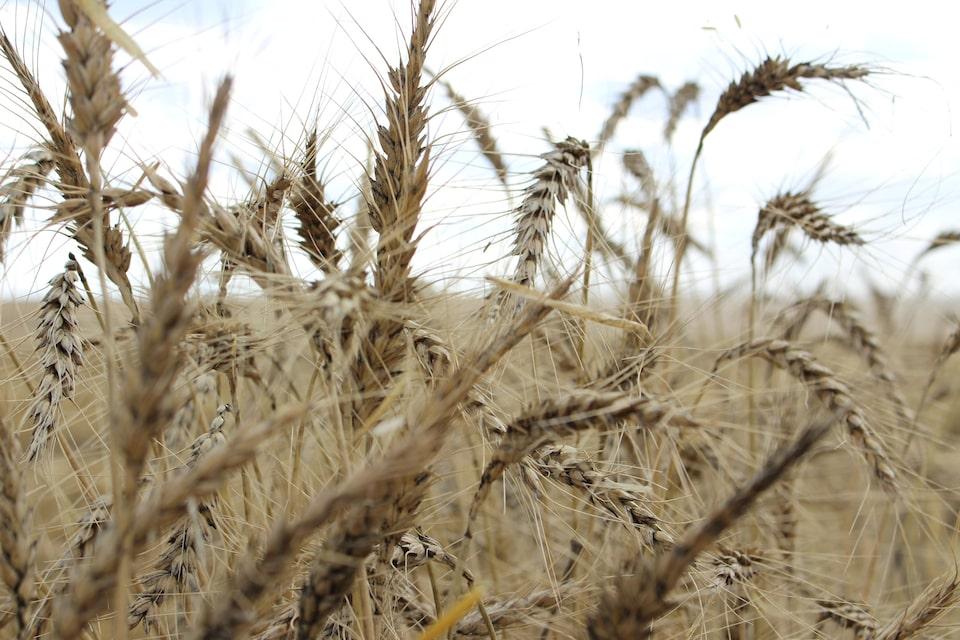
HAMBURG/CANBERRA/PARIS, May 9 (Reuters) - Chinese buyers bought between 400,000 and 500,000 metric tons of wheat from Australia and Canada in recent weeks, traders said, as heat threatens to damage crops in China’s agricultural heartlands. China is the world's top wheat grower and also imports large amounts of grain when domestic supply falls short of demand. Sign up here. Earlier this week, Henan province, which grows about a third of China's crop, issued a risk warning as hot, dry weather threatened the wheat growing in its fields. Chinese buyers have purchased four or five 55,000-ton shipments of wheat from Australia for delivery in July or August and around 200,000 tons from Canada, sources at two major trading firms in Australia said. The wheat is of milling quality. The bookings from Australia were the first made by China from the country since last year, said one of the traders. COFCO, the state-owned Chinese firm that handles most of the country's wheat imports, did not immediately respond to a request for comment. China has in recent years been one of the world's biggest wheat importers, buying in around 11 million tons worth $3.5 billion in 2024. Australia and Canada are typically its biggest suppliers. But shipments slowed sharply after China reaped large wheat and corn harvests last year and have since remained low. China delayed or redirected shipments from Australia earlier this year and imported less than a million tons of wheat in the seven months to March 31, Chinese customs data accessed through Trade Data Monitor show. One of the sources said their company had lowered its forecast of Chinese 2025 wheat production by around 5 million tons but there was no guarantee that more purchases would follow because China has large wheat inventories. "China is well self-sufficient in feed grains this crop year with heavy stocks," said Rod Baker, an analyst at Australian Crop Forecasters in Perth, adding that faltering economic growth in China was also depressing demand for grains. Talk of Canadian wheat sales to China has echoed around agricultural business circles in Winnipeg, Canada's grain industry capital, according to traders. Few concrete details on the sales have emerged. Chinese buyers would have avoided buying U.S. wheat due to tariffs and the trade war between Washington and Beijing, one trader said. China in the past has been a top destination for U.S. wheat sales. The drop-off in Chinese imports earlier in the current 2024/25 season had contributed to subdued international wheat prices, with benchmark futures in Chicago still near a four-year low touched last July. Along with weather risks to China's upcoming harvest, attractive prices may have lured Chinese importers back into the market as the 2025/26 season approaches, traders said. BARLEY Chinese importers also booked a large amount of barley, according to traders. Some said that six panamax bulk carriers carrying around 360,000 tons of French or Ukrainian new-crop barley had been sold for delivery in July or August, with others putting the volume much higher at around 1 million tons, also for shipment this summer. "Chinese wheat and barley import buying has been very quiet in the past year and these are the first major deals I have seen in many months," a German trader said. Feed barley purchases with optional origin were from Ukraine or France. The deals were done at a price of around $250-$254 a tonne delivered to China, one trader said. https://www.reuters.com/markets/commodities/china-buys-canadian-australian-wheat-heat-hits-crop-traders-say-2025-05-09/
2025-05-09 21:35
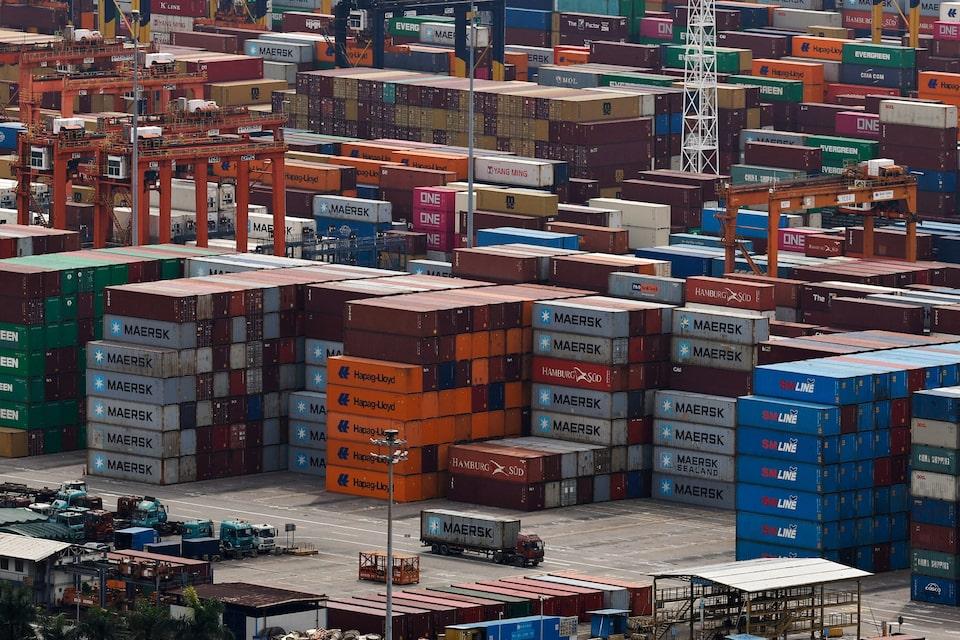
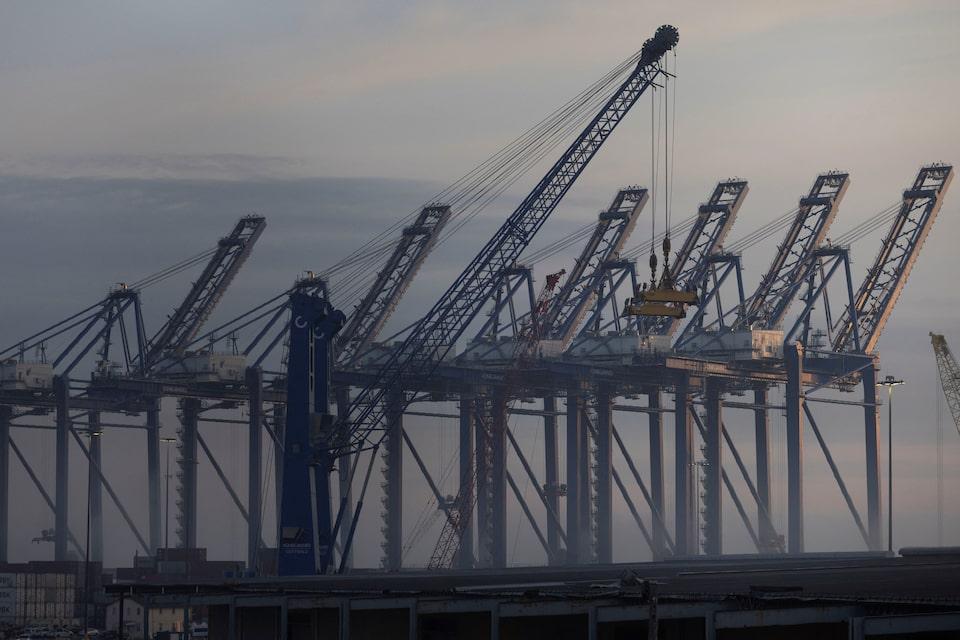
Trump 'threw out there' the 80% figure, White House says Top US and Chinese officials meet Saturday in Geneva Meeting looks 'very promising,' Trump adviser Hassett says WASHINGTON, May 9 (Reuters) - U.S. President Donald Trump said on Friday an 80% tariff on Chinese goods "seems right," suggesting for the first time a specific alternative to the 145% levies he has imposed on Chinese imports ahead of closely watched weekend talks between the two countries. U.S. Treasury Secretary Scott Bessent and chief trade negotiator Jamieson Greer will meet Chinese economic tsar He Lifeng in Switzerland to discuss containing the damaging trade war between the world's two biggest economies, which has already entangled global supply chains. Sign up here. Asked how Trump arrived at the 80% figure, White House spokeswoman Karoline Leavitt said, "That was a number the president threw out there, and we'll see what happens this weekend." Trump will not unilaterally bring down tariffs on China, however, she stressed. "We need to see concessions from them as well," she said. China is also sending a top public-security official to the talks in Geneva, a source familiar with the plans said. The development, first reported by the Wall Street Journal, underscores the importance of the issue of fentanyl trafficking to the talks and the wider U.S.-China relationship. Trump cited fentanyl as the rationale for the initial imposition of punitive import taxes on goods from China, Canada and Mexico earlier this year. China's embassy in Washington did not respond to a request for comment. "China should open up its market to USA – would be so good for them!!! Closed markets don't work anymore!!!" Trump wrote in an all-caps social media post , opens new tab. "80% tariff on China seems right. Up to Scott B.," he added moments later. Trump on Thursday said he expected there to be substantive talks this weekend and predicted U.S. tariffs were likely to come down. China's foreign ministry has decried what it calls abusive and bullying economic tactics and said China remains firmly opposed to what it calls an unsustainable approach to trade by the U.S. Ryan Majerus, partner with the King & Spalding law firm and a former senior Commerce Department official, said the expected decline in port and trade traffic may have created some pressure to start addressing the U.S.-China trade impasse in Geneva. "I don't see an easy off-ramp for either party," he said. "We could see a more limited agreement that lowers the tariff rates to a degree, depending on what China is willing to do." Asked by a reporter in the Oval Office on Friday whether he had given Bessent a number reflecting how low he was willing to go, Trump said yes, though he left it unclear whether his bottom-line figure was the same 80% he floated publicly. "We have to make a great deal for America," he said. "I put out a number today, 80%, so we'll see how that all works out." The weekend talks come on the heels of Trump's first agreement with a major trading partner: Thursday's announcement of a pact with Britain. While that fueled some optimism in markets, it was fairly limited in scope, and a range of details still need to be hammered out. "The U.S.-U.K. trade agreement may be better than nothing, but it is not significant enough to warrant a change to our forecast," Nancy Vanden Houten, lead U.S. economist at Oxford Economics, wrote on Friday. "While talks this weekend between U.S. and Chinese officials may yield some progress, expectations for a significant reduction in tariffs seem unwarranted." Oxford estimates that lowering tariffs on China to 80% would bring the overall effective import tax rate from all the tariffs imposed by Trump so far to 18% from around 22% now. That would still be treble what Oxford had estimated at the start of Trump's term and far above the 2-3% average from before he returned to office. US STOCKS MUTED While Trump has indicated on several occasions that he expects the tariff rates on China to come down, he had not until now proposed a precise alternative. Even though 80% is just above half the current rate, it remains extraordinarily high, above even the hefty 60% rate that Trump proposed while campaigning for president last year. It was not clear how it would be received by China amid what Bessent has already cast as an effective trade embargo between the two countries. What level tariff rates settle at – and not just for China – has been a central focus for investors rattled by months of financial market volatility arising from the chaotic rollout of Trump's aggressive trade policies. U.S. stocks, which have recouped a significant chunk of their losses since mid-February's record high, finished slightly lower for the week after a quiet session on Friday. The dollar was weaker against a basket of major trading partners' currencies. Since taking office in January, Trump has hiked the tariffs paid by U.S. importers for goods from China to 145%, in addition to those he imposed on many Chinese goods during his first term and the duties levied by the Biden administration. China hit back by imposing export curbs on some rare earth elements, vital for U.S. manufacturers of weapons and electronic consumer goods, and raising tariffs on U.S. goods to 125%. It also imposed extra levies on some products including soybeans and liquefied natural gas. Trump's push on tariffs is widely seen to be elevating risks to the U.S. economy, with concerns that they will lift prices for American consumers and businesses while at the same time cutting into the demand that has propped up the job market. Trump is already facing dropping approval ratings as Americans brace to pay more for clothes, electronics, toys and countless other goods that emerge from Chinese factories. China's government is seeking to mitigate closures, bankruptcies and job losses at manufacturers struggling to find viable alternatives to the U.S. market. Representing the meeting's host, Swiss Vice President Guy Parmelin, who also serves as economic minister, emerged from separate bilateral meetings in Geneva with the U.S. and Chinese delegations with optimistic words. "It's already a success," Parmelin told reporters. "The two sides are talking ... If a road map can emerge and they decide to continue discussions, that will lower the tensions." https://www.reuters.com/world/trump-says-80-tariff-chinese-goods-seems-right-should-open-up-its-market-us-2025-05-09/
2025-05-09 21:22
WASHINGTON, May 9 (Reuters) - President Donald Trump said on Friday that the U.S. will maintain a baseline 10% tariff on imports even after trade deals are struck, adding there could be exemptions when countries offer significant trade terms. Trump said to expect new trade deals in the coming weeks, but "we always have a baseline of 10%." Sign up here. https://www.reuters.com/business/autos-transportation/trump-says-us-will-maintain-10-tariffs-even-after-trade-deals-2025-05-09/
2025-05-09 21:17
MEXICO CITY, May 9 (Reuters) - Mexican Finance Minister Edgar Amador said on Friday that state oil company Pemex hopes to return to capital markets for financing in the medium term, when conditions are favorable. Pemex has a financial debt of $101 billion and has not turned directly to the markets to raise funds in several years due to the high costs it faces. Sign up here. "We have to have a conversation with the market, with investors, eventually, in the medium term - not at this moment. Right now, the conditions are not ideal for that to happen," Amador said in an interview with Bloomberg Linea. "What we have to do is create those conditions so that the company can turn to capital markets," he added. When asked if the option of going to those markets was off the table, he responded: "That is the aspiration." Mexico's finance minister sits on Pemex's board of directors. https://www.reuters.com/business/energy/mexicos-pemex-hopes-return-capital-markets-when-conditions-permit-minister-says-2025-05-09/

2025-05-09 21:02
RIO DE JANEIRO, May 9 (Reuters) - Brazilian chemical firm Unigel approved a deal proposed by oil giant Petrobras (PETR4.SA) , opens new tab to settle legal disputes over two fertilizer plants in northeastern Brazil, Petrobras said on Friday, confirming an earlier report by Reuters. The deal would allow state-run Petrobras to work on resuming operations of the two plants in the states of Sergipe and Bahia, as President Luiz Inacio Lula da Silva's administration seeks to reduce Brazil's reliance on imported fertilizer. Sign up here. Petrobras leased the two nitrogen fertilizer plants to Unigel in 2019 under a 10-year agreement, but both facilities have been shut since 2023, with Unigel citing unfeasible operating conditions due to high natural gas prices in Brazil. The deal, which still needs to be ratified by the arbitration court, reestablishes Petrobras' possession over the two plants, Petrobras said in a securities filing. Operations are set to resume after a bidding process to contract services to run and maintain them, it added. https://www.reuters.com/business/energy/brazils-unigel-approves-deal-with-petrobras-fertilizer-plants-sources-say-2025-05-09/

2025-05-09 20:52
May 9 (Reuters) - Fifteen state attorneys general sued U.S. President Donald Trump on Friday to try to block his national energy emergency, which the states said is an unlawful effort to disregard regulations and fast-track permitting for oil and gas development. The Democratic state attorneys general, including those from California, Washington and New York, said using emergency powers to bypass normal permitting processes for hundreds of proposed projects will cause irreparable harm to natural and historic resources, undermining drinking water and wildlife habitat. Sign up here. The lawsuit, filed in Seattle federal court, seeks a court order that the January 20 executive order declaring a national emergency was unlawful and that efforts to implement the order by Army Corps of Engineers and Advisory Council on Historic Preservation (ACHP) violated administrative law. It also seeks an injunction barring the Army Corps and ACHP from emergency procedures to issue permits for energy-related projects. The White House said in a statement that the "President of the United States has the authority to determine what is a national emergency, not state attorneys or the courts. President Trump recognizes that unleashing American energy is crucial to both our economic and national security.” Trump, a Republican, declared a national energy emergency on his first day in office, claiming the development and production of energy and critical minerals failed to meet the country's needs. Trump directed the leadership of government agencies to use emergency powers to speed up permitting and remove obstacles to energy production. U.S. energy production is near record levels, although U.S. power demand is growing for the first time in decades due to the development and adoption of AI. The price of crude oil has fallen around 20% from a year ago and nearly 50% from a recent peak in 2022. Emergency powers allow presidents to tap into special authorities, which is often used in times of crisis. Trump declared a national emergency during his first term to fight the COVID-19 pandemic. Since he took office in January, Trump has declared illegal immigration a national emergency to speed up construction of detention space and a wall on the southern border with Mexico. His use of a national emergency to impose trade tariffs was nearly terminated by a bipartisan vote in the Senate. https://www.reuters.com/business/energy/democratic-state-attorneys-general-sue-block-trumps-energy-emergency-2025-05-09/