2025-05-09 20:46
MEXICO CITY, May 9 (Reuters) - Mexican state energy company Pemex said on Friday that it addressed a hydrocarbon leak from a pipeline that transports crude oil from the Akal-C platform in the Gulf of Mexico to the maritime terminal in the port of Dos Bocas. Pemex, which had said on Wednesday evening that the cleanup was expected to be completed in the next few hours, said on Friday that "containment measures" continued and that it was preventing additional arrivals at the normally busy terminal. Sign up here. It came a week after an incident temporarily shut down operations at the company's new Olmeca refinery nearby. https://www.reuters.com/business/energy/mexicos-pemex-says-it-addressed-leak-gulf-mexico-pipeline-2025-05-09/
2025-05-09 20:33
ORLANDO, Florida, May 9 (Reuters) - TRADING DAY Cautious stability Sign up here. World markets traded on a solid footing this week as the Trump administration struck what could be the first of "dozens" of trade deals in the coming weeks, and as investors cheered this weekend's US-China trade talks in Switzerland. The S&P 500 and Nasdaq are back where they were on April 2, recovering the 15% losses in the days immediately after 'Liberation Day' when Trump unveiled his reciprocal tariffs, Germany's DAX is at new highs and Japanese stocks sealed their best weekly winning streak in over two years. Sentiment was boosted by a sweeping raft of stimulus measures from China, including interest rate cuts and liquidity injections. The Bank of England also cut rates and the Bank of Japan looks to have put its tightening cycle on ice. While the U.S. Federal Reserve didn't ease policy, markets know where they are with it - stability amid uncertainty can be reassuring too. On the earnings side, 450 companies listed on the S&P 500 have reported first quarter results. Earnings growth is running at around 14%, although negative projections for the second quarter have outstripped positive forecasts by almost 50%, according to IBES/LSEG analysis. Caution reigns though, at least in U.S. markets. Despite the wave of trade optimism, Wall Street and Treasury yields ended little-changed on the week. Investors were also reminded of how erratic and unpredictable the U.S. administration is - President Donald Trump and Vice President JD Vance renewed their attacks on Fed Chair Powell, and Trump said 80% tariffs on China "seemed right", a figure the White House later said he "threw out there". Once the dust settles and deals are reached, tariffs will be lower than those proposed on April 2, perhaps significantly lower. But the fact is, they will be significantly higher than they were before Trump entered office. As economist Phil Suttle notes, tariffs have yet to bite, but they will. He estimates the average effective U.S. tariff rate will settle around 22%, which would be a four-fold increase from when Trump took over. Goldman Sachs economists note that while the 'hard' data has been resilient, the economy is on the "precipice of an activity slowdown". So for investors, it depends on the starting point. Are you relatively bullish because tariffs won't be as high as looked likely on April 2, or relatively bearish because they will be much higher than before Trump? With uncertainty so high and visibility so low, the current interregnum might be appropriate. All eyes now turn to Geneva, where a U.S. delegation led by Treasury Secretary Scott Bessent will sit down for trade talks with a Chinese team led by economic tsar He Lifeng. Monday's markets could be very interesting. I'd love to hear from you, so please reach out to me with comments at [email protected] , opens new tab. You can also follow me at @ReutersJamie and @reutersjamie.bsky.social. This Week's Key Market Moves Chart of the Week Remember Elon Musk and DOGE? The billionaire Tesla CEO and owner of social media platform 'X' was brought into the Trump administration in January to great fanfare, pledging to take a chainsaw to federal spending and get the budget deficit down. Eventual cuts of $2 trillion were touted. It's safe to say his initial efforts have fallen short of those lofty goals, and Musk has taken has taken a step back from the limelight. As Republicans prepare to complete Trump's fiscal package next week, those aims are looking increasingly out of reach. The early days of the Trump 2.0 administration suggest spending has not been reigned in at all. Indeed, it is higher than it was under the Biden administration. Morgan Stanley economists this week said they expect the 2026 budget deficit to be 7.1% of GDP, up from 6.7% in 2025. That would be an increase of around $310 billion. Numbers like that could unnerve investors and put added downward pressure on long-dated Treasuries. Here are some of the best things I read this week: What could move markets on Monday? Opinions expressed are those of the author. They do not reflect the views of Reuters News, which, under the Trust Principles , opens new tab, is committed to integrity, independence, and freedom from bias. Trading Day is also sent by email every weekday morning. Think your friend or colleague should know about us? Forward this newsletter to them. They can also sign up here. https://www.reuters.com/markets/global-markets-trading-day-2025-05-09/

2025-05-09 20:17
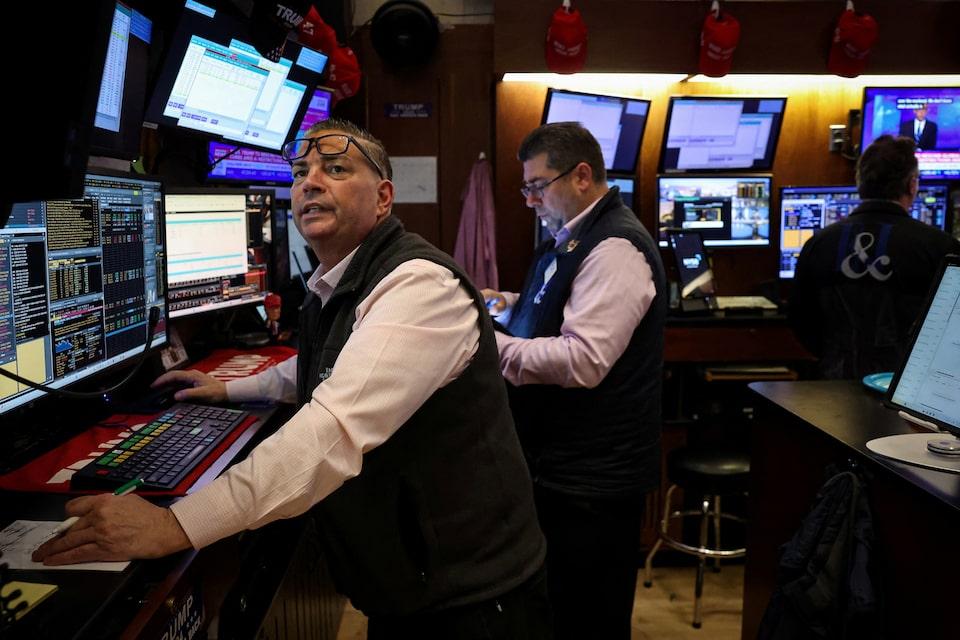
Fed officials: tariffs to boost inflation, slow growth this year Expedia falls after soft US travel demand leads to revenue miss Trump suggests 80% tariffs on Chinese goods, currently at 145% Indexes: Dow down 0.29%, S&P off 0.07%, Nasdaq flat NEW YORK, May 9 (Reuters) - U.S. stocks ended the week on a quiet note on Friday after oscillating between slight gains and declines, as investors gauged President Donald Trump's comments on Chinese tariffs ahead of weekend trade talks between the two countries. Wall Street's main indexes finished slightly lower for the week. Sign up here. Trump said Beijing should open its market to the U.S. and that setting 80% tariffs on Chinese goods "seems right." The comments marked his first specific suggestion in a change for the levies, currently at 145%. Representatives from the two economic powerhouses are to meet in Switzerland over the weekend to discuss tariffs. Investors hope it will mark a first step toward ratcheting down a trade war that has sparked concerns over global economic growth and resurgent inflation. "China is the main focus, and that is the one where the consequences are largest because of long-term trade practices that really need to be improved," said Russell Price, chief economist at Ameriprise in Troy, Michigan. "It could go either way, because at least they're in the same room together. So regardless of whether we see that as just to get to know you a little bit better or to make some progress on an actual deal remains to be seen, but it could go either way." While many saw the discussions this weekend as being of a more preliminary nature, Trump said on Thursday he expects substantive talks. The Dow Jones Industrial Average (.DJI) , opens new tab fell 119.07 points, or 0.29%, to 41,249.38, the S&P 500 (.SPX) , opens new tab lost 4.03 points, or 0.07%, to 5,659.91 and the Nasdaq Composite (.IXIC) , opens new tab gained 0.78 points, or flat, to 17,928.92. For the week, the S&P 500 fell 0.47%, the Nasdaq declined 0.27%, and the Dow fell 0.16%. Markets have been volatile since Trump first announced a slew of tariffs on countries around the globe on April 2, but stocks have rebounded to near levels seen just before the duties were announced, in part due to solid corporate earnings. Of the 450 S&P 500 companies that reported earnings through Friday morning, about 76% topped analyst expectations. But many have also cut or withdrawn their forecasts due to the uncertain trade environment. On Thursday, Wall Street's main indexes closed higher as investors cheered a trade deal struck between Britain and the U.S., the first of its kind since Trump announced a 90-day pause to his tariffs. However, a 10% baseline tariff on goods imported from the UK into the U.S. remained in place. Reuters reported India had offered to slash its tariff gap with the U.S. to less than 4% from nearly 13% now, in exchange for an exemption from Trump's tariffs, according to sources. Energy (.SPNY) , opens new tab climbed 1.1% and led gains among the 11 S&P 500 sectors as oil prices rose on optimism ahead of the talks while healthcare (.SPXHC) , opens new tab fell 1.1% as the worst performer on the session. Days after the Federal Reserve left interest rates unchanged, Fed policymakers on Friday pointed to increasing economic risks from Trump's tariffs, echoing comments from Chair Jerome Powell at the meeting earlier this week. Expedia (EXPE.O) , opens new tab slumped 7.3% after the online travel platform missed quarterly revenue estimates. Advancing issues outnumbered decliners by a 1.35-to-1 ratio on the NYSE while declining issues outnumbered advancers by a 1.06-to-1 ratio on the Nasdaq. The S&P 500 posted six new 52-week highs and three new lows while the Nasdaq Composite recorded 53 new highs and 97 new lows. Volume on U.S. exchanges was 16.03 billion shares, compared with the 16.47 billion average for the full session over the last 20 trading days. https://www.reuters.com/world/china/us-stock-index-futures-muted-after-rally-china-talks-awaited-2025-05-09/
2025-05-09 19:20
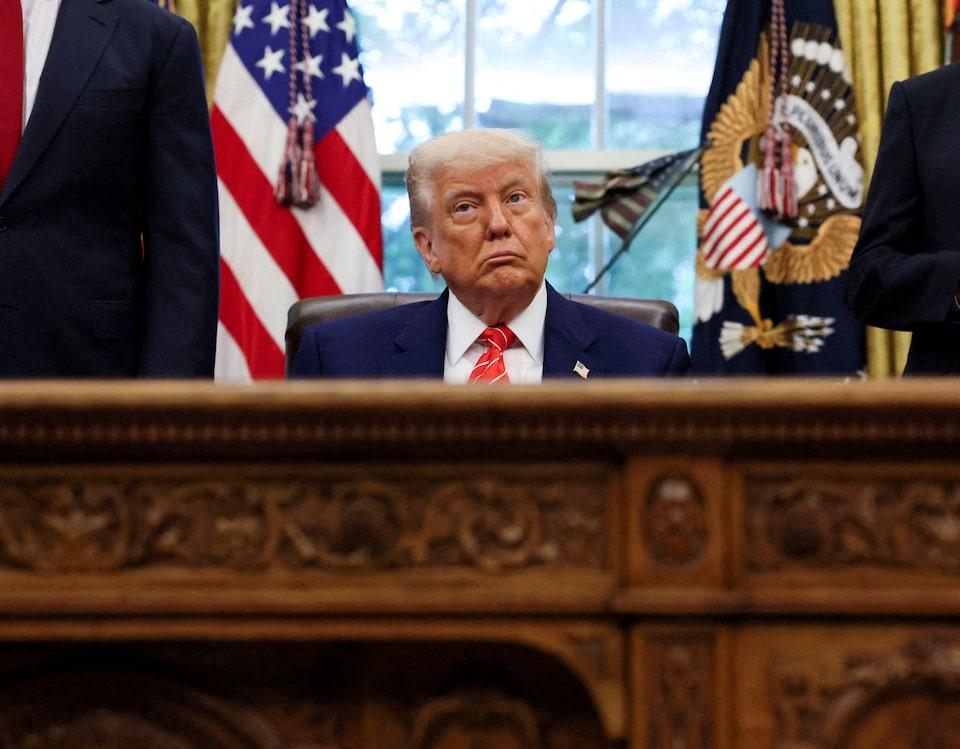
May 9 (Reuters) - U.S. President Donald Trump's administration is considering several executive orders to expedite the construction of nuclear power plants, the New York Times reported on Friday, citing drafts it has reviewed. Sign up here. https://www.reuters.com/business/energy/trump-administration-considers-orders-expediting-nuclear-plant-construction-nyt-2025-05-09/
2025-05-09 18:42
US CDS spreads rise on debt ceiling worries, policy uncertainty Size of the market, trading volumes have increased recently X-date seen at end of August, early September, Barclays says NEW YORK, May 9 (Reuters) - The cost of insuring exposure to U.S. government debt has climbed noticeably over the past month and remains stubbornly high, as jittery investors brace for a looming U.S. borrowing-limit political debate as well as overall policy uncertainty. Spreads on U.S. credit default swaps (CDS) - market-based gauges of the risk of a sovereign default - widened to their highest since the debt ceiling crisis of 2023 in recent weeks. The size of the market and trading volumes have also increased recently, Barclays said in a note this week, in a sign that a product generally considered to be niche is garnering more investor attention. Sign up here. While years ago buying protection for a U.S. default was an unpopular trade, things have changed recently because of policy uncertainty in Washington, said Greg Peters, co-chief investment officer of PGIM Fixed Income. "Now, with the debt ceiling and everything else going on, no one wants to be short that option," he said. U.S. sovereign CDS spreads have increased not just for short-dated maturities but across the curve, with one-year and five-year spreads at their highest since May 2023, when the U.S. was on the verge of a default because of political brinkmanship over the debt ceiling. On Friday, those spreads stood at 60 basis points and 56 basis points, respectively - a touch lower than in recent weeks but still significantly higher than in March, S&P Global Market Intelligence data showed. The rise in the protection costs has gained momentum after April 2, when U.S. President Donald Trump announced sweeping tariffs, which in the following days sparked a sharp selloff in the Treasury market, the bedrock of the global financial system. "What you've seen since April 2 is a real rise in that risk premium," said Peters. After days of heavy selling, Treasuries rallied after Trump announced a 90-day tariff pause for most U.S. trading partners, a move likely prompted by the tariff-fueled selloff. Benchmark 10-year yields were last at 4.36%, about 20 basis points lower than the high they touched on April 11, the day tariffs were paused. Still, another key measure of risk embedded in Treasury bonds, which captures the premium investors charge for policy uncertainty, has remained elevated in recent weeks, according to New York Fed data. The U.S. government reached its statutory borrowing limit in January and began employing "extraordinary measures" to keep it from breaching the cap and risking a potential default. Barclays analysts said in a note this week the so-called X-date, when the government will no longer be able to pay all its obligations, will likely fall in late August or early September, but that an economic slowdown could put pressure on the Treasury's cash position and pull that date forward. Treasury Secretary Scott Bessent said earlier this week that the department was "at the warning track" in terms of exhausting remaining borrowing capacity under the federal debt ceiling, but vowed that the government would not default on its obligations. Investors held about $3.9 billion worth of active credit insurance contracts on U.S. government debt as of May 2, Barclays said, citing data from the Depository Trust and Clearing Corporation, a financial market infrastructure company, up from $2.9 billion at the beginning of the year. Over the past three months, credit insurance on U.S. government debt has been the 12th most-traded single-name CDS contract globally, with weekly trading averaging over $625 million, said Barclays. https://www.reuters.com/business/finance/policy-uncertainty-fuels-rise-us-government-debt-hedging-2025-05-09/
2025-05-09 18:13
Total rig count falls six to 578, oil down five, gas steady Gulf of Mexico rig count drops to lowest since September 2021 Permian shale rig count hits lowest since December 2021 May 9 (Reuters) - U.S. energy firms this week cut the number of oil and natural gas rigs operating to their lowest since January, energy services firm Baker Hughes (BKR.O) , opens new tab said in its closely followed report on Friday. The oil and gas rig count, an early indicator of future output, fell by six to 578 in the week to May 9. , , Sign up here. Baker Hughes said this week's decline puts the total rig count down 25, or 4% below this time last year. Baker Hughes said oil rigs fell by five to 474 this week, their lowest since January, while gas rigs were unchanged at 101. In the Gulf of Mexico, drillers cut three rigs, bringing the total count down to nine, the lowest since September 2021. In the Denver-Julesburg (DJ)-Niobrara shale in Colorado and Wyoming, Nebraska and Kansas, drillers cut one rig, reducing the count to 5, the lowest since January 2021. In the Permian shale in West Texas and eastern New Mexico, the nation's biggest oil-producing shale basin, drillers cut two rigs, leaving 285 rigs, the lowest since December 2021. In New Mexico, drillers cut four rigs, bringing the total down to 96, the lowest since April 2022. The oil and gas rig count declined by about 5% in 2024 and 20% in 2023 as lower U.S. oil and gas prices over the past couple of years prompted energy firms to focus more on boosting shareholder returns and paying down debt rather than increasing output. Even though analysts forecast oil prices would decline for a third year in a row in 2025, the U.S. Energy Information Administration (EIA) this week projected crude output would rise from a record 13.2 million barrels per day (bpd) in 2024 to around 13.4 million bpd in 2025. That increase in production, however, was lower than the EIA's outlook in April due to lower oil price forecasts as U.S. tariffs increase the chances of weaker global economic growth and oil demand. On the gas side, the EIA projected an 88% increase in spot gas prices in 2025 would prompt producers to boost drilling activity this year after a 14% price drop in 2024 caused several energy firms to cut output for the first time since the COVID-19 pandemic reduced demand for the fuel in 2020. The EIA projected gas output would rise to 104.9 billion cubic feet per day (bcfd) in 2025, up from 103.2 bcfd in 2024 and a record 103.6 bcfd in 2023. Oil and gas drilling permit applications in Texas, the top U.S. oil-producing state, hit a four-year low in April amid concerns that rising OPEC+ supplies and a trade war will continue to hit crude prices, consultancy Enverus said on Thursday. Operators in Texas submitted 570 new drilling permit applications in April, down from 795 in March and the lowest number since February 2021, according to Enverus. Shale producer Diamondback (FANG.O) , opens new tab said on Monday it will drop three rigs in the second quarter, and could reduce activity further if oil prices fall more. Rival Coterra Energy (CTRA.N) , opens new tab is reducing its 2025 Permian activity by three rigs, while producer Matador Resources (MTDR.N) , opens new tab is dropping one drilling rig by the middle of 2025. https://www.reuters.com/business/energy/us-oil-gas-rig-count-falls-lowest-since-january-baker-hughes-says-2025-05-09/