2025-05-09 06:24
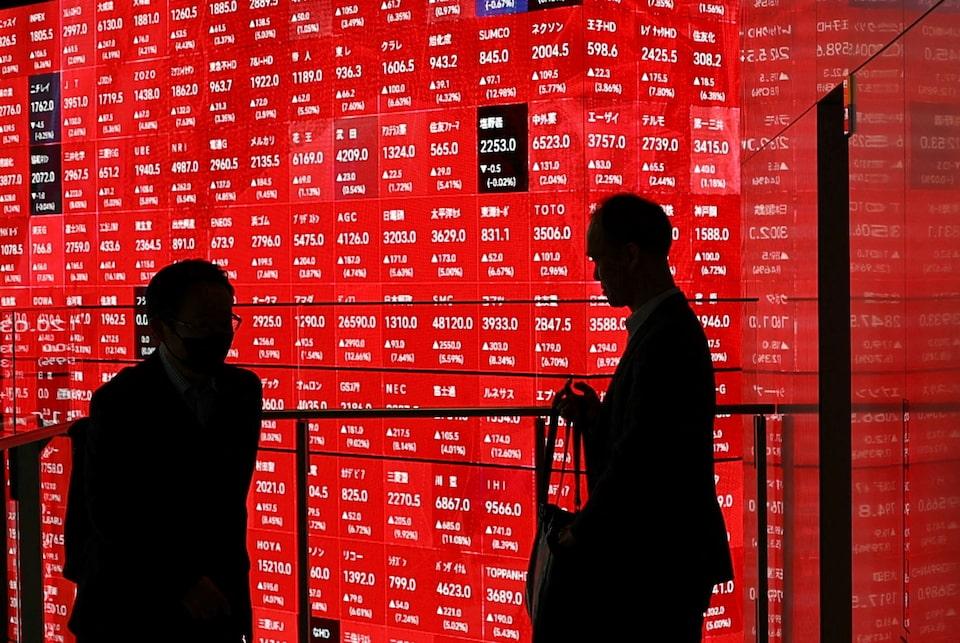
U.S. deal with UK is first since Trump's tariff pause U.S. officials to meet with Chinese negotiators on Saturday Bitcoin leaps to highest since January; gold falls for third day Chip shares rise in Japan, Taiwan; China stocks struggle TOKYO, May 9 (Reuters) - Stocks surged in Japan and Taiwan on Friday after a U.S. trade deal with Britain fuelled guarded optimism for progress in tariff talks with other countries. Bitcoin soared to the highest since January and U.S. crude ticked up after a more than 3% surge on Thursday, when President Donald Trump announced the agreement with British Prime Minister Keir Starmer - the first in the month since Trump started a 90-day pause on trade tariffs to allow room for negotiations. Sign up here. At the same time, concerns that the limited trade agreement with London may not provide much of a blueprint for additional deals cooled hopes around the outcome of Sino-U.S. trade talks set for Saturday in Switzerland. Mainland blue chips (.CSI300) , opens new tab eased 0.1%, while Hong Kong's Hang Seng (.HSI) , opens new tab rose 0.3% after struggling for direction during the session. Japan's Nikkei (.N225) , opens new tab soared 1.7% and Taiwan's equity benchmark (.TWII) , opens new tab advanced 1.8%, with technology shares the strongest performing sector. Australian stocks (.AXJO) , opens new tab rose 0.5% and Singapore's Straits Times Index (.STI) , opens new tab added 0.8%. MSCI's broadest index of Asia-Pacific shares outside Japan (.MIAPJ0000PUS) , opens new tab gained 0.4%. "The deal between the U.S. and UK was more style over substance," said Kyle Rodda, a senior financial markets analyst at Capital.com. "However, it feeds the narrative that the U.S. is looking to bang out rapid-fire trade deals and reduce tariffs - at the margins - and other trade barriers," Rodda said. "Constructive language and statements of intent will likely be enough to drive stocks higher off the back of the U.S.-China trade talks." Trump pushed back against seeing the UK deal as a template for other negotiations. The "general terms" agreement leaves in place a 10% tariff on goods imported from the UK but lowers prohibitive U.S. duties on UK car exports. Britain agreed to lower its tariffs to 1.8% from 5.1% and provide greater access to U.S. goods. Last week, Trump said he has "potential" trade deals with India, South Korea and Japan. NYMEX U.S. crude ticked up 0.3% to $60.25 per barrel on Friday, building on the previous day's 3.2% surge. Brent crude added 0.3% to $63.18 per barrel, following Thursday's 2.8% rally. The U.S. dollar index , which measures the currency against six major peers, edged to a one-month peak at 100.86. The euro sagged to a one-month trough at $1.1197, and sterling slipped to a three-week low of $1.3213. The yen dipped to a one-month low of 146.185 per dollar, after a 1.5% tumble on Thursday. Higher U.S. Treasury yields helped support the greenback, with the 10-year yield steady at 4.3667% following Thursday's 10-basis point jump as demand for the safety of bonds ebbed. Bitcoin was also buoyed by the improvement in market sentiment, rising to the highest since January 31 at $103,909.17, and closing the distance with the all-time high from January 20 at $109,071.86. Standard Chartered's Geoffrey Kendrick no longer sees risk sentiment as the main driver for the world's biggest cryptocurrency. "It is now all about flows, and flows are coming in many forms," said Kendrick, the bank's global head of digital assets research, pointing to an influx of cash into bitcoin ETFs, as well as buying by so-called whales. "I think a fresh all-time high for bitcoin is coming soon," he said. "I apologise that my $120,000 Q2 target may be too low." https://www.reuters.com/markets/global-markets-wrapup-1-2025-05-09/
2025-05-09 06:19
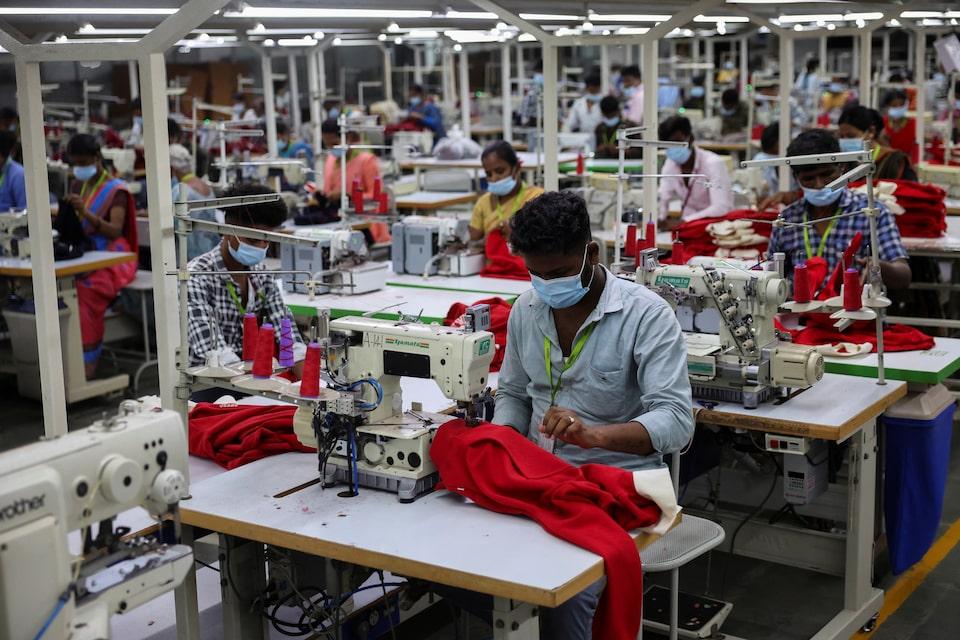
American retailers ramp up queries to India apparel hub Heftier US tariffs on China, Bangladesh make India competitive India's Tiruppur textile hub faces worker shortage, higher costs Bangladesh still has advantage on labour rates, larger factories TIRUPPUR, India/DHAKA, Bangladesh, May 9 (Reuters) - In a garment hub in south India, R.K. Sivasubramaniam is fielding requests from Walmart and Costco who want to sidestep higher U.S. tariffs faced by rival Asian suppliers, Bangladesh and China. But rows of idle sewing lines at his factory lay bare his biggest challenge. "Even if orders come, we need labour. We don't have sufficient labour," said the managing director of Raft Garments which supplies underwear and t-shirts priced as low as $1 to U.S. brands. Sign up here. Considered India's knitwear capital, Tiruppur city in the southern state of Tamil Nadu accounts for nearly one-third of the country's $16 billion in apparel exports, and is staring at a huge opportunity as U.S. buyers explore ramping up sourcing from India in the face of heftier tariffs on other Asian hubs. U.S. President Donald Trump plans to hit India, the world's sixth largest textile and apparel exporter, with a 26% tariff from July, below the 37% imposed on Bangladesh, 46% on Vietnam and 145% on China - all of which are bigger American suppliers. Those tariffs will make apparel from India much more competitive with both Bangladesh and China. But the mood is somber at the Tiruppur textile park as it faces a reality check: India's hopes of capitalising on its tariff advantage are hindered by a skilled labour crunch, limited economies of scale, and high costs. Raft Garments wants to expand production to tackle new orders but is importing high-end machines to automate some stitching processes, given the business for now heavily depends on migrant labour, which is very tough to find or retain. Garment exporters in India say workers have to be trained and many leave within months to work at smaller, unorganised units that allow longer hours and pay more. The larger manufacturers can't match them due to foreign clients' requirements on cost and workers' conditions, according to Reuters interviews with 10 manufacturers and apparel exporter trade groups representing 9,000 businesses. Prime Minister Narendra Modi has for years courted foreign investors to his "Make in India" programme to turn the South Asian nation into a global manufacturing hub. A shortage of skilled workers in a nation where 90% of the labour force operates in the informal sector is seen as a big roadblock, especially in labour-intensive sectors like garments. Tiruppur offers a glimpse of India's labour strain. "We need at least 100,000 workers," said Kumar Duraiswamy of the exporters association in Tiruppur, where he said more than 1 million people currently work. Modi's government last year said it was extending a programme to specifically train 300,000 people in textile-related skills, including garment making. In the textile hub, some have taken matters into their own hands. Amid a hum of sewing machines at the Cotton Blossom factory, which makes 1.2 million garments a month, including for American sporting goods retailer Bass Pro Shops, Naveen Micheal John said he has set up three centres thousands of miles away to train and source migrant workers. And even then, most return to their home towns after a few months. "We skill them there for three months, then they are here for seven months. Then they return back," John said during a tour of his garment unit, adding he wants to look at other states where labour and government incentives both may be better. CAPACITY WOES China's $16.5 billion worth of apparel exports, Vietnam's $14.9 billion and Bangladesh's $7.3 billion made them the three biggest suppliers to America in 2024, when India shipped goods worth $4.7 billion, according to U.S. government data. U.S. companies have for years been diversifying their supply chains beyond China amid geopolitical tensions. And even before the news of tariffs in April, now paused until July, Bangladesh's garment industry began losing its sheen amid political turmoil there. A survey of 30 leading U.S. apparel brands by the United States Fashion Industry Association showed India had emerged as the most popular sourcing hub in 2024, with nearly 60% of respondents planning to expand sourcing from there. With the tariffs, India's exports would cost $4.31 per square metre of apparel, compared with $4.24 for Bangladesh and $4.35 for China, a sharp improvement on India's competitiveness without the levies, according to Reuters calculations based on 2024 import data from the U.S. Office of Textiles and Apparel. But it's in the economies of scale where India loses. Bangladesh Garment Manufacturers and Exporters Association says an average garment factory there has at least 1,200 workers, whereas in India, according to its Apparel Export Promotion Council, there are only 600 to 800. "Bangladesh capacities are huge ... We have issues of capacity constraint, lack of economy of scale due to smaller size of factories, labour unavailability during peak seasons," said Mithileshwar Thakur of the Indian trade group. To address those challenges, garment makers have started to set up factories in states where migrant workers come from, he said. In Tiruppur, its exports association says the largest 100 exporters contributed 50% of its $5 billion sales last fiscal year, with the rest from 2,400 units, a telling sign of the fragmented and largely smaller-scale operations. Raft makes 12 million garment pieces a year with a workforce of just 250 people. A U.S. client is close to placing an order for 3 million units, which will stretch the factory to its limit and force it to consider expansion. "This one order is more than enough for us," said Sivasubramaniam. PRICING ROADBLOCK Data from shipping consultants Ocean Audit showed Walmart (WMT.N) , opens new tab imported 1,100 containers of household goods and clothing between April 2 and May 4 from India, nearly double the same period last year, including cotton shirts and pleated maxi skirts. In a statement, Walmart said it sources from more than 70 countries around the world as it aims to find the right mix of suppliers and products. While U.S. retailers are lodging more queries in Tiruppur, pricing negotiations remain contentious due to higher labour and other costs. Indian brokerage Avendus Spark said in March Bangladesh's cost of labour stood at $139 per month, compared to India's $180 and China's $514. P. Senthilkumar, a senior partner at India's Vector Consulting Group, said India had stricter rules for overtime policies and worker shifts, further raising costs. In Dhaka, Anwar-ul-Alam Chowdhury of Evince Group said most of their U.S. buyers were sticking with Bangladesh, given the "large production capacity, lower costs, and reliable quality give us a clear edge." In India, though, Tiruppur exporters said they are in hectic talks with many U.S. clients who love the Bangladesh cost advantage and are aggressively bargaining. At Walmart-supplier Balu Exports, Mahesh Kumar Jegadeesan said U.S. clients had conveyed "we will not budge on the price" and were willing to move some orders only if Indian exporters can match prices. Inside the nearby Raft Garments factory, where women were stitching underwear, the smile on managing director Sivasubramaniam's face sparked by 14 new business inquiries of recent weeks faded quickly. "All want us to match Bangladesh prices. Price is a big problem," he said. https://www.reuters.com/world/china/walmart-calls-indias-garment-worker-woes-blunt-tariff-edge-2025-05-09/
2025-05-09 06:08
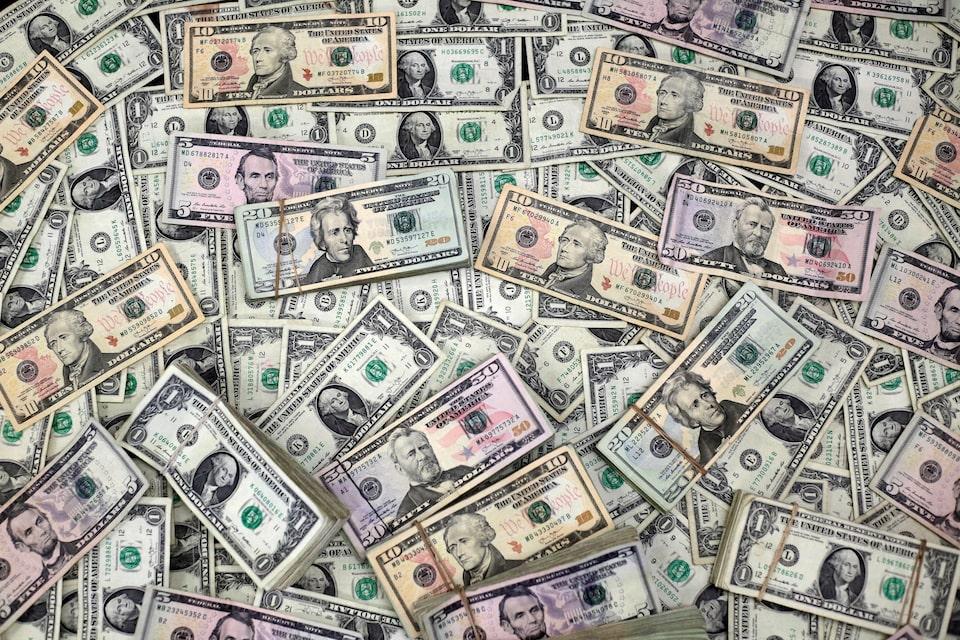
Dollar gains on trade deal prospects Dollar set to notch weekly gain against yen and Swiss franc Markets focused on US-China talks in Geneva NEW YORK, May 9 (Reuters) - The dollar was on track for a weekly gain against major currencies, including the Swiss franc, yen and euro on Friday, after a U.S.-UK trade deal increased optimism about upcoming U.S.-China talks. Financial markets headed into the weekend with the focus squarely on trade negotiations between Washington and Beijing due to begin on Saturday in Switzerland. Sign up here. President Donald Trump announced on Thursday a U.S.-UK trade deal that left in place a 10% baseline tariff on British goods, but lowered prohibitive duties on vehicle imports. "There's strong optimism across the market of progress in U.S.-China trade talks in particular and more broadly more trade deals," said Matthew Weller, head of market research at StoneX. "It does seem like the Trump administration is perhaps extending a series of olive branches to different countries and perhaps the worst of the trade wars and tariffs is ... behind us. That's what the market is starting to price in." The U.S. dollar is on track for the fourth straight week of gains against the Swiss franc. But it was down 0.01% to 0.83150 franc on the session. The euro was set for the third straight week of losses against the dollar. It was, however, last up 0.17% on the day at $1.125025. The U.S. currency was on track for a third consecutive week of gains against the Japanese yen although it was down 0.39% to 145.355 yen on the session. Sterling was trading higher and was set for a weekly gain after losing ground on Thursday following the announcement of the U.S.-UK trade deal. It strengthened 0.50% to $1.3306. "The trade war has progressed to the point where policymakers seem eager to show some payoff," Goldman Sachs analysts led by Kamakshya Trivedi wrote in an investor note. "Even though there are reasons to be skeptical ... it will be hard to ignore the policy intent of setting a more positive tone." Central bank decisions this week diverged: The Federal Reserve left rates unchanged while the Bank of England cut rates. The central banks of Sweden and Norway held them steady. In contrast with other G10 currencies, the dollar was lower against several Asian currencies this week after a shock surge in the Taiwan dollar . After a volatile few days, it has settled around 30 to the dollar, more than 6% stronger than at the end of April. The dollar weakened 0.02% to 7.241 versus the offshore Chinese yuan but was set for a weekly gain. The Korean won strengthened 0.12% against the dollar to 1,395.86 per dollar, also on track to finish the week higher. Bitcoin climbed back above $100,000, reflecting a refreshed appetite for risk-taking in markets' more speculative corners. It gained 0.38% to $103,023.28. https://www.reuters.com/world/china/dollar-eyes-weekly-rise-into-us-china-trade-talks-2025-05-09/
2025-05-09 06:05
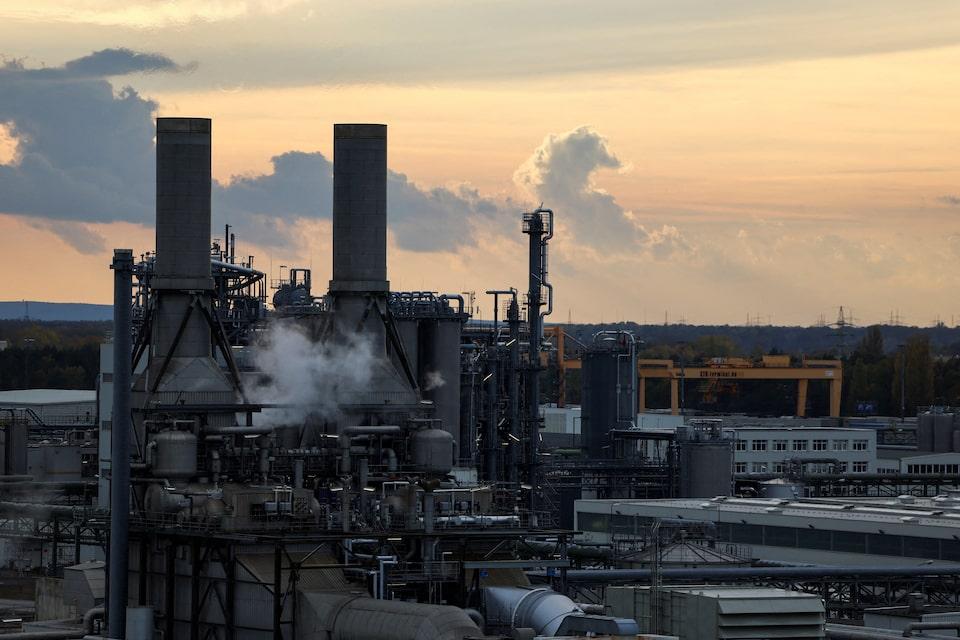
May 9 (Reuters) - BASF's (BASFn.DE) , opens new tab agriculture unit is aiming to expand in Asia and global seed markets as it prepares for a stock market listing in about two years, a senior executive told Reuters. The German industrial chemicals giant has said that its Agricultural Solutions unit should be ready by 2027 for an initial public offering that could see BASF sell a minority stake in the maker of pesticides and seeds. Sign up here. "We aim to further increase our share of revenue from seeds. We are at close to 22% and we want to move more towards 25%," Livio Tedeschi, the division's president, told Reuters. Among new products underpinning that ambition, BASF is working on hybrid wheat, an approach that has for years been pursued by the industry to boost wheat yields, and new soy variants that resist pests such as soil roundworms. Tedeschi said this was a high strategic priority and it could be supported by collaboration deals and small acquisitions. A particular geographic focus across products including crop chemicals and digital services was Asia, he added. "When measured by market share, we are under-represented in Asia. We want to increase our market share," said Tedeschi. BASF's agriculture business, among the four largest industry players alongside Syngenta, Bayer (BAYGn.DE) , opens new tab and Corteva (CTVA.N) , opens new tab, posted global 2024 sales of 9.8 billion euros ($11.1 billion), with Asia accounting for 11.6% of that. From North America, Europe and South America it derived 39.8%, 24.6% and 24% of sales, respectively. Parent BASF last week said it was facing high levels of uncertainty from U.S. tariffs and other countries' reactions to them, but reaffirmed its earnings guidance for lack of clearer economic indicators. Tedeschi added that BASF's decision to separate the agriculture unit from the rest of the business gave the unit more autonomy and would allow it to sustain research and development spending at 9%-10% of sales. ($1 = 0.8836 euros) https://www.reuters.com/business/basfs-agriculture-arm-eyes-seeds-asia-it-prepares-listing-2025-05-09/
2025-05-09 06:02
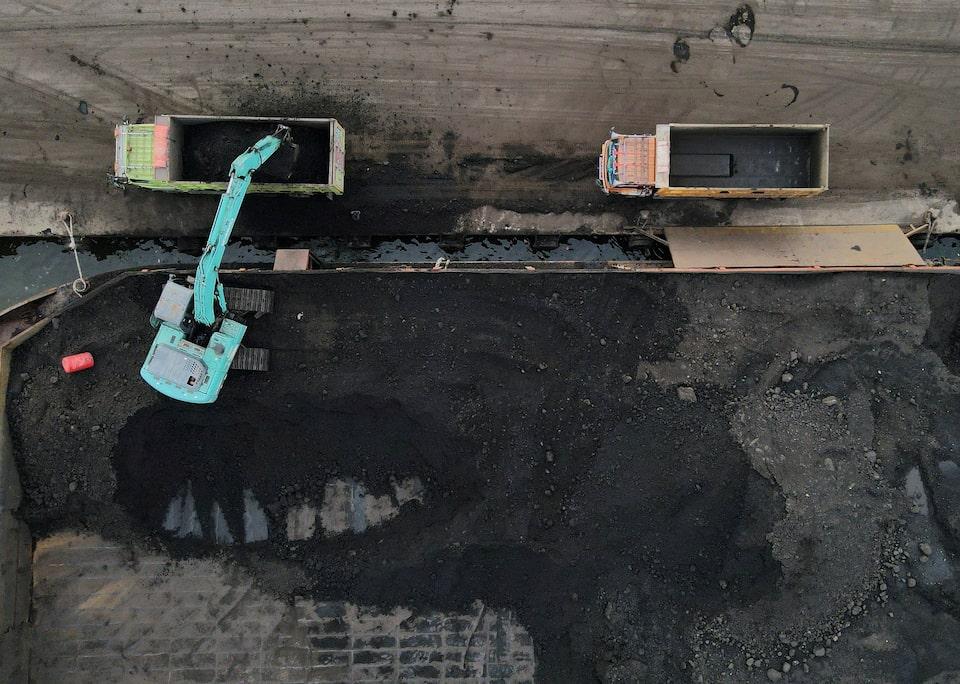
LITTLETON, Colorado, May 9 (Reuters) - Indonesia's exports of thermal coal have dropped to their lowest in three years so far in 2025, dented by weak demand in China and India - the world's two largest coal consumers. The world's largest exporter of coal for power generation shipped out 150 million tons of thermal coal over the first four months of 2025, according to data from commodities intelligence firm Kpler. Sign up here. That was 12%, or nearly 20 million tons, less than what was shipped during the same months in 2024, and marked the biggest year-on-year decline in data going back to the start of 2017. As Indonesia accounts for roughly half of all thermal coal exports, the lower Indonesian shipments have dragged global thermal coal exports lower too, by 7%, or 23 million tons, from January through April compared with the same months a year ago. If the relatively weak pace of coal exports is sustained over the rest of the year, 2025 could mark the first annual decline in Indonesian coal exports since 2020, when the country's coal output and shipments were stalled by COVID-19. KEY MARKET CUTS Weaker coal import demand from China and India were the main drags on Indonesia's coal exports. China - by far the world's largest coal producer, consumer and importer - cut its purchases from Indonesia by 14 million tons, or 20%, during January to April from the same period last year. Beijing's greater emphasis on boosting local coal mine output, alongside ongoing efforts to reduce air pollution, have been the key drivers behind China's reduced import appetite. World No.2 coal consumer India is also on a domestic coal output push, and reduced imports of Indonesian coal by 15%, or by 6 million tons, during January to April from the same months in 2024. BROADER COAL USE SLOWDOWN? Beyond China and India, other historically large coal importers have also reduced Indonesian coal imports this year. Japan and South Korea imported a total of 13 million tons of coal from Indonesia during January to April, compared to 17 million tons during the same months in 2024. Taiwan, Thailand, the Philippines, Malaysia and Pakistan all also registered declines in year-to-date coal imports from Indonesia. Ongoing efforts to reduce coal use in power production, and the increased generation from clean energy sources instead, has likely helped trim coal demand across Asia so far this year, and could trigger further declines in coal purchases going forward. Over the first quarter of 2025, coal-fired electricity production across Asia was down 3% from the same months in 2024, data from think tank Ember shows. However, the weak state of China's industrial economy - which has direct links to trade partners across the region - has also likely played a role in curbing Asia's overall coal use. Weaker Chinese activity throughout its construction sector and heavy industries will have had knock-on effects along its supply chains, which span borders and will have chilled energy-intensive activity in neighbouring nations as well. And with most of Asia's manufacturing sector now set to take a hit from the new higher trade tariffs set by U.S. President Donald Trump, overall industrial activity - and demand for coal power - could decline further in the months ahead. That said, if Asian economies opt to deploy stimulus measures designed to counter the impact of U.S. trade barriers, then greater industrial energy use could result, which could spark a rebound in coal imports and consumption. OUTLIERS Not all major coal users have curbed coal consumption and imports so far this year. Vietnam and Bangladesh both lifted Indonesian coal imports to record highs during January to April, and look set to continue boosting coal use and imports going forward to feed their fast-growing energy systems. Other, more developed economies have also stepped up coal imports, in part due to a sharp run-up this year in the price of natural gas, which is another major source of power production in many areas. Spain, Italy, Romania and New Zealand all registered year-over-year rises in imports of Indonesian coal, and higher coal-fired power output. Even the United States has boosted coal-fired electricity output this year by over 20% from year-before levels, Ember data shows. That offers little help to Indonesian coal exporters, however, as the U.S. is a fellow coal exporter. And with China and India both likely to remain only modest coal importers over the coming months, the recent weak pace of Indonesia's coal shipments looks set to be maintained for the near term at least. That in turn raises the prospect of a rare full-year contraction in Indonesia's coal shipments, and a possible peak in global coal export flows. https://www.reuters.com/markets/commodities/indonesia-coal-exports-post-rare-decline-so-far-2025-maguire-2025-05-09/
2025-05-09 05:49
SMIC revenue rises 28% in Q1, misses expectations SMIC says impact on chip sector mitigated by tariff exemptions Company says "hard landing" could still be in store for industry Shares slide 6.8% BEIJING, May 9 (Reuters) - China's top foundry, Semiconductor Manufacturing International Corp (SMIC) (0981.HK) , opens new tab, said first-quarter revenue surged and profit more than doubled, helped in part by rush orders from U.S. customers seeking to beat hikes in tariffs. But the results fell short of analysts' expectations and SMIC predicted a drop in revenue for the current quarter, saying the company could have lower production yields due to the testing of newly installed equipment. Its Hong Kong-listed shares tumbled 6.8%. Sign up here. Chinese authorities have been in close communication with the country's chip sector to mitigate the impact of escalating trade tensions between the U.S. and China, including granting tariff exemptions, co-CEO Zhao Haijun told an earnings call. "The direct impact on China's foundry sector at the moment is minor due to tariff exemptions and a diversified supply chain," he said. But Zhao added that the second half remained unclear and SMIC was watching to see if customers reduce their purchases due to price increases caused by tariffs, which could result in a "hard landing" for the industry. SMIC's profit attributable to shareholders jumped 162% to $188 million in the January-March quarter from a year earlier, but fell short of an LSEG consensus estimate of $222.4 million. Revenue climbed 28%. U.S. clients accounted for 12.6% of its first-quarter revenue, compared with 8.9% in the previous quarter and 14.9% in the same period a year ago SMIC predicted revenue could decline by as much as 6% in the second quarter from the January-March quarter. The foundry focuses on chips for consumer electronics and home appliances. Advanced chips such as those found in Huawei's (HWT.UL) smartphones represent a very small portion of its sales. SMIC has never confirmed that it produces Huawei chips. U.S. President Donald Trump's administration in April granted exclusions from steep reciprocal tariffs on smartphones, computers and memory chips imported from China. Prior duties on Chinese imports, however, remain in place. Chinese authorities have also granted exemptions on some products, including semiconductors. https://www.reuters.com/world/china/smic-closely-monitor-impact-tariffs-demand-says-co-ceo-2025-05-09/