2026-01-19 00:16
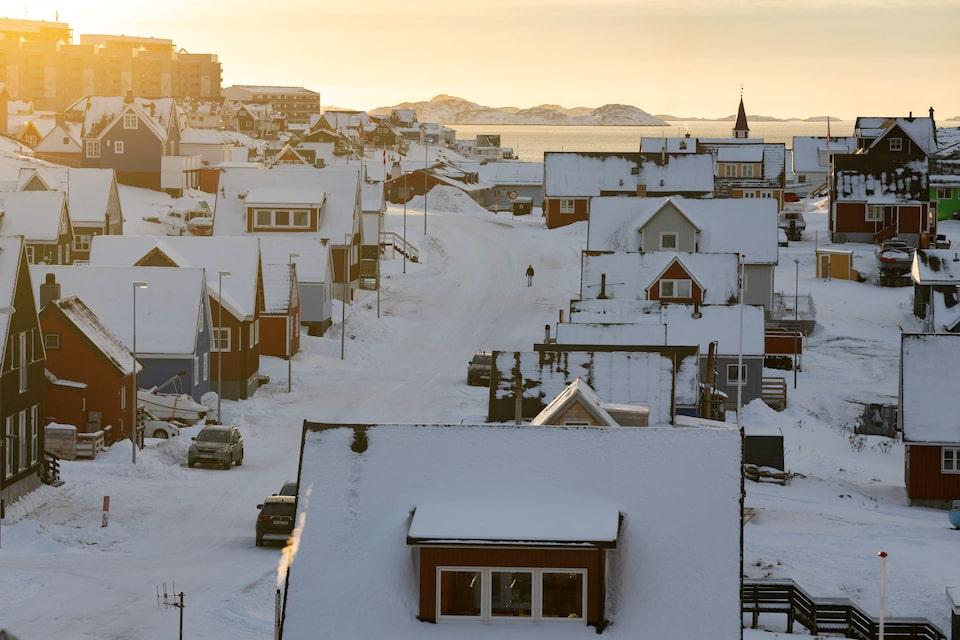
LONDON, Jan 19 (Reuters) - Britain's government must stop flip-flopping on key policies and be bold on trade, house-building and employment reforms if it wants to build on some nascent signs of improvement in the economy, a leading think tank said on Monday. In the 18 months since Prime Minister Keir Starmer's emphatic election victory, the government's record has been mostly one of U-turns, kite-flying on tax ideas and timidity, the Resolution Foundation said in a report. Sign up here. "With signs that productivity may be turning a corner, the government must capitalise by ramping up its plans," Greg Thwaites, research director at the Resolution Foundation, said. Starmer and finance minister Rachel Reeves have promised voters they will speed up the economy but so far there has been no significant change in pace and planned reforms in areas such as welfare and tax have been dropped or watered down. The Resolution Foundation said planning changes to help cities hit housing targets, deeper regulation alignment with the European Union and getting more young and old people into work could boost household incomes by 2,000 pounds ($2,680) a year. That kind of growth would also generate enough tax revenue, to increase spending on the public health service by a quarter. Britain's economy has stagnated for much of the almost two decades since the global financial crisis and GDP per person has fallen further behind that of other big European countries since the pandemic, the think tank said. The shocks from COVID, high energy prices and the impact of Brexit led to a drop in productivity growth. The report said there was growing evidence that the hit to the economy from Brexit could already be close to double the 4% impact assumed by Britain's official budget forecasters. But productivity leapt by 3.1% over the year to the end of the third quarter in 2025, adjusting for past under-recording of employment in official data by using payroll figures, it said. ($1 = 0.7463 pounds) https://www.reuters.com/world/uk/uk-must-be-bold-reforms-after-policy-u-turns-think-tank-says-2026-01-19/
2026-01-19 00:14
Jan 19 (Reuters) - Billionaire wealth surged at three times its recent pace last year to reach its highest level on record, deepening economic and political divides that threaten democratic stability, anti-poverty group Oxfam said on Monday. In a report timed for the opening of the World Economic Forum in Davos, the charity said the fortunes of global billionaires jumped 16% in 2025 to $18.3 trillion, extending an 81% rise since 2020. Sign up here. The gains happened even as one in four people worldwide struggle to eat regularly and nearly half the global population live in poverty. Oxfam’s study, which draws on academic research and data sources ranging from the World Inequality Database to Forbes' rich list, argues that the wealth boom is being matched by a dramatic concentration of political clout, with billionaires 4,000 times more likely than ordinary citizens to hold political office. The group links the latest wealth surge to policies under U.S. President Donald Trump, whose second administration has cut taxes, shielded multinational corporations from international pressure and eased scrutiny of monopolies. Soaring valuations of artificial intelligence companies have added further windfall gains for already wealthy investors. "The widening gap between the rich and the rest is at the same time creating a political deficit that is highly dangerous and unsustainable," Oxfam's executive director Amitabh Behar said. Oxfam urged governments to adopt national inequality reduction plans, impose higher taxes on extreme wealth and strengthen firewalls between money and politics, including curbs on lobbying and campaign financing. Wealth taxes are levied in just a few countries such as Norway at present but others, from Britain to France and Italy, have debated similar moves. The Nairobi-based charity calculates that the $2.5 trillion added to billionaires' fortunes last year is roughly equal to the stock of wealth held by the poorest 4.1 billion people. The world’s billionaire population surpassed 3,000 for the first time last year, with Tesla and SpaceX chief Elon Musk becoming the first individual to exceed $500 billion in net worth. Behar warned that governments are "making wrong choices to pander to the elite," pointing to aid cuts and the rollback of civil liberties. The report highlights what it calls the expanding grip of ultra‑wealthy business figures over traditional and digital media. Billionaires now own more than half of the world’s major media firms, Oxfam said, citing holdings by Jeff Bezos, Elon Musk, Patrick Soon‑Shiong and France's Vincent Bolloré. https://www.reuters.com/business/davos/billionaires-wealth-hits-new-peak-their-clout-grows-oxfam-says-2026-01-19/

2026-01-19 00:14
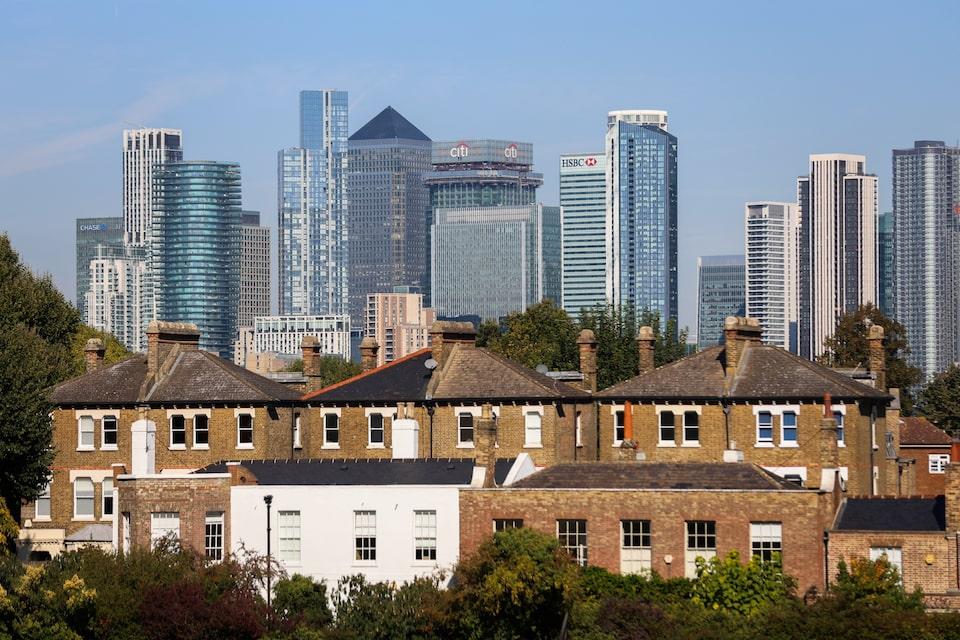
LONDON, Jan 19 (Reuters) - Asking prices for British homes rose by the most on record for the Christmas and New Year period after a fall linked to uncertainty around finance minister Rachel Reeves' budget, property website Rightmove said on Monday. The rise in Rightmove's house price gauge comes after the Royal Institution of Chartered Surveyors said last week that there were signs of improving expectations for the market following Reeves' November 26 tax and spending statement. Sign up here. "It's an encouraging start to the year to see sellers confident enough to list their homes at higher prices after several months of muted price growth," Colleen Babcock, property expert at Rightmove, said. "However, asking prices are only back to where they were in the summer of 2025 before the budget rumours began surfacing, which unsettled the market and dented confidence." Reeves announced 26 billion pounds ($35 billion) of tax increases but delayed the introduction of most of them and did not raise income tax rates as had been expected at one point. Rightmove said: ($1 = 0.7477 pounds) https://www.reuters.com/world/uk/uk-homes-asking-prices-show-record-rise-time-year-rightmove-says-2026-01-19/
2026-01-18 23:45
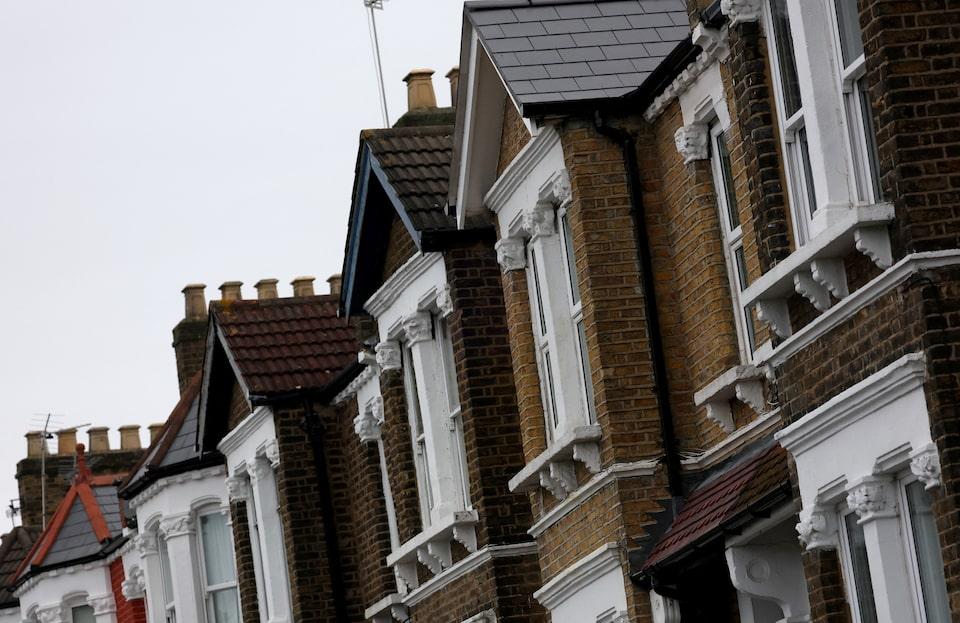
S&P 500 futures, STOXX 600 fall, Nikkei leads Asia lower Chinese economy grows 4.5%, retail soft but industry solid Dollar slips on yen and Swiss franc, as euro edges up Japan's PM calls snap general election LONDON, Jan 19 (Reuters) - Global stocks dropped and the dollar eased against the safe-haven yen and Swiss franc on Monday after U.S. President Donald Trump threatened additional tariffs on goods imported from European nations that oppose his planned takeover of Greenland. Gold and silver prices jumped to new record peaks, while oil dipped on concerns about what a possible trade war between the U.S. and Europe could mean for global growth and demand. Sign up here. U.S. cash equity markets are closed on Monday for Martin Luther King Jr. Day, although S&P 500 and Nasdaq futures both dropped over 1.2%. In Europe, the STOXX 600 index (.STOXX) , opens new tab fell 1.2%. Blue-chip indexes in Frankfurt (.GDAXI) , opens new tab, Paris (.FCHI) , opens new tab and London (.FTSE) , opens new tab were down 0.4% to 1.7%. Japan's Nikkei (.N225) , opens new tab fell 0.7%, and MSCI's broadest index of Asia-Pacific shares outside Japan (.MIAPJ0000PUS) , opens new tab was little changed. Trump said he would impose additional 10% levies from February 1 on goods imported from Denmark, Norway, Sweden, France, Germany, the Netherlands, Finland and Britain, rising to 25% on June 1 if no deal on Greenland was reached. Major European Union states condemned the tariff threats as blackmail, and France proposed responding with a range of previously untested economic countermeasures. The EU and Britain had agreed trade deals with the U.S. last year. "There is obviously a response (in financial markets) to the new tariff threats," said George Lagarias, chief economist at Forvis Mazars. "It's highly likely that the White House will use the threat of tariffs consistently, even when deals have previously been agreed." The EU's retaliation options include a package of its own tariffs on 93 billion euros ($108 billion) of goods imported from the U.S. that was suspended for six months in early August, and measures under an Anti-Coercion Instrument that could hit U.S. services trade or investments. The tariff threats should also make for a fraught few days at Davos as leaders from around the world gather in Switzerland at the World Economic Forum, including a large U.S. group led by Trump. DOLLAR NOT SUCH A SAFE-HAVEN In currency markets, the euro recovered from a seven-week low, rising 0.4% to $1.1641 . "The market reaction that we have seen so far is more on the back of the geopolitical risk than the tariff threat," said Tommy von Brömsen, FX strategist at Handelsbanken. "Typically you see dollar strength in the wake of increased geopolitical risk but now we see dollar weakness as it is originating from the U.S.," von Brömsen said, adding that the uncertainty could cause investors to diversify away from U.S. assets. Sterling clawed its way back up to $1.3422 after initially dipping in Asian trade, while safe-haven currencies also rose. The dollar eased 0.7% to 0.7965 Swiss francs , and 0.2% to 157.88 yen . Investors largely shrugged off an announcement from Japanese Prime Minister Sanae Takaichi to dissolve parliament on Friday ahead of a snap general election to be held on February 8, as she looks to shore up her coalition's fragile majority. "The Bank of Japan's response will be critical, given PM Takaichi's expressed preference for cooperation and softened central bank independence," said Scotiabank chief FX strategist Shaun Osborne. The BoJ meets on Friday and is widely expected to maintain its policy rate at 0.75% after a rate hike in December. The dollar index , which measures the currency against six peers, was lower on Monday. The cash U.S. Treasury market was shut, but 30-year bond futures fell 19 ticks. Gold again proved to be a safe harbour, rising as high as $4,689 an ounce , while silver climbed to $94.08. CHINA GROWTH SLOWS China's blue chips (.CSI300) , opens new tab were little changed after data showed annual economic growth slowed to 4.5% in the December quarter, though that still topped forecasts. Industrial output also beat market expectations thanks to strength in exports, but disappointing retail sales underlined weak domestic demand. Oil prices were little changed as civil unrest in Iran subsided, with the market also tracking the demand picture should the trade war over Greenland escalate. Brent was down just 0.1% at $64.04 a barrel, while U.S. crude was flat at $59.41. ($1 = 0.8611 euros) https://www.reuters.com/world/china/global-markets-global-markets-2026-01-18/
2026-01-18 20:54
Cause of crash not yet known, transport minister says Of 75 people hospitalised, 15 in serious condition, official says Video shows rescuers pulling passengers from twisted carriages Train to Huelva was travelling at around 200 km/h, El Pais reports ADAMUZ, Spain, Jan 19 (Reuters) - A high-speed train derailed and smashed into another oncoming train in southern Spain on Sunday, pushing the second train off the tracks and down an embankment in a collision that killed at least 21 people, said Spain's interior ministry. The accident happened near Adamuz in the province of Cordoba, about 360 km (223 miles) south of the capital Madrid. Sign up here. Of the 75 people hospitalised, 15 are in serious condition, the chief of Andalucia's regional government, Juanma Moreno, told reporters early on Monday. He said the death toll would likely be more than 20 and warned the number may rise by daylight. "The forcefulness of the accident has been very strong ... we will likely find (more) corpses," Moreno said, adding that heavy machinery would be needed to remove the trains' wrecked metal pieces and try to locate any new victims. Video from the scene shared on social media showed rescuers pulling passengers from twisted carriages lying on their side under the glare of floodlights. Some passengers climbed out of smashed windows, while others were wheeled away on stretchers. El Pais newspaper reported that the 27-year-old driver of the Madrid-to-Huelva train, the one that was struck, was among the dead. There were around 400 passengers on the two trains, most of them Spaniards travelling back to and from Madrid after the weekend. It was unclear how many tourists could be onboard as January is not holiday season in Spain. "There are many injured. I am still trembling," Maria San José, 33, a passenger on the Malaga-to-Madrid high-speed train that first derailed, told El Pais. A passenger on the second train, who was not identified, told public broadcaster TVE: "There were people screaming, their bags fell from the shelves. I was travelling to Huelva in the fourth carriage, the last, luckily." The second train, heading to Huelva and operated by state-funded Renfe, was travelling at around 200 km per hour (124 miles/hour) at the moment of impact, reported El Pais. It was unclear how fast the first train was travelling when it derailed. The cause for the crash is not yet known, Spanish Transport Minister Oscar Puente told reporters at a press conference at Atocha station in Madrid, adding it was "really strange" that a derailment should have happened on a straight stretch of track. This section of track was renewed in May, he added. "Tonight is a night of deep pain for our country," Spanish Prime Minister Pedro Sanchez said on X. Spain's King and Queen were following the developments with concern, a spokesperson said. 'STILL PEOPLE TRAPPED' The accident happened at 7.45 p.m. (1845 GMT), about 10 minutes after the Iryo train left Cordoba heading towards Madrid, authorities said. "The Iryo 6189 Malaga - (to Madrid) train has derailed from the track at Adamuz, crashing onto the adjacent track. The (Madrid) to Huelva train which was travelling on the adjacent track has also derailed," Adif, which runs the rail network, said in a social media post. Puente said most of those killed and injured had been in the first two carriages of the second train, the Renfe Alvia that derailed on impact and plunged down the side of the railway embankment. The first carriage had 37 people on board and the second, 16, he said. An Iryo-operated train travelling from Malaga to Madrid derailed, smashing into the Renfe train travelling from Madrid to Huelva, sending it careering down a railway embankment. The Iryo train had more than 300 passengers on board, while the Renfe train had around 100. Paco Carmona, Cordoba fire chief, told TVE that while the Iryo had been evacuated within hours of the accident, the Renfe carriages were badly damaged, with twisted metal and seats. "There are still people trapped. The operation is concentrating on getting people out of areas which are very narrow," he said. "We have to remove the bodies to reach anyone who is still alive. It is proving to be a complicated task." HORRIFIC SCENE Adamuz Mayor Rafael Moreno told El Pais that he was among the first to reach the crash site alongside the local police and saw what he believed to be a badly lacerated body several metres from the accident site. "The scene is horrific," he said. "I don't think they were on the same track, but it's not clear. Now the mayors and residents of the area are focused on helping the passengers." Local television images showed a reception centre set up for passengers in Adamuz, a town of 5,000 people, with locals bringing food and blankets as nighttime temperatures hovered around 42 degrees Fahrenheit (6 degrees Celsius). Tearful passengers disembarking from the bus spoke briefly to local press before being guided inside. Salvador Jimenez, a journalist for TVE who was on board the Iryo train, shared images showing the nose of that train's rear carriage lying on its side, with evacuated passengers sitting on its upturned side. Iryo is a private rail operator, majority-owned by Italian state-controlled railway group Ferrovie dello Stato. The train involved was a Freccia 1000 train which was travelling between Malaga and Madrid, a spokesperson for Ferrovie dello Stato said. The company said in a statement that it deeply regretted what had happened and had activated all emergency protocols to work closely with the relevant authorities. Renfe said the derailment of its train had been caused by the Iryo train derailing into its path, adding that emergency services were still recovering passengers. Renfe said its president was travelling to the crash site and that it was working to support passengers and their families. Adif has suspended all rail services between Madrid and Andalucia. https://www.reuters.com/world/europe/two-high-speed-trains-derail-spain-police-said-2026-01-18/

2026-01-18 19:38
Euro opens down, European markets expected to come under pressure Focus on Danish crown, defence stocks could benefit Trump tariff threat adds to concerns over Iran, Fed LONDON, Jan 18 (Reuters) - Global markets are facing volatility after President Donald Trump vowed to slap tariffs on eight European nations until the U.S. is allowed to buy Greenland, news that pushed the euro to a seven-week low in late Sunday trading. Trump said he would impose an additional 10% import tariff from February 1 on goods from Denmark, Norway, Sweden, France, Germany, the Netherlands, Finland and Britain, which will rise to 25% on June 1 if no deal is reached. Sign up here. Major European Union states decried the tariff threats over Greenland as blackmail on Sunday. France proposed responding with a range of previously untested economic countermeasures. As early trade kicked off in Asia-Pacific, the euro fell 0.2% to around $1.1572 , its lowest since November. Sterling also dipped, while the yen firmed against the dollar. "Hopes that the tariff situation has calmed down for this year have been dashed for now - and we find ourselves in the same situation as last spring," said Berenberg chief economist Holger Schmieding. Trump's sweeping "Liberation Day" tariffs in April 2025 sent shockwaves through markets. Investors then largely looked past U.S. trade threats in the second half of the year, viewing them as noise and responding with relief as Trump made deals with Britain, the EU and others. While that lull might be over, market moves on Monday could be dampened by the experience that investor sentiment had been more resilient than expected in 2025 and global economic growth stayed on track. U.S. markets are closed on Monday for Martin Luther King Jr. Day, which means a delayed reaction on Wall Street. The implications for the dollar were less clear. It remains a safe haven, but could also feel the impact of Washington being at the centre of geopolitical ruptures, as it did last April. Bitcoin , a liquid proxy for risk that is open to trade at the weekend, was steady, last trading at $95,330. Capital Economics said countries most exposed to increased U.S. tariffs were the UK and Germany, estimating that a 10% tariff could reduce GDP in those economies by around 0.1%, while a 25% tariff could knock 0.2–0.3% off output. European stocks are near record highs. Germany's DAX (.GDAXI) , opens new tab and London's FTSE index (.FTSE) , opens new tab are up more than 3% this month, outperforming the S&P 500 (.SPX) , opens new tab, which is up 1.3%. European defence shares will likely continue to benefit from geopolitical tensions. Defence stocks (.SXPARO) , opens new tab have jumped almost 15% this month, as the U.S. seizure of Venezuela's Nicolas Maduro fuelled concerns about Greenland. Denmark's closely managed crown will also likely be in focus. It has weakened, but rate differentials are a major factor and it remains close to the central rate at which it is pegged to the euro , and not far from six-year lows. "The U.S.-EU trade war is back on," said Tina Fordham, geopolitical strategist and founder of Fordham Global Foresight. Trump's latest move came as top officials from the EU and South American bloc Mercosur signed a free trade agreement. HOT SPOTS EVERYWHERE The dispute over Greenland is just one hot spot. Trump has also weighed intervening in unrest in Iran, while a threat to indict Federal Reserve Chair Jerome Powell has reignited concerns about the U.S. central bank's independence. Against this backdrop, safe-haven gold remained near record highs. Given Trump’s recent Fed attacks, an escalation with Europe could pile pressure on the dollar if it adds to worries that U.S. policy credibility is becoming critically impaired, said Peel Hunt chief economist Kallum Pickering. "(This) could be amplified by a desire, especially among Europeans, to repatriate capital and shun U.S. assets, which may also pose downside risks to lofty U.S. tech valuations," he added. The World Economic Forum's annual risk perception survey, released before its annual meeting in Davos next week, which will be attended by Trump, identified economic confrontation between nations as the number one concern replacing armed conflict. A source close to French President Emmanuel Macron said he was pushing for activation of the "Anti-Coercion Instrument", which could limit access to public tenders, investments or banking activity or restrict trade in services, in which the U.S. has a surplus with the bloc, including digital services. "With the U.S. net international investment position at record negative extremes, the mutual inter-dependence of European-U.S. financial markets has never been higher," said Deutsche Bank's global head of FX research George Saravelos in a note. "It is a weaponization of capital rather than trade flows that would by far be the most disruptive to markets." https://www.reuters.com/world/europe/world-markets-face-fresh-jolt-trump-vows-tariffs-europe-over-greenland-2026-01-18/