2025-05-09 05:00
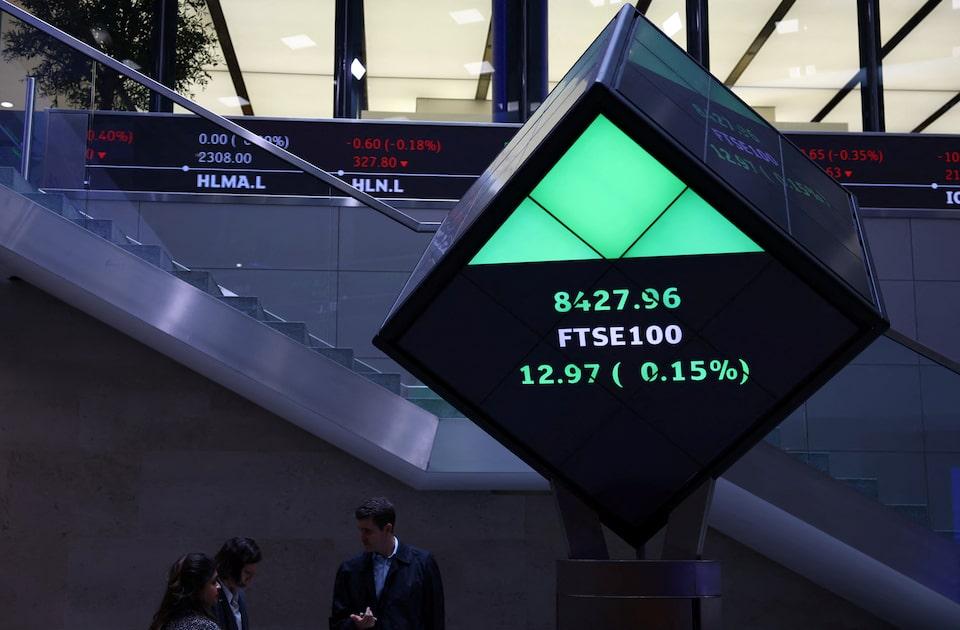
UK-US strike first deal to cut Trump tariffs Set of 'marginal' gains combine to lift UK appeal - investors UK expected to attract funds seeping out of the U.S. LONDON, May 9 (Reuters) - Investors are betting on long-depressed UK markets as a U.S. trade deal, rate cuts and hopes for renewed links with Europe spur optimism for a revival as they search for alternatives to a volatile Wall Street and flailing dollar. Britain's FTSE 100 (.FTSE) , opens new tab share index completed its longest daily winning streak of all time this month and is now moving in line with international peers for the first time since 2021, while sterling sits near 38-month highs against the dollar . Sign up here. Money managers expect at least more stability for UK assets scarred by Brexit, ex-Prime Minister Liz Truss' 2022 mini-Budget scare and January's bout of capital flight as soaring bond yields threatened shaky government finances. A UK-EU summit, bets for Thursday's Bank of England rate cut to be followed by more easing this year and a wider move into Europe and Asia by investors spooked by potential tariff hits to U.S. growth are also sweeping gloom out of British markets. "These are all marginal benefits that together add up into something bigger," said Invesco global head of asset allocation research Paul Jackson, who sees UK stocks outperforming the U.S. this year. The FTSE is up just over 4% this year, while the broad S&P 500 index is down almost 4% (.SPX) , opens new tab. Jill Hirzel, senior investment specialist at London-based Insight Investment, said the 626 billion pounds ($834.27 billion) asset manager expected 30-year gilt yields, which underpin UK government borrowing rates, to likely drop from current levels around 5.2% . When bond yield falls, their price rises. TRADE HOPES U.S. President Donald Trump, who unleashed market turmoil with universal levies on April 2 before pausing most of those, on Thursday unveiled a trade agreement with the UK. Britain's car industry will see U.S. tariffs immediately slashed to 10% from 27.5%, while levies on steel and aluminum will reduce to zero. In late London trade, the domestically-focused FTSE 250 index was up 0.6% (.FTMC) , opens new tab. The UK was already viewed as unlikely to be targeted by punitive import taxes, Fidelity International portfolio manager Shamil Gohil said, but a clear trade deal would lift market and economic sentiment from here. "It reduces uncertainty, with clarity on tariffs helping to give confidence to businesses and consumers to start spending and investing," Gohil added. "We could even see a GDP bump because of it." British Prime Minister Keir Starmer also wants annual UK-EU summits to follow talks in London on May 19, which will focus on defence partnerships but could set the scene for renewed cooperation in areas like youth mobility and labour. STABILITY? UK assets have been on a rollercoaster ride for years, with the latest selling spree in January pushing sterling to 14-month lows and 10-year gilt yields to 17-year highs as fiscal and market stability fears fed on each other. A brief market rally alongside the labour government's landslide election win last year faded fast as investors stayed cautious on British assets layered with extra risk after the 2022 rout and 2016 Brexit vote. Heightened U.S. trade uncertainty, however, which has sparked anxiety about growth slowing and inflation rising and shaken faith in U.S. assets, means Britain appears relatively steady. "I think the political volatility (in the UK) continues, but hopefully from an international perspective investors become less concerned about the fiscal issues than they have been in the last decade," Aberdeen Investments fixed income fund manager Mark Munro said. "Some of that concern might move elsewhere (with investors) starting to look again at U.S. budget deficits and the volatility of Treasuries." Big investors have warned that protectionist and volatile U.S. trade policies may erode the safe haven status of U.S. Treasuries, with higher yields raising the cost of financing $37 trillion worth of national debt. In the UK, weak growth and high borrowing are still driving finance minister Rachel Reeves towards hiking taxes or breaching budget targets, the National Institute of Economic and Social Research think tank said, but investors see rate cuts helping. "The UK has been viewed poorly and discounted for quite a long time now and I think overall it is a lot more stable now than what we've had," said Janus Henderson global equity income manager Andrew Jones, who said he has had overweight stance on UK stocks for some time. And although Bank of England rate setters were split on Thursday's rate decision, lower oil prices and a stronger pound would help contain price pressure and clear the way for further rate cuts ahead, analysts said. Premier Miton CIO Neil Birrell added that while he was not currently raising exposure to the UK, he was receiving an unusually high volume of queries about this long unpopular market from clients. Fidelity's Gohil said overseas pension fund clients had started expressing interest in buying into Britain to diversify away from the U.S. He was also raising holdings of debt issued by UK banks and utilities groups. "The UK's definitely more immune to the direct impact of trade wars. So actually, as a place to hide, it's not the worst." ($1 = 0.7504 pounds) https://www.reuters.com/world/uk/global-markets-britain-analysis-2025-05-08/
2025-05-09 04:44
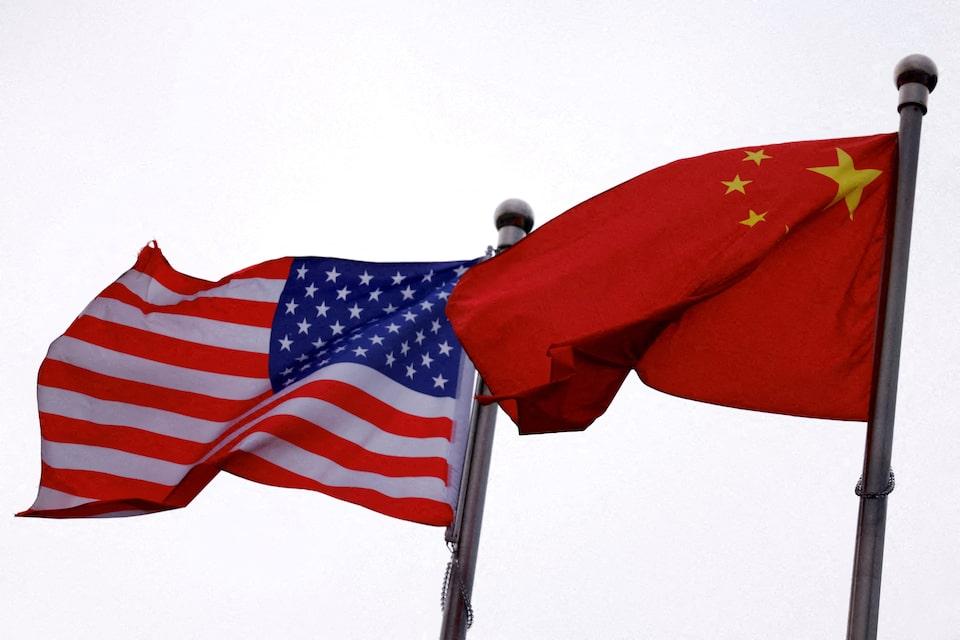
A look at the day ahead in European and global markets from Kevin Buckland Without doubt, markets are more optimistic now about a thaw in global trade tensions than they were two weeks ago, when the administration of U.S. President Donald Trump first started hinting at a de-escalation with China. Sign up here. But whatever hopes there are heading into Saturday's scheduled talks in Switzerland between U.S. and Chinese officials, they are not being embraced evenly across markets. The dollar remains up on the euro, sitting at a one-month peak, but the safe-haven yen is pushing up from a one-month trough, likely in response to Beijing's defiant tone on Friday when China's vice foreign affairs minister said that, while his country doesn't want a trade war, it doesn't fear one either. The yuan dipped to a one-week low in offshore markets. Trump has hinted that sky-high 145% levies on Chinese goods - which effectively amount to an embargo - would likely come down, although the White House dismissed as speculation a New York Post report of a plan to slash tariffs by more than half. In stock markets, Japan's Nikkei rose 1.5% but gains elsewhere in Asia were more muted and, perhaps tellingly, Chinese bourses including Hong Kong's Hang Seng were all lower. Wall Street futures were flat on Friday, after some relatively robust gains overnight. Signals from European futures indicated only a marginal rise. The build-up to Washington's trade agreement with London on Thursday set the market up to be a bit disappointed. Analysts later called it more of a framework than a trade deal, and more style than substance. But taking the glass-half-full view, as the first deal since Trump started ramping up tariffs in earnest, it does stir hopes that the White House may be looking for rapid-fire deals in coming weeks to inject additional calm into markets that have been badly bruised by erratic U.S. trade edicts. Crude oil traders seem optimistic, sending Nymex up more than 3% on Thursday, while safe-haven gold sagged a little further back from last month's all-time peak. Bitcoin is particularly buoyant, pushing back to the cusp of $104,000 on Friday. At various times this year the token has acted as a barometer of risk appetite and of expectations on Trump policy. But it may have even more going on now, according to StanChart's digital asset analyst Geoffrey Kendrick, who predicts a break of the record high of $109,071.86 "is coming soon". "It is now all about flows," he wrote in his latest note, pointing to both buying by whales and ETF inflows. "I apologise that my $120,000 Q2 target may be too low." Key developments that could influence markets on Friday: -- BoE Governor Bailey, Fed governors Barr, Kugler, New York Fed chief Williams speak at conference in Reykjavik, Iceland -- Richmond Fed chief Barkin, Chicago Fed chief Goolsbee speak at separate venues -- ECB board member Schnabel speaks at Harvard University Trying to keep up with the latest tariff news? Our new daily news digest offers a rundown of the top market-moving headlines impacting global trade. Sign up for Tariff Watch here. https://www.reuters.com/world/europe/global-markets-view-europe-2025-05-09/
2025-05-09 02:26
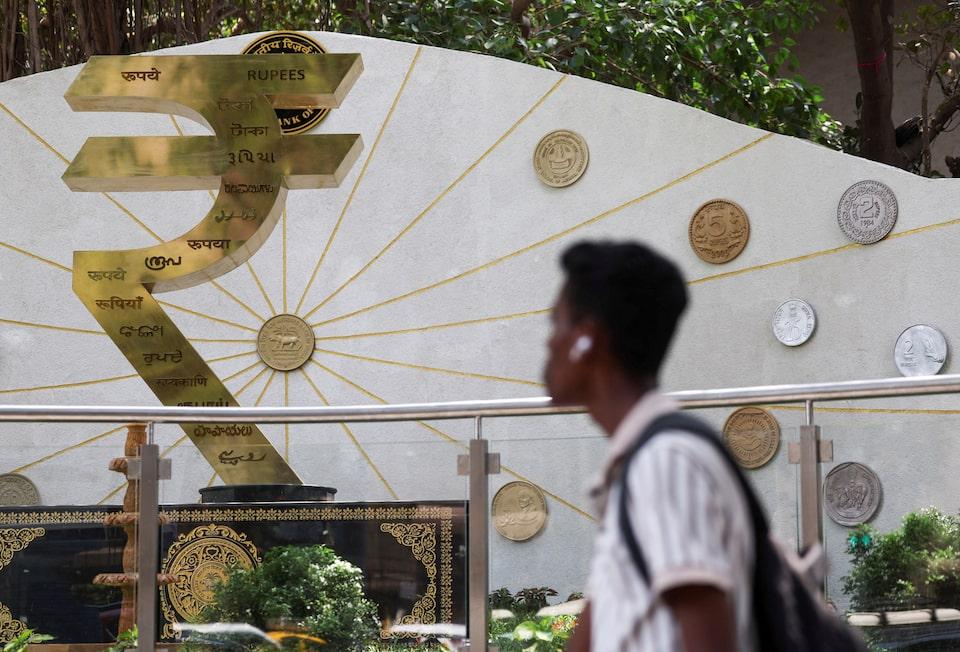
MUMBAI, May 9 (Reuters) - The Indian rupee looks set to decline further on Friday, pressured by the widening conflict between India and Pakistan that may trigger increase hedging and speculative activity. The 1-month non-deliverable forward indicated that the rupee will open at 85.80 to 85.90 to the U.S. dollar compared with 85.71 in the previous session. Sign up here. The rupee on Wednesday slumped 1.04%, recording its worst session in more than two years. The currency came under pressure in the afternoon session after India reported Pakistan's attempts to engage military targets. "Until yesterday afternoon, markets had largely priced in a view that there would be no meaningful worsening in India-Pakistan tensions," a currency trader at a Mumbai-based bank said. "That assumption is now being reassessed, and positioning in the rupee will likely need to be adjusted accordingly," and it may lead to a pick-up in hedging and speculative activity, the trader said. Pakistan and India accused each other of launching drone attacks on Thursday, and Islamabad’s Defense Minister said further retaliation was “increasingly certain”. India said military stations were attacked by Pakistani drones and missiles. Indian equities were set to open more than 1% lower. In the two sessions following the rise in tensions, the activity of foreign investors indicates that they largely held the view that the situation would not have a lasting impact on the Indian economy, analysts said. Preliminary data showed that foreign investors were net buyers of Indian equities on Thursday, after buying approximately $350 million on Wednesday. "It will be interesting to see how the numbers pan out in today’s session. There’s a sense that the landscape has shifted,” said Kunal Kurani, Assistant Vice President at Mecklai Financial. Other Asian currencies largely weakened on Friday, while the U.S. dollar rose against its major counterparts, creating additional headwinds for the rupee. KEY INDICATORS: ** One-month non-deliverable rupee forward at 86.12; onshore one-month forward premium at 18.75 paise ** Dollar index up at 100.76 ** Brent crude futures up 0.1% at $62.9 per barrel ** Ten-year U.S. note yield at 4.37% ** As per NSDL data, foreign investors bought a net $349.1 mln worth of Indian shares on May 7 ** NSDL data shows foreign investors sold a net $115.7 mln worth of Indian bonds on May 7 https://www.reuters.com/world/india/rupee-likely-weaken-more-widening-india-pakistan-conflict-2025-05-09/
2025-05-08 23:48
FY profit slightly beats consensus estimates Asset management profit rises 33% Final dividend of A$3.90 per share declared Co has no plans to reposition businesses despite trade tensions SYDNEY, May 9 (Reuters) - Top Australian investment bank Macquarie (MQG.AX) , opens new tab reported a rise in annual profit due to a well-timed asset sale, pushing its shares higher, and flagged a renewed focus on its home market as the policies of U.S. President Donald Trump upend the world order. Macquarie, which makes two-thirds of its profit abroad from businesses ranging from owning infrastructure to trading oil and gas, cast its Australian retail banking business as a safe harbour as Trump's tariffs fuel inflation and roil exchange rates globally. Sign up here. "Australia is going to be one of the more resilient economies," Macquarie CEO Shemara Wikramanayake said in an interview. "We have negligible trade with the U.S. We're quite exposed to China, but they can stimulate. So, it'll probably come through this quite resiliently," she told Reuters, referring to the company's Banking and Financial Services (BFS) unit, which runs Australia's online-only No. 5 mortgage business. Annual profit for the Sydney-headquartered company rose 5.5% in the year to end-March to A$3.72 billion ($2.38 billion), just pipping the Visible Alpha consensus of A$3.70 billion, after it sold a helicopter leasing business just before the end of its financial year. Profit from its BFS unit, which has been rapidly growing its share of Australia's A$2 trillion-plus mortgage market, leapt 11%. Shares of Macquarie were up 4.3% near the close of trading, helping push the broader index (.AXJO) , opens new tab up 0.6%, as analysts cheered a robust result from one of Australia's most-exposed companies to the global economy. Citi analysts called the profit "an in-line result". Wikramanayake, in the interview, said Macquarie's investment banking division may experience a slowdown in mergers since "people will be cautious" and the company may need to hold equity positions longer than expected. The bank may, however, benefit from a return to volatility in energy commodities trading since "people will need us more to provide a service", she said. Macquarie has been strategically realigning its North American operations, having sold its U.S. and European public asset units to Nomura (8604.T) , opens new tab in April. Higher net interest income from growth in average loan and deposit portfolios was partly offset by margin pressure amid stiff lending competition and an ongoing shift in portfolio mix, Macquarie said. The company reported A$941 billion in assets under management at year-end, slightly up from A$938.3 billion a year earlier. It declared a final dividend of A$3.90 per share, slightly higher than A$3.85 per share last year. ($1 = 1.5630 Australian dollars) https://www.reuters.com/markets/commodities/australias-macquarie-posts-near-5-rise-full-year-profit-2025-05-08/
2025-05-08 23:29
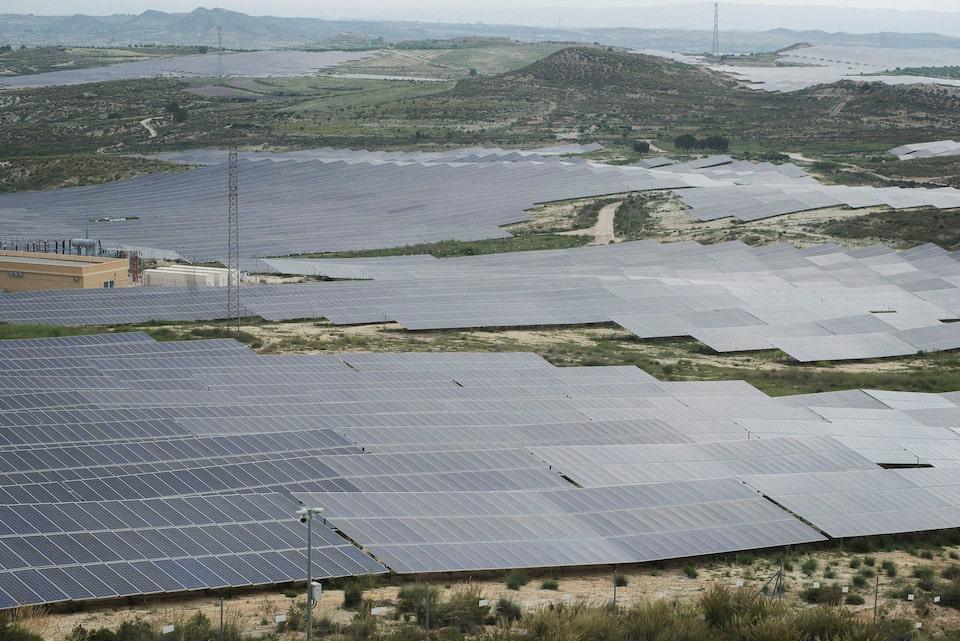
Vietnam, Malaysia, Thailand, Cambodia hit by US tariffs Indonesia, Laos solar panel exports to US surge eight-fold Chinese firms shift production to Laos, Indonesia SINGAPORE, May 7 (Reuters) - Solar panel makers in Laos and Indonesia, mostly owned by Chinese firms, boosted their share in the U.S. market after steep tariffs hit exports from other Southeast Asian countries including Cambodia and Thailand, trade data showed. The U.S. government finalised steep levies on imports of solar cells and modules from Vietnam, Malaysia, Thailand and Cambodia in April, following two rounds of tariffs in June and November last year, to prevent dumping by mostly Chinese-owned factories in these countries. Sign up here. However, Chinese companies have moved their production to Indonesia and Laos and boosted exports to the United States, Reuters reporting showed. The combined share for Indonesia and Laos in the U.S. solar modules market rose to 29% in the three months after the second round of U.S. duties were imposed on neighbouring producers in late November, from less than 1% in 2023, a Reuters review of U.S. trade data showed. Analysts and industry experts say the southeast Asian capacities owned by Chinese companies were almost exclusively set up to sidestep tariffs and supply the U.S. markets at premiums to global prices, exposing the limits of Washington's trade interventions. Yana Hryshko, head of global solar supply chain research at consultancy Wood Mackenzie, said all solar manufacturing capacity in the four Southeast Asian countries hit with high tariffs would now likely "be shut down or reduced dramatically". CHANGING TRADE ROUTES Solar panel exports from Vietnam, Malaysia, Thailand and Cambodia to the U.S. fell by 33% on an annual basis in the nine months since the first round of tariffs in June. In the same period, exports from regional neighbours Indonesia and Laos grew around eight-fold, the trade data showed. Overall U.S. solar panel imports have fallen 26% since June, with the four countries' combined share of the market plunging from 82% in the full year 2024 to 54% in the three months following the second round of tariffs in late November. U.S. imports of solar cells, which can be assembled in the United States to create panels, have tripled since the first round of tariffs despite higher costs of imports from the targeted countries. However, Indonesia and Laos still ate into the market as their exports surged about 17-fold. Solar cells accounted for roughly 28% of all U.S. solar imports since the first round of tariffs, compared with 6.5% in 2023, the data showed. Chinese manufacturers are already revising export strategies due to concerns about tariffs on Indonesia and Laos, said Fei Chen, solar research analyst at consultancy Rystad Energy. "Several solar manufacturers plan to set up production bases in non-Southeast Asia regions such as Turkiye, Oman, Saudi Arabia, UAE, Ethiopia, to supply the U.S. market," she said. Factories in China, mostly shut out of the U.S. market for over a decade by high import duties, have been boosting solar panel sales to Asia and Africa, data from energy think-tank Ember showed. Asia accounted for 37% of all Chinese exports in the first quarter of 2025, up from 25.4% in 2024, while Europe's share declined to 34% from 41% in 2024, Ember data showed. Total Chinese exports have remained steady despite lower demand due to high stockpiles in Europe - its biggest market. https://www.reuters.com/sustainability/boards-policy-regulation/us-tariffs-europe-slowdown-reshape-global-solar-panels-trade-2025-05-07/
2025-05-08 23:18
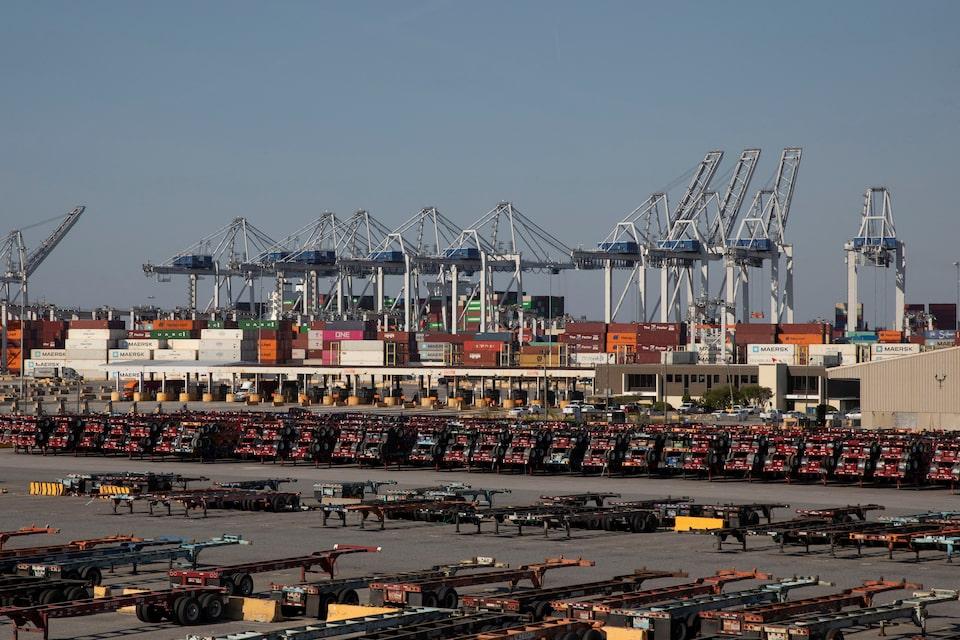
US imports up 9% year-over-year in April May imports at two largest US ports falling sharply this month Maersk said April US-China volume plunged 30-40%, underscoring May declines Trump says of cargo declines: "That means we lose less money." LOS ANGELES/WASHINGTON, May 8 (Reuters) - U.S. container imports surged in April as companies raced to avoid President Donald Trump's tariffs, which now include a 145% duty on goods from China, but executives at the country's two busiest ports said the trend looked set to reverse in May. April container imports jumped 9.1% from a year earlier to top 2.4 million 20-foot equivalent units (TEUs), the second highest on record for the month, supply chain technology provider Descartes (DSG.TO) , opens new tab said on Thursday. Sign up here. Imports from China, the top U.S. maritime trade partner, jumped 6.2% and accounted for 33.4% of all imports in April. The 145% tariffs that Trump imposed on China on April 9 more than doubled the cost of goods from the country for U.S. consumers and prompted retailers like Walmart (WMT.N) , opens new tab, Amazon.com (AMZN.O) , opens new tab and other importers to pause or cancel some factory orders. Trump has also imposed 10% tariffs on many other nations and said those rates could go higher. Import cargo at the Port of Los Angeles, the No. 1 U.S. seaport complex and the nation's leading gateway for goods from China, is expected to drop 35% year-over-year this week, said Gene Seroka, the port's executive director. Overall May ship traffic could decline by roughly 20% as operators of hulking cargo vessels cancel scheduled voyages due to soft demand, Seroka added. Many of the goods that enter the Port of Los Angeles and adjacent Port of Long Beach fan out across the mainland United States via truck and train. Port of Long Beach CEO Mario Cordero expects May volume at both ports combined to drop 30% versus a year ago. Elsewhere, shipping giant Maersk (MAERSKb.CO) , opens new tab said container volumes plunged 30-40% between the U.S. and China in April as a trade war erupted between the world's top economies, and it warned that a protracted dispute could shrink global volumes this year. Due to the time it takes to sail across the Pacific, the drop is likely to show up in U.S. import results in May. When asked about the current cargo declines at West Coast ports and the ripple effects on longshore and trucking employment, Trump on Thursday told journalists: "That means we lose less money." Trump did not elaborate how a drop in supplies of goods for Americans and the potential decline of any related duties would result in losing less money. U.S. ocean imports are a closely watched gauge of health for the nation's economy because they include nearly everything Americans buy and inputs for many things domestic factories make. Historically, port volumes have fallen during economic downturns and global disasters, including the COVID pandemic. Quickly evolving U.S. trade policies and retaliatory measures from U.S. trading partners as well as ongoing instability in the Middle East and Eastern Europe are raising the risk for global supply chain disruption, Descartes said. "The full impact of tariffs — and the May 2 expiration of the de minimis exemption — has yet to be reflected in import volumes from China," Descartes said, referring to popular duty-free access for low-value shipments from China and Hong Kong. https://www.reuters.com/business/near-record-us-container-import-streak-expected-snap-may-due-tariffs-2025-05-08/