2025-05-08 23:00
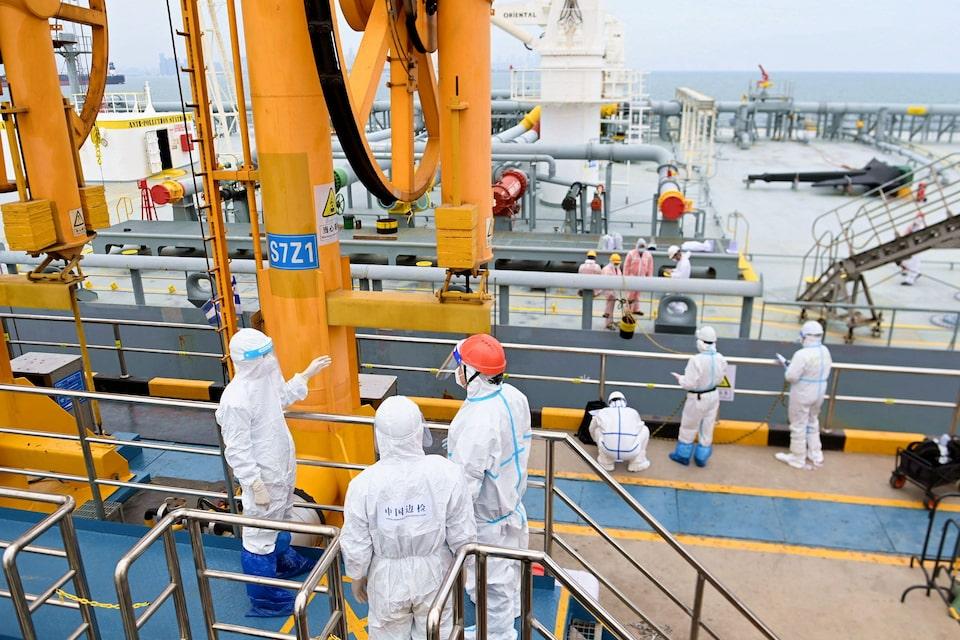
U.S. sanctioned Luqing, Shengxing refiners over Iranian oil Key port operator rejects shipments to those refiners, sources say Sanctions create hurdles for finance and sales, sources say Measures deter other 'teapots' from buying Iran oil, sources say SINGAPORE, May 8 (Reuters) - Recent U.S. sanctions on two small Chinese refiners for buying Iranian oil have created difficulties receiving crude and led them to sell product under other names, sources familiar with the matter said, evidence of the disruption that Washington's stepped-up pressure is inflicting on Tehran's biggest oil buyer. The targeting of independent refiners, known as teapots, marked an escalation in Washington's efforts to cut off Tehran's export revenue as President Donald Trump seeks to pressure Iran into a deal over its nuclear programme. Sign up here. Washington's sanctions against Shandong Shouguang Luqing Petrochemical in March and Shandong Shengxing Chemical in April have also begun to deter other, larger independent Chinese refiners from buying Iranian crude, three of the sources said. About five plants in the refining hub of Shandong province have halted purchases of Iranian oil since last month, worried about being hit by sanctions, two trading executives said. That wariness is the main reason discounts for Iranian Light have widened to $2.30-$2.40 a barrel against ICE Brent from about $2 a month ago, the executives and another source said. Among the inconveniences faced by the two sanctioned teapots, state-run Shandong Port Group, the main port operator in the province, has denied entry to vessels loaded with crude they have purchased, five trade sources said. That follows the port group's January ban on port calls by U.S.-sanctioned tankers. Shandong Port Group and Shengxing did not respond to requests for comment. A Luqing executive declined to comment. Large state banks have also stopped providing Luqing with operational capital for purchasing crude, forcing it to work with smaller banks, four of the sources said. The sources declined to be identified due to the sensitivity of the matter. Beijing says it opposes unilateral sanctions and defends as legitimate its trade with Iran, which ships about 90% of its oil exports to China. However, Chinese customs data has not shown any oil shipped from Iran since July 2022, with Iranian crude imports instead labelled as originating from Malaysia or other countries. SHIPPING, SALES HEADACHES The Shandong Port Group's banning of cargoes for the two refineries has forced them to discharge at other ports, according to three sources. In one case, the tanker Bei Hai Ming Wang carrying oil for the Shengxing refinery was rejected when it sought to land at the Laizhou port, controlled by Shandong Port Group, around April 21, according to a source familiar with the matter. It eventually unloaded on May 2 at the privately owned Wantong Crude Oil Terminal in neighbouring Dongying, data from analytics firm Vortexa showed. In another sign of trading disruption from the sanctions, two Asia-based oil product traders who had previously dealt with Luqing said they stopped doing so after it was sanctioned. In addition, no shipments of gasoline blendstock have been recorded since the end of March out of Laizhou port, used by Luqing for most of its blendstock exports, Kpler and LSEG shiptracking data showed. That contrasts with the first three months of this year when 83,000 metric tons (701,000 barrels) of methyl tertiary butyl ether, a key gasoline blendstock export, were shipped from Laizhou, accounting for 15% of China's total outflow of the blendstock. State giant CNOOC stopped supplying crude to Shandong Haihua Group's 40,000 barrel-per-day refinery, operated by Luqing, shortly after the U.S. sanctions were announced, three trade sources and a Shandong-based Chinese oil market consultant said. CNOOC did not respond to a request for comment. Calls to Haihua went unanswered. The two teapots have also begun selling product through new entities, according to seven trade sources, with Luqing using Shouguang Jiaqing Petroleum Sales and Shengxing selling via Shandong Xuxing Petrochemical. Calls to the two entities seeking comment went unanswered. https://www.reuters.com/business/energy/us-sanctions-china-refiners-over-iran-oil-disrupt-operations-sources-say-2025-05-08/
2025-05-08 22:27
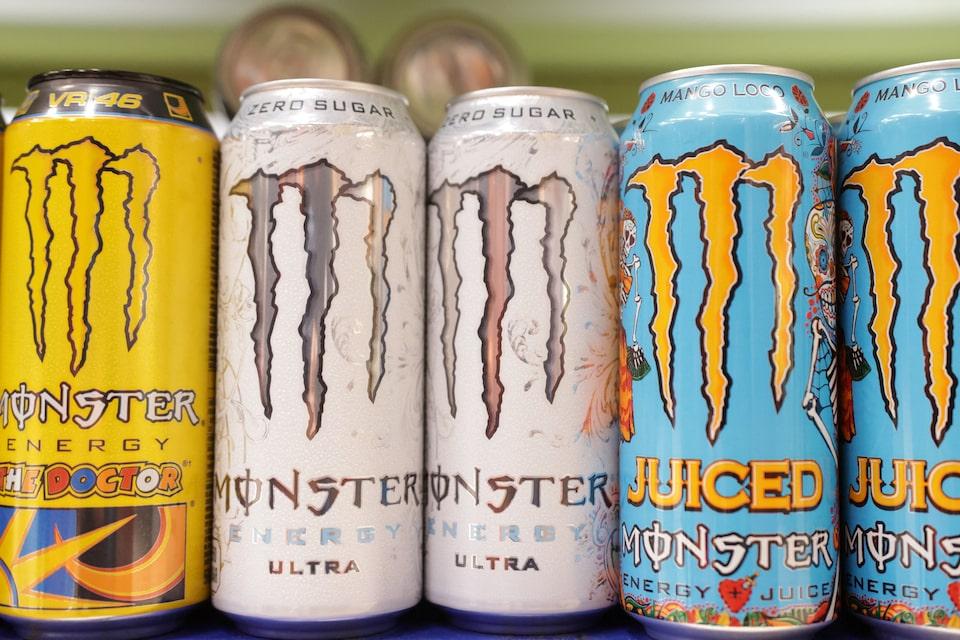
May 8 (Reuters) - Monster Beverage (MNST.O) , opens new tab reported a surprise fall in first-quarter revenue on Thursday, signaling consumers in the U.S. pared back spending on pricey energy drinks amid economic uncertainty. Colder weather in January and high inflation in February led to softer consumer spending, impacting sales during the quarter. Sign up here. The company also attributed the decline in net sales to changes in ordering patterns of bottlers and distributors in the U.S. and Europe and foreign currency headwinds. Monster Beverage hedges against the rise in aluminum prices, but said it would recognize tariffs imposed on imports of the material due to higher U.S. Midwest duty-paid aluminum premium, which climbed more than 70% in the three months through March. The company said one of its flavor and concentrates subsidiary was planning on opening a facility in Brazil, expected to be operational next year, to help mitigate the impact from aluminum levies. The tariffs, however, were not expected to have a material impact on the company's overall results, executives said on a post-earnings call. Beverages giant Coca-Cola (KO.N) , opens new tab warned last month that macroeconomic uncertainty due to tariffs could hurt consumer sentiment, despite topping quarterly results estimates. Net sales for Monster energy drinks segment, which houses the namesake brand and Reign Total Body Fuel products, fell 0.8% to $1.72 billion. Its total net revenue fell 2.3% to $1.85 billion during the quarter ended March 31, compared with analysts' estimate of a 4.3% rise to $1.98 billion, according to data compiled by LSEG. Persistent weakness in its alcohol brands segment also weighed on sales during the quarter, the Corona, California-based company said. Monster has increased prices over the last year, helping its gross profit as a percentage of net sales rise to 56.5% from 54.1% a year earlier. Excluding items, it earned 45 cents per share, compared with the estimate of 46 cents. Monster's shares were down 2.2% in extended trading. https://www.reuters.com/business/retail-consumer/monster-beverage-posts-surprise-fall-quarterly-net-sales-choppy-demand-2025-05-08/
2025-05-08 22:00
May 8 (Reuters) - Citigroup (C.N) , opens new tab said on Thursday it may record devaluation on its Russian ruble-denominated assets in earnings. Citigroup, which had previously announced it was ending all institutional banking services in Russia, had Russia-related exposures of $2.0 billion and total clients' exposures of $9.0 billion as of the first quarter of 2025, according to the filing. Sign up here. Its services are only those necessary to fulfill its remaining legal and regulatory obligations, as well as support its employees, the filing added. https://www.reuters.com/markets/us/citi-may-record-devaluations-ruble-denominated-assets-2025-05-08/

2025-05-08 21:41
May 8 (Reuters) - Ukrainian President Volodymyr Zelenskiy said on Thursday he told U.S. President Donald Trump in a telephone call that a 30-day ceasefire was a "real indicator" of moving towards peace with Russia and Kyiv was ready to implement it immediately. Zelenskiy spoke to Trump in the middle of a three-day ceasefire proclaimed by Russian President Vladimir Putin, coinciding with commemorations of the 80th anniversary of the World War Two victory over Nazi Germany. Sign up here. Zelenskiy has dismissed the three-day pause as meaningless and each side has accused the other of violating it. "Ukraine is ready for a complete 30-day ceasefire from this very day, from this very moment," Zelenskiy said in his nightly video address. "But it has to be real... Thirty days which could become the beginning of years of peace. A ceasefire, both prolonged and reliable, will be a real indicator of a movement towards peace." The Ukrainian president said Russia had to demonstrate its readiness to end the war, starting with an unconditional ceasefire. Trump, in a social media post on Thursday, again called for a 30-day unconditional ceasefire, though he made no reference to his conversation with Zelenskiy. He said that if the 30-day ceasefire "is not respected, the U.S. and its partners will impose further sanctions." A 30-day ceasefire was initially proposed by Washington in March and Ukraine agreed. Russia has said such a measure can only take effect once reliable measures of monitoring and upholding it are put in place. Zelenskiy said he also spoke to Trump about the ratification by Ukraine's parliament on Thursday of an agreement to exploit Ukraine's mineral riches along with the creation of an investment fund for Ukraine's reconstruction. He said he and Trump "noted how important it is that our relationship has strengthened our countries over the decades". https://www.reuters.com/world/europe/zelenskiy-says-30-day-ceasefire-would-be-real-indicator-movement-towards-peace-2025-05-08/

2025-05-08 21:37
WASHINGTON, May 8 (Reuters) - U.S. President Donald Trump called on Thursday for a 30-day unconditional ceasefire between Russia and Ukraine, warning that Washington and its partners would impose further sanctions if the ceasefire is not respected. Ukraine has expressed readiness to accept a U.S. proposal to enact an immediate 30-day ceasefire, while Russia has proposed only a three-day ceasefire to coincide with the 80th anniversary of the end of World War Two on Thursday. Sign up here. Trump said in a social media post: "If the (30-day) ceasefire is not respected, the U.S. and its partners will impose further sanctions." "Hopefully, an acceptable ceasefire will be observed, and both Countries will be held accountable for respecting the sanctity of these direct negotiations," Trump said. "This ceasefire must ultimately build toward a Peace Agreement. It can all be done very quickly, and I will be available on a moment’s notice if my services are needed." Trump has said he wants to the end the war in Ukraine but his administration has also threatened to abandon its attempts to broker a deal if Russia and Ukraine do not make headway. Ukrainian President Volodymyr Zelenskiy said on Thursday he told Trump in a telephone call that Kyiv was ready for a 30-day ceasefire with Russia "starting this minute." The Ukrainian president said Russia had to demonstrate its readiness to end the war, starting with an unconditional ceasefire. Ukraine's foreign minister said on Thursday Russia had repeatedly violated its own 3-day ceasefire hours after it began and called the initiative a "farce", while Moscow said Kyiv had continued fighting. Russia launched a full-scale invasion of Ukraine in February 2022. It had annexed Crimea in 2014. https://www.reuters.com/world/trump-calls-30-day-russia-ukraine-ceasefire-2025-05-08/

2025-05-08 21:29
New E&P head says advancing with 'reactivation of closed wells' Some 4,800 wells could be reopened for production, data shows Programs to extract more barrels are expensive and difficult Pemex lacks funds for these strategic projects MEXICO CITY, May 8 (Reuters) - Mexican state energy company Pemex plans to reopen old wells in a bid to squeeze more barrels out of them to boost declining oil production, according to two documents and four sources, as it struggles to reach an ambitious government target. Pemex said in a filing to the United States Securities and Exchange Commission published this week that it expects production to fall to 1.58 million barrels per day (bpd) this year rather than the 1.8 million bpd officials have consistently touted. Sign up here. It currently produces some 1.6 million bpd. Production for the heavily-indebted company has been declining for years as its older fields in the Gulf of Mexico, including many former star producers, are being depleted and newer fields have failed to compensate for it. Angel Cid Munguia, the new head of the company's exploration and production arm, wrote in an internal document, dated May 6, that it was advancing with the "reactivation of closed wells" though did not elaborate on the number. The specifics would depend on both the risk profiles of the thousands of wells across the country both onshore and offshore, and which ones could ramp up production fastest, four sources familiar with the plans told Reuters. Pemex did not immediately respond to a request for comment. Mexico has more than 31,000 wells both onshore and offshore, and about a third of them are closed, data shared with Reuters showed. More than 4,800 wells are considered to be "operational" for hydrocarbon production. The reactivation depends on geological information, funding, well mechanics, and the recovery factor of each well, said one of the sources, who has studied closed wells in detail. The documents lacked detail on what exact technology would be used to reactivate old wells but companies operating in other mature fields around the globe have used specialized expensive equipment to keep bringing hydrocarbon products to the surface even as production slows. The wells being considered for this strategy are for crude oil, natural gas and condensate, said another one of the sources, who works at Pemex, adding plans had advanced slowly because of tight budgets at the highly indebted company. Some of these wells had been closed because they filled with water or had presented too low pressure, which made production challenging because more specialized equipment was needed, the source added. Pemex had for the past months also been working on plans for extensive secondary recovery methods for wells in the Gulf of Mexico, including Ku, Maloob, Zaap, Akal and Ayastil, two other Pemex sources who worked on a separate plan with the same aim of boosting declining production. While these wells do not have to be reopened, using new production methods, they could potentially produce much more, the two sources said, adding that in part the projects have not moved forward because of a lack of funds. In a separate document dated the same day, Cid Munguia wrote that two people had already been designated for the supervision, design and engineering of strategic exploration projects. Cid Munguia returned to his post last week after the surprise departure of Nestor Martinez, a former senior official at the hydrocarbon regulator who had been appointed by President Claudia Sheinbaum in October. Last year, Pemex sought to defer up to 26.8 billion pesos (then worth $1.35 billion) of spending in an attempt to "optimize resources" in its exploration and production arm. Pemex then argued it would prioritize investments in higher-producing wells and defer some administrative and production work, including covering wells and acquiring seismic equipment needed for exploration. In the past, there have been concerns over the management of closed and abandoned wells. It is a legal requirement in Mexico to safely shut wells that are no longer producing and ensure they do not pose a risk to air, land and water. Even so, petroleum engineers and reservoir geologists have repeatedly told Reuters that some closed wells are having a detrimental impact on the environment. Reuters in 2022 reported on how some of these wells were impacting populations in the poor southern state of Chiapas. https://www.reuters.com/business/energy/mexicos-pemex-plans-reopen-wells-boost-declining-production-documents-sources-2025-05-08/