2025-05-08 21:23
Crude utilization falls to 95% in Q1 from 98% in Q4 Liquidity down to $2.1 bln from $3.8 bln in previous quarter First quarter was second period of consecutive loss HOUSTON, May 8 (Reuters) - Venezuela-owned refiner Citgo Petroleum registered an $82 million net loss in the first quarter, compared with a net income of $410 million in the same period last year, amid weak refining margins, the Houston-based company said on Thursday. Citgo, whose assets are being pursued by expropriated companies and bondholders defaulted by Venezuela through a U.S. court-organized auction, registered red numbers again in its latest period, following a $146 million loss in the fourth quarter. Sign up here. "Despite the unfavorable pricing environment, we continued to focus on operational excellence and set a historic quarterly crude processing rate at the Lake Charles refinery," said CEO Carlos Jorda in a release. Average throughput of the seventh largest U.S. oil refiner in the first quarter was 833,000 barrels per day (bpd), of which crude runs were 768,000 bpd for an overall crude utilization of 95%, below the 98% registered in the previous quarter. Utilization at the Lake Charles, Louisiana, refinery rose to 99%, but fell at the Corpus Christi, Texas, refinery to 83% from 96% in the previous quarter as the facility underwent planned maintenance work. The company's profit plummeted to $305 million last year, below the $2 billion profit of 2023, which has changed expectations from some creditors and investors about how much can be recovered from the auction in Delaware. Following a failed bidding round last year, the court launched a new bidding round by choosing a $3.7 billion starting bid last month. A final sale hearing is scheduled for July after rival bids are received and a winner selected in coming months. In the first quarter, Citgo's volume of marketing sales declined slightly to 423,000 bpd, the company said. Citgo reported equipment and turnaround expenditures of $35 million between January and March. Its quarter-end liquidity - an important metric for the auction - declined to $2.1 billion from $3.8 billion at the end of the fourth quarter. https://www.reuters.com/business/energy/citgo-petroleum-registered-82-million-loss-amid-weak-margins-q1-2025-05-08/
2025-05-08 21:17
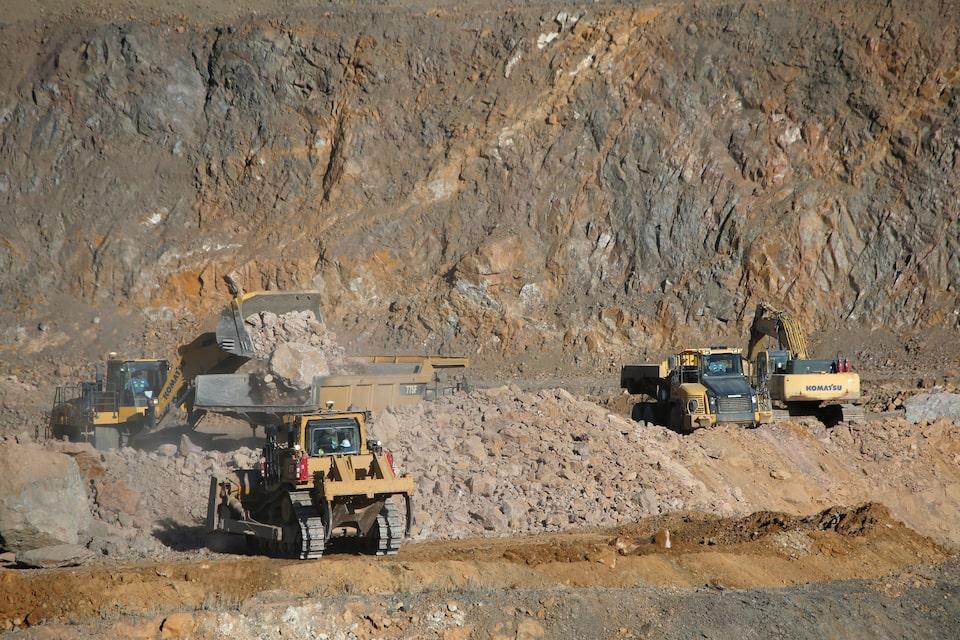
May 8 (Reuters) - U.S. rare earths producer MP Materials (MP.N) , opens new tab said on Thursday that it swung to a first-quarter loss due in part to rising production costs and interest expenses, though results met investors' expectations. The results are the first since the Las Vegas-based company said last month it would stop shipping the critical minerals to China for processing in response to Beijing's tariffs. Sign up here. The move essentially halts a major source of revenue for the company, although its impact will not reflect until second-quarter results, expected in August. For the first quarter ended March 31, the company posted a net loss of $22.6 million, or 14 cents per share, compared to net income of $16.5 million in the year-ago period. Excluding one-time items, the company lost 12 cents per share, matching analysts' expectations, according to IBES data from LSEG. Shares of the Las Vegas-based company fell 1.3% in after-hours trading. MP said its cost of sales, excluding depreciation and related items, increased by roughly $13.3 million, due in part higher production costs associated with the low utilization of its refining facilities. The company is increasing the use of those facilities. MP's interest costs also rose by nearly $5 million due in part to rising expenses tied to a convertible note due in 2030. MP produces rare earths concentrate at its California mine that it had sold to refiners in China, until last month, and elsewhere. It also refines rare earths in California. The company produced 12,213 metric tons of that concentrate during the quarter, 10% higher than the year-ago period. At its California refinery, MP produced 563 metric tons of neodymium and praseodymium (NdPr) — the two most in-demand rare earths — during the quarter, more than four times the year-ago period. Realized prices of rare earth concentrates during the quarter rose 12% from the year-ago period, though prices for NdPr fell 16%. https://www.reuters.com/markets/commodities/mp-materials-swings-quarterly-loss-rising-production-costs-2025-05-08/
2025-05-08 21:16
WASHINGTON, May 8 (Reuters) - Republican U.S. lawmakers sent a letter to the head of the House Ways and Means Committee on Thursday voicing their support for tax credits boosted in former President Joe Biden's Inflation Reduction Act, legislation for which no Republicans voted. WHY IT'S IMPORTANT The letter from a dozen Republican U.S. Representatives shows the importance of the incentives, known as investment tax credits, or ITC, and production tax credits, or PTC, for Republican states with big clean electricity projects, such as wind, solar and nuclear power, and battery storage. Sign up here. The letter, signed by Representatives Mariannette Miller-Meeks of Iowa, Jen Kiggans, of Virginia, and Jeff Hurd of Colorado among others, emphasized that the credits help projects as the United States faces power demand levels not seen in 40 years. Republicans, led by President Donald Trump, are looking to cut spending such as tax credits in previous legislation in the budget reconciliation process. KEY QUOTES "These credits are bolstering American supply chains, industrial capacity, grid reliability and resilience, and countless high-quality jobs across the nation," the lawmakers said in the letter to Representative Jason Smith, the chairman of the committee. "As China aggressively expands its energy capabilities to fuel its geopolitical ambitions, the ITC and PTC are vital to keeping the U.S. at the forefront of the intensifying global energy race," they said. The lawmakers said as the committee undertakes reforming the tax code to help address the national debt that it is "not unreasonable" to incorporate a phase-out of the credits, without further details. RESPONSE "They’re trying to be reasonable actors, but by opening the door for phase outs, they appear to be giving up ground in these negotiations while dozens of their colleagues remain firmly in the camp of full repeal," said Chris Moyer, a former staffer to Democrats in Congress and the head of Echo Communications Advisors. https://www.reuters.com/sustainability/climate-energy/republican-us-lawmakers-voice-support-ira-energy-tax-credits-2025-05-08/

2025-05-08 21:13
Nutrien sees strong global fertilizer demand despite trade wars Weather delays and high energy costs impacted Q1 earnings Analyst sees potential struggles due to low corn profitability WINNIPEG, Manitoba, May 8 (Reuters) - Nutrien (NTR.TO) , opens new tab offered a bullish outlook for the 2025 global fertilizer market in an analyst call on Thursday, despite issuing disappointing first-quarter results on Wednesday night. Strong global demand combined with supply constraints is driving up prices around the world, said Nutrien's president and CEO, Ken Seitz, who downplayed trade-war impacts. Sign up here. Weather-related delays in the United States and Australia slowed down fertilizer sales, and higher-than-expected natural gas prices pinched first-quarter earnings, but energy prices have declined and global sales have recovered. "Things are going strong," Seitz said. The Saskatoon, Canada-based firm posted an adjusted profit of 11 cents per share for the quarter ended March 31, compared with analysts' average estimates of 31 cents, according to data compiled by LSEG. Nutrien shares fell 2.8% to close at C$76.19 in Toronto on Thursday. Despite the earnings miss, Morningstar analyst Seth Goldstein did not find the company's explanation about weather hurting its fertilizer retail business far-fetched. "Look at the first half, not the first quarter," he said, referring to a likely upsurge in fertilizer use by U.S. farmers following a wet early spring. "In my mind the fundamentals are looking great for the fertilizer business." Nutrien expects the global potash business to be 71 million-75 million metric tons in 2025, with industry production capacity the limiting factor rather than demand. Overall fertilizer demand is growing in all markets and spot prices are rising, Seitz said. The increase in U.S. corn acres this year is positive for fertilizer consumption due to that crop's comparatively high nutrient needs. China and India are also expected to have strong demand. The present trade battles around the world, involving the U.S., Canada, China and many other countries, have "not impacted the outlook for our business," Seitz said. Nutrien's Canadian-made products cross the U.S. border without a tariff and its global supply chain has been navigating other tariff regimes. Chris Reynolds, Nutrien's executive vice president and chief commercial officer, said tariffs could affect how fertilizers and chemicals are sourced, but "generally the story is much more about demand." Nutrien executives said they see robust U.S. demand for fertilizers in the second half of 2025, but StoneX analyst Josh Linville sees low corn profitability as a threat, especially for phosphate. "I think there are going to be some struggles," Linville said. "I think we've got a really, really big danger that we're going to see demand slower and lower than what is typical." Farmers might put off fertilizer purchases and application if they face poor returns this fall, Linville said. Nutrien's Brazilian operations continue to be reorganized, with good signs in various areas of business, but agricultural chemicals earnings are "still seeing competition from generics and it's certainly stressing (chemicals) prices," said Reynolds in the call. Nutrien is focused on production improvements, small acquisitions, cost-cutting and noncore divestitures to improve financial performance, Seitz and other executives said. https://www.reuters.com/world/americas/nutrien-paints-bullish-fertilizer-industry-picture-despite-poor-q1-results-2025-05-08/

2025-05-08 21:08
ORLANDO, Florida, May 8 (Reuters) - TRADING DAY Making sense of the forces driving global markets Sign up here. By Jamie McGeever, Markets Columnist Wot's ... uh the deal? A wave of trade optimism washed over markets on Thursday as a deal between the United States and Britain, cooling global tensions and a generally less belligerent stance from Washington spurred sharp gains in equities and other risk assets like bitcoin. In my column today I dig into why the tariff chaos of last month meant macro hedge funds in April suffered one of their worst maulings in years, and why the near-term outlook remains challenging. More on that below, but first, a roundup of the main market moves. I'd love to hear from you, so please reach out to me with comments at [email protected] , opens new tab. You can also follow me at @ReutersJamie and @reutersjamie.bsky.social. If you have more time to read, here are a few articles I recommend to help you make sense of what happened in markets today. Today's Key Market Moves Tariff tensions cool, markets sizzle If this week has felt like markets have been treading water, waiting for investors to take a bullish or bearish view on the next phase of the global trade war, a clear direction seems to be emerging now. And the bulls are in the driving seat. In the last 24 hours there has been confirmation of high-level U.S.-China talks taking place this weekend, a U.S.-UK trade deal, a U.S.-Ukraine minerals deal, and positive soundings from U.S. President Donald Trump that further agreements are close. The S&P 500 and Nasdaq are back above their closing levels on April 2, Trump's tariff 'Liberation Day' that sparked a market meltdown, wiped trillions of dollars off the value of U.S. stocks, and forced him to back down days later. On Thursday, Brazil's stock market rocketed to a record high, bitcoin leaped back above $100,000 and is up 35% from its post-Liberation Day lows, and bond yields shot higher. Whether this optimism is justified remains to be seen. As Federal Reserve Chair Jerome Powell said repeatedly on Wednesday, there is no clarity at all on what the economic impact of tariffs will eventually be. All we know is uncertainty has rarely been higher, and inflation and unemployment risks are rising. The U.S. central bank left policy unchanged as expected, resisting calls from Trump to lower interest rates, with Powell insisting the Fed needs more "hard" economic data before deciding its next step. But other major central banks are more worried about the risks to growth and are cutting rates. They include the European Central Bank, the People's Bank of China and, despite a surprise three-way vote split on Thursday, the Bank of England. Little wonder the dollar is trading at its highest in a month. The PBOC snapped a run of seven consecutive days fixing the yuan at a stronger level against the dollar, fixing the currency at 7.2073/dollar on Thursday. The yuan also weakened on the onshore and offshore spot markets, and goes into Friday slipping further back from Monday's highs of the year. Macro hedge funds mauled in April While many investors survived the market volatility unleashed by U.S. President Donald Trump's "Liberation Day" with only a few scratches, macro hedge funds suffered one of their worst maulings in years. HFR's benchmark composite fund index fell by only 0.5% in April and the equity index actually rose, according to data released on Wednesday, but macro strategists were caught flat-footed by the steep declines in the dollar, oil, and short-dated Treasury yields and whiplashed by a brief, but historic, selloff in long bonds. Consequently, macro hedge fund strategies lost 2.7% in the month, according to HFR, equaling the losses in March 2023 amid the turmoil caused by the U.S. regional banking crisis. The last time macro strategies had a worse month was February 2018 due to the "Volmaggedon"-fueled market turmoil. Macro funds suffered, in part, because April marked a sharp shift in correlations between several asset classes – including abrupt reversals in some markets and accelerated moves in others – as well as a surge in margin calls and huge shifts in capital flows as many investors reduced their U.S. allocations. BIG SHORT At the start of April, hedge fund managers' positioning in the dollar was roughly flat, according to Commodity Futures Trading Commission data. They had unwound net long dollar positions worth around $35 billion in the prior two months as the greenback fell 4% against a basket of major currencies. Macro funds started to rebuild their longs in the first week of April, but any hopes of a dollar rebound were obliterated following Trump's tariff announcements on "Liberation Day". The dollar fell 4.5% in April, its steepest fall since November 2022, and the euro sealed its best two-month performance since 2010. CFTC data also shows that leveraged funds extended their short positions in two-, five- and 10-year Treasury futures. The $1.0+ trillion short position, in aggregate across the three maturities, is now the highest this year, and in the five-year contract it is the biggest on record. Funds take these positions for many reasons such as hedging and arbitrage plays. But those making a directional bet on rates got burned - yields fell in April, particularly at the short end and the belly of the curve. 'SO MUCH UNCERTAINTY' Macro funds' hefty losses underscore investors' deep confusion about U.S. policy and, by extension, the outlook for asset classes across the board. JPMorgan's quant and derivatives strategists say macro fund managers were actually penalized for remaining cautious. They were not prepared for the 'V-shaped' recovery in equities and other risk assets in recent weeks, so the recovery in macro funds and commodity trading advisors (CTAs) has been "modest" with "little sign of a reversal", they wrote on Wednesday. This contrasts with equity-focused funds who de-risked in February and March and were thus well positioned for the rapid rally seen in the last few weeks, they added. But trend-following macro fund managers could be forgiven for retaining a "glass half empty" outlook. Trade tensions are stoking inflation and unemployment risks, and Federal Reserve Chair Jerome Powell on Wednesday basically admitted that he and his colleagues have no idea what the correct policy response should be because visibility is so low. "There's so much uncertainty ... there's so much that we don't know," Powell told reporters after the central bank left interest rates unchanged, a message he drove home in many different ways during his 41-minute press conference. He isn't alone. Consumer sentiment is nose-diving, businesses are scrapping forecasts and investor conviction is running low even as markets have stabilized in the last few weeks. Macro hedge fund managers' confidence may simply be running lower than most. The 2.7% fall in HFRI's Macro Index last month wiped out all its gains from the first quarter. A sustainable rebound will almost certainly require longer-term trends and correlations to emerge across currencies, rates and commodities. Right now, that looks like a long shot. What could move markets tomorrow? Opinions expressed are those of the author. They do not reflect the views of Reuters News, which, under the Trust Principles , opens new tab, is committed to integrity, independence, and freedom from bias. Trading Day is also sent by email every weekday morning. Think your friend or colleague should know about us? Forward this newsletter to them. They can also sign up here. https://www.reuters.com/markets/global-markets-trading-day-graphic-pix-2025-05-08/
2025-05-08 21:06
Trump targets 3rd independent China refiner for taking Iran oil Prior sanctions on China teapots have led to halt in purchases Next round of talks expected over weekend Companies operating terminal at Shandong port targeted Latest sanctions fall short of 'turning point' - analyst WASHINGTON, May 8 (Reuters) - U.S. President Donald Trump's administration on Thursday imposed sanctions on a third Chinese independent, or "teapot" oil refinery and port terminal operators in China for purchases of Iranian oil ahead of an expected fourth round of U.S.-Iran nuclear talks. The U.S. Treasury designated the Hebei Xinhai Chemical Group refinery and three companies for operating a terminal at Dongying Port in Shandong Province. It said they had purchased or facilitated the delivery of hundreds of millions of dollars worth of Iranian oil. Sign up here. It was the latest independent Chinese refinery targeted by the Trump administration after it re-imposed a policy of "maximum pressure" that aims to cut off Iran's export revenue to pressure Tehran into a deal to curb its nuclear program and stop the funding of militant groups across the Middle East. "The United States remains resolved to intensify pressure on all elements of Iran’s oil supply chain to prevent the regime from generating revenue to further its destabilizing agenda," Treasury Secretary Scott Bessent said in a statement. The latest round of talks between Iran and the United States is likely to take place over the weekend in the capital of Oman. Previous sanctions imposed on two small Chinese refiners for buying Iranian oil have created difficulties in receiving oil, leading them to halt purchases of crude and sell product under other names, sources familiar with the matter said. Those sanctions have also begun to deter other, larger independent Chinese refiners from buying Iranian crude, three of the sources said. Iran's U.N. mission in New York did not immediately respond to a request for comment. "China has always firmly opposed the US's abuse of illegal unilateral sanctions and 'long-arm jurisdiction,'" said Liu Pengyu, spokesperson for China's embassy in Washington. "The US should stop interfering with and undermining the normal economic and trade cooperation between China and Iran." The companies Treasury designated for operating the port terminal were Baogang (Dongying Donggang) Logistics and Warehousing Co, Ltd, Shandong Jingang Port Co, Ltd, and Shandong Baogang International Port Co, Ltd. Treasury said the companies operate a terminal in Dongying Port that has received more than one million barrels of Iranian oil. The department's Office of Foreign Assets Control also imposed sanctions on several companies, vessels, and captains it said facilitated Iranian oil shipments as part of Iran's "shadow fleet" of tankers. The sanctions block U.S. assets of those designated and prevent Americans from doing business with them. It designated Star Twinkle Shipping Limited, Hong Kong Prime Trading Co., Limited, Embrace Que Limited, Nissho Lines Incorporated, Propitous Forever Trading Co Ltd, and Skadi Limited. It also identified the tankers STAR TWINKLE 6, LAMD, SKADI, IMPALAS, BIG MAG, and THANE as blocked property. An analyst said the latest U.S. sanctions were incremental. "Today’s sanctions sustain pressure on Chinese importers but fall short of a turning point for Iranian exports, as the Trump administration continues to hold off on targeting Chinese state-owned enterprises," said Fernando Ferreira, a director of geopolitical risk service at Rapidan Energy Group. "If Beijing refuses to curb imports, I suspect Washington will continue to move up the sanctions list and target more sensitive entities," he said. https://www.reuters.com/business/energy/us-imposes-iran-related-sanctions-third-china-teapot-refinery-ports-2025-05-08/