2025-05-08 19:58
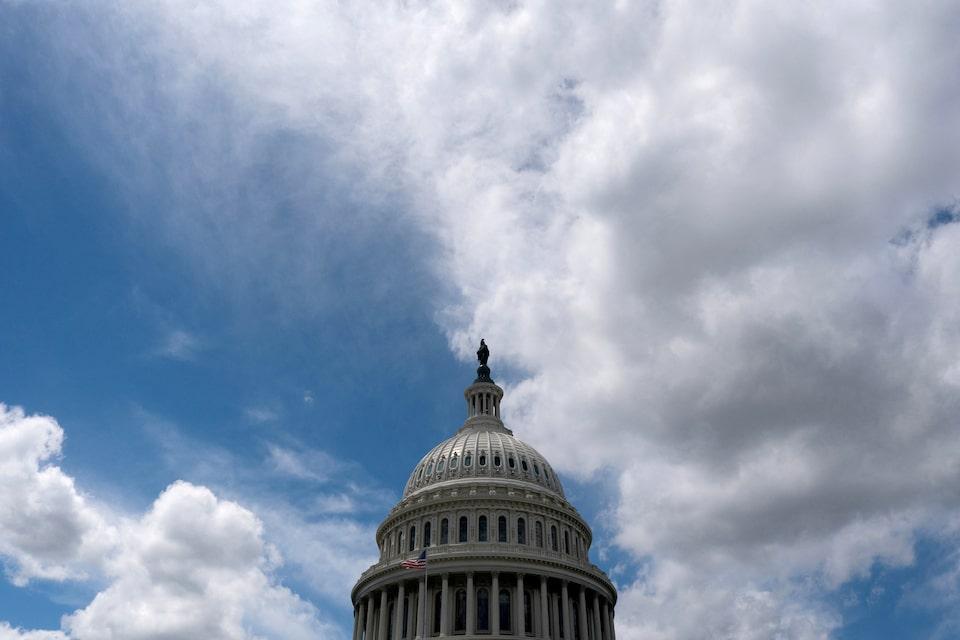
Senate stablecoin bill fails to receive enough votes to advance Democrats expressed concern about Trump crypto ventures Setback is blow to crypto industry, which tried to portray crypto as bipartisan May 8 (Reuters) - Legislation that would create a regulatory framework for U.S. dollar-pegged cryptocurrency tokens known as stablecoins faced a setback on Thursday as the bill failed to clear a key hurdle in the U.S. Senate. The setback is a blow to the crypto industry, which has long pushed for lawmakers to pass legislation creating new rules for digital assets. The sector spent more than $119 million backing pro-crypto congressional candidates in last year's elections and had tried to paint the issue as bipartisan. Sign up here. Stablecoins, a type of cryptocurrency designed to maintain a constant value, usually a 1:1 dollar peg, are commonly used by crypto traders to move funds between tokens. Their use has grown rapidly in recent years, and proponents say that they could be used to send payments instantly. Analysts and lobbyists had once considered stablecoin legislation almost certain to pass this year, but the bill - dubbed the GENIUS Act in the Senate - has faced pushback from Democrats as frustration has grown over President Donald Trump's various crypto ventures. In a vote on Thursday, only 49 senators voted to advance the bill to a full vote, falling short of the 60 votes needed to formally end debate on the bill. Notably, two Republican senators - Senator Josh Hawley and Senator Rand Paul - voted alongside Democrats against moving forward with the bill. "While we've made meaningful progress on the GENIUS Act, the work is not yet complete, and I simply cannot in good conscience ask my colleagues to vote for this legislation when the text isn't finished," said Senator Mark Warner, a Democrat who earlier voted to advance the bill out of the Senate Banking Committee, in a statement. A group of Democrats, including Warner, that initially supported the legislation said on Saturday that Republicans had failed to negotiate on stronger provisions related to foreign stablecoin issues and anti-money-laundering protections. Senate Democrats more broadly have expressed concerns about the bill especially after Trump's crypto business World Liberty Financial announced last week that its stablecoin would be used by an Abu Dhabi investment firm for its $2 billion investment in crypto exchange Binance. In a speech on the Senate floor after the vote to move the bill toward a full vote failed, Senate Majority Leader John Thune expressed disappointment with Democrats, accusing them of denying the White House a bipartisan win. "Not every bill that comes to the floor is a final bill," Thune said. https://www.reuters.com/sustainability/boards-policy-regulation/stablecoin-bill-fails-clear-key-hurdle-us-senate-2025-05-08/
2025-05-08 19:58
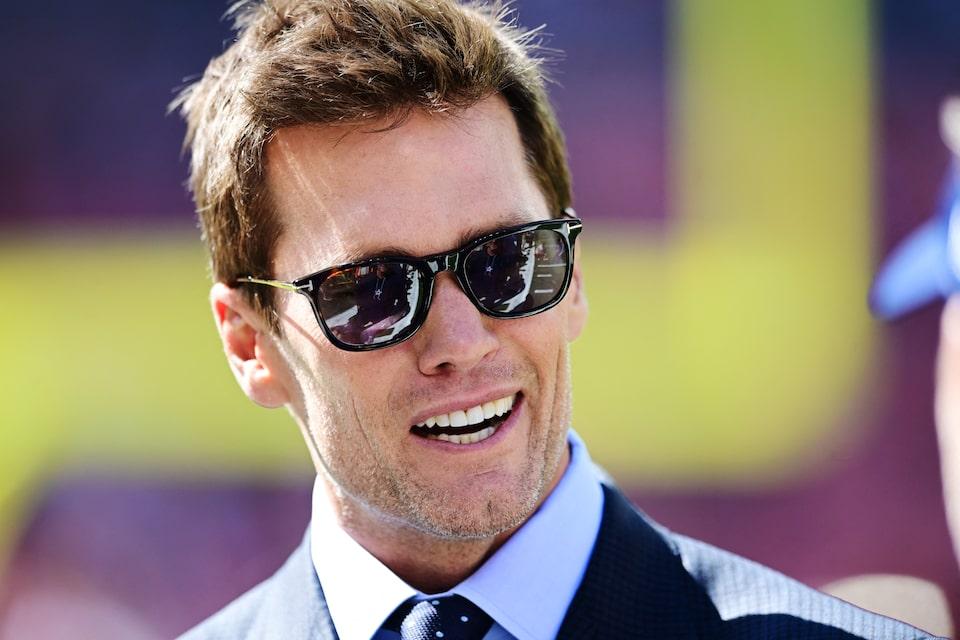
May 8 (Reuters) - A federal judge narrowed but stopped short of dismissing a lawsuit by investors seeking to hold celebrities like sports stars Tom Brady, Stephen Curry and Shohei Ohtani liable for promoting the collapsed cryptocurrency exchange FTX. The investors said the defendants ignored "red flags" and hid millions of dollars of payments to promote FTX as "brand ambassadors," as part of a civil conspiracy with Sam Bankman-Fried's exchange to defraud them into becoming customers. Sign up here. In a 49-page decision on Wednesday, U.S. District Judge K. Michael Moore in Miami dismissed 12 of the 14 claims, saying the investors did not prove the celebrities knew FTX was a fraud, and merely receiving payments did not establish a conspiracy. He said the investors could try to prove the defendants violated Florida law by helping FTX sell unregistered securities, finding it plausible that FTX "needed influencers" to sell its products. A claim under Oklahoma law also survived. Other defendants include sports stars David Ortiz and Naomi Osaka, supermodel Gisele Bundchen, comedian Larry David, businessman and TV personality Kevin O'Leary, and the Golden State Warriors basketball team. Lawyers for the defendants did not immediately respond to requests for comment on Thursday. Adam Moskowitz, a lawyer for the investors, called the decision a victory because Florida law allows strict liability, meaning the defendants did not have to know FTX was a fraud. He said he plans to file an amended complaint with additional defendants, including Major League Baseball and Formula 1 Racing. The sports stars Shaquille O'Neal and Trevor Lawrence previously settled. FTX filed for bankruptcy protection in November 2022. Bankman-Fried is appealing his fraud conviction and 25-year prison sentence. Last October, FTX won court approval for its bankruptcy plan, which would allow it to fully repay customers. The case is In re FTX Cryptocurrency Exchange Collapse Litigation, U.S. District Court, Southern District of Florida, No. 23-md-03076. https://www.reuters.com/legal/ftx-lawsuit-against-tom-brady-stephen-curry-shohei-ohtani-others-is-narrowed-2025-05-08/
2025-05-08 19:37
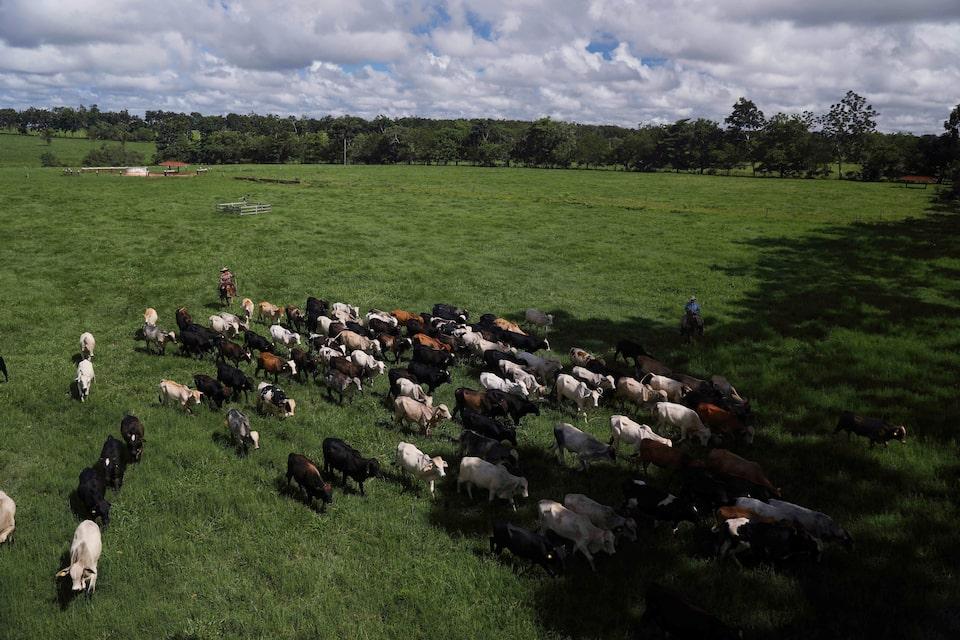
SAO PAULO, May 8 (Reuters) - Brazilian meat exporters sold some 48,000 metric tons of beef into the United States last month despite enforcement of a new 10% tariff by Washington, Roberto Perosa, head of Brazilian beef lobby Abiec, said on Thursday. Perosa told a press conference that the volume was "a big surprise" because it compares with roughly 8,000 tons of Brazilian beef sold to U.S. importers in the year-ago month. Sign up here. China remains Brazil's main export destination for beef products, but a severe shortage of cattle in the United States has boosted demand for beef imports, including from Brazilian and Australian suppliers, Perosa said. Citing data from consultancy Datagro, Perosa noted that Brazil could become the world's biggest beef producer in 2026, replacing the United States, where ranchers face difficulties to increase cattle inventories and companies would tend to produce less beef. Brazil is already the world's biggest beef exporter. For sales outside a predetermined annual quota of 65,000 tons, Brazilian beef was previously subject to a 26.4% tariff in the United States. An additional 10% tariff now applies. For Brazilian beef sales inside the quota, the U.S. administration imposed a tariff of 10%, from zero previously, Perosa said. The annual quota of 65,000 tons was filled in January. Next week, representatives of Brazil's beef-packers will accompany President Luiz Inacio Lula da Silva in a visit to China. For the first time, they will go to two cities in the interior to promote Brazilian beef products there, Perosa said. China imported some 12% more Brazilian beef so far in the year, or about 392,000 metric tons, he said. Though Perosa does not see China issuing new permits for Brazilian beef exporters in the short term, it is possible new suppliers are cleared next year, when Beijing will have ended its safeguard probe focusing on overall beef imports. https://www.reuters.com/world/china/brazil-april-beef-exports-us-soar-despite-new-tariffs-beef-lobby-says-2025-05-08/
2025-05-08 19:26
Canadian heavy crude trading at extremely tight discount to WTI Canadian producers see benefits from Trans Mountain pipeline expansion Pathways group hoping to resume negotiations with government May 8 (Reuters) - Canadian Natural Resources Ltd (CNQ.TO) , opens new tab, the country's largest oil producer, reported a better-than-expected first-quarter profit and record production on Thursday, helped by stronger Canadian heavy crude prices that persist in the wake of the opening of additional pipeline export capacity last year. Producers in Canada have benefited this spring from a historically tight price discount on heavy oil versus U.S. benchmark crude, helping cushion the blow from a significant fall in global oil prices. Sign up here. Canadian Natural President Scott Stauth told analysts on a conference call he expects the current Western Canada Select discount not to change significantly over the next few quarters. "Our expectation would be that the differentials are in the range that they are, out and forward on," he said. On Wednesday, WCS for June delivery in Hardisty, Alberta, settled at $8.75 a barrel under the U.S. West Texas Intermediate crude - its narrowest discount since 2020. Canadian Natural earlier reported a first-quarter profit of C$2.4 billion that beat analysts' estimates. The company's shares were last up 5.6% on the Toronto Stock Exchange. Oil producers in Canada have gotten a lift from the start-up of the Trans Mountain pipeline expansion project, which has nearly tripled the flow of oil to the country's Pacific Coast from landlocked Alberta, raised Canadian crude prices and opened up market access to refineries in Asia and the U.S. West Coast. Canadian oil has also benefited from U.S. sanctions on Venezuela and other countries, which are boosting demand for non-sanctioned heavy crude producers. Canadian Natural's quarterly output rose to a record 1.58 million barrels of oil equivalent per day during the first quarter, from 1.33 million boepd during the same period a year earlier. The company plans to lower its annual capital budget by C$100 million to C$6.05 billion, and said that would not impact its planned operating activities or targeted production levels for 2025. Stauth said the lowered capital budget was not related to the lower WTI price environment, but instead due to ongoing efficiency and optimization projects at various sites that have helped the company cut costs. He also said he hoped the negotiations between the federal government and the Pathways Alliance, a group of oil sands producers that have proposed a C$16 billion carbon capture and storage project, would be able to continue in the near future now the Canadian election is over and new Prime Minister Mark Carney is in place. ($1 = 1.3878 Canadian dollars) https://www.reuters.com/markets/commodities/canadian-natural-resources-beats-first-quarter-profit-estimates-2025-05-08/

2025-05-08 18:01
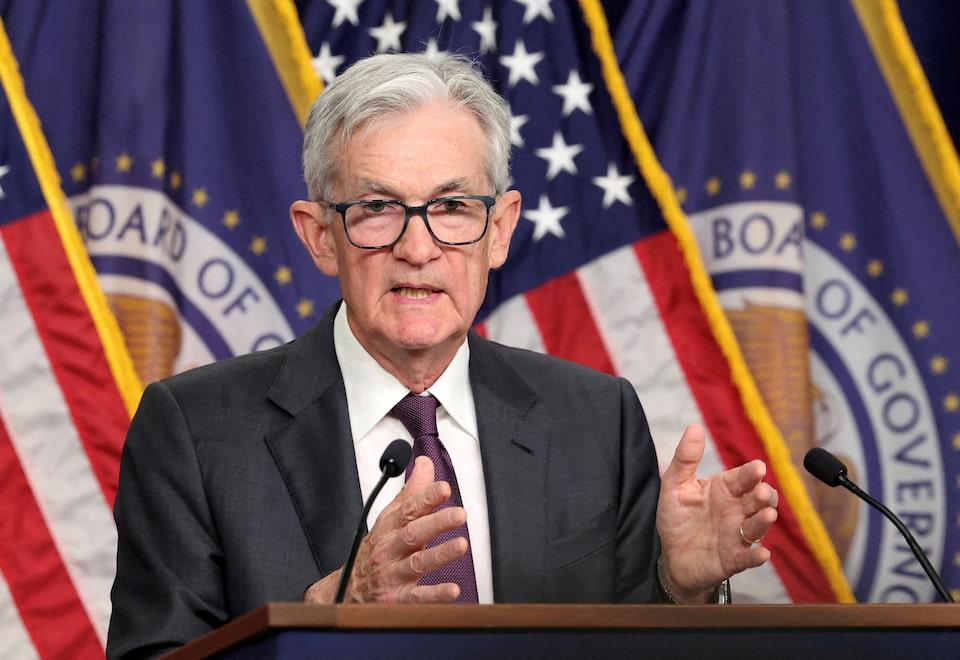
Trump has criticized Powell over rate policy for years Fed kept rates on hold this week in 'wait and see' posture on tariffs Traders bet US-UK trade deal announced Thursday means fewer Fed rate cuts WASHINGTON, May 8 (Reuters) - U.S. President Donald Trump renewed his criticism on Thursday of Federal Reserve Chair Jerome Powell, calling him a "fool" and complaining that the Fed is refusing to lower interest rates. Trump has been on a virtual war path against Powell in recent weeks, threatening to fire him -- and then backing away from that threat. He has repeatedly lashed out at Powell in posts on his social media site, calling him "a major loser" in one post. Sign up here. Trump, speaking one day after the Fed, as financial markets had widely expected, kept its key borrowing rate unchanged, said cutting interest rates would be "like jet fuel" for the economy, "but he doesn't want to do it." He said Powell is "not in love with me." Early last week, in remarks suggesting that he is more knowledgeable about interest rates than Powell, Trump said he was not "a huge fan of" Powell. The Fed this week kept short-term borrowing costs in the 4.25%-4.50% range, where they have been since December. While the big tariffs imposed by Trump are likely to increase both inflation and unemployment, the economy so far has shown little sign of either, Powell said on Wednesday, giving the central bank time to wait until there is more clarity on where tariffs actually end up and assess their effect on prices and jobs. At that point the Fed can act as needed, and potentially aggressively, he said. Trump had a different view. "'Too Late' Jerome Powell is a FOOL, who doesn't have a clue," he wrote in a post on Truth Social on Thursday morning. "Oil and Energy way down, almost all costs (groceries and 'eggs') down, virtually NO INFLATION ..." Cutting interest rates typically boosts the economy, but in a time of above-target inflation, doing so could also unleash an upward spiral of price pressures that Powell has said must be avoided. Trump named Powell as the Fed chair in 2018, during his first term in the White House, and Democratic President Joe Biden appointed Powell to a second four-year term in 2022. Trump and British Prime Minister Keir Starmer on Thursday announced a "breakthrough deal" on trade, the first since Trump announced steep import levies on most U.S. trading partners on April 2 before subsequently pausing some of them to allow time to reach country-by-country deals. That first glimmer of certainty amid what had been an increasingly foggy outlook makes the Fed actually less likely to cut rates aggressively. That was the read from financial markets, as traders pulled back Thursday from what had been overwhelming bets on a July start to interest rate reductions, with any more than three rate cuts by year's end seen as increasingly unlikely. Trump has made no secret of his dissatisfaction with Powell's conduct of monetary policy ever since shortly after picking him as Fed chair early in his first term. Trump's suggestion last month that he would like Powell gone sent stocks and bonds both down as investors priced in the chance the Fed could lose its independence and thereby its ability to restrain inflation. Powell, asked about Trump's criticisms in his news conference on Wednesday, declined to comment. He has said he intends to complete his term as chair, which ends in about a year. Powell met a total of three times with Biden. Powell's calendars also show he had a 90-minute dinner with Trump at the White House during his first stint there, as well as several other shorter encounters, but has not spoken with him since 2019. Powell said on Wednesday that he never has sought and never would seek a meeting with a president. "It's always been the other way," he said Wednesday. Talking to Powell, Trump said on Thursday, is "like talking to a wall." https://www.reuters.com/world/us/trump-renews-criticism-feds-powell-not-cutting-rates-2025-05-08/
2025-05-08 17:22
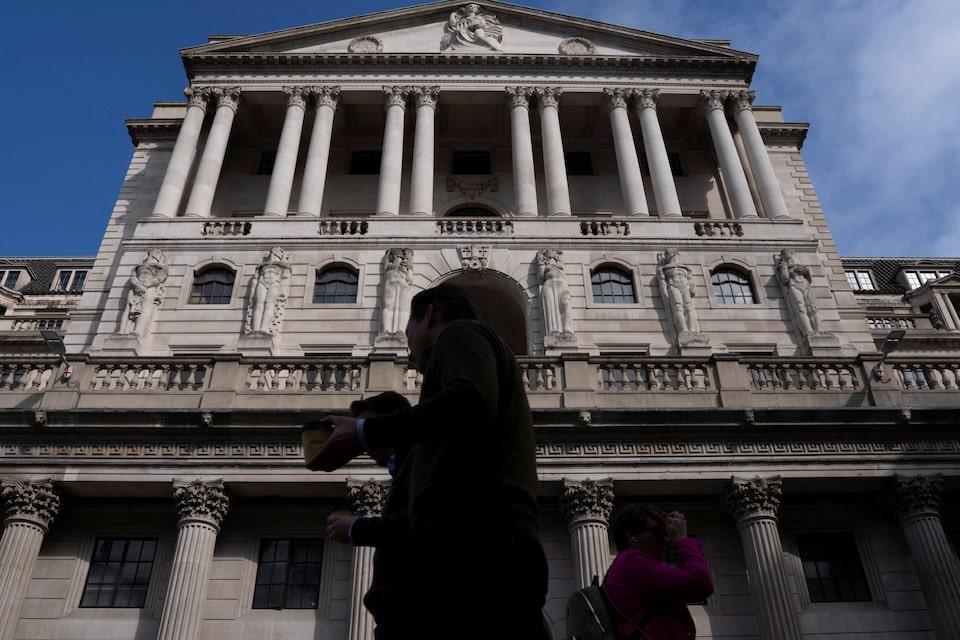
Bank of England cuts main interest rate to 4.25% from 4.5% Two BoE policymakers unexpectedly oppose cutting rates Tariffs expected to knock growth, push down UK inflation Markets ditch bets on back-to-back May-June rate cuts LONDON, May 8 (Reuters) - (This May 8 story has been corrected to say two-thirds of the impact is due to the direct effect of tariffs on demand for UK imports, not because of weaker global growth, in paragraph 16) The Bank of England cut interest rates on Thursday to tackle the expected hit from U.S. President Donald Trump's tariffs but a surprise three-way split among policymakers cooled expectations that it might speed up future moves. Sign up here. The BoE's rate-setters voted 5-4 in favour of cutting borrowing costs by quarter of a percentage point to 4.25%. Two Monetary Policy Committee members, Swati Dhingra and Alan Taylor, voted for a bigger half-point cut. Chief Economist Huw Pill and Catherine Mann wanted to keep rates on hold. No economist polled by Reuters had expected any vote against a rate cut. Sterling rose and two-year borrowing costs jumped as markets saw a much reduced chance of another rate cut in June. Thursday's decision was the British central bank's first since Trump announced wide-ranging tariffs on April 2, which unleashed temporary market turmoil and prompted the International Monetary Fund to cut its global growth forecasts. The BoE said it thought tariff increases by the U.S. and other countries would trim British economic growth and push down on inflation, but stressed the outlook was unclear. "The past few weeks have shown how unpredictable the global economy can be. That's why we need to stick to a gradual and careful approach to further rate cuts," Governor Andrew Bailey said. The BoE has now cut interest rates by the same amount as the U.S. Federal Reserve since mid-2024 but by less than the European Central Bank due to concerns about high wage growth as well as the risk of persistently above-target inflation. "The two votes from committee members to hold rates steady sent a more hawkish message to the market," said Matthew Landon, global market strategist at J.P. Morgan Private Bank. "Beneath the hood, we still think that the conditions for cuts remain in place." NO 'AUTOPILOT' FOR RATES The BoE said it had no pre-set path for rates. It also said the impact of global trade tensions "should not be overstated". "Interest rates are not on autopilot. They cannot be," Bailey told a press conference. "Instead, the MPC must continue to respond carefully to the evolving economic circumstances." For three of the five policymakers who voted for a quarter-point reduction, this week's decision would have been "finely balanced" without the escalation of trade tensions, the minutes showed. Bailey indicated to reporters he was among that group. Based on the situation as of April 29, the BoE estimated the U.S. tariffs would lower British inflation by 0.2 percentage points in two years' time and reduce the size of the economy by 0.3% after three years. Later on Thursday, Trump said he would scrap 25% tariffs on imports of British steel and lower tariffs on cars from 27.5% to 10%, the rate which will remain for most other goods imports. Bailey, speaking before details of the deal were public, said it would "help to reduce uncertainty". However, the BoE said about two-thirds of the damage it forecast to British growth was the direct impact of tariffs in reducing demand for British exports in the U.S. and elsewhere, while the remainder reflected the impact of trade policy uncertainty in lowering global growth. On Wednesday, Fed Chair Jerome Powell highlighted ongoing uncertainty about the impact of trade policy on the economy as the U.S. central bank held off from a further rate cut. INFLATION FORECAST CUT While investors still expect the BoE to lower interest rates close to 3.5% by year-end, June's meeting now looks much less likely to yield a cut - with the probability falling to under 20% from around 60% before Thursday's announcement. Two-year gilt yields rose around 7 basis points after the BoE announcement and finished the day 12 bps higher at a two-week high of 3.93% as investors digested the U.S. deal. Asked by CNBC television about the market reaction to the rate cut, Bailey said it reflected how the BoE had said there were still upside as well as downside risks to inflation. In a quarterly forecast update, the BoE trimmed its expectation for inflation this year, seeing it peaking at around 3.5%, lower than a previous forecast of around 3.75% though up from the latest official reading of 2.6% in March. It sees inflation back at its 2% target in the first quarter of 2027 - nine months earlier than it forecast in February. The central bank expects the economy to grow this year by 1%, a bit more than February's forecast of 0.75%, thanks to a strong end to 2024 and robust official data at the start of 2025 which pointed to 0.6% quarterly growth in the first quarter. However, it said the first-quarter growth bounce looked like a one-off and for 2026 it cut its growth forecast to 1.25% from 1.5%. https://www.reuters.com/markets/econ-world/boe-cuts-rates-425-it-sees-tariff-hit-growth-2025-05-08/