2025-05-08 17:02
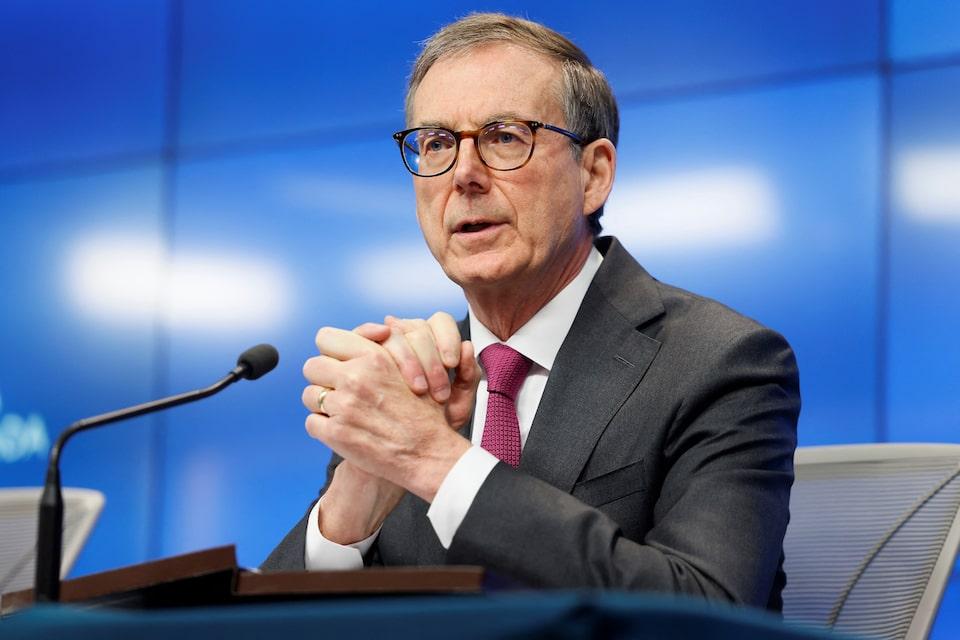
By Promit Mukherjee and David Ljunggren OTTAWA, May 8 (Reuters) - A prolonged trade war could increase the risks to Canadian financial stability by hurting banks and other institutions and making it harder for households and businesses to pay down debt, the Bank of Canada said on Thursday. Sign up here. In its annual Financial Stability Report, the central bank said the financial system was resilient. But the impacts of tariffs slapped by U.S. President Donald Trump on Canada and Ottawa's subsequent counter-tariffs could hurt financial stability, especially if it continues for a long period of time. "A long-lasting trade war poses the greatest threat to the Canadian economy. It also increases risks to financial stability," the bank said. The BoC said in the near term, the unpredictability of U.S. trade policy could cause further market volatility and strains on liquidity. In an extreme case, market volatility could turn into market dysfunction. In the medium to long term, a prolonged global trade war would have severe economic consequences, it added. Governor Tiff Macklem told reporters that the uncertainties were so great that "our analysis is not a projection, it is an assessment of vulnerabilities". If the trade war continues some households, especially those carrying higher levels of debt, might default on their payments, the bank said, adding the risk was concentrated mainly amongst households without a mortgage. This could hurt a strong banking system which has built a robust liquidity base and access to funds, the BoC said. "If credit losses occur on a large enough scale, banks could cut back on lending in response. Struggling households and businesses would have less access to credit to get through tough times. This cycle could exacerbate the economic downturn," it said. The BoC also highlighted a heightened risk from hedge funds which have been taking increasing exposure to Government of Canada bonds. In some cases they have bought almost half of all the auctions of government bonds. But a bulk of their purchases is supported by debt, making them more likely to pull back from the market in periods of stress, threatening the bond market. As interest rates started coming down in Canada last year, overall level of household debt dropped and insolvencies amongst businesses fell, and banks and non-bank financial institutions increased ability to absorb shocks. Those households with a mortgage who will be renewing this year or next are generally in a more resilient position to make payments due to lower interest rates, but if impacted by job loss or loss of income, some households might be hit. This scenario could be repeated among businesses too, the bank said, adding that those with existing vulnerabilities such as high leverage, weak profitability and low cash reserves are at risk of falling behind on debt payments. ((Reuters Ottawa bureau)) Keywords: CANADA CENBANK/ https://www.reuters.com/world/americas/canadian-financial-system-stable-trade-war-poses-big-risks-says-central-bank-2025-05-08/
2025-05-08 16:51
EDPR profit fell 24% in first quarter due to no capital gains Recurring core profit to reach 1.9 billion euros in 2025 CEO denies EDPR is selling any stake in Ocean Wind JV LISBON, May 8 (Reuters) - EDP Renovaveis (EDPR.LS) , opens new tab, the world's fourth largest wind energy producer, said on Thursday it expects core recurring profit to grow 13% in 2025 on the back of a solid operational performance, despite a 24% drop in net income in the first quarter. The renewables arm of Portugal's EDP (EDP.LS) , opens new tab said earlier that its first-quarter net profit fell to 52 million euros ($59 million), despite a solid revenue increase. That was slightly below the 54.8 million euro average forecast by analysts polled by LSEG. Sign up here. EDPR said it booked no capital gains from the sale of wind and solar assets – part of a strategy of disposing of stakes in mature plants to finance new ones – in the first quarter. A year ago, it booked 58 million euros of capital gains. Overall revenue grew 21% to 763 million euros on the back of a 10% increase in power production to 10.9 gigawatt-hours (GWh), "with Europe and North America representing more than 80% of total generation output", it said in a statement. Its consolidated earnings before interest, taxes, depreciation and amortisation (EBITDA), or core profit, rose 5% year-on-year to 476 million euros. Excluding capital gains, recurring core profit grew 20%. CEO Miguel Stilwell de Andrade said it was "a good set of results, supported by capacity expansion and operational efficiency", and EDPR now estimates a recurring EBITDA of 1.9 billion euros in 2025. It expects 2 billion euros of proceeds from transactions of renewable parks in 2025 that should result in capital gains of 100 million euros. It sees net debt falling to 8 billion euros in December from 8.9 billion in March. The CEO denied media reports that the company wanted to sell part of its 50% stake in Ocean Winds, the joint venture with France's Engie for offshore wind. "This stake is strategic and we like that joint venture," he said. ($1 = 0.8846 euros) https://www.reuters.com/business/energy/wind-energy-firm-edpr-sees-core-recurring-profit-rising-13-2025-2025-05-08/

2025-05-08 14:33
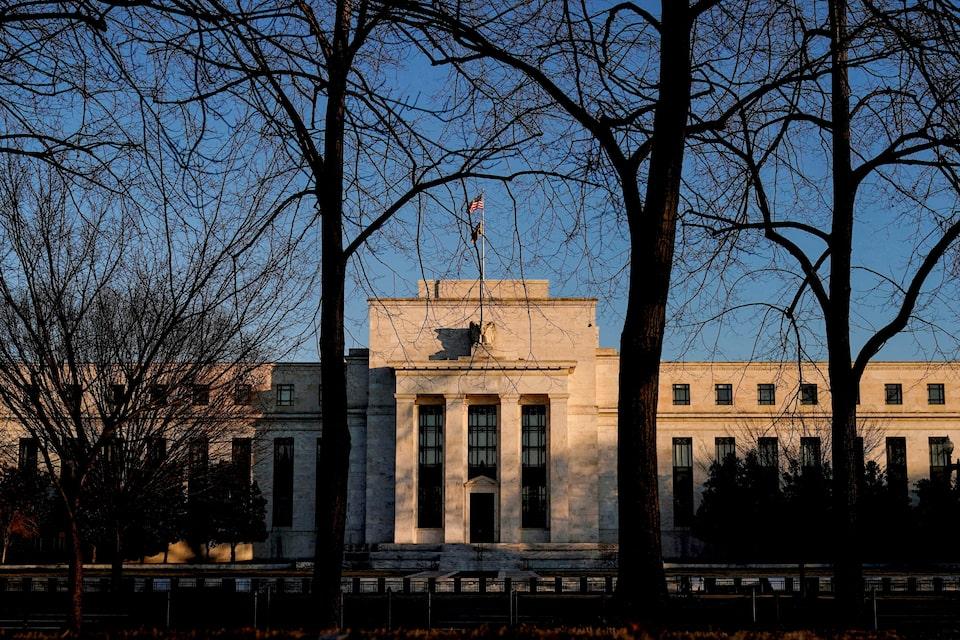
BoE cuts rates; Norway and Sweden hold rates steady US Fed caught between high inflation and weakening growth Trade uncertainty creates challenging central bank outlook LONDON, May 8 (Reuters) - Big central banks are diverging as White House tariffs threaten to raise U.S. inflation and a dash out of the dollar sparks disinflationary currency strength elsewhere. The U.S. Federal Reserve is holding rates steady for now, while Switzerland is moving closer to negative rates once again, and Japan remains an outlier with its bias to hike rates. Sign up here. Here's a look at where 10 developed-market central banks stand. 1/ SWITZERLAND The Swiss National Bank next meets on June 19 and says it is ready to pull interest rates back into negative territory, from 0.25% currently, to stop the surging Swiss franc hurting the export-heavy economy and raising deflation risks. But with speculators now betting against the franc after haven demand drove it almost 7% higher against the dollar since early April, the SNB may avoid having to resort to unconventional monetary policies after all. 2/ CANADA The Bank of Canada held rates at 2.75% in April after seven consecutive cuts. Its policymakers were evenly split on the need for more easing and Governor Tiff Macklem said global trade uncertainty made forecasting "of little use". Still, money markets see the BoC dropping rates another quarter point by July, with a further reduction by year-end. 3/ NEW ZEALAND Traders widely expect the Reserve Bank of New Zealand to cut rates by 25 basis points to 3.25% on May 28 to protect the China-focused economy from trade blows, then to keep cutting for the rest of this year as the strong kiwi dollar helps inflation stay on target. 4/ SWEDEN Sweden's Riksbank left its key rate unchanged at 2.25% on Thursday but left the door open to rate cuts ahead. Swedish manufacturing activity expanded in April as the government's defence and construction spending pledges boosted hopes the slowing Scandinavian economy can avoid a recession. 5/ EURO ZONE The European Central Bank reduced rates for the seventh time in a year in April and money market traders are almost unanimously expecting another quarter-point cut to 2% on June 5. They also see another cut by year-end as highly likely. Headline inflation in the euro zone has moderated to 2.2%, the strengthening euro is lowering import prices, growth is slowing and while hopes for German fiscal stimulus have been high, this week's upheaval in the Bundestag has cast some doubt. 6/ UNITED STATES The U.S. central bank, which is under fire from President Donald Trump for resisting rate cuts, on Wednesday held borrowing costs at 4.25%-4.50%. The Fed said that risks of higher inflation and unemployment had risen, further clouding the U.S. economic outlook as its policymakers grapple with the impact of tariffs. The Fed has kept interest rates on hold since December, following 100 bps of cuts last year. Money markets price in roughly 75 bps of further easing by year-end. 7/ BRITAIN The Bank of England, which has lowered borrowing costs slowly to accommodate bumpy inflation trends, delivered a 25 bps cut to 4.25% on Thursday, as expected. But an unexpected three-way split among policymakers as Trump's tariffs weigh on global economic growth caught markets by surprise. The Monetary Policy Committee voted 5-4 in favour of cutting rates, but two members voted for a bigger half-point cut while two wanted to keep rates on hold. Traders anticipate another cut by August. 8/ AUSTRALIA The Reserve Bank of Australia held rates steady at 4.1% in April but as U.S. tariffs threaten China, Australia's biggest trading partner, money markets have placed a more than 90% chance of a 25 bps reduction on May 20 and priced about 105 bps of cuts by year-end. 9/ NORWAY Norway's central bank has ditched plans to ease monetary policy as its oil-linked currency weakens alongside the global trade outlook, posing a fresh inflationary threat. As expected, the Norges Bank kept rates on hold at a 17-year high of 4.50% on Thursday. 10/ JAPAN The Bank of Japan, long-expected to pursue rate hikes, has turned cautious as it waits to see how tariffs will affect its export-focused economy and after Japanese factories suffered blows from the U.S. raising levies on imported vehicles. The BoJ held borrowing costs steady at 0.5% on May 2 as Governor Kazuo Ueda said a pledge to bring inflation down to 2% had been "pushed back somewhat" and investors nervously awaited the results of high-stakes U.S.-Japan trade talks. https://www.reuters.com/business/finance/global-markets-central-banks-graphic-2025-05-08/
2025-05-08 14:04
OTTAWA, May 8 (Reuters) - The Bank of Canada released the following statement by Governor Tiff Macklem on Thursday: "Good morning. Senior Deputy GovernorCarolyn Rogers and I are pleased to be here to discuss the Bank of Canada’s Financial Stability Report (FSR). Sign up here. "Each year, the Bank assesses the stability of Canada’s financial system and highlights risks that could threaten that stability. While some risks have diminished, the current trade environment has pushed risks higher overall. "But let us look back for a minute before we look ahead. "The country's financial system has faced unprecedented shocks in recent years, and it has proven resilient. Households, businesses, banks and other financial institutions weathered the upheaval of the pandemic and the sharp rise in inflation and interest rates that followed. It was ad ifficult period for many Canadians, and pockets of stress remain. But proactive steps taken by households and businesses, together with substantially lower interest rates, put the system on a more resilient footing heading into 2025. "Now, the Canadian economy and financial system face a new threat. US trade policy has taken a dramatic protectionist shift.Tariffs and uncertainty have sharply reduced prospects for global economic growth. And financial markets have been rocked by chaotic policy announcements and reversals. "A long-lasting trade war poses the greatest threat to the Canadian economy. It also increases risks to financial stability. "There are two key concerns. "In the near term, the unpredictability of US trade policy could cause further market volatility and strains on liquidity. In an extreme case, market volatility could turn into market dysfunction. "In the medium term, a prolonged global trade war would have severe economic consequences. It would reduce growth and increase unemployment. This could, in turn, have important ramifications for our financial system. With debt still at high levels, some households and businesses may be unable to keep up with payments. If loan losses occur on a large enough scale, banks could cut back on lending in response. This would exacerbate the economic downturn and put more pressure on businesses and households. "What we are evaluating in this report are the indications of stress in the overall financial system. There are many uncertainties — we still do not know what tariffs will remain, whether they'll be reduced or escalated, or how long all of this will last. That makes it particularly difficult to anticipate the risks to the financial system. "In our April Monetary Policy Report, we presented two illustrative scenarios to show how a trade war could affect the economy. In the FSR, we've focused on the more severe of those scenarios to explore how the trade war could affect different parts of the financial system. To be clear, our analysis is not a projection. It is an assessment of vulnerabilities — pockets of existing or potential stress and how they could spread across the financial system. "Let me turn to the Senior Deputy Governor to outline how these vulnerabilities affect the four key sectors of the financial system: households, businesses, banks and institutions known as non-bank financial intermediaries — a broad category including finance companies, pension funds, insurance companies and fund managers. "I'll start with households. Total debt relative to disposable income is lower than it was a year ago, but still high by historical standards. Despite lower interest rates, signs of financial stress have risen over the past 12 months, particularly among households without a mortgage. For example, the share of these households that are behind on credit card or auto loan payments has continued to go up. "Among households with a mortgage, 60% are facing renewal this year or in 2026. Most of those renewing will see their payments rise because they took out their mortgage during the pandemic when rates were very low. But the average increase will be smaller than what we expected a year ago. "Still, if a large economic shock causes job losses, it will be harder for some households to keep up with their debt payments. "A prolonged trade war may be that shock. It would cause demand for Canadian exports to fall and disrupt supply chains, threatening jobs and incomes. Workers in trade-dependent industries could find it particularly difficult to continue managing their debt. "A prolonged trade war would matter for businesses too. Most Canadian businesses have managed to adjust to past interest rate increases, and the surge in small business insolvencies last year proved to be temporary. But businesses in trade-related sectors — especially those with high debt, low profitability or low cash reserves — could also fall behind on debt payments. "A strength of our financial system is that Canadian banks are well positioned to absorb higher credit losses. Banks have increased their capital buffers in recent years and, more recently, they’ve increased provisions for credit losses, bolstering their resilience. Liquidity levels remain high, and bank access to funding remains strong. But if credit losses occur on a large enough scale, banks could cut back on lending in response. Struggling households and businesses would have less access to credit to get through tough times. This cycle could exacerbate the economic downturn. "In the non-bank financial sector, the growing presence of hedge funds in the market forGovernment of Canada bonds raises some concern. Government bond markets are the foundation of the financial system. They need to function smoothly for other markets to work. The increased activity by hedge funds has helped absorb increased issuance of government debt, keeping yields lower and liquidity higher. But hedge funds have also taken on increasingly large amounts of leverage to fund their purchases of government bonds. This makes them more likely to pullback from these crucial markets in periods of stress, introducing added volatility. "The recent gyrations in the US Treasury market clearly illustrated this risk. If the trade war causes a larger spike in volatility than we have seen so far, leveraged hedge funds might rush to sell their holdings. That could strain liquidity across core markets, increasing stress throughout the financial system. Moreover, growing connections between banks and non-bank financial institutions could make it easier for stress to spread. Against a backdrop of increased market volatility, and given their importance in government bond markets, hedge funds need to make sure that they are prepared to respond to sudden liquidity needs without disrupting market functioning. "It's time to wrap up. "The Canadian financial system is resilient. Despite high indebtedness and the economic turbulence of the pandemic, households, businesses and banks weathered a rapid rise in interest rates. That was a big test, and the financial system proved to be a source of stability. "But we must all remain vigilant. Vulnerabilities remain and there is another test on the horizon. "By identifying vulnerabilities, we can help the financial system prepare for future stress. We are watching developments closely and remain in regular contact with financial system participants and with other authorities in Canada and globally. A stable and resilient financial system absorbs shocks rather than amplifying them, and this benefits every Canadian. "With that, the Governor and I would be pleased to take your questions." ((Reuters Ottawa bureau)) Keywords: CANADA CENBANK/MACKLEM https://www.reuters.com/world/americas/full-text-bank-canada-says-trade-uncertainty-has-pushed-risks-higher-overall-2025-05-08/
2025-05-08 13:31
May 8 (Reuters) - Mexico's annual inflation rate came in line with market expectations in April, official data showed on Thursday, accelerating from the previous month but still within the central bank's target range. That should allow the Bank of Mexico to keep lowering borrowing costs in Latin America's second-largest economy, which faces a weakening trend amid mounting global trade uncertainties, analysts say. Sign up here. Consumer prices in Mexico rose 3.93% in the year through April, according to national statistics agency INEGI, roughly in line with economists' forecasts in a Reuters poll and up from 3.8% the previous month. Mexico's central bank, also known as Banxico, has an inflation target of 3%, plus or minus a percentage point. In March it cut its interest rate by 50 basis points for the second consecutive time to 9%, the lowest since September 2022, and policymakers have signaled that further easing should come if inflation holds steady as expected. The central bank's next decision is scheduled for May 15. JPMorgan economist Gabriel Lozano said that Banxico is widely expected to keep the 50-basis-point easing pace, noting that although the impact of U.S. tariffs brings downside risks to growth, inflation has not substantially improved. "The narrative and dovish bias in the March statement together with incoming information ever since, suggest, in our view, that the May statement will be similar," he said in a note to clients. Although economic growth is not part of Banxico's mandate, analysts believe a weak outlook stemming from trade tensions triggered by U.S. President Donald Trump's sweeping tariffs adds to the argument for it to keep easing monetary policy. In April alone, consumer prices in Mexico rose 0.33%, while the closely watched core index, which strips out some volatile food and energy prices, rose 0.49%. Both were in line with market forecasts. The 12-month core index stood at 3.93%, up from 3.64% in March, with core inflation driving the overall index up. Andres Abadia of Pantheon Macroeconomics said that the latest data represent a bad start to the quarter but that underlying pressures remain in check, forecasting another 50-basis-point rate cut in May if external conditions are stable. https://www.reuters.com/world/americas/mexicos-inflation-meets-expectations-april-2025-05-08/

2025-05-08 12:59
Deribit set to help Coinbase in non-U.S. markets Analyst expects more deals in crypto market Shares jump 5.7% after deal May 8 (Reuters) - Coinbase (COIN.O) , opens new tab, the largest publicly traded cryptocurrency exchange, said on Thursday it will buy derivatives exchange Deribit in a $2.9 billion deal to expand into the crypto options markets. The move underscores a push by crypto firms to widen their institutional investor base, while also catering to retail traders who are becoming more sophisticated. Sign up here. The Deribit acquisition gives Coinbase "a foothold in non-U.S. markets, especially Asia and Europe, where leverage trading is more prevalent," said Bo Pei, analyst at US Tiger Securities. The cash-and-stock deal will allow Coinbase to offer crypto options to its international clients. Widely used for hedging, options can be a key source of stability as their demand typically holds up during bouts of volatility. Shares of Coinbase, which have lost nearly 21% of their value in 2025, jumped 5.7%. The company already allows its U.S. and international customers to trade crypto futures. The deal consists of $700 million in cash and 11 million shares of Coinbase's Class A common stock, the company said in a blog post , opens new tab. Although still early in the derivatives space, Coinbase reached record market share in its consumer and institutional derivatives volume in the last quarter. It is set to report its first-quarter earnings on Thursday after markets close. "Should the U.S. legalize crypto options trading/perpetuals trading domestically, Coinbase will be swift to offer these services to US clients, bringing significant revenue upside," Daiwa Securities analyst Steven Nie said. The deal also coincides with U.S. President Donald Trump's advocacy for digital assets and his pledge to establish America as the global center of cryptocurrency. Buoyed by the regulatory optimism, several crypto-related firms are clinching deals to increase their user base. Ripple last month bought buy multi-asset prime broker Hidden Road in a $1.25 billion deal, in one of the largest deals in the crypto company's history. "There will be more consolidations in the crypto market led by U.S. firms," Pei said. Kraken, another cryptocurrency exchange, had said in March it would buy retail futures trading platform NinjaTrader for $1.5 billion. https://www.reuters.com/markets/deals/coinbase-acquire-deribit-29-billion-deal-wsj-reports-2025-05-08/