2025-05-08 12:54
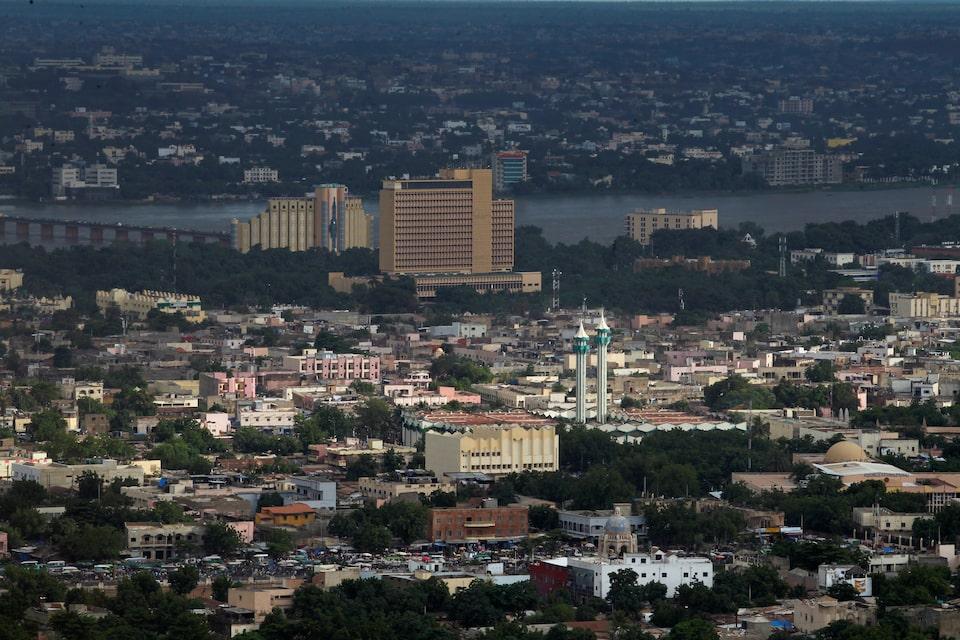
May 8 (Reuters) - It's late to the sell-USA party. But bitcoin is finally reclaiming its place as a big alternative for investors spooked by President Donald Trump's trade war and keen to dump U.S. stocks, Treasuries and the dollar. After an initial tumble to its lowest levels this year soon after Trump announced his Liberation Day tariffs on April 2, the notoriously volatile bitcoin has slowly clawed back ground. It managed to outperform stock markets in 10 out of 17 sessions in that period, VanEck data shows. Sign up here. The world's top and original cryptocurrency is now a whisker away from the $100,000 mark last seen three months ago, after a 15% rise in April alone. By comparison, the S&P 500 (.SPX) , opens new tab slipped around 0.8% in April, the tech-focused Nasdaq Composite (.IXIC) , opens new tab eked out 0.8% gains last month, while the U.S. dollar index fell over 4%. "The most recent price action may have begun to validate the view that Bitcoin is not just the 501st company in the SPX," analysts at research firm Block Scholes said. Bitcoin is up 33% from its April low in a surprising turn for the cryptocurrency, given how closely it has mimicked the performance of equity markets in periods of market turmoil- particularly the tech sector - over the past few years. Correlations between bitcoin and other asset classes have also shifted, according to Block Scholes, and bitcoin is the most inversely correlated to the steepness of the Treasury yield curve in over two years. "Investors are really starting to respond to (bitcoin) as a potential diversifier," said Ben McMillan, chief investment officer at IDX Advisors. Bitcoin has even outperformed gold's 11% rise since April 2, despite the safe-haven metal's surge to record highs. Measures of bitcoin's expected volatility have dropped to 18-month lows, as per Block Scholes. "The damage has been done in terms of trust towards the U.S. and dollar assets ... but you can't (diversify) overnight," said Martin Leinweber, director of digital asset research & strategy at MarketVector Indexes. "What kind of neutral assets do you have? Underlying that is really a supportive shift towards bitcoin and crypto." Investors have also turned more bullish on digital asset-focused investment products, with roughly $5.5 billion over the last three weeks flowing into those funds, as per CoinShares data, including $1.8 billion in the week through May 3 for bitcoin products. If changing tariff policies continue to drive a move away from U.S. assets, bitcoin could find its next leg higher, Geoff Kendrick, global head of digital asset research at Standard Chartered Bank said in a note to clients. "We expect a strategic asset reallocation away from U.S. assets to trigger the next sharp upswing in bitcoin in the coming months," Kendrick said, adding he sees bitcoin hitting a new record high of around $120,000 in the second quarter of 2025. TOO MUCH, TOO SOON It's far too early, however, to say bitcoin has severed its ties with macroeconomic developments. Bitcoin's 30-day correlation to the S&P 500 briefly dipped to 0.45 in early April but has crept back up to 0.87, as per LSEG data, where 1 indicates they are moving in lockstep. And it still remains some ways away from its January record high. "I think we'll inevitably see periods going forward where bitcoin's correlation (to risk assets) rises again," said IDX Advisors' McMillan. "But the key point is, it is starting to take on trading characteristics of its own." https://www.reuters.com/markets/currencies/cryptoverse-markets-question-us-exceptionalism-bitcoin-starts-shine-2025-05-08/

2025-05-08 12:42
Quarterly comparable sales at Tim Hortons and Burger King decline Rising commodity prices increase supply chain costs for Restaurant Brands Tim Hortons sales dip despite 'Buy Canadian movement' expectations, analyst says May 8 (Reuters) - Restaurant Brands (QSR.TO) , opens new tab missed first-quarter revenue and profit estimates on Thursday, hurt by sluggish demand at its restaurant chains such as Burger King and Tim Hortons against the backdrop of tariff-related uncertainty. The restaurant industry has been battling ongoing sales declines as budget-conscious Americans stick to home-cooked meals, prioritizing spending on essentials over dining out. Sign up here. The U.S. economy shrank for the first time in three years in the first quarter, signaling consumers are expecting product prices to shoot up due to the escalating global trade tensions. The Trump administration's shifting tariff policies have forced businesses to raise prices in an effort to protect profit margins from rising input costs and supply chain disruptions. Fast-food chain operators such as McDonald's, Domino's , Chipotle (CMG.N) , opens new tab and Starbucks (SBUX.O) , opens new tab took a hit to sales and flagged weak consumer demand. Restaurant Brands' increased advertising and promotional efforts such as $5 value meals didn't connect well with middle-to-lower-income groups. Comparable sales at the company's Tim Hortons segment, its biggest revenue generator, dipped 0.1% in the quarter, while at Burger King it fell 1.3%. "Surprised by the Tim Hortons miss in the context of peers that cited strength in Canada including McDonald's, Starbucks, Wendy's & Yum!, while the brand was a theoretical beneficiary of the 'Buy Canadian movement'," Andrew Charles, analyst with TD Cowen Securities said. Restaurant Brands, whose U.S.-listed shares were marginally down to $67.44 in premarket trading, said rising prices of commodities such as coffee pushed up its supply chain costs. The company reported quarterly revenue of $2.11 billion, compared with analysts' average expectation of $2.13 billion, according to data compiled by LSEG. On an adjusted basis, Restaurant Brands earned 75 cents per share, missing estimates of 78 cents. https://www.reuters.com/business/burger-king-parent-restaurant-brands-misses-quarterly-revenue-estimates-2025-05-08/

2025-05-08 12:35
May 8 (Reuters) - Utility Talen Energy (TLN.O) , opens new tab reported a loss for the first quarter on Thursday, hurt by higher interest and energy expenses, sending its shares down 3.3% in premarket trading. Higher-for-longer interest rates burden utilities as it makes investing in the construction and maintenance of power grids and other infrastructures more expensive. Sign up here. Talen said its interest costs jumped 25.4% to $74 million during the reported quarter, while total energy expenses increased by 10.8% to $235 million. The quarterly loss was also driven by an absence of the gains realized from the sale of a data center to Amazon (AMZN.O) , opens new tab last year for $650 million. The results echo those of other nuclear utility peers such as Vistra (VST.N) , opens new tab and Constellation Energy (CEG.O) , opens new tab, which were also weighed down by higher interest rates. Talen owns and operates about 10.7 gigawatts of power infrastructure in the United States. It produces and sells electricity, capacity, and ancillary services into wholesale U.S. power markets. Talen narrowed its full-year adjusted core profit outlook to be in the range of $975 million to $1.13 billion from a prior view of $925 million to $1.18 billion. The utility also said it had identified extra maintenance work in Unit 2 of the Susquehanna nuclear facility, which had already been placed under a planned outage in March. "We have elected to complete this scope of work while Unit 2 is already in outage and market prices and demand are relatively low," Talen said adding that the outage will be extended into mid-May. The Houston-Texas based company reported a net loss attributable to stockholders of $135 million for the quarter ended March 31, compared with a profit of $294 million, a year ago. https://www.reuters.com/business/energy/utility-talen-energy-posts-quarterly-loss-higher-expenses-2025-05-08/

2025-05-08 12:33
LONDON, May 8 (Reuters) - OPEC oil output edged lower in April despite a scheduled output hike taking effect, a Reuters survey found, led by a cut in Venezuelan supply on renewed U.S. attempts to curb the flows and smaller drops in Iraq and Libya. The Organization of the Petroleum Exporting Countries pumped 26.60 million barrels per day last month, down 30,000 bpd from March's total, the survey showed on Thursday, with cuts by some producers offsetting higher Iranian supply. Sign up here. The reduction comes despite OPEC+, which comprises OPEC and its allies including Russia, beginning in April to unwind its most recent layer of output cuts. The group plans to accelerate the hikes in May and June, citing supportive market fundamentals such as low inventories. The full extent of the rises will depend partly on the impact of attempts by U.S. President Donald Trump to clamp down on supply from Iran and Venezuela. The biggest drop among OPEC members in April was from Venezuela, where exports declined as cargo cancellations to U.S. oil company Chevron (CVX.N) , opens new tab forced ships to return. Iraq, which is under pressure to boost compliance with OPEC+ output quotas, also curbed output, the survey found. There was little change in output from top producer Saudi Arabia, and in Gulf members the United Arab Emirates and Kuwait, despite higher OPEC+ quotas for April. While the survey and March data provided by OPEC's secondary sources show the UAE and Iraq are pumping close to the quotas, other estimates, such as those of the International Energy Agency, suggest they are pumping significantly more. Among countries pumping more, Iran boosted exports in April, the survey found, and provided OPEC's largest output hike with the latest U.S. measures having little impact on output. The Reuters survey aims to track supply to the market and is based on flows data from financial group LSEG, information from other companies that track flows such as Kpler, and information provided by sources at oil companies, OPEC and consultants. https://www.reuters.com/business/energy/opec-april-oil-output-edges-lower-despite-plans-hike-survey-finds-2025-05-08/
2025-05-08 12:33
BoE cuts rates by 25 bps Riksbank, Norges Bank signal easing to come Policymakers warn about growth hit from tariffs Fed tugged in opposite direction by unemployment, inflation FRANKFURT, May 8 (Reuters) - Europe's central banks stood in stark contrast to their U.S. counterpart on Thursday, cutting interest rates or hinting at policy easing to come, even as the Federal Reserve kept a steady hand overnight and left investors guessing about its next move. Most of the world's biggest central banks have been cutting borrowing costs this year due to slowing inflation, diverging from the Fed, normally the world's trendsetter, as the U.S. could now be facing an inflation surge from the fallout of a global trade war. Sign up here. Tariffs will disproportionately hit the U.S., the world’s largest consumer, as the new duties along with the sharp weakening of the dollar make imported goods more expensive. By contrast, the rest of the world could face slower inflation via weaker trade, a stronger currency against the dollar and lower energy costs. The Bank of England cut interest rates by 25 basis points and hinted at more easing, while Sweden's Riksbank and Norway's Norges Bank both said that rate cuts are likely coming, with all three citing tariffs as a threat to growth. The ECB, which only meets in early June, has also been preparing markets for its eighth rate cut in 13 months, arguing that inflation is now essentially on target and tariffs will hurt growth. By contrast, the Fed warned Wednesday evening that the turbulence could push up both inflation and unemployment, opposing forces that call for different policy responses, a hint that the world may be facing a lengthy wait for clearer guidance. "There's no real cost to our waiting at this point," Fed Chair Jerome Powell said. "There should be some increase in inflation, there should be some increase in unemployment. Those call for different responses." The BoE on the other hand saw no reason to wait as it cut its key rate to 4.25% and even debated a bigger move, warning that tariffs have increased uncertainty and will likely lower global growth. "The past few weeks have shown how unpredictable the global economy can be. That's why we need to stick to a gradual and careful approach to further rate cuts," BoE Governor Andrew Bailey said. Central banks in Norway and Sweden kept rates unchanged for now but both made explicit references to possible policy easing to come. "The uncertainty resulting from the new US trade policy may put downward pressure on inflation in Europe," the Riksbank said. "Short-term inflation expectations have risen in the United States, while they have fallen in the euro area." SHOCKS Most central banks, however, emphasized that trade shock is beyond what they are normally used to and they lack the tools to handle a rapidly changing situation that primarily impacts supply, rather than demand. The turbulence could drag the U.S. into a recession but that would be more akin to the pandemic, with the exception that it is largely driven by government officials, with the power to change course at will. "That’s very different from a typical recession caused by weakening demand," said Jean Boivin, the Head of the BlackRock Investment Institute. "It’s more akin to what we saw in the pandemic: supply disruptions quickly leading to a contraction, but activity can also pick up again quickly if and when those disruptions dissipate," Boivin added. The real issue for central banks is that any decision they take now impacts the economy on a 12- to 18-month horizon. But political decisions move much faster and banks have little visibility over what is to come. So their main job for now is to maintain financial market confidence and prevent any inflationary impact from tariffs becoming embedded. "One reason why few expect tariffs alone to create an inflationary cycle is that the FOMC intends to keep making it unprofitable," Steven Blitz at TS Lombard said. "Here, however, is where recession can begin," Blitz said. "Margin squeeze from higher tariffs and a limited ability to pass the price hike forward, eventually turns into a credit squeeze as firms appear less able to meet credit obligations -- and that eventually becomes layoffs." https://www.reuters.com/world/europe/central-banks-europe-keep-easing-agenda-even-fed-stays-firmly-hold-2025-05-08/
2025-05-08 12:31
BAMAKO, May 8 (Reuters) - Mali owes more than $94 million to the entity managing a dam which also provides power to Senegal and Mauritania, and the debt has become "a question of life and death" for its ability to continue operating, according to a letter seen by Reuters. The funding gap raises the spectre of more electricity supply problems in Mali, where outages in recent years have dented public support for the military government that took power following coups in 2020 and 2021. Sign up here. The Manantali dam and power plant came online in 2002 and has an installed capacity of 200 megawatts. More than half of what it produces goes to Mali while Senegal gets 33% and Mauritania gets 15%. Mali currently owes "an enormous amount of more than 54 billion CFA" francs ($94.12 million) to SOGEM, the entity that manages Manantali and several other projects, according to an April 25 letter from SOGEM to the director-general of Energie du Mali, Mali's electric utility. "It is now a question of life or death for our installations and for SOGEM," reads the letter signed by SOGEM's director-general, Mohamed Mahmoud Sid'Elemine. It is unclear if the debt stems from Manantali or other costs. However, a source at the utility told Reuters most of the debt was racked up in the last year. The utility did not immediately respond to a request for comment. The letter touts the Manantali project as a success story for regional cooperation that cost hundreds of billions of CFA francs to implement. Mali, Burkina Faso and Niger are members of the Alliance of Sahel States and announced last year they were leaving the West African economic and political bloc known as ECOWAS. ($1 = 573.7500 CFA francs) https://www.reuters.com/sustainability/climate-energy/mali-pressed-pay-enormous-debt-regional-dam-document-says-2025-05-08/