2025-05-08 11:29
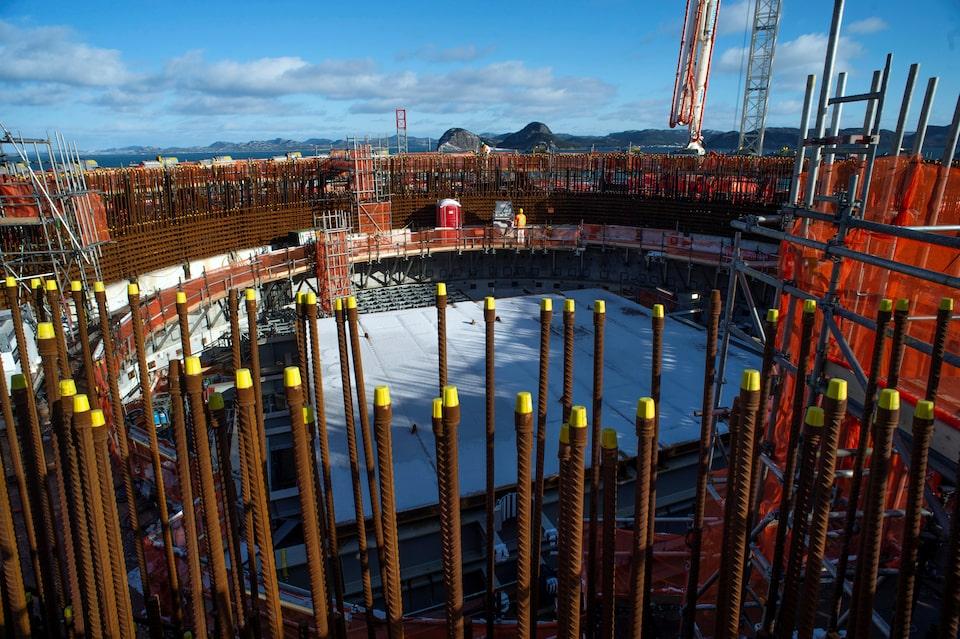
May 8 (Reuters) - Canadian oil and gas producer Cenovus Energy (CVE.TO) , opens new tab on Thursday posted a fall in first-quarter profit but managed to beat Wall Street estimates on the back of higher output and improved refining margins. The Calgary, Alberta-based company's U.S.-listed shares were up nearly 1.4% in premarket trading following the results. Sign up here. Energy producers in Canada have been benefiting from the completion of the Trans Mountain pipeline expansion project, which offers the only export route to international markets bypassing the U.S. The pipeline has raised its capacity to 890,000 barrels per day. Peer Imperial Oil (IMO.TO) , opens new tab last week posted its highest-ever first-quarter earnings, driven by stronger margins in its refining and fuel sales business. Suncor Energy(SU.TO) , opens new tab on Tuesday beat quarterly profit estimates on greater refinery production and sales volumes. Cenovus' total upstream production was 818,900 barrels of oil equivalent per day (boepd) in the first quarter, up from 800,900 boepd a year earlier. Its total quarterly downstream throughput was 665,400 barrels (bbl) per day, compared with 655,200 bbl per day a year ago. Refinery utilization in the Canadian Refining segment rose to 104% from 94% a year ago, while it rose to 90% in the U.S. Refining segment from 87%. CEOs of Canadian oil and gas producers, including Cenovus' Jon McKenzie, had said earlier in April they are seeking to avoid making abrupt decisions about spending or production, with oil prices hitting four-year lows and recession fears growing. Cenovus' first-quarter net income fell to C$859 million ($618.79 million) from C$1.18 billion a year earlier, as crude prices declined on uncertainty surrounding the U.S. economy, tariff policies and fears of oversupply. However, the company's quarterly profit per share of 47 Canadian cents surpassed analysts' average estimate of 37 cents per share, according to data compiled by LSEG. ($1 = 1.3882 Canadian dollars) https://www.reuters.com/business/energy/canadas-cenovus-energy-posts-lower-first-quarter-profit-2025-05-08/
2025-05-08 11:21
China resumes Brazilian soy imports from five firms Suspensions were due to phytosanitary issues Move comes ahead of Lula's state visit BEIJING, May 8 (Reuters) - China, the world's largest soybean buyer, has lifted restrictions for Brazilian soybean shipments from five firms previously suspended over phytosanitary concerns, the Brazilian government confirmed on Thursday. Earlier, Reuters reported, citing a source familiar with the matter and Chinese customs data, that China had resumed imports from the firms. Sign up here. "The decision was made after technical understandings between the health authorities of Brazil and China," Brazil's Agriculture Ministry said in a statement. Brazil is the world's largest soybean producer and exporter, and the top supplier to China as the trade war drives Beijing to diversify away from the U.S., its second-largest supplier. The source had said that the resumption of supplies began on April 25, weeks ahead of a planned state visit to China by Brazilian President Luiz Inacio Lula da Silva and at a time when China is trying to marshal a global coalition against the U.S. trade war. Reuters reported in January that China had suspended imports from related entities of Terra Roxa Comercio de Cereais, Olam Brasil, C.Vale Cooperativa Agroindustrial, Cargill Agricola S.A., and ADM do Brasil. Global giants like Cargill have many subsidiaries licensed to export to China. Brazil said at the time it intended to raise the issue with Beijing and its agriculture ministry last month provided officials there with information about the suspended firms. According to a Chinese customs database, all entities with the exact names of the five firms currently hold "normal" registration status. The database does not specify the resumption date, and Reuters was unable to verify their prior status. ADM do Brasil parent Archer-Daniels-Midland Co (ADM.N) , opens new tab, Cargill Inc - the privately-held U.S. grain trading giant and parent of Cargill Agricola SA - Terra Roxa Comercio de Cereais and the parent firms of the other two affected companies did not immediately respond to requests for comment. China's GACC and the Brazilian Embassy also did not respond to requests for comment. China, which purchases more than 60% of globally traded soybeans, sources over 70% of its imports from Brazil -further eroding U.S. market share. In 2024, China imported a record 105.03 million metric tons of soybeans, with more than 74 million tons coming from Brazil. Brazil's bumper harvest is expected to bolster China's soybean imports to a record high in the second quarter. https://www.reuters.com/sustainability/climate-energy/china-resumes-brazilian-soy-imports-5-suspended-firms-ahead-lula-visit-source-2025-05-08/

2025-05-08 11:16
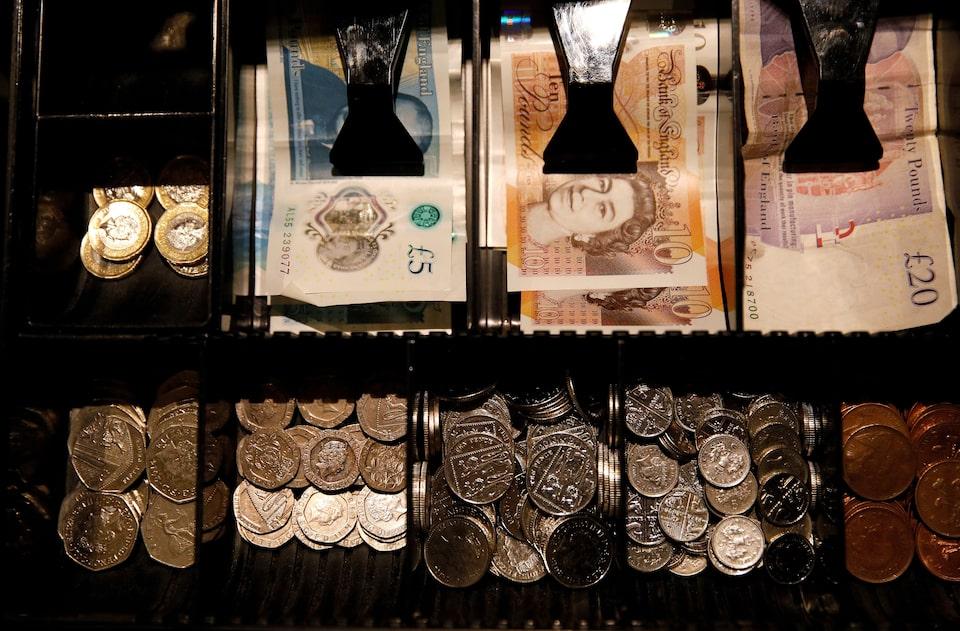
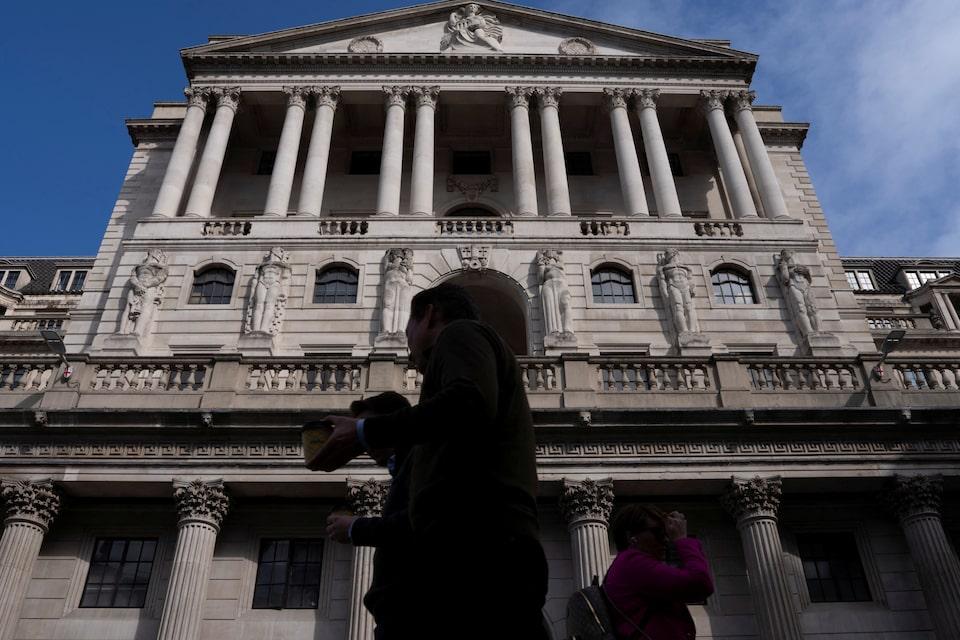
LONDON, May 8 (Reuters) - The pound rose on Thursday, after the Bank of England delivered a widely expected cut to interest rates, just as Britain was poised to strike a deal with the United States on trade. The BoE cut its main rate by a quarter point to 4.25%, despite an unexpected three-way split among policymakers as U.S. President Donald Trump's tariffs weigh on global economic growth. Sign up here. The pound was last up 0.2% on the day at $1.3311, having rallied from a session low of $1.3242 right before the BoE decision. UK stocks (.FTSE) , opens new tab, (.FTMC) , opens new tab pared some of the day's gains, but still showed a gain, with midcap stocks up 1%, outpacing the blue-chip index, which rose 0.2%. UK government bonds came under pressure, sending 10-year yields up 3.5 bps on the day to 4.491%, from 4.446% right before the BoE decision. https://www.reuters.com/world/uk/sterling-rises-even-boe-cuts-rates-britain-poised-us-trade-deal-2025-05-08/
2025-05-08 11:13
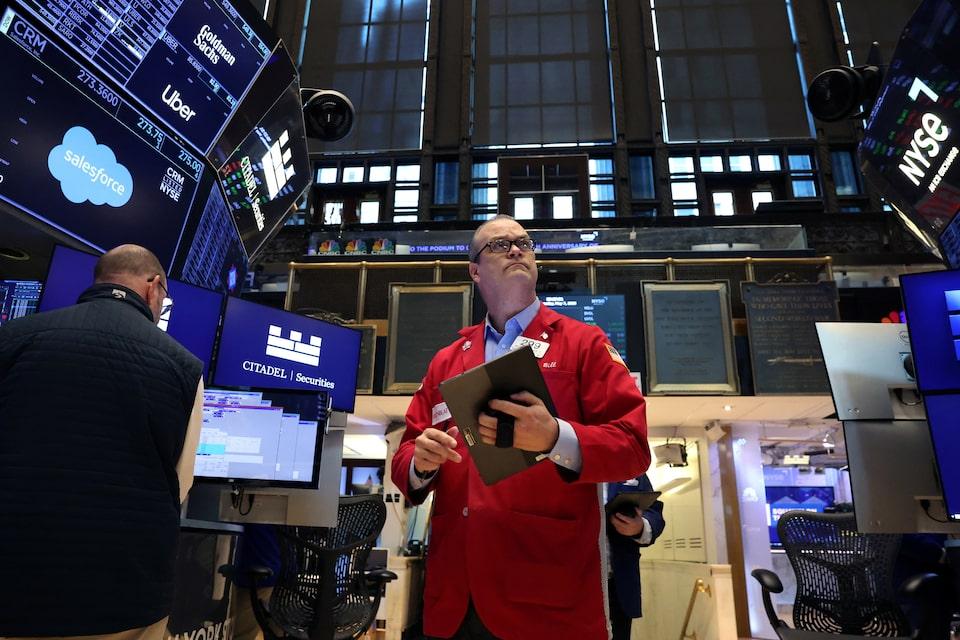
LONDON, May 8 (Reuters) - What matters in U.S. and global markets today By Mike Dolan , opens new tab, Editor-At-Large, Financial Industry and Financial Markets Sign up here. The spotlight hit Britain on Thursday as U.S. President Donald Trump's 'major trade deal' announcement looks set to provide a major relief for UK exporters, just as the Bank of England is set to cut interest rates. I'll get into all the market news below, and, for today's deep dive, I'll explain why Europe may be better prepared to absorb a deluge of global investment flows than many assume. Today's Market Minute * The Federal Reserve held interest rates steady on Wednesday but said the risks of higher inflation and unemployment had risen, further clouding the U.S. economic outlook. * Trump is expected to announce a trade deal between the United States and Britain on Thursday, the New York Times reported on Wednesday. * Ukraine is starting to consider a shift away from the U.S. dollar, possibly linking its currency more closely to the euro amid the splintering of global trade and its growing ties to Europe, Central Bank Governor Andriy Pyshnyi told Reuters. * Sentiment in the oil market has soured in recent weeks, but looking at current conditions on the ground - and refiners' profit margins - one would be forgiven for thinking that the oil market is doing extremely well. What gives? Reuters' columnist Ron Bousso explores this discrepancy. * Concern is mounting over just how big a hit the Chinese economy is going to take from the trade war with the United States, but so far the commodity most at risk - iron ore - is seemingly unaffected. Reuters' columnist Clyde Russell explains why in his latest piece. UK eyes 'major trade deal' A British official said the U.S. and UK were working to agree on lower tariffs for steel and autos, two sectors that have been hit by 25% U.S. levies. In return, Britain is likely to agree to lower its own tariffs on U.S. cars and cut a digital sales tax that affects U.S. tech groups. The status of a 10% "baseline" tariff imposed by Trump on most countries including Britain remained unclear. Awaiting a widely-expected quarter point UK rate cut later today, sterling appeared to shrug off the anticipated trade announcement. But the FTSE 250 (.FTMC) , opens new tab index of domestically facing mid-cap stocks rose almost 1% on the news to its highest point since late February. Meanwhile, the Federal Reserve chose not to change interest rates on Wednesday, a decision that was widely expected. The U.S. central bank flagged the high level of uncertainty ahead, arguing that it made it challenging to make any confident changes to policy or guidance. Embattled Fed Chair Jerome Powell highlighted the risk that trade upheaval could lift both unemployment and inflation, creating tensions in the Fed's dual mandate on jobs and price stability. "I don't think we can say which way this will shake out," Powell said. But Wall Street stocks (.SPX) , opens new tab ended higher nonetheless, emboldened by hopes that the week ahead will see at least some easing of planned U.S. tariffs amid expected deals with Britain and others as well as weekend talks in Switzerland with China. U.S. stock futures extended those gains overnight along with a broad advance in European and Asian bourses. Although the first-quarter U.S. earnings season has been sideswiped by suspended outlooks and foggy guidance due to the looming tariffs, estimated annual profit growth for S&P 500 companies during the first three months is running at 14% - almost twice what it was on April 1 and above the 12% forecast for the first quarter made at the start of the year. Elsewhere, US Treasury yields were steady to a touch higher after the Fed meeting, with $25 billion of 30-year bonds up for auction later on Thursday. The dollar index (.DXY) , opens new tab was slightly firmer, with the euro flirting with its lowest level in almost a month and China's offshore yuan slipping after this week's latest monetary easing from the People's Bank of China. Elsewhere, central banks in Sweden and Norway kept their interest rates on hold. Regional markets were unnerved by the escalating conflict between India and Pakistan. Trading was halted for an hour on Thursday at the Pakistan Stock Exchange (.KSE) , opens new tab after the benchmark index plunged as much as 6% following reports of drones being shot down in major cities including Karachi and Lahore. That came a day after Indian strikes on multiple targets in the country fanned fears of a larger military conflict between the nuclear-armed neighbours. The Indian rupee , equities (.NSEI) , opens new tab and bonds also weakened in late afternoon trading there. Europe braces for transatlantic capital reverse Europe may be better prepared to absorb a seismic shift in global investment flows than many assume, as a number of regulatory twists are set to bolster euro market depth. Trump's unilateral redrawing of world trade rules is raising the question of whether giant U.S. capital surpluses will have to unwind if tariff hikes succeed in squeezing America's persistent trade deficits. For macro-economists, those are two sides of the same coin. If the administration succeeds in rebalancing the U.S. economy, defusing dollar over-valuation and regaining the country's manufacturing edge, that will have to involve some shrinkage of the roughly $26 trillion U.S. Net International Investment Position, the excess of foreign capital in U.S. assets over U.S. investments overseas. During March and April, there was considerable concern that foreign capital flight was indeed underway as U.S. stocks, bonds and the dollar fell in tandem. The sell-off was driven by mounting anxiety about the potential for a self-inflicted U.S. recession or stagflation, fraying U.S. institutions and the dollar's role as a safe haven. At the same time, the euro and euro stocks soared, in part due to Germany's equally dramatic new spending and borrowing plans that reignited hopes for longer-term growth and an expanded pool of high-quality debt assets. But doubts lingered about whether Europe's smaller and shallower capital markets could ever accommodate a repatriation of the deluge of savings that have poured into U.S. assets over the past decade-plus. Some $7 trillion in European savings has flocked to Wall Street equities since 2012. Indeed, many reckon American markets attracted such vast sums as much because of their unrivalled scale and liquidity as any 'exceptional' American economic or corporate performance per se. In turn, the euro's smaller and more fragmented markets have raised doubts about whether the currency could ever challenge the dollar's wide usage. NOT JUST 'NICE TO HAVE' But this relative imbalance is not set in stone, especially if Europe's markets develop apace alongside a push to meet post-pandemic and Trump-linked challenges with a more "high-pressure" economy and industrial policies. TS Lombard's Davide Oneglia argues the Trump trade shock has underlined the urgency of last year's report from former European Central Bank chief Mario Draghi , opens new tab on measures that the EU needs to pursue to keep up with bigger economic rivals. And, evidenced in part by Germany's fiscal bazooka this year, EU leaders are now acutely aware that Draghi's demands were not just 'nice to haves', including financial market reforms. Oneglia highlights Draghi's conclusion that some 80% of the money required for transformation of European competitiveness will need to be financed by the private sector. And on that score, some progress appears to be underway. "EU policymakers finally appear to be getting serious about integrating and deepening European financial markets," Oneglia wrote this week. BROADER, DEEPER, WIDER Oneglia pointed to two specifics that should help expand long-term institutional investment across European markets. First is reform of "Solvency II" regulatory rules governing the 10 trillion euro insurance industry. This could free up additional capital and allow a wider pool of public and private equity to be invested in the continent. The second measure is a "wildly underreported" push to channel large European private savings into capital markets by developing a more expansive private pension industry across the region. On the latter, the European Commission this year rebranded the old Capital Markets Union as the Savings and Investment Union. The private pension push accompanying this is likely to involve requirements for things like auto-enrolment in pensions and targets for national implementation as soon as this year. In that spirit, Germany's new government has also made developing private pensions a priority. Why this matters is that European households currently hold about a third of their savings in cash and deposits, more than twice the share U.S. households hold. And German savers are the most extreme, with more than 40% of their financial wealth in cash. Channeling these savings into institutional investment funds will go a long way to deepening European markets. Of course, a crush of untapped savings and returning overseas investment could flood European markets too quickly, saddling the region with an overvalued currency - the very issue America has fretted about for the past decade. Be careful what you wish for, as the old saying goes. "Exorbitant privilege" may not be all it's cracked up to be in that scenario. Europe has to decide how to manage those investment flows as well as what to do with the finance. Chart of the day The Bank of England is expected on Thursday to nudge its main interest rate below the Federal Reserve's key rate for the first time since August. This will restore the U.S. rate premium that's existed in all but a brief period over the past decade. Markets now expect three more cuts from both central banks over the remainder of the year. However, after a fresh wobble in British government bond yields earlier this year, 10-year gilt yields are now almost 20 basis points above U.S. Treasury equivalents, though that gap has roughly halved in the past month. Today's events to watch * Bank of England policy decision, press conference and monetary policy report * U.S. weekly jobless claims, Q1 productivity and unit labor costs * Bank of Canada governor Tiff Macklem speaks * US corporate earnings: ConocoPhilips, Paramount Global, News Corp, Warner Bros Discovery, Expedia, Match, Molson Coors, Sempra, Tapestry, Alliant, Insulet, Viatris, Microchip Technology, Mckesson, Monster, Akamai, Solventum, TKO, Federal Realty, Epam, Kenvue * U.S. Treasury sells $25 billion 30-year bonds Opinions expressed are those of the author. They do not reflect the views of Reuters News, which, under the Trust Principles , opens new tab, is committed to integrity, independence, and freedom from bias. https://www.reuters.com/markets/us/americas-uk-eyes-major-trade-deal-2025-05-08/
2025-05-08 11:11
Bank of England cuts main interest rate to 4.25% from 4.5% Two BoE policymakers unexpectedly oppose cutting rates Tariffs expected to knock growth, push down UK inflation Markets ditch bets on back-to-back May-June rate cuts LONDON, May 8 (Reuters) - (This May 8 story has been corrected to say two-thirds of the impact is due to the direct effect of tariffs on demand for UK imports, not because of weaker global growth, in paragraph 16) The Bank of England cut interest rates on Thursday to tackle the expected hit from U.S. President Donald Trump's tariffs but a surprise three-way split among policymakers cooled expectations that it might speed up future moves. Sign up here. The BoE's rate-setters voted 5-4 in favour of cutting borrowing costs by quarter of a percentage point to 4.25%. Two Monetary Policy Committee members, Swati Dhingra and Alan Taylor, voted for a bigger half-point cut. Chief Economist Huw Pill and Catherine Mann wanted to keep rates on hold. No economist polled by Reuters had expected any vote against a rate cut. Sterling rose and two-year borrowing costs jumped as markets saw a much reduced chance of another rate cut in June. Thursday's decision was the British central bank's first since Trump announced wide-ranging tariffs on April 2, which unleashed temporary market turmoil and prompted the International Monetary Fund to cut its global growth forecasts. The BoE said it thought tariff increases by the U.S. and other countries would trim British economic growth and push down on inflation, but stressed the outlook was unclear. "The past few weeks have shown how unpredictable the global economy can be. That's why we need to stick to a gradual and careful approach to further rate cuts," Governor Andrew Bailey said. The BoE has now cut interest rates by the same amount as the U.S. Federal Reserve since mid-2024 but by less than the European Central Bank due to concerns about high wage growth as well as the risk of persistently above-target inflation. "The two votes from committee members to hold rates steady sent a more hawkish message to the market," said Matthew Landon, global market strategist at J.P. Morgan Private Bank. "Beneath the hood, we still think that the conditions for cuts remain in place." NO 'AUTOPILOT' FOR RATES The BoE said it had no pre-set path for rates. It also said the impact of global trade tensions "should not be overstated". "Interest rates are not on autopilot. They cannot be," Bailey told a press conference. "Instead, the MPC must continue to respond carefully to the evolving economic circumstances." For three of the five policymakers who voted for a quarter-point reduction, this week's decision would have been "finely balanced" without the escalation of trade tensions, the minutes showed. Bailey indicated to reporters he was among that group. Based on the situation as of April 29, the BoE estimated the U.S. tariffs would lower British inflation by 0.2 percentage points in two years' time and reduce the size of the economy by 0.3% after three years. Later on Thursday, Trump said he would scrap 25% tariffs on imports of British steel and lower tariffs on cars from 27.5% to 10%, the rate which will remain for most other goods imports. Bailey, speaking before details of the deal were public, said it would "help to reduce uncertainty". However, the BoE said about two-thirds of the damage it forecast to British growth was the direct impact of tariffs in reducing demand for British exports in the U.S. and elsewhere, while the remainder reflected the impact of trade policy uncertainty in lowering global growth. On Wednesday, Fed Chair Jerome Powell highlighted ongoing uncertainty about the impact of trade policy on the economy as the U.S. central bank held off from a further rate cut. INFLATION FORECAST CUT While investors still expect the BoE to lower interest rates close to 3.5% by year-end, June's meeting now looks much less likely to yield a cut - with the probability falling to under 20% from around 60% before Thursday's announcement. Two-year gilt yields rose around 7 basis points after the BoE announcement and finished the day 12 bps higher at a two-week high of 3.93% as investors digested the U.S. deal. Asked by CNBC television about the market reaction to the rate cut, Bailey said it reflected how the BoE had said there were still upside as well as downside risks to inflation. In a quarterly forecast update, the BoE trimmed its expectation for inflation this year, seeing it peaking at around 3.5%, lower than a previous forecast of around 3.75% though up from the latest official reading of 2.6% in March. It sees inflation back at its 2% target in the first quarter of 2027 - nine months earlier than it forecast in February. The central bank expects the economy to grow this year by 1%, a bit more than February's forecast of 0.75%, thanks to a strong end to 2024 and robust official data at the start of 2025 which pointed to 0.6% quarterly growth in the first quarter. However, it said the first-quarter growth bounce looked like a one-off and for 2026 it cut its growth forecast to 1.25% from 1.5%. https://www.reuters.com/world/uk/boe-cuts-rates-425-it-sees-tariff-hit-growth-2025-05-08/
2025-05-08 10:37
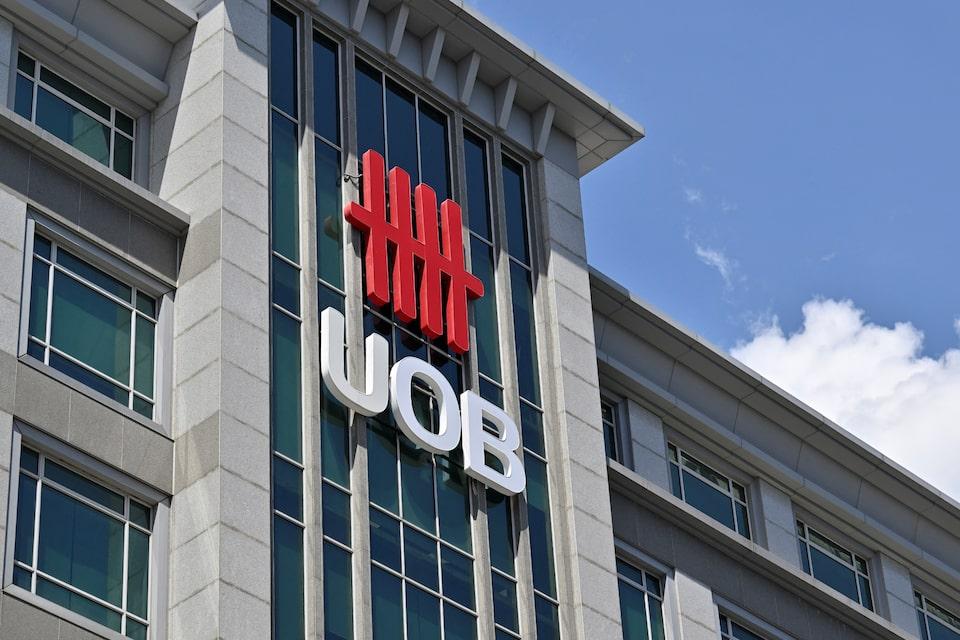
Asian currency rally boosts demand for wealth, forex products Trump's tariffs push investors from U.S. assets to Asia Currency volatility drives demand for Asia banks' forex services HONG KONG/SINGAPORE, May 8 (Reuters) - A sharp rally in Asian currencies is set to boost demand for wealth and forex products as clients seek alternatives to U.S. dollar-denominated assets and demand for hedging grows amid trade tariff uncertainties, bankers and analysts say. The rally in the currencies since last week, starting with the Taiwan dollar and spreading outwards to those of China, Hong Kong, Malaysia, Singapore and South Korea, sounds a warning for the greenback, and is seen as an "Asian crisis in reverse". Sign up here. "Most of our clients are Asian, so if their own currency is growing, that gives them more purchasing power for wealth management products," Tan Su Shan, chief executive of Singapore's biggest bank DBS Group (DBSM.SI) , opens new tab, said on Thursday. A strong Singapore dollar would help bring a "pool of wealth" into the leading global wealth management hub said Leong Yung Chee, the chief financial officer of its United Overseas Bank or UOB (UOBH.SI) , opens new tab. Singapore's currency has risen more than 4% since U.S. President Donald Trump hiked tariffs on April 2. "We hope to benefit from that in terms of the wealth management of some businesses that we do for retail clients," Leong said, during the bank's earnings briefing on Wednesday. The expectations underscore how President Donald Trump's trade policies are pushing investors out of U.S. assets and moving their money into Asia, amid growing questions about the status of the greenback as a safe haven. A weaker dollar is expected to cloud demand for popular U.S. fixed-income assets among wealth management clients in Asia, who may now be more open to investing in local currency denominated assets, analysts said. The return of assets to Asia will further bolster the allure of the region as a leading global wealth hub. Between 2025 and 2028, Asia is set to account for nearly half of all new high-net-worth individuals, or those with more than $10 million in assets, according to Knight Frank's 2025 Wealth Report issued in March. The Asian currency swings have not yet hugely influenced investor sentiment, said Morningstar senior analyst Michael Makdad. However, over the long term, currency trends could affect flows as investments are allocated out of U.S. assets. In Taiwan, a substantial portion of household financial assets has traditionally been allocated to life insurance products that invest heavily in dollar assets, and a leap of 8% in its currency within two days sent tremor across the sector. "If Taiwanese life insurers struggle to generate attractive returns from U.S. fixed-income investments, it may open the door for banks to offer more alternative wealth management solutions instead," Makdad said. 'TAILWIND AND HEADWINDS' Chinese exporters have accumulated a substantial amount of money in US-dollar-denominated assets, previously on the expectation of the yuan getting weaker, said Christopher Beddor, deputy China research director of Gavekal Dragonomics. If currency expectations shift and the interest-rate gap narrows, there could be "a quite meaningful amount of money suddenly flowing into yuan-denominated Chinese bank accounts", he said. "We're not there yet, but it's in the back of the mind for many investors." The heightened volatility in currency markets is also expected to drive demand for regional banks' forex services, bankers said, though local clients' exports made less competitive by stronger currencies is a concern. "They will provide both tailwind and headwinds," said DBS's Tan. "A stronger currency does affect their ability to export. It will affect their cost curves as well, and so the impact will depend on whether you're a net exporter or importer." In Japan, banks may benefit from corporate clients looking beyond usual hedging tools to reduce foreign exchange risks. Japanese firms have generally gone for the simplest hedging strategy - selling dollars and buying yen - but the urgency of the tariff situation is prompting them to consider other derivatives, said Noriaki Masuda, deputy manager in the transaction banking department of Mitsubishi UFJ Bank. Company profitability will be affected when exchange rates fluctuate sharply, Masuda said, adding, "There may be cases where companies will be forced to restructure business distribution or raise prices." https://www.reuters.com/business/finance/asian-banks-see-big-boost-wealth-business-currencies-rally-2025-05-08/