2026-01-18 19:34
New integration deal appears to be blow for Syria's Kurds Syrian forces seize oil-rich regions, key dams SDF head confirmed the group agreed to withdraw from two Arab-majority provinces Kurdish leader, Syrian president to meet on Monday TABQA, Jan 18 (Reuters) - Syria and the main Kurdish fighting force struck a wide-ranging deal to bring Kurdish civilian and military authorities under central government control on Sunday, ending days of fighting in which Syrian troops captured territory including key oil fields. U.S. envoy Tom Barrack hailed a "pivotal inflection point", but noted that there was still challenging work to be done to finalise details of a comprehensive integration deal. Sign up here. The terms of the deal appeared to be a major blow for the Kurdish-led Syrian Democratic Forces (SDF), which ran a semi-autonomous region in Syria's northeast for more than a decade. SDF head Mazloum Abdi confirmed in a later statement that the group agreed to withdraw from two Arab-majority provinces - Deir al-Zor, the country’s main oil- and wheat-producing area, and Raqqa, home to key hydroelectric dams along the Euphrates. The SDF had resisted integration into the Islamist-led government that has ruled Syria since Bashar al-Assad was toppled in late 2024. The 14-point deal published by Syria's presidency featured the signatures of both Syrian President Ahmed al-Sharaa and Abdi, who appeared to have signed separately , state media reported. Abdi said he is set to meet Sharaa in Damascus on Monday and would share the details of the agreement with the public after his return, Kurdish media reported. The SDF head said they remained committed to protecting the "achievements" of the Kurdish region in the northeast. “This war was imposed on us. We wanted to prevent it, but unfortunately, because it was planned by many forces, it was imposed on us," Kurdish media quoted him as saying. NEW DEAL PRESENTS TOUGH TERMS Syria's government and the SDF engaged in months of talks last year to bring Kurdish-run military and civilian bodies under Syrian state institutions by the end of 2025. But after the deadline passed with little progress, clashes broke out and grew into a government offensive on Kurdish-held areas. Sunday's agreement said the clashes should end, although intermittent fighting was still reported in some areas. The deal stipulates that all SDF forces will be merged into the central defence and interior ministries as "individuals" and not as whole Kurdish units. The latter had been a SDF demand. It also says all border crossings, gas and oil fields and prisons and camps holding Islamic State fighters and affiliated civilians captured after the group's defeat in 2017 would be handed over, another point the SDF had long resisted. A Syrian government official said security at those locations remained "quite good" on Sunday evening and that Damascus was keen for a transition of control "that doesn't impact the mission to defeat the Islamic State, and does not provide an opportunity for Islamic State elements or cells" to destabilise security in the area. The government will formally take over Deir al-Zor and Raqqa. Syrian state media published photos of residents in Raqqa celebrating the expected handover. The Syrian official said the handover should take place within the next 24 to 48 hours and was "the most important indication of the seriousness behind implementing this plan." The deal did appear to offer some concessions. It said the SDF could nominate military and civilian figures to assume key roles in the central government and that Hasakeh province, which has a sizeable Kurdish population and is the main stronghold of the SDF, would have a governor appointed by consensus. It also commits the SDF to expelling all non-Syrian figures affiliated to the Kurdistan Workers' Party (PKK), a Kurdish militant group which fought a decades-long insurgency in Turkey. Sharaa had accused the PKK of hijacking SDF decision-making and preventing progress in integration, which the SDF denies. US CORNERED BETWEEN TWO ALLIES Turkey's foreign ministry said it hoped the "agreement will contribute to the security and peace of the Syrian people, as well as the entire region, particularly Syria's neighbours". "With the recognition of the realities on the ground, we hope that all groups and individuals in the country fully understand that Syria's future lies not in terrorism and division, but in unity, integration and cohesion," it added. The fighting has cornered the U.S. between its longtime support for the SDF as a key partner in fighting Islamic State, and its new backing for Sharaa, who has pledged to unite Syria under one central government that protects all Syrians. Barrack met with SDF head Abdi in the Kurdistan region of Iraq on Saturday and with Sharaa in Damascus on Sunday. Syrian troops kept up their advance on Sunday even after the U.S. military had publicly urged them to stop. A senior Kurdish commander told Reuters before the deal was announced that the U.S. should intervene more forcefully to end the fighting. Kurdish concerns about Sharaa's government have been deepened by bouts of sectarian violence last year, when nearly 1,500 Alawites were killed by government-aligned forces in western Syria and hundreds of Druze died in southern Syria, some in execution-style killings. https://www.reuters.com/world/europe/syrian-forces-advance-deeper-into-usbacked-kurdishcontrolled-northeast-2026-01-18/
2026-01-18 17:42
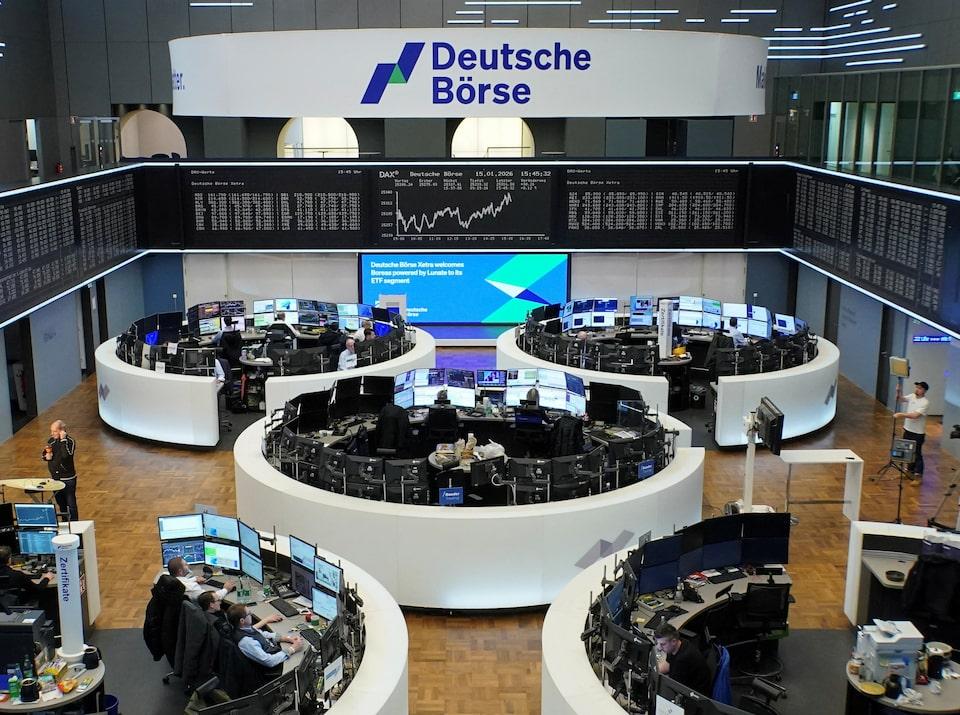
LONDON, Jan 18 (Reuters) - U.S. President Donald Trump has promised to implement further tariffs on imports of goods from some European countries until the U.S. is allowed to acquire Greenland, a move that could send a jolt through financial markets when they reopen on Monday. In a post on Truth Social, Trump said additional 10% import tariffs would take effect on February 1 on goods from Denmark, Norway, Sweden, France, Germany, the Netherlands, Finland and Great Britain — all already subject to tariffs imposed by Trump. Sign up here. Major EU states on Sunday decried the tariff threats against European allies as blackmail, as France proposed responding with a range of previously untested economic countermeasures. GEORGE SARAVELOS, GLOBAL HEAD OF FX RESEARCH, DEUTSCHE BANK, LONDON: "We are not so sure the impact on the euro will be as negative as is commonly assumed. "European countries own $8 trillion of U.S. bonds and equities, almost twice as much as the rest of the world combined. "With dollar exposure still very elevated across Europe, developments over the last few days have potential to further encourage dollar rebalancing." HOLGER SCHMIEDING, CHIEF ECONOMIST, BERENBERG, LONDON: "For Europe, this is a bad geopolitical headache and a moderately significant economic problem. But it could also backfire for Trump, who faces resistance from senior Republicans in the U.S. "Logic still points to an outcome that respects Greenland's right to self-determination, strengthens security in the Arctic for NATO as a whole, and largely avoids economic damage for Europe and the U.S." TONY SYCAMORE, MARKET ANALYST, IG, SYDNEY: "Markets at this point are expected to reopen this week in 'risk-off' mode. "This latest flashpoint has heightened concerns over a potential unravelling of NATO alliances and the disruption of last year’s trade agreements with several European nations, driving risk-off sentiment in stocks and boosting safe-haven demand for gold and silver." CARSTEN NICKEL, DEPUTY DIRECTOR OF RESEARCH, TENEO, LONDON: "The most likely way forward is a return to the trade war that was put on hold in high-level U.S. agreements with the UK and the EU in summer. "The immediate takeaway is that deals with the U.S. administration hardly provide certainty over the longer term. This risk was already evident from the fact that the summer agreements left many technical questions unanswered. "The key question to watch is whether the EU will try to keep the confrontation confined to such a more “classic” trade war, or whether calls for a harsher line prevail." NEIL SHEARING, GROUP CHIEF ECONOMIST, CAPITAL ECONOMICS, LONDON: "At face value, the tariffs would shave a few tenths of a percentage point off GDP in the affected economies while adding a similar amount to U.S. inflation. "The political and geopolitical consequences would be much greater. "Any attempt by the U.S. to seize Greenland by force or coerce Denmark into ceding the territory would drive a wedge through transatlantic relations and inflict potentially irreparable damage on NATO. "While European governments have shown a willingness to compromise with the U.S. on issues such as trade, defence spending and Ukraine, sovereignty over Greenland is unlikely to be negotiable." KALLUM PICKERING, CHIEF ECONOMIST, PEEL HUNT, LONDON: "While a lot will depend on what information we get from either the U.S. or Europe before markets open on Monday, given what we know so far, the initial moves are likely to be decidedly risk-off. Gold and silver are likely to rally while equities come under pressure. "Given Trump’s recent attacks on the U.S. Federal Reserve, this serious escalation with Europe could add even more downward pressure on the dollar if it adds to worries that U.S. policy credibility is becoming critically impaired – which could be amplified by a desire, especially among Europeans, to repatriate capital and shun U.S. assets, which may also pose downside risks to lofty U.S. tech valuations." https://www.reuters.com/world/asia-pacific/view-markets-edge-trump-threatens-more-tariffs-europe-over-greenland-2026-01-18/
2026-01-18 11:43
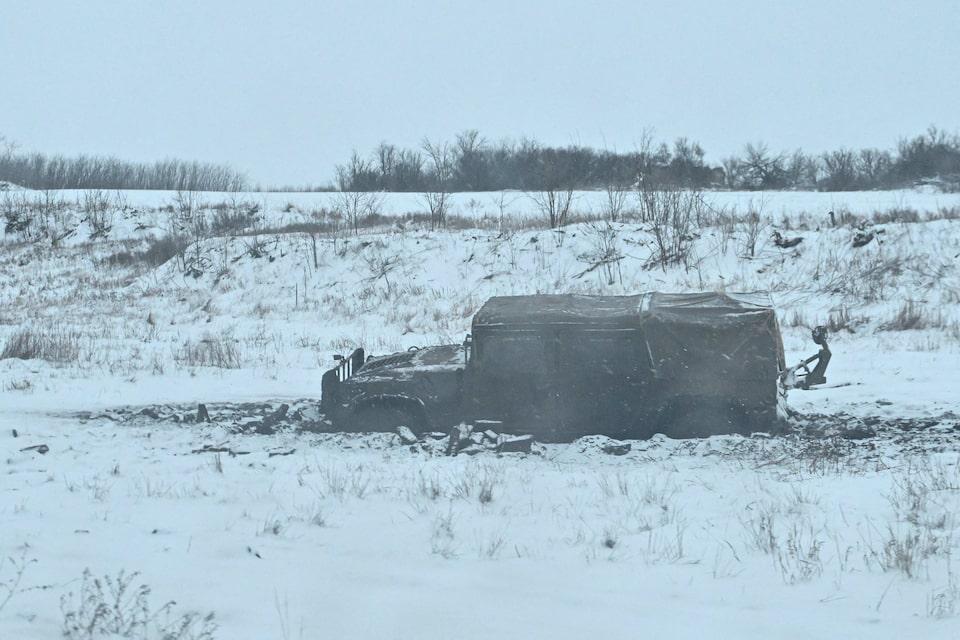
200,000 consumers without power in Russian-held Zaporizhzhia Drone strikes also reported in Belgorod and North Ossetia One person killed in Russia's Belgorod MOSCOW, Jan 18 (Reuters) - More than 200,000 consumers in the Russian-held part of Ukraine's Zaporizhzhia region were left without electricity on Sunday, the Moscow-installed regional governor said, after a Ukrainian drone strike on Saturday. In a statement posted on Telegram, Yevgeny Balitsky said that work was ongoing to restore the power supply, but that almost 400 settlements remain without electricity. Sign up here. Temperatures are well below freezing throughout the southeastern Zaporizhzhia region, around 75% of which is controlled by Russia. Russia has frequently bombarded Ukraine's power infrastructure throughout its nearly four-year war, causing rolling daily blackouts, and has also targeted heating systems this winter. Separately, the governor of the Russian border region of Belgorod, which has come under regular Ukrainian attack since 2022, said that one person had been killed and another wounded by a drone strike on the border village of Nechaevka. Further south, in the Caucasus mountains region of North Ossetia, two children and one adult were injured when a Ukrainian drone struck a residential building in the town of Beslan, the region's governor said. https://www.reuters.com/world/drone-strike-cuts-power-supply-russia-held-parts-ukraines-zaporizhzhia-region-2026-01-18/
2026-01-18 10:21
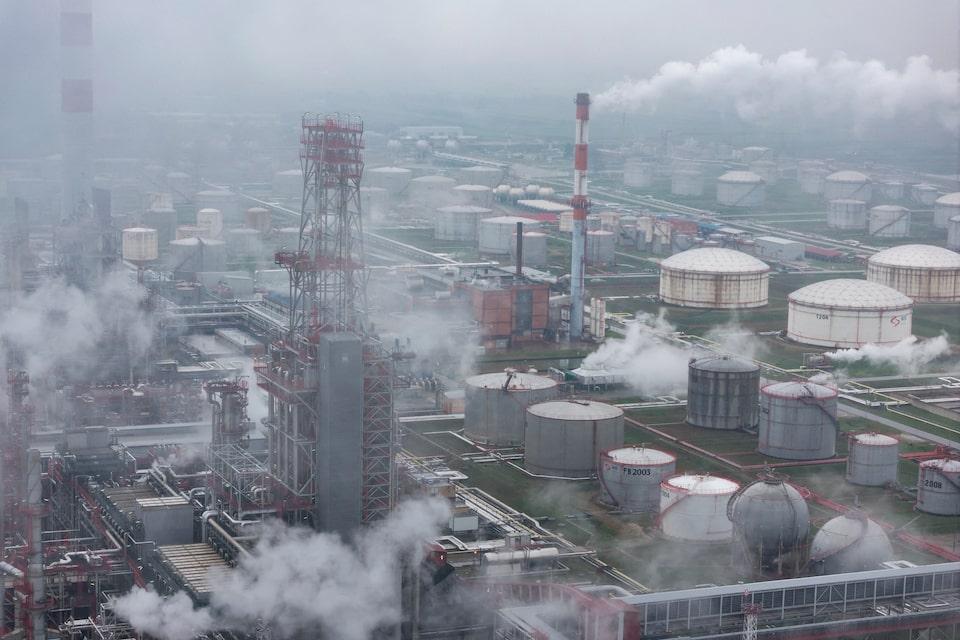
ATHENS, Jan 18 (Reuters) - The majority Russian-owned oil firm NIS has restarted a refinery in Serbia, resuming imports of crude oil after securing a waiver on sanctions imposed by the United States, Serbia's energy minister said on Sunday. Energy Minister Dubravka Djedovic Handanovic said in an Instagram post that the refinery had been restarted after a pause of almost two months. Sign up here. She said the first diesel to be produced by the refinery after the restart should be on the market by January 27. The U.S. Treasury Department's Office of Foreign Assets Control (OFAC) imposed sanctions on NIS - in which the majority stake belongs to Russia's Gazprom Neft (SIBN.MM) , opens new tab and Gazprom (GAZP.MM) , opens new tab - in October as part of broader measures targeting Russia's energy sector over Moscow's war in Ukraine. NIS had until late March to negotiate the divestment of the stakes held by the Russian firms and it is in the midst of negotiating a sale to Hungary’s MOL (MOLB.BU) , opens new tab. Hungarian Foreign Minister Peter Szijjarto said on Thursday that he expects that the initial deal for the sale will be approved by OFAC in the coming days. NIS, which operates the only oil refinery in Serbia, was granted a sanctions reprieve by OFAC until January 23, allowing it to import crude oil through Croatia’s JANAF (JANF.ZA) , opens new tab pipeline. Gazprom and Gazprom Neft own 11.3% and 44.9% of NIS, respectively. The Serbian government has a 29.9% stake. https://www.reuters.com/sustainability/boards-policy-regulation/russian-owned-us-sanctioned-nis-restarts-serbia-refinery-2026-01-18/
2026-01-18 06:10
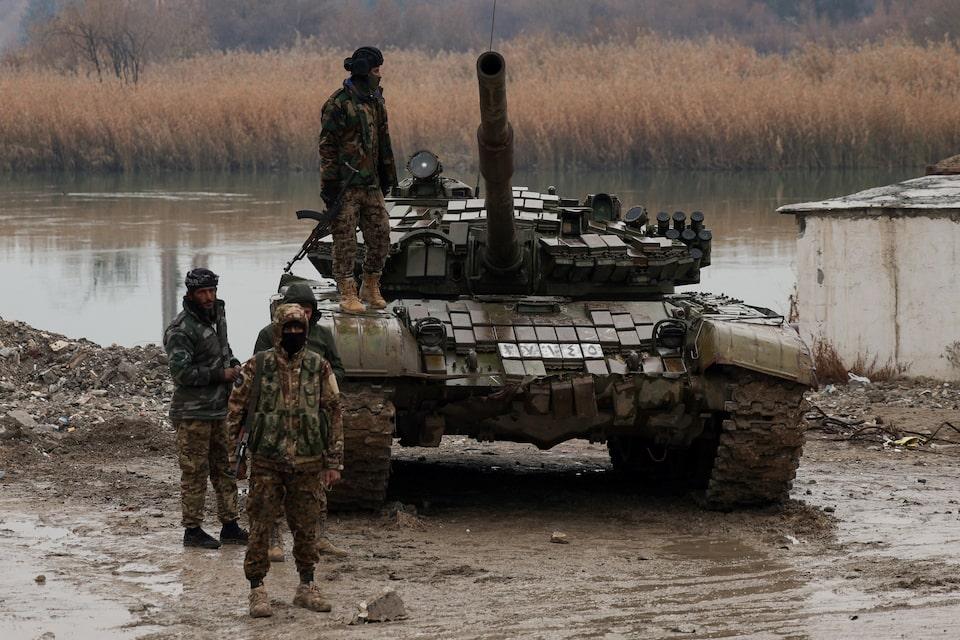
Jan 18 (Reuters) - Syrian troops fighting U.S.-backed Kurdish-led forces seized the Omar oil field, the country’s largest, and the Conoco gas field in the eastern Deir Zor province as allied Arab tribal forces advanced in the oil-rich area along the border with Iraq, officials and security sources said on Sunday. The takeover of the oil fields that lie east of the Euphrates River — a main source of revenue for the Kurdish-led forces — was a major blow to the group. Sign up here. Syrian government officials said the oil wealth the militia had controlled to sustain its self-administered region had deprived the state of much‑needed resources. Syrian President Ahmed al-Sharaa said last week it was unacceptable for a militia to control a quarter of the country and hold its main oil and commodities resources. The Syrian army pressed ahead into predominantly Arab-populated areas of northeast Syria controlled by the U.S.-backed Syrian Democratic Forces (SDF), despite U.S. calls to halt its advance. A government source said Kurdish-led forces were overcome after advances led by the Arab tribal fighters, allowing the government and its tribal allies to move into a stretch of territory of more than 150 km along the eastern bank of the Euphrates stretching from Baghouz near the Iraqi border towards key towns, including al-Shuhail and Busayra. Syrian government officials said the advances effectively brought most of Deir al-Zor province — the country’s main oil- and wheat-producing area along the Euphrates — under their control. Late on Saturday, the army also took control of the northern city of Tabqa and its adjacent dam, as well as the major Freedom Dam, formerly known as the Baath Dam, west of Raqqa. Syrian Kurdish authorities have not acknowledged the loss of those strategic sites and said fighting continued near the dam area, accusing Damascus of breaching an agreement on the withdrawal of forces from areas east of Aleppo to expand its offensive. Syrian Kurdish officials said factions aligned with the government were attacking their forces despite efforts to reach a peaceful outcome. The civil administration that runs the region said Damascus was intent on sowing divisions between Arabs and Kurds. “We are at a critical juncture. We either resist or live in dignity and face all types of injustice,” their statement said, urging residents of the majority-Arab areas to stand by the SDF. “We call on our people, especially the youth, to take up arms and prepare to resist any attack. We are facing a war for our survival,” it added. The government had called on SDF fighters — most of whom are from Arab tribes — to defect. It says hundreds have already switched sides and joined tribal forces fighting the SDF. Dozens of Arab tribal leaders have said they had been marginalised under Kurdish leadership, a claim the SDF denies, saying its ranks reflect the diversity of Syrian society. https://www.reuters.com/world/middle-east/syrian-forces-seize-major-oil-gas-fields-eastern-syria-security-sources-say-2026-01-18/

2026-01-18 04:54
BEIJING, Jan 18 (Reuters) - China, the world's largest iron ore consumer, has received its first shipment of iron ore from the Simandou mine in Guinea in West Africa, in which Beijing has heavily invested to increase supply security. China, which imports 80% of its iron ore from Australia and Brazil, has been attempting to diversify its supply by expanding domestic output and investing in overseas mines. Sign up here. A vessel carrying nearly 200,000 metric tons of iron ore from Simandou arrived in Majishan port in East China's Zhejiang province on January 17 after a 46-day voyage, China Baowu Steel Group, the world's largest steel producer, said in a statement on its WeChat account on Saturday. Simandou has a planned yearly production capacity of 120 million tons and is made up of four mining blocks that yield a high-grade ore that is 65% iron. Investors in the four blocks include Rio Tinto (RIO.L) , opens new tab(RIO.AX) , opens new tab, China-owned Chalco (601600.SS) , opens new tab and Winning Consortium Simandou (WCS), a Singaporean-Chinese partnership. China Baowu is also a key shareholder in the project after completion of the transfer of shareholding rights by WCS. Underlining how important the Simandou project is to Beijing, China's Vice Premier Liu Guozhong attended the commissioning of the mine in Guinea in November. A second Simandou iron ore shipment departed Guinea in late December, according to China Baowu's statement. Beijing set up China Mineral Resources Group in 2022 to centralise iron ore purchases and get better terms from miners. (This story has been corrected to clarify the ownership structure of the Simandou project in paragraph 4-5) https://www.reuters.com/world/asia-pacific/china-receives-first-shipment-simandou-iron-ore-2026-01-18/