2025-05-08 06:44
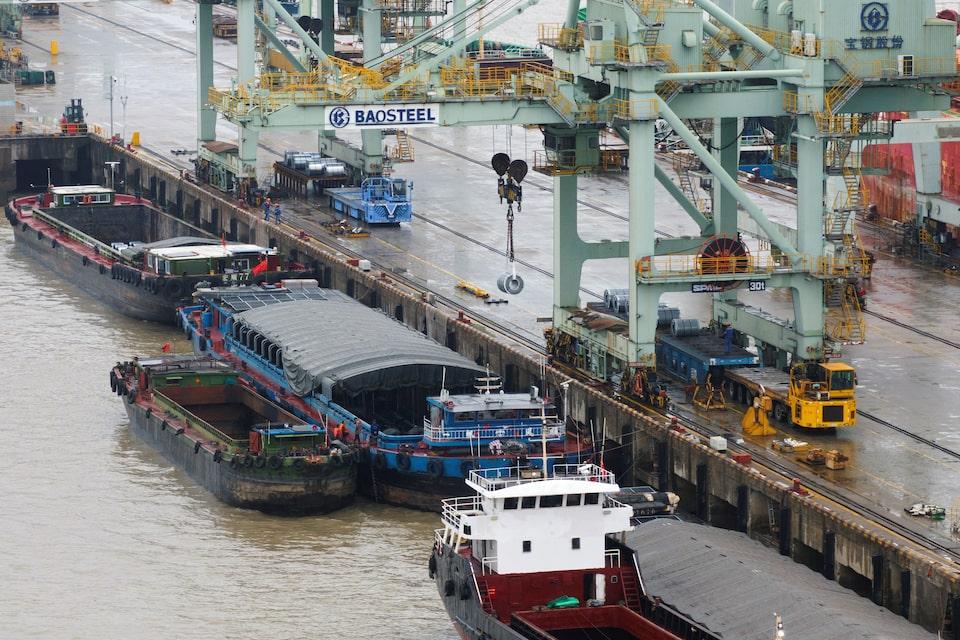
BEIJING, May 8 (Reuters) - China's steel exports are set to slump in the second quarter, threatening to exacerbate a supply glut at home, analysts and traders said, as the trade war and a wave of protectionism moving in its wake crimps export markets. Second-quarter shipments from the world's largest steel producer and exporter are forecast to fall by up to a fifth from the first quarter, said eight analysts and traders, who also expect exports to worsen further later in the year. Sign up here. That would also leave second quarter shipments lower than in the same period in 2024. Steel exports have been hit by a double blow as Washington's tariffs choke off the transshipment trade, where third countries resell Chinese steel to the U.S., and top customers like South Korea and Vietnam impose their own duties to avoid steel then being rerouted and dumped in their markets. "It's certain that total exports will slide in Q2," said a Chinese steel trader on condition of anonymity as they are not authorised to speak to media. "One can look at Middle East, Africa and South America as alternative outlets but the problem is no country can absorb such a huge capacity." China's rising steel exports have helped partly offset weak demand from the battered property sector and any decline will redirect steel back home, depressing prices, eroding steelmaker profitability and denting their appetite for inputs like iron ore. First-quarter exports hit the highest level since 2016 as mills rushed to get steel out of the country before the then-rumoured tariffs were announced. While the steel industry has long expected near-record exports to ultimately trigger some backlash, the magnitude of protectionism unleashed by the trade war between Washington and Beijing has surprised many. The Chairman of China's largest listed steelmaker, Baosteel (600019.SS) , opens new tab, said late last month the sector's exports faced "unprecedented" pressure and more steel left at home would intensify oversupply. Overseas orders for a large Chinese exporter fell between 20% and 30% last month versus the month before, according to an April survey compiled by consultancy Mysteel. There are also concerns the trade war could spillover into products heavily reliant on steel, like electric vehicles or home appliances, weakening the other major source of steel demand outside the property sector, said Ge Xin, deputy director at consultancy Lange Steel. "It takes time for that impact to permeate through into the upstream steel market, likely reflected in data in the second quarter when home demand seasonally slowed, aggravating the supply glut situation." ($1 = 7.2251 Chinese yuan) https://www.reuters.com/world/china/trade-war-set-slash-chinas-steel-exports-aggravating-oversupply-home-2025-05-08/
2025-05-08 06:41
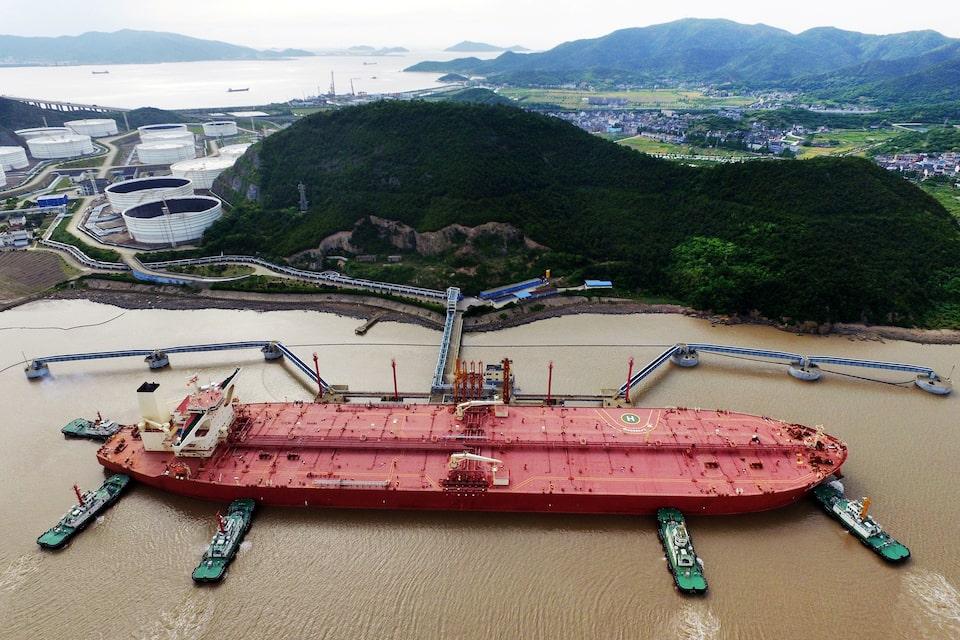
Crude prices supported by impending US-China talks Brent prices could drop to $50 if US-Iran deal occurs - Citi Trump heralds 'breakthrough' deal with UK NEW YORK, May 8 (Reuters) - Oil prices rose around 3% on Thursday, buoyed by hopes of a breakthrough in looming trade talks between the U.S. and China, the world's two largest oil consumers. Brent crude futures settled up $1.72, or 2.8%, at $62.84 a barrel. U.S. West Texas Intermediate crude rose $1.84, or 3.2%, to $59.91. Sign up here. U.S. Treasury Secretary Scott Bessent will meet with China's top economic official on May 10 in Switzerland for negotiations over a trade war that is disrupting the global economy. Optimism around those talks was providing support to the market, said SEB analyst Ole Hvalbye. The countries are the world's two largest economies and fallout from their trade dispute was likely to lower crude consumption growth. Analysts cautioned that the recent tariff-driven volatility in the oil market was not over. "The global risk premium that was pushing oil prices up and down during the past couple of years has been replaced by a tariff premium that will also be fluctuating in response to the latest headlines out of the Trump administration," Jim Ritterbusch, of U.S. energy consultancy Ritterbusch and Associates, said in a note. In another trade development, U.S. President Donald Trump and British Prime Minister Keir Starmer announced a "breakthrough deal" on trade that leaves in place a 10% tariff on goods imported from the UK while Britain agreed to lower its tariffs to 1.8% from 5.1% and provide greater access to U.S. goods. On the supply front, the Organization of the Petroleum Exporting Countries and its allies in OPEC+ will increase its oil output, pressuring prices. OPEC oil output edged lower in April despite a scheduled output hike taking effect, a Reuters survey found, led by a cut in Venezuelan supply on renewed U.S. attempts to curb the flows and smaller drops in Iraq and Libya. Analysts at Citi Research lowered their three-month price forecast for Brent to $55 per barrel from $60, but maintained their long-term forecast of $60 a barrel this year. A U.S.-Iran nuclear deal could drive Brent prices down toward $50 per barrel on increased global supply, but without a deal prices could rise to over $70, they added. U.S. sanctions on two small Chinese refiners for buying Iranian oil have created difficulties receiving crude and led them to sell product under other names, sources familiar with the matter said, evidence of the disruption that Washington's stepped-up pressure is inflicting on Tehran's biggest oil buyer. https://www.reuters.com/markets/commodities/oil-prices-steady-after-dropping-economic-uncertainty-supply-concerns-weigh-2025-05-08/
2025-05-08 06:41
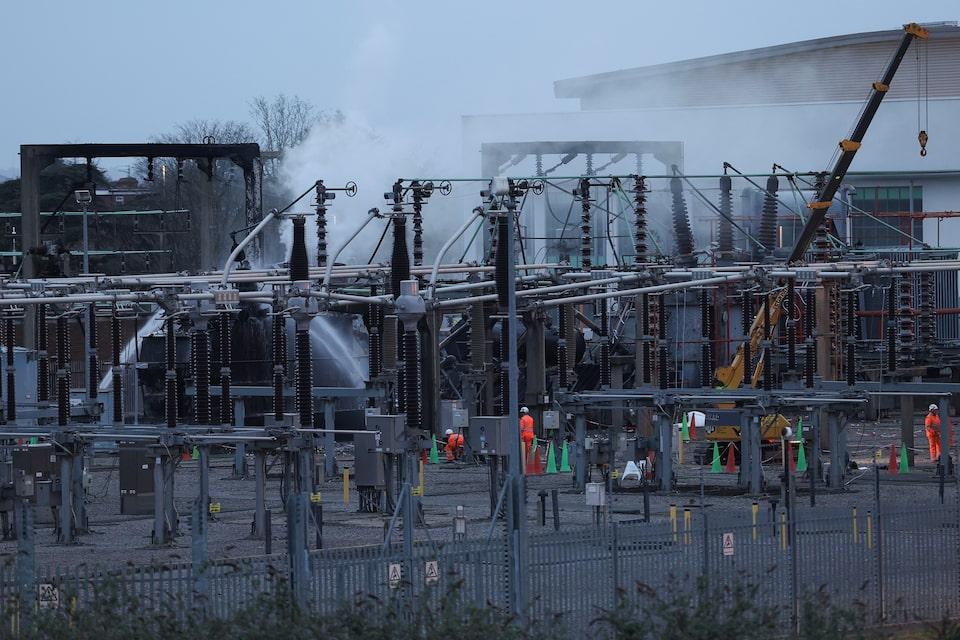
LONDON, May 8 (Reuters) - The cause of the fire at an electricity substation that forced Britain's Heathrow Airport to shut down for almost a day remains unknown, the National Energy System Operator said in an interim report on Thursday. The closure of Heathrow, the busiest airport in Europe, on March 21 cost airlines tens of millions of pounds and stranded thousands of passengers. It also raised questions about the resilience of Britain's infrastructure. Sign up here. NESO, which manages the country's electricity network, said it would produce a final report on the outage in June, with recommendations on the resilience of energy systems and plans for response and restoration. The police said in March the fire was not suspicious. London Fire Brigade and National Grid Electricity Transmission continue to conduct forensic investigations into the cause of the fire, NESO said in the interim report. The outage prompted scrutiny from the government, airlines and passengers, who asked why all of Heathrow's four terminals had to shut and why it took 18 hours for power to be restored. Heathrow said it hoped the final report would provide answers on the cause of the fire. "Further clarity on how the fire started and why two transformers were subsequently impacted can help ensure greater resilience for the UK's energy grid moving forward," the airport said in a statement. https://www.reuters.com/world/uk/cause-heathrow-shutdown-fire-still-unknown-initial-report-says-2025-05-08/
2025-05-08 06:39
Trump announces US-UK trade deal Dollar hits four-week high against Japanese yen Markets eyeing U.S.-China trade talks Dollar index reaches highest since April 10 NEW YORK, May 8 (Reuters) - The U.S. dollar gained against the safe-haven yen and Swiss franc on Thursday with market nerves soothed by a bilateral trade deal between the United States and the United Kingdom, while sterling reversed gains made after an interest rate cut from the Bank of England. U.S. President Donald Trumpannounced a "breakthrough" trade agreement with Britain on Thursday, which leaves in place a baseline 10% tariff on British imports including vehicles. Sign up here. The market sees the trade deal as positive because it means Trump is envisioning a 10% baseline for friendly countries with anything beyond that subject to negotiation, said Axel Merk, president and chief investment officer at Merk Hard Currency Fund in California. "The market for whatever reason today takes that as good news. In my view, a 10% baseline tariff is still very high for goods coming into the U.S. and does change in my assessment how global trade operates," Merk said. The dollar rose to a four-week high of 146.175 against the yen following the announcement of the trade deal. It was last up 1.55% at 146 yen. Against the Swiss franc , it was 1.07% stronger at 0.8323 franc, matching its highest level since May 1. The deal could serve as a template for other countries looking to sign trade agreements with the U.S., said Steve Englander, head of global G10 FX Research at Standard Chartered in New York. "Getting a deal that looks like it's going to work is going to be risk positive. I think the market will look at what's disclosed and ask how much of this will be applicable to other countries or if it's going to be the template for other deals," Englander said. Wall Street's main indexes, including the benchmark S&P 500 (.SPX) , opens new tab, buoyed by market optimism on the trade deal. Gold prices fell with the dollar advancing. Spot gold fell 1.74% to $3,305.76 an ounce. Trump said he expects substantive negotiations between the United States and China when Treasury Secretary Scott Bessent and chief trade negotiator Jamieson Greer meet China's economic tsar, He Lifeng, in Switzerland on Saturday. The BoE's Monetary Policy Committee voted 5-4 to cut rates by a quarter point, in line with expectations. But there was an unexpected divergence among voting members: two, Swati Dhingra and Alan Taylor, voted for a bigger half-point cut while Chief Economist Huw Pill and external member Catherine Mann wanted to hold interest rates. The BoE's decision came a day after the U.S. Federal Reserve held interest rates but said the risks of higher inflation and unemployment had risen. Sterling gave up earlier gains and was down 0.37% at $1.32410. The dollar index , which measures the greenback against a basket of currencies including the yen and the euro, rose 0.41% to 100.31, hitting its highest since April 10. The euro was down 0.71% at $1.122175. The dollar also gained against both the Swedish and Norwegian currencies after Sweden's Riksbank and Norway's Norges Bank held rates, as expected. The Swedish crown was up 0.94% at 9.7471 per dollar, while the Norwegian crown was last at 10.4313 per dollar, up 0.99%. In cryptocurrencies, bitcoin gained 4.68% to $101,293.99. Ethereum rose 16.29% to $2,091.29. https://www.reuters.com/world/middle-east/dollar-front-foot-after-fed-signals-no-rush-cut-rates-2025-05-08/
2025-05-08 06:30
LISBON, May 8 (Reuters) - EDP Renovaveis (EDPR.LS) , opens new tab, the world's fourth largest wind energy producer, said on Thursday its first-quarter net profit fell 24%, despite a solid revenue increase, as it did not make any capital gains in the period unlike a year earlier. The renewables arm of Portugal's EDP (EDP.LS) , opens new tab said net profit fell to 52 million euros ($58.78 million), slightly below the 54.8 million euro average forecast by analysts polled by LSEG. Sign up here. The company said it booked no capital gains from the sale of wind and solar assets – part of a strategy of disposing stakes in mature plants to finance new ones – in the first quarter. A year ago, it booked 58 million euros capital gains. Overall revenues grew 21% to 763 million euros on the back of a 10% increase in power production to 10.9 gigawatt-hours (GWh), "with Europe and North America representing more than 80% of total generation output", it said in a statement. Consolidated earnings before interest, taxes, depreciation and amortisation (EBITDA) rose 5% year-on-year to 476 million euros, beating the average forecast of 466 million euros. Excluding capital gains, recurring EBITDA grew 20%. EDPR, which operates in 28 countries across Europe, Asia and the Americas, said that in March its installed capacity was 19.3 GW, up about 2.8 GW from a year ago. As of March, capacity under construction of new wind and solar farms stood at 2.4 GW, of which 2 GW would be added this year, 80% of it in Europe and United States. ($1 = 0.8846 euros) https://www.reuters.com/sustainability/climate-energy/wind-energy-firm-edprs-profit-falls-24-despite-strong-revenues-2025-05-08/
2025-05-08 06:04
LITTLETON, Colorado, May 8 (Reuters) - Clean energy sources generated the smallest amount of Germany's electricity in over a decade so far in 2025, dealing a blow to the energy transition momentum of Europe's largest economy. Electricity generation from clean power sources totalled just under 80 terawatt hours (TWh) during the first four months of the year, according to data from energy think tank Ember. Sign up here. That clean energy volume is down 16% from the same months in 2024 and is the lowest for that period since at least 2015. To compensate for the drop in clean electricity supplies, German power firms were forced to lift fossil fuel power output by 10% from a year ago, and the share of fossil fuels in the German generation mix has climbed to its highest since 2018. This resurgence in fossil generation has placed Germany's power system under heightened scrutiny, as the country has promoted itself as a regional energy transition leader and a major proponent of a cleaner European electricity system. Given the reversal in Germany's energy transition momentum so far this year, any continued backsliding by such an influential economy could undermine regional commitments to energy transition efforts. CLEAN CUTS A 31% drop in electricity production from wind farms has been the chief driver behind the lower clean energy supplies in Germany so far this year. Just 39 TWh of wind-powered electricity was produced from January to April, which was the lowest wind total for that period since 2017 despite wind generation capacity in Germany climbing by roughly 30% in the intervening years. Low wind speeds at turbine level were the main culprit behind the wind woes this year, and resulted in wind power's share of Germany's electricity production mix dropping from 34% in January to April 2024 to 24% for those months this year. MISSED PEAK German utilities may need to expect even lower wind output in the months ahead. Wind power supplies tend to peak during winter and spring when wind speeds are normally highest for the year, and undergo their annual doldrums over the summer when wind speeds drop. As a result, and after already seeing a more than 30% drop in wind output through the opening four months of the year, German power suppliers must now prepare for further declines in wind generation through the coming summer. Thankfully for utilities, solar farms hit their production peak over the northern hemisphere summer, and should supply power firms with a record volume of clean electricity during daylight hours over the coming months. However, due to the complete halt in solar generation at night, the peak in monthly solar output will fall short of the volumes generated by wind farms during their peak output periods. That will leave utilities needing to boost output from other energy sources to plug any resulting supply gaps. FOSSIL FIX So far in 2025, Germany's coal-fired plants have been the go-to source for on-demand power, and the primary source of electricity in the country. The 40 TWh of electricity from coal-fired plants is 16% more than during the January to April period last year, and is the highest coal-fired total for those months since 2023. Coal-fired emissions are up by a similar degree, amounting to nearly 42 million tons of carbon dioxide (CO2) compared to 36 million tons during January to April 2024. High natural gas costs have curbed German natural gas-fired power generation so far this year, which dropped by around 9% during January to April from the same months a year ago. However, German power firms may opt to raise gas-fired generation going forward as regional gas prices have dropped by around a third since peaking in February. As natural gas plants emit less than half of the CO2 as coal plants per TWh of electricity, an expansion in gas-fired production could result in lower overall emissions as long as coal-fired generation is cut back. But if German firms opt to expand both coal and gas-fired output in order to keep up with overall power demand, total power emissions will keep climbing and could further undermine Germany's status as a regional energy transition leader. The opinions expressed here are those of the author, a columnist for Reuters. https://www.reuters.com/business/energy/germanys-energy-transition-hits-reverse-so-far-2025-maguire-2025-05-08/