2025-05-08 06:03
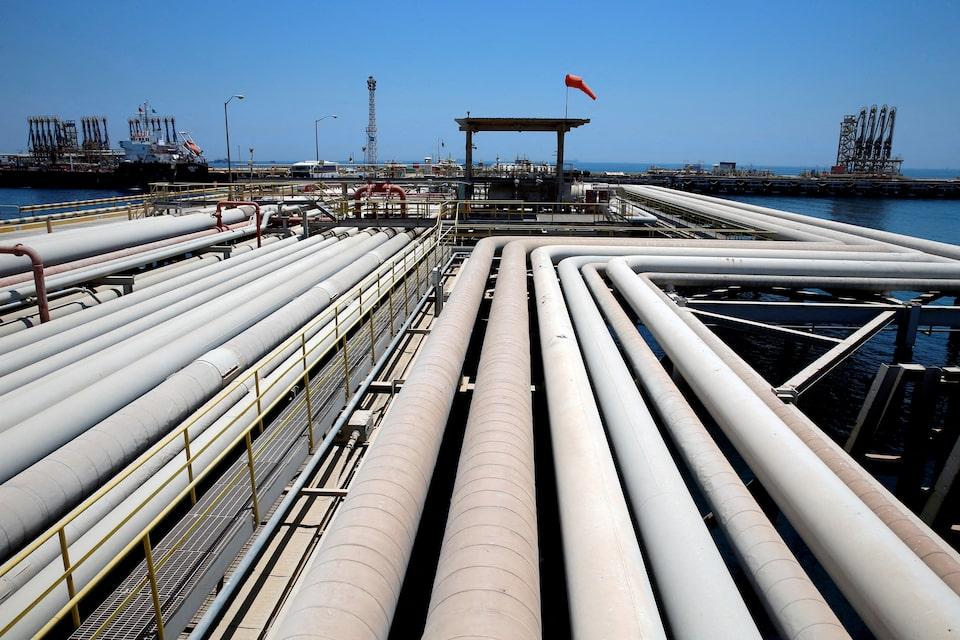
Global refining profit margins above 2024 levels Traders refilling depleted diesel inventories after cold winter Gasoline demand set to rise ahead of summer LONDON, May 8 (Reuters) - Global oil refineries’ strong profit margins signal healthy oil consumption today, a stark contrast with the grim long-term demand outlook. Sentiment in the oil market has soured in recent weeks due to concerns about the impact that U.S. President Donald Trump's trade war will have on global economic activity and energy consumption. The International Energy Agency last month sharply slashed its oil demand forecast for 2025 to 730,000 barrels per day from 1.03 million bpd in March, citing trade tensions. Sign up here. At the same time, the surprise plan by OPEC+ to sharply increase crude production by 960,000 bpd between April and June has increased bearishness about long-term oversupply. But looking at current conditions on the ground, one would be forgiven for thinking that the oil market is doing extremely well. Refining margins, which reflect the overall profits a plant makes from processing crude into fuels such as gasoline and diesel, remain elevated. The Singapore margin for refining Dubai crude is around $7 a barrel, compared with $4.25 a year ago, according to data provider LSEG. Similarly, benchmark European Arab light margins are at $6 a barrel, some 36% higher than the price one year ago, while U.S. Gulf Coast Mars margins have more than doubled over the same period to near $16 a barrel. These margins are obviously being flattered by the steep decline in oil prices this year, and they are lower than the peaks seen during the height of the energy crisis that followed Russia's invasion of Ukraine in 2022. But they remain high compared to recent history and certainly do not reflect a contraction in demand. Importantly, U.S. refineries are operating at elevated levels, processing over 16 million bpd last week, 123,000 bpd higher than last year. Yet Brent crude forward prices indicate that investors don’t think demand will hold up. While the Brent July contract is trading at a premium to the October contract, indicating a healthy supply and demand balance, prices in the fourth quarter of 2025 onwards have in recent weeks shifted to a contango structure, whereby future prices trade above contracts for earlier delivery. This means investors expect to see an oversupply in oil relative to demand. WHAT GIVES? What explains this discrepancy between ample refining margins and the dour demand outlook? One key factor is clearly that oil refineries, traders and wholesale buyers are filling up gasoline stocks ahead of the peak summer driving season and refilling depleted diesel stocks following a particularly cold winter. And even though consumer and business confidence may be falling and anxiety about an impending economic slowdown may be spiking, oil demand is continuing to hold up well. While U.S. diesel and heating oil stocks are significantly below their 5-year average at around 107 million barrels, consumption of around 3.7 million bpd on a 4-week average basis remains above the 5-year average despite declining by 13.5% from this year’s high, according to the latest data from the Energy Information Administration. U.S. gasoline demand and inventories also remain near last year's levels, while commercial crude inventories are around 438 million barrels, shy of last year's level, according to the EIA. Similarly, European diesel stocks are below their 2024 levels, according to Dutch consultancy Insights Global, while demand continues to be fairly healthy. PARTY ALMOST OVER? All this points in one direction: stronger refining margins. But it is unclear how long this will last. In addition to plentiful forecast downgrades, there are some signs that real, on-the-ground economic conditions are eroding. Container bookings between China and the United States – a key metric for trade conditions between the world's top economies – dropped by 42.7% on a weekly basis in the seven days to April 28, according to analytics firm Vizion. Many retail companies have also cut sales targets in recent weeks. Of course, successful trade talks between Washington and Beijing over the coming weekend – and other signs of de-escalation in the global trade war – could alter the outlook for global economic activity meaningfully. But, for now, oil refiners are enjoying a surprisingly buoyant market. ** The opinions expressed here are those of the author, a columnist for Reuters. ** Want to receive my column in your inbox every Thursday, along with additional energy insights and trending stories? Sign up for my Power Up newsletter here. https://www.reuters.com/business/energy/oil-refiners-robust-profits-defy-souring-outlook-bousso-2025-05-08/
2025-05-08 06:00
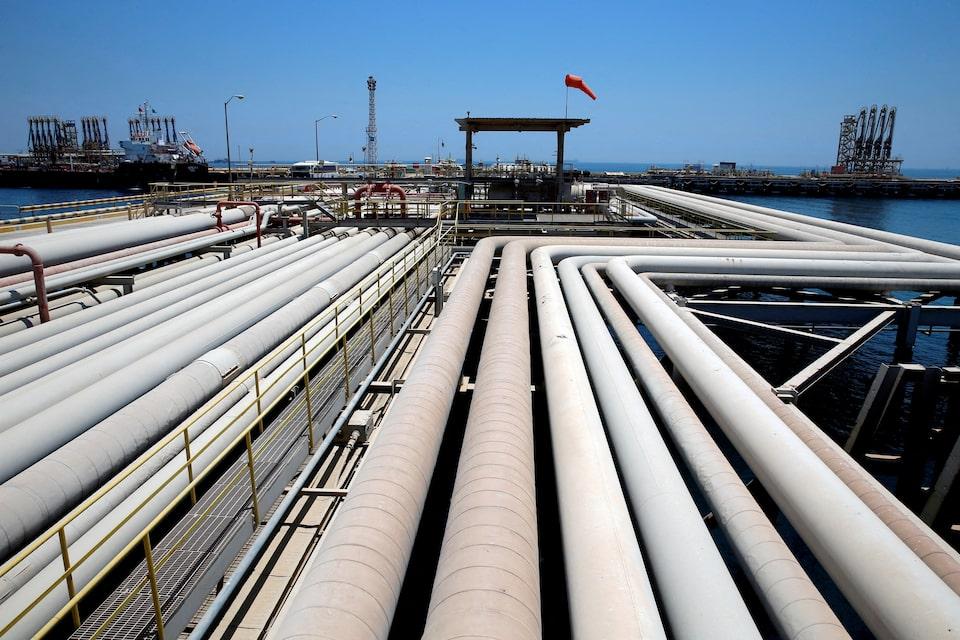
OPEC+ agreed another accelerated oil output hike for June Oil market shows tight immediate balances Driving season boosts demand, can absorb extra OPEC+ oil New oil from Brazil, Guyana to hit market by end 2025 LONDON, May 7 (Reuters) - The oil market appears to be telling Saudi Arabia that its shift to pumping more oil after five years of cutting output was well timed. The kingdom has in recent weeks pushed fellow OPEC+ members to produce more oil despite fears about an economic slowdown, a marked change in policy that helped oil prices settle at a four-year low on Monday. Sign up here. But despite OPEC+ agreeing to raise output by a cumulative near one million barrels per day (bpd) between April and June, the oil market is still reflecting a perception of tight supply over the next few months of peak summer demand. That has pushed the futures curve, which reflects forward prices, into a rare "smile" shape, a structure Morgan Stanley analysts said was last seen only briefly in February 2020. Brent futures' most prompt July contract was trading at a 74 cent per barrel premium to the October contract late on Wednesday, a market structure known as backwardation, which indicates immediate tight supply. However, from November, prompt prices flip to a discount to forward prices, a structure known as contango, indicating oversupply and the likelihood that summer 2025 might be the last gasp of a tight oil market. Having backwardation and contango together is unusual and gives the chart its "smile". Energy Aspects analyst Richard Price said the structure was a result of tight prompt supply coupled with expectations of U.S. President Donald Trump's trade wars slowing economic activity later in the year. OPEC+ cited low stocks and healthy prompt demand when it agreed on Saturday to raise output for July. Global oil inventories stood near the bottom of their historical five-year range at 7.647 billion barrels, according to the International Energy Agency's latest available data for February, down from 7.709 billion barrels a year earlier. Meanwhile, refiners' appetite for crude is rising ahead of the July-August peak driving season. "Refinery maintenance in the Atlantic basin will start to taper off, increasing oil demand (for refining)... Summer driving should provide some support," BNP Paribas analyst Aldo Spanjer said. Global oil demand will rise by 1.3 million barrels per day in the third quarter of 2025 from the second quarter to average 104.51 million bpd, the IEA said in its latest report in April. The 1 million bpd increases already announced by OPEC+ and the possibility of a further 0.4 million barrels per day in July, almost fully match the predicted rise in demand. HIGHER SUPPLY OUTLOOK OPEC's decision to add more barrels to the market did change the shape of the 'smile', but the fact that the structure did not flip into contango reflects a balance between supply and demand, said an executive at a major trading house. At the start of last week, eight consecutive monthly Brent contracts were backwardated through to January 2026, double the current four. The four-month Brent spread was more than twice as wide at $1.85 a barrel. Outside of OPEC+, new projects coming online in Brazil and Guyana should boost supply towards the end of 2025, the IEA said in its monthly report in April. Robust supply growth combined with slowing demand would result in a rapid market weakening towards the end of 2025, Morgan Stanley said. https://www.reuters.com/markets/commodities/oil-market-smile-suggests-saudi-arabias-output-shift-was-well-timed-2025-05-07/
2025-05-08 05:49
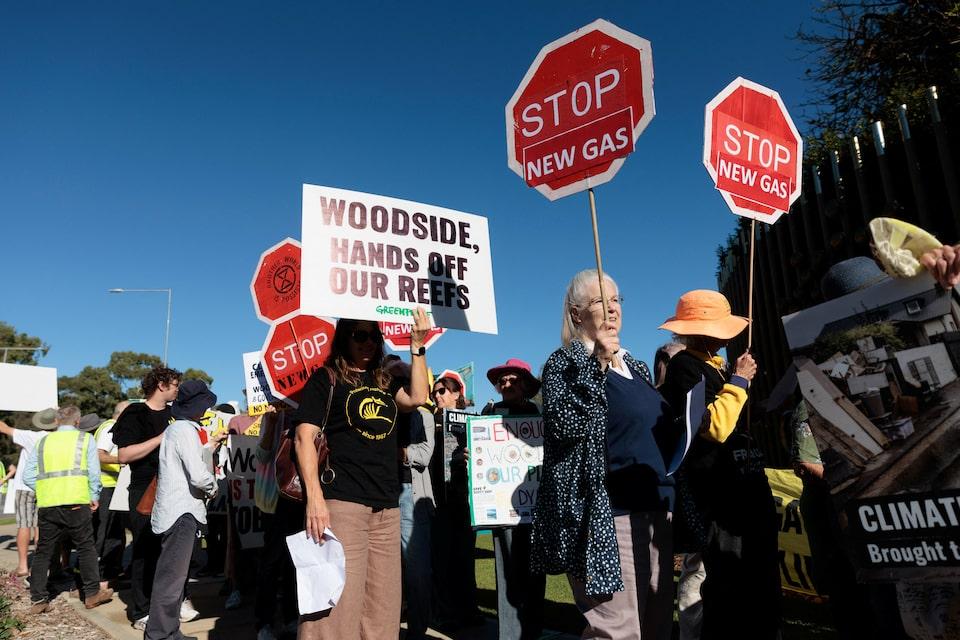
Activists disrupt annual meeting with whistles and heckling Woodside forced to suspend proceedings, drown out noise with promotional videos One-fifth of shareholders vote against climate committee chair SYDNEY, May 8 (Reuters) - Climate change activists blew whistles and shouted on Thursday as they disrupted Australian gas producer Woodside Energy's (WDS.AX) , opens new tab annual general meeting, heckling Chief Executive Meg O’Neill and forcing several suspensions. Investors also figured in the backlash to Woodside's gas projects and sustainability measures, similar to previous years, with Australian pension funds HESTA and Aware lodging protest votes against its director charged with climate risk oversight. Sign up here. "I'd ask you to please be respectful of the other actual shareholders in the room who have a keen interest in understanding what we're doing to generate value for them," O'Neill told protesters who interrupted her opening address. "You should be ashamed!" some of them had yelled. The whistling and shouting began around 20 minutes into the meeting in the western Australian city of Perth, as O'Neill discussed Woodside’s gas portfolio, its contribution to society and role in meeting energy security and decarbonisation goals. The behaviour was "unnecessary", Chairman Richard Goyder said. Event organisers suspended proceedings and tried to drown out the noise by playing promotional videos about the company's energy projects and sponsorship of football club the Fremantle Dockers. "We have plenty more of these videos we can play," O’Neill added. O'Neill and Goyder also faced scrutiny from meeting attendees who questioned the company's carbon emissions and the impact of the proposed North West Shelf project extension on nearby Murujuga rock art and sea turtles in the Scott Reef. A coalition of environmental groups - Go Beyond Gas, Greenpeace and the Conservation Council of WA - also protested outside. Last year's proceedings featured similar backlash with shareholders rebuking Woodside's emissions plan and activists crashing the meeting due to concerns over the company's pursuit of new gas projects. The company also greenlit a $17.5-billion liquefied natural gas project at Louisiana in the United States last week, which would take its total LNG output to 24 million tonnes per annum (Mtpa) in the next decade, or more than 5% of global supply. Ahead of the annual meeting, influential proxy adviser Glass Lewis recommended that shareholders block the re-election of independent director Ann Pickard, who chairs the oversight committee on climate risk. It cited an inadequate response to an "ongoing pattern of significant shareholder opposition to the company’s climate strategy". The funds HESTA and Aware, as well as Norway’s Storebrand, opposed Pickard’s re-election, while U.S. pension funds CalPERS and CALSTRS voted against director Ben Wyatt. "The steps taken by Woodside so far fall short of what is needed to position it for the global transition to a low-carbon future and the company needs to do more," HESTA said in a statement. One-fifth (19.45%) of shareholders voted against Pickard's election, the worst vote on record against a Woodside committee chair, according to the Australasian Centre for Corporate Responsibility. https://www.reuters.com/business/environment/australian-climate-protesters-disrupt-woodsides-annual-meet-2025-05-08/
2025-05-08 05:39
Equities rise after US-UK trade deal announcement Investors eye US-China weekend talks US dollar advances with bond yields, oil settles up BoE cuts UK rates, Sweden and Norway hold rates NEW YORK/LONDON, May 8 (Reuters) - Global equities were slightly higher on Thursday, with Wall Street outperforming, while the dollar and Treasury yields also gained after the United States and United Kingdom outlined a trade deal, fueling hopes for compromises with other countries. Cryptocurrencies were also bolstered by the U.S.-UK trade agreement, which was the first pact announced in the month since U.S. President Donald Trump started a 90-day pause on trade tariffs to give room for negotiations. Sign up here. The deal, unveiled by Trump and British Prime Minister Keir Starmer, leaves in place a 10% tariff on goods imported from the UK but lowers prohibitive U.S. duties on UK car exports. Britain agreed to lower its tariffs to 1.8% from 5.1% and provide greater access to U.S. goods. Investors were encouraged as they waited for planned talks between U.S. and Chinese officials in Switzerland over the weekend, which are seen as a first step in dialing down the damaging trade war between the world's two biggest economies. "There's optimism growing around trade deals, not only this UK deal that was announced today, but around what might happen over the weekend," said Mona Mahajan, head of investment strategy at Edward Jones, adding that the S&P 500 has risen sharply since the lows of April. Wall Street indexes pulled back from their session highs in the last hour of trading but still finished the day with gains. The Dow Jones Industrial Average (.DJI) , opens new tab rose 254.48 points, or 0.62%, to 41,368.45, the S&P 500 (.SPX) , opens new tab rose 32.66 points, or 0.58%, to 5,663.94 and the Nasdaq Composite (.IXIC) , opens new tab rose 189.98 points, or 1.07%, to 17,928.14. The CBOE volatility index (.VIX) , opens new tab, also known as Wall Street's fear gauge, registered its lowest closing level since April 2, also a bullish signal. MSCI's gauge of stocks across the globe (.MIWD00000PUS) , opens new tab rose 0.83 points, or 0.10%, to 844.86. Earlier the pan-European STOXX 600 (.STOXX) , opens new tab index closed up 0.4%. The trade news followed the latest U.S. central bank policy update on Wednesday, when the U.S. Federal Reserve took a wait-and-see stance on interest rates and warned that risks of higher inflation and higher unemployment had risen as it navigates uncertainty caused by Trump's trade policies. In government bonds, U.S. Treasury yields touched multi-week highs, as the U.S.-UK deal spurred optimism for agreements with other countries in the coming weeks and months. "If tariff threats start to recede and if this UK deal is the beginning of a range of deals coming up, then you would think (Federal Reserve Chair Jerome) Powell wouldn't have to cut rates very much at all," John Velis, macro strategist for the Americas, at BNY in New York. The yield on benchmark U.S. 10-year notes rose 11.3 basis points to 4.388%, from 4.275% late on Wednesday. The 30-year bond yield rose 8.1 basis points to 4.853%. The 2-year note yield, which typically moves in step with Fed interest rate policy expectations, rose 9.8 basis points to 3.891%, from 3.793% late on Wednesday. In currencies, the U.S. dollar gained against major currencies with market nerves calmed by the U.S.-UK agreement. But Sterling reversed earlier gains which had followed an interest rate cut from the Bank of England. The pound was last down 0.42% at $1.3239 while the dollar index , which measures the greenback against a basket of currencies including the yen and the euro, rose 0.77% to 100.66. The euro was down 0.67% at $1.1223. Against the Japanese yen , the dollar strengthened 1.46% to 145.92 and against the Swiss franc , the dollar strengthened 1.01% to 0.832. Sweden and Norway's central banks hinted they could also cut rates later in the year. The Swedish crown weakened 0.77% versus the dollar to 9.744. In crypto, bitcoin surpassed $100,000 for the first time since early February, rising 4.93% to $101,544.25. Ethereum rose 17.79% to $2,118.37. Crude futures rose, buoyed by hopes of a breakthrough in trade talks between the United States and China, the world's two largest oil consumers. U.S. crude settled up 3.17%, or $1.84 at $59.91 a barrel while Brent settled at $62.84 per barrel, up 2.81%, or $1.72, erasing the previous day's losses. Demand for safe-haven gold weakened as the UK-U.S. deal raised hopes for deals with other countries. Spot gold fell 1.73% to $3,306.00 an ounce. U.S. gold futures fell 2.35% to $3,301.90 an ounce. https://www.reuters.com/markets/global-markets-wrapup-1-2025-05-08/
2025-05-08 04:33
A look at the day ahead in European and global markets from Rocky Swift The European theatre of World War II ended 80 years ago today, a sombre reminder as armed conflict still rages on the continent while another one threatens to ignite between nuclear powers in South Asia. Sign up here. To accommodate a moment of silence in honour of Victory in Europe (VE) Day, the Bank of England is delaying its policy announcement by two minutes to 1102 GMT. The BoE is expected to continue its gradual pace of rate cuts that have come more slowly than those by the U.S. Federal Reserve, which stood pat yesterday in the face of inflation and recession fears. A different sort of world war, between U.S. President Donald Trump and practically all of America's trade partners, looked marginally cooler ahead of ice-breaker talks between Washington and Beijing trade tsars this weekend. Chinese blue chips (.CSI300) , opens new tab and Hong Kong's Hang Seng (.HSI) , opens new tab gained 0.75% and 1.1%, respectively, on hopes the negotiations will bring down retaliatory tariffs of more than 100% with the U.S. And equity futures in European and U.S. markets turned higher after Trump posted that he will hold a press conference today about a trade deal with a "BIG, AND HIGHLY RESPECTED, COUNTRY. THE FIRST OF MANY!!!." This would be the first of some 200 trade deals that Trump claims to have made but has kept mum on so far. Last week, the president trumpeted "potential deals" with South Korea, Japan, and India. But the New York Times says the "big" country is Britain, a possibility previously flagged by analysts. UK stock futures and sterling climbed in Asia trade. North Korea lobbed missiles into the ocean again, and Pakistan vowed retaliation for an Indian air strike, which was itself retaliation for an attack by Islamist militants last month. Stock markets in Asia weathered the drama, continuing anaemic gains seen on Wall Street after the Fed. But steeper advances in gold and Bitcoin signalled resilient demand for defensive assets. Key developments that could influence markets on Thursday: - European earnings: Siemens Energy (ENR1n.DE) , opens new tab - US earnings: Shopify (SHOP.TO) , opens new tab, ConocoPhillips (COP.N) , opens new tab, Warner Bros Discovery (WBD.O) , opens new tab - Germany trade, industrial production (March) - BoE policy decision - US weekly jobless claims - $25 billion auction of US 30-year bonds - Bank of Canada Governor Tiff Macklem speaks Trying to keep up with the latest tariff news? Our new daily news digest offers a rundown of the top market-moving headlines impacting global trade. Sign up for Tariff Watch here. https://www.reuters.com/markets/europe/global-markets-view-europe-2025-05-08/
2025-05-08 04:02
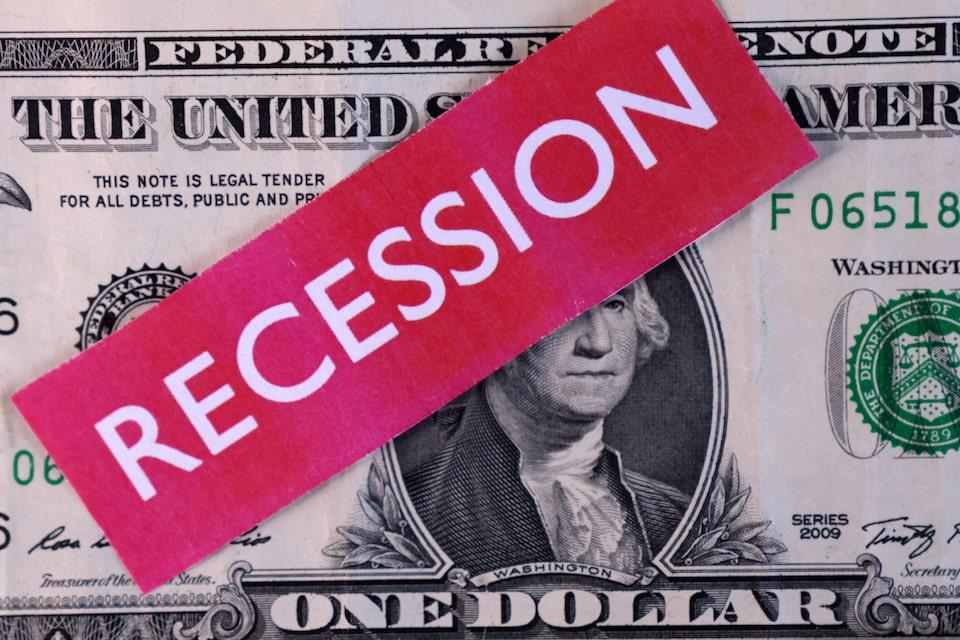
Trade tensions push global recession risk Recession can still be avoided, analysts say Stocks bounce back but earnings season offers some insights LONDON, May 8 (Reuters) - Global recession risks have shot back up markets' worry list, but the readout from economic data and key financial indicators is not as clear cut as it first appears. A 90-day pause on most reciprocal tariffs unveiled by U.S. President Donald Trump in April has eased investors' worst fears, but the damage to business and consumer confidence is expected to hurt. Sign up here. "Recession risks have risen markedly even if there are some deals struck on tariffs," said Guy Miller, chief markets strategist at Zurich Insurance Group. "The risk of a U.S. recession is 50-50, it's that close." Here's a look at what some closely-watched indicators say about global recession risks. 1/ HARD VS SOFT A disconnect between so-called soft economic numbers such as sentiment indicators and hard data, for instance jobs figures, makes it hard to decipher recession risks. Latest U.S. jobs numbers point to a resilient economy, while a first quarter economic contraction in the United States and an expansion in the euro zone have both been explained away by pre-positioning by companies ahead of the reciprocal tariffs. Business and consumer confidence indicators meanwhile have deteriorated, a sign for some that weaker growth will materialise soon. U.S. consumer confidence slumped to a nearly five-year low in April. Consumer spending is key because it accounts for more than two-thirds of U.S. economic activity. A euro zone investor morale index has rebounded after nose-diving in April , opens new tab but remains in negative territory. "We assume that any contraction in the euro area would be short lived and relatively mild," said MUFG senior economist Henry Cook. Zurich's Miller said he was watching initial weekly jobless claims as the most timely indicator of what's happening in the U.S. economy. 2/ CHANGE YOUR MIND There's no getting away from slashed growth forecasts. Economists polled by Reuters indicate high risks of a recession this year, having forecast strong growth just three months ago. Barclays reckons the picture is one of a meaningful global slowdown, combined with mild U.S. and euro area recessions. Yet a recession is not a done deal, economists say. If the U.S. can arrange trade deals soon or deliver on tax cuts, the risks would fall, while the euro zone economy will likely be buffered by lower rates and fiscal stimulus. "A recovery of consumer spending due to higher wages and a more dovish than expected central bank, at least in the euro area, are the main factors helping to avoid a deep recession," said BofA economist Ruben Segura-Cayuela. 3/ WHERE'S THE DEMAND? The signal from commodity markets points to a sharp growth slowdown. Oil prices are down around 16% so far this year to around $60 a barrel . If that's sustained, 2025 would mark the worst year for crude since 2020's COVID crisis. For sure, they also reflect expectations for more supply from OPEC, but the price falls fit into the broader picture of weaker demand as global growth slows, analysts say. Copper, dubbed "Dr Copper" for its track record as a boom-bust indicator, has recovered from roughly one-year lows hit in early April but remains below a March peak . Citi is bearish over the next three to six months as physical copper consumption and manufacturing activity slow due to U.S. tariffs, especially the 145% levy on manufacturing hub China. 4/ TRUST MR BOND? Government bond markets reflect concern about a U.S. tariff-induced slowdown, but no heightened recession risk, as markets assume central banks will respond swiftly with rate cuts. China on Wednesday cut rates to help soften the blow of a trade war and traders have increased European Central Bank rate cut bets since March. They anticipate 60 basis points of further ECB easing by December. Traders expect roughly 80 bps of U.S. Federal Reserve cuts by December and 115 bps by mid-2026, after paring back more aggressive expectations since the tariff pause. The Fed on Wednesday left rates steady and said the risks of higher inflation and unemployment had risen. "In recent years they (Fed funds futures) have consistently overestimated how dovish the Fed would be," said Deutsche Bank macro strategist Henry Allen. Also watch yield curves, although their reliance as a recession indicator has been called into question recently. The gap between 10-year and 2-year Treasury yields has been positive since last year. While yield curve inversion has historically been seen as a recession predictor, the curve tends to revert back to normal as recession nears. "In recent cycles, the recession didn’t begin when curves were inverted, but when they un-inverted as central banks rapidly cut rates leading short-dated yields to fall more quickly than the long-dated ones," said Allen. 5/ STOCKS, TOO UPBEAT A rebound in stocks suggests recession fears have faded. German shares are near record highs, New York and Tokyo have jumped more than 15% each from lows hit last month (.N225) , opens new tab, (.SPX) , opens new tab, (.GDAXI) , opens new tab. But pay attention to company earnings. Sweden's Electrolux (ELUXb.ST) , opens new tab slashed its outlook while Volvo Cars (VOLCARb.ST) , opens new tab, computer gadget maker Logitech (LOGN.S) , opens new tab and drinks giant Diageo (DGE.L) , opens new tab abandoned their targets due to uncertainty. General Motors (GM.N) , opens new tab pulled its forecast for the year even as it reported strong results. "Q1 was perhaps the last of the unaffected earnings quarters, with tariffs a factor from Q2 onwards," said Zurich's Miller. "Given the uncertainty, I would have thought valuations should reflect at least some of this. So far, they do not." https://www.reuters.com/markets/global-markets-recession-graphic-2025-05-08/