2025-05-07 21:46
Judge to rule on land transfer by May 14 Apache Stronghold opposes mine on religious grounds Rio Tinto sees project as crucial for energy transition May 7 (Reuters) - A U.S. federal judge said he will rule by May 14 on whether to block the Trump administration from transferring Arizona land to Rio Tinto (RIO.L) , opens new tab and BHP (BHP.AX) , opens new tab to build a major copper mine opposed by Native Americans. The long-running and complex legal case pits the religious rights of Arizona's San Carlos Apache people against rising demand for copper for the energy transition and the geopolitics of China's wide control over the critical minerals industry. Sign up here. The dispute centers on the federally owned Oak Flat Campground where many Apache worship their deities. The site sits atop a reserve of more than 40 billion pounds (18.1 million metric tons) of copper, a crucial component of electric vehicles and nearly every electronic device. Rio and BHP's Resolution Copper project would, if built, cause a crater 2 miles (3 km) wide and 1,000 feet (304 m) deep that would slowly engulf that worship site. U.S. District Judge Steven Logan, who ruled in favor of the land transfer in 2021, held a nearly two-hour hearing on Wednesday to consider a fresh request that he block the land transfer temporarily while the U.S. Supreme Court deliberates. Logan, an appointee of former U.S. President Barack Obama, gave little indication as to how he would rule in the week promised but asked pointed questions about what harm the Apache could endure if the transfer were to occur before the Supreme Court rules. He also asked for data on Rio's maintenance costs for existing Resolution assets, which a Rio executive estimated at $11 million a month. Since 2021, courts have rejected a request by Apache Stronghold - a nonprofit group that includes the Apache and others - to block the land transfer needed for the mine. The rulings deferred to a 2014 decision made by the U.S. Congress and then-President Obama. President Donald Trump started the land transfer in his first term, a move undone by successor Joe Biden while the issue wound its way through courts. The U.S. Supreme Court is now considering whether to take the case. The Supreme Court has said at least 13 times it will continue to deliberate on the appeal request, an unusually long time frame. Meanwhile, Trump last month restarted the land transfer process, with his administration aiming to complete it as soon as June 16. The U.S. Justice Department, which has opposed the Apaches' request under both Biden and Trump, argued that Logan should stick with his 2021 ruling. "There is no basis for this court to issue a different result here," said Erika Danielle Norman, a Justice Department attorney. Apache Stronghold and their attorneys with the Becket Fund for Religious Liberty said they were encouraged by the hearing. "All the Apaches are asking for is to put that land transfer on hold while the Supreme Court deliberates," said Becket's Joseph Davis. Rio Tinto said it appreciated the court's time and that Resolution is "vital to securing America's energy future, infrastructure needs, and national defense." BHP, which owns 45% of the project to Rio's 55%, did not immediately respond to a request for comment. https://www.reuters.com/sustainability/boards-policy-regulation/us-judge-rule-by-may-14-rio-tinto-copper-project-opposed-by-native-americans-2025-05-07/

2025-05-07 21:44
May 7 (Reuters) - The United States said on Wednesday it plans to call for U.N. sanctions against vessels identified as taking part in circumvention of United Nations resolutions to combat North Korea's nuclear and missile programs. The British-based Open Source Center issued a report on Wednesday , opens new tab saying that in the past year it had tracked a number of non-Korean flagged vessels transporting North Korean coal and iron ore to ports in China, in violation of U.N. sanctions. Sign up here. Speaking at a meeting of the U.N. Security Council, James Byrne, director of the Open Source Network, identified several vessels, including the Tanzanian-flagged Armani and Sophia, the falsely-flagged Cartier and Casio, and the unflagged Yi Li 1 and An Yu. Byrne said the vessels had started engaging in sophisticated "spoofing" techniques, such as by presenting digital tracks to indicate they were in other countries, when satellite imagery showed them loading in North Korea. U.S. Ambassador to the U.N. Dorothy Camille Shea said the Security Council would continue to highlight sanctions violations despite Russia's veto last year of the mandate of the panel of experts that monitored such violations on behalf of the U.N.'s 1718 Committee on North Korea. "In the coming days, we plan to nominate for designation in the 1718 Committee vessels clearly identified in the briefing to which Mr. Byrne referred for violations of U.N. sanctions restrictions," she said. Shea accused Russia of "cynically obstructing" sanctions implementation, including though importation of North Korean missiles and shells for use in its war in Ukraine. She accused Chinese authorities of "looking the other way" as Chinese companies import North Korean coal and iron ore, even though Beijing insists it fully implements the U.N. resolutions. Geng Shuang, China's deputy U.N. ambassador, said China rejected U.S. "accusations and smearing" and charged that Washington was using the North Korea issue as a pretext for strategic military deployments that jeopardized the security interests of regional countries, including China. Russian U.N. ambassador Vasily Nebenzya dismissed criticism of its relationship and cooperation with North Korea, saying it was Moscow's sovereign right and that Russia was "very grateful to our Korean brothers for the assistance they've extended to us." North Korea's U.N. ambassador Kim Song accused the United States of "high-handedness and arbitrariness" that should not be tolerated by the international community. https://www.reuters.com/markets/commodities/us-seek-un-sanctions-ships-taking-north-korean-coal-china-2025-05-07/

2025-05-07 21:43
HOUSTON, May 7 (Reuters) - Exxon Mobil (XOM.N) , opens new tab has signed a long-term agreement to supply 250,000 metric tons of low-carbon ammonia annually to Japanese trading house Marubeni (8002.T) , opens new tab, the U.S. oil producer said on Wednesday, representing Exxon's first signed customer agreement for its planned hydrogen facility in Baytown, Texas. The agreement is a step forward in Exxon's effort to build the world's largest low-carbon hydrogen facility at its Baytown refining and chemical complex, which has experienced delays. Sign up here. Hydrogen, which can be produced from natural gas, is a clean fuel that produces water when it is burned, while ammonia can be used as a carrier for hydrogen, allowing it to be shipped in liquid form. Carbon dioxide from the production of hydrogen will be captured and stored underground, the company said. "This is another positive step forward for our landmark project,” said Barry Engle, president of low carbon solutions at Exxon, in a statement. The customer agreement with Marubeni is contingent on whether Exxon makes its final investment decision to move forward with the Baytown hydrogen facility. Exxon said it expects to make that decision this year, which depends on favorable government policy and regulatory permits. Marubeni will also take an equity stake in Exxon's Baytown hydrogen facility, the companies said. An Exxon spokesperson declined to specify the percentage of the stake. https://www.reuters.com/sustainability/exxon-agrees-supply-japans-marubeni-with-low-carbon-ammonia-2025-05-07/

2025-05-07 21:31
LONDON, May 7 (Reuters) - British Steel said on Wednesday it would hire over 180 new staff as it prepares to ramp up production following the British government's operational seizure of the group from its Chinese owners in April. British Steel operates the country's last two remaining blast furnaces in Scunthorpe, eastern England. They have been running at a loss and came close to being shut down under plans announced in March by owners China's Jingye Group (600768.SS) , opens new tab. Sign up here. But following the government's intervention in April, British Steel said on Wednesday it would "significantly increase" iron and steel production in the coming months. As such it is recruiting for more than 180 new roles in engineering, manufacturing and business functions. The group employs 3,000 people, whose jobs were at risk under Jingye's closure plans. British Steel's interim chief executive Allan Bell said that with government backing, the company wanted to become one of the world's leading steel manufacturers. "To help achieve this, and meet customer demand, we will be upping production," he said in a statement. That demand is unlikely to be from the United States after President Donald Trump in March imposed a tariff of 25% on steel imports, in a blow for British Steel, which Jingye had warned was already losing 700,000 pounds ($922,000) a day. British Steel supplies the rail, construction, and automotive industries, but has struggled with high energy costs in the UK and a glut of steel in the global market. The government has previously said it is looking to bring in a private sector partner to secure British Steel's future. Meanwhile, Britain is trying to agree a trade deal with the U.S. which it hopes will reduce Trump's tariffs for its exporters, including British Steel. https://www.reuters.com/world/uk/british-steel-under-uk-government-control-ramp-up-output-hire-staff-2025-05-07/

2025-05-07 21:21
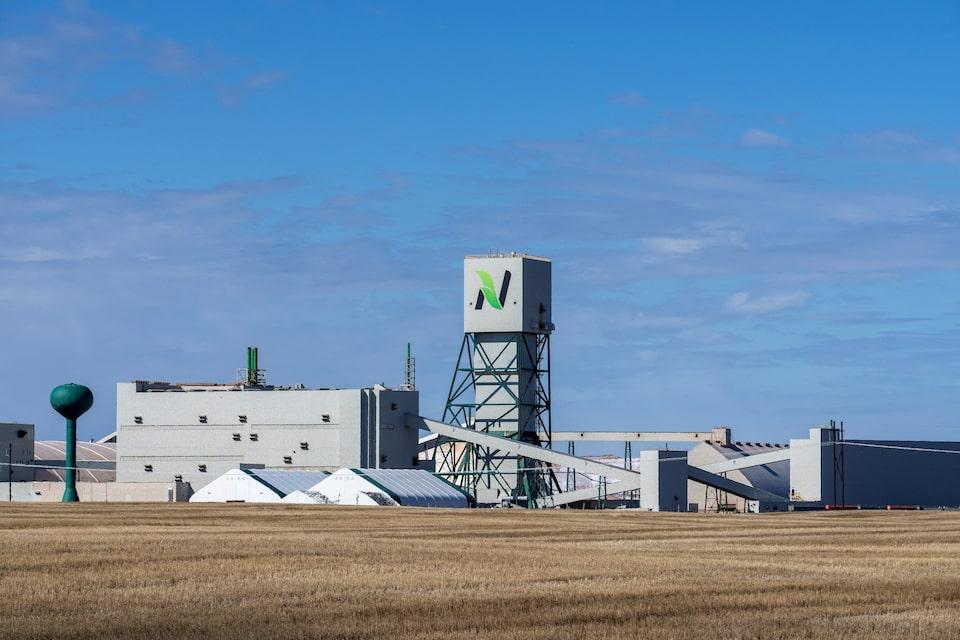
May 7 (Reuters) - Nutrien (NTR.TO) , opens new tab fell short of Wall Street expectations for first-quarter profit on Wednesday, as the top potash producer was impacted by lower prices and higher energy costs. Trade tensions between the United States and China following U.S. President Donald Trump's tariffs have led to volatility in crop prices over the past few months, prompting farmers to reign in costs, which in turn has hit demand for fertilizers. Sign up here. Its quarterly net selling price for potash in North America fell 21.6% from a year earlier to $243 per tonne, while adjusted core profit for the segment was down about 16% at $446 million. Higher energy costs in its nitrogen segment further pressured earnings in the quarter, which raised its cost of goods sold by about 10% at $663 million. Adjusted core profit fell about 12% to $408 million. Average natural gas prices have risen over the past few quarters and hit a two-year high on March 10, supported by strong demand from LNG export facilities and supply concerns in the run up to the summer season. Nutrien's quarterly earnings were also impacted by delayed field activity due to wet weather conditions in North America and strategic actions in South America. The company's quarterly sales for crop nutrients was down 8.7% at $1.19 billion, while sales for crop protection products was down 12.7% at $972 million. Earlier this year, Nutrien's Brazilian unit said it would sell its fertilizer blending plants in the country amid a shift in focus to reselling farm inputs through local retailers after its acquisitions and investments failed to yield the expected returns. The Saskatoon, Canada-based firm posted an adjusted profit of 11 cents per share for the quarter ended March 31, compared with the analysts' average estimate of 31 cents per share, according to data compiled by LSEG. https://www.reuters.com/markets/commodities/top-potash-producer-nutrien-misses-first-quarter-profit-estimates-2025-05-07/
2025-05-07 21:06
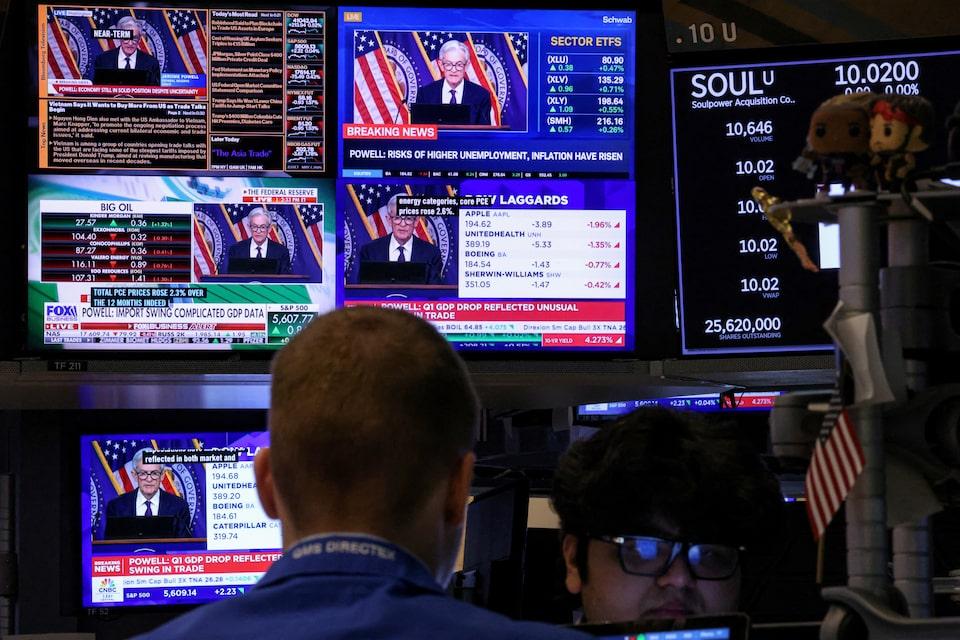
ORLANDO, Florida, May 7 (Reuters) - TRADING DAY Making sense of the forces driving global markets Sign up here. By Jamie McGeever, Markets Columnist Glass half full...probably A late rally ensured Wall Street's three main indexes rose on Wednesday, as investors digested Fed Chair Jerome Powell's press conference after the central bank left interest rates on hold, a raft of stimulus measures from China and news that high-level U.S.-China trade talks will open on Saturday. In my column today I shine a light on how the U.S. bond market's resilience has spurred hedge funds to build up their 'basis trade' bets, which are now comfortably back above the $1 trillion mark. More on that below, but first, a roundup of the main market moves. I'd love to hear from you, so please reach out to me with comments at [email protected] , opens new tab. You can also follow me at @ReutersJamie and @reutersjamie.bsky.social. If you have more time to read, here are a few articles I recommend to help you make sense of what happened in markets today. Today's Key Market Moves Taking the positives from trade, China, Fed If ever a day in financial markets reflected the thick fog of uncertainty surrounding the global trade, growth and policy outlook, Wednesday was that day. Investors initially welcomed the wave of policy easing measures from China and confirmation that U.S.-China trade talks will open this weekend. But skepticism soon set in that Washington and Beijing would make much progress. It's a welcome first step, but the road ahead could be long and difficult. The Fed's decision was widely expected and Powell's press conference offered little clarity, leaving investors struggling for direction. If there was a thread running through markets, it was difficult to spot. Wall Street rallied in the last half hour of trading after trading in the red most of the day, yet long-dated Treasuries rose after Powell flagged risks to growth. Gold fell, in part on easing U.S.-China trade tensions, yet oil fell on skepticism these talks will yield much. Either way, U.S. Treasury Scott Bessent, who along with chief trade negotiator Jamieson Greer will meet China's economic tsar He Lifeng in Switzerland, characterized the meeting as the beginning of "negotiations". It's a start. It will be interesting to see how markets in Asia, especially China, open on Thursday in a follow-on reaction to the trade developments and stimulus steps. Currency traders will note that China's central bank leaned against mounting downward pressure on the currency on Wednesday and set its daily fix at its strongest yuan level in a month. $1 trillion basis trade has barely barked, let alone bitten Amid all the uncertainty surrounding U.S. growth, Federal Reserve policy, and the attractiveness of the dollar, the U.S. bond market is remarkably tranquil, calling into question long-held fears about the massive 'basis trade'. While Treasuries experienced a brief bout of volatility following the Trump administration's 'Liberation Day' tariffs last month, including a spike in long-term yields and dislocation in 30-year swap spreads, the $29 trillion market has withstood everything thrown at it. Indeed, positioning in Treasury futures has quietly risen in recent weeks and is now close to a record aggregate peak across two-, five- and 10-year contracts. In the five-year space, both 'long' and 'short' positions have never been higher. The Treasury futures market is where hedge funds operate the basis trade, an arbitrage that profits from making highly levered bets on tiny differences between the price of cash bonds and futures. Global financial authorities have repeatedly warned that, if suddenly unwound, these positions – levered up to 100 times – could pose a threat to financial stability, as sharp price swings could trigger a devastating dash for cash and scramble to cover. But that hasn't happened yet, despite all the market volatility over the past month. Instead asset managers and leveraged funds are steadily building their 'long' and 'short' positions, respectively. Aggregate holdings across two-, five- and 10-year futures contracts are all comfortably above $1 trillion in notional terms. Speculators seem happy to continue peeling off the pips in the basis trade, and asset managers are happy to lock in yields between 3.80% and 4.20%. "It's maybe a little surprising how fast these positions are being rebuilt, but it shows a generally salient view leveraged investors have in the functioning of the repo and Treasury markets," says Steven Zeng at Deutsche Bank. SOLID FOUNDATIONS Treasury market depth may be a bit thinner than normal but it's nowhere near crisis levels, and there's no sign of the funding stress of late 2018, or September 2019 when the Fed was forced to inject liquidity into the market. The 'MOVE' index of implied Treasury market volatility has come down almost as quickly as it spiked in early April and is now below its average of the last three years. Overnight repo rates, which hedge funds can use to fund the basis trades, spiked at the height of the tariff turmoil a month ago, but that was an insignificant blip compared to the surges in 2018 and 2019. Repo rates are now in the middle of the Fed's 4.25-4.50% policy target range. Meanwhile, New York Fed data shows that the volumes of overnight cash borrowed at the Secured Overnight Financing Rate (SOFR) hit a record $2.8 trillion at the end of April. That suggests liquidity is ample, demand is strong and investors have confidence in this source of funding. These all appear to be signs of a well-functioning market. True, there is some sign of elevated anxiety in the Treasury market. The 'term premium' - the risk premium investors demand for buying longer-dated bonds rather than rolling over short-dated loans - has risen to the highest in a decade. And there is always the risk that a sharp spike in borrowing costs – perhaps driven by another policy surprise or twist in the ongoing trade war – could put the basis trade in peril. But then what? If things did start to unravel, the Federal Reserve or Treasury Department would almost certainly come in with a backstop to preserve financial stability and maintain bond market functioning. So despite the fearmongering, the $1 trillion 'basis trade' remains the dog that has barely barked, let alone bitten. Perhaps the deepest and most liquid market in the world is simply more robust than some Cassandras would have you believe. What could move markets tomorrow? Opinions expressed are those of the author. They do not reflect the views of Reuters News, which, under the Trust Principles , opens new tab, is committed to integrity, independence, and freedom from bias. Trading Day is also sent by email every weekday morning. Think your friend or colleague should know about us? Forward this newsletter to them. They can also sign up here. (This story has been refiled to say technology index slides 0.5%, not 1%, in paragraph 11) https://www.reuters.com/markets/global-markets-trading-day-graphic-pix-2025-05-07/