2025-05-07 20:24
May 7 (Reuters) - Occidental Petroleum (OXY.N) , opens new tab beat Wall Street estimates for first-quarter profit on Wednesday, helped by strong production and favorable commodity prices. Benchmark Brent crude prices averaged $74.98 a barrel during the first quarter, up 1.3% sequentially, while U.S. natural gas prices have been on an upward trajectory over the past few quarters and touched a two-year high on March 10. Sign up here. Average domestic realized price for total natural gas production rose to $2.42 per thousand cubic feet, a 50% jump from last year. The company's realized price for natural gas liquids (NGL) was $25.94 per barrel, roughly a 17% year-over-year increase. Meanwhile, average realized price for oil fell from last year, but increased 2% from the preceding quarter. Production rose nearly 19% to 1.39 million barrels of oil equivalent per day (MMboepd) from the previous year, helped by higher output in the Rockies and in what the company called the Gulf of America. The company said it has made $2.3 billion of debt repayments year-to-date, supported by divestitures it undertook in the quarter. The company saw its debt balloon after closing the acquisition of privately-held CrownRock last year. "We continue to rapidly advance towards our debt reduction goals, and we believe our deep, diverse portfolio of high-quality assets positions us for success in any market environment," CEO Vicki Hollub said in a statement. The company reported an adjusted profit of 87 cents per share for the quarter ended March 31, compared with analysts' average estimate of 77 cents a share, according to data compiled by LSEG. https://www.reuters.com/business/energy/occidental-reports-quarterly-profit-beat-2025-05-07/
2025-05-07 19:32
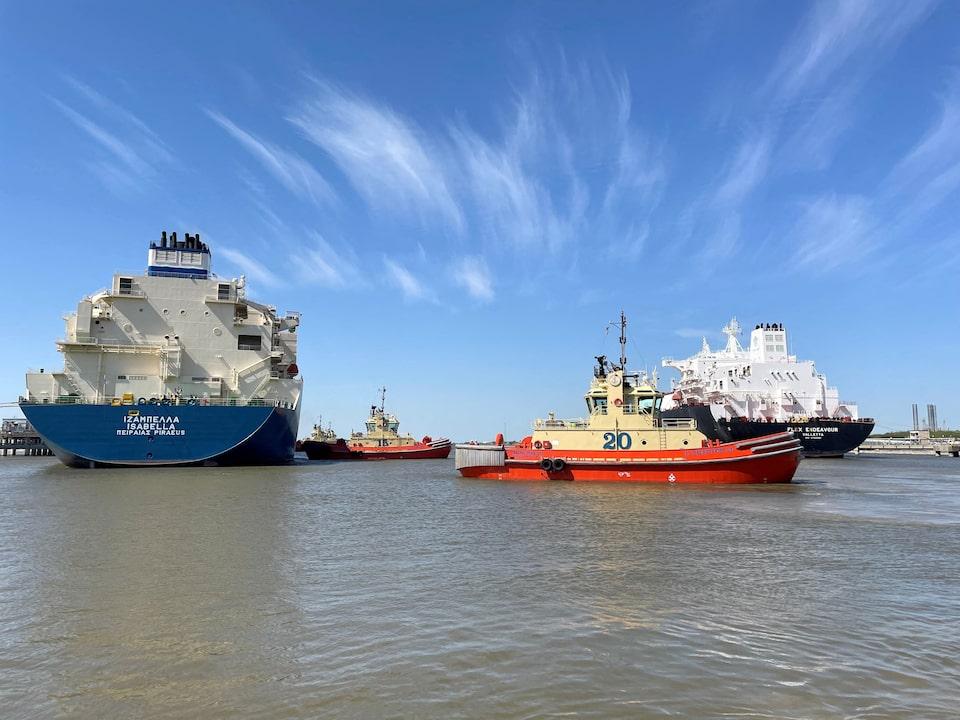
USTR rules on LNG shipments surprised industry Rules go against Trump vow to support US energy dominance Rules would disadvantage US LNG exporters in global market Industry says dearth of US shipbuilding makes compliance difficult LOS ANGELES/WASHINGTON, May 7 (Reuters) - U.S. energy groups are asking President Donald Trump's administration to exempt liquefied natural gas tankers from a new rule that will require producers to move an increasing percentage of their exports on U.S.-built vessels as part of a broader push to revive domestic shipbuilding. The U.S. is the world's No. 1 LNG exporter at $34 billion annually and the Trump administration has been a supporter of the industry in his push for energy dominance. Sign up here. In a move that shocked the industry, the U.S. Trade Representative (USTR) announced April 17 that LNG producers would have to transport 1% of their exports on U.S.-built ships starting in April 2029. That percentage would escalate to 15% in April 2047 and beyond. That could put the U.S. LNG industry at a disadvantage to its peers around the world because there aren't enough U.S.-built ships to meet the requirement, the American Petroleum Institute (API) said in an April 23 letter to U.S. Energy Secretary Chris Wright and National Energy Dominance Council Chair Doug Burgum seen by Reuters. Burgum is also U.S. Interior Secretary. It "risks counteracting the significant progress the Trump Administration has made towards reducing uncertainty and unleashing U.S. LNG," API CEO Mike Sommers wrote in that letter. API counts as members some of the world's largest energy companies, such as Exxon Mobil (XOM.N) , opens new tab, Chevron (CVX.N) , opens new tab and Cheniere Energy (LNG.N) , opens new tab. Individual exporters that do not comply could lose their export licenses, even though the percentages apply to the overall industry and to ships that exporters do not own or control, industry groups warned. "They have little control over their ability to comply with USTR's new requirements but ultimately face the consequences of not doing so," Sommers said in the letter. "We will continue working with USTR and the Department of Energy in support of feasible and durable policies that benefit consumers and advance American energy dominance," Aaron Padilla, API's vice president of corporate policy, told Reuters in a statement late on Tuesday. Representatives from the USTR and White House press office did not immediately respond to requests for comment. USTR proposed the rules as part of a larger effort to counter China's growing commercial and military dominance on the high seas. Oil major Chevron supported API's view saying it would be hard to transport LNG as laid out in the new ruling. "We must work together – industry and governments, to balance support for American economic competitiveness while also maintaining stable and efficient global energy markets," said Barbara Pickering, President of oil major Chevron's shipping division. There are now 792 LNG carriers in operation globally, according to shipping consultancy AXSMarine. LNG ships from South Korea and Japan dominate that group with 703 combined. China, which aims to become a LNG tanker powerhouse, built 58. Five come from U.S. shipyards - though those 1970s-era American made vessels are laid up and not currently in use, AXSMarine said. South Korea remains the dominant builder with 232 LNG carriers currently on order. China, while still behind, is rapidly expanding its footprint with 101 LNG carriers on order, AXSMarine said. U.S. shipyards cannot turn out vessels fast enough to meet the USTR deadline, the Center for LNG told Reuters in a statement. "There are no such vessels in existence today, and building them would take decades, making compliance impossible for the industry," Charlie Riedl, executive director at the Center for LNG, said in a statement on Wednesday. The USTR requirement for 1% of LNG exports to be transported on U.S.-built vessels would require as many as five American-built ships by the end of the decade, which is not feasible, API CEO Sommers said in the letter. That's because it would take as long as five years to build one LNG carrier at either of the two U.S. shipyards with docks long enough to build such a ship, Sommers said. "We urge the Administration to exempt crude oil and refined product imports and exports - consistent with this Administration's approach to exempt these same products from baseline and reciprocal tariffs," Sommers wrote. Vehicle carrier operators also hope to win relief from new rules that would levy hefty U.S. port fees on all of their foreign-built vessels. USTR also announced those unexpected rules on April 17. https://www.reuters.com/business/energy/us-energy-companies-seek-exemption-trump-plan-move-lng-us-built-ships-2025-05-07/
2025-05-07 19:28
May 7 (Reuters) - California-based metals exploration company KoBold Metals said on Wednesday that it had agreed on a framework to buy AVZ Minerals' interests in the Manono lithium deposit in the Democratic Republic of Congo. The agreement will enable KoBold, which is backed by billionaires Bill Gates and Jeff Bezos, to invest more than $1 billion to bring lithium from Manono to Western markets. Sign up here. Lithium, a key metal used extensively to make batteries for electric vehicles and various consumer electronics, is produced in limited quantities in the United States, leading to a heavy reliance on China. The administrations of both President Donald Trump and his predecessor, Joe Biden, have made efforts to reduce this dependency. Last month, Massad Boulos, President Trump's senior adviser for Africa, said that the United States is in talks to invest billions of dollars in the mineral-rich Congo. The country boasts vast reserves of cobalt, lithium, uranium and other minerals essential for the energy transition. Both the Silicon Valley start-up and AVZ Minerals said that they were collaborating with all stakeholders involved in the deal, including the governments of the United States and the DRC. https://www.reuters.com/world/africa/kobold-metals-agrees-framework-buy-stake-congo-lithium-deposit-2025-05-07/

2025-05-07 17:17
May 7 (Reuters) - Vistra (VST.N) , opens new tab swung to a loss in the first quarter on Wednesday, as the independent power producer was hurt by setbacks in its hedging activities and higher costs, sending its shares down more than 5%. The company said the quarterly deficit was driven primarily by unrealized mark-to-market losses on derivative positions as energy prices increased in the forward periods. Sign up here. Persistently high interest rates also weighed on the utility, making it more expensive to invest in the construction and maintenance of critical infrastructure. Vistra's interest costs rose nearly 88% to $319 million in the quarter, while unrealized net loss from mark-to-market valuations of commodities jumped over two-fold to $567 million. In March last year, Vistra had completed the acquisition of Energy Harbor, and the first-quarter performance this year was aided by "two additional months" of results from the nuclear utility. Its adjusted core profit from ongoing operations rose to $1.24 billion compared to $810 million a year earlier, helped by higher prices and strong retail performance. The utility expects load growth to increase at an annual rate of nearly 4% through 2030 with data centers accounting for about 40% of new demand. Besides new plants, existing assets will also need to increase power generation to meet the growing demand from data centers, the company said. U.S. utilities are already fielding massive requests for new power capacity, with many receiving inquiries from data center companies for volumes of power that exceeds their existing generation capacity. The Irving, Texas-based company posted a net loss of $268 million for the three months ended March 31, compared with a net income of $18 million a year ago. https://www.reuters.com/business/energy/utility-vistra-posts-quarterly-loss-derivative-challenges-higher-costs-2025-05-07/

2025-05-07 16:21
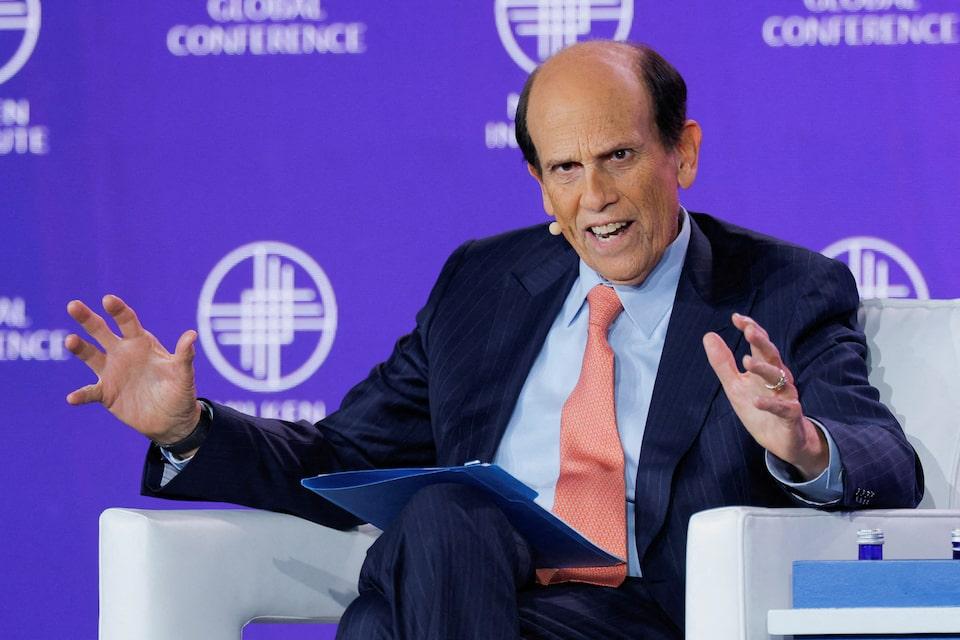
Investor allocations to Europe seen increasing Enthusiasm over progress on tariffs may be premature Questions over US fiscal outlook add to worries BEVERLY HILLS, California, May 7 (Reuters) - Market uncertainty caused by U.S. President Donald Trump's erratic policymaking and aggressive stance on tariffs hung heavily over an investor gathering in Los Angeles this week, with many saying it is time to pivot to non-U.S. assets for more clarity. Concerns over the U.S. economic trajectory, and growing chances of an imminent recession fueled by White House trade policies were major topics at the Milken Institute Global Conference in Beverly Hills, California, where Wall Street dealmakers and global investors gathered to raise capital, sell companies and get a handle on the industry's mood. Sign up here. On panels and in more than a dozen private interviews on Monday and Tuesday, attendees said the U.S. economy's size and depth of its capital markets left few viable alternatives for a dramatic shift away from American assets. Many, however, said the volatility was pushing them to consider higher allocations to non-U.S. markets, Europe in particular. "We've spent a lot of time focused on the U.S. and Europe, and historically, we have had a little bit of a bias towards the U.S.," said Purnima Puri, governing partner at HPS Investment Partners, a New York-based credit investment firm. "We do think Europe is starting to look significantly more interesting, and that's a market we're spending time on," she said on stage at the conference on Tuesday. Entrepreneur Andre Loesekrug-Pietri elicited grins and pats on the back as he walked the halls sporting a green baseball cap with the words "Make Europe Great Again," in a tongue-in-cheek poke at Trump's red "Make America Great Again" hats. While many downplayed the risk of capital outflows from the U.S. that spooked markets in the immediate aftermath of Trump's tariff announcement last month, the search for alternative geographies was a major theme at the event. Some bankers characterized it as a chance to diversify portfolios with too much U.S. exposure, particularly earlier this year and late last year, when the market was betting Trump's second presidency would boost the economy through deregulation and tax cuts. Contributing to the shift are Europe's improved growth prospects and lower asset valuations. "At the start of the year, I think the view was that the U.S. was the place to be, and that's where capital is going to flow, and ... that has shifted differently," said Lee Kruter, partner and head of performing credit at GoldenTree Asset Management, speaking on stage. "In the first quarter we looked for opportunities in Europe," he added, citing better growth prospects and lower risks of stagflation than the U.S. Several senior bankers and investors said western Europe is the obvious place to invest in but it could have challenges as well. U.S. Treasury Secretary Scott Bessent sought to calm event attendees, noting in a speech on Monday that betting against America was a time-tested mistake. But concerns over a tariff-induced slowdown and a prolonged trade war with China have kept investors on edge. Several bankers said in interviews that the market's current enthusiasm may be premature and that it would take little, like a comment from China on stalling trade talks, to send stocks lower again. Saira Malik, chief investment officer at Nuveen, said non-U.S. assets could continue to do better as long as tariff uncertainty persists, but over the long-term U.S. assets could outperform other geographies again, with the tech sector being a major driver. FINANCING US DEBT A less urgent but also prominent concern was the U.S. fiscal outlook, with the prospect of rising government debt feeding doubts over the long-term safety of U.S. assets. "I believe that the underlying foundation of the dollar and Treasury market has been eroding over the last number of years, and we better pay attention to it pretty soon," Alan Schwartz, executive chairman at Guggenheim Partners, warned on a panel on Monday. Steven Mnuchin, founder and managing partner of Liberty Strategic Capital, said the U.S. dollar had no alternative as the global reserve currency. "With that comes a level of responsibility," the former U.S. Treasury secretary in Trump's first administration said at the event on Monday. "It is very important for us to keep the dollar as the reserve currency of the world, because if people don't view that, then we're going to have an even bigger problem financing our debt." https://www.reuters.com/business/finance/investors-milken-eye-foreign-shores-tariffs-cloud-us-outlook-2025-05-07/
2025-05-07 15:35
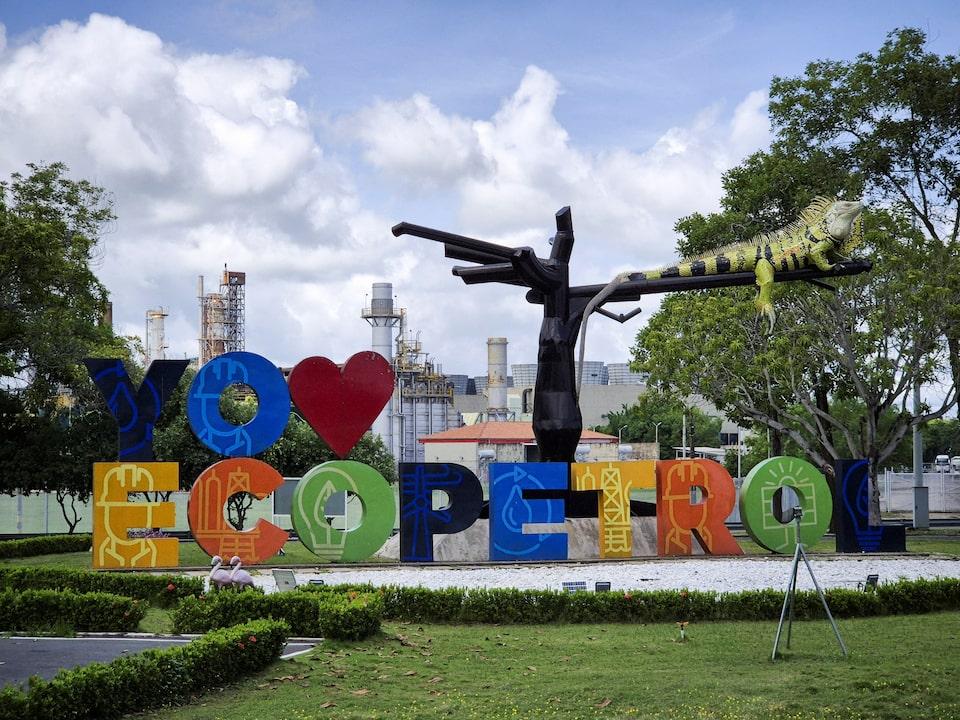
BOGOTA, May 7 (Reuters) - Colombia's state oil firm Ecopetrol (ECO.CN) , opens new tab is planning to cut some 1 trillion pesos ($232 million) in costs and expenses and signaled more flexibility in its investment plan for this year, Chief Executive Ricardo Roa said on Wednesday. Roa spoke in call with analysts as the oil firm faces falling oil prices that ate into its first-quarter profits. Sign up here. For its 2025 investment plan, Ecopetrol said it could cut its planned spending of $5.9 billion to $6.8 billion by around half a billion dollars. However, the company's hydrocarbons vice-president Rafael Guzman said the planned cuts would not affect Ecopetrol's production. "Today, with our current expectations, we have proposed around $500 million," finance chief Camilo Barco said of the planned spending cuts. "However, considering the extent to which lower prices persist, we will be able to take more drastic measures aimed at protecting production and reserves," Barco added. Ecopetrol had on Tuesday reported a net profit for the first three months of 2025 down 22%, citing geopolitical tensions weighing on global oil prices, notably economic slowdown in China and the United States' broad-ranging tariff threats. Ecopetrol's share price edged up slightly in morning trading on Wednesday. It is up nearly 1.2% since the start of this year. ($1 = 4,305.02 Colombian pesos) https://www.reuters.com/business/energy/colombias-ecopetrol-plans-233-million-cost-cuts-lower-oil-prices-bite-2025-05-07/