2025-05-07 10:29
BERLIN, May 7 (Reuters) - Germany must pursue trade deals as part of wider European Union efforts to diversify its markets, new Economy Minister Katherina Reiche said on Wednesday, adding the United States would remain the country's main trade partner. "We cannot hope that the export and import opportunities for German companies will automatically improve in the coming years. We have to take action ourselves," Reiche said after the handover ceremony with former economy minister Robert Habeck. Sign up here. She spoke about the importance of diversifying the European Union's trading partners with free trade agreements with countries such as Australia, Chile, India and Mexico, as well as Latin America's Mercosur bloc, but added the United States would remain Germany's main trading partner. The European Commission is coordinating the 27-nation bloc's response to import tariffs announced by U.S. President Donald Trump, including a 25% levy on its steel, aluminum and cars and an additional 10% on almost all other goods. "Trade wars have disadvantages for both sides and that is why it is important that we reach a free trade agreement with the U.S.," Reiche said. The U.S. was Germany's biggest trading partner in 2024 with two-way goods trade totaling 253 billion euros ($287.16 billion). Industry representatives have underlined the extent of the challenges faced by Europe's largest economy. Volker Treier, head of foreign trade at the German Chamber of Industry and Commerce, said on Wednesday Trump's trade policy had led investors to lose confidence and postpone investments. The AHK World Business Outlook for the first part of 2025, which surveyed 4,600 German companies in over 90 countries between March 17 and April 14, showed that only 19% of companies expected the German economy to improve, compared to 27% late last year. Meanwhile, 33% of the companies surveyed expected a deterioration. ($1 = 0.8811 euros) https://www.reuters.com/markets/europe/new-economy-minister-says-germany-must-actively-seek-trade-improvements-2025-05-07/

2025-05-07 10:27
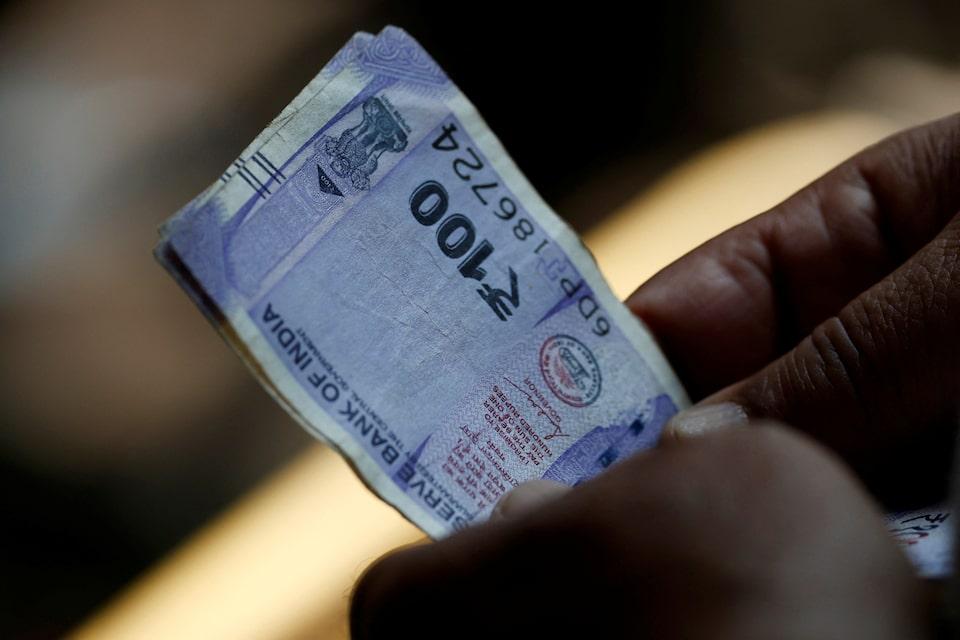
MUMBAI, May 7 (Reuters) - The Indian rupee weakened on Wednesday to log its worst single-day decline in a month as worries over an escalation in geopolitical conflict between India and Pakistan hit sentiment alongside a fall in Asian peers. India said it had struck nine Pakistani "terrorist infrastructure" sites, some of them linked to an attack by militants on tourists that killed 26 people in Indian Kashmir last month. Sign up here. Pakistan said it had shot down five Indian fighter jets in the worst fighting in more than two decades between the nuclear-armed neighbors. The Indian rupee closed lower by nearly 0.5% at 84.8250 against the U.S. dollar, marking its worst performance since April 9. The rupee is likely to keep facing intermittent pressure depending on how the situation evolves, a trader at Singapore-based hedge fund said. In the near-term, bullish bets on the currency could be scaled back while the Reserve Bank of India may step in to limit sharp swings, the trader said. During the day, the rupee's losses were curbed on the back of dollar selling interest from a large conglomerate near the 84.90 level and on intermittent offers from state-run banks, a trader at a Mumbai-based bank said. Asian currencies were lower on the day, with the offshore Chinese yuan declining to 7.22 and the Indonesian rupiah down 0.5%. "Risk appetite in part will have been curtailed following India's decision to attack Pakistan close to the border with Kashmir ... Pakistan has also retaliated, leaving the risk of conflict elevated," MUFG Bank said in a note. India's benchmark equity indexes, the BSE Sensex (.BSESN) , opens new tab and Nifty 50 (.NSEI) , opens new tab, swung between gains and losses before ending slightly in the green while the benchmark 10-year bond yield dipped to 6.3381%. Investors await the Federal Reserve's policy decision due later in the day. No changes to benchmark interest rates are expected. https://www.reuters.com/world/india/rupee-falls-most-month-after-indian-strikes-pakistan-raise-tensions-2025-05-07/
2025-05-07 10:24
MOSCOW, May 7 (Reuters) - Russia's budget proceeds from oil and gas sales fell by around 12% in April compared to the same month last year, the finance ministry said on Wednesday, blaming a sharp drop in the price of oil. Oil and gas revenues have been the most important source of cash for the Kremlin, accounting for about a third to a half of total federal budget proceeds over the past decade. Sign up here. According to the finance ministry, revenue reached 1.09 trillion roubles ($13.49 billion) last month, down from 1.23 trillion roubles in April 2024 but marginally up from 1.08 trillion roubles in March. This was better than 0.96 trillion roubles expected by Reuters. Revenue declined by 10.3% year-on-year in January-April to 3.73 trillion roubles. A sustained fall in the oil price far below the level planned in its budget would hamper Russia's ability to continue to fight in Ukraine, though tax rises or cuts to spending in the short term could help cushion the impact of lower oil prices. The average Russian oil price in roubles has continued to slide in recent months from 5,079 roubles in March and 4,562 roubles in April per barrel, according to Reuters data. The finance ministry had initially targeted 10.94 trillion roubles from oil and gas revenue for the budget this year. It revised the expected proceeds down to 8.32 trillion roubles last month amid falling oil prices. ($1 = 80.7955 roubles) https://www.reuters.com/markets/europe/russias-oil-gas-revenue-down-12-yy-april-2025-05-07/

2025-05-07 10:16
LONDON, May 7 (Reuters) - What matters in U.S. and global markets today By Mike Dolan , opens new tab, Editor-At-Large, Financial Industry and Financial Markets Sign up here. Wall Street's latest stutter seems to have been cut short, as stock futures welcomed the announcement of upcoming U.S.-China trade talks and a fresh bout of monetary easing from the People's Bank of China to boot. In today's column, I discuss what the Trump administration's use of "strategic uncertainty" means for the dollar. Now, onto all of this morning's market news. Today's Market Minute * India attacked Pakistan and Pakistani Kashmir on Wednesday, and Pakistan said it shot down five Indian fighter jets in the worst fighting in more than two decades between the nuclear-armed enemies. Indian shares were lower on Wednesday morning, but had pared their early losses. * U.S. Treasury Secretary Scott Bessent and chief trade negotiator Jamieson Greer will meet China's economic tsar He Lifeng in Switzerland this weekend for talks that could be the first step toward resolving a trade war disrupting the global economy. * Chinese authorities announced on Wednesday a raft of stimulus measures, including interest rate cuts and a major liquidity injection, as Beijing steps up efforts to soften the economic damage caused by the trade war with the United States. * The moves in Asian FX markets in recent days have brought a regional conundrum into sharp focus: how much appreciation can Asian currencies countenance in the face of U.S. President Donald Trump's global trade war? Read the analysis from Reuters' columnist Jamie McGeever. * Amid all the headlines around the U.S. minerals deal with Ukraine, Washington has pursued a potentially even more significant critical metals deal in the Great Lakes region of Africa. Read the analysis from Reuters' columnist Andy Home. Trade talks at last Global stock markets held steady for the most part on Wednesday, as oil prices rose and gold prices fell following signs of a potential de-escalation in the U.S.-China trade spat. U.S. and Chinese officials on Tuesday said Treasury Secretary Scott Bessent and chief trade negotiator Jamieson Greer will meet China's top economic official He Lifeng in Switzerland this weekend. Investors appear to remain cautious about prospects for any breakthrough in tariff negotiations, though. The dollar was down for a fourth session and European stocks dropped. Meanwhile, China announced various stimulus measures on Wednesday, including rate cuts, more cash for the banking system and the expansion of a channel that helps insurance money flow into stocks. But the big story remains what will happen with U.S.-China talks this weekend. All eyes will now turn to the Federal Reserve, which will release its latest policy decision today. Its assessment of the still-uncertain trade and inflation picture will be watched closely, even though almost no one expects any move in interest rates on Wednesday. Over in Europe, jitters eased and the euro held steady after German conservative leader Friedrich Merz was elected chancellor in a second round of voting on Tuesday, after he failed to secure a majority in the first attempt. Geopolitical developments in Asia are jarring somewhat, as India's military strikes on neighbouring Pakistan have increased regional tensions. India's rupee fell slightly and stocks in Pakistan slumped after the heaviest fighting in decades erupted between the nuclear-armed neighbours. Check out my column today, where I turn to the U.S. where the Trump Administration's policy of 'strategic ambiguity' appears to be having the desired affect on investors. Chart of the day China's central bank announced on Wednesday that it will lower the borrowing cost of its seven-day reverse repurchase agreements, its benchmark interest rate, by 10 basis points (bps) to 1.40%, effective May 8. Other interest rates will drop in line with the key rate. These announcements came shortly after U.S. and Chinese officials said the countries will meet in Switzerland this weekend for talks. The Chinese economy is already feeling the pain from the triple-digit U.S. levies, with data last week showing factory activity contracting in April at the fastest pace in 16 months. Concerns have been rising over the impact the tariffs would have on the job market and on the already-strong deflationary pressures in China as exporters lose their biggest customer. Today's events to watch * U.S. Federal Reserve's Federal Open Market Committee policy decision and press conference from Fed Chair Jerome Powell * U.S. March consumer credit * German Chancellor Friedrich Merz meets French President Emmanuel Macron in Paris * Chinese President Xi Jinping visits Moscow * Bank of England Deputy Governor Sarah Breeden speaks * US corporate earnings: Walt Disney, Uber, Paycom, DoorDash, Skyworks, Atmos, Corteva, Axon, Emerson Electric, Verisk, Fortinet, Bunge, CF, Charles River, Rockwell, Bio-Techne Texas Pacific Land, Marketaxess, Cencora, Vistra, Dayforce, Trimble Opinions expressed are those of the author. They do not reflect the views of Reuters News, which, under the Trust Principles , opens new tab, is committed to integrity, independence, and freedom from bias. https://www.reuters.com/markets/us/global-markets-view-usa-2025-05-07/
2025-05-07 10:12
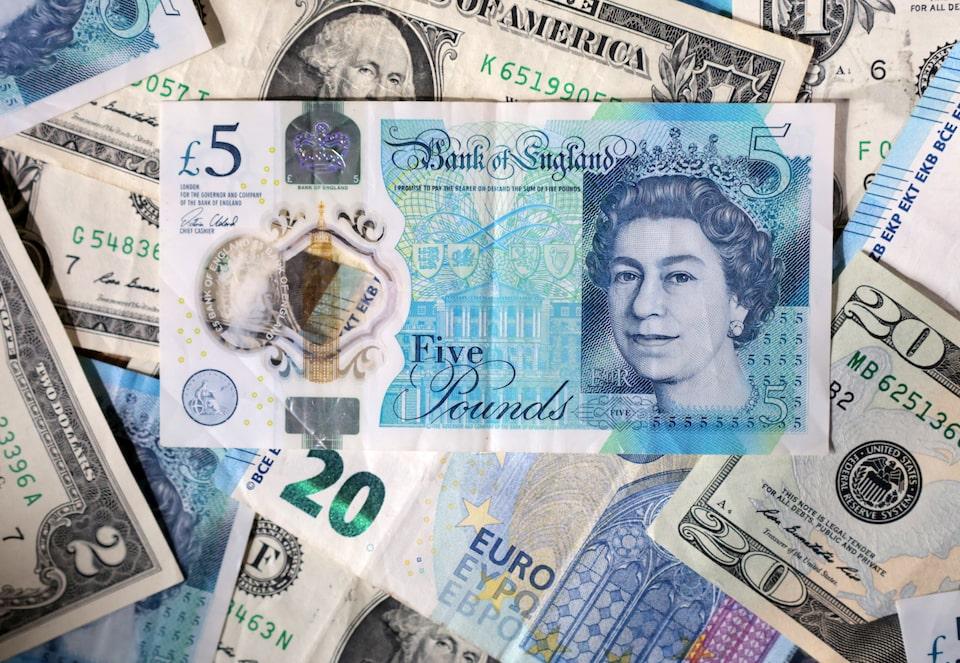
May 7 (Reuters) - The pound lost ground versus a strengthening dollar on Wednesday but remained near its highest levels in over three years, ahead of a Bank of England policy meeting due on Thursday. Investors also focused on tariffs talks as U.S. Treasury Secretary Scott Bessent and chief trade negotiator Jamieson Greer are due to meet China's economic tsar He Lifeng this weekend. Sign up here. Britain and India clinched a free trade pact on Tuesday after tariff turmoil sparked by U.S. President Donald Trump forced the two sides to hasten efforts to increase their trade. Analysts flagged chances of a trade deal with the U.S. soon while focusing on the May 19 UK-European Union summit as warming relations with the EU typically sees sterling rally. The pound was last down 0.25% on the dollar at $1.3333 . It hit $1.3444 on April 28, its highest since February 2022. The greenback rose against the safe-haven yen and Swiss franc ahead of the outcome of the Federal Reserve policy meeting due later in the session. Money markets priced in 94 basis points (bps) of BoE rate cuts by December, including 25 bps on Thursday, but some analysts argued that the central bank could be less dovish than market expectations. Analysts argued that domestic inflation dynamics, lower global energy prices, the prospect of China re-routing a share of its exports towards Europe, and a stronger sterling all point to a lower inflation outlook over the coming quarters. "We take a slightly more cautious view," said Shaan Raithatha, senior economist at Vanguard. "Though we acknowledge the inflation outlook is softening, there are some near-term risks," he added, before mentioning improving growth prospects, higher utility prices and tentative evidence that the rise in national insurance contributions (NICs) and national living wage (NLW) are "starting to feed through to final prices." The pound was also weaker against the euro, which was down 0.15% at 85.16 pence. The BoE is expected to lower rates by a quarter point on Thursday as U.S. tariffs darken the global growth outlook. https://www.reuters.com/world/uk/sterling-drops-versus-dollar-focus-boe-trade-talks-2025-05-07/
2025-05-07 07:26
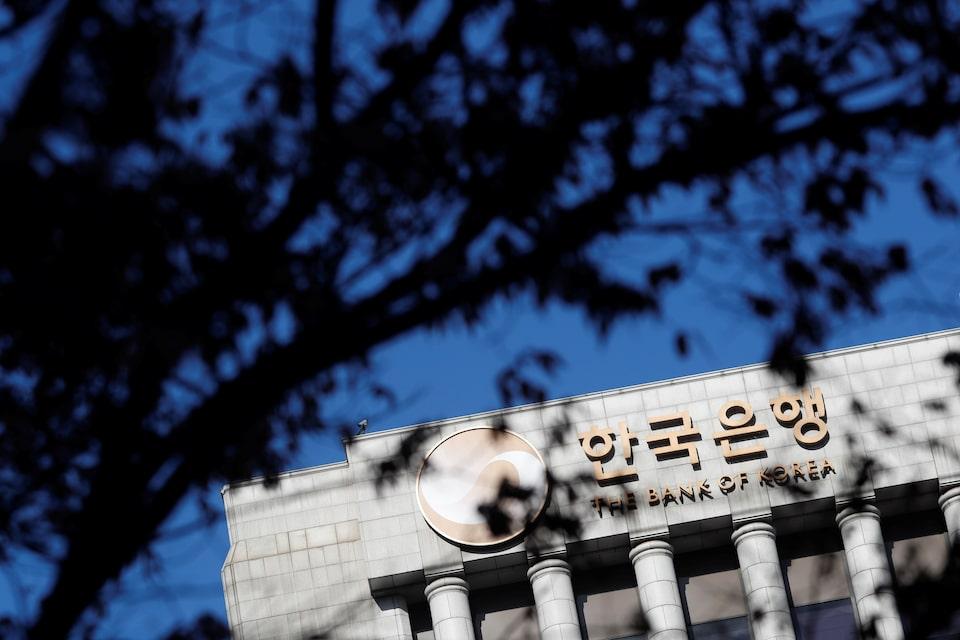
SEOUL, May 7 (Reuters) - Most of the Bank of Korea's board members assessed headwinds to South Korea's economy were growing faster than expected, a factor that would warrant more interest rate cuts, minutes from last month's meeting showed on Wednesday. "With economic growth this year expected to fall short of previous forecasts due to the economic slowdown, the need for preemptive interest rate cuts is growing," one of the seven board members said, according to the minutes from the bank's April 17 rate review. Sign up here. The BOK's seven-member board on April 17 held the benchmark interest rate (KROCRT=ECI) , opens new tab at 2.75% as expected at its monetary policy review and signaled it would cut rates in May to cope with "significant" risks to the economy from U.S. President Donald Trump's sweeping tariff policy. A majority of economists surveyed by Reuters expect the BOK to lower the benchmark interest rate to 2.25% by the end of the third quarter of this year as shifting U.S. tariff policy fuels fears of a global recession and threatens to sharply curtail exports out of Asia's fourth-largest economy. The BOK next reviews policy interest rates on May 29. https://www.reuters.com/world/asia-pacific/bank-korea-minutes-suggest-another-interest-rate-cut-imminent-2025-05-07/