2025-05-07 06:03
SINGAPORE, May 7 (Reuters) - Aster Chemicals and Energy will acquire Chevron Phillips Singapore Chemicals through its affiliate Chandra Asri Capital, the companies said on Wednesday. They did not provide details on the value of the deal. Sign up here. Chevron Phillips Singapore Chemicals currently operates a 400,000 metric ton per year (tpy) polyethylene facility in Singapore's Jurong Island. Polyethylene is a type of plastic resin used in the packaging, construction and medical industries. "This acquisition represents a key achievement for Aster, supporting our strategic goals with new capabilities and strengthening our offerings to customers," the CEO of Singapore-based Aster Chemicals and Energy, Erwin Ciputra, said. The approximately 150 employees of Chevron Phillips Singapore Chemicals are expected to have the opportunity to join Aster, Chevron Phillips Chemical said in its statement. The transaction remains subject to customary closing conditions. Last month, Aster Chemicals and Energy, a joint venture between Chandra Asri and Glencore (GLEN.L) , opens new tab, completed its purchase of Shell's Singapore refinery and refining assets. https://www.reuters.com/business/energy/aster-acquire-chevron-phillips-singapore-chemicals-2025-05-07/

2025-05-07 06:03
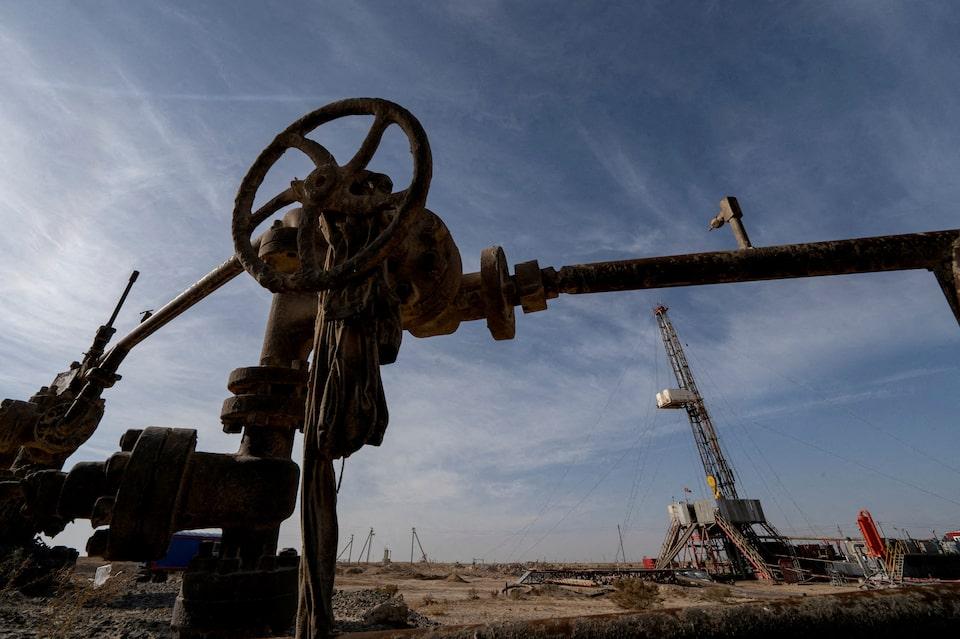
LITTLETON, Colorado, May 7 (Reuters) - Shipments of most widely-traded energy products are slowing in sync with the global economy, which has been stunned by the tough new tariffs imposed by U.S. President Donald Trump so far this year. Exports of crude oil, gasoline, diesel and thermal coal all contracted during the January to April window from the same months in 2024, as the economies of importer nations drop down a gear in response to heightened trade uncertainty. Sign up here. The liquefied natural gas and chemicals sectors have registered export volume gains so far this year, but are at risk of a slowdown if the malaise already chilling demand for oil, coal and fuels also cools the power and manufacturing sectors. Below is a breakdown of how major energy product markets are faring so far in 2025. CRUDE CUTS Global export volumes of crude oil from January through April totalled 4.93 billion barrels, according to data from commodity intelligence firm Kpler. That total was 1.3% lower than during the same period in 2024, and was driven mainly by a 9% drop in imports by China, the world's largest crude importer and consumer. Other major crude importers that also registered a year-over-year drop in purchases include the United States (-14%), South Korea (-3%), Italy (-12%) and the Netherlands (-1%). Somewhat offsetting those declines were import increases into India (up 1%), Japan (up 5%) and Taiwan (up 7%). India's crude imports were a record for the January through April window, as were those into Malaysia, Lithuania, Myanmar and Oman, Kpler data showed. Rising sales into those markets bode well for crude exporters, and all those economies should continue to register growth in crude purchases over the coming years. However, it is unclear whether those growth markets will be able to offset the declines seen in East Asia (China, Japan, South Korea and Taiwan). East Asia has arguably been the most critical importer bloc for the crude market for the past decade or so, and has accounted for around 40% of total crude imports since 2019. So far in 2025, however, East Asia purchased only 37% of total crude exports, which is the lowest share for that region in six years. If China, Japan and South Korea in particular continue to post small annual declines in crude purchases, global crude exporters may need to steepen sales increases to new emerging markets in order to replace those lost East Asia volumes. FUELS & COAL Gasoline exports during January through April declined by 5% from the same months a year ago, as economic worries combined with the ongoing electrification of car fleets ate into demand. Among the 10 largest gasoline importers, only Singapore and Pakistan have posted year-over-year increases in import volumes so far in 2025, Kpler data shows. All other major markets, including the United States, Mexico, Malaysia, the United Arab Emirates and Nigeria, posted declines. The diesel, or gasoil, market has also contracted so far this year as global trucking mileage took a hit from the reduced shipment of goods. Between January and April, total diesel exports dropped by 3% from a year ago to the lowest volume for that period since 2022. Steep import contractions were registered in France, Turkey, Malaysia and Mexico, revealing a wide span in the downturns in gasoil use. Further contractions in goods production and movement will further cut diesel flows. Thermal coal exports dropped by 6.7% during January to April from the same months a year ago, as all major traditional importers including China, India, Japan, South Korea and Taiwan cut back on purchases. Import volumes expanded in Vietnam, Turkey and the Netherlands - the main entry point for bulk commodities into mainland Europe - and also in Bangladesh and Morocco. Southeast Asia and North Africa look set to remain growth markets for coal exporters over the near-term, due to the need for more cheap power in those economies. But if China and India both continue to scale back overall coal import dependence, total coal shipments look set to continue to contract over the coming years. LNG & CHEMICAL GROWTH In contrast with the trends seen in crude oil, refined fuels and coal, the export volumes of LNG and chemicals have been on an expansionary path so far in 2025. Total exports of LNG hit a record for the January to April period, with just over 143 million tons of the super-chilled gas shipped out during that window. That volume figure was only 1% more than during the same months in 2024, and so any sustained dips in LNG shipments over the coming months could easily knock year-to-date volumes into reverse. A sharp rise in natural gas costs in key markets - especially compared to coal - has served to curb demand for LNG in Asia so far in 2025, and any sustained downturn in industrial activity will further cut into LNG demand going forward. Chemical export volumes climbed 4% to three-year highs during January to April, on the back of stronger import demand in India, Brazil, South Korea and Australia. However, any further economic weakening - especially within manufacturing - would likely reduce demand for chemical imports, and ensure that the pain now being felt mainly in the oil and fuels arena is spread throughout the energy industry. The opinions expressed here are those of the author, a columnist for Reuters. https://www.reuters.com/business/energy/global-energy-product-exports-slow-trade-worries-mount-maguire-2025-05-07/
2025-05-07 05:59
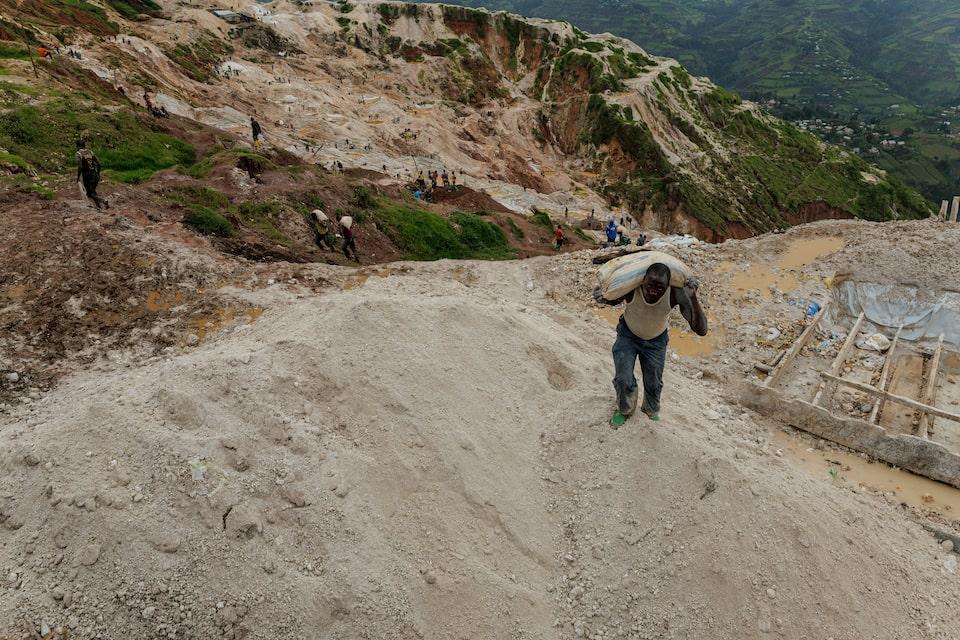
LONDON, May 6 (Reuters) - Away from the headlines around the minerals deal with Ukraine, the United States has pursued a potentially even more significant critical metals deal in the Great Lakes region of Africa. The government of the Democratic Republic of Congo reached out to the Donald Trump administration with a Ukrainian-style proposal in February in response to the rapid advance of the Rwandan-backed M23 rebel group in the east of the country, Sign up here. The U.S. government has responded enthusiastically with a flurry of negotiations aimed at ending a decades-long conflict born out of the Rwandan genocide of 1994. The political momentum is building towards a potential peace deal between Congo and Rwanda as soon as May, to be accompanied by bilateral minerals deals between both countries and the United States. At stake are the mineral riches of North and South Kivu provinces, a major but highly problematic source of metals such as tin, tungsten and coltan. SAVING THE BISIE TIN MINE The M23 rebels seized control of Goma and Bukavu, eastern Congo's two largest cities, in February. By early March, they had advanced rapidly westwards to Walikale, the location of the Bisie tin mine. Bisie is a poster child for ethical mining in the Congo, having transitioned from an artisanal site to a fully-modernised operation that is the world's fourth largest producer of tin concentrates. Bisie's operator, Alphamin Resources (AFM.V) , opens new tab, quickly shut down and evacuated the site as M23 rebels closed in, sending tin prices into a frenzy and threatening the Congolese government with the loss of a major source of revenue. The fall of Walikale seems to have accelerated direct talks between the U.S. government, Congo and Rwanda, resulting in M23 fighters withdrawing in what they presented as a goodwill gesture ahead of Qatar-brokered peace talks. Alphamin resumed operations at Bisie on April 15. ARMED RICHES Bisie is the only official-sector mine in North and South Kivu provinces. Everything else is artisanal. Researchers from The International Peace Information Service have mapped , opens new tab over 2,800 sites in eastern Congo since 2009 and collected information from 829 active sites that it estimated employed some 132,000 miners between 2021 and 2023. Of the sites surveyed, 85% were mining gold and most of the rest digging for the 3T minerals - tin, tungsten and tantalum, the latter occurring as coltan ore. The IPIS estimates that 61% of miners at these sites were affected by "armed interference", defined as coercive rent-taking, from one of the many armed groups operating in the region, not least the Congolese army. This has been a problem for many years. Indeed, Congo was the template for what became known as "conflict minerals" legislation such as the 2010 Dodds-Frank Act requiring U.S. companies to adhere to responsible sourcing rules. Sadly, not much has changed on the ground. The M23 rebels themselves are involved in the minerals trade. Artisanal producers of coltan in the town of Rubaya pay a 15% tax to the group, Reuters journalists found on a visit to rebel-controlled areas. The seepage of metals across Congo's eastern borders is a major problem, not just for the Congolese government, but also for Western buyers due to the threat of conflict minerals contaminating the official supply chain. THE GREAT RAILWAY GAME Congo's minerals wealth is undisputed and its potential rewards far more immediate than from the deal with Ukraine. A peace deal between Rwanda, Congo and the M23 rebel group would be an important first step to restoring order to the troubled Kivu provinces. But there are plenty of other armed groups actively operating in the region and it is unclear how far the United States would want to commit to any military presence to deter them. The prize, however, is tantalisingly large. Congo is also one of the world's richest sources of copper and cobalt, which are produced far away from the Great Lakes region in the southern province of Katanga. This part of Congo's mineral wealth is largely controlled by Chinese operators, which ship both raw materials and finished metal back to China. The West would love to loosen China's grip. A lot of investment is going into the Lobito Corridor project , opens new tab, which will rehabilitate and extend a railway line linking the Angolan port of Lobito with Congo's copper-belt mines. The aim is to use the railway as a generator of economic development and also open up a western transport route for Congo's metals. China's response is a $1.4 billion deal to upgrade the Tanzania-Zambia railway line that transports Chinese-produced metals eastwards to the port of Dar es Salaam. Railways have until now defined the great minerals game being played out between East and West in the heart of Africa. A minerals-for-security deal in the north of the country would open a whole new front in that strategic competition and a new chapter in Congo's history. The opinions expressed here are those of the author, a columnist for Reuters. https://www.reuters.com/markets/commodities/after-ukraine-deal-us-turns-its-critical-minerals-gaze-africa-andy-home-2025-05-06/
2025-05-07 05:48
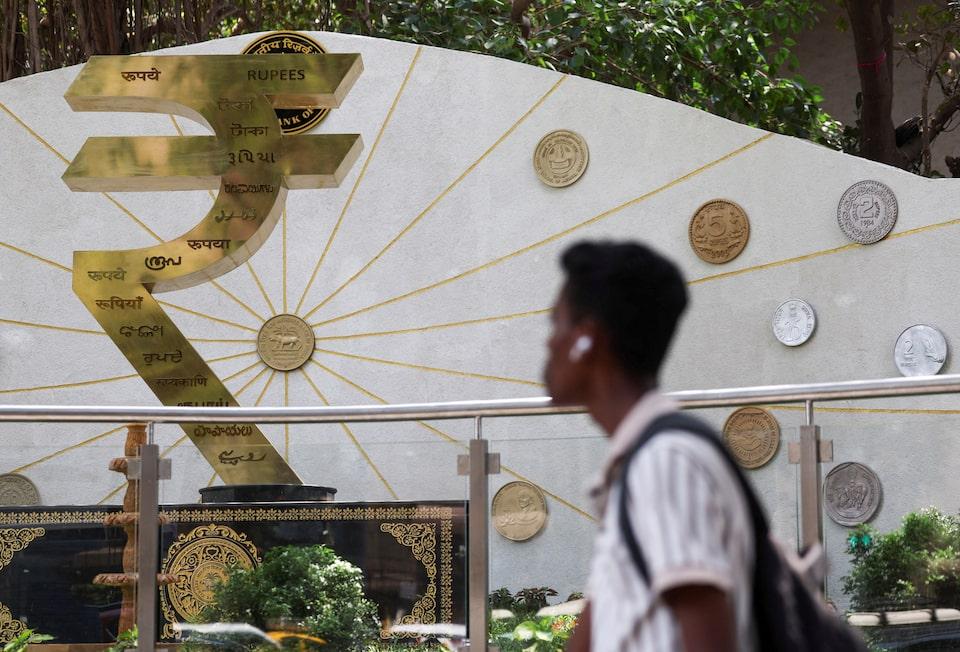
MUMBAI, May 7 (Reuters) - India's forex markets exhibited resilience on Wednesday following India's strikes in Pakistan, with the rupee's decline aligning with other Asian currencies and forward premiums witnessing few fluctuations. The rupee was last quoted at 84.5875 against the U.S. dollar, a 0.2% decline for the day, largely mirroring the 0.2%-to-0.4% drop in its Asian peers such as the offshore Chinese yuan, Thai baht, and Indonesian rupiah. Sign up here. The rupee maintained a narrow trading range of 20 paisa. Meanwhile, the dollar/rupee forward premiums exhibited minimal response, with the 1-year implied yield showing little change at 2.17%. "The relative calm is definitely a surprise. It seems the market isn't factoring in a major intensification of tensions at this point," said Kunal Kurani, assistant vice president at Mecklai Financial. "We'll have to wait over the next few days to see if the market's assessment proves correct." The rupee's near-term volatility expectations, too, were largely unchanged following India's military action, with 1-month implied volatility holding near 6%. India said it struck nine Pakistani "terrorist infrastructure" sites, some of them linked to an attack by Islamist militants on tourists that killed 26 people in Indian Kashmir last month. Islamabad called the assault a "blatant act of war" and said it had informed the U.N. Security Council that Pakistan reserved the right to respond appropriately to Indian aggression. https://www.reuters.com/world/india/indian-forex-markets-largely-unfazed-by-india-strikes-pakistan-2025-05-07/
2025-05-07 05:20
Business group cuts economic growth forecast Exports and tourism forecast also cut Tariffs could lead to $43 billion lost export revenue over a decade BANGKOK, May 7 (Reuters) - Thailand's economy and exports will grow less than expected this year because of U.S. tariffs, a leading business group said on Wednesday, adding the country could lose market share in the United States if a tariff reduction was not secured. Southeast Asia's second-largest economy was now expected to grow between 2.0% and 2.2% this year, down from a previous forecast of 2.4% to 2.9% growth, the Joint Standing Committee on Commerce, Industry and Banking said. Sign up here. And exports, a key economic driver, were seen growing by between 0.3% and 0.9% this year, down from earlier projection of 1.5% to 2.5% growth, while expected tourist arrivals were cut to 36 million to 37 million, down from 39 million to 39.5 million. Thailand is among the Southeast Asian nations hardest hit by U.S. President Donald Trump's trade policy, facing a 36% tariff on shipments to its biggest export market if a reduction cannot be negotiated before July. If the tariffs stand, the economy might grow by just 0.7% this year, and lost export revenue over the next decade could be 1.4 trillion baht ($43 billion), said Kriengkrai Theinnukul, chair of the Federation of Thai Industries, part of the group. There was also a risk that other countries might negotiate better tariff terms and weaken Thai exports to the United States, Kriengkrai said. The United States took more than 18% of Thai exports last year, worth $55 billion. Washington has put its trade deficit with Thailand at $45.6 billion. Kriengkrai said business was also worried about the strength of the baht , saying the government should make sure the currency does not appreciate too fast or become too volatile. The finance ministry last week cut its forecast for economic growth this year to 2.1% from 3% due to the impact of U.S. tariffs and a global slowdown. Thailand's economy has lagged regional peers since the pandemic, and the group said tariffs added to structural challenges such as high levels of household debt. ($1 = 32.64 baht) https://www.reuters.com/world/asia-pacific/thai-business-group-cuts-2025-gdp-growth-forecast-over-tariffs-impact-2025-05-07/
2025-05-07 05:17
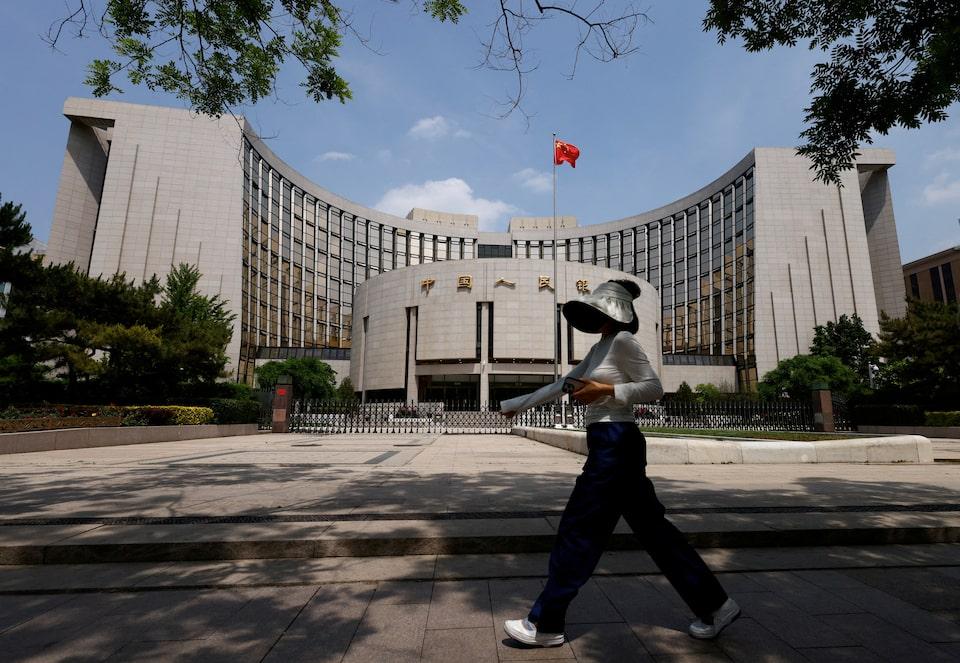
China to cut interest rates on May 8, trim RRR on May 15 Beijing enhances stock market support tools; shares jump Stimulus steps announced as U.S. and China set for trade talks BEIJING, May 7 (Reuters) - Chinese authorities announced on Wednesday a raft of stimulus measures, including interest rate cuts and a major liquidity injection, as Beijing steps up efforts to soften the economic damage caused by the trade war with the United States. The announcements come shortly after U.S. and Chinese officials said Treasury Secretary Scott Bessent and chief trade negotiator Jamieson Greer will meet China's top economic official He Lifeng in Switzerland this weekend for talks. Sign up here. The talks are the first opportunity for the two sides to de-escalate tensions after a protracted cat-and-mouse game over tariffs in which neither wanted to be seen as backing down. The tensions have roiled global markets and upended supply chains. The Chinese economy is already feeling the pain from the triple-digit levies, with data last week showing factory activity contracting in April at the fastest pace in 16 months. Concerns have been rising over the impact the tariffs would have on the job market and on the already-strong deflationary pressures in China as exporters lose their biggest customer. "The domestic economy must be strong enough before (China) kicks off any protracted trade negotiations," Xing Zhaopeng, senior China strategist at ANZ, said of Wednesday's stimulus measures. Chinese stocks (.CSI300) , opens new tab, (.SSEC) , opens new tab, (.HSI) , opens new tab rose as investors cheered the easing steps and the ice-breaker trade talks. Citi analysts said in a note that "the tariff impact had started to surface," and the stimulus measures could be "tactical" ahead of the trade talks. "Timely domestic support could create more leverage for China," they said. China's central bank will lower the borrowing cost of its seven-day reverse repurchase agreements, its benchmark interest rate, by 10 basis points (bps) to 1.40%, effective May 8. Other interest rates will drop in line with the key rate. The amount of cash that banks must hold as reserves, known as the reserve requirement ratio (RRR), will also be cut by 50 bps from May 15, bringing the average level to 6.2%. The People's Bank of China's (PBOC) Governor Pan Gongsheng told a press conference the first RRR cut since September last year will release 1 trillion yuan ($138 billion) in liquidity. At the same event, the chairman of the China Securities Regulatory Commission, Wu Qing, said authorities will help A-share listed companies affected by tariffs to cope with difficulties. Li Yunze, the head of the National Financial Regulatory Administration, said Beijing will expand a pilot scheme allowing insurance companies to invest in stock markets by an additional 60 billion yuan ($8.31 billion). Additionally, PBOC's Pan said the central bank will set up low-cost relending facilities for purchases of tech-related bonds, and for investments in elderly care and services consumption. Similar existing tools to support agriculture and small businesses will be enhanced, Pan said. The PBOC is also trimming mortgage costs for some buyers. FX OPPORTUNITY Policymakers have been flagging monetary policy easing moves since late 2024, but had held fire while the yuan currency was under pressure, fearing capital outflows, analysts said. A slightly stronger yuan in recent days may have given the central bank an opening. "A weaker dollar certainly gives China more room to make monetary adjustments," said Xu Tianchen, senior economist at the Economist Intelligence Unit. "I don't have very high expectations of the credit impact of these measures," said Xu, but added they "inject renewed confidence, which will support the stock market." Capital Economics analysts also said the economic impact of the monetary stimulus "will be positive but modest" because the main constraint on credit is demand, not supply. Fiscal support would be more effective, they said. Washington and Beijing are expected to discuss over the weekend reductions of the broader tariffs, two sources familiar with the planning told Reuters. The negotiating teams are also expected to discuss eliminating duties on specific products, U.S. policies on de minimis and the U.S. export control list, one of the sources said. Beijing has largely kept up its fiery rhetoric as tensions soared over the past few weeks, having vowed to "never kneel" to U.S. President Donald Trump's tariffs. The stimulus measures announced on Wednesday are "preventive in nature, as the U.S.-China trade negotiations may take quite a long time," said Ma Hong, senior analyst at GDDCE Research Institution. ($1 = 7.2164 Chinese yuan) https://www.reuters.com/markets/asia/china-central-bank-governor-says-will-cut-banks-reserve-requirement-ratio-2025-05-07/