2025-05-07 05:05
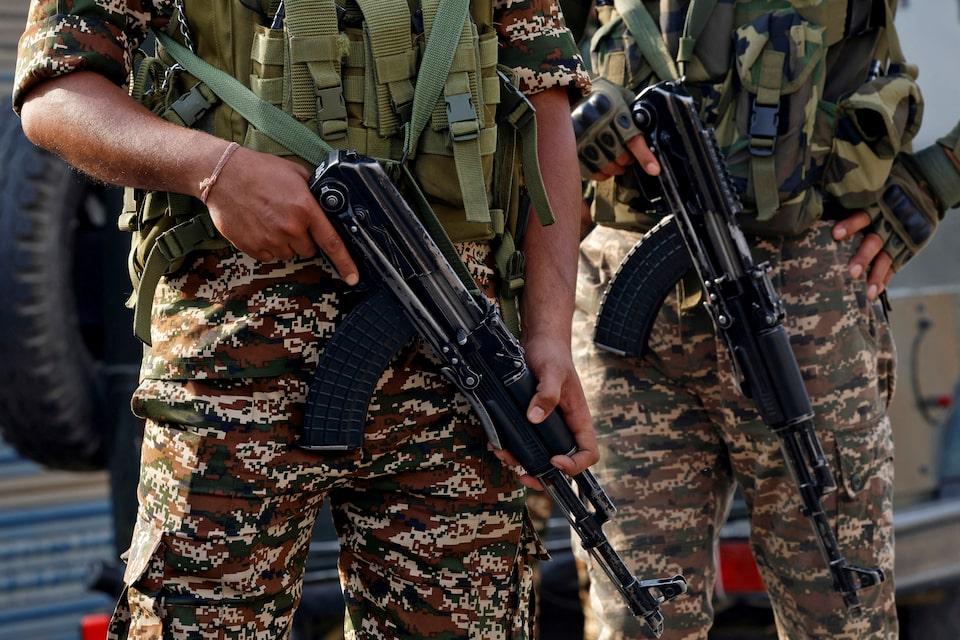
NEW DELHI, May 10 (Reuters) - India and Pakistan agreed to a ceasefire on Saturday after a fourth day of strikes and counter-strikes against each other's military installations. Here is a chronology of major military and diplomatic escalations in their troubled relationship since 1999. Sign up here. May–July 1999: India and Pakistan fight an undeclared war in the Kargil region of Kashmir after Pakistani army-backed irregulars occupy Indian posts on the Line of Control (LoC), or ceasefire line. India pushes back after intense fighting. The U.S. pressures Pakistan to withdraw. December 2001: A heavily armed group attacks India's parliament building in New Delhi, killing nine people. India blames Pakistan-based Islamist groups Jaish-e-Mohammed and Lashkar-e-Taiba. The two countries come to the brink of a fourth war. November 2008: Ten heavily armed attackers target major landmarks across Mumbai, including two luxury hotels, a Jewish centre and the main train station, killing 166 people. India pauses all dialogue with Pakistan, resuming briefly years later under a structured peace process. January 2016: Attackers disguised as soldiers storm an Indian Air Force base near the Pakistan border, exchanging fire with Indian forces who, backed by tanks and helicopters, battle for more than 15 hours before wresting back control of the compound. All five assailants and at least two guards are killed. India says the attackers came from Pakistan, while Pakistani authorities condemn the raid. Peace talks, briefly revived in 2015, stall again. September 2016: Eighteen Indian soldiers are killed in an attack on an army base in Uri in Indian Kashmir. India blames Pakistan for the attack and responds with "surgical strikes" across the LoC on what it calls terrorist launchpads. Pakistan denies any incursion on its territory. February 2019: A suicide bomber kills 40 Indian paramilitary police in Kashmir. India conducts air strikes in Balakot, Pakistan. Pakistan responds with air strikes of its own and shoots down an Indian aircraft. India also claims to have shot down a Pakistani plane but this is not confirmed. The standoff cools following international pressure. August 2019: India revokes Kashmir's special status, scrapping a constitutional provision that allowed the state of Jammu and Kashmir to make its own laws. Pakistan downgrades diplomatic ties and suspends trade. April 2025: Twenty-six men are killed when Islamist assailants target Hindu tourists in Indian Kashmir. India blames Pakistan-backed groups; Pakistan denies involvement and calls for a neutral investigation. India suspends the 1960 Indus Waters Treaty that regulates water-sharing from the river and its tributaries, while Pakistan suspends all trade with India, including through third countries. Both countries close airspace to each other's airlines and revoke most visas issued to each other's nationals. May 2025: India attacks sites in Pakistan and Pakistani Kashmir, targeting what it describes as "terrorist infrastructure". Over four days, both countries engage in strikes and counter-strikes against each other's military installations. On May 10, the two countries said they had agreed to a ceasefire, after pressure from and talks with the United States. https://www.reuters.com/world/asia-pacific/indian-strike-pakistan-is-worst-fighting-between-neighbours-over-2-decades-2025-05-07/
2025-05-07 04:55
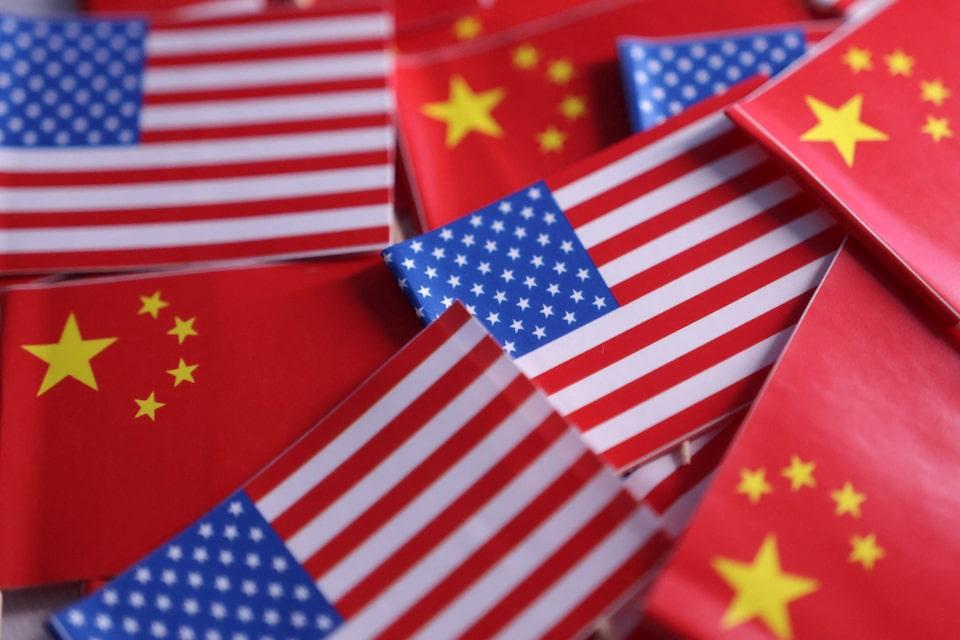
A look at the day ahead in European and global markets from Tom Westbrook After a few weeks buying the rumour of U.S.-China de-escalation, markets gave a lukewarm welcome to news that the countries' top trade officials will meet in Geneva at the weekend. Sign up here. It all sounds very preliminary. U.S. Treasury Secretary Scott Bessent told Fox News that Saturday's meeting would be about working out what to talk about. "My sense is this will be about de-escalation," he said. But the Chinese side was guarded, citing a proverb in its statement. "There is an old Chinese saying: Listen to what is said, and watch what is done...if (the U.S.) says one thing but then does another, or attempts to use talks as a cover to continue coercion and blackmail, China will never agree." Still, it lifted U.S. futures and they held most of their gains through the Asia day, while Hong Kong stocks jumped. China also flagged interest rate cuts and expanded a channel for directing insurers' money into the stock market - cheered by investors, although a bit half-heartedly, because the fiscal spending they so desire is still absent. The action filled in the waiting hours before the Federal Reserve meeting, where no policy change is expected but markets will be trying to gauge policymakers' sensitivity to jobs and inflation. Markets pared back expectations of future cuts as data on Friday showed the labor market, for now, is holding up. India's rupee weakened slightly on the dollar as the worst fighting in more than two decades erupted between India and Pakistan. Asian currencies eased after a few sessions of surging against the U.S. dollar. Mostly second-tier data is due in Europe through the day, though there are earnings out at healthcare multinational Fresenius (FREG.DE) , opens new tab and drugmaker Novo Nordisk (NOVOb.CO) , opens new tab. Key developments that could influence markets on Wednesday: -US Federal Reserve meeting Trying to keep up with the latest tariff news? Our new daily news digest offers a rundown of the top market-moving headlines impacting global trade. Sign up for Tariff Watch here. (This story has been corrected to show that market expectations were pared back for future cuts, not hikes, in paragraph 9) https://www.reuters.com/markets/europe/global-markets-view-europe-2025-05-07/
2025-05-07 03:42
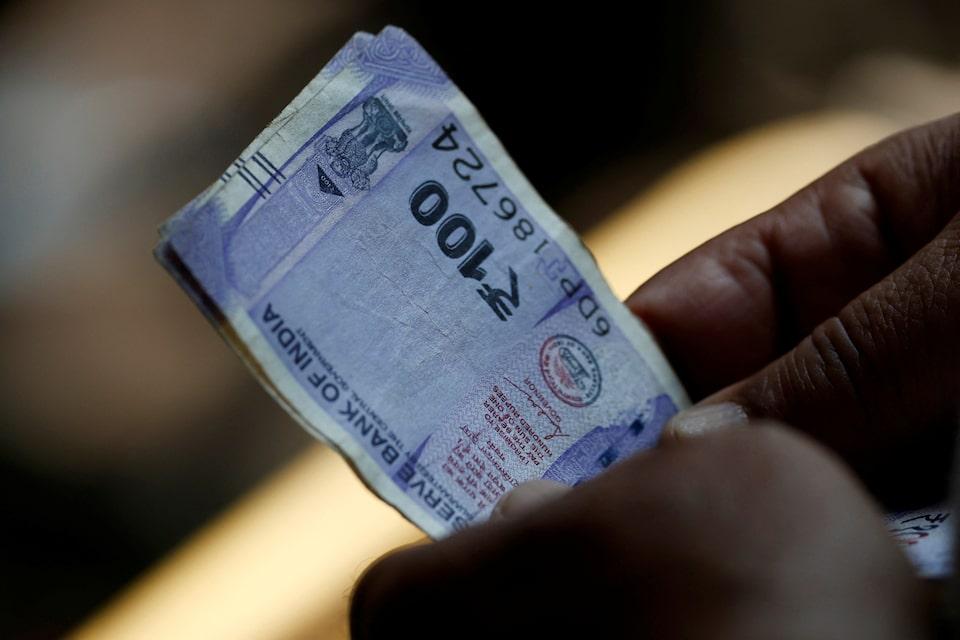
MUMBAI, May 7 (Reuters) - The Indian rupee declined against the U.S. dollar in the non-deliverable forward (NDF) market on Wednesday, after Indian armed forces hit multiple sites in Pakistan and what the Indian government described as "Pakistan-occupied Jammu and Kashmir". The 1-month NDF indicated that the rupee is likely to trade at 84.64-84.68 when onshore spot market opens, down from 84.4325 on Tuesday. Sign up here. India attacked Pakistan and Pakistani Kashmir on Wednesday with at least eight deaths reported, while Pakistan called the assault a "blatant act of war". India said it struck nine Pakistani sites on Wednesday that were "terrorist infrastructure". The strikes by India came on the back of a deadly attack on its side of Kashmir last month. (This story has been refiled to clarify attribution for 'Pakistan-occupied' in paragraph 1) https://www.reuters.com/markets/currencies/indian-rupee-declines-ndf-market-following-strikes-against-pakistan-2025-05-07/
2025-05-07 03:11
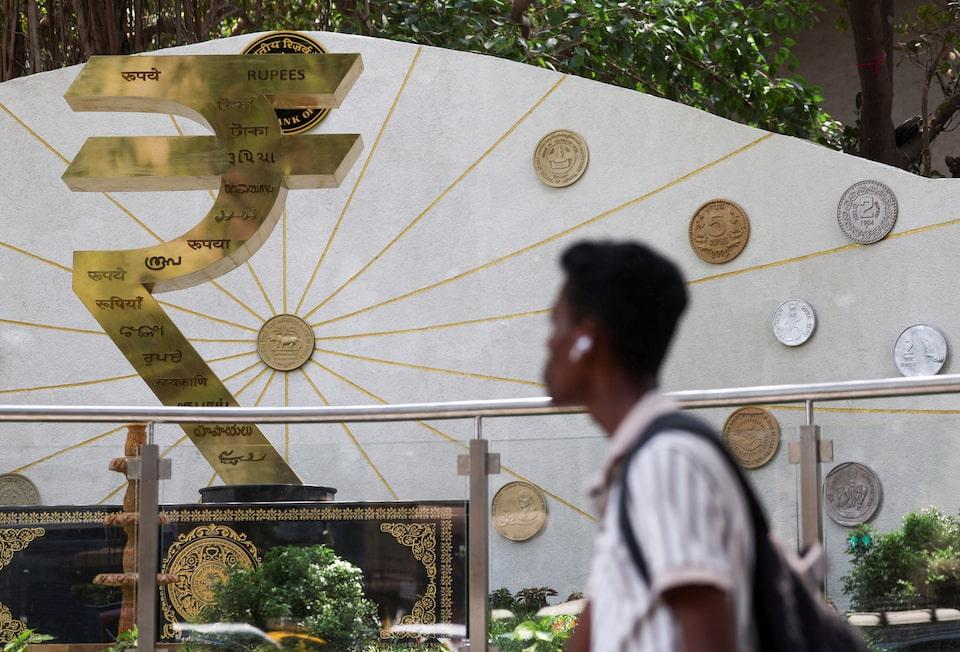
MUMBAI, May 7 (Reuters) - The India rupee is poised to decline at open on Wednesday after military action by India against Pakistan heightened cross-border tensions. The 1-month non-deliverable forward indicated that the rupee will open at 84.64 to 84.68 to the U.S. dollar, down from 84.4325 in the previous session. Sign up here. The initial market reaction "understandably" reflects caution and worries over the potential for a further escalation, a currency trader at a Mumbai-based bank said. "With the situation unfolding, all focus will be on the news flow," he said. "You can be sure the RBI (Reserve Bank of India) will intervene if there's any sign of disorderly moves," said a trader at a private bank. The RBI can be "heavy handed with intervention today" to manage any extraordinary spike in volatility, Dhiraj Nim, FX strategist and economist at ANZ, said. The rupee had not shown signs of stress over the India-Pakistan situation before this and that complacency might become a factor if the situation worsens, the trader at the Mumbai-based bank said. India said it struck nine Pakistani sites that were "terrorist infrastructure" while Islamabad said six Pakistani locations were targeted. India's offensive followed an attack by Islamist militants that killed tourists in Indian Kashmir last month for which it blamed Pakistan. Pakistan termed the assault a "blatant act of war" and said it had informed the U.N. Security Council that Pakistan reserved the right to respond appropriately to Indian aggression. ASIAN CUES Asian currencies were mostly weaker on Wednesday, an added headwind for the rupee. The focus for regional currencies remains on news flow surrounding U.S. tariffs. Investors are awaiting further details on trade deals the Trump administration is negotiating, particularly with China. On Sunday, U.S. President Donald Trump signalled that some agreements could be announced this week. https://www.reuters.com/world/india/rupee-faces-downward-pressure-after-india-strikes-pakistan-rbi-action-watched-2025-05-07/
2025-05-07 00:57
Fed keeps rates steady but eyes rising price, unemployment risks U.S., China to discuss trade in Switzerland at weekend Dollar rises, European stocks fall U.S. stock indexes end choppy session higher with late rally NEW YORK/LONDON, May 7 (Reuters) - Equities rose in a volatile session on Wednesday but U.S. Treasury yields fell after the Federal Reserve left interest rates unchanged while warning of higher inflation and labor market risks. While trading was choppy after the Fed statement and comments from its chair, Jerome Powell, stocks had a late-session rally as chipmakers jumped after Bloomberg reported that President Donald Trump's administration plans to rescind artificial-intelligence chip curbs made by the Biden administration. Sign up here. This was after the Fed said it held rates steady, in line with expectations. But while the U.S. central bank said the economy continued to expand at a solid pace, it noted that risks of higher inflation and unemployment had risen as it grapples with the impact of Trump's tariff policies. The risks of higher unemployment and higher inflation left the Fed with almost no good short-term options, said Julia Hermann, global market strategist at New York Life Investments. "Their ability to preemptively cut rates to shore up economic growth is constrained by upside inflation risks, and then, conversely, their ability to preemptively hike rates to reduce inflation risk is constrained by downside risk to growth," she said. "So it's a stagflation conundrum." "We expect to see meaningful easing from the Fed only in the scenario that economic growth figures really disappoint." Citing uncertainty due to the potential for macro-economic fallout from tariff policies, Adam Reinert, chief investment officer at Marshall Financial, said: "the Fed needs to retain their conviction and confidence. In the near term, we believe Jay Powell and his team may have to become comfortable with being uncomfortable." Investors were also focused on the prospects for progress on U.S.-China trade relations during Wednesday's session. U.S. Treasury Secretary Scott Bessent and chief trade negotiator Jamieson Greer are scheduled to meet China's top economic official for talks over the weekend in a potential first step for peace after Trump ignited a trade war with the world's No. 2 economy last month. Bessent said his sense is that the meeting in Switzerland "will be about de-escalation," while China sounded more guarded and cited a proverb about actions speaking louder than words. On Wall Street, the Dow Jones Industrial Average (.DJI) , opens new tab rose 284.97 points, or 0.70%, to 41,113.97, the S&P 500 (.SPX) , opens new tab rose 24.37 points, or 0.43%, to 5,631.28 and the Nasdaq Composite (.IXIC) , opens new tab rose 48.50 points, or 0.27%, to 17,738.16. MSCI's gauge of stocks across the globe (.MIWD00000PUS) , opens new tab rose 2.12 points, or 0.25%, to 844.03, after falling by around 0.4% earlier. The pan-European STOXX 600 (.STOXX) , opens new tab index closed down 0.54% earlier in the day. In currencies, trading was choppy after the Fed statement and as Powell took questions from reporters, but ultimately the U.S. dollar remained slightly stronger against major currencies including the yen and the euro. The dollar index , which measures the greenback against a basket of currencies including the yen and the euro, rose 0.42% to 99.92. The euro was down 0.62% at $1.1297 while against the Japanese yen , the dollar strengthened 1.03% to 143.88. Sterling weakened 0.64% to $1.3282. The Canadian dollar weakened 0.41% to C$1.38 per U.S. dollar. In U.S. Treasuries, yields slipped after the Fed's update. The yield on benchmark U.S. 10-year notes fell 4.9 basis points to 4.269% from 4.318% late on Tuesday while the 30-year bond yield fell 4.1 basis points to 4.7718%. The 2-year note yield, which typically moves in step with Fed interest rate policy, fell 0.8 basis point to 3.781%, from 3.789% late on Tuesday. Oil prices fell by more than $1 a barrel as investors doubted that the upcoming U.S.-China trade talks will result in a breakthrough, while hopes for an Iran-U.S. nuclear deal eased supply worries. U.S. crude futures settled down 1.73%, or $1.02, at $58.07 a barrel while Brent settled at $61.12 per barrel, down 1.66%, or $1.03, on the day. In precious metals, gold prices extended losses, weighed by a stronger dollar and easing China-U.S. trade tensions, while traders were left dissatisfied by Powell's cautious remarks about the U.S. economy. Spot gold fell 1.8% to $3,367.70 an ounce. U.S. gold futures fell 1.37% to $3,364.70 an ounce. https://www.reuters.com/markets/global-markets-wrapup-1-2025-05-07/
2025-05-07 00:49
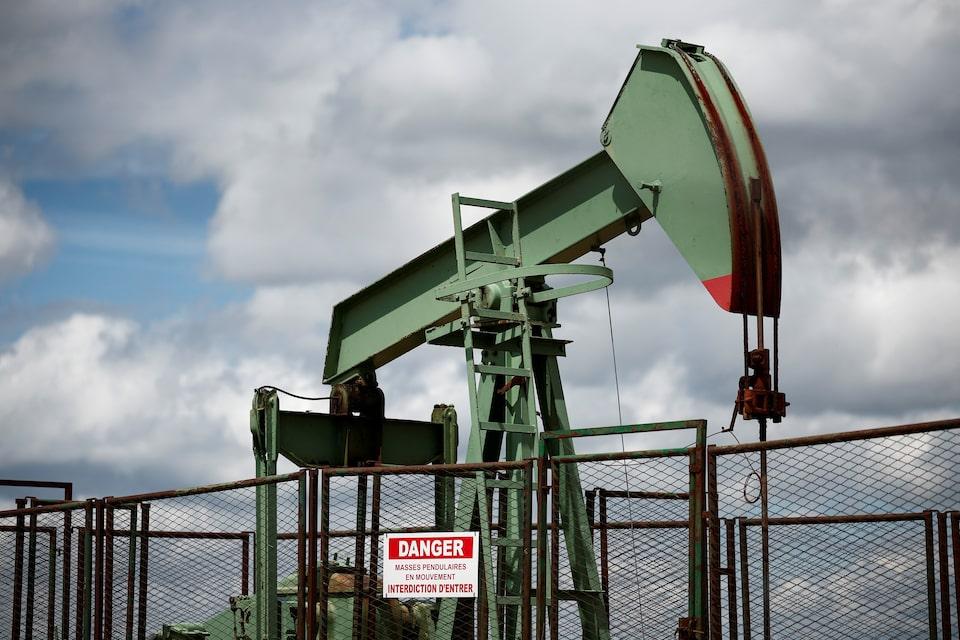
U.S.-China officials to meet over the weekend Vance says 'so far, so good' with Iran nuclear talks U.S. gasoline inventories rose unexpectedly last week, EIA says U.S. Fed held interest rate steady NEW YORK, May 7 (Reuters) - Oil prices fell by more than $1 a barrel on Wednesday as investors doubted that upcoming U.S.-China trade talks will result in a breakthrough, while hopes for an Iran-U.S. nuclear deal eased supply worries. Brent crude futures settled $1.03, or 1.66%, lower at $61.12 a barrel while U.S. West Texas Intermediate crude lost $1.02, or 1.73%, lower at $58.07 a barrel. Sign up here. The U.S. and China are due to meet in Switzerland, which could be the first step toward resolving a trade war disrupting the global economy. The trade talks between the world's two largest economies come after weeks of escalating tensions. Duties on goods imports between the countries have soared well beyond 100%. "While the meeting may signal a thaw, expectations for a breakthrough remain low," said Thiago Duarte, market analyst at Axi. "Unless the U.S. receives major trade concessions, further de-escalation seems unlikely," he said. Asked about the upcoming trade meeting with Chinese officials, U.S. Treasury Secretary Scott Bessent described the talks as "the opposite of advanced." U.S. Vice President JD Vance described Washington's talks with Iran as "so far, so good" and said there was a deal to be made that would reintegrate Iran into the global economy while preventing it from getting a nuclear weapon. "There is a possibility that the U.S. could be lifting the sanctions on Iranian oil, which right now is under maximum pressure," said Phil Flynn, senior analyst with Price Futures Group. The U.S. had threatened secondary sanctions on Iran after a fourth round of talks were postponed between Washington and the OPEC member with production of more than 3 million barrels per day, or about 3% of global output. The Federal Reserve held interest rates steady but said the risks of higher inflation and unemployment had risen, further clouding the economic outlook as the U.S. central bank grapples with the impact Trump's tariff policies. Both benchmarks were pressured by data from the Energy Information Administration (EIA) showing gasoline inventories in the U.S. rose unexpectedly last week, raising concerns of weak demand ahead of U.S. summer driving season. "This is the first bad report for gasoline in a couple of weeks. The refiner had been cranking up the utilization rate. But today in this report it went backwards," said Bob Yawger, director of energy futures at Mizuho. However, U.S. crude inventories fell by 2 million barrels to 438.4 million barrels in the week, compared with analysts' expectations in a Reuters poll for an 833,000-barrel draw. Limiting the losses, some U.S. producers have signalled they would cut spending, cautioning the country's oil output may have peaked. Additionally, conflict in the Middle East between Israel and the Houthis increases the geopolitical risk premium, said Tamas Varga, an analyst at PVM. Volatility is expected to persist on quicker-than-expected OPEC+ supply, while U.S. policymaking remains unpredictable, he added. https://www.reuters.com/markets/commodities/oil-up-signs-more-europe-china-demand-less-us-output-2025-05-07/