2025-05-06 21:05
OSLO, May 6 (Reuters) - The Norwegian parliament on Tuesday ordered the Labour minority government to launch a new frontier areas oil and gas exploration licensing round, setting the stage for increased oil drilling. Norway became Europe's largest supplier of natural gas following Russia's invasion of Ukraine in 2022, providing about 30% of all gas imports to the European Union. Sign up here. The motion which was initially tabled by the opposition Conservatives, garnered majority support after it was backed by the opposition Centre Party, which quit the government in January. The original proposal calling the government to launch a new licensing round in the first-half of this year was amended at the Centre Party's request to postpone it until the next year. The Labour government, however, could start preparations for the launch this year. The two former partners agreed in 2022 to postpone frontier area licensing rounds until the end of this year in exchange for a smaller opposition Socialist Left party backing a budget. While Norway stopped awarding ocean blocks for oil and gas drilling in frontier areas, such as in the eastern part of the Barents Sea, it continued to conduct annual licensing rounds in more mature areas. Last year, Norway exported a record amount of natural gas to Europe and volumes are expected to stay near this level in the coming years. The output, however, is expected to fall sharply after 2030. Finding and developing more resources could slow down the expected decline. The Conservatives said more exploration was needed for Norway to remain a stable energy supplier to Europe for a long time. "If the European Union is to succeed in becoming more independent of Russian gas, Norway should continue to contribute," they said in the draft proposal. https://www.reuters.com/business/energy/norway-parliament-orders-restart-frontier-oil-gas-exploration-licensing-2025-05-06/

2025-05-06 21:05
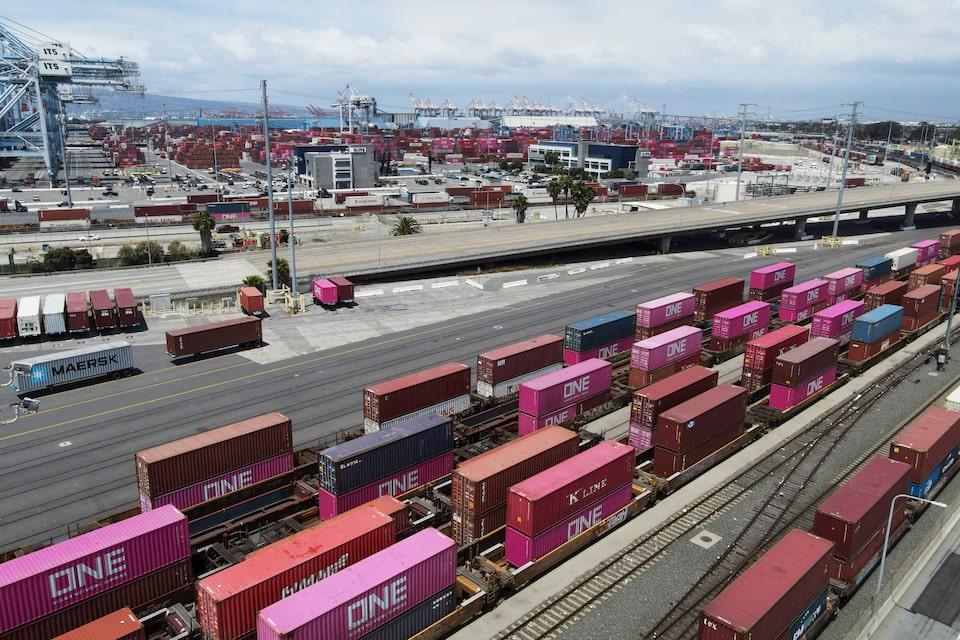
ORLANDO, Florida, May 6 (Reuters) - TRADING DAY Making sense of the forces driving global markets Sign up here. By Jamie McGeever, Markets Columnist Deep uncertainty, thin patience Investors dumped U.S. stocks and the dollar on Tuesday as the optimism of the recent rebound continued to fizzle, and was replaced by renewed pessimism about the economic and market damage from the global trade war. The surge in Asian currencies over the last few days caught many investors off guard, and highlights the acute challenges policymakers in the region face. More on that below, but first, a roundup of the main market moves. I'd love to hear from you, so please reach out to me with comments at [email protected] , opens new tab. You can also follow me at @ReutersJamie and @reutersjamie.bsky.social. If you have more time to read, here are a few articles I recommend to help you make sense of what happened in markets today. Today's Key Market Moves Absent tariff clarity, nerves fray After a few weeks smoldering in the background, investors' worries over trade, tariffs and growth are very much back on the front burner. Figures on Tuesday showed the U.S. trade deficit swelled to a record $140.5 billion in March as businesses increased imports to beat the tariffs. Imports from 10 countries hit record highs but purchases from China fell to a five-year low, a result of Washington's 145% tariffs on its main economic rival. Carl Weinberg, chief economist at High Frequency Economics, calculates that the deficit widening at that quarterly rate drags down GDP by two percentage points on an annualized basis. "Ouch!" This set the tone. Although stocks briefly recovered some losses after U.S. President Donald Trump said he would make a "very big" announcement before his visit to the Middle East next week, Wall Street was in the red all day. Short-dated bond yields and the dollar fell, the yield curve steepened and gold prices rose more than 2% for a second day to within sight of last month's record $3,500 an ounce. This is the backdrop against which the Federal Reserve began its two-day policy meeting. It will almost certainly hold the line on Wednesday, with Chair Jerome Powell expected to say more incoming data is needed before deciding the next move. Traders are betting the Fed will resume its easing cycle in July, but some economists reckon high inflation will prevent any rate cuts at all this year. On the trade front, U.S. Treasury Secretary Scott Bessent said agreements with some of the United States' largest trade partners could be unveiled as early as this week. Markets are reluctant to get too excited though - the fact remains, Washington has yet to announce a single trade deal. One was announced on Tuesday though, between Britain and India. However, it should be noted that the on-and-off negotiations had been underway for three years, and the projected 4.8 billion pound boost to Britain's economy by 2040 is less than 0.2% of last year's GDP of 2.6 trillion pounds. Trade talks can be tough, and the final agreements not always particularly earth-shattering. Asia FX surge raises doubts about region's trade war arsenal The Taiwan dollar's record rise in recent days has brought a regional conundrum into sharp focus: how much appreciation can Asian currencies countenance in the face of U.S. President Donald Trump's global trade war? Currency depreciation would typically be the weapon of choice for Asian policymakers seeking to mitigate the export and growth shocks caused by a trade war. But many Asian currencies are moving in the opposite direction. The Taiwan dollar's 6% rise against the greenback over Friday and Monday marked a record two-day spike. It's unclear what sparked the surge of capital into a market that was 'long' dollars and unhedged. Many analysts say it was speculation that Taiwan had agreed to allow its currency to strengthen as part of an upcoming trade deal with Washington, a claim Taiwan's central bank and president have strenuously denied. But regardless, what matters is that the Taiwan dollar's jump didn't come in isolation, raising doubts over Asia's willingness or ability to use FX as a trade war shock absorber. CONTAGION In parallel with the Taiwan dollar's record move in recent days, the South Korean won on Monday also clocked its biggest two-day rally in 15 years, while China's offshore yuan hit a six-month high. China's markets reopened on Tuesday for the first time since Thursday, and the onshore renminbi gapped sharply higher too. On Saturday, the Hong Kong Monetary Authority sold HK$46.54 billion ($6 billion) of local currency to prevent it from strengthening beyond its official band between 7.75 and 7.85 per U.S. dollar. That was the HKMA's first such action in four and a half years and its largest-ever intervention in the FX market. And even though the Indian rupee, Indonesian rupiah and Vietnamese dong were all recently at record lows against the U.S. dollar, they have begun to ride the continent-wide crest of rising currencies in recent days, especially the rupee. 'RIPPED OFF' This is exactly what Trump wants. Some of America's biggest bilateral trade deficits are with Asian countries who Trump says have "ripped off" the U.S. for years, in part, because, he argues, they have kept their exchange rates artificially weak through central bank intervention and by accumulating huge foreign currency reserves. Indeed, six of America's top 10 bilateral trade deficits last year were with Asian countries, topped of course by China. America's combined deficit with these six countries last year was more than $650 billion. It's also true that many Asian countries closely manage their currencies to varying degrees or regularly intervene in the market ostensibly to limit volatility but implicitly to exert some control over the exchange rate. How much any of this is 'fair' or 'unfair' trade is highly debatable. But what is not up for debate is that the region will face immediate challenges in an environment where the question is how far Asian countries can let their exchange rates rise. CROSSROADS All else being equal, a strengthening currency will make these countries' exports less competitive on the international market, but appreciation could be a price worth paying if it secures less punitive trade deals with Washington. The weighted average U.S. 'reciprocal' tariff on Asia is over 40%, up from around 12% before Trump's trade war, MUFG analysts estimate. On the other hand, intra-Asian trade is more important than ever, expanding 43% over the past four decades to more than half of all Asian trade, according to the International Monetary Fund. Consequently, ceding some competitive advantage to the U.S. via the dollar exchange rate will be less meaningful than relative regional competitiveness. This may limit Asian countries' tolerance for local currency strength. The other issue Asian policymakers may struggle with is dollar weakness more broadly. There was a widely held belief in the months surrounding Trump's election win last November that his tariff agenda would stoke U.S. inflation, force the Federal Reserve to raise interest rates, and therefore boost the dollar. But while price pressures and inflation expectations have indeed intensified in recent months, U.S. growth is weakening, and markets expect the Fed to cut rates this year. On top of that, a risk premium has been built into the dollar's price as Trump's erratic and controversial policies have prompted many investors to reassess their willingness to hold U.S. assets. Considering all this, Asian policymakers face huge challenges in determining how best to respond to the U.S. trade salvos. But one thing is for sure, 'weaponizing' FX may no longer be the obvious option. What could move markets tomorrow? Opinions expressed are those of the author. They do not reflect the views of Reuters News, which, under the Trust Principles , opens new tab, is committed to integrity, independence, and freedom from bias. Trading Day is also sent by email every weekday morning. Think your friend or colleague should know about us? Forward this newsletter to them. They can also sign up here. https://www.reuters.com/markets/global-markets-trading-day-graphic-pix-2025-05-06/
2025-05-06 20:51
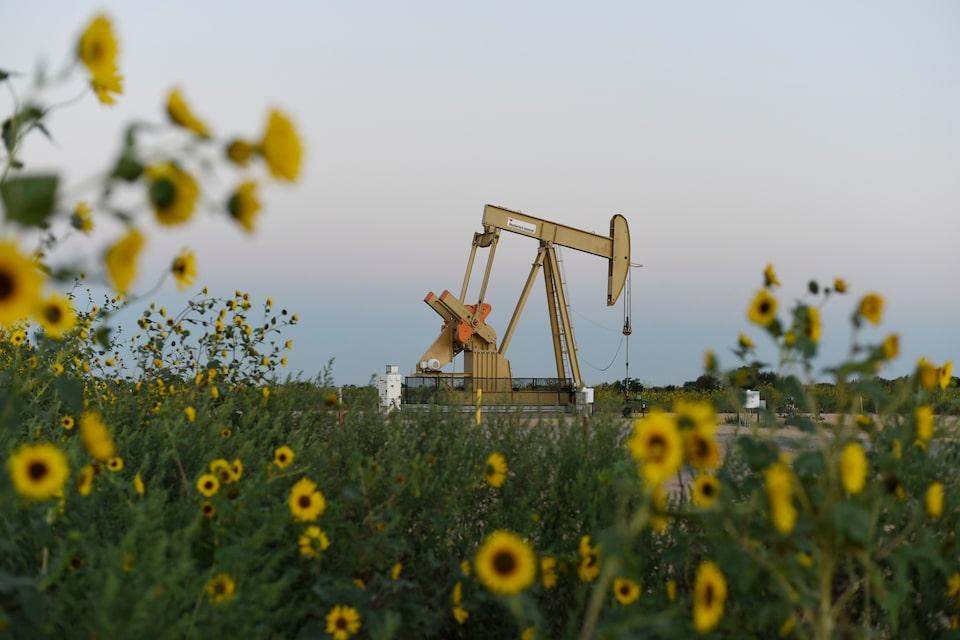
May 6 (Reuters) - Devon Energy (DVN.N) , opens new tab missed Wall Street estimates for first-quarter profit on Tuesday, as lower oil prices offset higher production. Shares were down about 1% at $30.29 in extended trading. Sign up here. Average Brent crude futures fell on average in the first quarter from a year earlier on fears that U.S. tariffs and the ensuing trade war would slow global economic growth and slash energy demand, even as OPEC+ ramps up supply. Devon said realized price, including cash settlements for oil during the quarter was down 8% year-over-year at $69.15 per barrel. However, Oklahoma City-based Devon's total quarterly production rose 22.7% from a year earlier to 815 thousand barrels of oil equivalent per day (MBoepd), aided by contributions from its recent acquisitions. Last year, the company acquired certain assets of Bakken-focused energy producer Grayson Mill Energy, which is owned by private equity firm EnCap, in a cash-and-stock deal worth $5 billion. The company also raised its current-year oil production forecast by 1% to between 382,000 and 388,000 barrels per day. Meanwhile, it cut capital expenditure plan by $100 million to between $3.7 billion and $3.9 billion following early achievement of its recently launched business optimization plan. Last month, the U.S. oil and gas producer said it plans to boost its annual free cash flow by $1 billion by the end of 2026 by reducing drilling and completion costs and improving operating margins. The U.S. oil and gas producer reported an adjusted profit of $1.21 per share for the quarter ended March 31, compared with analysts' average estimate of $1.25, according to data compiled by LSEG. https://www.reuters.com/business/energy/devon-energy-misses-first-quarter-profit-estimates-2025-05-06/
2025-05-06 20:42
May 6 (Reuters) - Fertilizer producer Mosaic (MOS.N) , opens new tab beat Wall Street expectations for first-quarter profit on Tuesday, driven by strength in its South America business. Shares of the company rose more than 2% after the bell. Sign up here. The results come as the agrichemical industry braces for the potential fallout from U.S. President Donald Trump's sweeping tariffs on most imports. However, Mosaic expects agriculture and fertilizer markets to remain robust despite global trade uncertainties. The company raised its potash production forecast for the current year, as it expects that improved demand will push prices higher. It now forecasts potash production to range between 9 million tonnes and 9.4 million tonnes in 2025, compared to its previous projection of 8.7 million tonnes to 9.1 million tonnes. The company is also banking on rising demand in Brazil, where crop prices are experiencing a surge due to strong demand for domestic consumption and exports. In 2024, Brazil represented almost 40% of Mosaic's total revenue, according to data compiled by LSEG. Production cost improvements helped boost adjusted core profit at Mosaic's South America fertilizer segment to $122 million in the first quarter, up from $83 million a year earlier. The segment also benefited from a modest increase in sales volumes, reporting net sales of $934 million in the quarter, compared to $886 million the previous year. First-quarter results were, however, partially offset by weakness in potash and phosphate segments, where lower selling prices and turnaround activities at some facilities resulted in decreased sales. The Tampa, Florida-based company reported adjusted earnings of 49 cents per share for the quarter ended March 31, compared with analysts' average estimate of 45 cents per share. https://www.reuters.com/markets/asia/mosaic-beats-first-quarter-profit-estimates-2025-05-06/

2025-05-06 20:30
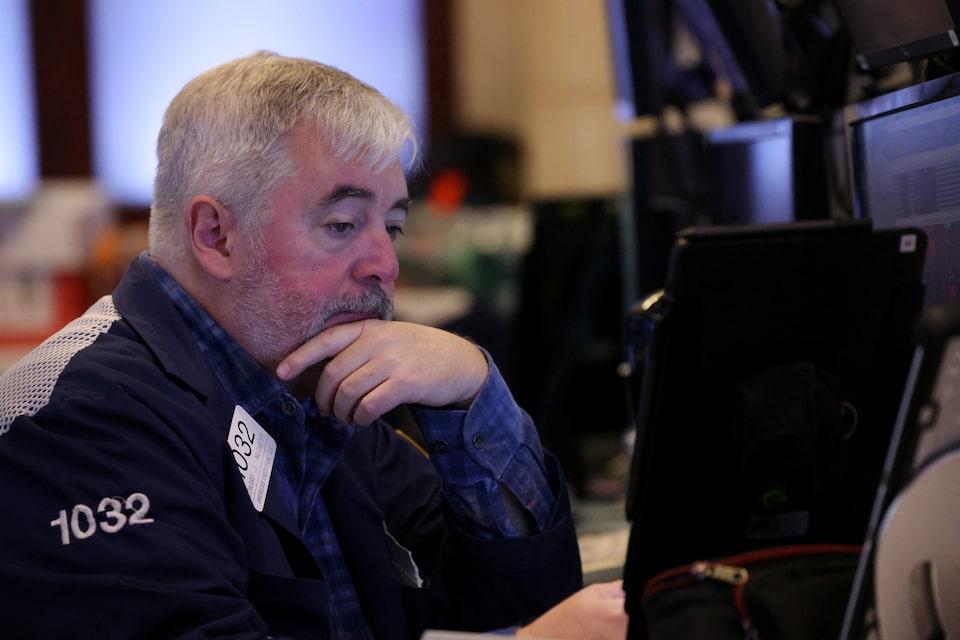
May 6 (Reuters) - U.S. stock futures rose late on Tuesday after it was announced that Treasury Secretary Scott Bessent and U.S. Trade Representative Jamieson Greer would meet with China's top economic official later this week in Switzerland. S&P 500 and Nasdaq futures were up about 1%, signaling that traders expect Wall Street to open higher on Wednesday morning, the latest sharp move in several weeks of uncertainty related to President Donald Trump's global trade war. Sign up here. The U.S. Trade Representative's office and Treasury said Greer and Bessent would travel together to Geneva on May 8 and would also meet with Swiss President Karin Ketter-Sutter to discuss negotiations over reciprocal trade. In Tuesday's trading session on Wall Street, the S&P 500 (.SPX) , opens new tab and Nasdaq (.IXIC) , opens new tab lost ground after comments from Trump provided little clarity about the timeline for any trade deals. Stocks have been volatile since Trump announced his first round of tariffs on April 2, with the S&P 500 initially dropping nearly 15%, only to stabilize and briefly recover to levels from before the tariffs were announced. https://www.reuters.com/business/us-stock-futures-fall-possible-pharma-tariffs-ford-pulls-forecast-2025-05-06/
2025-05-06 19:54
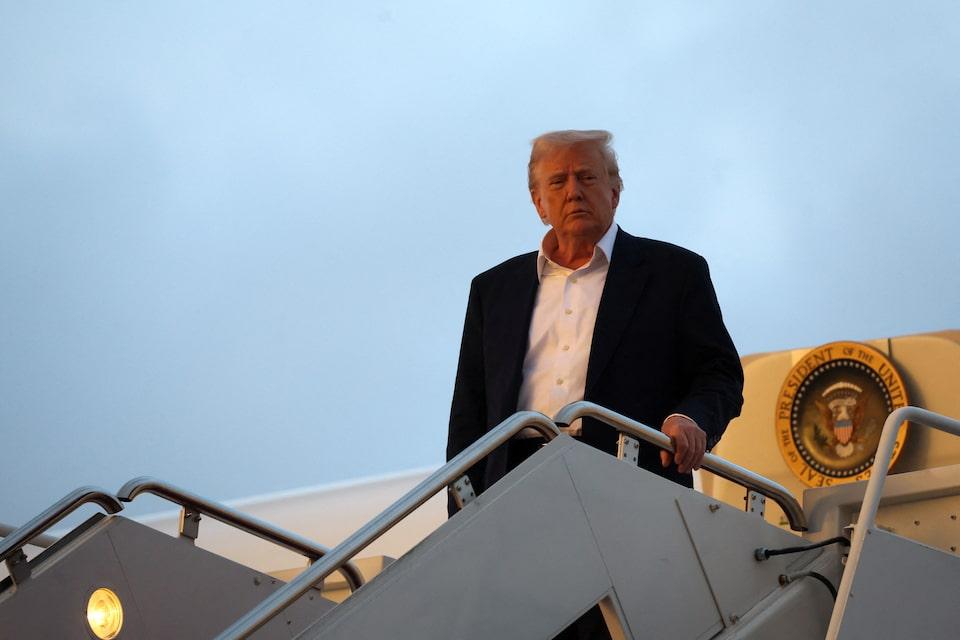
WASHINGTON, May 6 (Reuters) - The U.S. government will not pay for a high-speed rail line planned between Los Angeles and San Francisco, President Donald Trump told reporters at the White House on Tuesday, citing cost overruns. The Republican president's administration in February began probing whether to rescind about $4 billion in federal funds awarded to California's High-Speed Rail project. Sign up here. "This government is not going to pay," Trump told reporters during a meeting with Canadian Prime Minister Mark Carney. Voters approved $10 billion for the project in 2008 but the costs have risen sharply and Trump has sharply criticized the effort. The Transportation Department under former President Joe Biden awarded the project about $4 billion. The full project was initially estimated to cost around $40 billion but has now jumped from $89 billion to $128 billion. A spokesman for California Governor Gavin Newsom, a Democrat, said on Tuesday: "With 50 major structures built, walking away now as we enter the track-laying phase would be reckless — wasting billions already invested and letting job-killers cede a generational infrastructure advantage to China." The California High-Speed Rail Authority said on Tuesday the rail project "is delivering real results. There is active civil construction along 119 miles in the Central Valley, resulting in over 15,000 construction jobs, and design and pre-construction activities are underway on the extensions to Merced and Bakersfield totaling 171 miles." In 2021, Biden restored a $929 million grant for California's high-speed rail Trump had revoked in 2019 after the Republican president called the project a "disaster." The Federal Railroad Administration said in February it had initiated a review of the California project at the direction of Transportation Secretary Sean Duffy over the funds to build the segment in the California Central Valley between Merced and Bakersfield. The entire San Francisco-to-Los Angeles project was initially supposed to be completed by 2020 for $33 billion, USDOT said, but the Merced-to-Bakersfield segment alone will cost more than the original total, USDOT said. USDOT cited a report that the Merced-to-Bakersfield segment alone has a funding gap of at least $6.5 billion. https://www.reuters.com/world/us/trump-says-us-will-not-pay-california-high-speed-rail-2025-05-06/