2025-05-06 19:14
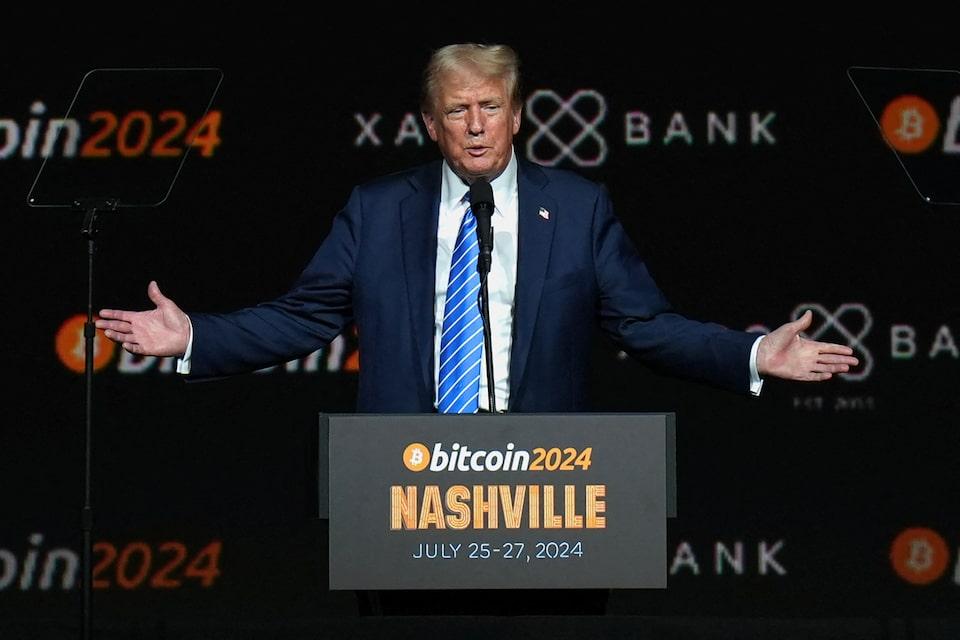
House panels were due to discuss crypto bill Representative Maxine Waters objected due to concerns about Trump ventures Trump has touted a meme coin, family crypto project Crypto industry has sought to portray digital asset regulation as a bipartisan issue May 6 (Reuters) - Tensions on Capitol Hill over President Donald Trump's various cryptocurrency ventures escalated on Tuesday and threatened to derail the digital asset sector's hope of legislation by the end of this year as a top Democratic lawmaker stalled efforts to debate a bill. Although Congress had appeared likely earlier this year to pass legislation governing digital assets for the first time, Democrats have grown increasingly frustrated as Republican Trump and his family members have promoted their personal crypto projects. Sign up here. Representative Maxine Waters' objection to a joint hearing scheduled for Tuesday effectively cancelled proceedings between the House Financial Services Committee and the House Agriculture Committee, which were due to discuss creating a new legal regime for cryptocurrencies. Trump's crypto ventures include a so-called meme coin called $Trump, launched in January, and a business called World Liberty Financial, a crypto company owned partly by the president. Trump on social media has promoted a private dinner later this month for the top holders of his meme coin, along with a "special VIP tour" for a select few investors. The business endeavors have drawn criticism from government ethics experts and political opponents over potential conflicts of interest, especially because Trump courted cash from the crypto industry on the campaign trail and pledged to overhaul regulations for the sector. They have also put further legislation this year related to cryptocurrency in doubt as some lawmakers have expressed concern about self-dealing. "I cannot in good faith agree to such a hearing to discuss crypto market structure while Republicans refuse to stop or even acknowledge Trump's abuse of power," Waters said in a statement ahead of the scheduled hearing. Representative French Hill, the Republican chairman of the House Financial Services Committee, said that Waters objecting to Tuesday's hearing "has thrown partisanship into what has historically been a strong, good, working bipartisan relationship." In a statement, Anna Kelly, the White House deputy press secretary, said there were no conflicts of interest and that Trump's assets are in a trust managed by his children. “President Trump is dedicated to making America the crypto capital of the world and revolutionizing our digital financial technology," she said. Still, Trump's crypto arrangements have threatened to derail legislation that was once considered near certain by analysts and lobbyists to pass this year. Congress is also debating a bill to create a regulatory framework for stablecoins, a type of cryptocurrency designed to maintain a constant value, usually a 1:1 dollar peg. Senate Democrats have expressed concerns about the bill, especially after World Liberty Financial announced last week that its stablecoin would be used by an Abu Dhabi investment firm for its $2 billion investment in crypto exchange Binance. The White House wants that bill to pass the Senate by next week, according to a source familiar with the discussions. But some Democrats said on Saturday that Republicans had failed to negotiate on stronger provisions related to foreign stablecoin issues and anti-money-laundering protections, and that they would be unable to support the bill as it currently stands. The stablecoin bill could still pass the Senate, in which Republicans hold the majority, but could pose a setback for the crypto industry which has tried to portray digital asset regulation as a bipartisan issue. https://www.reuters.com/sustainability/boards-policy-regulation/trumps-crypto-ventures-cause-tensions-bubble-over-democratic-lawmaker-scuttles-2025-05-06/
2025-05-06 19:14
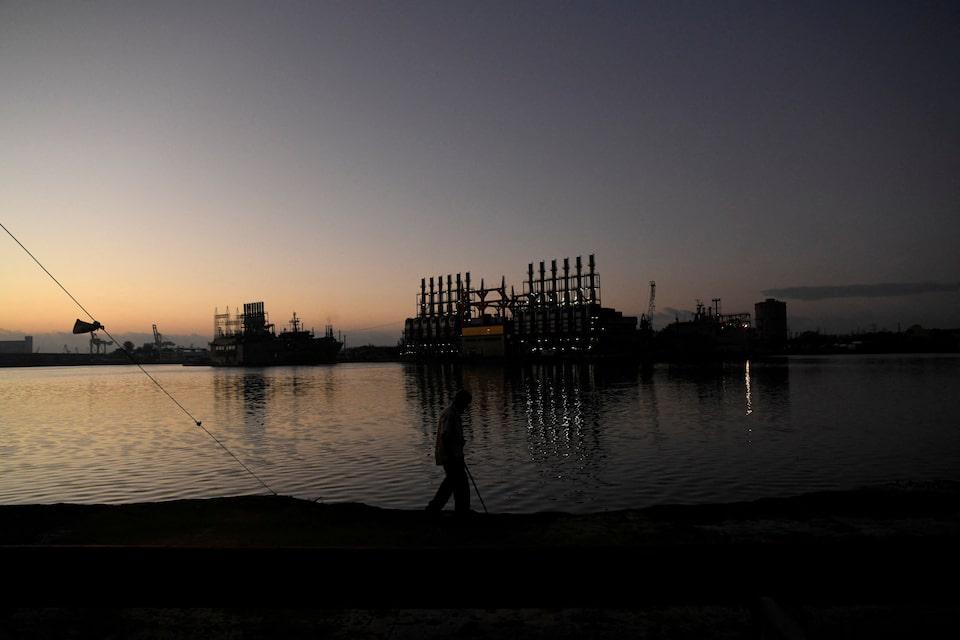
May 6 (Reuters) - Mexican state oil company Pemex increased shipments of crude to Cuba by almost 20% last year as the island's energy crisis worsened, according to a company filing. Pemex affiliate Gasolinas de Bienestar exported 20,100 barrels per day of crude and 2,700 bpd of oil products in 2024, for a sum equivalent to $600 million, according to Pemex's annual report to the U.S. Securities and Exchange Commission, published by the company on its website this week. Sign up here. In 2023, Pemex sent the Caribbean island 16,800 bpd of crude and 3,300 bpd of oil products for a value of $400 million. Shipments that year started in July. Cuba has been struggling with long and frequent power outages, which it blames on a Cold War-era U.S. trade embargo and fresh restrictions from U.S. President Donald Trump. In March, an outage in the capital, Havana, and neighboring provinces left over 10 million people without power for nearly two days. Pemex is among the world's most indebted oil companies and its production of crude oil and condensate dropped by 11% in the last year. "These sales represented 2.8% of our total crude oil exports and 0.7% of our total sales of oil product, respectively," Pemex said in the filing. In the past, several sources told Reuters that shipments to Cuba were made as donations. Pemex marked them as sales in the latest filing, without further details. The oil producer did not immediately respond to requests for comment about whether its exports had continued during 2025 or about volumes. https://www.reuters.com/business/energy/mexicos-pemex-increased-crude-shipments-cuba-2024-filing-shows-2025-05-06/
2025-05-06 19:01
Heavy maintenance dented Q1 profitability Refineries to operate at 94% in Q2 Shares rise in midday trading May 6 (Reuters) - Marathon Petroleum (MPC.N) , opens new tab swung to a loss in the first quarter, but performed better than Wall Street expected, as the biggest U.S. refiner navigated a period of elevated maintenance and industry-wide turnaround activity. The results reflected the second-largest planned maintenance quarter in its history, the company said on Tuesday. Sign up here. "We completed significant planned turnaround activity in the quarter, particularly in our Gulf Coast region, where utilization decreased from 97% in the fourth quarter of last year to 82% in the first quarter," said Chief Financial Officer John Quaid during a conference call with analysts. Lower Gulf Coast volumes were partially offset by higher margins in the mid-continent region and on the West Coast, Quaid added. The Findlay, Ohio-based refiner said quarterly crude capacity utilization was about 89%, resulting in total throughput of 2.8 million barrels per day. The scheduled downtime to perform maintenance — known as turnaround activity — reduces refinery utilization, limiting the company's production. Marathon plans to operate its refineries at 94% of their combined capacity in the second quarter. Net loss attributable to Marathon was $74 million, or 24 cents per share, for the three months ended March 31, compared to a profit of $937 million, or $2.58 per share, a year earlier. Rivals Valero Energy (VLO.N) , opens new tab, Phillips 66 (PSX.N) , opens new tab and HF Sinclair (DINO.N) , opens new tab also reported quarterly losses. Analysts on average had expected Marathon to lose 53 cents per share, according to data compiled by LSEG. "Although first-quarter earnings results were well ahead of expectations, the consensus estimate had been lowered significantly since Marathon last reported," said Nick Hummel, analyst with Edward Jones. The company's shares were up about 1% in midday trading. Marathon said its refining and marketing margin was $13.38 per barrel in the first quarter, compared to $19.35 per barrel in the same period of 2024. U.S. refining margins rebounded in the first three months of 2025 after touching multi-year lows last year, but face pressure from market volatility related to U.S. tariffs. Marathon, the top U.S. refiner by volume, returned over $1.3 billion of capital to shareholders during the quarter. As of the end of March, the company had $6.7 billion available under its share repurchase authorizations. "For our refining business, we are positioned to meet summer demand as seasonal trends are expected to improve margins and we remain constructive on its long-term outlook," CEO Maryann Mannen said in a statement. https://www.reuters.com/business/energy/top-us-refiner-marathon-petroleum-swings-q1-loss-2025-05-06/

2025-05-06 18:52
Credit market's riskiest borrowers send worrying signals Credit spreads retrenched after tariff-induced spike Trade policy is key in determining outlook BEVERLY HILLS, California, May 6 (Reuters) - Pockets of the U.S. corporate debt market are flashing warning signs that a cooling economy is squeezing the most fragile borrowers, a BlackRock executive said, despite broader market hopes that the turbulence from tariffs has subsided. Credit spreads - the premium investors demand to hold corporate debt rather than safer U.S. government bonds - spiked last month after President Donald Trump announced tariffs that sparked market volatility and fears of a sharp economic slowdown. But spreads have tightened in recent weeks, as the U.S. administration signaled a softer stance on tariffs and raised the possibility of imminent trade deals. Sign up here. Still, some signs of the financial health of CCC-rated companies - the market's riskiest borrowers - have deteriorated to the point that their earnings are not high enough to allow them to service their debt, said Amanda Lynam, head of macro credit research within the Portfolio Management Group at BlackRock (BLK.N) , opens new tab, the world's largest asset management firm. "There are pockets that we are watching very carefully," she told Reuters in an interview. "There are companies that have less of a financial cushion, and you have to tread more carefully, because if and when we see a downshift in economic activity, they could be more vulnerable." Lynam spoke to Reuters late on Monday on the sidelines of the Milken Institute Global Conference taking place this week in Beverly Hills, where Wall Street executives and company chiefs struck a better-than-feared tone on the U.S. economic outlook. High-yield credit spreads widened to 461 basis points last month after Trump's imposition of steep tariffs - their widest since early 2023, when turmoil in the regional banking sector rocked U.S. markets. They have since retreated and were last at 360 basis points, according to the ICE BofA US High Yield Index (.MERH0A0) , opens new tab. The retreat was partly due to renewed market optimism on the U.S. economy and its ability to withstand policy uncertainty, said Lynam. Also, several investors had long been waiting for corporate debt valuations to drop as an opportunity to add exposure more cheaply, she said. "There's a lot of money on the sidelines and a lot of investors share, I think, a common view that fundamentals are pretty good, and want to wait for a decent entry point. When you have those periods of widening, (spreads) snap back quickly because that money is getting deployed," she said. Still, valuations in credit markets could be impacted by a "more challenging growth and inflation backdrop," she said, with Trump's trade policies seen as key in determining the economic outlook. "What this all boils down to is growth," said Lynam. Separately, Purnima Puri, a governing partner at HPS Investment Partners, a credit investment firm, said on Tuesday the recent retrenchment in credit spreads was unlikely to last. BlackRock announced late last year that it planned to buy HPS for about $12 billion. "When we're looking at the market and tariffs and trade and inflation and then growth ... we don't think that the spread retrenchment is sustainable," she said on stage at the Milken event on Tuesday. (This story has been republished to remove an outdated image, with no changes to text) https://www.reuters.com/business/pockets-us-credit-markets-flash-warnings-despite-upbeat-tone-says-blackrock-2025-05-06/

2025-05-06 18:38
The move comes after threefold 2025 deficit increase Oil prices hit lowest level in four years Siluanov sees no extraordinary measures to balance budget in 2025 Rouble expected to weaken when interest rates decrease MOSCOW, May 6 (Reuters) - The Russian government plans to tap its fiscal reserves for 447 billion roubles ($5.51 billion), or about 1/10th of their liquid assets, to balance the budget in 2025 after a threefold increase in the deficit, the finance minister said on Tuesday. The finance ministry raised the 2025 budget deficit estimate to 1.7% of gross domestic product last week from 0.5% after reducing the energy revenues forecast by 24% due to expectations of a prolonged period of low oil prices. Sign up here. The move, taken as global oil prices hit their lowest level in four years, reversed the ministry's initial plan to replenish the reserve National Wealth Fund (NWF) this year and forced it to look for sources to cover the deficit instead. "Overall for the year, based on forecast data from the Ministry of Economy, which we used as a basis for the federal budget adjustment, we expect to use 447 billion roubles from the National Wealth Fund," minister Anton Siluanov told a news conference. The liquid assets of the NWF stood at 3.3 trillion roubles, or $39 billion, last month after dropping by about two-thirds since the start of the war in Ukraine in 2022. The fund is projected to receive over 1 trillion roubles in extra revenues from 2024. NO EMERGENCY MEASURES Siluanov said the government was not planning any emergency measures such as raising taxes this year. Neither is the ministry planning to increase its borrowing plans. Siluanov earlier said defence spending will not be touched. "This year, I hope we will manage without taking extraordinary measures during the budget execution process," he said. Many economists, however, see such measures as inevitable in the coming years. Seeking ways to counter the oil price shock, Siluanov proposed to save more oil revenues by lowering the "cut-off" price of oil, above which all energy revenues are set aside for a rainy day, in the next three-year draft budget. The initiative would have ensured at least a three-year coverage of budget spending if the oil price remains low for an extended period, but also implied a reduction in spending as the military operation in Ukraine continues. Siluanov's comments on Tuesday suggested the idea was shelved for the time being. With the current cut-off price at $60 per barrel, at the projected average price for Urals blend at $56 this year, no money can flow into the fund. "In the projections for the next three-year budget, a change in the cut-off price will not be provided for," he said. Russia is the world's second largest oil exporter with energy making up one fifth of the budget's total revenues. U.S. President Donald Trump said on Tuesday that with lower oil prices, Russia is more eager to settle the Ukraine war. CHEAP MONEY The strong rouble, which has rallied by about 40% against the U.S. dollar this year, mostly on expectations of a peaceful settlement in Ukraine in an unprecedented decoupling from the oil price, has added to the budget woes. The oil price calculated in roubles fell in early May to a two-year low below the 4,000 rouble per barrel mark, about 40% lower than planned in the budget, according to Reuters calculations. Siluanov said stalled imports, as domestic buyers of foreign goods struggle to secure loans at high domestic interest rates and face international payment problems caused by Western sanctions, were a key factor behind the rouble's strength. Sales of foreign currency, predominantly the Chinese yuan, from the National Wealth Fund, which resumed in April to cover the budget shortfall, have also supported the rouble in recent weeks. Siluanov said that eventual monetary policy easing will enable importers to take more loans and push the rouble lower. A weaker local currency generally helps to fill state coffers for exporting countries. "If the money becomes cheaper, it will affect the exchange rate," Siluanov said, pledging that there will be no changes to the foreign currency regulation, which includes mandatory sales of foreign currency by exporting companies. ($1 = 81.1455 roubles) https://www.reuters.com/en/russia-plans-tap-fiscal-reserves-balance-2025-budget-finance-minister-says-2025-05-06/

2025-05-06 17:44
SAO PAULO, May 6 (Reuters) - The spending limit established by Brazil's fiscal framework should be raised from 2027 to incorporate the excess of court-ordered payments, Treasury Secretary Rogerio Ceron said on Tuesday. Ceron said that there was still no government decision on the matter, but that an eventual expansion should be limited to the amount necessary for those payments, not allowing for other additional expenses. Sign up here. The court-ordered payments are seen ranging from 30 billion to 40 billion reais ($5.25-6.99 billion). "Given the level of court-ordered payments, which is not coming down, maybe the country will not be able to resolve this in the short term," he said. Brazil's Supreme Court allowed part of the payments to be paid outside of the fiscal framework until 2026, but from 2027 they will again be included in the spending limit, with the government already anticipating a squeeze on public accounts. This year, the Brazilian government should pay 70 billion reais in court-ordered debt in July, an amount that Ceron considers should not pressure inflation. He also said that Brazil is committed to its fiscal rules but reforms are necessary to ensure they are preserved. A recent drop in commodity prices, as well as a stronger Brazilian currency, affect the country's tax revenues, he added. ($1 = 5.7230 reais) https://www.reuters.com/world/americas/brazils-treasury-secretary-suggests-raising-spending-limit-2027-2025-05-06/