2025-05-06 16:29
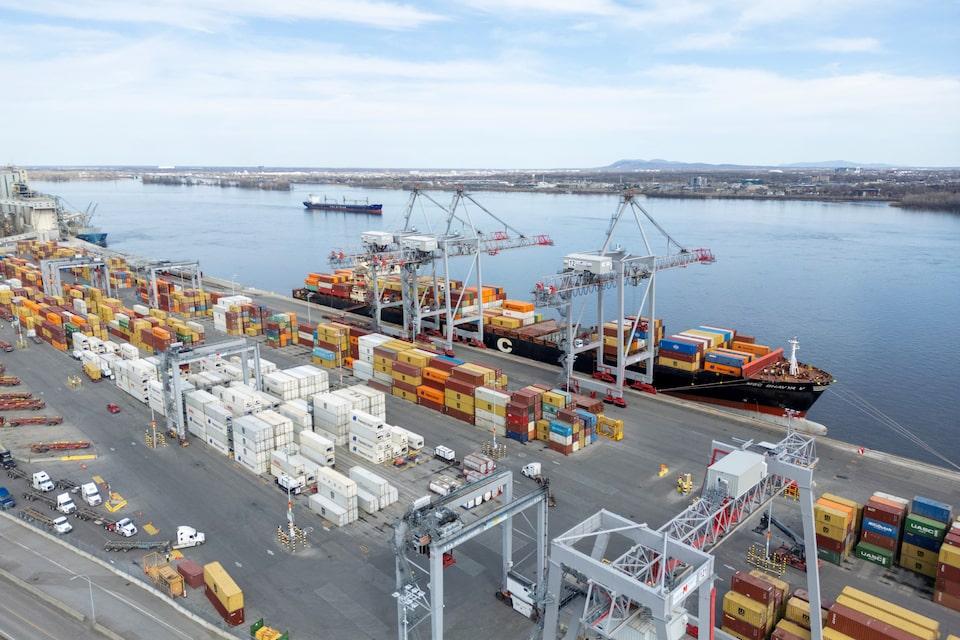
M&A contracts inked fall to lowest level since 2005, Dealogic data shows Trump's tariffs cause market volatility, impacting M&A and IPO plans Tech deals remain strong amid tariff uncertainty NEW YORK, May 6 (Reuters) - Bankers and CEOs hit the brakes on mergers and acquisitions after U.S. President Donald Trump launched a global trade war on April 2, with fewer deals getting signed than during the bleakest days of the COVID-19 pandemic and the 2008-2009 global financial crisis. The number of M&A contracts announced across the world - an indicator of global economic health - fell in April to the lowest level in more than 20 years, according to data compiled by Dealogic for Reuters. Sign up here. In the U.S., the world's largest M&A market, just 555 deals were signed last month, the fewest for any month since May 2009. Trump's self-styled "Liberation Day," when he announced tariffs against all countries, caused global markets to slide, CEOs from Chime to StubHub to yank planned IPOs and retaliatory measures from other nations. Uncertainty has also prompted bankers, who earn fees and bonuses from facilitating deals, to tell clients to hold off on M&A and initial public offerings until there is more clarity and consistency on U.S. policy. "I advise clients to wait," said Lorenzo Paoletti, a managing director of investment banking at Truist Securities. "CEOs and CFOs haven't fully understood how tariffs will hit them yet, so it's better to keep cash on hand" until more clarity emerges. Bankers expected 2025 would be a stellar year for M&A under a pro-business Trump. But deal signing across the world fell off a cliff after his tariff plan tipped off the global trade war, reaching 2,330 deals in April, the lowest since February 2005 and 34% below the historical monthly average. A few big deals, including Global Payments' $24.25 billion acquisition of a card processing and account services firm in April, helped buoy an otherwise moribund start to the year. That was not enough, however, to keep the value of global M&A activity from slipping to $243 billion - about 54% below March and 20% below the monthly average over the last 20 years, the Dealogic data shows. "We are seeing a chain reaction in all of the diligence that we are doing," said Kristin Pothier, a global deal advisory and strategy leader at KPMG consultancy firm. The tit-for-tat trade war caused market volatility to spike to historic levels in April, "driven by on-again, off-again statements from the White House around tariff policy," said , opens new tab Morgan Stanley analyst Lisa Shalett. On April 2, Trump imposed and then paused for 90 days a minimum 10% tariff on all U.S. imports, and higher percentages to dozens of key partners from Europe to Japan, including levies on China that added up to 145%. Trump’s threats to fire U.S. Federal Reserve Chairman Jerome Powell, which called into question the Fed’s political independence, further exacerbated stress in the markets, Shalett said. There was one bright spot for M&A last month: tech deals in which value lies more in intellectual property like algorithms and software than in physical goods subject to tariffs, like autos. The technology industry has been responsible for almost 40% of the nearly $600 billion in deals signed this year in the U.S. The country accounts for almost half of global deal activity by value. Uncertainty has been affecting industries differently. Telecom, media, services, oil and gas and utilities are sectors less affected by the tariffs, while some areas of industrials, healthcare and technology are facing larger changes in their business model due to the tariff announcements, said Kevin Cox, global head of M&A at Citi. "Anyone that is a manufacturer, either taking inputs from abroad or sending finished product abroad, is going to be affected," Cox said. His team is telling clients to take their time to understand the additional risks of a target's business model and its expected returns. The bank advised Boeing (BA.N) , opens new tab on its April 22 sale of flight software subsidiary Jeppesen to Thoma Bravo for $10.6 billion, in what was considered a tech deal. "Volatility impacts transactions,” Cox said. “Buyers must price in this additional risk, or step back and wait for the situation to be known." https://www.reuters.com/business/ma-deal-signing-hits-20-year-low-after-trumps-liberation-day-2025-05-06/

2025-05-06 15:20
Romania's international bonds continue to slide Leu currency falls past 5 per euro level for first time Trading volumes surge after presidential election Romania grappling with EU's highest budget deficit Cenbank may need to raise rates if budget outlook worsens -analyst BUCHAREST/LONDON, May 6 (Reuters) - Romania's central bank said on Tuesday it was looking for the "optimal way" to counter significant capital outflows amid steep falls in the leu currency after a hard-right opposition leader won the first round of a repeat presidential election. The bank, which holds its next policy meeting on May 16, held its benchmark interest rate at the European Union's joint-highest 6.5% level last month, faced with heightened risks over trade tariffs and fiscal uncertainty ahead of the vote. Sign up here. Romania's 10-year local currency bond yields jumped by some 50 basis points to 8% on Monday after eurosceptic nationalist George Simion decisively swept Sunday's ballot, triggering the resignation of Prime Minister Marcel Ciolacu. By mid-afternoon in Europe on Tuesday, most of Romania's international sovereign bonds had arrested earlier declines, but the dollar-denominated issues maturing in 2044 and 2048 remained close to their lowest since November 2022, with bid levels at 81.62 cents and 69.62 cents on the dollar, respectively. Romania, whose debt pile at 54.8% of output is still well below an 81% EU average, failed to sell domestic bonds at a regular tender on Monday due to low demand. Debt managers plan to tap domestic markets again on Thursday. "An important change happened in the currency market lately, capital inflows fell but outflows rose significantly," Romanian central bank spokesperson Dan Suciu told Reuters. "As a result, to counter these movements liquidity must be drawn from the market and (market) interest rates must rise. The central bank will look for an optimal way for this situation." Romania's leu fell more than 2% on Tuesday, past the key 5 per euro level for the first time, underperforming central European currencies. The central bank declined to comment on whether it had intervened to help the currency. The bank had previously said it would give the tightly-controlled leu "more flexibility" if political tensions eased later this year after spending what JP Morgan estimates is over 10 billion euros ($11.35 billion) on interventions in 2024. Romanian media reported a surge in interventions on Monday, which Reuters could not independently verify. "They have limited amount to spend. And clearly, if this story from yesterday continues, they would run out of reserves quite fast," said Anton Hauser, senior fund manager with Erste Asset Management. Stronger demand for euros from households to shield their savings could put further pressure on the exchange rate, which he said was "clearly overvalued." VOLUMES SURGE On Tuesday JP Morgan recommended going long on the euro versus the leu in FX spot markets, with Romania's intervention policy seemingly shifting. The central bank's foreign exchange reserves stood at 62.4 billion euros at the end of April. As the leu crashed out of the tight range it had held onto for much of the past three years, trading volumes surged to their highest levels in at least a decade in the first two sessions following Sunday's election, LSEG data showed. More than half of Romania's debt stock is denominated in foreign currency, the highest rate in central Europe, with billions more in hard currency issuance planned for 2025. While Romania's credit rating sits on the lowest rung of investment grade, investors say markets were starting to price in a downgrade, and several of its international bonds were trading below the 70 cent level, the point at which debt is typically considered distressed. Romania, whose 354 billion euro economy is central Europe's second largest behind Poland, already has an interim president until the May 18 run-off. An interim government cannot issue decrees or introduce policies. The country has the EU's largest budget deficit and risks a ratings downgrade to below investment level unless it enforces a decisive fiscal correction. A Simion victory in the run-off could isolate Romania, erode private investment and destabilise NATO's eastern flank, where Bucharest plays a key role in providing logistical support to Ukraine as it fights a three-year-old Russian invasion, political observers say. "Given the recent results and political developments, we have lifted our guidance for the 2025 budget execution from 7.7% of GDP to 8.7% of GDP, and skew the risks to the upside," economists at Wood&Company said in a note. "We see an emerging risk that the Central Bank will not be able to ease monetary policy this year and may even reverse into an emergency interest rate increase if the budget outlook worsens further." ($1 = 0.8814 euros) https://www.reuters.com/markets/europe/romania-looks-counter-capital-outflows-after-far-right-election-gains-2025-05-06/
2025-05-06 14:44
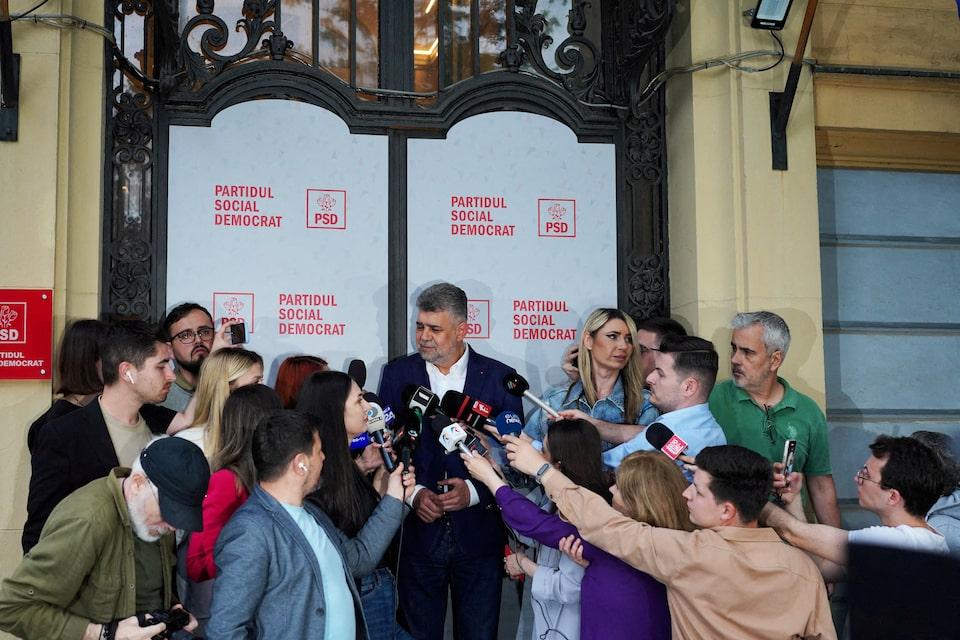
First-quarter net revenues highest for the period since 2016 Earnings per share fall short of estimates Share price falls around 1% SAO JOSE DOS CAMPOS, Brazil, May 6 (Reuters) - Brazilian planemaker Embraer (EMBR3.SA) , opens new tab reaffirmed its full-year delivery and financial outlook on Tuesday, saying U.S. tariffs so far had "limited impact," although its CEO added his voice to calls for a return to zero tariffs for the aviation sector. The world's third-largest aircraft maker after Airbus (AIR.PA) , opens new tab and Boeing (BA.N) , opens new tab expects to deliver 77 to 85 commercial jets this year, with executive aviation deliveries between 145 and 155 aircraft. Sign up here. The company said that early in the year its U.S. content helped to mitigate the impact of President Donald Trump's tariffs. It said it had to make operational changes to reduce the exposure of the Phenom and Praetor business jets to the trade conflict, but that its commercial aviation unit was not affected in the first quarter. The company's initial estimate is that the tariffs could reduce its operating margins by 90 basis points this year, but it said steps such as additional cost reductions were being taken to limit the impact. "We join other companies in calling for the return of zero tariff policy for the aviation sector, as has been the case for several decades," Chief Executive Francisco Gomes Neto told a call with analysts, noting the sector was "highly globalized." In the first quarter, a seasonally weaker period for planemakers, Embraer reported a 23% year-on-year increase in net revenues to $1.1 billion, which it said was the highest for the period since 2016. Core earnings, as measured by adjusted earnings before interest, taxes, depreciation and amortization, more than doubled to $108.6 million, while the closely watched EBITDA margin rose to 9.8% from 5.2%. Earnings per share, however, fell short of market estimates as the company reported an adjusted loss of $0.40 per share in the quarter. Analysts polled by LSEG expected EPS of $0.01. "In spite of this miss, the company's operational results looked solid," Citi analysts said in a note to clients. Sao Paulo-traded shares of the Brazilian company - which more than doubled in value in 2024 and hit an all-time high earlier this year - fell around 1% on Tuesday, underperforming the broader Bovespa stock index (.BVSP) , opens new tab, which was up 0.2%. https://www.reuters.com/business/aerospace-defense/embraer-reaffirms-2025-outlook-says-us-tariffs-have-limited-impact-2025-05-06/

2025-05-06 14:36
China, France, Germany drive global debt increase, IIF reports Emerging markets face record $7 trillion in bond, loan redemptions US debt levels raise concerns over yields, inflation risk NEW YORK, May 6 (Reuters) - Global debt rose by around $7.5 trillion in the first three months of the year to hit a record high of over $324 trillion, data from a banking trade group showed on Tuesday. The Institute of International Finance said China, France, and Germany were the largest contributors to the global debt increase, while debt levels declined in Canada, the UAE, and Turkey. Sign up here. "While the sharp depreciation of the U.S. dollar against major trading partners contributed to the increase in the USD value of debt, the Q1 rise was more than quadruple the average quarterly increase of $1.7 trillion observed since the end of 2022," the IIF said in its Global Debt Monitor. The global debt-to-output ratio continued to move slowly lower, standing just above 325%. However, in emerging markets the ratio hit a record high at 245%. Total debt in emerging markets rose by over $3.5 trillion in the first quarter to a record high of more than $106 trillion. China alone accounted for over $2 trillion of the rise, according to the IIF. China's government debt-to-GDP is at 93% and is expected to hit 100% before the end of the year. Emerging market debt outside China also hit a nominal record, with Brazil, India and Poland seeing the largest increases in the dollar value of their debt. Yet the debt-to-GDP ratio of emerging markets ex-China fell to below 180%, some 15 percentage points below the record high, the IIF said. Importantly, emerging markets face a record $7 trillion in bond and loan redemptions during the rest of 2025, while for developed economies, the number stands near $19 trillion. EYES ON AMERICA The weaker dollar has worked as a buffer across developing economies, limiting the impact in emerging markets of the spike in volatility triggered by U.S. President Donald Trump's trade war. "However, if policy uncertainty persists for a prolonged period, fiscal policy may need to become increasingly accommodative — particularly in countries with strong trade linkages to the U.S.," the IIF said. There was also concern about U.S. debt levels and what large financing needs from the world's top economy, triggered partially by a tax cut push, could do to U.S. yields. "A sharp rise in the supply of U.S. Treasuries would put upward pressure on yields and significantly increase government interest expense," the IIF said. "In such a scenario inflation risk would also rise." Tariffs are seen by the Trump administration as a way to patch the budget hole left by the expected tax cuts, but uncertainty surrounding trade policy and erratic implementation has slowed business spending and weighed on U.S. growth. "There is also the possibility that (a 10% universal) tariff could ultimately reduce government revenues if it triggers foreign retaliation," the IIF report said. https://www.reuters.com/world/china/global-debt-hits-record-over-324-trillion-says-iif-2025-05-06/
2025-05-06 14:10
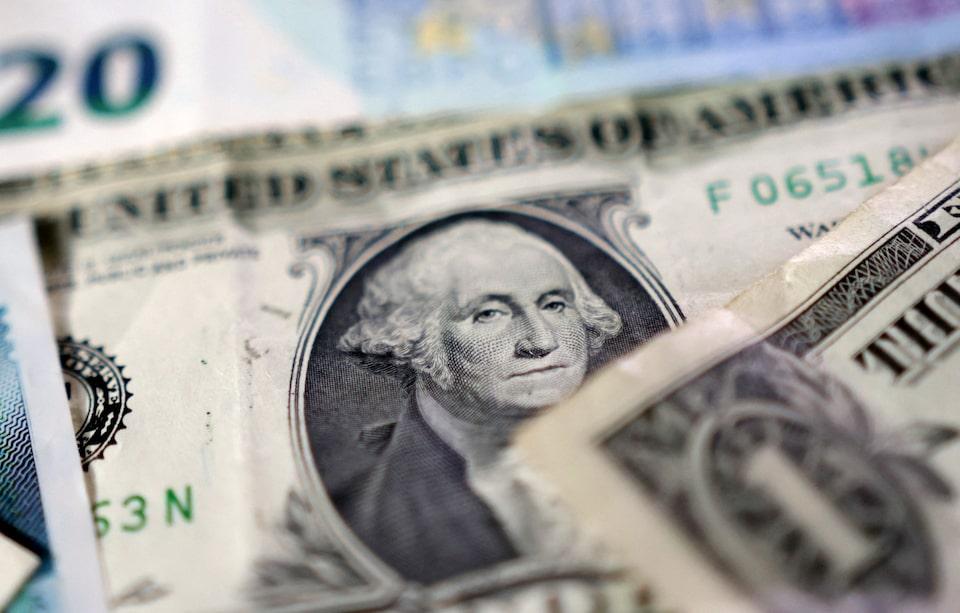
ZURICH, May 6 (Reuters) - The Swiss National Bank is ready to intervene in the foreign currency markets and cut interest rates even below zero to prevent inflation falling below its price stability target, Chairman Martin Schlegel said on Tuesday. Swiss inflation fell to 0% in April, its lowest level in four years, government data showed on Monday, at the bottom end of the SNB's 0-2% target range. Sign up here. The reading fueled expectations the SNB will cut rates from the current 0.25% at its next policy meeting on June 19, while markets expect rates could go below zero later in the year. Schlegel said the SNB had expected inflation to come down, and it would now be "interesting" what the central bank would decide. "No one likes these negative interest rates, obviously the Swiss National Bank doesn't like it," Schlegel said at an event in Zurich. "But if we have to do it, the negative interest rates, we're certainly prepared to do it again," he added. Schlegel acknowledged current market uncertainties, but said price stability remained the SNB's key priority. "We are to stay committed to our mandate, regardless of what happens," Schlegel said. The central bank was also prepared to intervene in the foreign currency markets to weaken the Swiss franc, whose appreciation contributes to low inflation by making imports cheaper. Schlegel noted that the safe-haven currency had become stronger in the last couple of weeks, creating another problem for Swiss exporters wrestling with lower demand abroad and economic uncertainties. "For the last couple of quarters, we have always said we are ready to intervene in the forex market if it's necessary," Schlegel said. https://www.reuters.com/business/finance/swiss-national-bank-ready-take-rates-below-zero-tackle-low-inflation-2025-05-06/
2025-05-06 14:01
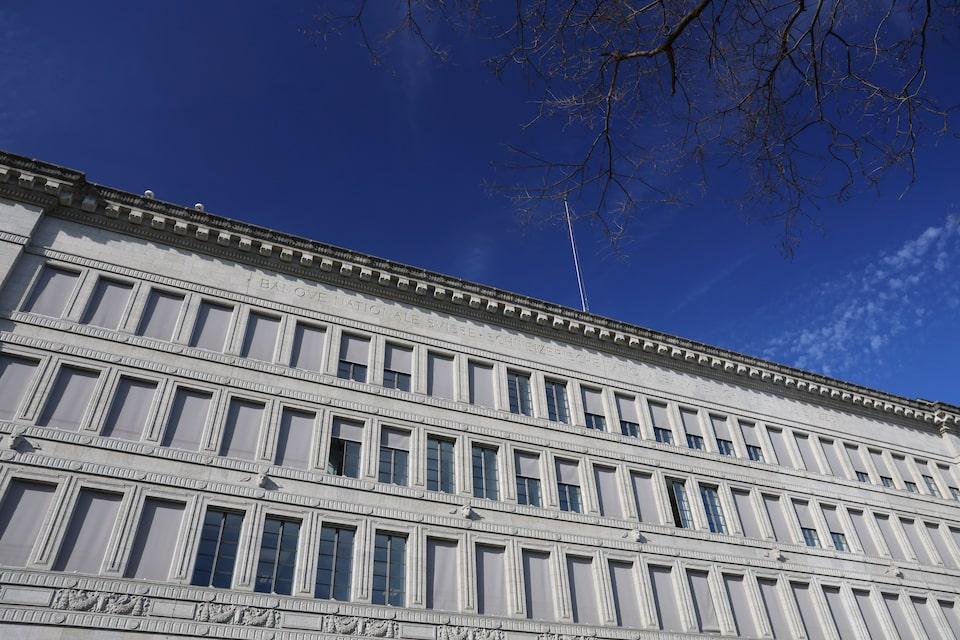
Canada's trade deficit in March stood at C$506 million Imports drop by 1.5%, exports slip by 0.2% Drop in exports, imports led by falling US shipments In volume terms, exports in March rose by 1.8% OTTAWA, May 6 (Reuters) - Canada's trade deficit narrowed to C$506 million ($366.34 million) in March, beating expectations as imports fell at a faster rate than the drop in exports, data showed on Tuesday. Imports of goods dropped 1.5% in March, driven by a 2.9% slump in shipments from the United States after Canada imposed retaliatory tariffs on its neighbor following President Donald Trump's 25% tariff on Canadian steel and aluminum from March 12. Sign up here. Exports to the United States dropped by 6.6% but were almost compensated by an increase in exports to the rest of the world. Reuters reported on Tuesday that small and medium companies in Canada are pivoting from the United States and seeking new markets as tariffs or the uncertainty around them is making doing business difficult with the biggest market in the world. "One exciting story that comes out of the data is clearly there's an indication of interest in markets outside of the United States," said Stuart Bergman, chief economist at Export Development Canada. Analysts polled by Reuters had estimated that the total trade deficit would widen to C$1.56 billion in March, up from a revised C$1.41 billion in February. Trump's tariff threats at the end of last year and the beginning of this year pushed Canadian firms to advance supplies south of the border, boosting trade surpluses in December and January. But as tariffs took hold, shipments to the United States have been squeezed. The United States is Canada's biggest trading partner and Trump's tariffs have hurt trade, investments and jobs on both sides of the border. Canadian Prime Minister Mark Carney will meet with Trump on Tuesday to start talks on a comprehensive trade and security deal, which experts have said could eventually lead to reducing the burden of tariffs on Canada. The Bank of Canada has said that it would act quickly and decisively if the economy takes a sharp hit, with money markets now estimating almost a 52% chance of a rate cut of 25 basis points in June. The Canadian dollar was up 0.18% to trade at 1.3801 to the U.S. dollar, or 72.46 U.S. cents. Bond yields for the government's two-year bonds were down 0.5 basis points to 2.557%. Canada's overall exports for March came in at C$69.9 billion, down from C$70.04 billion in February, led by the United States. This was the second month in a row when exports fell. "Despite the two consecutive monthly declines, export levels remained relatively high in March, posting a 10.2% increase compared with the same month a year earlier," Statscan said, adding that lower prices primarily led to the drop. In volume terms, exports were up 1.8% in March, it said. However, imports fell in both value and volume terms. They dropped for the first time in five months, with the largest contributors being metal and non-metallic mineral products by 15.8% and energy products by 18.8%. In volume terms, total imports edged down 0.1% in March. Imports in March were at C$70.40 billion, down from C$71.44 billion. https://www.reuters.com/world/americas/canadas-trade-deficit-narrows-more-than-expected-march-imports-fall-2025-05-06/