2025-05-06 13:46
BENGALURU, May 6 (Reuters) - The Indian rupee will give up nearly all of its year-to-date gains against the dollar by the end of July as a slowing economy dampens investor sentiment and the Reserve Bank of India simultaneously loosens its grip on the currency's movements, a Reuters poll of FX analysts found. Supported by net capital inflows of around half a billion dollars from foreign investors into Indian equities in April the rupee gained more than 1% last month and was up more than 4% from a lifetime low of 87.95 per dollar set in February. Sign up here. However, most FX analysts in an April 30-May 6 Reuters poll expected the rupee's recent strength to fade soon as the economy was showing signs of a cyclical slowdown. India's economy, which grew 9.2% in the fiscal year 2023–24, was projected to have expanded at a slower pace of 6.3% in both the following fiscal year and the current one, a separate Reuters poll showed. In three months the rupee was forecast 1.2% weaker than it currently is at 85.50 per dollar, down 2.2% at 86.30 in six months and then at 86.28 in a year, a trend similar to an April survey. It was up about 1.4% for the year against the greenback on Tuesday. "The strengthening is definitely a surprise, given...that capital flows haven't really improved," said Gaura Sengupta, chief economist at IDFC First Bank. "The depreciation for the rupee...is largely a capital flow story...which, in this uncertain environment, will not be very strong." The range of forecasts for the six-month outlook in the poll was the widest in more than two years, showcasing the RBI's reduced intervention in the forex market under Governor Sanjay Malhotra. "I think the RBI has not been intervening lately unlike the previous regime where we saw the RBI step in on either side. There is a big swing happening and I think the RBI is allowing that to occur," said Upasna Bhardwaj, chief economist at Kotak Mahindra Bank. The currency's implied volatility is at its highest level in two years, reflecting heightened uncertainty and risks to the rupee's outlook. Expectations that the RBI will cut interest rates by a cumulative 100 basis points to 5.50% in the current easing cycle to support a slowing economy were also likely to exert more downward pressure on the rupee. (Other stories from the Reuters May foreign exchange poll) https://www.reuters.com/markets/currencies/indian-rupees-rally-stall-by-end-july-weaker-times-ahead-2025-05-06/

2025-05-06 13:06
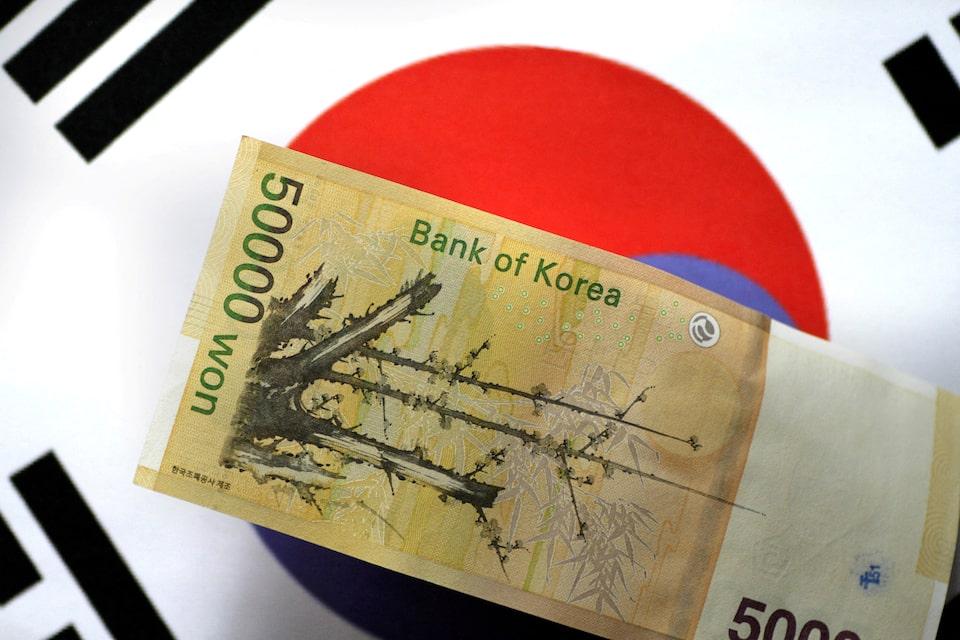
ORLANDO, Florida, May 6 (Reuters) - The Taiwan dollar's record rise in recent days has brought a regional conundrum into sharp focus: how much appreciation can Asian currencies countenance in the face of U.S. President Donald Trump's global trade war? Currency depreciation would typically be the weapon of choice for Asian policymakers seeking to mitigate the export and growth shocks caused by a trade war. But many Asian currencies are moving in the opposite direction. Sign up here. The Taiwan dollar's 6% rise against the greenback over Friday and Monday marked a record two-day spike. It's unclear what sparked the surge of capital into a market that was 'long' dollars and unhedged. Many analysts say it was speculation that Taiwan had agreed to allow its currency to strengthen as part of an upcoming trade deal with Washington, a claim Taiwan's central bank and president have strenuously denied. But regardless, what matters is that the Taiwan dollar's jump didn't come in isolation, raising doubts over Asia's willingness or ability to use FX as a trade war shock absorber. CONTAGION In parallel with the Taiwan dollar's record move in recent days, the South Korean won on Monday also clocked its biggest two-day rally in 15 years, while China's offshore yuan hit a six-month high. China's markets reopened on Tuesday for the first time since Thursday, and the onshore renminbi gapped sharply higher too. On Saturday, the Hong Kong Monetary Authority sold HK$46.54 billion ($6 billion) of local currency to prevent it from strengthening beyond its official band between 7.75 and 7.85 per U.S. dollar. That was the HKMA's first such action in four and a half years and its largest-ever intervention in the FX market. And even though the Indian rupee, Indonesian rupiah and Vietnamese dong were all recently at record lows against the U.S. dollar, they have begun to ride the continent-wide crest of rising currencies in recent days, especially the rupee. 'RIPPED OFF' This is exactly what Trump wants. Some of America's biggest bilateral trade deficits are with Asian countries who Trump says have "ripped off" the U.S. for years, in part, because, he argues, they have kept their exchange rates artificially weak through central bank intervention and by accumulating huge foreign currency reserves. Indeed, six of America's top 10 bilateral trade deficits last year were with Asian countries, topped of course by China. America's combined deficit with these six countries last year was more than $650 billion. It's also true that many Asian countries closely manage their currencies to varying degrees or regularly intervene in the market ostensibly to limit volatility but implicitly to exert some control over the exchange rate. How much any of this is 'fair' or 'unfair' trade is highly debatable. But what is not up for debate is that the region will face immediate challenges in an environment where the question is how far Asian countries can let their exchange rates rise. CROSSROADS All else being equal, a strengthening currency will make these countries' exports less competitive on the international market, but appreciation could be a price worth paying if it secures less punitive trade deals with Washington. The weighted average U.S. 'reciprocal' tariff on Asia is over 40%, up from around 12% before Trump's trade war, MUFG analysts estimate. On the other hand, intra-Asian trade is more important than ever, expanding 43% over the past four decades to more than half of all Asian trade, according to the International Monetary Fund. Consequently, ceding some competitive advantage to the U.S. via the dollar exchange rate will be less meaningful than relative regional competitiveness. This may limit Asian countries' tolerance for local currency strength. The other issue Asian policymakers may struggle with is dollar weakness more broadly. There was a widely held belief in the months surrounding Trump's election win last November that his tariff agenda would stoke U.S. inflation, force the Federal Reserve to raise interest rates, and therefore boost the dollar. But while price pressures and inflation expectations have indeed intensified in recent months, U.S. growth is weakening, and markets expect the Fed to cut rates this year. On top of that, a risk premium has been built into the dollar's price as Trump's erratic and controversial policies have prompted many investors to reassess their willingness to hold U.S. assets. Considering all this, Asian policymakers face huge challenges in determining how best to respond to the U.S. trade salvos. But one thing is for sure, 'weaponizing' FX may no longer be the obvious option. (The opinions expressed here are those of the author, a columnist for Reuters) https://www.reuters.com/markets/currencies/asia-fx-surge-raises-doubts-about-regions-trade-war-arsenal-mcgeever-2025-05-06/
2025-05-06 12:42
EU prepares countermeasures during Trump's 90-day tariff pause U.S. tariffs cover 70% of EU goods, could rise to 97% EU prefers negotiated solution, but all options remain open EU says partners all phoning bloc to deepen trade ties BRUSSELS, May 6 (Reuters) - The European Union is under no pressure to accept an unfair tariff deal with the United States, its trade chief said on Tuesday, adding that it was being contacted by other countries seeking to forge closer trade ties with the 27-nation bloc. The EU faces 25% U.S. import tariffs on its steel, aluminium and cars and so-called "reciprocal" tariffs of 10% for almost all other goods, a levy that could rise to 20% after President Donald Trump's 90-day pause expires on July 8. Sign up here. European Trade Commissioner Maros Sefcovic said the EU would use the pause to prepare further rebalancing measures and ensure a level playing field if talks failed. "All options remain on the table here," he told the European Parliament. While the EU's clear preference was to negotiate a solution with the United States, he said Washington now needed to show its readiness to make progress towards a fair and balanced agreement. "We do not feel weak. We do not feel under undue pressure to accept a deal, which would not be fair for us," Sefcovic said. The commissioner said U.S. tariffs now covered 70% of EU goods trade to the United States and that could rise to 97% after further U.S. investigations into pharmaceuticals, semiconductors and other products. He said the EU was also focused on the 87% of global trade not conducted with the U.S., pointing to the bloc's negotiations with India, Indonesia, the Philippines, Thailand and Malaysia. "I can tell you that our phones are not stopping ringing all the time because everyone wants to accelerate free trade agreement negotiations with us," he said. The comment evoked language from the White House, which has said it has received a flood of calls from governments seeking to cut deals and reduce the impact of Trump's tariffs, which have roiled markets and raised fears of a global economic downturn. The European Union has suspended its own countermeasures against the U.S. steel tariffs to give room for negotiations, although they appear not to have made much progress. Sefcovic said the EU would also guard against possible surges of imports due to trade diverted by Trump's tariff wall, adding that a task force set up to monitor trade diversion would produce its first results in mid-May. https://www.reuters.com/business/autos-transportation/eu-keeps-options-open-it-readies-response-expanding-us-tariffs-2025-05-06/

2025-05-06 12:36
May 6 (Reuters) - U.S. utility Constellation Energy (CEG.O) , opens new tab missed Wall Street expectations for first-quarter profit on Tuesday, hurt by higher operating and interest expenses, sending its shares down nearly 5% in premarket trading. The company's net income fell around 87% from a year earlier to $118 million in the reported quarter. Sign up here. Higher-for-longer interest rates can weigh on utilities as it makes investing in the construction and maintenance of critical infrastructure such as electrical grids more expensive. Constellation Energy said interest expenses rose nearly 15% from a year earlier to $146 million in the January-March quarter, while total operating expenses rose 18.5% to $6.34 billion. The company also said its $16.4 billion acquisition of privately held natural gas and geothermal company, Calpine, a deal which faced backlash from consumer groups, was on track to be completed by the end of the year. The utility had defended its planned acquisition of Calpine to the regulators last month. The Baltimore, Maryland-based utility, posted an adjusted profit of $2.14 per share for the three months ended March 31, missing analysts' estimates of $2.22 according to data compiled by LSEG. https://www.reuters.com/business/energy/constellation-energy-misses-first-quarter-profit-estimates-hit-by-higher-2025-05-06/

2025-05-06 12:10
TAIPEI, May 6 (Reuters) - Taiwanese electronics manufacturer and AI server maker Wistron Corp (3231.TW) , opens new tab said on Tuesday its board has approved an additional investment of $455 million in its new U.S. subsidiary. The new planned investment would bring the total planned capital injection into the subsidiary to $500 million, Wistron said in a press release. Sign up here. The move ramps up Wistron's earlier commitment, announced on April 2, to invest $45 million to set up a subsidiary to "support business development and strategic growth" in the United States. https://www.reuters.com/technology/wistron-corp-invest-additional-455-million-new-us-unit-2025-05-06/

2025-05-06 11:47
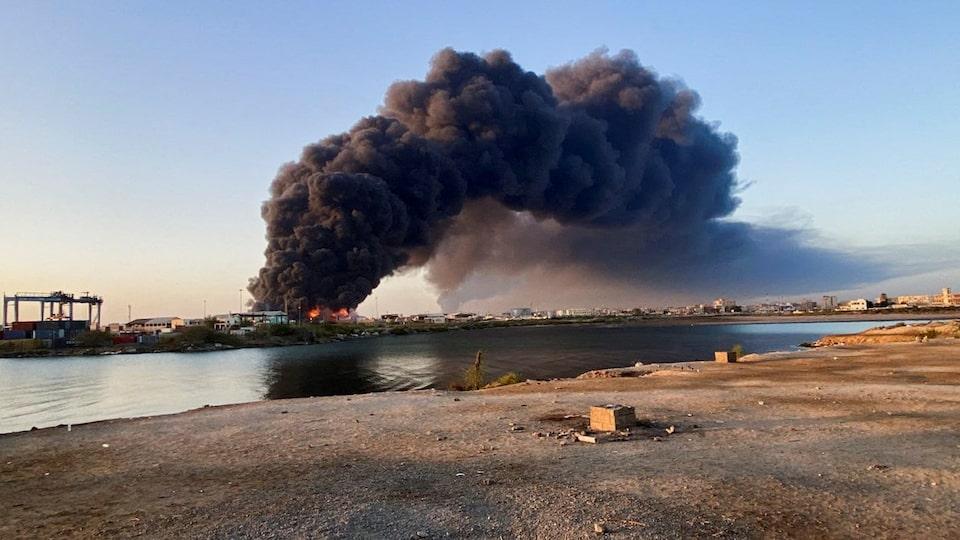
DUBAI, May 6 (Reuters) - British maritime security firm Ambrey reported on Tuesday that the paramilitary Rapid Support Forces (RSF) had launched a drone attack on facilities at Port Sudan, targeting the container terminal and escalating a two-year-long conflict. Ambrey said it had obtained video footage showing damage to the terminal and civilian infrastructure, reportedly leaving the city without power. Sign up here. No damage to merchant vessels was reported, but Ambrey noted significant GPS disruptions in the area. Explosions and fires rocked Sudan's main port city and wartime capital Port Sudan on Tuesday, a witness said, part of a days-long drone assault that has torched the biggest fuel depots, damaging the most important gateway for foreign aid. Port Sudan houses the country's main seaport, airport and the army's top command. Since April 2023, Sudan has been gripped by war between the army and RSF, triggered by a dispute over a transition to civilian rule. The conflict has displaced over 12 million people and pushed half the population into acute hunger, according to the United Nations. https://www.reuters.com/world/ambrey-says-rsf-launched-drone-attack-port-sudans-container-terminal-2025-05-06/