2025-05-06 11:16
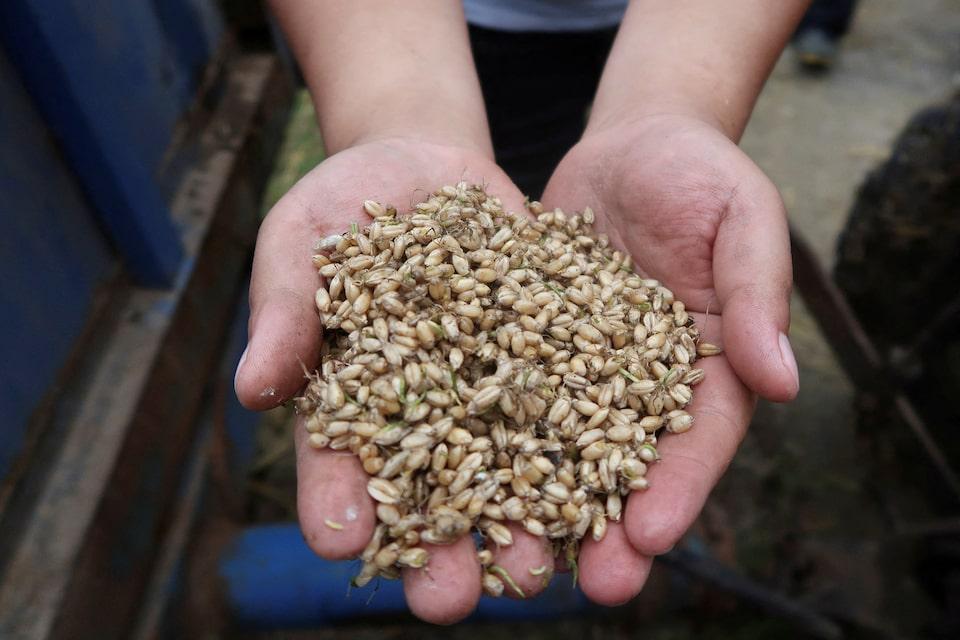
BEIJING, May 6 (Reuters) - Henan province, a key wheat-producing region known as China's granary, has issued a risk warning as dry, hot winds threaten the development of its wheat crop. From May 11 to 13, temperatures are expected to exceed 35 degrees Celsius (95°F), posing a threat to the wheat grain-filling stage, particularly in areas like Anyang, Puyang and Zhengzhou, according to a local government statement. Sign up here. The grain-filling stage is critical, as the plant transfers nutrients into developing grains, determining both yield and quality. Henan produces about one-third of China’s wheat, with the harvest typically taking place between late May and mid-June. The warning follows an alert from China's water resources minister last Tuesday, who cautioned about worsening drought conditions in the northern wheat belt amid limited short-term rainfall. Weather maps show a 90-day rainfall deficit across key growing regions, including Hebei, Henan, Anhui and Jiangsu - together accounting for 61% of the winter wheat crop, according to the Commonwealth Bank of Australia. "While a significant proportion of the area planted is irrigated, dry conditions can have a notable impact on output," the bank said in a note on Tuesday. China was the world's top wheat importer in 2022 and 2023, but imports plummeted last year. A reduction in wheat output could prompt the Asian nation to boost imports again to make up for the shortfall. https://www.reuters.com/world/china/chinas-henan-province-issues-risk-warning-heat-threatens-wheat-crop-2025-05-06/
2025-05-06 10:49
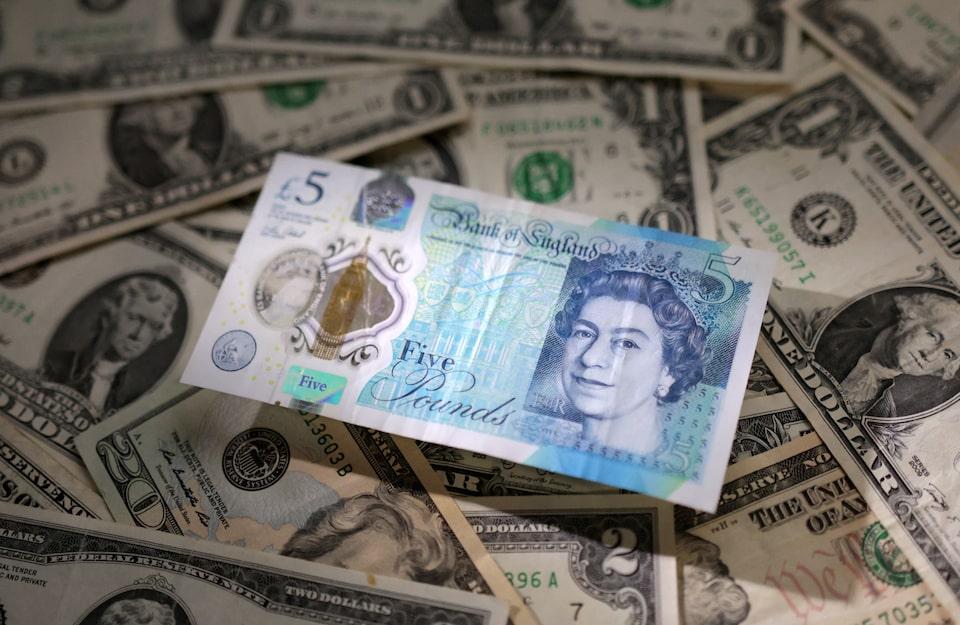
LONDON, May 6 (Reuters) - The pound strengthened against both the dollar and the euro on Tuesday, largely due to weakness in both peers rather than major British news, which is fairly thin until Thursday's closely watched Bank of England meeting. The pound was last up 0.2% on the dollar at $1.3323 helped by nervousness in markets hoping for trade deals between the U.S. and other countries which could reduce the effect of U.S. tariffs but may not materialise. Sign up here. Sterling reached an over-three-year top on the greenback in late April, as fears about the health of the U.S. economy undermined the dollar, but had been dropping back on hopes of deals. Markets, however, are now reassessing that view once more. The pound was also stronger against the euro, which was down 0.2% at 84.95 pence. The pair were roughly flat in early trade, but the common currency turned lower after German conservative leader Friedrich Merz failed to secure enough parliamentary votes to become chancellor, throwing politics in Europe's largest economy once more into disarray. As for Britain, the focus is Thursday's Bank of England meeting. Markets see a 25 basis point rate cut as all but certain, and will be focusing on any indications of policymakers' plans for later in the year. "It's still going to be interesting, markets will be looking at the accompanying guidance, the tone, and whether there are votes for a 50 basis point cut," said Jane Foley, head of FX strategy at Rabobank. Markets are currently pricing at least two more 25 basis point BoE rate cuts this year in addition to Thursday's move, and see a good chance of a third. Such bets are predicted on forecasts that British growth will be weaker this year than earlier expected, in part due to the impact of tariffs, and that inflation will slow. Whether or not the BoE indicates that is its expectation could also move the pound. The BoE said on Tuesday its announcement and economic forecasts will be delayed by two minutes and published at 1102 GMT rather than 1100 GMT, due to a national two-minute silence being held to commemorate the 80th anniversary of Victory in Europe (VE) Day. https://www.reuters.com/world/uk/sterling-gains-dollar-euro-2025-05-06/
2025-05-06 10:44
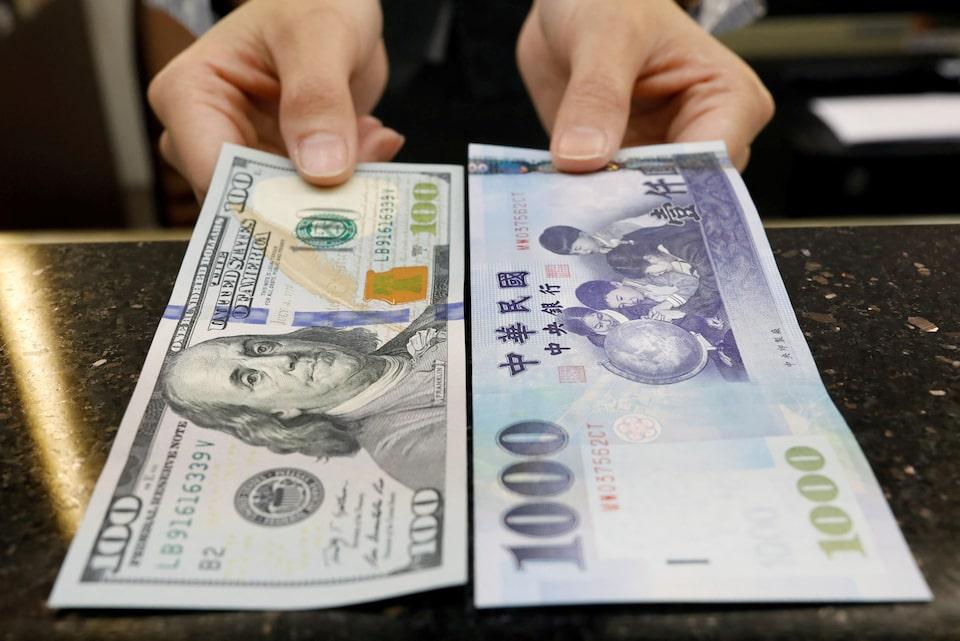
SINGAPORE, May 6 (Reuters) - Taiwan's currency is at three-year highs after notching unprecedented gains as insurance firms, pension funds and other investors quit U.S. dollar assets or scramble to hedge exposure. Analysts estimate billions of dollars' worth of hedging or repatriation by life insurance firms could drive the Taiwan dollar even higher. Sign up here. WHY IT'S IMPORTANT The latest scramble by Taiwanese life insurers to protect their portfolios reflects an unwinding of massive U.S. dollar holdings by global investors, as U.S. President Donald Trump's chaotic trade policies shake decades of unquestionable faith that investors had in the dollar's dominance. That means investors based in low-yielding markets such as Taiwan, who for years could count on stable and high dollar yields as well as extra return owing to depreciation in their currencies, are now re-assessing portfolios. BY THE NUMBERS Khoon Goh, head of Asia research at ANZ, estimates Taiwanese life insurance companies hold $682 billion of foreign assets, mostly in U.S. fixed income, though he is unsure how much of that they could be selling or bringing home. UBS analysts say Taiwan's net international investment position, which measures the difference between its external financial assets and liabilities, is "uniquely large" at 165% of gross domestic product as compared to an average of 0% for other emerging Asian economies. Namik Immelback, chief strategist at SEB Research, estimates that of the $700 billion in foreign assets these life insurance companies hold, only 70%, or $490 billion, is hedged. Analysts at HSBC said as of last December, the average currency hedge ratio based on their sample of Taiwanese life insurance companies was slightly less than 60%. The three-month U.S. dollar/Taiwan dollar non-deliverable forward – a common metric used for hedging – fell to its most negative in 17 years on Tuesday , suggesting investors are heavily betting on further appreciation for the Taiwan dollar. https://www.reuters.com/world/asia-pacific/taiwanese-life-insurers-portfolios-have-billions-unhedged-dollars-2025-05-06/
2025-05-06 10:43
MUMBAI, May 6 (Reuters) - The Indian rupee slipped on Tuesday, tracking mild losses in regional peers and dollar demand from foreign banks, though broader weakness in the greenback limited the decline. The rupee closed at 84.4325 against the U.S. dollar, down 0.2% on the day. Sign up here. The offshore Chinese yuan retreated from a near six-month high hit on Monday on signs that the country's central bank may be unwilling to allow rapid appreciation amid sharp rallies seen in other Asian currencies - most prominently, the Taiwanese dollar. The dollar index was down 0.1% at 99.7 while India's benchmark equity indexes, the BSE Sensex (.BSESN) , opens new tab and Nifty 50 (.NSEI) , opens new tab ended slightly in the red. Traders pointed to dollar bids from at least two U.S. based banks alongside routine importer hedging demand among factors that weighed on the rupee on Tuesday. With the dollar nursing losses of 8% against major peers this year on the back of heightened policy uncertainty, carry trades on emerging market currencies could benefit, per analysts at BofA. Carry investors borrow money from economies with low interest rates to fund investments in higher-yielding assets. BofA reckons that pairing currencies like the Indian rupee and Brazilian real against shorting lower yielding currencies such as Thai baht or Singaporean dollar is also an "appealing relative carry-value strategy." The Federal Reserve's policy decision due on Wednesday is focus this week, where the central bank is widely expected to keep rates steady but the attention will be on how policymakers are likely to navigate the economic of tariffs. Traders are currently pricing in 75 basis points of easing this year with the first move possible in July, as per LSEG data. https://www.reuters.com/world/china/rupee-ends-lower-foreign-banks-dollar-bids-dip-regional-peers-2025-05-06/

2025-05-06 10:40
LONDON, May 6 (Reuters) - A look at what matters in U.S. and global markets today from Mike Dolan , opens new tab, Editor-At-Large, Finance and Markets World markets are getting nervy again on the back of fresh salvos in Washington's trade war, a striking slide in the U.S. dollar in Asia and an unexpected political twist in Germany. Sign up here. I'll dive into all of the market-moving news below. Today's Market Minute * German conservative leader Friedrich Merz failed to secure enough parliamentary votes to become chancellor on Tuesday in a major blow that threw politics in Europe's largest economy once more into disarray. * Chinese travellers' spending rose 8% year-on-year during the May Day holiday, but was still off pre-pandemic levels, while the country's services activity expanded at the slowest pace in seven months in April. * The dollar struggled to make headway on Tuesday as an unprecedented two-day surge in its Taiwanese counterpart spilled over to other regional peers and highlighted the fragility of the U.S. currency. * Warren Buffett will stay on as chairman of Berkshire Hathaway after Vice Chairman Greg Abel takes over as chief executive officer. Shares of Berkshire closed down about 5% on Monday. * Saudi Arabia has signalled it is willing to enter a painful price war to assert dominance over other oil producers, but worsening global economic conditions mean the kingdom's standard playbook might be less effective this time around. Check out the latest from Reuters' columnist Ron Bousso. Asia FX rattles and Merz stumbles Wall Street stock indexes (.SPX) , opens new tab broke a nine-day winning streak on Monday, and futures remain in the red ahead of today's open, with fresh anxiety seeping in as the Federal Reserve kicks off its two day policy meeting later on Tuesday. The recent market recovery had hinged in part on investor hopes for a measure of trade detente between the U.S. and China after Beijing last week said it was evaluating an offer from Washington to hold talks over tariffs. But that trail seems to have gone cold, and market focus has instead shifted to an unexplained 10% surge in Taiwan's dollar on Friday and Monday. Upward pressure on other Asia currencies such as Hong Kong's dollar is generating chatter about whether dollar depreciation will be a central part of Washington's trade negotiations. While holidays across Asia on Monday may have exaggerated these moves somewhat, speculation is rising about whether some regional governments may be backing away from U.S. currency and bond holdings. The Hong Kong Monetary Authority said on Tuesday that is has been reducing duration of its Treasury holdings and diversifying into other currencies and assets. With no new breakthrough in bilateral trade talks in the mix, the fallout from the upheaval remained front and centre as U.S. corporate earnings season continues. Ford Motor's stock fell overnight after it suspended its annual guidance because of uncertainty around tariffs, saying the levies would cost the company about $1.5 billion in adjusted earnings before interest and taxes. And President Donald Trump opened new fronts in the tariff war by saying he would impose a 100% tariff on all movies produced outside the U.S., though he gave few details on just how such a levy would work. Netflix, Amazon and Paramount Global all fell about 2% on Monday as a result. Moving to Europe, German (.GDAXI) , opens new tab and euro zone stocks (.STOXX) , opens new tab fell back more than 1%, and German bond yields dipped after German conservative leader Friedrich Merz failed to secure enough parliamentary votes to become chancellor in a blow that could throw politics in Europe's largest economy into disarray. Merz, who led his CDU/CSU conservatives to a federal election victory in February and signed a coalition deal with the centre-left Social Democrats, won just 310 votes in the secret ballot in the Bundestag - six short of an absolute majority. Although the surprise outcome raises concerns about the transformative economic plans promised by Merz, the Bundestag has 14 days to elect him or another chancellor, and he's still expected to get through eventually. The euro was steady as a result. Chart of the day Whether due to tariff-related negotiations or "malevolent people", a 10% two-day leap in Taiwan's dollar to its strongest level in more than two years has set off a flurry of speculation about whether America is seeking selective devaluations of the dollar against trading partners in Asia and elsewhere as a pre-condition for holding off on steep import tariff increases. Taiwan's president denied the speculation, claiming exchange rates formed no part of last week's trade talks in Washington, and its central bank has shored up the local currency today. But regional currency markets continued to rumble on Tuesday, unnerved by a surge in China's offshore yuan on Friday to its highest since the U.S. election. Hong Kong's pegged dollar tested the stronger end of its trading band, prompting the Hong Kong Monetary Authority to buy $7.8 billion to keep a lid on it. Trade talks aside, a related concern is that Asian central banks are backing away from U.S. investments and Treasuries. The HKMA said on Tuesday it has been reducing duration of its Treasury holdings and diversifying into other currencies and assets. Today's events to watch * U.S. Federal Reserve's Federal Open Market Committee starts its two-day policy meeting, decision Wednesday * U.S. March international trade balance, New York Fed's April global supply chain pressure index; Canada March trade balance * Canada's Prime Minister Mark Carney meets US President Donald Trump at White House * Bank of England Deputy Governor Sarah Breeden speaks * U.S. corporate earnings: Advanced Micro Devices, Super Micro, Mosaic, Marathon, Duke Energy, Devon Energy, Wynn Resorts, Marriott, Global Payments, International Flowers & Fragrances, Arista Networks, Fidelity National Information Services, Waters, Gartner, Progressive * U.S. Treasury sells $42 billion of 10-year notes Opinions expressed are those of the author. They do not reflect the views of Reuters News, which, under the Trust Principles , opens new tab, is committed to integrity, independence, and freedom from bias. https://www.reuters.com/markets/us/global-markets-view-usa-2025-05-06/
2025-05-06 10:37
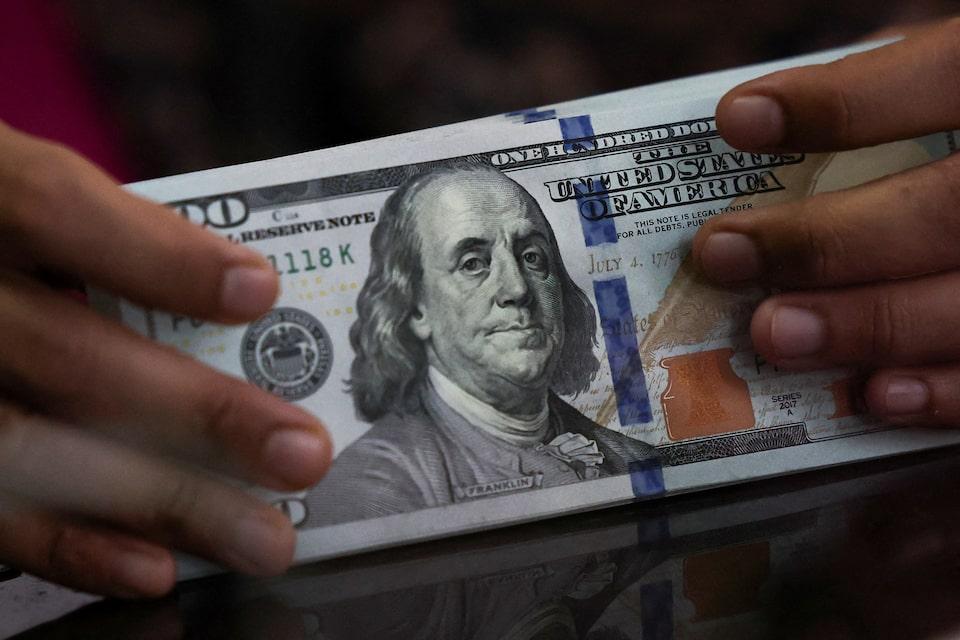
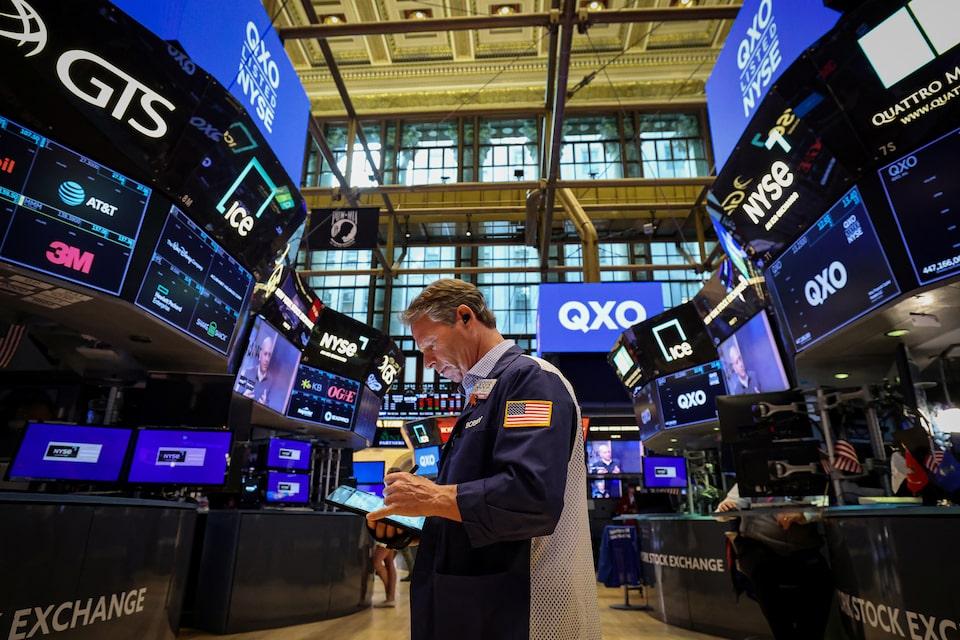
Reuters poll graphic on U.S. dollar safe haven concerns BENGALURU, May 6 (Reuters) - Concerns are mounting about the dollar's safe haven appeal, according to a majority of FX strategists surveyed by Reuters who forecast the global reserve currency will decline further over the coming year amid fears of an economic downturn. Since President Donald Trump's return to the White House, the greenback (.DXY) , opens new tab is down nearly 9% against a basket of major currencies, with his incessant flip-flopping on tariff policies battering investor sentiment. Sign up here. A 90-day reprieve to his April 2 reciprocal tariffs has done little to aid a revival. Over 55% of respondents, 46 of 83, surveyed April 30–May 6 who answered an additional question voiced concern about the dollar’s safe haven status — a sharp rise from about a third in the April survey — though most conceded no clear alternative exists yet. "I'm very concerned," said Steve Englander, head of global G10 FX Research at Standard Chartered. "It's like a betrayal of confidence from a friend. You can argue it didn't matter, or that you didn't mean it, but your friend still remembers it. That's where the dollar currently is with respect to international confidence." "If you'd asked me this two months ago, I'd say what matters for the dollar in the first instance is the stimulus, and the funding - whether or not they've actually gotten revenues - would be secondary. Now it's clear markets are much more concerned about the long-term fiscal path." These worries have weighed heavily on the greenback in recent weeks. But the euro , currently at $1.13 and barely off an over-three year high on April 18, was not expected to make further gains by the end of the month or by end-July, according to survey medians from over 70 forecasters. "We're generally quite flat with our view on euro-dollar in the short-term. There is still some room for the dollar to recover because of signals from the Trump administration they are shifting from threatening and announcing big tariffs to a phase of negotiating trade deals," said Francesco Pesole, currency strategist at ING. A near-80% majority of strategists, 47 of 59, expected a decrease in dollar net-shorts in U.S. Commodity Futures Trading Commission positioning or not much change by end-May. The common currency was then predicted to rise to $1.14 in six months and $1.16 in 12 months, poll medians showed — its biggest year-ahead monthly forecast upgrade since November 2010. The U.S. economy contracted for the first time in three years last quarter, swamped by a flood of imports as businesses raced to avoid higher costs from tariffs. While interest rate futures are pricing in three Federal Reserve rate cuts by year-end, policymakers have hinted they were in no hurry to reduce rates anytime soon. "We're more bearish on the dollar in the second half of the year. More realization of weak U.S. hard data, the Fed starting to actually cut rates as market are pricing, some of the rotation out of U.S. assets and concerns around Fed independence will likely come back into view," said Erik Nelson, macro strategist at Wells Fargo Securities. Despite Trump calling Fed Chair Jerome Powell "a total stiff" and repeating calls to lower interest rates, he said he would not remove Powell before his term ends in May 2026. "Everything depends on Fed independence. If there’s ever fear the Fed is losing its independence it seriously undermines the dollar’s safe haven status," said Brian Rose, senior U.S. economist, UBS Global Wealth Management. "We're seeing the Japanese yen or Swiss franc, which are sort of the backup safe havens, benefiting from the current situation." The yen and the franc , both up nearly 10% so far this year, were expected to gain a further 2.8% and 0.4% respectively, in 12 months. (Other stories from the Reuters May foreign exchange poll) https://www.reuters.com/markets/currencies/us-dollars-safe-haven-halo-flickers-amid-fed-fiscal-trade-jitters-2025-05-06/