2025-05-06 07:45
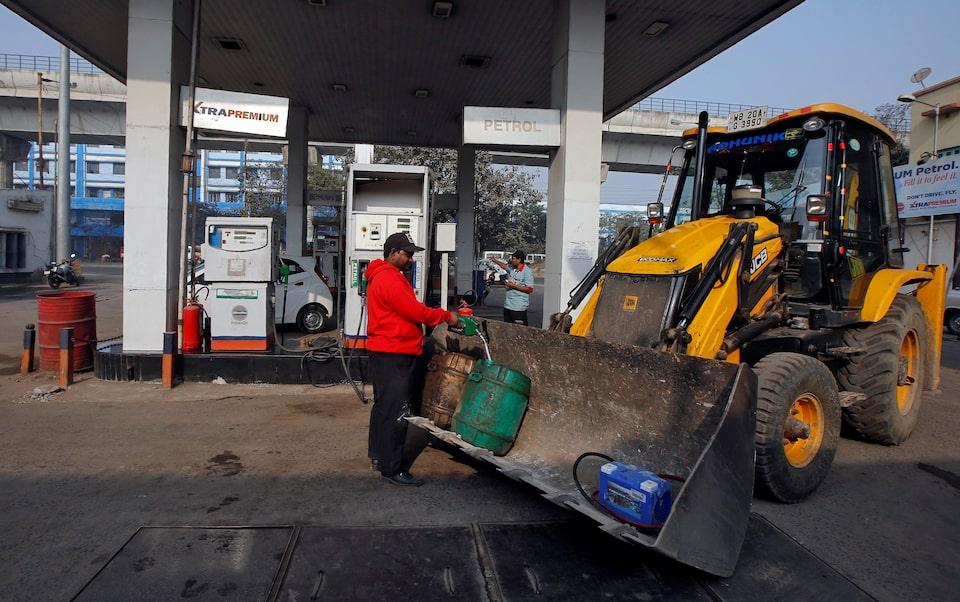
SINGAPORE, May 6 (Reuters) - India's diesel exports likely hit their lowest level in over a decade in April as major exporter Reliance cut refining output for maintenance at a time when domestic demand was robust, trade sources and analysts said. India, one of Asia's top-three diesel exporters, exported around 1.15 million metric tons (9.69 million barrels) of the industrial and transportation fuel in April, an average of data from LSEG, Kpler, Vortexa and two trade sources showed. Sign up here. This would be the lowest since February 2012 and a significant drop from a nearly 1-1/2 year high of 2.83 million tons registered in March, according to official data. Official export figures for April are due in the last week of May. "The unexpectedly low outflows from India for April resulted in limited supplies heading for Asia and Europe," LSEG Oil Research senior analyst Charles Ong wrote in a note. The drop in India's exports has partly supported Asia's spot 10-ppm gasoil premiums for most of April to its highest level in more than three months, with values jumping from 16 cents to 90 cents per barrel. Reliance Industries (RELI.NS) , opens new tab, operator of the world's largest refining complex at Jamnagar in western India, shut some of its refining units for maintenance in April. The company's diesel exports slumped to 800,000 tons in April, according to two of the sources and LSEG. Reliance did not immediately respond to a Reuters request for comment. Mangalore Refinery and Petrochemicals (MRPL.NS) , opens new tab, which typically exports more than three 65,000-70,000-ton cargoes per month, sold only one cargo in April, Reuters data showed. The rest were likely sold domestically, one of refinery sources said. Indian refiners were further encouraged by higher jet fuel margins to produce more aviation fuel than diesel, he added. Front-month regrade values, the discount between jet fuel and 10ppm sulfur gasoil, narrowed in April to around 80 cents a barrel from more than $1 a barrel in March. For May, exports are expected to rebound to nearly 2 million tons, two of the sources said, as Reliance resumes production. However, MRPL will start maintenance at one of its crude units which will cap diesel exports, one of them said. https://www.reuters.com/business/energy/indias-april-diesel-exports-likely-hit-lowest-level-over-decade-sources-say-2025-05-06/
2025-05-06 07:40
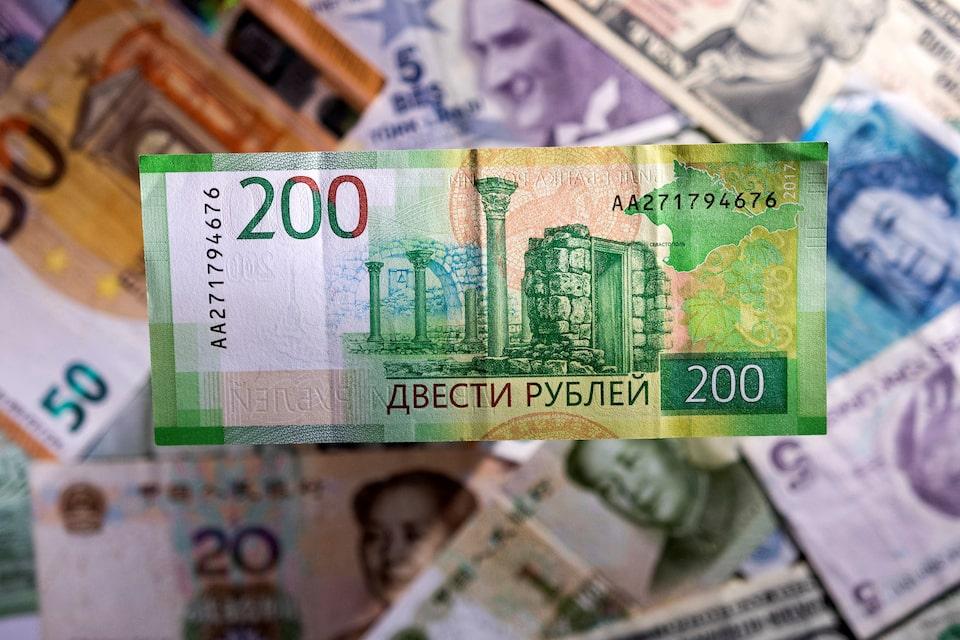
Average oil price dips below 4,000 roubles per barrel Global oil prices fall on tariffs war, OPEC+ output hike Russia ups deficit estimate, cuts energy revenue forecast MOSCOW, May 6 (Reuters) - Russia's oil price in roubles has fallen to a two-year low below the 4,000 rouble per barrel mark and some 40% lower than planned in the federal budget, data showed, piling pressure on the Kremlin, already saddled with a burgeoning budget deficit. Driven by expectations that production will exceed consumption, global oil prices have lost over 10% in six straight sessions and dipped over 20% since April when U.S. President Donald Trump's tariff shocks prompted increased bets on a slowdown in the global economy. Sign up here. Oil prices have also dropped following the decision of the Organization of the Petroleum Exporting Countries (OPEC) and its allies led by Russia, a group known as OPEC+, to speed up oil output hikes. According to Reuters calculations, the average price of Russia's mix of Urals and ESPO blends dipped on May 2 to $48.92 per barrel, or 3,987 roubles, which is more than 40% below the 6,726 roubles the government had originally planned for this year. That's the lowest since May 2023, according to Reuters data. It is also still well below the recently downgraded government forecast of 5,281 roubles per barrel for the Russian oil blend, used for taxation. Trump said on Monday that Moscow and Kyiv wanted to settle the war in Ukraine and that Russian President Vladimir Putin was more inclined towards peace after the recent fall in the price of oil. The fall in the prices of energy, which account for a third of Russia's federal budget proceeds, prompted the government last week to hike the 2025 budget deficit estimate to 1.7% of gross domestic product from 0.5% for 2025. The move came after it reduced the energy revenues forecast by 24% due to expectations of a prolonged period of low oil prices. Russia already hiked state spending on national defence by a quarter in 2025 to 6.3% of gross domestic product (GDP), the highest level since the Cold War, as the country continues its war in Ukraine, now in its fourth year. Many analysts believe that the government will have no other choice but to hike taxes, reduce some sensitive social spending, and go on a borrowing spree if it wants to balance future budgets without cutting defence spending. The average Russian oil price in roubles has continued to slide in recent months from 5,079 roubles in March and 4,562 roubles in April per barrel, according to Reuters data. https://www.reuters.com/business/energy/russias-oil-price-roubles-two-year-low-40-below-budgeted-level-data-shows-2025-05-06/
2025-05-06 07:09
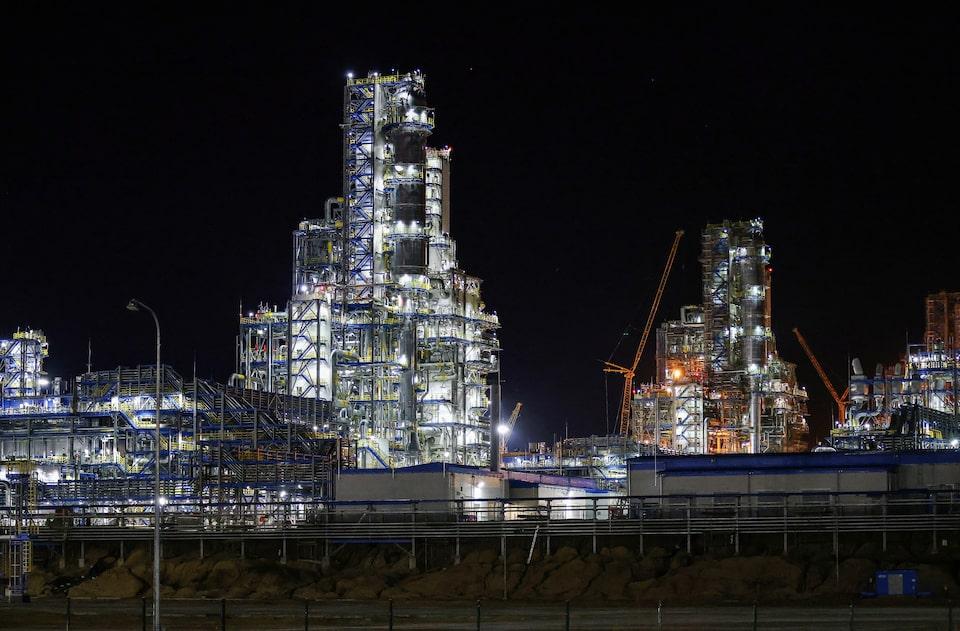
EU to publish 'roadmap' to phase out Russian energy Plan includes end-2027 ban on Russian gas imports, sources say Could pave way for more U.S. LNG imports EU has not imposed sanctions on Russian gas BRUSSELS, May 6 (Reuters) - The European Union will publish plans on Tuesday to ban new Russian gas deals by the end of this year, and phase out existing contracts with Moscow by the end of 2027, three EU officials told Reuters. The bloc had set a non-binding aim to end Russian fossil fuel imports by 2027 after Moscow's full-scale invasion of Ukraine in 2022. Sign up here. The EU Commission's plan includes a commitment to propose in June a ban on new Russian gas import deals and spot contracts by the end of 2025, the officials told Reuters. It will also make a legal proposal to ban Russian gas and liquefied natural gas imports under existing contracts by the end of 2027, said the officials, who wished to remain anonymous to discuss the confidential plans, which could still be changed before they are published. The legal proposals would need approval from the European Parliament and a reinforced majority of EU countries. The EU has imposed sanctions on Russian coal and seaborne oil shipments, but not on gas due to opposition from Slovakia and Hungary, which receive Russian pipeline supplies and say switching to other suppliers would hike energy prices. Sanctions require unanimous approval from all 27 EU countries. Around 19% of Europe's gas still comes from Russia, via the TurkStream pipeline and liquefied natural gas shipments. That's far below the roughly 40% Russia supplied before 2022. But European buyers still have "take-or-pay" contracts with Gazprom which require those that refuse gas deliveries to pay for much of the contracted volumes. The Commission has been assessing legal options to allow European companies to break existing Russian gas contracts without facing financial penalties. The EU officials did not specify how Brussels intends to do this. Lawyers have said it would be difficult to invoke "force majeure" to quit these deals, and that buyers could face penalties or arbitration for doing so. The proposals were first reported by Bloomberg News. Uncontracted "spot" purchases made up around 31% of the Russian LNG Europe bought last year, Rystad Energy data show. As it attempts to cut decades-old energy ties with Russia, the European Commission has signalled willingness to buy more U.S. LNG, a step President Donald Trump has demanded from Europe as a way of shrinking its trade surplus with the United States. The Commission is also concerned about energy prices, and has said any measures to restrict Russian energy imports must hurt Moscow more than the EU, and take into account the impact on fuel costs. The U.S. is pushing Russia for a peace deal with Ukraine, which, if reached, may reopen the door for Russian energy and ease sanctions. The European Commission had originally planned to publish its roadmap in March, but delayed it in part due to uncertainty around these developments. https://www.reuters.com/sustainability/climate-energy/eu-set-out-plan-phasing-out-final-russian-gas-supplies-2025-05-06/
2025-05-06 07:06
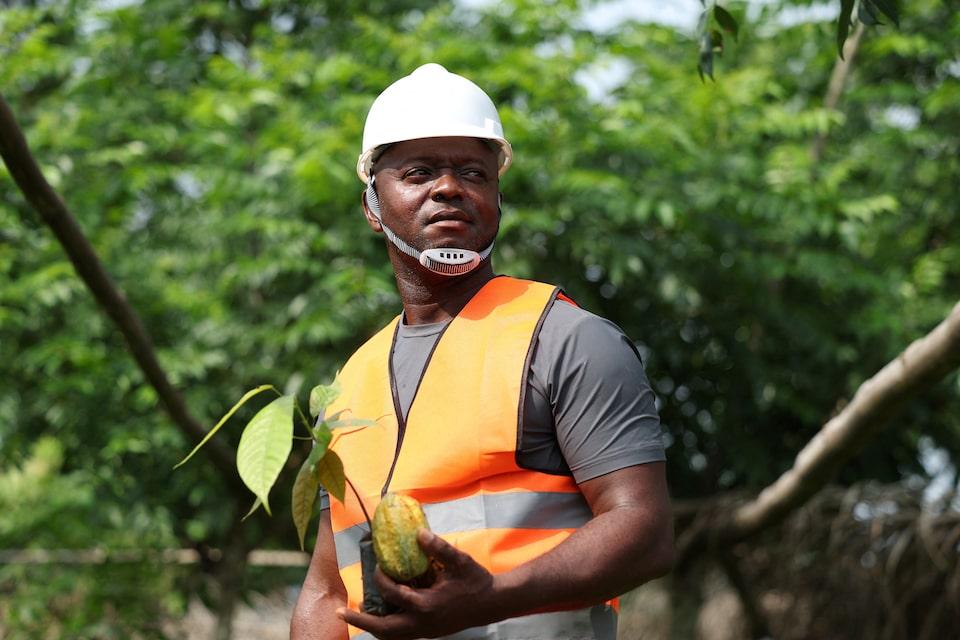
Cocoa prices surged on world markets in 2023-2024 In Nigeria, thousands switch careers to grow cocoa Official: big share of Nigerian beans smuggled out IKOM, Nigeria, May 6 (Reuters) - Growing up in Nigeria's cocoa farming area of Ikom in the southeast, Anyoghe Akwa did not see much of a future, so instead he decided to move away, study civil engineering and carve out a career in the construction industry. That was until 2023, when he heard that cocoa prices were surging and farmers back home in Ikom were making a fortune. Sign up here. "We saw 20-year-olds who never attended university generating a lot of money from cocoa farming, while those of us who were aspiring for a PhD were struggling," said Akwa, 47, who had enrolled in a doctorate programme. "So we started to come back and opened our own farms." Akwa is one of a cohort of new entrants to the sector, mostly men and nicknamed "cocoa boys", who have switched to farming or other jobs to cash in on the cocoa price surge. The Cocoa Farmers Association of Nigeria, which represents smallholder farmers, saw its membership increase by more than 10,000 in 2023-2024. In Ikom, located in Cross River State on the border with Cameroon, most farmlands are owned by the community. Under an ancestral custom, a person with family roots in the community can present a bottle of wine, an offering of food and a modest sum of around 5,000 naira ($3) to receive a plot of land. Akwa had inherited some farmland from his father and added some more through community allocation so he could plant more cacao trees, whose seeds are processed into cocoa and chocolate. "Last year, I harvested four bags. I sold the first bag for 800,000 naira ($500), and the others between 1 million and 1.2 million naira per bag. It was a lot of money," he said, noting that sale of just one bag matched his annual salary as a civil engineer. At the top price, Akwa was selling cocoa for 20 times its value in 2022, when the price of one 64-kg bag of beans was 60,000 naira, according to local growers. NIGERIA'S COST OF LIVING CRISIS A drop in output from Ivory Coast and Ghana, the world's top two cocoa exporters which together account for 50% of global production, drove prices up from $2,200-$2,500 per metric ton in 2022 to nearly $11,000 in December 2024, according to the International Cocoa Organization, an inter-governmental body. The price surge coincided with Nigeria's worst economic crisis in over three decades, with record numbers of people being plunged into poverty. Those producing cocoa were largely protected, and even helped by a devaluation of the naira that made exports more competitive. Growers are not the only beneficiaries. The cocoa business also involves factors, or middlemen between farmers and licensed buying agents, who warehouse the beans and sell on to exporters. Ndubuisi Nwachukwu, 48, made the leap from banker to LBA in 2022, inspired by a business mentor. His timing turned out to be ideal. "The income I've made these few years as an LBA, if you add up all the salary I earned as a banker, it is not up to it," he said. In Ikom and other cocoa-producing areas, the newly-affluent "cocoa boys" are shaking up local economies and driving up housing costs. "You can consider me to be a cocoa boy, because when you (talk about) cocoa now, people see you to be a 'big boy'," said Mark Bassey, 41, who left a low-paying job as a medical laboratory scientist to become a grower in his ancestral home. As a boy, Bassey followed his mother to the cocoa plantation, so the skills were familiar to him. Like Akwa, he had wanted something different and had studied science at university, but he found it impossible to make a good wage. "I know that I will still go back into my profession because of my love for it, but for now I want to focus on farming," said Bassey, who says he has quadrupled his income. SMUGGLING AND HEDGING Nigeria is the world's fourth-largest cocoa producer, according to the ICCO, but its output of 315,000 metric tons was far behind its West African rivals Ivory Coast and Ghana, at 2,241,000 and 654,000 respectively. The influx of new farmers, coupled with new cocoa strains that bear fruit within 18 months and government efforts to boost the sector by handing out free seedlings, should be driving up output, but this is not reflected in official statistics. "Putting all these things together, by now we believe that Nigeria's cocoa production level would have doubled," said Rasheed Adedeji, director of research and strategy at the Cocoa Research Institute of Nigeria. One reason is that a significant proportion of Nigerian cocoa beans, around 200,000 tons a year, are smuggled out of the country, he said. The CRIN says it has received over half a million requests for new cocoa seedlings so far this year, enough to cover 400,000 hectares of farmland, triple the demand seen in the same period last year. Still, some of the new growers are hedging their bets. Akwa shuttles between his farm and various construction sites where he still directs teams of workers and foremen. "I don't sleep because I have to keep calling them to see if they have done this or that," he said. But if prices hold, he sees a long-term future in cocoa. "With what I'm seeing, it's possible that I would switch to cocoa farming full-time." https://www.reuters.com/world/africa/cocoa-boys-flock-nigerian-farmlands-drawn-by-high-prices-2025-05-06/
2025-05-06 07:00
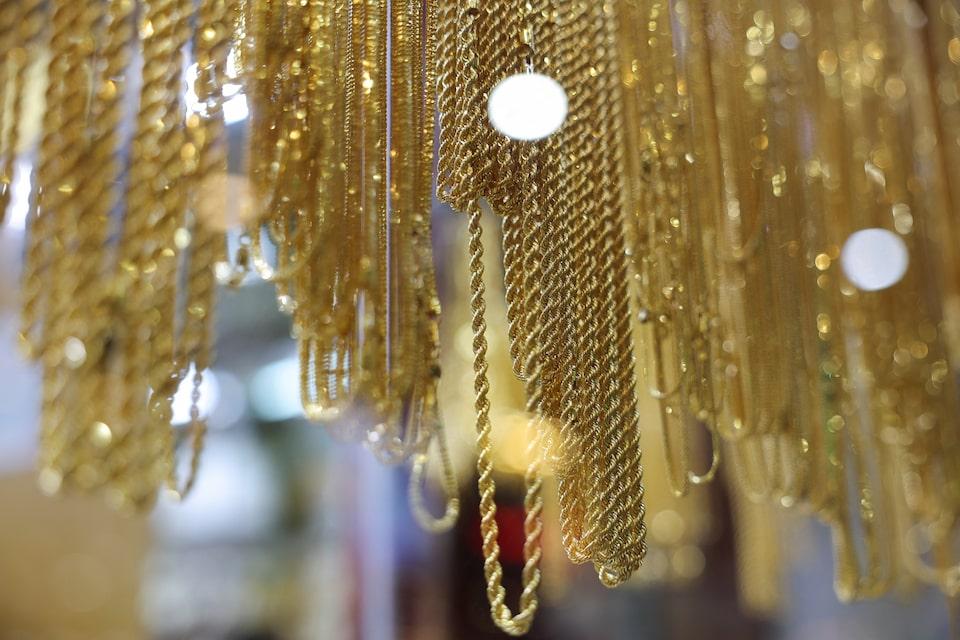
Fed's interest rate verdict on Wednesday Trump to announce pharmaceutical tariffs in next two weeks Gold to retest the $3,500 mark - analyst May 6 (Reuters) - Gold prices rose to a two-week high on Tuesday, as tariff threats from U.S. President Donald Trump lifted demand for the safe-haven metal, while the Federal Reserve's policy decision this week was also in focus. Spot gold rose 1.2% to $3,374.78 an ounce, as of 1219 GMT, after hitting its highest since April 22 earlier in the session. Sign up here. U.S. gold futures gained 1.9% to $3,383.90. "The structural factors that supported gold in recent weeks are all still around - trade tensions are not fixed, concern about the dollar as a reserve currency," said UBS analyst Giovanni Staunovo. "We are still looking for gold to retest the $3,500 mark this year." On Sunday, Trump announced a 100% tariff on movies produced overseas but disclosed few details on how such a levy would work. On Monday, the U.S. President said he intends to announce pharmaceutical tariffs within the next two weeks. Gold, used as a safe store of value during times of political and financial uncertainty, scaled an all-time high of $3,500.05 per ounce last month, boosted by central bank buying, tariff war fears and strong investment demand. "Gold's solid rebound from last week's $3,200 low extended overnight, with prices reaching $3,287 on demand from China, the world's biggest bullion buyer, following holidays," Saxo bank said in a note. Meanwhile, the Fed is widely expected to keep rates steady on Wednesday, but Chair Jerome Powell's comments will be closely watched for cues on the central bank's rate trajectory. Traders are pricing in 75 basis points of rate easing this year with the first move possible in July, LSEG data showed. Lower interest rates decrease the opportunity cost of holding non-yielding bullion. Elsewhere, spot silver rose 1.6% to $33.01 an ounce, platinum climbed 2% to $978.05 and palladium gained 1.4% to $954. https://www.reuters.com/markets/commodities/gold-hits-two-week-high-safe-haven-demand-fed-decision-looms-2025-05-06/
2025-05-06 06:43
May 6 (Reuters) - AngloGold Ashanti (AU.N) , opens new tab, and Gold Fields (GFIJ.J) , opens new tab have agreed to pause talks to merge their neighbouring Tarkwa and Iduapriem mines in Ghana, the companies said on Tuesday, two years after announcing the plan. The plan to combine the two mines, which would have created Africa's biggest gold mine, had not been advanced, with the Ghanaian government still to make a decision on whether to grant regulatory approval. Sign up here. "The companies have decided to pause discussions around the joint venture to allow them to focus on improving the current, standalone performance at their respective sites," AngloGold said in a statement. Gold Fields said in a separate statement that while a combination of the two mines remained "compelling", the two miners would continue focusing on their respective operations "on a standalone basis". Under the joint venture plan, Gold Fields and AngloGold would have owned 60% and 30% of the merged operation, respectively, with the government holding 10%. The joint operation had been forecast to produce an average 900,000 ounces annually over the first five years and 600,000 ounces a year over the estimated 18-year life of the mine. https://www.reuters.com/markets/anglogold-ashanti-gold-fields-halt-ghana-jv-talks-2025-05-06/