2025-05-06 06:43
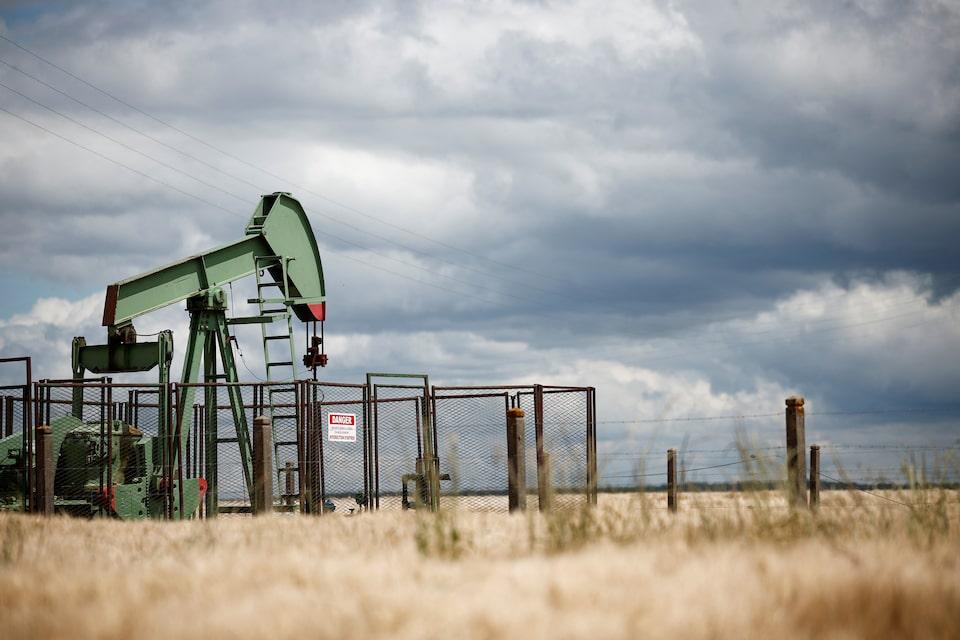
Brent, WTI rebound from Monday's close at four-year lows China spending increased during May Day holiday Israel strikes Houthi targets in Yemen European Commission proposes more sanctions against Russia US crude, product inventories likely down last week -poll NEW YORK, May 6 (Reuters) - Oil prices climbed about 3% on Tuesday on signs of higher demand in Europe and China, lower production in the U.S., tensions in the Middle East and as buyers emerged the day after prices fell to a four-year low. Brent futures rose $1.92, or 3.2%, to settle at $62.15 a barrel, while U.S. West Texas Intermediate (WTI) crude gained $1.96, or 3.4%, to close at $59.09. Sign up here. Both benchmarks rose out of technically oversold territory, the day after posting their lowest settlements since February 2021 on a decision by OPEC+ to boost output. "The market may be seeing some bottom fishing with a significant amount of profit taking out of short holdings, a major contributor to today’s price rebound," analysts at energy advisory firm Ritterbusch and Associates said. OPEC+, the Organization of the Petroleum Exporting Countries (OPEC) and allies like Russia, decided over the weekend to speed up oil production hikes for a second consecutive month. "After evaluating the latest OPEC+ move to accelerate the easing of supply cuts, market players are focusing on developments in trade and the possibility ... that trade deals will be reached," said Tamas Varga, an analyst at PVM, a brokerage and consulting firm that is part of TP ICAP. Varga also pointed to the rise in geopolitical risk premium in the Middle East as Israel struck Iran-backed Houthi targets in Yemen as a retaliation for an assault on Ben Gurion airport. U.S. President Donald Trump, however, said the U.S. will stop bombing the Houthis in Yemen, saying that the group had agreed to stop interrupting important shipping lanes in the Middle East. Prices also drew support after consumers in China increased spending during the May Day celebration and as market participants returned after the five-day holiday. The U.S. dollar (.DXY) , opens new tab fell to a one-week low against a basket of currencies as investors grew impatient about trade deals. A weaker U.S. currency makes dollar-priced oil less expensive for buyers using other currencies. In addition, lower oil prices in recent weeks have prompted some U.S. energy firms like Diamondback Energy (FANG.O) , opens new tab and Coterra Energy (CTRA.N) , opens new tab to announce that they would cut some rigs, which analysts said should over time increase prices by reducing output. Ahead of weekly U.S. oil inventory data, analysts forecast crude stockpiles fell about 800,000 barrels last week. If correct, that would be the first time stockpiles fell for two consecutive weeks since January. That compares with an decrease of 1.4 million barrels during the same week last year and an average decrease of 100,000 barrels over the past five years (2020-2024). GROWTH IN EUROPE? In Europe, companies are expected to report growth of 0.4% in first-quarter earnings, LSEG I/B/E/S data showed, an improvement over the 1.7% drop analysts had expected a week ago. The European Union trade chief said the 27-nation bloc is under no pressure to accept an unfair tariff deal with the U.S. The European Commission, meanwhile, proposed adding more individuals and over 100 vessels linked to Russia's shadow fleet to its 17th package of sanctions against Moscow in response to Russia's 2022 invasion of Ukraine. Trump said late on Monday he would announce pharma tariffs over the next two weeks, his latest action on levies that have roiled global financial markets over the past months. U.S. Treasury Secretary Scott Bessent said the Trump administration could announce trade agreements with some of the United States' largest trade partners as early as this week, but gave no details on which countries were involved. The U.S. trade deficit widened to a record high in March as businesses boosted imports of goods ahead of tariffs, which dragged gross domestic product (GDP) into negative terrain in the first quarter for the first time in three years. The Federal Reserve is widely expected to leave interest rates unchanged on Wednesday as tariffs roil the economic outlook. An interest rate cut could spur economic growth and thus, oil demand. But tariffs raise prices, and the Fed uses higher interest rates to combat inflation. https://www.reuters.com/markets/commodities/oil-steadies-after-falling-four-year-lows-previous-session-2025-05-06/
2025-05-06 06:11
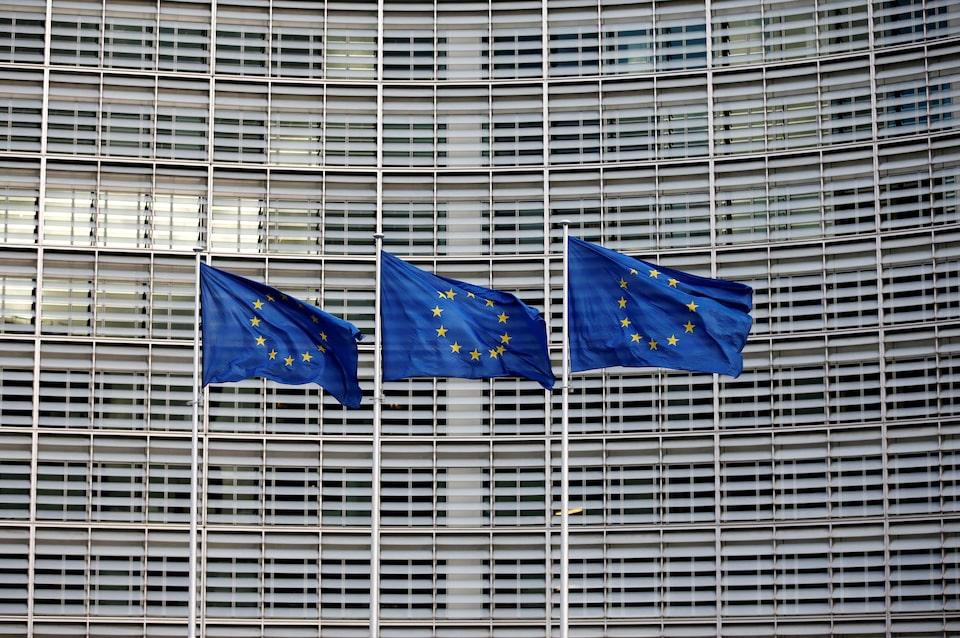
BRUSSELS, May 6 (Reuters) - The European Union will publish plans on Tuesday to ban new Russian gas deals by the end of the year, and phase out existing contracts with Moscow by end-2027, three EU officials told Reuters. The European Commission will on Tuesday publish a "roadmap" of how it plans to end Russian fossil fuel imports by 2027. The roadmap will include a commitment to propose, in June, a ban on new Russian gas import deals and spot contracts by the end of 2025, the officials said. Sign up here. The roadmap will also include a commitment to make a legal proposal to ban Russian gas and liquefied natural gas imports under existing contracts by the end of 2027, said the officials, granted anonymity to discuss the confidential plans, which could still change before they are published. https://www.reuters.com/markets/europe/eu-propose-ban-russian-gas-imports-by-end-2027-sources-say-2025-05-06/
2025-05-06 06:04
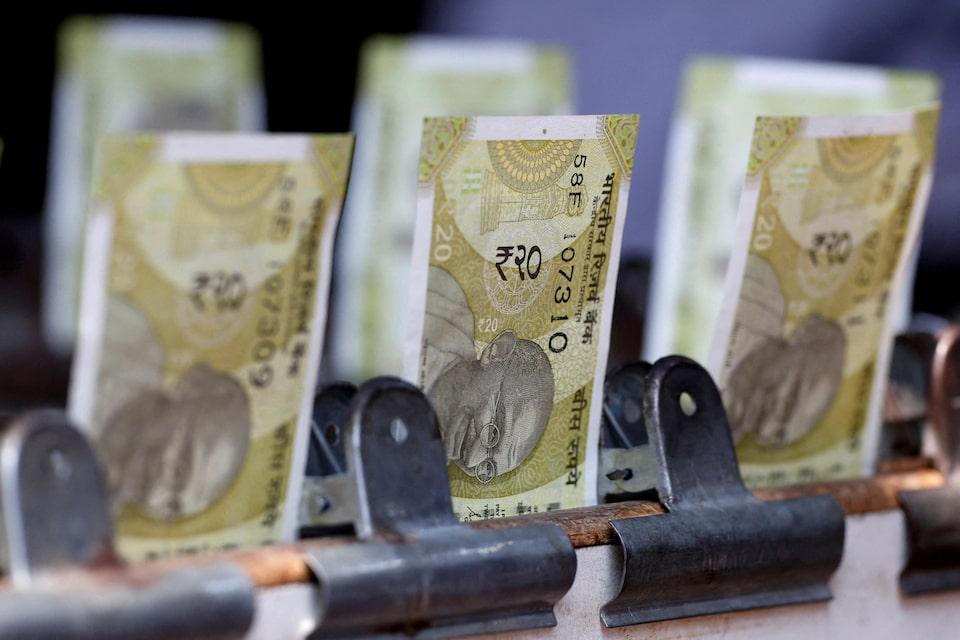
MUMBAI, May 6 (Reuters) - The Indian rupee edged lower on Tuesday as regional currencies took a breather following a drop in the offshore Chinese yuan, with traders citing routine dollar demand from oil companies and importers. The rupee was down 0.4% at 84.55 against the U.S. dollar as of 11:20 a.m. IST. The dollar index was treading water below the 100 mark while the offshore Chinese yuan was lower by 0.2%. Sign up here. The local currency's 14-day correlation with the offshore Chinese yuan has risen to a near three-month peak as optimism about a softening of U.S. trade policies helped Asian currencies gain. Elevated demand to buy dollars at the daily reference rate published by the Reserve Bank of India (RBI) also weighed on the rupee on Tuesday, traders said. While a sharp rally in the local currency had pulled down the Chinese yuan-Indian rupee cross rate (CNY/INR) to a near 9-month low last week, it has since recovered with analysts pointing out that the RBI may remain wary of too much INR richness against the Chinese currency. "We see near-term downside risk to USD/INR, but the RBI will be careful to not let the INR outperform significantly, especially against the CNY," analysts at ANZ said in a note. The RBI had likely intervened via state-run banks last week to put a lid on gains in the INR, traders said. In the near-term, focus will remain on developments on the U.S. trade deals with different countries while investors will also keep an eye on the Federal Reserve's policy decision due in U.S. market hours on Wednesday. While the central bank is widely expected to keep rates unchanged, remarks from Chair Jerome Powell - and other policymakers later in the week - will be in focus for cues on the future bath of policy rates. https://www.reuters.com/world/india/rupee-slips-asia-fx-rally-cools-correlation-with-yuan-tightens-2025-05-06/
2025-05-06 06:00
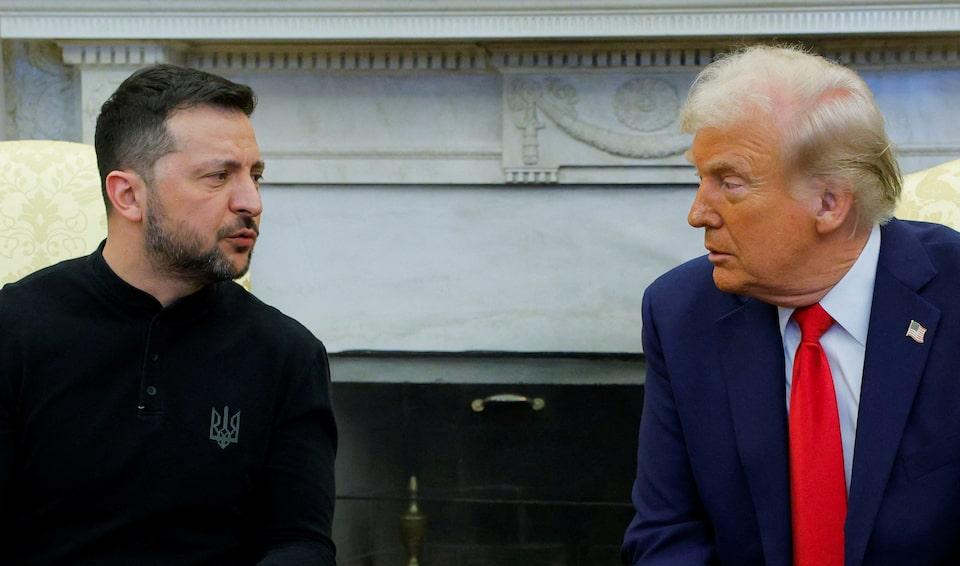
LONDON, May 2 (Reuters) - U.S President Donald Trump's minerals deal with Ukraine is a big symbolic win for both sides. Ukraine gets a long-term commitment for U.S. investment in "a free, sovereign, and secure Ukraine". The United States gets a stake in Ukraine's future resource potential. And Trump gets to prove that he is, to quote White House spokeswoman Karoline Leavitt, "the great deal maker". Sign up here. Just don't expect a Ukrainian critical minerals rush soon. Yulia Svyrydenko, Ukraine's deputy prime minister, posted on X , opens new tab that she does not expect the jointly-owned Reconstruction Investment Fund to pay out any dividends in the first 10 years. DON'T MENTION THE RARE EARTHS At least everyone has stopped calling it the rare earths deal. The agreement covers all sub-soil resources, including oil, gas and a wide spectrum of metals. Ukraine has a couple of rare earth deposits, which is not surprising given the size of the country and that rare earths are not as rare as their name suggests. Deposits that are viable economically and technically are relatively unusual and how promising Ukraine's are is unclear. Even the best-mapped Novopoltavske field , opens new tab was last surveyed in 1982-1991. It is also inconveniently located just north of Chernihiv in Zaporizhzhia province, which is the wrong side of the front line from a Ukrainian point of view. So are two of the touted lithium projects. Indeed, about 40% of Ukraine's metal resources are under Russian occupation, according to estimates by Ukrainian think tanks We Build Ukraine and the National Institute of Strategic Studies. Unlocking the full value of the minerals deal will be impossible without a definitive peace and reconciliation of Ukraine's and Russia's competing territorial claims. LONG ROAD FROM MINE TO MARKET Ukraine has other lithium deposits and also hosts reserves of critical minerals such as uranium, titanium and graphite. But since existing production facilities are not included in the deal and many have been closed since the start of the war anyway, Ukraine will be building a minerals production chain from scratch. That is a long journey. The challenge with many of the metals on everyone's critical raw materials list is not getting them out of the ground, although that can be capital-intensive enough, but in refining them into high-purity products ready for the manufacturing process. Rare earths' separation and processing is notoriously tricky and dominated by Chinese operators, which is another reason why no-one's calling it the rare earths deal any more. Mined uranium also needs to be enriched before it can be fed into a nuclear power plant and titanium ore needs to be processed into aviation-grade alloy before it can be used to build aircraft. It's an inconvenient truth that Russia is one of the world's largest titanium processors and accounted for 27% of the enriched uranium supplied to U.S. commercial reactors in 2023. Russia, however, is explicitly excluded from benefiting from the reconstruction of Ukraine. PRICE PROTECTION Market price is another problem. Ukraine's graphite deposits are both on the right side of the front line and relatively well mapped. The Balakhivske project is at the feasibility study stage, according to the Ukrainian Geological Survey. There is a ready European market for the material needed for the anode in electric vehicle batteries. But will mining it in Ukraine be economically viable? Canadian miner Northern Graphite (NGC.V) , opens new tab, the only producer in North America, has announced it is putting its Quebec plant on care and maintenance due to a 50% collapse in the graphite price. China controls 70% of the global supply chain and can exert huge influence over pricing, in this case flooding the market to undermine potential competitors. The West's lithium ambitions are being similarly stymied by Chinese over-supply and rock-bottom market prices. Ukraine will find that private investment will need government help to shield start-ups from price turbulence. The United States has already understood the need for direct federal action. The Department of Defense is a strategic investor , opens new tab in a domestic rare earths processing project being led by Australia's Lynas Rare Earths (LYC.AX) , opens new tab. STAKING THE METALLIC FUTURE This minerals deal is clearly going to come with a long repayment schedule. But it is a sign of the times. As the world transitions from a fossil fuel economy to a metallic future, minerals have become the new geopolitical currency. In this new world order China is the dominant incumbent and the West the challenger. The United States has just made a strategic move in the great global minerals game. It will not be the last. Next up is the Democratic Republic of Congo, where another minerals-for-security deal is on the table. The opinions expressed here are those of the author, a columnist for Reuters. https://www.reuters.com/markets/commodities/us-ukraine-deal-is-heavy-symbolism-light-minerals-andy-home-2025-05-02/
2025-05-06 05:52
Saudi-led OPEC+ to sharply increase output by June Riyadh appears willing to enter price war Signs that oil demand could be hit due to trade wars LONDON, May 6 (Reuters) - Saudi Arabia has signalled it is willing to enter a painful price war to assert dominance over other oil producers, but worsening global economic conditions mean the kingdom's standard playbook might be less effective this time around. Saudi Energy Minister Prince Abdulaziz bin Salman in recent weeks has appeared to threaten an all-out price war to restrain recalcitrant OPEC+ members that have failed to comply with the alliance’s production quotas. Sign up here. The strategy appeared to shift into a higher gear over the weekend. On Saturday, six key members of the Organization of the Petroleum Exporting Countries plus Russia and Kazakhstan agreed to rapidly unwind production cuts for a second consecutive month. The decision to add 411,000 barrels per day of oil in June means that between April and the end of next month, OPEC+ will have added 960,000 bpd into the market, which is already well supplied. OPEC+ sources have told Reuters that the group could further accelerate the production hikes and bring back to the market as much as 2.2 million barrels per day by November. The OPEC+ moves shocked the market, pulling benchmark Brent crude prices below $60 a barrel on Monday, a threshold beneath which many producers will struggle to make money. Even more ominous, oil future prices from October onwards are now in a contango structure, whereby crude prices for future delivery are trading at higher prices than contracts for closer delivery, indicating market expectations for long-term oversupply. This will likely make oil producers think twice before investing in new production, and could lead many short-cycle U.S. shale producers to cut activity. SAME OLD STORY? On its face, this looks like a familiar pattern. In 2014, Saudi Arabia launched a market share war to strangle soaring U.S. shale production. In 2020, it clashed with Russia at the peak of the coronavirus pandemic. And today the kingdom is allowing more supply to flood markets at a time when it is upset with Kazakhstan, Iraq and possibly the United Arab Emirates for repeatedly exceeding production quotas under an OPEC+ supply agreement. Does that mean the outcome will be the same today? Not necessarily. The 2014-16 price war largely achieved Riyadh’s goals, reducing global supplies and increasing Saudi Arabia’s control of the market, as did the 2020 spat, which resulted in Saudi Arabia and Russia both curbing production and agreeing to coordinate activity going forward. But this time Saudi Arabia faces a major problem. Its supply-boosting strategy may fail to produce a proper demand response, an essential component of any successful price war. Historically, lower oil prices have generated higher demand, particularly in price-sensitive markets in Asia and the United States. Global demand rose by nearly 2 million bpd in 2015, above last decade’s average of 1.3 million bpd, according to data from the International Energy Agency. But the 20% drop in oil prices since the start of this year has arguably been driven mostly by concerns over the global demand outlook due to U.S. President Donald Trump's trade war, particularly the spat with China. Slowing freight activity between the world’s two largest economies and warnings from big-name multinationals suggest that tensions could persist for months, if not years. So there is no guarantee that a sharp drop in oil prices will spark a meaningful surge in demand. Instead, producers could potentially end up fighting for share of a shrinking oil demand pie. This could produce further price volatility and threaten to undermine Riyadh’s longstanding control of the market. Perhaps a better parallel can be drawn from late 1997, when OPEC raised members’ production quotas sharply only months before the Asian financial crisis hit, leading to a 50% drop in oil prices over the following 12 months as demand crumbled. ‘VOLATILITY BUSTER’ Saudi officials have been telling market participants behind closed doors that the kingdom is willing and able to withstand a price downturn. This is partly thanks to the country’s ability to access debt. Saudi Arabia's Public Investment Fund (PIF) has raised $11 billion in sukuk, or Islamic bonds, so far this year and is looking to raise up to an additional $2 billion in the coming weeks, according to Reuters. But Riyadh would likely have to make uncomfortable sacrifices to withstand a sustained drop in prices. Even though its oil production costs are among the lowest in the world, it also requires a crude price of over $90 a barrel to balance its national budget, according to the International Monetary Fund’s assessment of the 2025 budget. And protracted market weakness could make OPEC+ members restless. That risks blowing up an alliance that has become a central tenet of Saudi Arabia’s foreign policy in recent years. So Saudi Arabia can start a price war, but with Washington now the biggest factor in the demand equation, Riyadh may struggle to win it. ** The opinions expressed here are those of the author, a columnist for Reuters. ** Want to receive my column in your inbox every Thursday, along with additional energy insights and trending stories? Sign up for my Power Up newsletter here. https://www.reuters.com/markets/commodities/saudi-arabia-can-control-oil-supply-demand-could-be-its-achilles-heel-bousso-2025-05-06/
2025-05-06 05:40
KUALA LUMPUR, May 6 (Reuters) - Malaysia's exports will be impacted more by global economic growth and trade than by currency fluctuations, its trade minister said on Tuesday, while flagging a potential slowdown in outbound shipments. Trade Minister Tengku Zafrul Aziz said exports rose significantly in the first quarter of 2025 as companies were frontloading orders to get ahead of U.S. tariffs, which were announced by President Donald Trump in early April. Sign up here. "What will support the exports more is actually the growth of the global economy and the growth of global trade ... more so than the currency fluctuation," Tengku Zafrul said at a press conference. Malaysia's exports rose a better-than-expected 6.8% in March from a year earlier, with shipments to the United States rising to a record high of 22.66 billion ringgit ($5.4 billion). Tengku Zafrul said the "dramatic increase" in exports mainly included purchases in electrical and electronic products from U.S. buyers "looking at stocking up due to the possible increase in tariffs". However, he said the growth in exports was unlikely to remain as strong moving forward. Malaysia's exports are projected to rise 5.2% in 2025, moderating from a 5.7% expansion in 2024. Malaysia is facing a 24% tariff rate in July for exports to the U.S., unless an agreement is struck between the two countries. The Southeast Asian nation has said it is open to negotiating with the U.S. on non-tariff barriers, reducing its bilateral trade surplus, and exploring a bilateral trade agreement. Prime Minister Anwar Ibrahim said on Monday there was a possibility that Malaysia can negotiate a reduction in threatened U.S. tariffs as Washington has agreed to further talks. Tengku Zafrul said Malaysia's objective is to reduce the tariff to zero, adding that the U.S. wants Malaysia to resolve trade imbalances and non-tariff barriers, as well as safeguard U.S. technology from transhipment smuggling. Malaysia's trade ministry will now be the sole issuer of certificates of origin for exports to the U.S. to prevent illicit transshipment through Malaysia, Tengku Zafrul added, without specifying which countries such illicit shipments originated from. The ministry will also enhance audits of exporters' applications and strengthen investigations to curb any transshipment offences to the U.S. ($1 = 4.2290 ringgit) https://www.reuters.com/world/asia-pacific/malaysias-exports-impacted-more-by-global-economy-than-fx-moves-minister-says-2025-05-06/