2025-05-06 05:28
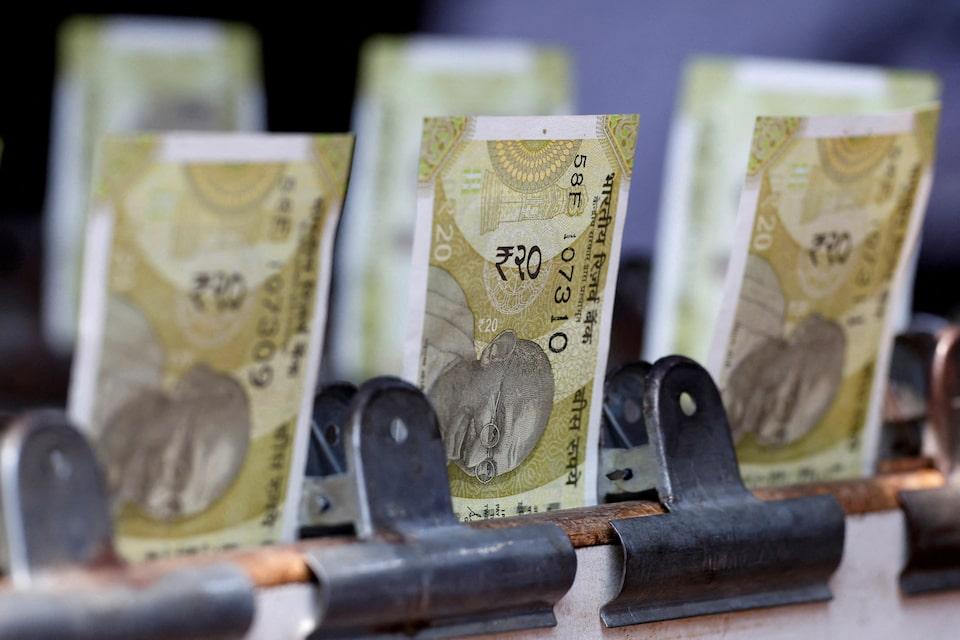
LAUNCESTON, Australia, May 6 (Reuters) - Asia's seaborne thermal coal prices have slumped to four-year lows as the region's heavyweight buyers China, India and Japan all import less of the power-station fuel. Prices for the main grades of thermal coal shipped from top exporters Indonesia and Australia have been on a sustained downtrend since October last year, and this has accelerated in recent weeks as import volumes have weakened. Sign up here. China, the world's biggest buyer of thermal coal, saw imports drop to 22.72 million metric tons in April, down from 23.84 million tons in March, according to data compiled by commodity analysts Kpler. For the first four months of 2025, China imported 91.56 million tons, down 13.1% from the 105.4 million tons in the same period a year earlier, according to Kpler. The fall in China's thermal coal imports comes amid weaker coal-fired generation and record high domestic coal output. First-quarter thermal power generation in China, which is overwhelmingly coal-fired with only tiny volumes of natural gas, fell 4.7% as both hydropower and renewable generation rose. Meanwhile, domestic coal production hit a record high of 440.58 million tons in March, up 9.6% on year, helping boost first-quarter output by 8.1% to 1.2 billion tons. The combination of rising local output and lower coal-fired generation has led China's domestic coal prices to weaken, with consultants SteelHome assessing thermal coal at the port of Qinhuangdao at 660 yuan ($90.78) a ton last week, a four-year low and down 25% from early October. The sliding domestic price has reflected in import prices, which have had to drop in order to remain competitive. Australian coal with an energy content of 5,500 kilocalories per kilogram (kcal/kg), a grade popular with Chinese buyers, dropped to $69.98 a ton in the week to May 2, according to an assessment by commodity price reporting agency Argus. This was the first time the price had dropped below $70 since May 2021, and it is now 22.5% below the most recent peak of $90.29 from early October. Indonesian thermal coal has suffered a similar fate, with the 4,200 kcal/kg grade, which is popular with both Chinese and Indian buyers, dropping to $48.42 a ton in the week to May 2, a four-year low and down 7.5% since October. It's worth noting that this grade has lost less than Australian coal, and that's most likely a reflection of some recent strength in India's imports of thermal coal. INDIA DEMAND India imported 15.31 million tons in April, the most since May last year, and up from 14.4 million tons in March. However, the rebound in March and April from a weak January-February period still means that for the first four months of 2025, India's thermal coal imports are down 6.7% to 53.33 million tons, according to Kpler data. The question for the market is whether the recovery in March and April is likely to sustain, and there are some signs that it could. India's government has extended a mandate for power plants using imported fuel to operate at full capacity until June 30, a move that will underpin demand for seaborne cargoes. This move was likely a response to both rising electricity demand and Coal India's (COAL.NS) , opens new tab struggles to meaningfully lift domestic output. The state-controlled company's production for the fiscal year that ended on March 31 rose a mere 1% to 781.1 million tons, well short of its initial target of 838 million tons. But it's likely that even if India does continue to import robust volumes of thermal coal, it's unlikely that these will be high enough to offset the loss of demand from China. Japan, the world's third-biggest coal importer, also saw lower arrivals in the first four months of the year, with Kpler recording seaborne volumes of 34.71 million tons, down 4.9% from the 36.48 million tons for the same period in 2024. Japan mainly imports higher-grade coal from Australia, and the weekly index for 6,000 kcal/kg fuel rose slightly to $93.79 a ton in the period to may 2, up from a four-year low of $91.58 the week prior. The overall picture for thermal coal in Asian seaborne markets is that prices are weakening in line with volumes, a process likely to continue as long as China's coal-fired generation struggles and the country's mines produce at high levels. The views expressed here are those of the author, a columnist for Reuters. https://www.reuters.com/business/energy/thermal-coal-prices-hit-4-year-low-asia-china-imports-wane-russell-2025-05-06/
2025-05-06 05:14
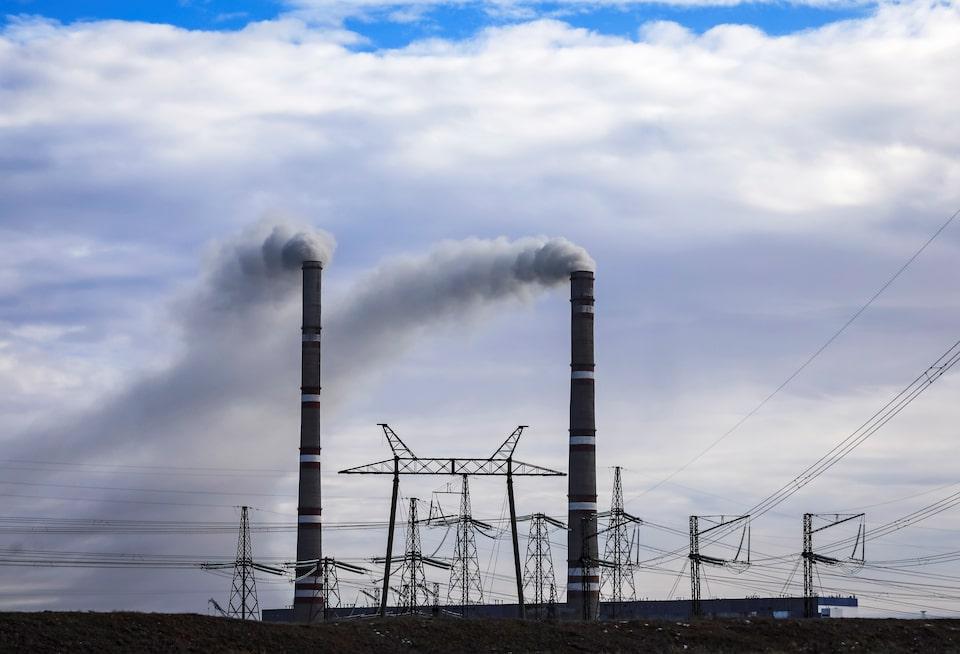
Markets growing nervous about absence of trade deals Trade deficit widens to record $140.5 billion in March Euro extends gains after Friedrich Merz elected German chancellor Canadian dollar strengthens after PM Mark Carney says Canada is not for sale NEW YORK, May 6 (Reuters) - The dollar fell broadly on Tuesday on worries that U.S. President Donald Trump's touted trade deals have yet to materialize, while the euro extended gains after the German parliament elected conservative leader Friedrich Merz as chancellor. Investors are waiting for details on trade deals the Trump administration has said it is negotiating with other countries, including China. Trump indicated on Sunday that some deals would be announced this week. Sign up here. "The market is getting nervous that we're starting to eat away at the schedule since the 90-day tariff reprieve without anything meaningful being announced," said Eugene Epstein, head of structuring for North America at Moneycorp. "There's a lot of good sentiment but because of a distinct lack of formal substance that I've seen, I think the market is starting to get uneasy again." The dollar was last down 0.86% at 142.445 Japanese yen . The Taiwanese dollar pared gains following a record rally against the greenback amid market disquiet over Trump's tariffs. The currency was last down 2.6% at 29.931 per dollar. The Canadian dollar strengthened after Prime Minister Mark Carney bluntly told Trump during a White House visit on Tuesday that Canada would never be for sale. The Canadian dollar strengthened 0.39% versus the greenback to C$1.38 per dollar. The euro extended gains after Merz secured the votes needed to become German chancellor following a humiliating and unprecedented defeat on the first attempt. The single currency was last up 0.50% to $1.1371 . The Commerce Department reported on Tuesday the U.S. trade deficit widened 14% to a record $140.5 billion in March as businesses boosted imports ahead of Trump's tariffs. Against the Swiss franc , the dollar gave up earlier gains to edge down 0.09% to 0.82145 franc. Swiss National Bank Chairman Martin Schlegel said the SNB is ready to intervene in currency markets and cut interest rates even below zero to prevent inflation falling below its price stability target. Markets are focused on Wednesday's Federal Reserve policy meeting, in which the U.S. central bank is expected to hold rates steady. Fed Chairman Jerome Powell is unlikely to provide clear guidance on how the central bank plans to respond to U.S. import tariffs, Macquarie analysts led by Thierry Wizman wrote in an investor note. "If traders wish to believe that the Fed will come to the rescue of the world tomorrow and assuage the recent rise in policy uncertainty and political uncertainty with a signal of overt 'dovishness,' they should think again," the analysts wrote. The Bank of England is expected to lower interest rates by a quarter point on Thursday . Britain's pound gained 0.61% at $1.33780. https://www.reuters.com/world/middle-east/dollar-restrained-by-surge-asian-counterparts-2025-05-06/
2025-05-06 05:12
Stocks fall on lack of tariff deals before Fed policy decision Gold rallies, oil rebounds after Monday sell-off UK/India reach trade agreement after 3 year negotiation Germany's Merz is elected chancellor on second try NEW YORK/LONDON, May 6 (Reuters) - MSCI's global equities gauge fell on Tuesday, while the dollar declined as investors grew frustrated with the lack of U.S. trade deals and waited for a Federal Reserve update, while oil futures rebounded from Monday's sell-off. However, U.S. Treasury yields fell to their lowest levels for the day in afternoon trading after a well-subscribed 10-year notes auction showed demand for government bonds. Sign up here. In currencies, the dollar lost ground against multiple currencies while the euro rose after German conservative leader Friedrich Merz was elected chancellor by parliament in a second voting round, hours after a shock defeat. Investors focused broadly on trade tensions between the U.S. and the rest of the world, particularly with China, the world's second biggest economy. Last week, Beijing said it was evaluating an offer from Washington to hold talks. But U.S. Treasury Secretary Scott Bessent said on Tuesday that while President Donald Trump's administration was negotiating with 17 major trading partners, it had not yet engaged with China. Bessent said the U.S. could announce trade deals as early as this week, but did not say with which countries. "It's gone from pretty much balance between people who are worried and people who think this will work quickly because it's just a negotiation. It tips every few days a little bit more negative," said Rick Meckler, partner, Cherry Lane Investments, a family investment office in New Vernon, New Jersey. And he added that "China and the trade policy with respect to China is a very controlling factor into where this market is headed. It's hard to tell if they're going to reach some kind of deal or if it's going to be an all-out trade war." Meanwhile, on Tuesday, Britain and India clinched a long-coveted free trade pact after U.S. tariff turmoil forced them to hasten efforts to increase their trade in whisky, cars and food. On Wall Street, the Dow Jones Industrial Average (.DJI) , opens new tab fell 389.83 points, or 0.95%, to 40,829.00, the S&P 500 (.SPX) , opens new tab fell 43.47 points, or 0.77%, to 5,606.91, and the Nasdaq Composite (.IXIC) , opens new tab fell 154.58 points, or 0.87%, to 17,689.66. MSCI's gauge of stocks across the globe (.MIWD00000PUS) , opens new tab fell 3.38 points, or 0.40%, to 842.83. Earlier, the pan-European STOXX 600 (.STOXX) , opens new tab index closed down 0.18%. Germany's DAX index (.GDAXI) , opens new tab ended down 0.4% after falling about 2% earlier. Investors are waiting for the Fed to make its next policy announcement on Wednesday after the conclusion of a two-day meeting. The central bank is widely expected to keep rates steady but investors will look for signals on future rate cuts. In bonds, U.S. Treasury prices rose as a well-received auction of the benchmark 10-year note suggested demand for U.S. government bonds remained intact, boosting other maturities across the curve as well. The yield on benchmark U.S. 10-year notes fell 3.5 basis points to 4.308%, from 4.343% late on Monday, while the 30-year bond yield fell 1.8 basis points to 4.8112%. The 2-year note yield, which typically moves in step with interest rate expectations for the Federal Reserve, fell 4.6 basis points to 3.795%, from 3.841% late on Monday. "The bulk of today's early price action lacked conviction," said Vail Hartman, U.S. rates strategist, at BMO Capital in New York. "It wasn't until the strong reception to the 10-year-auction that we saw a more durable breakout lower in yields." In currencies, Trump's trade policies have fuelled significant waves of dollar selling since April. On Tuesday, the dollar index , which measures the greenback against a basket of currencies including the yen and the euro, fell 0.62% to 99.19. The euro was up 0.57% at $1.1378 while against the Japanese yen , the dollar weakened 0.91% to 142.39. Sterling strengthened 0.64% to $1.3376 while the Canadian dollar strengthened 0.43% versus the greenback to C$1.38 per dollar. "The market is getting nervous that we're starting to eat away at the schedule since the 90-day tariff reprieve without anything meaningful being announced," said Eugene Epstein, head of structuring for North America at Moneycorp, referring to Trump's April 9 announcement of a 90-day pause on some tariffs to give room for trade negotiations. In energy, oil gained 3% on signs of higher demand in Europe and China, lower production in the U.S., tensions in the Middle East. Also buyers emerged the day after prices fell to a four-year low on concerns about an OPEC+ decision to boost output. U.S. crude settled up 3.43% or $1.96 at $59.09 a barrel while Brent settled at $62.15 per barrel, up 3.19%, or $1.92. Gold prices rose to a two-week high, supported by post-holiday buying from China and concerns over potential U.S. tariffs on pharmaceutical imports, while investors waited for the Fed policy meeting. Spot gold rose 2.64% to $3,421.49 an ounce. U.S. gold futures rose 3.34% to $3,421.90 an ounce. https://www.reuters.com/markets/global-markets-wrapup-1-2025-05-06/
2025-05-06 04:51
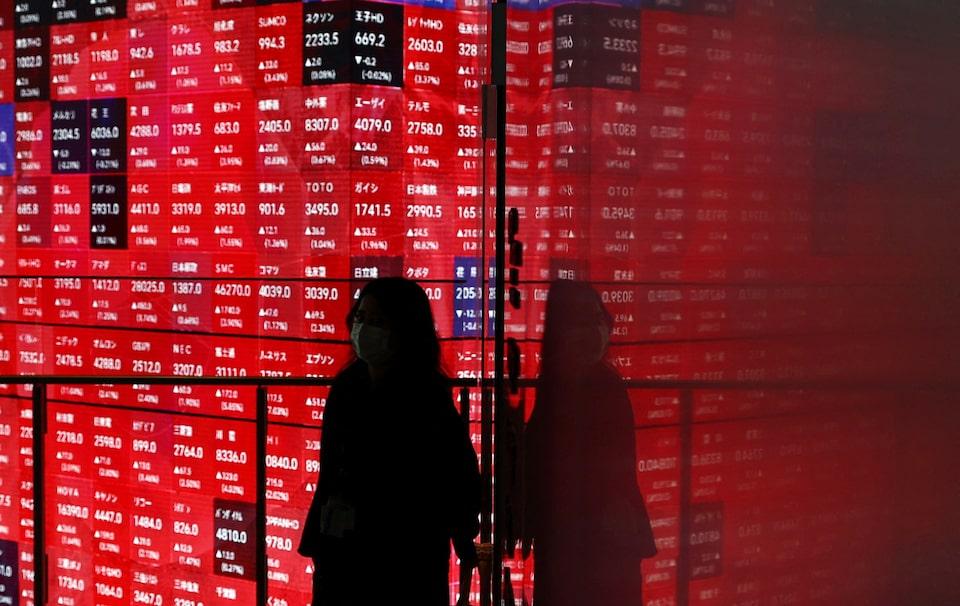
A look at the day ahead in European and global markets from Ankur Banerjee Investors are easing off heavy selling of the U.S. dollar after the Taiwan dollar led a dizzying surge in Asian currencies over the past two days. Still, the pause keeps the focus on the ramifications of erratic U.S. trade policy. Sign up here. The lack of concrete details on any trade deals between the U.S. and its partners has left investors back where they were: uncertain, jittery and hungry for good news. The optimistic sentiment from last week, following Beijing's statement that it was considering Washington's offer for trade talks, now seems distant. European stock futures point to a listless opening as markets mark time ahead of the Federal Reserve's policy decision on Wednesday. Although the central bank is likely to keep rates on hold, what it says will potentially have more sway on sentiment. Before this, April's Purchasing Managers' Index (PMI) data from Europe, due later on Tuesday, will underline the extent of disruption caused by U.S. President Donald Trump's fluctuating tariff policies. Investors are also monitoring European car makers after Ford Motor (F.N) , opens new tab suspended its annual guidance because of uncertainty around the United States. While the Taiwan dollar's unprecedented move has grabbed attention, other significant currency shifts have occurred across Asia. The Malaysian ringgit , for example, surged nearly 1.5% on Monday to its strongest since October. It has weakened since but remains near the landmark level. Hong Kong's de-facto central bank stepped into the foreign exchange market on Tuesday as the currency hit the top end of its band for a fourth time this month. The broad selloff in the U.S. dollar this time against Asian currencies has stoked speculation that regional economies might be willing to let their currencies strengthen to secure U.S. trade concessions. Whether that helps them to get trade deals over the line remains to be seen. Key developments that could influence markets on Tuesday: Economic events: April PMI data for France, Germany, UK and euro zone Earnings: Ferrari (RACE.MI) , opens new tab and Telenor (TEL.OL) , opens new tab Trying to keep up with the latest tariff news? Our new daily news digest offers a rundown of the top market-moving headlines impacting global trade. Sign up for Tariff Watch here. https://www.reuters.com/markets/europe/global-markets-view-europe-2025-05-06/
2025-05-06 03:50
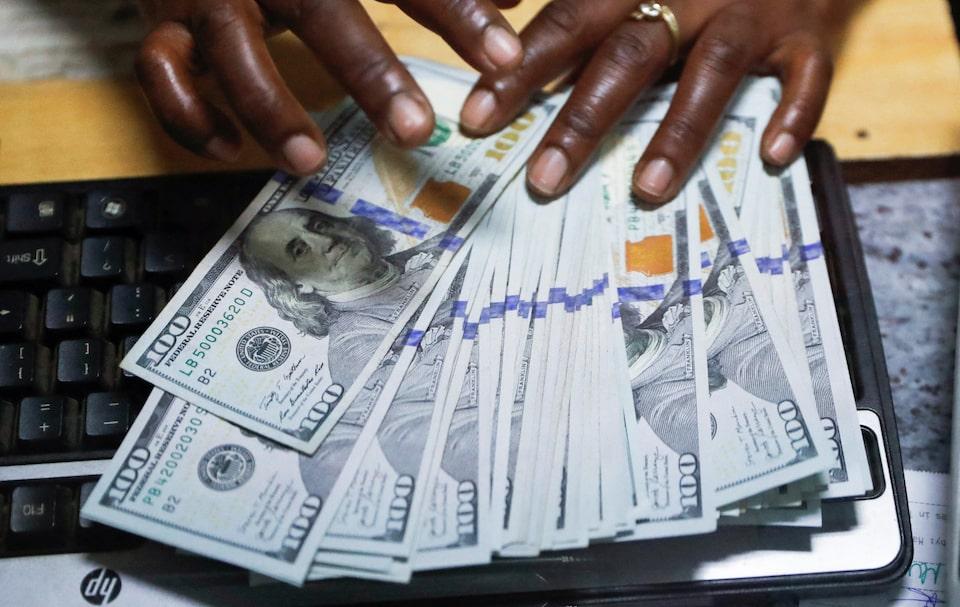
HONG KONG, May 6 (Reuters) - Hong Kong's de-facto central bank stepped into the foreign exchange market on Tuesday as the currency hit the top end of its band for a fourth time this month, spurred by a broader selloff in the U.S. dollar against several low-yielding currencies. The Hong Kong Monetary Authority bought $7.8 billion (HK$60.5 billion) against the Hong Kong dollar on Tuesday, and has been intervening since May 2 as the currency repeatedly hit 7.75, the upper limit of its peg to the U.S. dollar. Sign up here. The Hong Kong dollar is pegged to a tight band of between 7.75 and 7.85 versus the U.S. currency. The surge in the Hong Kong dollar mirrors moves in other Asian currencies, particularly the Taiwan dollar which rose an unprecedented 8% over two sessions to reach three-year highs. While analysts have found it difficult to determine a precise reason for the rally, they point to the progress in Sino-U.S. trade talks and a general loss of faith in the U.S. currency and its debt as possible triggers for investors rushing to unwind carry trades and buy back home currencies. The Taiwan dollar's upsurge followed the end of U.S.-Taiwan trade talks in Washington, sparking speculation of some kind of soft agreement between governments to weaken the U.S. dollar in return for trade concessions. Taiwan officials have said currencies were not part of the talks. The HKMA intervention to defend the peg has implications for monetary settings in the Hong Kong economy. The aggregate balance, the key gauge of cash in the banking system, will increase to HK$161 billion on May 7, nearly four times the HK$44.6 billion on Tuesday. https://www.reuters.com/world/asia-pacific/hong-kongs-central-bank-intervenes-maintain-currency-peg-2025-05-06/

2025-05-06 02:55
MUMBAI, May 6 (Reuters) - The Indian rupee is set to weaken at the open on Tuesday, mirroring losses in the offshore Chinese yuan, triggered by soft economic data and the daily central bank fix. The 1-month non-deliverable forward indicated that the rupee will open at 84.40-84.42 to the U.S. dollar compared with 84.25 in the previous session. Sign up here. Recent price action suggests "sizeable" buying interest in USD/INR in the 84-84.25 range, a currency trader at a Mumbai-based bank said. Further, the rupee appears more vulnerable than usual to moves in Asian currencies, especially the yuan, he added. The offshore Chinese yuan dropped 0.5% to weaken to 7.2350 to the U.S. dollar. The offshore yuan had hit a multi-month high of 7.1832 on Monday. The People's Bank of China's yuan midpoint deviation from the neutral forecast narrowed to -500 pips from -700 pips, which analysts said was a sign that the central bank wants to curb rapid appreciation in the yuan. Meanwhile, China's services activity expanded at the slowest pace in seven months in April, weighed down by uncertainty caused by U.S. tariffs, a private sector survey released on Tuesday showed, dampening demand for the yuan. Other Asian currencies dropped alongside the yuan. The Malaysian ringgit declined 0.8% and the Indonesian rupiah slipped 0.3%. The Taiwanese dollar dropped 3%. The decline in Asian currencies came after a recent rally on optimism that the worst of the U.S. tariff concerns had passed. Both the U.S. and China have signalled a willingness to resume trade talks, while President Donald Trump indicated that Washington is pursuing trade deals with India, South Korea, and Japan. The rupee, buoyed by the rally in Asian currencies, had strengthened to 83.77 last Friday before the Reserve Bank of India intervened to cap further appreciation. The 83.75–83.80 level marks the near-term bottom for the USD/INR pair, a currency trader said. KEY INDICATORS: ** One-month non-deliverable rupee forward at 84.54; onshore one-month forward premium at 18 paise ** Dollar index at 99.84 ** Brent crude futures up 1.4% at $61.1 per barrel ** Ten-year U.S. note yield at 4.35% ** As per NSDL data, foreign investors bought a net $334.7 million worth of Indian shares on May 2 ** NSDL data shows foreign investors sold a net $55.2 million worth of Indian bonds on May 2 https://www.reuters.com/world/china/rupee-slip-open-chinese-yuan-led-asia-fx-weakness-2025-05-06/