2025-05-06 01:47
MUMBAI, May 5 (Reuters) - The share of gold held by India's central bank in its foreign exchange reserves has doubled in the last four years as on March-end, a report by the Reserve Bank of India showed on Monday. In dollar value terms, the share of gold in the total foreign exchange reserves increased to about 11.70% by end-March, from 9.32% as at end-September 2024 and 5.87% as on end-March 2021, the central bank's half year forex reserves report said. Sign up here. As of end-March, the RBI held 879.59 metric tonnes of gold, compared to 854.73 metric tonnes at the end of September. The proportion of gold held domestically rose to 511.99 metric tonnes as of March 31, against 510.46 metric tonnes at September-end, the RBI said. "While 348.62 metric tonnes of gold were kept in safe custody with the Bank of England and the Bank for International Settlements (BIS), 18.98 metric tonnes were held in the form of gold deposits," the report showed. Central banks typically hold gold reserves to diversify their assets, enhance financial stability, and mitigate risks. Gold can act as a hedge against inflation and currency fluctuations. Central banks world over have stepped up purchases of gold amid volatility in global markets and currencies. Separately, the ratio of short-term debt to reserves, which was 19.1% at end-September 2024, increased to 22% at end-December, the RBI said. The ratio of volatile capital flows to reserves also increased to 74.3% at end-December 2024 from 67.8% at the end of the prior three months, it added. https://www.reuters.com/world/india/share-gold-indias-forex-reserves-doubles-four-years-central-bank-report-shows-2025-05-06/

2025-05-05 23:30
Berkshire Hathaway falls after Buffett to step down as CEO US service sector picks up in April Skechers jumps after $9 billion take-private deal Indexes off: Dow 0.24%, S&P 500 0.64%, Nasdaq 0.74% NEW YORK, May 5 (Reuters) - The S&P 500 fell to snap its longest streak of gains in 20 years on Monday as investors assessed U.S. President Donald Trump's latest tariff announcement ahead of the Federal Reserve's monetary policy decision later this week. On Sunday, Trump announced a 100% tariff on movies produced outside the U.S. but provided no details on how such levies would be implemented. Sign up here. Stocks have been volatile since Trump announced his first round of tariffs on April 2, with the S&P 500 initially dropping nearly 15%, only to stabilize and climb for the last nine straight sessions through Friday, its longest streak since 2004. On Monday, Treasury Secretary Scott Bessent said Trump's tariff, tax-cut and deregulation agenda would work together to drive long-term investment to the U.S., adding markets could overcome any short-term turbulence. "Nine up days in the S&P 500 is hard to maintain," said Art Hogan, chief market strategist at B Riley Wealth in Boston. "We are starting to price in that eventuality of deals being announced, but we're running out of daylight on that because every week that goes by that we don't start cutting deals we're doing economic damage." The Dow Jones Industrial Average (.DJI) , opens new tab fell 98.60 points, or 0.24%, to 41,218.83, the S&P 500 (.SPX) , opens new tab lost 36.29 points, or 0.64%, to 5,650.38 and the Nasdaq Composite (.IXIC) , opens new tab lost 133.49 points, or 0.74%, to 17,844.24. The Dow also snapped a nine-session win streak, its longest since December 2023. Several movie and television production stocks fell sharply right after Trump's announcement, but subsequently pared losses. Netflix (NFLX.O) , opens new tab fell 1.9% to snap an 11-session winning streak, while Amazon.com (AMZN.O) , opens new tab lost 1.9% and Paramount Global (PARA.O) , opens new tab was 1.6% lower. Energy (.SPNY) , opens new tab, down 2%, was the worst performer of the 11 major S&P sectors, after OPEC+ decided to speed up its output hikes, causing concerns about more supply as demand remains uncertain. Class B shares of Berkshire Hathaway stumbled 5.1% after Warren Buffett said he will step down as CEO of the conglomerate. On the economic front, the Institute for Supply Management survey showed the services sector picked up growth in April, while a measure of prices paid by businesses for materials and services raced to the highest level in more than two years, indicating tariffs were causing inflation pressures to build. Investors will closely eye the Fed's policy announcement on Wednesday, in which the central bank is largely expected to keep interest rates unchanged. Commentary from Fed Chair Jerome Powell will be scrutinized for signs of when the Fed will adjust monetary policy. Markets are pricing in about 75 basis points of rate cuts by the Fed for 2025, with the first easing of at least 25 basis points likely at the central bank's July meeting, according to LSEG data. Investors are also concerned about how tariffs may affect corporate profitability. Tyson Foods (TSN.N) , opens new tab tumbled 7.7% after the meat packer missed quarterly revenue expectations. However, Skechers (SKX.N) , opens new tab surged 24.3% after the footwear maker agreed to be taken private by 3G Capital in a $9.4 billion deal. Declining issues outnumbered advancers by a 1.88-to-1 ratio on the NYSE and by a 1.79-to-1 ratio on the Nasdaq. The S&P 500 posted nine new 52-week highs and three new lows, while the Nasdaq Composite recorded 53 new highs and 57 new lows. Volume on U.S. exchanges was 13.67 billion shares, compared with the 18.68 billion average for the full session over the last 20 trading days. https://www.reuters.com/business/us-stock-futures-fall-after-trumps-new-tariffs-start-fed-decision-week-2025-05-05/

2025-05-05 22:56
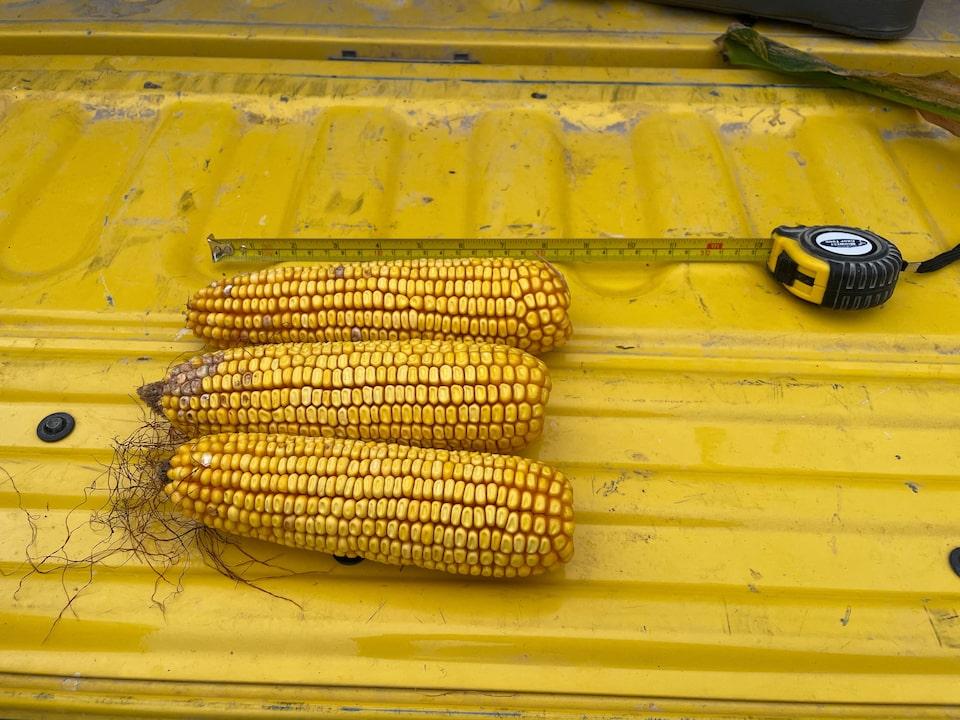
NAPERVILLE, Illinois, May 5 (Reuters) - U.S. farmers have hit very few snags with corn planting this spring, and the foreseeable future is barrier-free. Dry and mostly warm weather across the Corn Belt through mid-month should be favorable for farmers in the world’s largest exporter to get the grain in the ground. Sign up here. Whenever U.S. corn planting moves at an average or above-average clip, analysts often start considering two things. First, they ponder if this might further enhance the potential increase in planted corn acres between the government’s March and June surveys. Second, they weigh whether efficient planting could limit yield losses from poor weather. The idea is that corn would undergo its critical pollination period before the hottest part of the summer. U.S. Department of Agriculture data shows U.S. corn planting was 40% completed as of Sunday, just ahead of the five-year average of 39%. However, that gap could widen through mid-month given the supportive weather forecast. But what might this progress mean for acres and yields? ACRES USDA’s March survey showed that U.S. farmers would plant 95.3 million acres of corn in 2025, a 12-year high. Some analysts at the time feared a much larger number, though now that scenario seems to be a real possibility for the June survey. But does the timely planting mean that the acreage increase could be even greater? The short answer is no, not by itself. For one, U.S. corn acres almost always increase between the March and June surveys. That was the case in 15 of the last 20 years. Ironically, of the five years when corn acres declined from March to June, three had featured very fast paces of planting in early May. Slow planting certainly limits March-June acreage gains, but large jumps have occurred under both average and fast early May planting scenarios. And the largest jumps were not more likely to occur with an increasingly faster planting pace. Examining the specific years associated with big corn acreage gains between March and June (including 2007, 2009, 2021, 2023, 2024) may imply that the move was more market-driven. YIELDS Data suggests that faster early corn planting does not have a distinct bearing on yield outcomes. For example, there were 12 years within the last three decades in which corn planting was at least 50% complete as of May 4, well above current and average levels for purpose of demonstration. Final corn yield was more than 1% below USDA’s starting trend yield in five of those years, and yield was above trend by 1% or more in four of them. The 2012 drought was a notable season where fast planting preceded terrible yields, opposite the common notion. Slow planting seemingly has a much larger influence over yields. Of the five years that featured the lowest planting paces by early May, yields were discernably below trend in four of them and just average in the fifth. WHAT IS AVERAGE? In recent years, corn has been planted slightly later on average than over the longer term, and soybeans are probably to blame. As of Sunday, farmers had planted 30% of their intended soybean area, a record-large portion for the date. The relatively low acreage that they are targeting likely helps in this feat. But the record pace might be more reflective of a new normal rather than a genuinely speedy effort. I posted a poll on X for U.S. farmers on Monday asking whether they are planting their beans earlier than they were five-to-seven years ago, particularly as it pertains to planting beans before corn. Of nearly 400 farmer respondents by late afternoon on Monday, some 49% said they have shifted bean planting earlier to a large degree on their farm. About 19% said there was no significant change and 32% said the shift was somewhat mild. Many U.S. producers have said in recent years that earlier bean planting is linked with stronger yield potential. A major reason is that the plants can enjoy more sunlight – a key component to big bean yields – before day length peaks around June 21. While this phenomenon could continue to push back average corn planting dates over the coming years, this is likely to be irrelevant for this year, especially if fieldwork-favoring weather continues through the end of the month. Karen Braun is a market analyst for Reuters. Views expressed above are her own. https://www.reuters.com/markets/commodities/reality-check-does-timely-us-corn-planting-boost-acres-yield-braun-2025-05-05/
2025-05-05 22:29
Russian war blogs report Ukrainian attacks in Kursk Russian officials say drone attacks increased Town of Rylsk left without power MOSCOW, May 5 (Reuters) - Kyiv forces attacked a power substation in Russia's western Kursk region, the regional governor said on Tuesday, after Russian war bloggers reported a new Ukrainian land-based incursion into the area backed by armoured vehicles and drones. Power was yet to be restored to the town of Rylsk, a town of about 15,000 people about 50 km (30 miles) from the border with Ukraine, after Ukrainian forces struck the substation there late on Monday, damaging two transformers and injuring two teenagers, Kursk Governor Alexander Khinshtein said. Sign up here. "Dear residents, the enemy, in its agony, is continuing to launch strikes against our territory," Khinshtein said on the Telegram messaging app. Authorities were evacuating residents from areas near the border as Ukrainian drone attacks over the past day became "more frequent", the administration of the Kursk region said on Telegram early on Tuesday. Russian war bloggers reported that Ukrainian forces attacked the Kursk region on Monday, firing missiles, smashing through the border and crossing minefields with special vehicles. "The enemy blew up bridges with rockets at night and launched an attack with armoured groups in the morning," Russian war blogger "RVvoenkor" said on Telegram on Monday. "The mine clearance vehicles began to make passages in the minefields, followed by armoured vehicles with troops. There is a heavy battle going on at the border." Popular Russian military blog Rybar said on Tuesday that the advance of Ukrainian near the settlement of Tyotkino in Kursk region over the border was unsuccessful. Ukraine made a surprise offensive into Kursk in August 2024, hoping to shift the momentum as Kremlin forces gained the upper hand after Russia's full-scale invasion in 2022. Kyiv also hoped its position in Kursk would draw Russian troops away from other parts of Ukraine and give it a bargaining chip with Moscow. But Russia's top general said last month that Ukrainian troops had been ejected from Kursk, ending the biggest incursion into Russian territory since World War Two, and that Russia was carving out a buffer zone in the Ukrainian region of Sumy. Kyiv has not acknowledged that its troops were forced out. President Volodymyr Zelenskiy says Kyiv's forces continue to operate in Kursk and in the adjacent Russian region of Belgorod. The head of Glushkovo district in Kursk near the border with Ukraine, Pavel Zolotaryov, wrote on Telegram that residents of several localities were being evacuated to safer areas. "Over the past 24 hours, there has been an increase in attacks by enemy drones," Zolotaryov wrote. "There have been instances of people being killed or wounded, of houses and sites of civil infrastructure being destroyed." Zolotaryov did not provide evidence or further detail about the casualties. Reuters could not independently verify the report. Ukrainian officials did not comment on any advances on Monday but prosecutors said Russian shelling and guided bomb attacks during the day killed at least three people and injured others in border villages in the Sumy region. On Tuesday, the General Staff of Ukraine's Armed Forces said in its daily update only that fighting continued along the Kursk section of the frontline, with Kyiv forces repelling 18 enemy attacks there. Russian President Vladimir Putin last week declared a three-day ceasefire over May 8-10 to mark the 80th anniversary of the victory of the Soviet Union and its allies over Nazi Germany in World War Two. Zelenskiy said such a measure is pointless and has called instead for an unconditional ceasefire over at least 30 days in line with a U.S. proposal launched in March. https://www.reuters.com/world/europe/ukraine-attacks-russias-kursk-region-russian-war-bloggers-say-2025-05-05/

2025-05-05 22:19
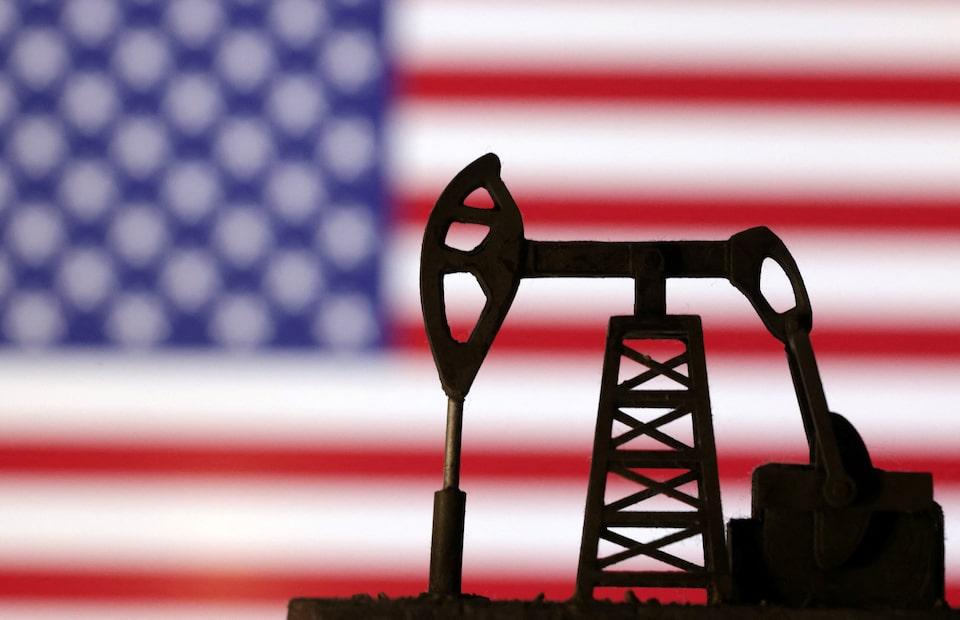
May 5 (Reuters) - A House of Representatives panel this week will consider sweeping changes to the nation's oil and gas drilling programs, including requiring dozens of lease sales in the Gulf of Mexico and Alaska, that could be passed in an impending budget bill. WHY IT MATTERS The proposal is designed to bolster President Donald Trump's goal to increase U.S. fossil fuel production by making it easier and cheaper to drill for oil and gas and mine for coal on federally-owned lands and waters. Sign up here. WHAT'S NEXT The House Natural Resources Committee will hold a markup hearing on energy provisions in the budget reconciliation bill on Tuesday. The hearing is a key step before legislation can advance to the Republican-controlled House floor for a vote. The reconciliation process will allow Republicans to bypass Democratic opposition and pass tax cut legislation along party lines later this year. KEY QUOTE "The House Committee on Natural Resources is answering President Trump's call to unleash American energy dominance through commonsense, science-based, and economically sound provisions in budget reconciliation," the committee's Republican staff said in a memo dated May 4. BY THE NUMBERS The proposal, unveiled last week, would mandate 30 oil and gas lease sales in the Gulf of Mexico, which President Donald Trump has renamed the Gulf of America, over 15 years. That provision would effectively replace the schedule the Interior Department has developed every five years for decades. It would also require six offshore auctions in Alaska's Cook Inlet and four onshore auctions in the state's Arctic National Wildlife Refuge in the next decade, as well as lease sales every other year in Alaska's National Petroleum Reserve. It also proposes that after 2035, 90% of the revenues from leasing in Alaska go to the state, with the state sharing revenue with the federal government prior to that date. The United States has held just a handful of lease sales in Alaska in recent years, largely due to a dearth of industry interest. The staff memo estimated that the proposals would generate $15 billion in savings and new revenue for the federal government, mainly from changes to onshore oil and gas leasing. The legislation would also lower royalty rates for drillers to 12.5% both offshore and onshore. REACTION An oil industry executive told Reuters that the House oil measures will largely remain intact in the final bill because of the sector's strong support in Congress, though some provisions could face legal challenges. Jenny Rowland-Shea, director of public lands at the liberal think tank Center for American Progress, said the bill "would upend the use of our public lands as we know it, putting President Trump's oil and mining industry donors in the driver’s seat." https://www.reuters.com/sustainability/house-committee-proposes-changes-boost-us-oil-coal-federal-lands-2025-05-05/
2025-05-05 22:03
May 5 (Reuters) - Williams Companies (WMB.N) , opens new tab said on Monday CEO Alan Armstrong will step down after more than 14 years at the helm of the U.S. pipeline operator. Armstrong, who joined Williams nearly 40 years ago, would be succeeded by insider Chad Zamarin, effective July 1. Zamarin, who joined the company in 2017, is currently the executive vice president of corporate strategic development. Sign up here. Williams on Monday also beat quarterly earnings estimates and raised its annual profit forecast, as it banked on rising demand for natural gas, driven by a surge in electricity consumption by homes, businesses, crypto-mining, and an artificial intelligence-led boom in data centers. "Williams is well positioned to benefit from the coming wave of natural gas demand from the power generation market and LNG exports, while continuing to deliver on traditional market needs," Armstrong said. The firm raised its 2025 adjusted core profit to be between $7.5 billion and $7.9 billion compared to its prior outlook range of $7.45 billion to $7.85 billion. Its first-quarter results were boosted by higher service revenues from expansion projects and acquisitions. In January, the U.S. energy regulator reinstated the certificate for Williams' Transcontinental gas pipeline, allowing it to go ahead with expansion of the project, after a U.S. court voided the initial approval in 2023. Total revenue rose nearly 10% to $3.05 billion during the quarter ended March 31, while service revenues climbed to $2 billion from $1.91 billion a year ago. At Transco, average daily transportation volumes rose to 15.9 million dekatherms (MMdth) of natural gas per day in the first quarter from 14.6 MMdth per day of natural gas a year ago. The company posted an adjusted profit of 60 cents per share for the quarter ended March 31, compared with average analysts' estimate of 56 cents per share, according to data compiled by LSEG. https://www.reuters.com/sustainability/boards-policy-regulation/williams-ceo-alan-armstrong-step-down-after-14-years-helm-2025-05-05/