2025-05-05 21:05
ORLANDO, Florida, May 5 (Reuters) - TRADING DAY Making sense of the forces driving global markets Sign up here. By Jamie McGeever, Markets Columnist Slow down, you're moving too fast A relatively quiet day on Monday with some key markets closed saw Asian and European stocks extend their recent rebound but Wall Street stumble after U.S. President Donald Trump's latest tariff salvo, despite more signs of underlying strength in the U.S. economy. U.S. stocks have bounced back strongly from their post-'Liberation Day' lows a month ago. But is this general positivity justified? More on that below, but first, a roundup of the main market moves. I'd love to hear from you, so please reach out to me with comments at [email protected] , opens new tab. You can also follow me at @ReutersJamie and @reutersjamie.bsky.social. If you have more time to read, here are a few articles I recommend to help you make sense of what happened in markets today. Today's Key Market Moves Tariff uncertainty still runs deep World markets are in limbo, with investors hoping for concrete progress in Washington's bilateral trade deal talks with dozens of countries but wary that the rally in risk assets over the past month could be losing momentum. Trump's decision on Sunday to slap 100% tariffs on foreign-made movies brought into the U.S. was a sign that perhaps he isn't turning quite as conciliatory as investors had hoped. Or it may be a reminder of how erratic his tariff policymaking agenda still is. Either way, it was enough to help snuff out Wall Street's nine-day upswing on Monday, in contrast to key markets in Asia and Europe that maintained their longest winning streaks in years. Will they run out of puff on Tuesday? It might be a low bar, but there were two developments over the weekend that could help investors keep a 'glass half full' view of markets - Trump pledged not to fire Fed Chair Jerome Powell, and Japan's finance minister Katsunobu Kato said Japan has no plans to threaten to sell its $1 trillion-plus holdings of U.S. Treasuries in trade talks with Washington. And Treasury Secretary Scott Bessent on Monday repeated his belief that tariffs, alongside the administration's tax cuts and deregulation agenda, will drive growth to near 3% this time next year. The U.S. economic data is mostly coming in on the stronger side of expectations, giving the Fed more breathing space, although how much longer that lasts remains to be seen. Some Asian currencies are clocking their biggest gains in years, and on Monday car giant Ford pulled annual guidance. Tariff uncertainty is still running deep. Wall Street's 'fever dream' could end in cold sweats Wall Street's recent rebound from its April lows suggests equity investors are pricing in a benign outlook for the U.S. economy, which contrast starkly with the more ominous signals coming from the oil, gold and fixed income markets. Is this justified confidence, or dangerous complacency? If you had turned off all communications on April 2 and logged back on today, you would find the S&P 500 roughly unchanged, with no sign of the 15% slump suffered in the days immediately following President Donald Trump's April 2 tariffs announcement. The S&P 500 has risen nine days in a row through May 2, its best daily winning streak in 21 years. Meanwhile, the "S&P 493" - the broad index excluding the "Magnificent Seven" tech megacaps - is flat for the year to date, also remarkable given the tumult over the past four months. Contrast that with other markets. Oil on Friday had its lowest close in four years and is down 25% on a year-on-year basis. While this partly reflects calls for accelerated output hikes by OPEC+, the macroeconomic signals flashing here are pretty clear: weak demand, sluggish growth and disinflation. Gold, meanwhile, is up 25% this year and still above its "Liberation Day" close, despite drifting down from its recent record high of $3,500 an ounce. While this is not an indication of heightened disinflation fear, it is a sign of elevated fear overall. Bullion's allure as the world's premier safe-haven asset has rarely been stronger. And what of U.S. Treasuries? The two-year yield has rebounded in recent days but is still 40 basis points lower this year, and rates traders are still anticipating at least three quarter point cuts from the Federal Reserve this year. Both are pricing in meaningful economic slowdown. COLD SWEATS Is this simply an example of the old adage that equity investors are paid to be optimistic while bond investors are paid to be pessimistic? Perhaps, but there is some justification for Wall Street's optimism. It's largely rooted in the view that the economic damage inflicted by tariffs won't be as bad as feared a few weeks ago, partly because the Trump administration has backpedaled in the face of market ructions. In other words, the "Trump put" is back. Investors also have reason not to be too worried about the 0.3% GDP contraction in the first quarter, as it largely reflects the front-loading of imports, a statistical anomaly that will be quickly reversed. It was a "gross distorted product", according to Goldman Sachs economists, who anticipate a 2.4% GDP expansion in the second quarter. Moreover, while "soft" economic data like consumer sentiment indicators continue to flash red, much of the "hard" data, like employment figures, is holding up well. And even if real growth this year is only 0.5% - Goldman's estimate, which is at the lower end of forecasts - that still implies nominal growth of close to 5%, if inflation tops 4%, as many economists expect. Importantly, earnings are driven by nominal growth rates. While first quarter earnings are obviously "rear-view mirror" numbers in the context of the trade war, around 74% of the 357 companies in the S&P 500 that have reported so far have beaten analyst estimates, according to LSEG's Tajinder Dhillon. This compares to a long-term average of 67.0%. And the 12-month forward growth expectations for the S&P 500 are still running at a punchy 10%. But that's not the whole story. Many firms have slashed forecasts or declined to give any guidance at all. Even though Trump seems very likely to dial down his initial tariff numbers, the cost of doing international business is still going to rise significantly. Whether that cost is borne more by businesses or consumers remains to be seen, but in the broader context of economic activity and corporate profitability, the effect will be the same. Tariffs haven't bitten yet, but they will. In an interview with Bloomberg TV on Friday, Gene Seroka, executive director of the Los Angeles port - the biggest in the country - pulled no punches: "CEOs are telling me, 'hit the pause button'. Hiring, off the table for right now. Capital investment, pause. And the retailers are telling me that even 10% (tariffs), 'I'm going to have to pass it on to the consumers'." Bob Elliott, CEO at Unlimited Funds, reckons equities are priced as if the last month was a "fever dream". The risk is that investors break out in cold sweats in the months ahead. What could move markets tomorrow? Opinions expressed are those of the author. They do not reflect the views of Reuters News, which, under the Trust Principles , opens new tab, is committed to integrity, independence, and freedom from bias. Trading Day is also sent by email every weekday morning. Think your friend or colleague should know about us? Forward this newsletter to them. They can also sign up here. https://www.reuters.com/markets/global-markets-trading-day-graphic-pix-2025-05-05/
2025-05-05 21:04
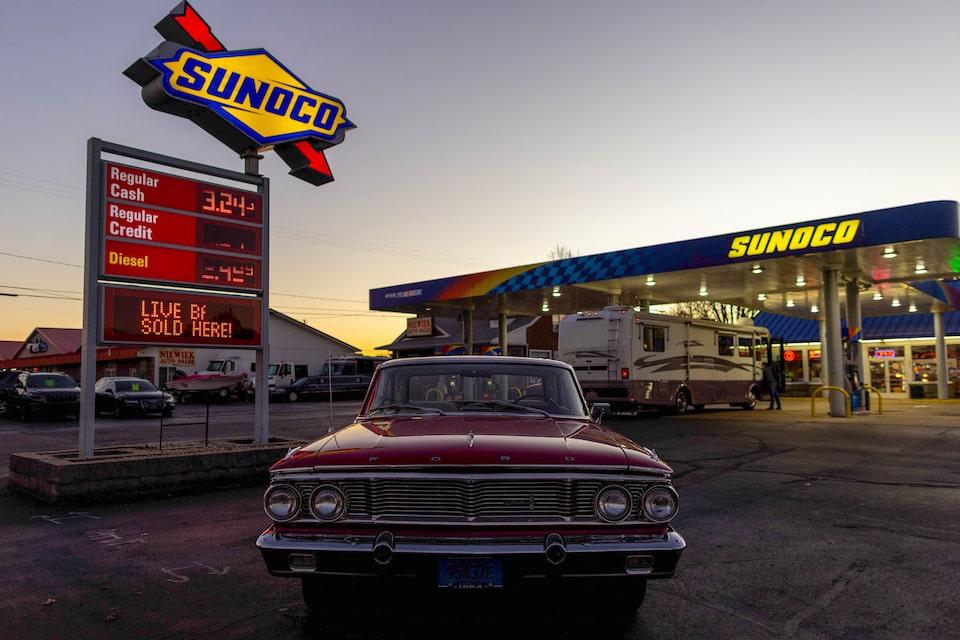
Deal would form largest independent fuel distributor in the Americas Parkland has been dogged by internal strife Parkland's largest shareholder blasts the deal Shares of Sunoco down 5.8%, Parkland gains 5.5% May 5 (Reuters) - U.S. fuel supplier Sunoco (SUN.N) , opens new tab has struck a $9.1-billion deal to buy Canada-based Parkland (PKI.TO) , opens new tab, a move that would create the Americas' largest independent fuel distributor but which Parkland's largest shareholder immediately criticized. Sunoco's offer was unanimously approved by Parkland's board, the companies said on Monday. But Parkland's largest shareholder, Simpson Oil, called the deal a "last-ditch attempt" by Parkland's board to retain control. Sign up here. Simpson said it was seeking a court injunction to force Parkland to hold a board election, but an Alberta judge denied the request later in the day. Dallas-based Sunoco first put forward an expression of interest in the Calgary-based fuel refiner and retailer in 2023. That offer was not accepted, but Parkland's board "left the door open" to future offers from the company, a source said. Under terms of the deal, whose total value includes debt, each Parkland share will be exchanged for C$19.80 in cash and 0.295 Sunoco unit — a 25% premium over the seven-day volume-weighted average price. Parkland management hailed Monday's deal as a path to greater financial stability and growth. The company had undertaken a strategic review in March following persistent pressure from Simpson Oil, which holds a nearly 20% stake, and activist investor Engine Capital — both of whom had been outspoken critics of the company's lagging share price performance. Parkland cancelled its May 6 annual general meeting and instead scheduled a special meeting for June 24 at which Parkland shareholders will vote on the Sunoco transaction. Michael Shaw, portfolio manager with Franklin Templeton’s ClearBridge Investments, said in an interview he has not yet decided whether he will support the deal. "The market's going to have to think about this," Shaw said, adding he needs to weigh whether there is a hypothetical scenario where Parkland could improve its performance and receive a better offer down the road. In a statement on Monday, Simpson Oil — which had been trying to wrest control of the company's board by proposing its own proxy slate of board candidates — said it has applied for a court injunction to force Parkland to hold the annual general meeting on May 6 as initially planned. Simpson said Parkland's board is pushing ahead with the deal despite losing shareholders' confidence. ASSETS ALIGN Parkland counts 4,000 retail and commercial locations across Canada, the U.S., and the Caribbean region, while Sunoco has an existing network of 7,400 Sunoco and partner-branded locations spanning the U.S., Puerto Rico, Europe, and Mexico. If the deal goes through, Sunoco will also be acquiring Parkland's 55,000-barrel-per-day Burnaby refinery, which produces 25% of the transportation fuel used in Canada's westernmost province of British Columbia. The two companies' assets align nicely together, said ATB Capital analyst Nate Heywood, who added shareholders will likely approve the deal since it is hard to see where a better offer would come from. "Sunoco is probably the most strategically positioned for this type of acquisition," Heywood said. Shares of Sunoco closed down 5.8% on Monday while those of Parkland ended up 5.5%. The acquisition marks Sunoco's second major deal in recent years. In 2024, Sunoco acquired fuel storage and pipeline operator NuStar Energy for $7.3 billion. The Parkland deal is expected to close in the second half of the year and deliver over $250 million in annual cost savings by the third year. Sunoco said the transaction will boost cash flow by more than 10% and allow the combined company to return to its target debt levels within 12 to 18 months of closing. To fund the cash portion, Sunoco has secured a $2.65 billion, 364-day bridge loan, a short-term facility often used to bridge financing gaps in large deals. The deal is subject to approval under the Investment Canada Act, which reviews large-scale acquisitions of Canadian companies by foreign buyers. Sunoco has pledged to retain Parkland's Canadian headquarters in Calgary, maintain significant Canadian employment levels, and continue to invest in the Burnaby refinery. https://www.reuters.com/markets/deals/sunoco-buy-parkland-9-billion-deal-2025-05-05/
2025-05-05 20:59
May 5 (Reuters) - U.S. shale producer Diamondback Energy (FANG.O) , opens new tab lowered its output forecast for 2025 on Monday and said that a combination of global economic uncertainty and rising OPEC+ supply has brought U.S. oil production to a tipping point. On the same day, oil prices crashed to a four-year low after the OPEC+ producer group accelerated plans to reverse some of the deep supply cuts it made in recent years as output from some parts of the world, including the United States, surged to record highs. Sign up here. Meanwhile, despite U.S. President Donald Trump's vow to unleash more U.S. oil drilling, his tariff policies have raised concerns of a global economic slowdown that could reduce commodity demand. The country's near two-decade-old shale boom is also now in a more mature stage of development, with geological hurdles a major challenge to production growth at current oil prices, Diamondback said. The company, which reported an 84.5% jump in first-quarter production to 850,656 barrels of oil equivalent per day following its $26 billion acquisition of private rival Endeavor Energy Resources, now expects full year output to average between 857,000 and 900,000 boepd. In an earlier forecast, it said production would average between 883,000 and 909,000 boepd. "Today, geologic headwinds outweigh the tailwinds provided by improvements in technology and operational efficiency," the company said in a letter to shareholders. "Therefore, we believe we are at a tipping point for U.S. oil production at current commodity prices." Diamondback also slashed its capital budget for this year by about $400 million to between $3.4 billion and $3.8 billion. The company will drill and complete fewer wells and maximize free cash flow generation during this period of macro instability, it said. Diamondback could reduce activity further if oil prices fall more, it added. Higher output and a jump in natural gas prices helped Diamondback post an adjusted profit of $4.54 per share for the first quarter, beating Wall Street estimates of $4.13, according to data compiled by LSEG. Its average price for natural gas during the quarter more than doubled year-over-year at $2.11 per thousand cubic feet. Average natural gas prices have risen over the past few quarters and hit a two-year high on March 10, supported by record flows to liquefied natural gas export facilities and concerns over supply in the lead-up to the summer season. https://www.reuters.com/business/energy/diamondback-energy-beats-first-quarter-profit-estimates-2025-05-05/

2025-05-05 20:12
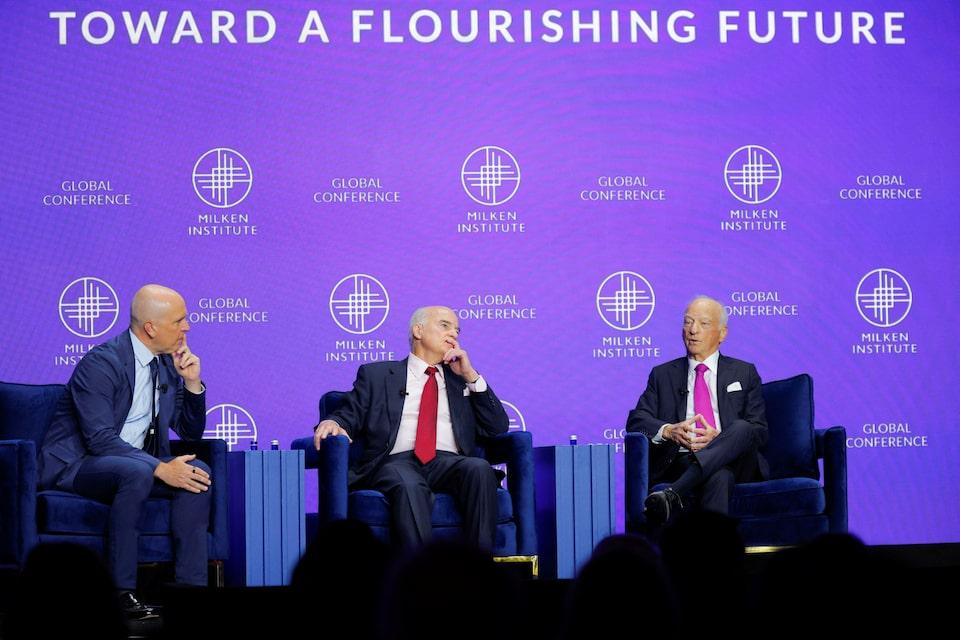
Trump's tariffs cause investment pauses, risks for U.S. assets Economists warn of recession risks, Trump's softer tariff stance raises hopes Investors cautious, some see opportunities amid market volatility BEVERLY HILLS, May 5 (Reuters) - Wall Street chief executives and dealmakers sought to strike a calm tone at a high-profile investor gathering in Beverly Hills on Monday, despite fears of an economic slowdown as U.S. President Donald Trump's trade policies cast a long shadow. Investment managers and bankers at the Milken Institute Global Conference warned that Trump's aggressive tariffs on imports from key U.S. trade partners had caused companies to pause investment plans and increased risks associated with U.S. assets, including a brief but sharp selloff in U.S. stocks. Sign up here. But because of the depth and liquidity of U.S. capital markets and size of the economy, many remained cautiously optimistic about the U.S. economic outlook, deal-making activities, and the country's ability to keep attracting large investment outflows. "It's very much a period of uncertainty and wait and see," said Harvey Schwartz, CEO of global investment firm Carlyle. "The risk premium is definitely higher but people want to engage. ... We are actively looking for opportunities." Since Trump's return to the White House, his on-again, off-again tariff announcements have roiled financial markets, inflicted steep stock losses and sparked fears of capital outflows from the U.S., as investors scramble for assets shielded from Trump's erratic policy shifts. RECESSION RISKS LOOM Risks of a global recession this year are high, a majority of economists in a Reuters poll projected at the end of April, with 92% saying Trump's tariffs had damaged business sentiment. Just three months earlier, the same group of economists had expected the global economy to grow at a strong clip. Many of the roughly 5,000 attendees at the 28th annual Milken meeting said a softer stance on tariffs indicated by Trump and Treasury Secretary Scott Bessent in recent days had raised hopes the economic slump caused by the administration's attempts to upend global trade dynamics would not be as dramatic as previously feared. Bessent said at the conference that Trump's policies would, over the long term, solidify the U.S. position as the "home of global capital" and warned that betting against the American economy was a time-tested mistake. "The primary components of the Trump economic agenda - trade, tax cuts, and deregulation - are not standalone policies. They are interlocking parts of an engine designed to drive long-term investment in the American economy," Bessent said. Still, as investors wait for clarity on the final composition of tariffs, many were taking a cautious stance on investment decisions, or hedging against the possibility of sluggish growth amid a prolonged trade war. "What we're hearing from clients is they're prepping for headwinds," said Citigroup CEO Jane Fraser. "They're holding off on investment spending; some of them are also pretty active in the markets," she added. DEPLOYING CAPITAL An executive at a large asset manager said delays in mergers and acquisitions had slowed down demand for private capital generally used to finance such deals, meaning private lenders were looking to fund fewer deals by making concessions on lending rates. Uncertainty remains high due to U.S. trade policies, a senior executive of a large overseas company said on condition of anonymity, citing concern about their impact on growth, inflation and the global realignment of trade flows. Some investors, however, put a more positive spin on the market's wild gyrations that kicked many portfolios lower. One prominent hedge fund manager, whose fund is back in the black after nursing losses earlier in the quarter, said he believes the talk of recession is overblown and predicted the United States can avoid it. Others said slowdown fears could also be an opportunity for investors with a relatively high tolerance for risk. Gautam Bhandari, global chief investment officer and managing partner at I Squared Capital, an infrastructure investment firm, said the lack of clarity over the ultimate composition of tariffs and their economic impact has pushed large firms to delay capital expenditure decisions, giving smaller players more room to maneuver. "For private capital in the middle market this is an opportunity," he said, noting that while tariffs make the global economy more fragmented, common themes are emerging, such as a renewed push toward industrialization. "All western economies are looking to revitalize their industry," Bhandari said. "Yes, inflation is upon us and maybe a slowdown will come, but that generally bears well for infrastructure because it's a defensive asset." At private dinners, cocktail parties and the main ballroom at the Beverly Hilton, ground zero for the conference, chiefs of top banks including Citigroup's Fraser, PJT Partners' CEO Paul Taubman, and Lazard CEO Peter Orszag mingled with hedge fund manager Bill Ackman and government representatives including Bessent and former Treasury Secretary Steve Mnuchin. Their message was clear: America has not lost its standing, and this remains the best place in the world to invest capital. "We're looking, we're assessing, we're figuring things out," said Waleed Al Mokarrab Al Muhairi, deputy group CEO at Mubadala Investment Company, which has 42% of its portfolios invested in the United States. "We haven't stopped deploying capital," he said on stage. https://www.reuters.com/business/tariff-fears-loom-large-milken-executives-try-stay-calm-2025-05-05/
2025-05-05 20:06
May 5 (Reuters) - Drivers in California pay higher prices at the pump than any other state in the country due to supply issues, costs from environmental compliance and fuel requirements, and high state taxes and fees, the U.S. Energy Information Administration said on Monday. In March, costs from Californian environmental programs such as Cap-and-Trade and the Low Carbon Fuel Standard added as much as $0.54 per gallon, the latest data showed. Sign up here. Consumers in California also pay around $0.90 per gallon in taxes and fees as of March, the highest in the country, the EIA said. WHY IT'S IMPORTANT California is the largest U.S. gasoline market but several fuelmakers have ceased operations at less profitable facilities, citing regulatory challenges and market dynamics. Six plants have shut since 2008, two of which have converted to producing renewable fuels. The state will likely see even higher gasoline prices as refinery closures put pressure on fuel supply and force the state to rely more on imports from countries like India and South Korea. Retail prices for regular grade gasoline in the state often exceed the national average by more than a dollar per gallon, the EIA said. CONTEXT In October, California Governor Gavin Newsom signed into effect ABX2-1, a bill designed to prevent fuel supply shortages in the state that gives regulators more control over inventory levels for refiners. Shortly after, Phillips 66 (PSX.N) , opens new tab announced plans to shut its large Los Angeles-area oil refinery in the fourth quarter of 2025. Last month, Valero Energy (VLO.N) , opens new tab announced plans to cease operations at its San Francisco-area oil refinery next year. https://www.reuters.com/business/energy/supply-issues-compliance-costs-drive-up-california-fuel-prices-eia-says-2025-05-05/
2025-05-05 20:01
UN brokers sustainable development plan before June meeting US wants to weaken commitments on financial system reform Also seeks to cut climate, gender, sustainability mentions from deal BRUSSELS/LONDON, May 5 (Reuters) - The United States is seeking to weaken a global deal aimed at helping developing countries struggling with the impacts of climate change and other issues, an internal United Nations document seen by Reuters showed. The Trump administration opposes draft reforms of the world's financial system intended to help developing countries, including around taxation, credit ratings and fossil fuel subsidies. It also wants mentions of "climate," "gender equality" and "sustainability" stripped out. Sign up here. The previously unreported document sheds light on how the Trump administration is seeking to imprint an "America First" agenda, including opposition to efforts to slow climate change and promote diversity, on the institutions at the heart of fixing global systemic crises. The once-a-decade, 4th International Conference on Financing for Development (FFD4) in Seville, Spain, in June aims to influence the strategic direction of the world's development finance institutions. Countries agreed at FFD3, for example, to broaden tax cooperation efforts so that developing countries could help set the rules and as of last May more than 140 countries were involved. "This conference is about bringing the world's leaders together and setting the underlying rules and priorities for financing development goals over the next decade," Tom Mitchell, executive director of the International Institute for Environment and Development, told Reuters. Compiled by the permanent representatives to the U.N. of Mexico, Nepal, Norway, and Zambia, with help from the U.N. secretariat, the April 11 negotiating draft is annotated with the positions of the 193 nations involved in the discussions. At U.N. negotiations over the FFD4 document in March, the U.S. mission said the draft at that time , opens new tab was too long and prescriptive and denounced "the ever-widening definition of sustainable development." "The international financial institutions have independent mandates and authorities, and we do not support attempts in the U.N. system to dictate their priorities or activities," the U.S. statement from acting U.N. Economic and Social Council representative Jonathan Shrier said. The U.N. does not hold direct authority over the multilateral development finance institutions. With ongoing changes at the World Bank and International Monetary Fund in the fight against climate change already facing pushback from U.S. Treasury Secretary Scott Bessent, the document showed it was seeking to water down the U.N.'s reform prescriptions. Among specific points in the text that refer to the systemic reform, the document shows the U.S. wants to remove a reference to a "package of reforms" for sustainable development. It wants to replace a line promising to "commit to reform the international financial architecture" with a pledge to "recognize the need to enhance its resilience and effectiveness in responding to present and future challenges and crises." Such changes in language signal the degree of shared commitment that can then be used as support for action or inaction in future talks. U.N. Secretary-General António Guterres has acknowledged the need to overcome multiple challenges ahead of the conference, but urged "all countries to be at the table in Sevilla focused on solutions," spokesperson Florencia Soto Niño said in an email to Reuters. The Treasury Department and State Department both declined to comment. The White House did not respond to a request for comment. While the U.S.' position on development has become tougher under Trump, the negotiating document shows it remains supportive of efforts that include developing countries working more closely with the private sector, and fostering innovation and financial literacy. CLIMATE CHANGE A key goal of the global reforms is to better help poorer nations cope with weather disasters, which are worsening due to climate change, and to boost economic development using low-carbon energy rather than traditional fossil fuels. President Donald Trump has quit the UN Paris climate agreement, slashed , opens new tab U.S. foreign development aid by more than 80% as part of a government overhaul led by billionaire Elon Musk and embarked on a trade war that is hurting many poorer nations. Among areas of the FFD4 document that the U.S. objects to is a call for countries to explore "global solidarity levies" that could include taxes on highly polluting activities or on the super-rich to finance sustainable development. If included, the levies could be taken up in U.N. negotiations on taxes this year and would bolster a task force led by France, Kenya and Barbados that aims to develop such taxes among smaller groups of countries. Other countries to object include Russia, Saudi Arabia and China. The U.S. is also seeking to delete a paragraph calling for companies to pay tax to the countries where economic activity occurs; a paragraph on helping developing countries bolster tax transparency; and another on phasing out inefficient fossil fuel subsidies, the document shows. Many of the world's poorest countries struggle with high debt and the costs of rebuilding after disastrous storms, but the FFD4 document shows the U.S. wants to strike a paragraph on reforming the credit-rating system. That includes a push for raters to take a more forgiving approach to poorer nations that voluntarily restructure their debt to invest in green projects, it showed. The U.S. also opposes a commitment to ensure countries receive "adequate and uninterrupted funding on appropriate terms of social protection and other essential social spending during shocks and crises," the document shows. While the U.S. has considerable influence as the biggest shareholder in both the World Bank, which provides loans and grants to developing countries, and the IMF, and is currently reviewing its role in both, the draft deal is likely to change further as countries continue negotiations in May, before reaching consensus on a final document in mid-June. The U.S. position puts pressure on other countries to accept a weaker deal, since the talks aim to adopt a deal by consensus. https://www.reuters.com/sustainability/cop/us-seeks-weaken-global-development-finance-efforts-un-document-shows-2025-05-05/