2025-05-05 09:46
May 5 (Reuters) - As financial markets pin their hopes on a de-escalation in the U.S.-China trade war, some experts caution that meaningful progress in striking a deal between the world's two largest economies may still be some way off. "Either tariffs are cut to more palatable levels or both sides put more exclusions on the table to make tariffs effectively less binding," Aidan Yao, Amundi's senior investment strategist for Asia, told the Reuters Global Markets Forum , opens new tab. Sign up here. "For now, signs of these are sparse, presumably because the pain threshold has not been reached," Yao said, adding that the outlook for the Chinese economy still looks positive. China recently said it was "evaluating" a U.S. proposal to resume trade talks over Washington's 145% tariffs. It has also created a list of U.S.-made products for exemption from its 125% retaliatory tariffs. Sat Duhra, portfolio manager at Janus Henderson, said, "Trump will need to respond if the threat of a recession increases significantly, which the equity market, dollar and the Treasuries arguably are beginning to point to." He said a resolution would benefit his company's positioning in China. Duhra has been lapping up Chinese stocks, noting opportunities in banks, technology and sportswear among other sectors, citing higher dividends and lower valuations. While Janus Henderson is broadly "neutral weight" on Chinese equities, Amundi holds a close to "neutral" stance, preferring domestic-oriented sectors in A-shares and AI-leading tech names in offshore stocks. China's blue-chip CSI300 (.CSI300) , opens new tab and Shanghai Composite (.SSEC) , opens new tab are down 4% and 2% year-to-date, respectively, in line with their U.S. counterparts - S&P 500 (.SPX) , opens new tab and Nasdaq (.IXIC) , opens new tab down 3% and 7%, respectively. "News on tariffs have become mostly noise for the Chinese markets... They don't set the trend anymore unless a U-turn on Trump's policies is achieved," Yao said, adding that China is well-positioned in terms of economic size and domestic policies to cushion the impact of external shocks. (Join GMF, a chat room hosted on LSEG Messenger: https://lseg.group/3KFHrhe , opens new tab) https://www.reuters.com/business/finance/strategists-optimistic-china-even-us-china-trade-war-climbdown-looks-far-off-2025-05-05/
2025-05-05 06:50
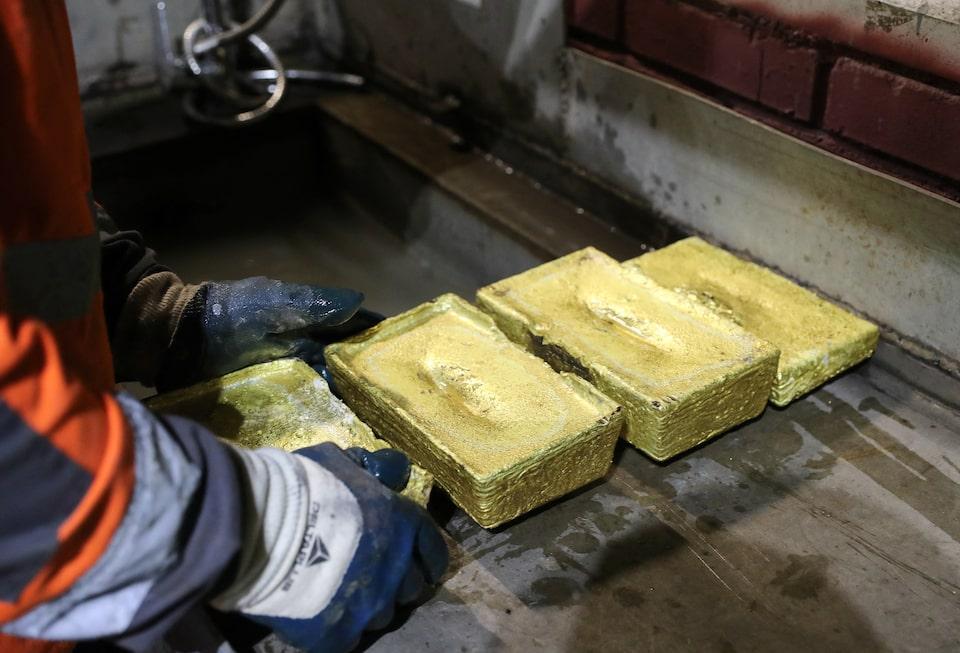
Fed's policy decision due on Wednesday U.S. dollar down 0.1% Gold to continue outperforming silver, Goldman Sachs says May 5(Reuters) - Gold prices gained more than 2% on Monday, driven by a weaker dollar and safe-haven demand, while the market awaits a policy decision from the U.S. Federal Reserve later in the week. Spot gold was up 2.3% at $3,315.09 an ounce at 1:52 p.m. ET (1752 GMT). Sign up here. U.S. gold futures settled 2.4% higher at $3,322.3. The dollar index (.DXY) , opens new tab fell 0.1%, making bullion less expensive for other currency holders. U.S. President Donald Trump announced on Sunday a 100% tariff on movies produced overseas, reigniting concerns about the potential fallout of a global trade war. "We are seeing a continued flow of safe-haven demand, keeping gold prices elevated ... prices are going to trade above $3,000 level at least in the near-term," said Jim Wyckoff, senior analyst at Kitco Metals. "I don't think any change in interest rates is expected at this meeting, but we'll be watching it to see if the Fed is leaning any particular way." Traders await Fed Chair Jerome Powell's comments due on Wednesday to get clues on the central bank's rate path. The Fed has held its policy rate in the 4.25%-4.50% range since December. The Fed is expected to leave interest rates unchanged this meeting, but it may be the last where the outcome is so cut and dry with Trump's tariffs casting a shadow of uncertainty over the economic outlook. Gold, which is considered a hedge against uncertainty and tends to thrive in a low interest rate environment, has hit multiple record highs and gained over 26% so far this year. Goldman Sachs expects gold to continue outperforming silver, but noted that, given the strong correlation in flows, renewed demand for gold in 2025 was likely to boost silver prices too. Spot silver rose 1% to $32.31 an ounce. Meanwhile, platinum fell 0.4% to $956.05 and palladium shed 1.5% to $939.55. https://www.reuters.com/markets/commodities/gold-gains-weaker-dollar-traders-brace-fed-rate-decision-2025-05-05/
2025-05-05 05:54
HONG KONG, May 5 (Reuters) - Ten people died when "sudden strong winds" capsized four boats carrying tourists, plunging 84 people into a river in Southwestern China on Sunday, state media reported. The last missing person was found around noon on Monday but showed no vital signs, China Central Television said. Sign up here. The Xinhua News Agency said 74 people had been rescued in the accident which occurred in Guizhou province. Authorities sent 70 people to hospital to be treated for "non-life-threatening conditions", state media said. Nearly 500 rescue workers were mobilised to deal with the accident as Chinese President Xi Jinping instructed provincial authorities to "do everything possible", Xinhua said. Xi also said authorities should enhance safety measures to curb the growing number of accidents at tourist attractions and major public places. https://www.reuters.com/world/asia-pacific/nine-killed-after-four-tourist-boats-capsize-china-state-media-reports-2025-05-05/

2025-05-05 05:33
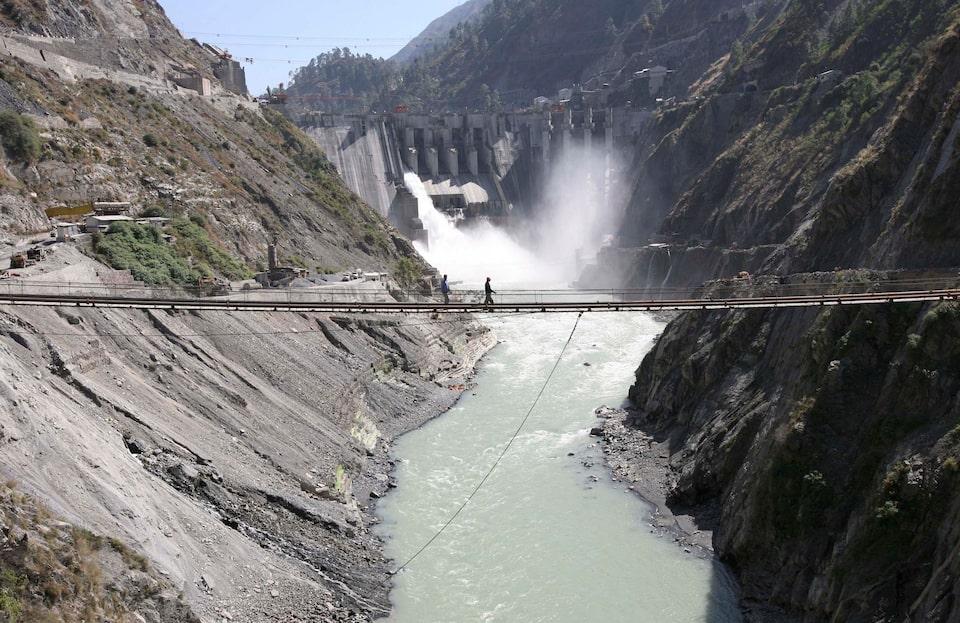
Work begins to clear sediment at two plants, sources say India suspended water-sharing treaty after Kashmir attack Pakistan denies Indian accusation of role in deadly attack India begins work without notifying Pakistan, sources say SRINAGAR, May 5 (Reuters) - India has begun work to boost reservoir holding capacity at two hydroelectric projects in the Himalayan region of Kashmir, sources with knowledge of the matter told Reuters, after fresh tension with Pakistan led it to suspend a water-sharing pact. The work represents the first tangible step by India to operate outside agreements covered by the Indus Waters Treaty, unbroken since 1960 despite three wars and several other conflicts between the nuclear-armed rivals. Sign up here. Last month, however, New Delhi suspended the pact that ensures supply to 80% of Pakistani farms after an attack in Kashmir killed 26, and it identified two of the three assailants as Pakistani. Islamabad has threatened international legal action over the suspension and denied any role in the attack, warning, "Any attempt to stop or divert the flow of water belonging to Pakistan ... will be considered as an act of war". A "reservoir flushing" process to remove sediment began on Thursday, carried out by India's biggest hydropower company, state-run NHPC Ltd (NHPC.NS) , opens new tab, and authorities in the federal territory of Jammu and Kashmir, the three sources said. The work may not immediately threaten supply to Pakistan, which depends on rivers flowing through India for much of its irrigation and hydropower, but it could eventually be affected if other projects launch similar efforts. There are more than half a dozen such projects in the region. India did not inform Pakistan about the work at the Salal and Baglihar projects, which is being done for the first time since they were built in 1987 and 2008/09, respectively, as the treaty had blocked such work, the sources added. They spoke on condition of anonymity as they were not authorised to talk to the media. India's NHPC and the neighbouring governments did not reply to emails from Reuters to seek comment. Since independence from British colonial rule in 1947, India and Pakistan have fought two of their three wars over Kashmir, in addition to numerous short conflicts. The flushing operation ran for three days from May 1, the sources said. "This is the first time such an exercise has taken place and will help in more efficient power generation and prevent damage to turbines," one of the sources told Reuters. "We were also asked to open the adjustable gates for cleaning, which we did from May 1," the source said, adding that the effort aimed to free dam operation from any restrictions. People living on the banks of the Chenab river on the Indian side of Kashmir said they noticed water had been released from both Salal and Baglihar dams from Thursday to Saturday. 'FREE WILL' The flushing of hydropower projects requires nearly emptying a reservoir to force out sediments whose build-up is a major cause of decline in output. For example, two of the sources said, power delivered by the 690-MegaWatt Salal project was far below its capacity, because Pakistan had prevented such flushing, while silting also hit output at the 900-MW Baglihar project. "Flushing is not a common thing because it leads to a lot of water wastage," said one of the sources. "Downstream countries are expected to be informed in case it leads to any inundation." Building both projects had required extensive back and forth with Pakistan, which worries about losing out on its share of water. Under the 1960 treaty, which split the Indus and its tributaries between the neighbours, India had also shared data such as hydrological flows at various spots on the rivers flowing through India and issued flood warnings. India's water minister has vowed to "ensure no drop of the Indus river's water reaches Pakistan". Government officials and experts on both sides say India cannot stop water flows immediately, however, as the treaty has allowed it only to build hydropower plants without significant storage dams on the three rivers allocated to Pakistan. The suspension means India "can now pursue our projects at free will", said Kushvinder Vohra, a recently retired head of India's Central Water Commission who worked extensively on Indus disputes with Pakistan. Prime Minister Narendra Modi's government has sought to renegotiate the treaty in recent years and the archfoes have tried to settle some of their differences at the Permanent Court of Arbitration in the Hague. These concerns related to the size of the water storage area at the region's Kishenganga and Ratle hydroelectric plants. https://www.reuters.com/world/asia-pacific/india-starts-work-hydro-projects-after-suspending-treaty-with-pakistan-sources-2025-05-05/
2025-05-05 05:27
Q1 GDP +4.87% y/y vs +4.91% in poll Q/Q GDP shrinks 0.98% on non-adjusted basis Government expected to increase spending JAKARTA, May 5 (Reuters) - Indonesia's economy grew at its weakest pace in more than three years in the first quarter, with headwinds expected in the rest of the year stemming from global trade turmoil and declining household spending. Southeast Asia's largest economy grew 4.87% in the first quarter from a year earlier, its slowest rate since the third quarter of 2021 and down from 5.02% in the previous quarter. Growth was roughly in line with analysts' forecasts in a Reuters poll at 4.91%. Sign up here. President Prabowo Subianto, who took office last year, has pledged to lift GDP growth to 8% during his five-year term, but is facing challenges from slowing global growth amid a trade war, as well as weakening domestic demand and a tighter budget position. U.S.-bound exports could also be hit by hefty tariffs in coming months, which Jakarta is looking to avert in talks with Washington. "Various challenges are already in sight, such as the negative impact of trade war tensions between the U.S. and its trading partner countries, including Indonesia," said Myrdal Gunarto, Maybank Indonesia economist. Global market uncertainties may also limit the central bank's room to ease monetary policy, he said. Bank Indonesia has cut interest rates twice since September and has said it has room to cut further, though its priority was maintaining market stability. Hosianna Situmorang, Bank Danamon's economist, said further growth deceleration to 4.79% is expected in the current quarter on slowing household spending and the impact of trade tensions. However, she kept Danamon's 4.8% full-year forecast, expecting improvements in the second half of 2025. "We see indications of improvement coming from easing trade tensions, since investors are predicting China would negotiate (with the U.S.). The government should also begin to accelerate spending," she said. Chief economic minister Airlangga Hartarto told reporters Indonesia's growth remained higher than peers in the Group of 20 major economies, and that government spending would provide growth momentum going forward. WEAKER SPENDING ON SHOES On a non-seasonally adjusted, quarter-on-quarter basis, GDP contracted 0.98%, Statistics Indonesia data showed. In the first three months of 2025, household spending, which makes up over half of the country's GDP, grew 4.89% annually, down just slightly from the previous three months, but marking the slowest pace in five quarters. That was despite higher spending during Ramadan, which fell in March this year. Spending on eating out, transportation and communication remained strong, but other spending, such as footwear purchases, was sluggish, Statistics Indonesia said. While the GDP data suggested stable purchasing power, other indicators suggested spending by urban middle class households was weakening, said Barra Kukuh Mamia, Bank Central Asia's economist. First-quarter investment growth slipped to 2.12%, its lowest in two years. Government spending contracted, but there was an increase in the net export contribution to GDP due to slowing imports. The mining sector shrank about 1%, affected by a drop in coal prices. The agriculture sector provided one bright spot, with 10.5% growth, boosted by stronger rice and corn harvests. https://www.reuters.com/world/asia-pacific/indonesia-annual-q1-gdp-growth-slowest-more-than-three-years-2025-05-05/
2025-05-05 05:05
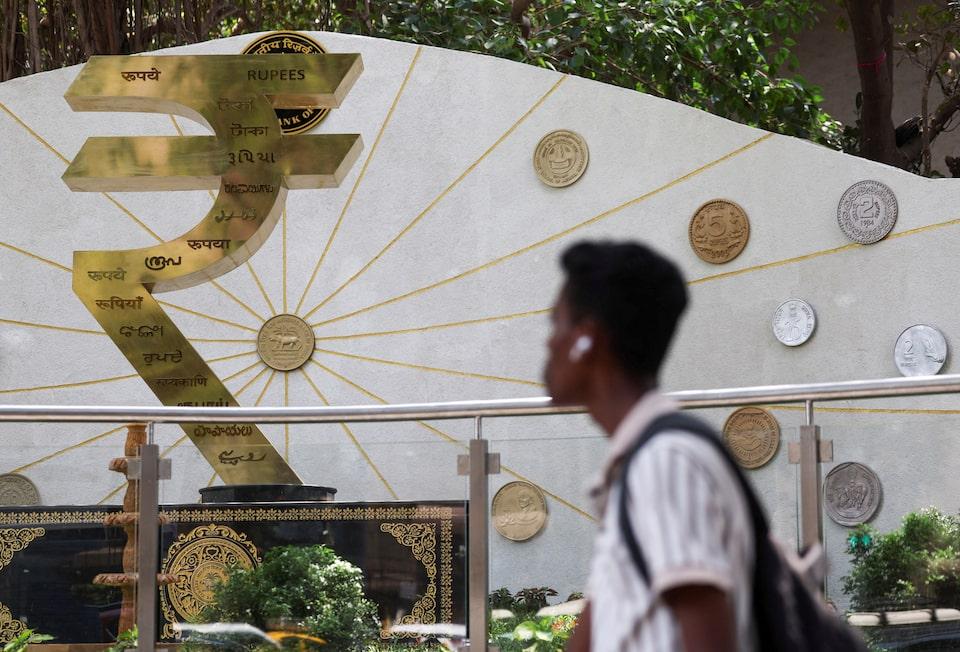
MUMBAI, May 5 (Reuters) - The Indian rupee strengthened on Monday on the back of modest portfolio inflows and a stronger yuan as easing U.S.-China trade tensions boosted emerging market currencies in Asia. The rupee was at 84.2850 as of 10:30 a.m. IST, up 0.3% on the day. The currency rallied to a peak of 83.77 on Friday before reversing course on the back of likely dollar-buying intervention by the Reserve Bank of India. Sign up here. On the day, the offshore Chinese yuan rose to a near six-month high of 7.1876, buoyed by optimism about trade talks between China and the United States. Beijing is considering ways to address the Trump administration's concerns about China's role in the fentanyl trade, the Wall Street Journal reported on Friday, providing a potential off ramp for the recent spate of hostilities on trade. U.S. President Donald Trump said though he had no plans to speak with Chinese President Xi Jinping this week, U.S. officials were speaking with Chinese officials about different things. The Taiwan dollar was up 3%, leading gains in Asia after the local government said on Saturday it had ended its first round of "substantive" tariff talks with the U.S. The dollar index, meanwhile, declined 0.1% to 99.7. The rupee is expected to hover between 84 and 84.75 on Monday with risks skewed towards appreciation, said Anil Bhansali, head of treasury at Finrex Treasury Advisors. Dollar-rupee forward premiums, meanwhile, slipped as traders pared hopes of rate cut by the Federal Reserve in June after U.S. jobs data came in stronger than expected. The 1-year implied yield was down 5 bps at 2.22%. Markets now see a 37% chance of a Fed cut in June, down from 64% a month ago. The Fed is widely expected to keep rates unchanged on Wednesday and investors will pay attention to remarks from Chair Jerome Powell. https://www.reuters.com/world/india/rupee-lifted-by-modest-inflows-stronger-yuan-forward-premiums-slip-2025-05-05/